The Kryptos Solution is Auctioned Off… But the Mystery is Far From Over!

Kryptos is one of the great remaining unsolved puzzles.

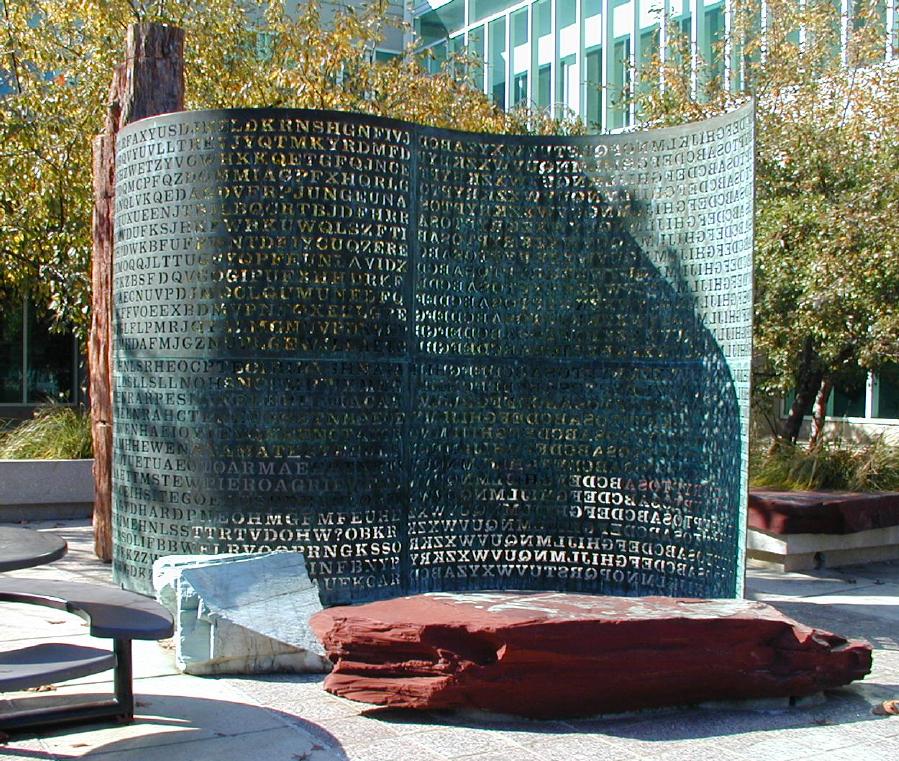
A flowing sculpture made of petrified wood and copper plating, sitting over a small pool of water. That’s what you see when you look at Kryptos.

It was revealed to the world in 1990, coded by former chairman of the CIA’s Cryptographic Center Edward Scheidt, and designed by artist Jim Sanborn. Designed to both challenge and honor the Central Intelligence Agency, for decades Kryptos has proven to be a top-flight brain teaser for codebreakers both professional and amateur.

Of the four distinct sections of the Kryptos puzzle, only three have been solved.

After a decade of silence, a computer scientist named Jim Gillogly announced in 1999 that he had cracked passages 1, 2, and 3 with computer assistance. The CIA then announced that one of their analysts, David Stein, had solved them the year before with pencil and paper. Then in 2013, a Freedom of Information Act request revealed an NSA team had cracked them back in 1993!

A curious game of one-upsmanship, to be sure. Something that foreshadowed what would follow years later…

Unfortunately for puzzle fans, K4 remained unsolved.
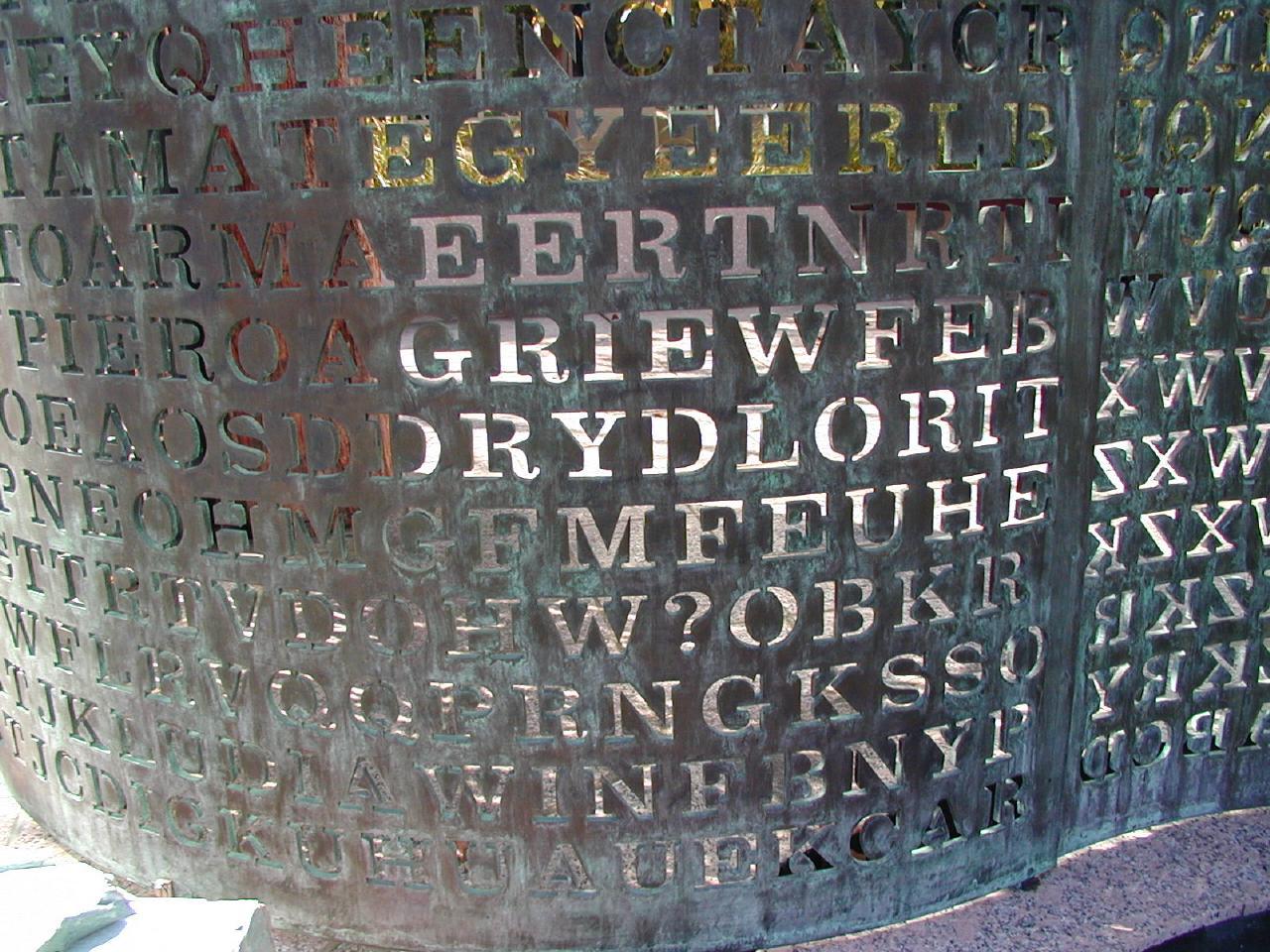
Eventually, Sanborn began offering hints. In 2006, he revealed that letters 64 through 69 in the passage, NYPVTT, decrypt to “Berlin.” In 2014, he revealed that letters 70 through 74, MZFPK, decrypt to “clock.” In 2020, he revealed that letters 26 through 34, QQPRNGKSS, decrypt to “northeast.”

Still, K4 remained unsolved.

Back in August, I wrote about Sanborn’s impending auction for the solution to the Kryptos puzzle, as Sanborn felt he no longer had “the physical, mental or financial resources” to maintain his role as the keeper of K4’s secret, and wished to hand that responsibility to another.

On November 20th, 2025, the solution to Kryptos sold to an anonymous bidder for $962,500, far above the predicted $300,000 – $500,000 estimate from the auction house.

At the moment, we don’t know if this anonymous bidder will reveal the solution or become the new keeper of the mystery.


You might think that the story of Kryptos would conclude there, for the moment.

But that’s not the case. The auction and its near-million-dollar bid were put into jeopardy by two intrepid investigators and a simple oversight by Sanborn himself.

On September 3rd, not long after I wrote about the upcoming auction, Sanborn received an email with the solved text of K4 from Jarett Kobek and Richard Byrne. They had discovered the solution among Sanborn’s papers at the Smithsonian’s Archives of American Art, after the auction house had mentioned the Smithsonian in their auction announcement.

Kobek and Byrne had discovered Sanborn’s accidental inclusion of the solution in the papers donated to the Smithsonian ten years ago during his treatment for metastatic cancer. “I was not sure how long I would be around and I hastily gathered all of my papers together” for the archives, he said.

Suddenly, the auction was in doubt.
Sanborn confirmed to Kobek and Byrne that they indeed had the correct solution. Later that day, he proposed they both sign non-disclosure agreements in exchange for a portion of the auction’s proceeds. They rejected the offer on the basis that it could make them party to fraud in the auction.

Sanborn reached out to the Smithsonian and got them to block access to his donated materials until the year 2075, to prevent others from following in Kobek and Byrne’s footsteps and further endangering the auction. Meanwhile, lawyers for RR Auction threatened Kobek and Byrne with legal action if they published the text.

Sadly, Kobek and Byrne had been put in an impossible position. They have the solution that diehard Kryptos fans have desired for decades, and the possibility of coercing them into revealing the solution is hardly low. Sanborn’s computer has been hacked repeatedly over the years, and he has been threatened by obsessive fans, even claiming he sleeps with a shotgun just in case.
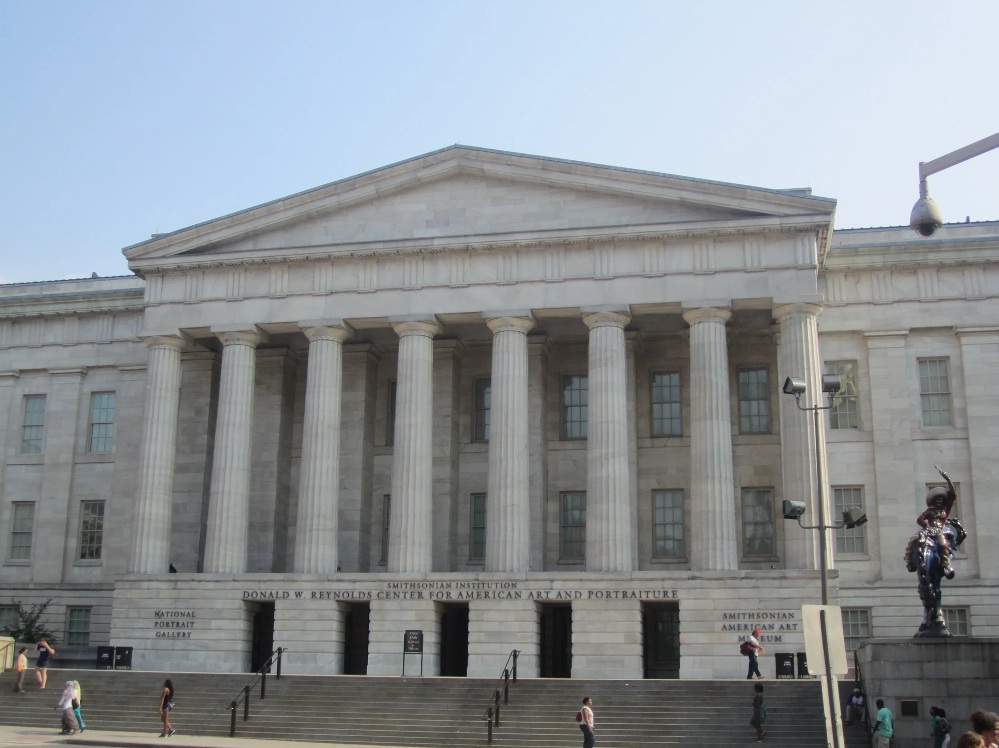
The auction house did disclose the discovery of K4’s solution to the bidding public, as well as the lockdown of the Sanborn archive at the Smithsonian’s Archives of American Art.

All parties waited to see what would transpire.

Still, with all this uncertainty looming, the auction closed with its $900,000+ bid, and thus far, neither the anonymous bidder nor the team of Kobek and Byrne have released the solution.

Byrne and Kobek say they do not plan to release the solution. But they are also not inclined to sign a legally binding document promising not to do so.

I waited to write about this story in the hopes that something would have been resolved in the weeks following the auction’s conclusion. But sadly, K4’s solution — and Kobek and Byrne’s potential roles in revealing it — remain unknown at the time of publishing this post.

Despite all this, the fact remains: Kryptos fans haven’t cracked K4.

But they know of four possible sources to find the solution: the Smithsonian (which is locked down), the anonymous bidder (similarly inaccessible), Sanborn (who has been fending them off for decades) and sadly, Kobek and Byrne, who remain in the crosshairs of the media, lawyers, and Kryptos enthusiasts. The pressure is mounting.

Jim Sanborn, until recently the steward and keeper of the Kryptos solution…

I suppose the best case scenario would be for someone to legitimately crack K4 and release their solution AND method for solving it.

That would free Kobek and Byrne from their burden and potential legal repercussions. That would be the triumph hoped for when Kryptos was conceived. The auction’s validity would remain intact.

Because even if the plaintext solution is revealed and someone reverse-engineers how it was encrypted, it’s a damp squib of an ending. Kryptos wasn’t solved. It wasn’t figured out. It would be a disappointing way for a rollercoaster of story to wrap up.

Sanborn deserves better. Kobek and Byrne deserve better. Kryptos deserves better.

So get cracking, solvers!

The Solution to the Kryptos Puzzle: Up for Auction Soon!

Kryptos.

No, sorry, we’re not doing a post about Superman’s dog.

Instead, today we’re discussing how the solution to one of the great unsolved cryptographic mysteries of our time is going up for auction in October.

For the uninitiated, Kryptos is a flowing sculpture made of petrified wood and copper plating, sitting over a small pool of water. It was revealed to the world in 1990, coded by former chairman of the CIA’s Cryptographic Center Edward Scheidt, and designed by artist Jim Sanborn. Designed to both challenge and honor the Central Intelligence Agency, for decades Kryptos has proven to be a top-flight brain teaser for codebreakers both professional and amateur.

There are four distinct sections, utilizing different forms of encryption. And amazingly, the fourth section continues to elude codecrackers to this very day.

It took nearly a decade before anyone announced a solution to the first three encryptions. A computer scientist named Jim Gillogly announced in 1999 that he had cracked passages 1, 2, and 3 with computer assistance.

The CIA, not to be one-upped, then revealed that one of their own employees, an analyst named David Stein, had solved those same three passages the year before, using only pencil, paper, and lunchtime man-hours.

But a 2013 Freedom of Information Act request into records of the National Security Agency revealed that an NSA team actually cracked those same three passages back in 1993 as part of a friendly rivalry between the NSA and CIA, provoked by former NSA director and then-deputy CIA director William O. Studeman.

Image courtesy of G.A. Matiasz

Passage 1 employs a Vigenère cipher, a letter-shifting cipher that has been used for centuries, also known as a periodic polyalphabetic substitution cipher, if you want to get fancy with it.

The message, penned by Sanborn himself, reads Between subtle shading and the absence of light lies the nuance of iqlusion. [Iqlusion is an intentional misspelling of “illusion.”]

Passage 2 also employs a Vigenère cipher, but utilizes a different keyword than Passage 1. The message, also composed by Sanborn, points toward something hidden nearby:

It was totally invisible. How’s that possible? They used the earth’s magnetic field. x The information was gathered and transmitted undergruund to an unknown location. x Does Langley know about this? They should: it’s buried out there somewhere. x Who knows the exact location? Only WW. This was his last message. x Thirty eight degrees fifty seven minutes six point five seconds north, seventy seven degrees eight minutes forty four seconds west. x Layer two. [Again, there’s an intentional misspelling here with “undergruund.”]

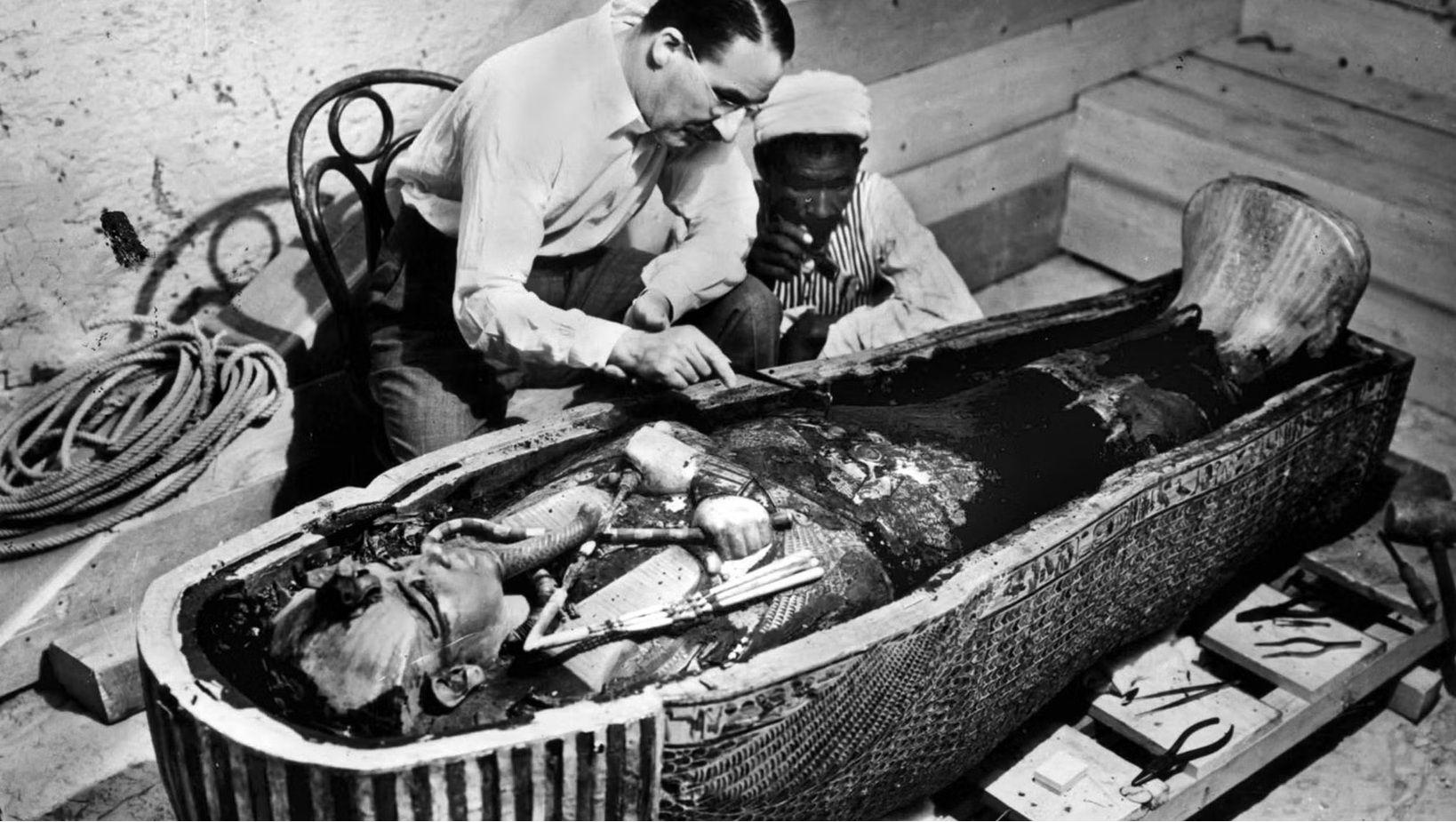
Passage 3 uses a transposition cipher, which relies on the positioning of given letters in order to properly spell out a message. The message is inspired by the words of Howard Carter, the archaeologist who opened King Tut’s tomb:

Slowly, desparatly slowly, the remains of passage debris that encumbered the lower part of the doorway was removed. With trembling hands I made a tiny breach in the upper left-hand corner. And then, widening the hole a little, I inserted the candle and peered in. The hot air escaping from the chamber caused the flame to flicker, but presently details of the room within emerged from the mist. x Can you see anything? q [Again, there’s an intentional misspelling with “desparatly.”]

Although some codebreakers believe the misspellings of “iqlusion,” “undergruund,” and “desparatly” are simply Sanborn’s crafty attempts at misdirection, others believe they are clues hinting at how to crack Passage 4, which is only 97 characters long.

Sanborn has even offered hints to help frustrated solvers in their efforts to unravel the mystery of Passage 4. In 2006, he revealed that letters 64 through 69 in the passage, NYPVTT, decrypt to “Berlin.”

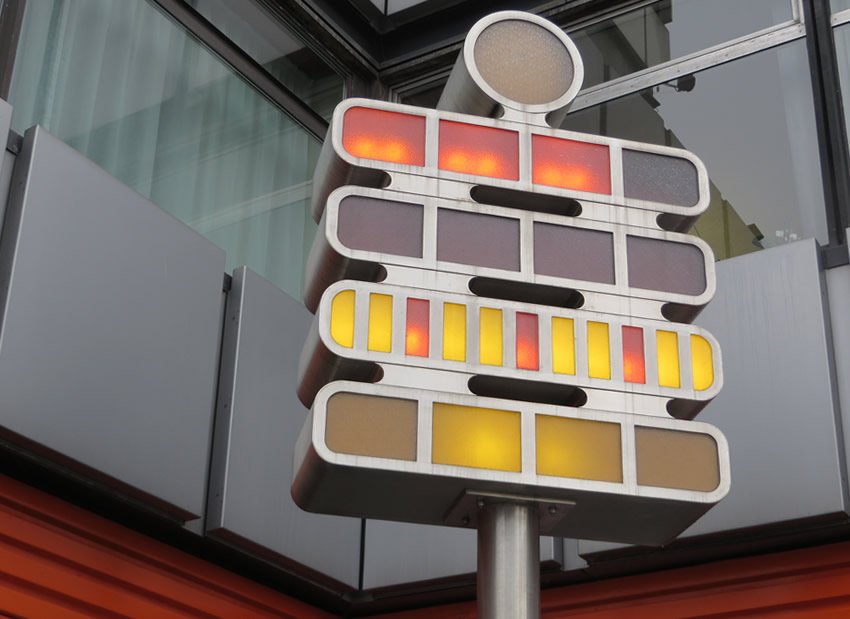
And in 2014, Sanborn revealed that letters 70 through 74, MZFPK, decrypt to “clock.” So the message has something to do with the Berlin Clock, although Sanborn has stated “there are several really interesting clocks in Berlin.”

Image of the Berlin Clock courtesy of Secret City Travel.com

Finally, in 2020, Sanborn revealed that letters 26 through 34, QQPRNGKSS, decrypt to “northeast.”

And yet, despite all these hints and several decades, K4 remains unsolved. (And to those hoping that AI will prove smarter than humans in this instance, that hasn’t been the case. Sanborn revealed to The New York Times that he has received solutions devised by ChatGPT and described them as “nothing short of fairly silly.”


So, if you win the auction, what do you get?

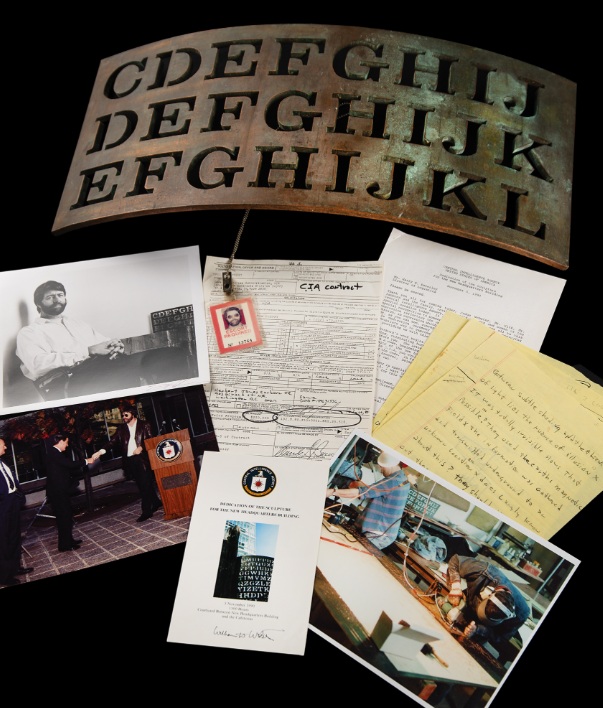
  • the handwritten K4 code, complete with a signed typed letter by Ed Scheidt, the CIA employee and cryptographer behind all four Kryptos codes
  • the copper model submitted to the CIA as a sample of the final piece
  • photographs relating to the creation of Kryptos
  • the original dedication pamphlet signed by late CIA director William Webster
  • copies of the coding charts used to encode Kryptos

And apparently, being the secretkeeper for Kryptos can be profitable. Sanborn grew weary of fielding dairy requests and queries for solutions, clues, and other data, and actually started charging a $50 fee for replies. He claims this fee has earned him $40,000 a year!

Sadly, Sanborn feels that he no longer has “the physical, mental or financial resources” to maintain his role as the keeper of K4’s secret, and wishes to hand that responsibility to another, which would allow him time to focus on other artistic endeavors.

And given that he’ll be turning 80 around the same time that the auction should be wrapping up, it’s fair to say he has more than earned this retirement from Kryptos.

The online auction of Kryptos by RR Auction begins on October 17 and closes on November 20 at 7 p.m. ET.

Will you be bidding, fellow puzzler? I fear my budget of — *checks wallet* — $29 is not going to get it done.

Let’s Talk Puzzle Codes!

Puzzly information is concealed in all sorts of ways. Rephrasings, anagrams, riddles, puns… these are all ways to challenge solvers by hiding information in plain sight.

But puzzle codes are one of the most prominent techniques… and one of the most ways to do so.

Codes in puzzles come in all shapes and sizes. And if you’re venturing beyond the confines of crossword-style puzzling, you’re bound to encounter a coded puzzle from time to time.

So, to better equip you for your puzzly sojourns in the future, today we’ll be breaking down a few common ways puzzles get encoded!


Letter Replacement

This is what you’ll see in your standard Cryptogram puzzle. Each letter in a quotation has been replaced with a different letter, and you need to notice utilize patterns, punctuation clues, and context in order to unravel what the letters in front of you truly represent.

For example:

Guvf vf n frperg zrffntr. Jryy, yrff frperg guna vg hfrq gb or, fvapr lbh’er nyzbfg svavfurq qrpbqvat vg.

Now, the order of letter replacement is usually randomized, but sometimes, a letter shift cipher has been applied. A letter shift cipher (like ROT13) means that there is a pattern to the letter replacement, rather than the randomness of traditional Cryptograms.

For example, A is actually M, B is actually N, and so on. Once you recognize the pattern, filling in the rest of the quote is easy.


Alphanumeric

After Letter Replacement, this is the most common style of coded puzzle. And like Letter Replacement codes, Alphanumeric puzzles can either be randomized or have a pattern.

For the former, each letter has been randomly assigned a number, and you need to figure out which number represents which letter. Our friends at Penny Dell Puzzles have a puzzle called Codewords that employs this code quite effectively:

By using a crossword-style or cryptic crossword-style grid, you can use letter repetition, placement, and frequency to figure out which letters go where.

But there are also alphanumeric puzzles that are not randomized. In these, each letter is replaced by the number that represents its order in the alphabet. A is 1, B is 2, all the way to Z is 26.

You can create a devious little puzzle by writing out a message, replacing each letter with its alphanumeric counterpart, and then jamming all the numbers together without spacing. Now the solver must figure out if that’s a 12 OR a 1 and a 2 next to each other.

For example:

25152118575202091477151541203154541621262612519225208919161591420

or, for a slightly easier version:

251521185 7520209147 715154 120 315454 1621262612519 225 208919 161591420

There are also puzzles that rely on older telephone keypads, where each digit represented several letters of the alphabet. 2 is ABC, 3 is DEF, all the way to 9 is WXYZ.

So each number in the sequence can represent three or four possible letters, and you need to puzzle out the message.


Coded Math

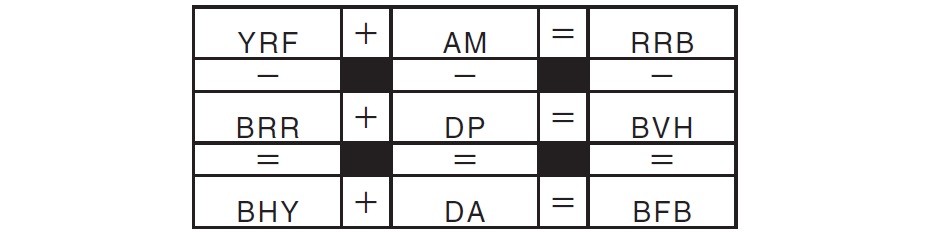
Letter Replacement can also work in reverse, where numbers in an equation have been replaced with letters, and you need to figure out which letter represents what number. Sometimes you’ll see this with a long-division problem (often employing 10 different letters to represent the digits 0-9).

Other times, it’s more of a logic puzzle where several equations are listed in sequence, like A + C = 10 and C – B = 4, and you must use the relationships provided to figure out what letters represent what numbers.

Another variation is combining Cryptogram-style letter replacement with logic puzzles. Imagine a 3×3 grid with equations overlapping, and all of the missing numbers are two, three, or four digits, but replaced with letters instead. This is called a Cross Arithmetic. Could you solve it?


Letter Blanks

Excluding letters from a word is also an effective way to create a puzzly code for someone.

There can be a pattern, like each word missing its center letter. (And then all the missing letters spell out a message).

Or perhaps there’s a pattern to the letters missing from several words (like a letter pair or a smaller word that’s been extracted from each incomplete word).

Or maybe there are multiple blanks in a word, and you need to figure out which letter fills every blank.


These are some of the codes and methods of obfuscation you’ll encounter in variety crosswords. How did you do? Did you unravel them all?

(Originally I was going to conclude this entry with Cryptic Crossword-style cluing, which is written in a coded language all its own, but I think that topic deserves a full blog post of its own.)

Happy puzzling, everyone!

The Founding Fathers of Cryptography?

It’s Veterans Day, and on an occasion dedicated to giving thanks to all those who served the United States honorably during either war or peacetime, it seemed appropriate to turn our puzzly gaze toward at American history for today’s post.

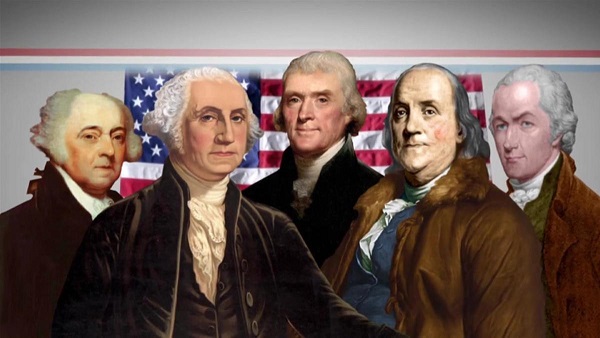
In fact, let’s look to America’s formative days. We’ve written in the past about George Washington and his creation of America’s first spy ring, and how heavily they relied on encryption and codebreaking techniques to protect America’s earliest secrets.

But as it turns out, Washington was far from the only Founding Father who was a strong proponent of cryptography.

Second president John Adams used a cipher to send letters to his wife Abigail when he was traveling. That cipher was designed by James Lovell, a member of the Continental Congress Committee on Foreign Affairs.

President #3 also relied heavily on ciphers and secret methods of communication. Thomas Jefferson created special ciphers specifically for Meriwether Lewis to use during the Lewis and Clark Expedition to protect the intrepid duo’s findings.

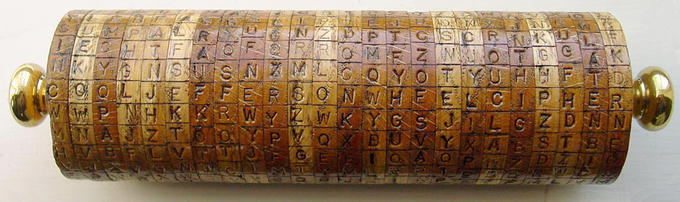
He even developed his own method for encryption. Some call it the wheel cypher, but it’s more commonly referred to as the Jefferson Disk.

These 36 wheels, threaded onto an iron spindle, allow the user to twist them until a message reads out. Each wheel has the letters of the alphabet in a random order.

So how did it work? Well, according to Monticello.org:

As an example, the sender of the message shown in the picture, “COOL JEFFERSON WHEEL CIPHER,” spells the message out and then looks to any other line of text – possibly the one directly above, which on this version of the cipher begins with the letter “N.” The sender then copies the rest of the letters from that line into the correspondence to spell out “NKYG NSUS NXML CQYO TYUH HFTD.”

The man who succeeded Jefferson as president, James Madison, employed encryption for both official documents — like letters between himself and members of the Continental Congress — and communication with other key figures. For instance, he sent a partially encrypted letter to Jefferson that described his plan to introduce a Bill of Rights.

Madison’s fellow contributor to the Federalist Papers, John Jay (later the first Chief Justice of the Supreme Court) always employed ciphers for diplomatic correspondence when traveling outside the US.

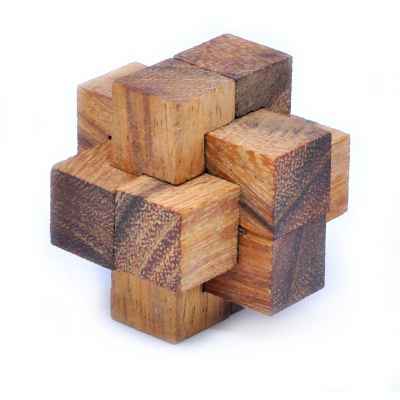
[This wooden puzzle is known as Franklin’s Kite.]

And as you might expect, the influential inventor, statesman, and polymath Benjamin Franklin had his hands in codecracking and cryptography as well. He not only created some of the ciphers employed by the Continental Congress, but he also published a book about encryption in the 1740s: George Fisher’s The American Instructor.

The Continental Congress, for their part, passed a resolution ordering ciphers to be used for all messages that couldn’t be safely transmitted otherwise.

In the end, as in the beginning, America doesn’t just love puzzles, it’s founded on puzzly principles.

[For more content involving American history and puzzles, check out our multi-part series on the history of the NSA, as well as the story of how a Tap Code and other puzzly spycraft techniques kept a soldier’s love story alive.]


dailypopwsicon

Treat yourself to some delightful deals on puzzles. You can find them on the Home Screen for Daily POP Crosswords and Daily POP Word Search! Check them out!

Thanks for visiting PuzzleNation Blog today! Be sure to sign up for our newsletter to stay up-to-date on everything PuzzleNation!

Puzzles and Games With a Sacred Touch?

In recent times, religion and the world of puzzles and games have crossed paths with sometimes surprising results.

The film adaptation of The Da Vinci Code, a fairly puzzle-centric thriller, was widely denounced by members of the Catholic Church, and there was similar resistance, though less vocal, against the sequel film, Angels & Demons.

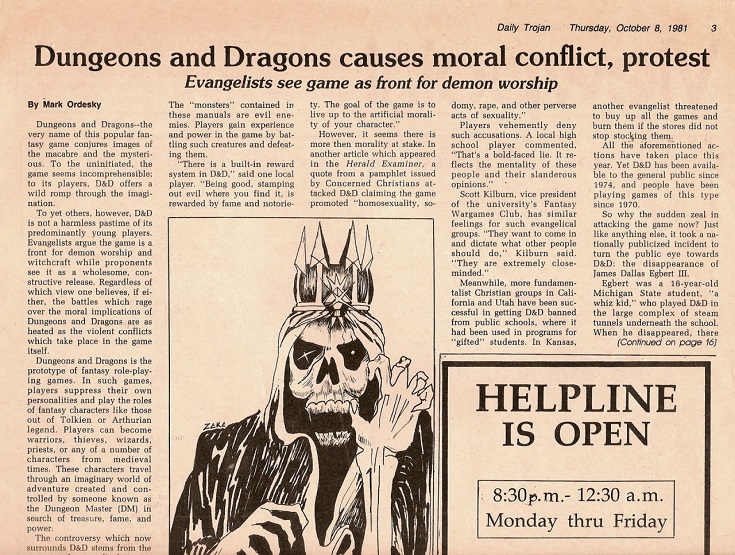
And, of course, in the 1980s, the roleplaying game Dungeons & Dragons was condemned as Satanic and dangerous to young minds.

I say that the above is strange because, for the most part, these seem to be anomalies or isolated incidents. There are numerous instances throughout history where puzzles and games were embraced by religion, even used as tools to teach aspects of religious beliefs.

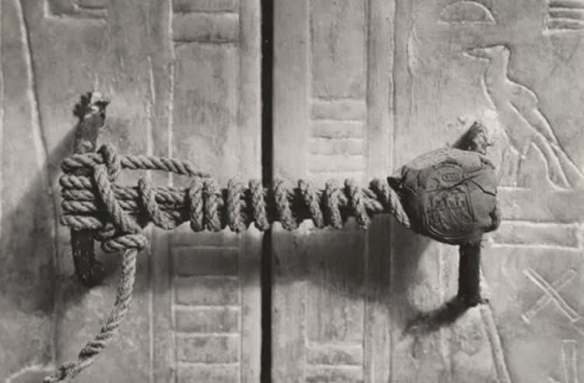
For instance, in ancient Egypt, we’ve seen evidence of puzzly techniques used not just to secure the tomb of Tutankhamun, but also to disguise the language and rituals employed by elite members of their society. Puzzles were entrusted to keep their secrets well beyond the grave.

the seal on king tut's tomb

Plus one of the most ancient games in the historical record, Senet, seems to have evolved from being an enjoyable pastime into a spiritual tool.

You see, some Senet boards have religious iconography on them, believed to symbolize the journey into the afterlife. So gameplay — or the inclusion of the gameboard itself among the belongings of the deceased — represented that journey and the quest to learn more about it.

Some online articles have taken to referring to Senet as “the Rosicrucian board game of death,” which is a harsh misinterpretation.

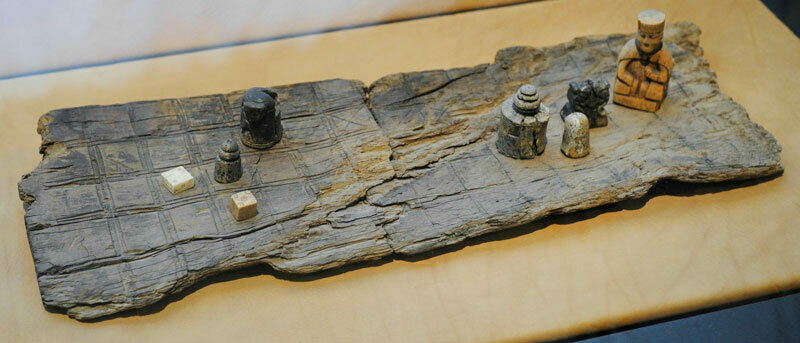
There was also an afterlife connection with games for the Vikings.

According to Mark Hall, a curator at Perth Museum and Art Gallery, there have been 36 burials where board games of some description have been found in the graves around Northern Europe.

These grave sites grant intriguing insight into how the Vikings viewed board games as a learning tool. It’s believed that including a board game among the effects of the deceased signaled not only their skill and status as a warrior, but their preparedness for the afterlife itself. Heck, their win-loss records were even recorded for posterity!

Palindromes were believed to work as magical shields that protected those wearing the talismans bearing such clever wordplay.

Heck, even the shape of dice were influenced by changing religious views. Early dice games gave very little consideration to the shape or evenness of dice, because rolls were believed to be guided by Fate or some greater outside force, so the shape didn’t matter.

As religious beliefs evolved away from gods and greater forces intervening in such things, the general spirit of fairness in dice began to prevail, and the shape, balance, and pip distribution of dice became much more standardized.

And as for the Catholic Church, I certainly didn’t mean to make it look like I was picking on them in the introduction, because there are positive associations between the church and the world of puzzles and games as well.

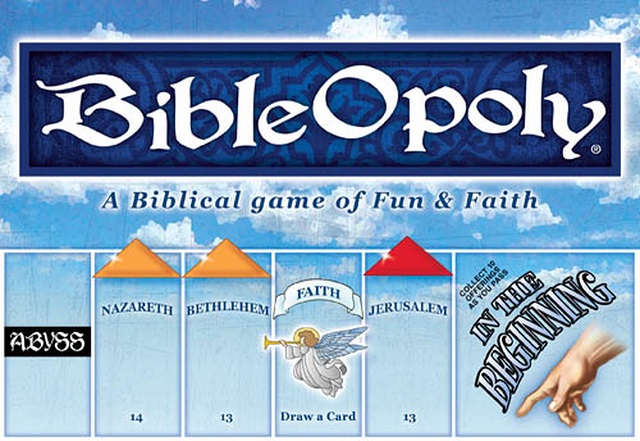
And no, I’m not just talking about lighthearted products like BibleOpoly or the cottage industry of family-friendly games like Bible editions of Outburst, Scattergories, Apples to Apples, Scrabble, and Taboo.

Chess boards and other game boards have been found in houses formerly used by the Knights Templar, for instance.

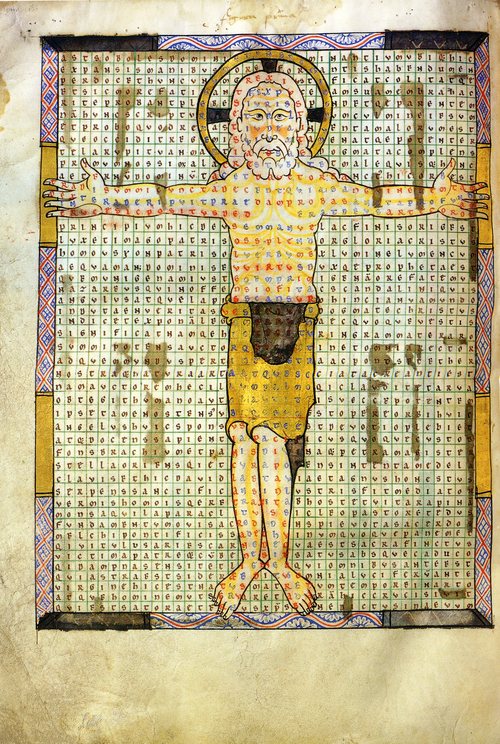
There’s also the puzzly art of carmina figurata, poems wherein either the entire body of the poem or select parts form a shape or pattern. These works originated as religious tributes, poems where letters were colored red to stand out from the regular black lettering in order to draw attention to or highlight a certain religious figure.

tumblr_m6a31vnnxo1qggdq1

[“De laudibus sanctae Crucis” by Oliverus.
Image courtesy of WTF Art History.]

There would be hidden words or messages concealed in the text, some speaking of the religious icons at the center of the piece in glowing terms.

Do you have any favorite puzzles and games that have an element of religion to them, fellow puzzlers and PuzzleNationers? Let us know in the comments section below. We’d love to hear from you!


dailypopwsicon

Halloween is almost here, and we have some spookily good deals for you to check out. You can find them on the Home Screen for Daily POP Crosswords and Daily POP Word Search! Check them out!

Thanks for visiting PuzzleNation Blog today! Be sure to sign up for our newsletter to stay up-to-date on everything PuzzleNation!

Spies, Crosswords, and Secret Messages!

secret message

There are loads of ways to hide secret messages in puzzles. The field of cryptography is built around it. Many meta puzzles have a special secret lurking inside their clever constructions. Heck, our friends at Penny Press even have an entire word seek called Secret Message.

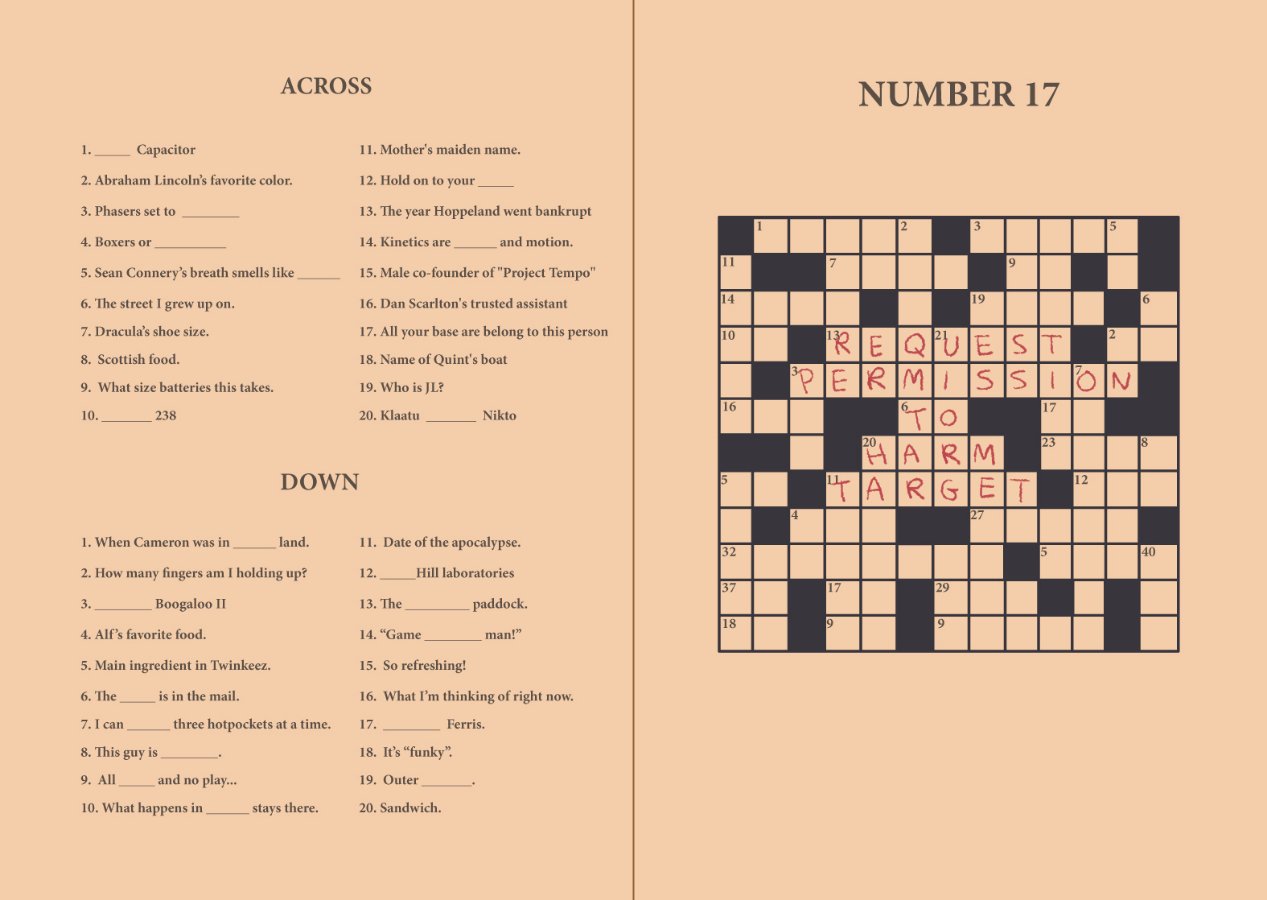
But have you ever noticed that there’s a strange fascination in pop culture with secret messages in crosswords?

No, I don’t mean constructors hiding quotations, poems, or word seeks in their crosswords, though those are impressive feats of cruciverbalism.

I’m talking about stories about actual secret messages concealed in crossword grids, meant to be hidden from even the most diligent solvers, only a special few possessing the keys to finding the hidden words.

Oh, believe me, it’s definitely a thing.

Look no further than the first Crossword Mysteries movie. The film opens with a murdered art gallery owner with a crossword in his pocket. And it turns out that a devilish criminal mastermind was submitting puzzles to Tess’s daily crossword that contained hidden instructions for robberies to be conducted that day. Diabolical!

You might laugh, but this is hardly the only time we’ve seen crime, secret messages, and crosswords combined. It was a plotline in the radio show The Adventures of Superman, and Lois Lane’s life once depended on Superman’s ability to solve a crossword puzzle.

There are any number of mystery novels, cozy and otherwise, that contain hidden messages in crosswords. Nero Blanc’s Anatomy of a Crossword and Corpus de Crossword come to mind, as do any number of murder mysteries where a strange message scribbled on a crossword grid turn out to be a pivotal clue to catch the killer.

And there’s an even more curious subset of this in pop culture: crosswords and spycraft.

I could give you a simple example, like Bernie Mac’s character in the Ocean’s 11 remake pretending to solve a crossword, but actually writing down key information about the casino for the upcoming heist.

But that’s not really a secret message IN a crossword. No, it’s more of a secret message ON a crossword, though it is a bit of decent spycraft.

CnwtMc9UMAAssmH

[From Spy vs. Guy.]

Let’s talk about spies and their crosswords, then.

In the TV show Burn Notice, former (and occasionally current) spy Michael Weston sometimes received hidden messages from his previous spy organization through the crossword, though we’re not given much info on how this is achieved.

In the James Bond prequel novel Double or Die, it’s actually the young Bond’s teacher who sneaks a secret message into a puzzle. He’s also a cryptic crossword editor, and he convinces his kidnappers to allow him to submit a crossword to the newspaper, because if he didn’t, it would let people know all was not well.

Naturally, the kidnappers didn’t spot the clues to his current location that the teacher had hidden in the puzzle. Bond, even in his youth, manages to do so with ease.

Rubicon-008

In the short-lived TV show Rubicon, crosswords are at the center of a fascinating unsolved mystery. An intelligence agent named Will finds out his mentor committed suicide after seeing a four-leaf clover.

He then finds a pattern across several crosswords that leads him to believe his mentor’s death is somehow connected to the pattern in the crosswords, and he tells his superior about it.

And soon after investigating it himself, Will’s superior is also found dead. Unfortunately, we never get a resolution for this story, but it certainly fits the bill.

So yes, the curious connection between secret messages and crosswords in pop culture is definitely a thing.

But did you know it also extends beyond fiction? Yup, I’ve got some real-world examples for you too.

Back in June of 1944, physics teacher and crossword constructor Leonard Dawe was questioned by authorities after several words coinciding with D-Day invasion plans appeared in London’s Daily Telegraph.

The words Omaha (codename for one of Normandy’s beaches), Utah (another Normandy beach codename), Overlord (the name for the plan to land at Normandy on June 6th), mulberry (nickname for a portable harbor built for D-Day), and Neptune (name for the naval portion of the invasion) all appeared in Daily Telegraph crosswords during the month preceding the D-Day landing.

So it was possible (though highly improbable) that Dawe was purposely trying to inform the enemy of Allied plans, and the powers that be acted accordingly. In the end, no definitive link could be found, and consensus is that Dawe either overheard these words himself or was told them by his students — possibly slipped by soldiers stationed nearby — and placed them into his grids unwittingly.

Yes, this was just a big misunderstanding. But sometimes, accusations like this have real-world consequences.

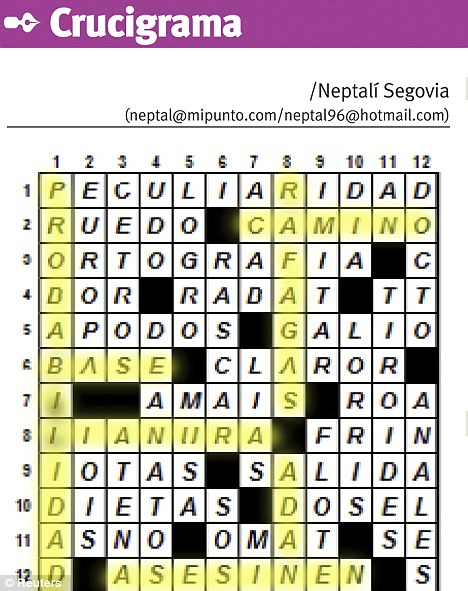
In Venezuela, a newspaper has been accused multiple times of hiding encrypted messages within their daily crossword puzzles in order to incite revolt against the government.

Another Venezuelan newspaper was accused of concealing messages ordering the assassination of a public official named Adan, the brother of President Hugo Chavez!

article-0-130C1EBE000005DC-570_468x591

Some of the answers considered suspicious in the grid included “Adan,” “asesinen” (meaning “kill”), and “rafaga” (which can mean either a burst of gunfire, or a gust of wind).

Apparently this confluence was considered enough to warrant a half-dozen members of the intelligence service visiting the newspaper’s editorial office.

Now, were these cases of genuine secret messages being passed through the crossword, or were these coincidental events that appeared credible because the crossword/secret message concept has been part of pop culture for decades?

I leave that question to you, fellow puzzlers.

Can you think of any examples of crosswords with secret messages in pop culture or intersections of crosswords and spycraft that weren’t mentioned here? Let us know in the comments section below! We’d love to hear from you.


dailypopwsicon

Well, summer’s over, but we still have deals galore for you to check out. You can find them on the Home Screen for Daily POP Crosswords and Daily POP Word Search! Check them out!

Thanks for visiting PuzzleNation Blog today! Be sure to sign up for our newsletter to stay up-to-date on everything PuzzleNation!