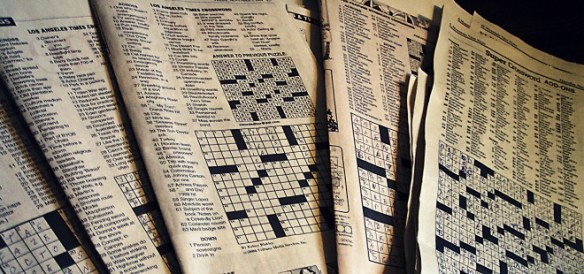
5 Questions with PuzzleNation Programmer Mike O’Neil

Welcome to 5 Questions, our recurring interview series where we reach out to puzzle constructors, game designers, writers, filmmakers, musicians, artists, and puzzle enthusiasts from all walks of life!

It’s all about exploring the vast and intriguing puzzle community by talking to those who make puzzles and those who enjoy them! (Click here to check out previous editions of 5 Questions!)

For the entire month of August, I’ll be introducing the PuzzleNation readership to many of the members of the PuzzleNation team! So every Thursday this month, you’ll meet a new name and voice responsible for bringing you the best puzzle apps on the market today!

And I’m excited to kick things off with Mike O’Neil as our latest 5 Questions interviewee!

Mike is part of our dynamite programming team, maintaining the high level of quality we know PuzzleNationers expect of us and helping push us into new puzzly arenas. A musician and long-time video-game fan as well, Mike is enthusiastic, sharp, and immensely capable, part of the well-oiled machine that makes PuzzleNation a brand to watch!

Mike was gracious enough to take some time out to talk to us, so without further ado, let’s get to the interview!


5 Questions with Mike O’Neil

1. How did you get started with puzzles and games?

I’ve been a video-game addict my whole life, so when I got to college I eventually decided to make them for a living. Puzzles and puzzle solving have always been a part of being a big-time gamer, so I’ve been puzzle solving since I got the gamer bug as a kid, though my favorite magazine-type puzzles are word searches.

2. Programming, puzzles, and music all demand a strong sense of balance and flow to create an immersive and productive experience. As a musician, does that ever influence your work in unexpected or insightful ways?

I would say that it’s more of the opposite, where programming has influenced my musicianship. The biggest common feature of all three is patience, so growing up solving puzzles was good training for practicing guitar.

Also, working on a piece of music can actually be like solving a puzzle because every person is different, so I often need to “solve the puzzle” to figure out exactly how I’m going to be able to pull off a particular riff/lick/lead/etc, which could be radically different from how the next person would do it.

3. What do you do in your off-time? What helps you relax or mentally recharge after a long week of puzzling?

My biggest off-time activities are video games and music, though those can all be a bit mentally challenging and not often the greatest unwinding activity. If things get really heavy I often do some urban hiking around NYC. It’s very stimulating and can last for hours (I once walked all 33 miles around the perimeter of Manhattan. My feet hated me for a week.)

4. What’s next for Mike O’Neil?

What’s next is working with the PN team to get more and more types of puzzle apps out there. Crosswords are great, but we have so much potential with our tools and team that the sky’s the limit. I’m looking forward to seeing what we come up with.

[Crosswords ARE great! Have you checked out the Penny Dell
Crosswords App for both iOS and Android devices? /shameless plug.]

5. If you could give the readers, writers, programmers, aspiring game designers, and puzzle fans in the audience one piece of advice, what would it be?

One piece of advice is to make sure that the solution you come up with for your current problem is the best one, not necessarily the fastest or most slick. When I was mentoring students back at the Electronic Arts Academy, my main goal was to make sure that they don’t start implementing solutions for simple tasks with the super fancy, super complicated-type things you do in school. A good general rule is to imagine someone has to take over your work the next day, so make sure it’s easily understandable.


A huge thank you to Mike for his time. I can’t imagine a better way to introduce a month of PuzzleNation-fueled interviews and content!

Thanks for visiting PuzzleNation Blog today! Be sure to sign up for our newsletter to stay up-to-date on everything PuzzleNation!

You can also share your pictures with us on Instagram, friend us on Facebook, check us out on TwitterPinterest, and Tumblr, and explore the always-expanding library of PuzzleNation apps and games on our website!

Lollapuzzoola 9 is near!

lpz9

Saturday, August 13, marks the ninth annual Lollapuzzoola!

The marvelous indie offspring of the American Crossword Puzzle Tournament, Lollapuzzoola is a favorite of both solvers and top constructors, all of whom descend upon New York City to enjoy what can only be described as “the best tournament held in New York on a Saturday in August.” (At least, that’s what they say on their website.)

The format is simple. Three divisions — Express (experienced solvers who have contended in or won tournaments before), Local (other solvers), and Pairs (allowing you to team up to solve) — pit their puzzly minds against clever clues and crafty constructors.

And for those who reach the top of mountain, “winners in each division are awarded prizes, which could range from a box of used pencils to a brand new car. So far, no one has ever won a car.

564470_572843946113519_105115358_n

But if you can’t make it to NYC that weekend, worry not! There’s an At-Home Division that will allow you to participate as if you were there! You’ll get your puzzles by email the day after the actual tournament for a very reasonable $12 fee!

It’s one of the highlights of the puzzle world each year, and I’m definitely looking forward to tackling the puzzles! They’re a diabolical treat each and every year! (For a full rundown of the event, check out this interview with Local Division winner and friend of the blog Patti Varol!)

Are you attending Lollapuzzoola or solving from home? Let me know! I’d love to hear from you!


Thanks for visiting PuzzleNation Blog today! Be sure to sign up for our newsletter to stay up-to-date on everything PuzzleNation!

You can also share your pictures with us on Instagram, friend us on Facebook, check us out on TwitterPinterest, and Tumblr, and explore the always-expanding library of PuzzleNation apps and games on our website!
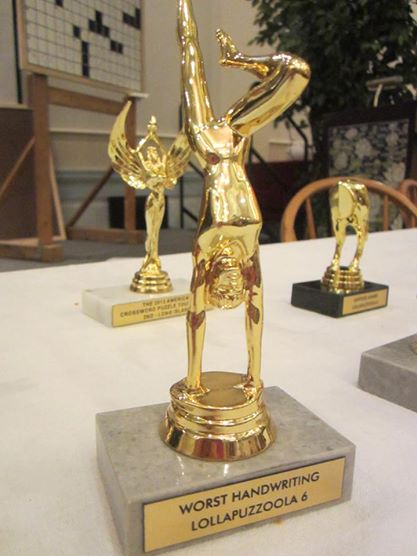
Puzzle Vandalism!

[Image courtesy of Milliande.com.]

It’s hard to know sometimes what qualifies as art.

Artists and entrepreneurs are constantly pushing the boundaries of visual and intellectual expression. Everything from paint and stone to light and shadow are used to realize artistic visions. Christo wraps buildings and calls it art.

That can make it tough for those who are less familiar with the fluid definition of art.

There was a famous incident back in May when a seventeen-year-old left his glasses on the floor of an art gallery and many patrons mistook them for an art installation.

This has only grown more complicated with the advent of interactive art pieces. Some works of art can only be viewed from a specific vantage point, while others actively engage patrons.

Recently a woman unintentionally vandalized a piece of art when she mistook it for part of an interactive exhibit.

And wouldn’t you know, that piece of art was based on a crossword puzzle.

[Image courtesy of Thoibao.today.]

The 91-year-old woman was visiting the Neues Museum in Nuremberg with a senior citizens group when she found the piece, “Reading-work-piece” by artist Arthur Koepcke, and began filling in the empty grid.

These days, you can understand her confusion and sympathize with her mistake. I mean, the exhibit did say “insert words,” after all. Those sound like instructions to me.

Plus the grid has remained incomplete since its creation in 1965. It’s about time somebody finished the puzzle.


Thanks for visiting PuzzleNation Blog today! Be sure to sign up for our newsletter to stay up-to-date on everything PuzzleNation!

You can also share your pictures with us on Instagram, friend us on Facebook, check us out on TwitterPinterest, and Tumblr, and explore the always-expanding library of PuzzleNation apps and games on our website!

5 Questions with Constructor and Editor Patti Varol!

Welcome to 5 Questions, our recurring interview series where we reach out to puzzle constructors, game designers, writers, filmmakers, musicians, artists, and puzzle enthusiasts from all walks of life!

It’s all about exploring the vast and intriguing puzzle community by talking to those who make puzzles and those who enjoy them! (Click here to check out previous editions of 5 Questions!)

And I’m excited to welcome Patti Varol as our latest 5 Questions interviewee!

profilepic

If you’ve solved crosswords anywhere other than the New York Times for the last few years, you’re bound to have encountered Patti Varol’s clever constructing and crafty cluing. A regular of The Washington Post and other outlets, Patti is a topnotch constructor and a crossword pro.

She’s also no stranger to PuzzleNation Blog, as she has previously contributed advice for constructing your own crosswords and shared her victory at Lollapuzzoola two years ago with the PuzzleNation audience.

Patti was gracious enough to take some time out to talk to us, so without further ado, let’s get to the interview!


5 Questions for Patti Varol

1. How did you get started with puzzles?

I solved all kinds of puzzles with my grandparents when I was a kid, and games were a big part of family time when I was growing up. A few years after I finished college, I answered an ad for an editorial job with the crossword/variety department at Penny Press — the puzzle test and the interviews for that position, and then taking that job, well, that changed my life. Suddenly, puzzles and games were something to study from the inside out, to take apart and put back together better, to make from scratch. And that was just as much fun as solving them…and I was getting paid to do it.

puzzlebooks_zpstzpevapx

2. You keep awfully busy when it comes to puzzles. Can you fill the PuzzleNation audience in on your various puzzle jobs and how they differ from each other?

I do! I’m Rich Norris’s assistant at the L.A. Times Crossword, which means that I write some of his correspondence (I let constructors know what Rich likes or doesn’t like about the puzzles they’ve sent him), and I pre-edit some of the daily puzzles. I also send out the monthly constructor schedule notices and do some of our testing and fact checking.

I’m also the editor of The Crosswords Club, which is a monthly publication with six Sunday-sized crosswords. The puzzles are made by some of the best constructors in the business, so they are as fun as they are challenging. Each monthly envelope also has an extra word game, and all of the puzzles have explanatory blurbs with some trivia and etymology. It’s a really neat product – there’s really nothing else like it on the market.

And I also do puzzle testing/proofreading for a few other venues, including some crossword tournaments and puzzle magazines. And I’m a puzzle constructor for the CrosSynergy puzzle syndicate; my crosswords appear in The Washington Post roughly once a month. I also construct puzzles for the LA Times and Crosswords Club occasionally, and I mentor new constructors who seek out my help.

Every venue I work for has a different style guide and different target audience, so it’s a job in itself to keep them all straight. All of these different puzzle jobs have made me a strong, confident editor and constructor. I love what I do, and I love being good at what I do. And I’m only good at what I do because I’ve had the privilege to work with and learn from the best.

aid1316594-728px-make-crossword-puzzles-step-10

[Image courtesy of Wikihow.com.]

3. What, in your estimation, makes for a great puzzle? What do you most enjoy — or most commonly avoid — when constructing your own? What do you think is the most common pitfall of constructors just starting out?

A great puzzle has a spark to it — you know right away that it’s something original, fresh, and special. You learn something new, or you see something familiar from a new angle. It’s that aha! moment, that pop. I’m being maddeningly vague here, I realize, but the elements of a great puzzle are elusive and subjective.

That same pop comes when constructing a puzzle, too. Getting a tough grid to come together cleanly, realizing that the right pieces are finally all there in the right order — that can be even more satisfying than solving someone else’s puzzle.

New constructors always seem to start off with more than they can handle: they try to make a Sunday puzzle (21x) before they’ve mastered the smaller daily format, or they try to do a low-word-count themeless before they’re fully comfortable with the 15x themed format. Or they try to cram too much theme in a grid.

Start small, aim big, and you’ll get better with every grid.

4. Between the Timothy Parker plagiarism scandal and the recent Slate article about insensitivity and tone-deafness in cluing in the New York Times crossword, accountability has been a major topic this year in the world of puzzles. As a gatekeeper to getting published yourself, what changes would you like to see made in order to bring crosswords into the 21st century?

Change is already underway, and it’s exciting, because crosswords just keep getting better and better. Just as language evolves — words and their meanings can be as fluid as they can be subjective — so, too, do the media and art forms that rely on language.

crossword1

[Image courtesy of HomeSchoolSuccess.com.]

The conversations about crosswords, online and offline, illustrate clearly that the crossword community is made up of some of the smartest, most language-sensitive, funniest people you’ll ever meet. We’re in love with our craft, and sometimes we take ourselves and our work too seriously, which is what happens when you’re passionate about what you do. But it’s so important to remember that puzzles are entertainment, a happy diversion, and if we use language incorrectly or insensitively, we’re not providing that diversion. We have to take our fun very seriously!

When we’re polishing a puzzle, crossword editors have a very specific audience in mind — we know our solvers because we listen to them and because we’re solvers ourselves. Because of this larger, ongoing conversation, we know that our solving audience is bigger and more diverse than ever.

This presents an interesting challenge: how do you make every crossword accessible and fun for every solver, regardless of race, gender, or age? Maybe not every clue and every entry will resonate with every single solver, but as long as I’m not actively alienating a solver, and as long as I’m stretching, testing, and entertaining most of my solvers, I’m doing my job.

And there are so many crosswords available now! In addition to the newspaper dailies, there are paper subscription services like The Crosswords Club, plus email/blog subscriptions by so many talented constructors, and more puzzle books and magazines available on newsstands than ever before.

We’ll always have good, old-fashioned puzzles, but now we also have lively, fresh puzzles with more current pop-culture references. This, too, is what happens when you’re passionate about what you do: your art naturally reflects and includes the community it is a part of.

5. If you could give the readers, writers, aspiring constructors, and puzzle fans in the audience one piece of advice, what would it be?

Solve all the puzzles. All of them. Even the puzzles that, at first glance, look like the kind you don’t like, solve them. And if you don’t know the answers, look them up. There’s no such thing as cheating at a puzzle — it’s all simply research that makes you better at puzzles.

The more you look up, the more you will learn and remember for the next puzzle you solve. And if you want to learn how to make puzzles, or to get better at making puzzles, nothing will teach you more about how a puzzle works than getting stuck — and then unstuck — while solving one.


A huge thank you to Patti for her time. Be sure to check out The Crosswords Club, and follow her on Twitter for baseball tweets and updates on her latest projects! (Her website is currently under construction.) I cannot wait to see what she has in store for us next!

Thanks for visiting PuzzleNation Blog today! Be sure to sign up for our newsletter to stay up-to-date on everything PuzzleNation!

You can also share your pictures with us on Instagram, friend us on Facebook, check us out on TwitterPinterest, and Tumblr, and explore the always-expanding library of PuzzleNation apps and games on our website!

Crosswords: Good for Any Apocalypse!

Crosswords. They’re great to have on hand when you’re bored, when you’re looking for a challenge, when you need a diversion, or when the end is near and doomsday approacheth.

Wait, what was that last one?

Yes, my fellow puzzlers and PuzzleNationers, as it turns out, crosswords have recently gained attention as a resource for doomsday preppers and other folks with a vested interest in doing their best to prepare for the worst.

[Image courtesy of Trinity International.]

In this article from The Examiner, the many pluses of crosswords are discussed:

Crossword puzzles also help younger family members and older family members to develop or maintain good spelling. Misspelled words in written communications can create confusion during an emergency.

In addition, crossword puzzles can help to instill a “can do” attitude in family members. When first beginning a crossword puzzle, for example, few people will know all or even most of the words needed. As crossword puzzle users progress into the crossword puzzle, however, the “across” words that they know will help them to guess the correct “down” words, and vice versa.

It goes on to discuss crosswords encouraging family interaction, the subgenre of Bible crosswords, the fact that crosswords don’t require batteries or electricity, that they’re affordable, and that they make great “hurry up and wait” time fillers. (Plus, they don’t take up much space in a bug-out bag!)

But what’s most intriguing about this article is that it implies that crosswords have both short-term and long-term value for preppers.

After all, if you’re a doomsday prepper, you need to think long term. We could be talking about a complete breakdown of society here. Since crosswords are not only strong language-building and vocabulary-building tools, but they’re also chronicles of knowledge both general and trivial, they have long-term value to a society in flux or rebuilding itself.

And based on my own stockpile of puzzle books, I’m ready for the next three or four doomsdays.

[The Examiner article was brought to my attention by The Guardian crossword blog.]


Thanks for visiting PuzzleNation Blog today! Be sure to sign up for our newsletter to stay up-to-date on everything PuzzleNation!

You can also share your pictures with us on Instagram, friend us on Facebook, check us out on TwitterPinterest, and Tumblr, and explore the always-expanding library of PuzzleNation apps and games on our website!

Puzzle Culture: Tone-Deaf Cluing?

The latest comic on Hayley Gold’s wonderful webpage Across and Down brought an article on Slate to my attention, and I wanted to share my thoughts on the subject.

The article by Ruth Graham was entitled “Why Is the New York Times Crossword So Clueless About Race and Gender?” and the centerpiece of the article was last week’s Tuesday puzzle, particularly the 31-Down clue “Decidedly non-feminist women’s group” for HAREM.

Ick.

HAREM is a troublesome word to clue as it is, one of those filler words that makes crosswords feel so behind-the-times, like PAGAN (which is always clued like “heathen” instead of as someone non-aligned with the bigger religions).

[A crossword that looks as old-timey as modern ones sometimes feel…]

Even the clues that pass for innocuous when it comes to HAREM, like “Sultan’s bevy of beauties,” are a little unpleasant, as if some tuxedo-clad goon is describing the contestants for Miss America, another antiquated practice that should go by the wayside.

But I’m getting off track here.

Graham’s point was about women and people of color being poorly treated by insensitive, thoughtless cluing, and she clearly did her homework while commenting on incidents in the past:

“Hateful” and “awful” may seem a bit harsh for what reads like a lame attempt at cheekiness. But the clue is certainly tone-deaf. And it’s not the first time a puzzle’s un-PC cluelessness has annoyed people. In 2012, the answer ILLEGAL was clued with: “One caught by the border patrol.” The offensive use of illegal as a noun set off a brouhaha that made its way to Univision.

In 2013, a national puzzle syndicate apologized for using the clue “Shylock” for the answer JEW. And in November, Shortz issued a mea culpa for the clue “Exasperated comment from a feminist.” Answer: MEN — presumably with an invisible exclamation point and flying sweat out of a Cathy comic.

[Image courtesy of TheGloss.com.]

I’m surprised she left out the granddaddy of them all when it comes to crossword insensitivity: the June 6, 2008 crossword that featured ETHNIC CLEANSING as 11-Down. (Special thanks to Eric Berlin’s website and Rex Parker’s blog for helping me track down the exact date on that one.)

She went on to discuss the dearth of women and people of color in puzzle constructing — something that is slowly changing, thankfully — as well as the tendency to only bring black culture into crosswords with “homies” and “thugs” in order to clue words like HOOD and GANGSTA, but there was one style of cluing that I feel should also be discussed in the same light.

You’ll see foreign words often clued with the English equivalent, and then some indicator of a foreign place. “One, in Seville” for UNO, or “Sea, in Paris” for MER. That’s all well and good.

[Image courtesy of Tumblr.]

But I’ve always been a little uncomfortable with clues like “June, to Juan” or “Left, to Pablo” that are meant to follow the same format. Picking names that are stereotypically associated with a given culture or ethnicity may not be as overtly hostile as cluing “Gangsta rap characters” as THUGS, but it’s certainly not MUCH better.

And we should do better. Crosswords are a cultural microcosm, representing the commonalities and peculiarities of our language in a given time and place. They represent our trivia, our understanding, our cleverness, our humor, and, yes, sometimes our shortcomings.

But if each crossword is a tiny time capsule, we should try our damnedest to have it represent the best of us.


Thanks for visiting PuzzleNation Blog today! Be sure to sign up for our newsletter to stay up-to-date on everything PuzzleNation!

You can also share your pictures with us on Instagram, friend us on Facebook, check us out on TwitterPinterest, and Tumblr, and explore the always-expanding library of PuzzleNation apps and games on our website!