Answers to the Punny Costume Challenge!

Halloween has come and gone, but the creativity and the glorious puns remain.

Before we get into the answers to our latest edition of the Punderful Halloween Costume Game, I want to share a few crossword-themed costumes from over the weekend that we were shared online.

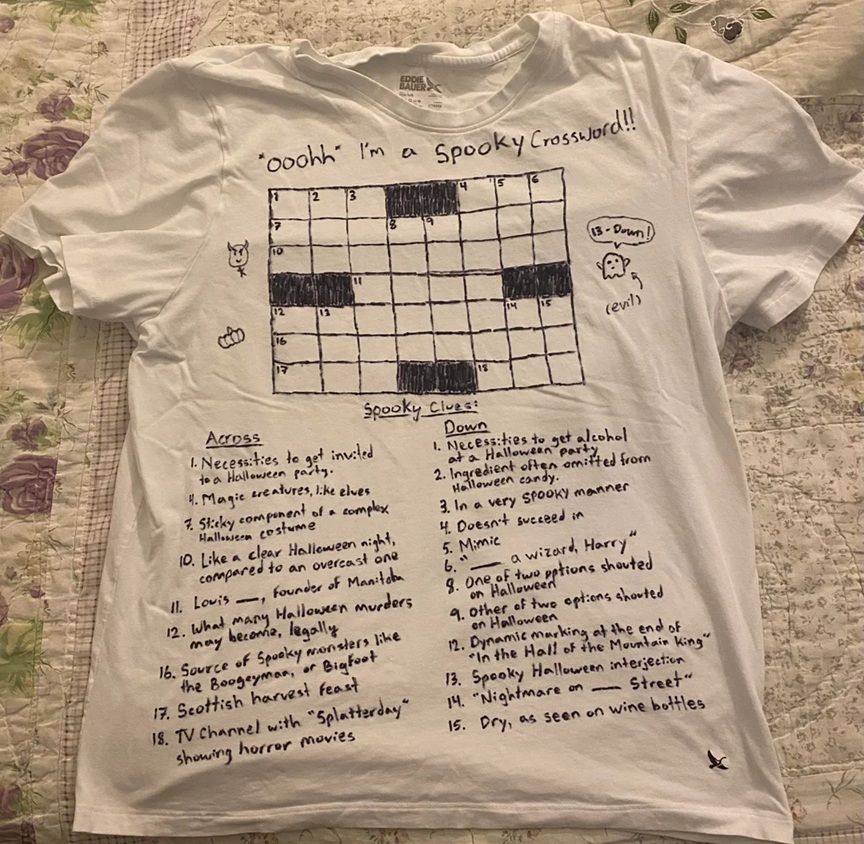
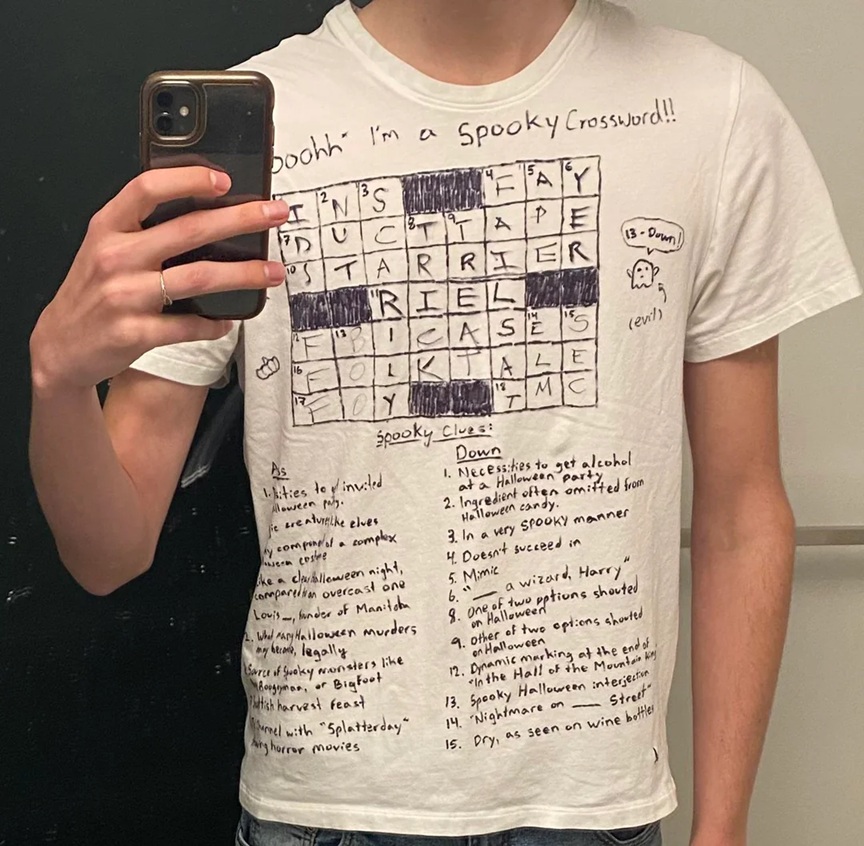
The first was this spooky crossword t-shirt, which solvers filled out at the party!

And it featured lots of Halloween vocabulary, like BOO, TRICK, TREAT, and SCARILY, as well as seasonal cluing! Great job!

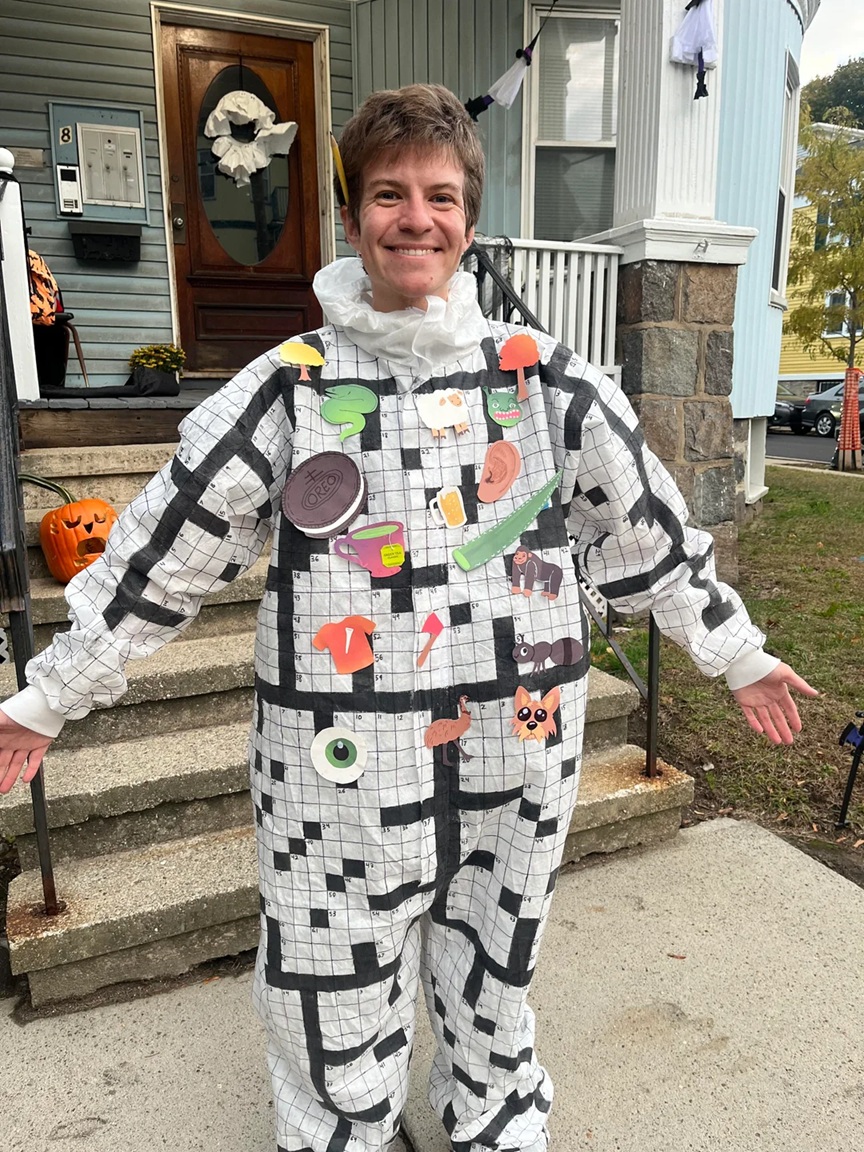
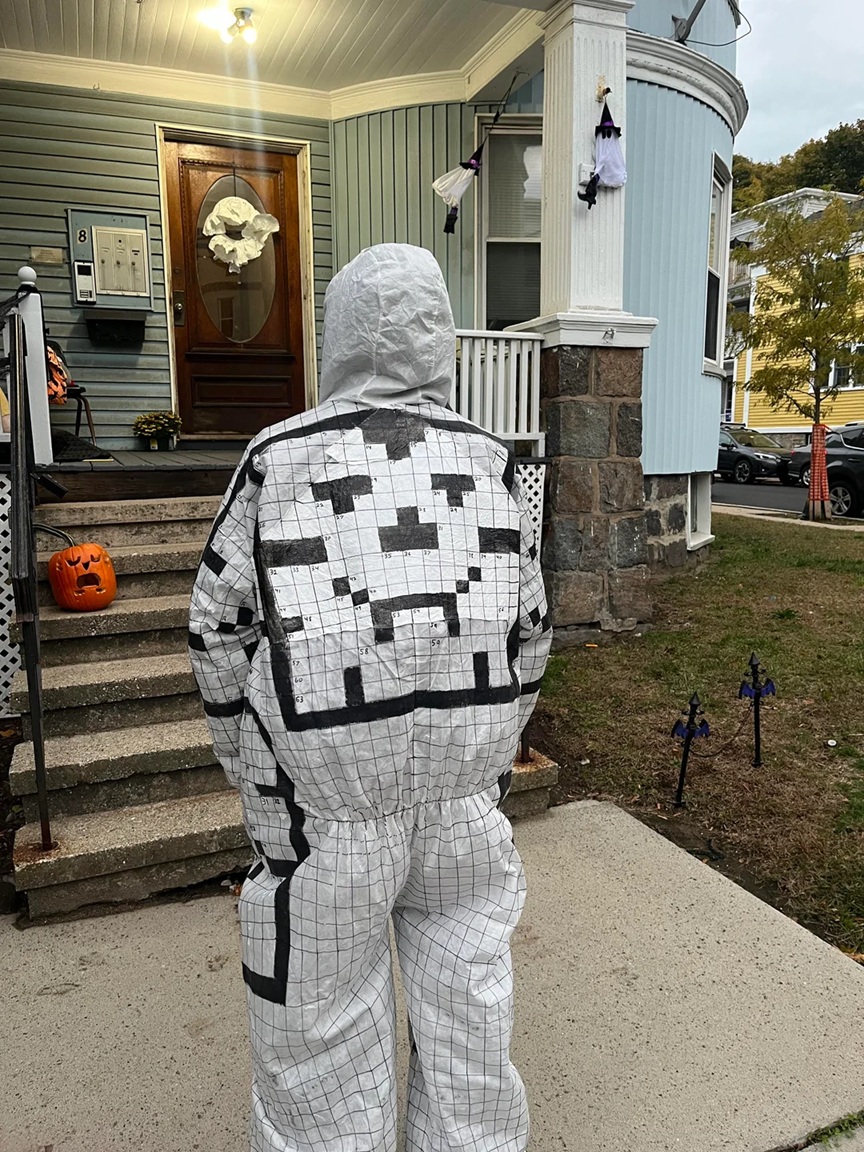
The second costume was even more elaborate:

They went as common crossword answers! This jumpsuit made of Halloween grids is loaded with crosswordese and familiar vocabulary in picture form. Can you name them all?

So fun to see people getting into the Halloween spirit in a puzzly way. Nicely done, both of you!

Now let’s check out some other creative costumers as we reveal the punny answers to last week’s game!


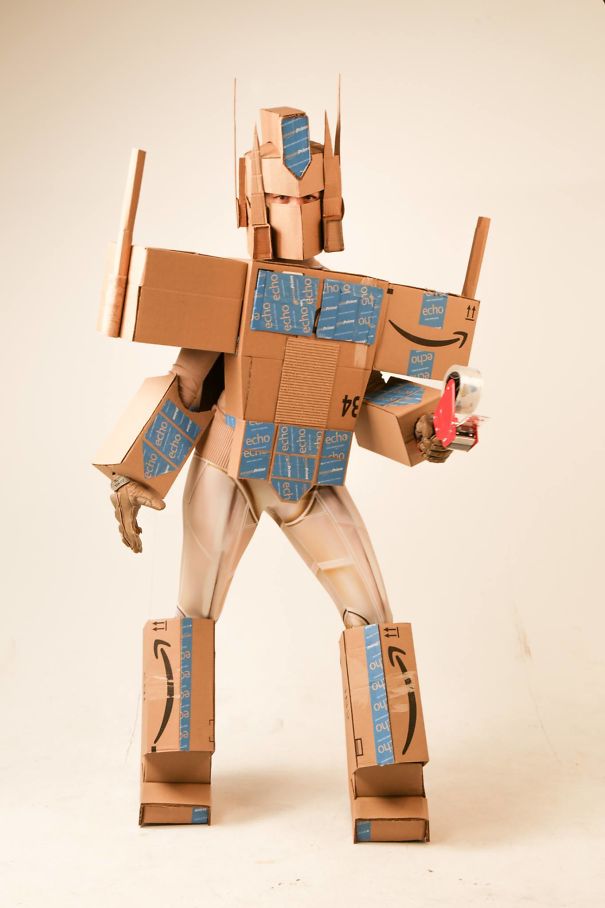
#1

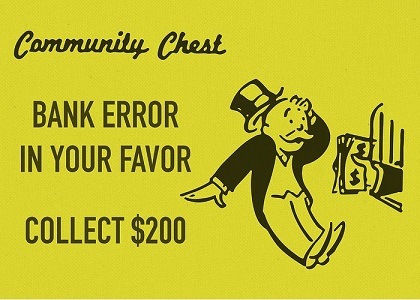
It’s Amazon Prime! (Optimus Prime + Amazon)

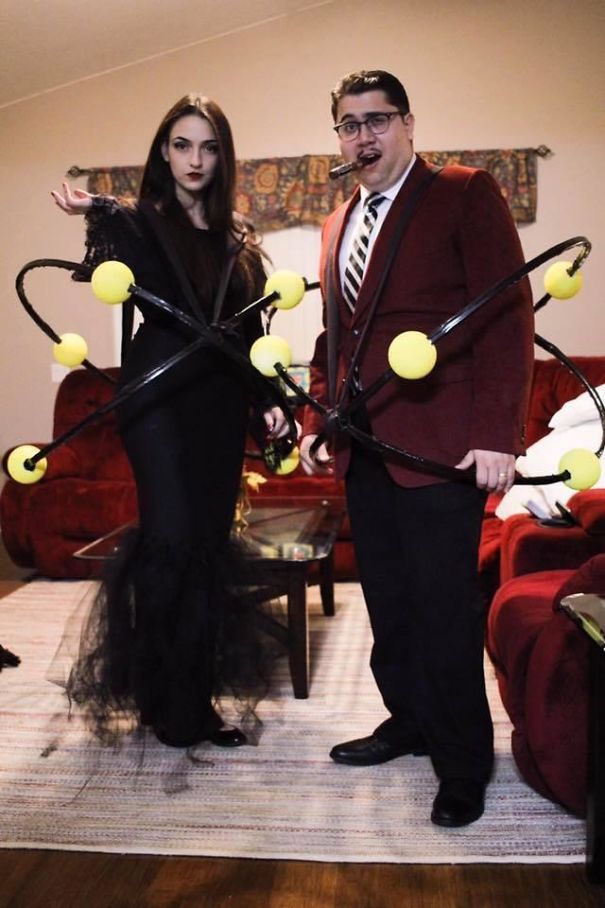
#2

It’s the Atoms Family!

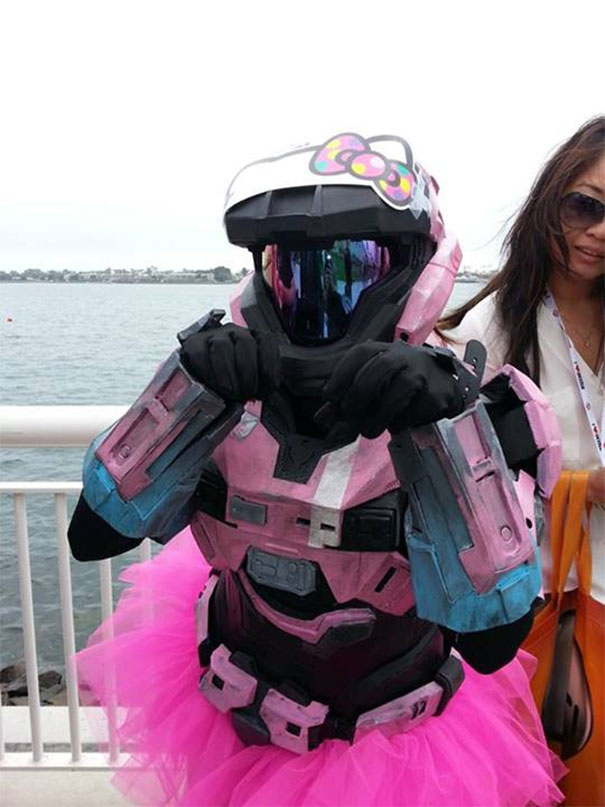
#3

It’s Halo Kitty! (Hello Kitty + Halo)

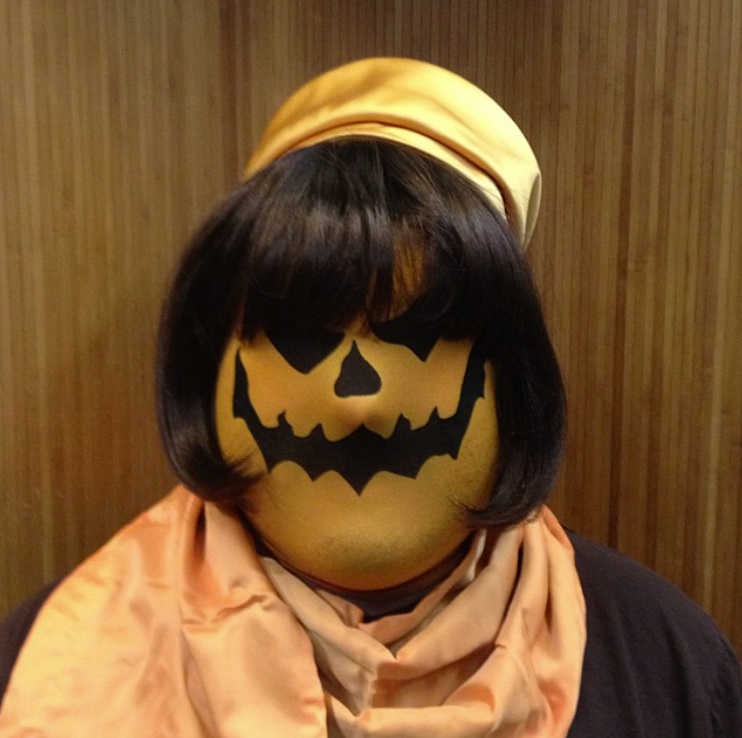
#4

It’s Jackie-O-Lantern! (Jack-o’-lantern + Jackie O)

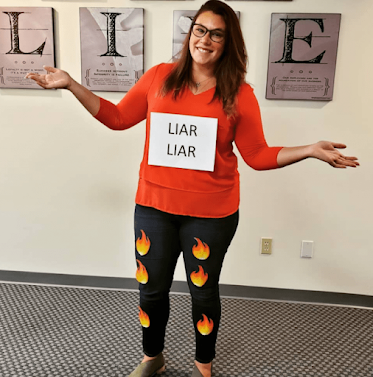
#5

Liar, Liar, Pants on Fire!

#6

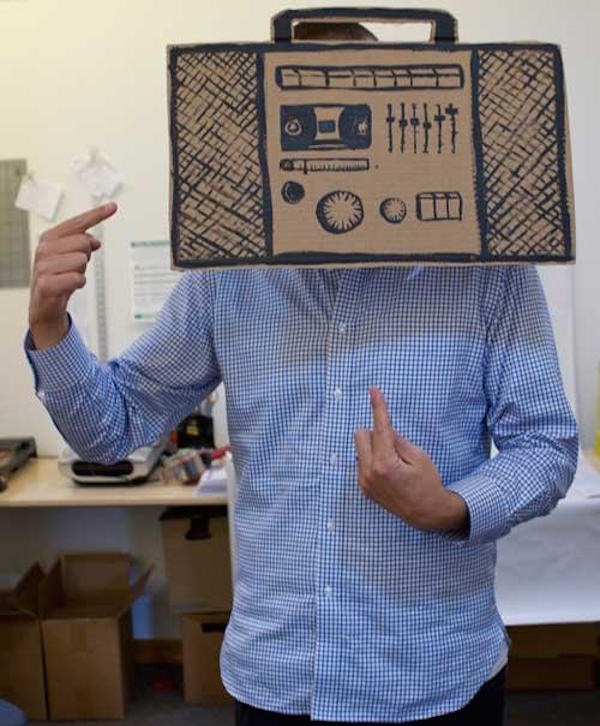
She’s a web server!

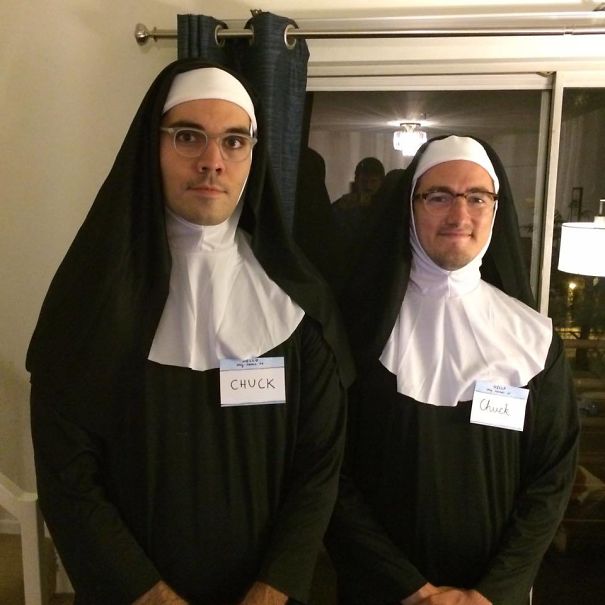
#7

They’re a pair of nun-chucks!

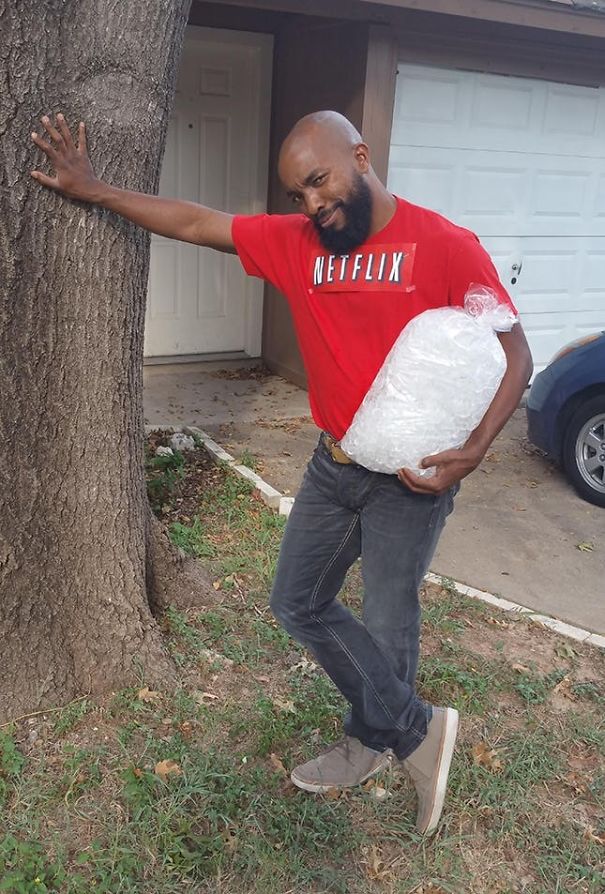
#8

It’s Netflix and chill!

#9

He’s Radiohead!

#10

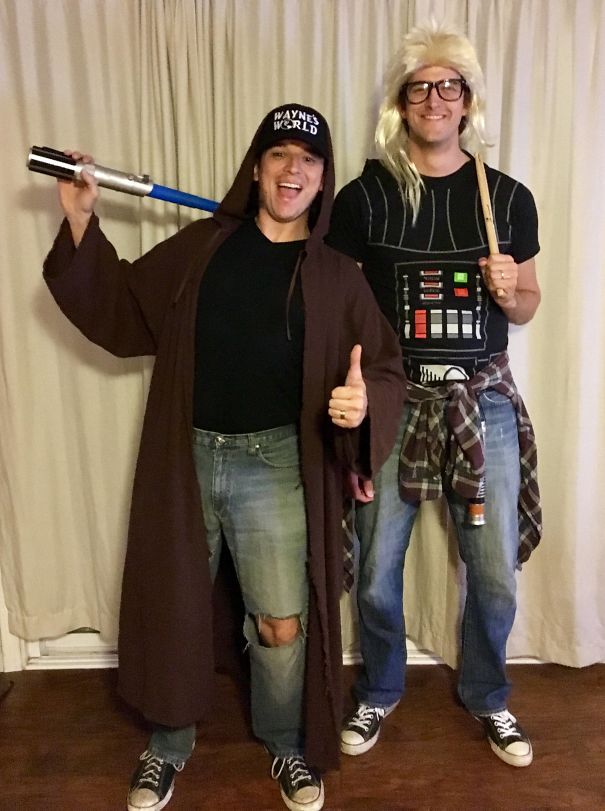
It’s Obi-Wayne Kenobi and Garth Vader!


How many did you get? Have you seen any great punny costumes we missed? Let us know in the comments section below. We’d love to hear from you!

The Crosswordese Champion?

Crosswordese is an omnipresent part of crossword discussion online.

It’s a scourge! It’s annoying! It ruins the solving experience! Can’t constructors just somehow avoid these particular three- and four-letter combinations, no matter how convenient or crucial they are to the grid?!

Rarely a week goes by without a Reddit post dedicated to the subject or a prominent complaint about some aspect of grid fill in one of the blogs/outlets dedicated to covering the daily crosswords.

And it’s understandable. Whether it’s yet another directional clue or a team’s abbreviation on a scoreboard, some entries just irk people. It raises their ire.

Oh no! The crosswordese is slipping into my everyday vernacular!

Quick, summon some longer vocabulary that’s not conducive to crosswording. Gumption. Hurly-burly. Syzygy. Defenestration.

Phew! That’s better. Now where was I?

Right, crosswordese.

I was pondering the plague of crosswordese, and it occurred to me that there’s probably one particular source that has contributed more crosswordese than any other.

But what could it be?

There’s the music industry, of course. There are loads of musicians common to crosswords: ARIE, ENO, SIA, ARLO, ENYA, DRE, ETTA, ELLA.

The same thing goes for celebs. UMA, ANA, ESAI, INA.

The sports world has its own infamous crosswordese as well: ORR, OTT, PELE, ELS, ITO, ALOU, AROD, ASHE, ILIE, SOSA, YAO, ISAO AOKI.

But those are huge swathes of pop culture. Is there a single pop culture property that has helped (or hindered, according to critics) crosswords the most?

There are a few that come to mind.

Peter Pan offers not just PAN, but SMEE, HOOK, TINK, and NANA.

The Beatles gave us ONO, STARR, and SGT (for Pepper).

Lord of the Rings is certainly worth mentioning, adding ORC, ENT, and LOTR.

Game of Thrones was ubiquitous at one point, helpfully resurrecting OONA and adding ARYA (and to a lesser extent BRON, SANSA, HODOR, and CERSEI).

Then there are some serious heavy-hitters.

The Simpsons has NED, MOE, APU, OTTO, EDNA, and STU (of the Disco variety).

On the sci-fi side, Star Trek offers WORF, TROI, LEVAR, LUC (as in Jean-__), and options for USS. Star Wars is handy as well, with ARTOO, REY, EWOK, POE, HAN, and LEIA.

Not to be outdone, M*A*S*H has plenty to offer: SWIT, ALAN ALDA, FARR, RADAR, and of course NEHI.

I considered awarding the Crosswordese Crown to one of the franchises above, but it occurred to me that I might have to look back a little farther to find the Crosswordese Champion.

Okay, a lot farther.

Some might take issue with me calling the Bible part of pop culture, but there’s no denying its influence in crosswords: LEAH, CAIN, ABLE, ADAM, EVE, ESAU, NOAH, ENOS, EDEN…

That’s a pretty impressive list of crossword regulars.

And yet…

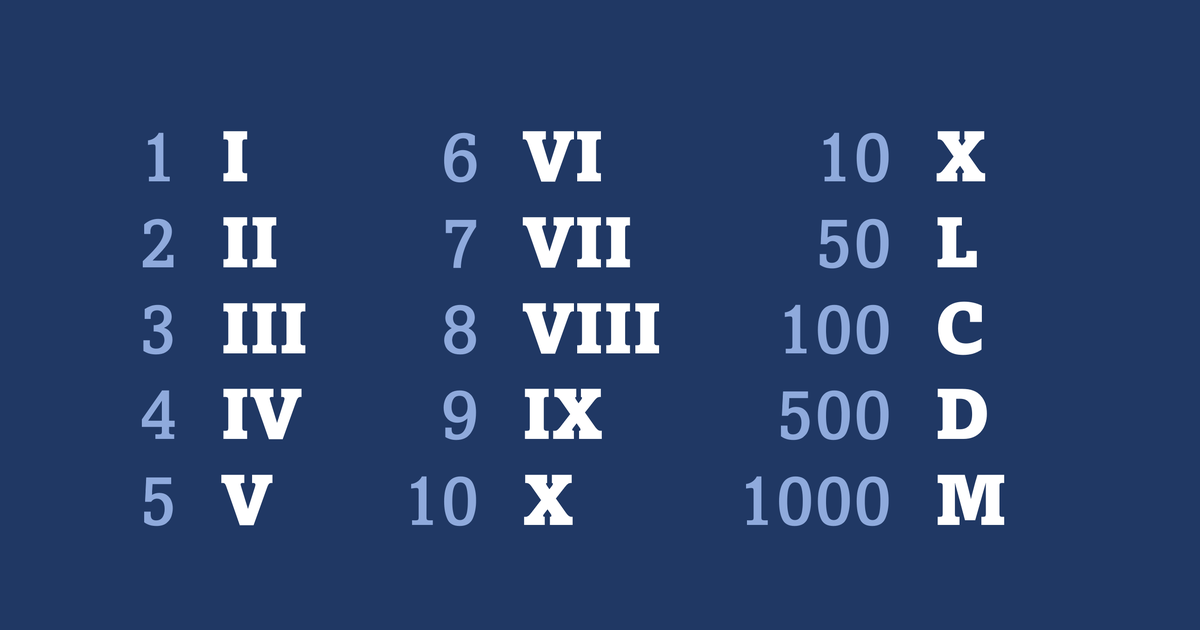
My gut says I might have to give credit to Roman Numerals as a whole. I mean, has any single cultural/pop cultural entity saved more cruciverbalists who’ve constructed themselves into a corner?

And has ANY solver cheered or celebrated when seeing a clue featuring a math equation AND Roman Numerals?

The balance of crosswordese gibberish and solver disinterest just might tip the scales here.

What do you think, fellow puzzlers? Is it the Bible, Roman Numerals, or another source that I missed? Let me know in the comments section below!

How Outdated Is Too Outdated in Crosswords?

One of the biggest complaints levied at crosswords in general involves the vocabulary often employed to fill the grid.

Whether you call it crosswordese, obscure trivia, outdated vocabulary, or intentional gatekeeping through language, it’s a problem some solvers never overcome, contributing to a negative, exclusionary reputation for crosswords.

Let’s talk about the two extremes first. I genuinely believe that there’s no intentional gatekeeping in crosswords. There are ongoing efforts to include more women, more voices of color, and more LGBTQIA+ creators in construction, and even constructing equipment is becoming more affordable through efforts like Crossworthy Construct.

But not knowing common crossword parlance is a barrier to enjoying crosswords.

There is work to put in for new solvers to get up to speed in crosswords. Those common crossword words and names that we take for granted — ETUI, ALEE, OLIO, ARIA, ICER, and more — represent the combined breadth and history of grid construction in crosswords. Those are the words you learn as part of your process to become a better solver, building a personal lexicon of crosswordese.

So where is the line? When does something pass from “charmingly difficult crosswordese” to “off-putting irrelevancy”?

In essence, how obscure is too obscure? How long can an old clue/entry linger without feeling outdated or exclusionary to new solvers?

It’s a good question, one that’s not not so easy to answer.

How long do we refer to “vamp” THEDA BARA, when her heyday was farther and farther back with every passing day?

How long do we continue to reference the Aral Sea, considering that there practically is no Aral Sea anymore? It’s mostly the Aralkum Desert now.

When it becomes part of history, is it acceptable? After all, calling Tokyo “Edo” or referring to Iran as “Persia, once” happens all the time.

Obviously, outdated terminology or obscure words aren’t as big an issue in crosswords as genuinely exclusionary and offensive entries, but it’s still a topic worth discussing, because it prevents the community from growing.

New entries, fresh entries, entries that speak to other members of the population… they have incredible value. Seeing yourself and your culture, your heroes, your history, your slang represented in crosswords builds a bond between you and the art of puzzling itself.

I’m sure outdated references and obscurities will never truly go away. Some of those letter combinations are just too valuable to constructors.

But it will be interesting to see how crosswordese and those potentially gatekeeping words change and evolve as we press forward.

Maybe in 30 or 40 years, “crosswordese” as a whole will feel more inclusive. One can only hope.


Thanks for visiting PuzzleNation Blog today! Be sure to sign up for our newsletter to stay up-to-date on everything PuzzleNation!

You can also share your pictures with us on Instagram, friend us on Facebook, check us out on TwitterPinterest, and Tumblr, and explore the always-expanding library of PuzzleNation apps and games on our website!

5 Questions for Crossword Constructor Chez Knox!

Welcome to 5 Questions, our recurring interview series where we reach out to puzzle constructors, game designers, writers, filmmakers, musicians, artists, and puzzle enthusiasts from all walks of life!

This feature is all about exploring the vast and intriguing puzzle community by talking to those who make puzzles and those who enjoy them.

And this marks the fifth edition of our series of interviews where we turn our eyes to the future of crosswords. Instead of interviewing established talents in the field, I’ve been reaching out to new and up-and-coming constructors and asking them to share their experiences as a nascent cruciverbalist.

And we’re excited to welcome Chez Knox as our latest 5 Questions interviewee!

knox

It doesn’t matter if they’re squares or hexagons; if you’re talking grids of repeated shapes, Chez Knox has you covered.

Her debut crossword puzzle will be published by The Inkubator later this year, so you know her skills with squares are topnotch. And as for the hexagons, she recently contributed the Alabama hexagon to a crowd-sharing effort to complete a 50-states quilt. The national quilt museum even had exhibition space reserved for the quilt before COVID complications cancelled the exhibit.

And now, fellow quilting/sewing enthusiast Shannon Downey is taking this Internet-united work of quilt creativity around the country to share the power of art and craftivism, thanks to creative folks like Chez.

Chez was gracious enough to take some time out to talk to us, so without further ado, let’s get to the interview!


5 Questions for Chez Knox

1. How did you get started with puzzles?

The Sunday newspaper was a bit of a ritual around my house growing up. My dad and I always read the comics and did the word puzzles together.

2. As you start to interact with the puzzle community at large, what have you learned along the way? What has been the most surprising part of the process for you?

Everyone genuinely wants to help a constructor succeed. I think I’ve been most surprised at the size of the cruciverbalist community – there are a lot of people out there into this kind of work!

What, in your estimation, makes for a great puzzle?

A great puzzle has a very clever theme connecting dots I’ve never before connected.

A good clue gives me so much joy! Lately I like finding puzzles with a well-executed clue echo. There’s a hint of nuance to this technique that makes me smile. (A clue echo is when the same clue is used twice in a puzzle. It is usually one word or a very short phrase. The answers contrast each other but connect through the clue.)

One example might be: 2D and 34A may both be clued as “Green” and the answers might be ENVIOUS and UNSEASONED.

What do you most enjoy — or try hardest to avoid — when constructing your own?

I try to avoid crosswordese – common fillers like ENO, OLIO, EKE, etc. But sometimes they are little words that sneak into a grid fill so that the sanity of the constructor is saved.

adventureImage-image-1512060253232-superJumbo

3. Do you have any favorite crossword themes or clues, either your own or those crafted by others? Who inspires you as a constructor?

My favorite themes are ones that highlight words inside of theme words/phrases. It could be a hidden word that plays on the meaning of the theme entry word or a handful of theme entries containing a common word among them. In the grid design, squares that make up this word would be shaded or circled.

An example of this kind of theme is given in Patrick Berry’s Crossword Constructor Handbook.

Theme entries:

  • CLAUDE MONET
  • MADE MONEY
  • SIMON DEMONTFORT
  • DESDEMONA
  • PANDEMONIUM

Do you see the common word here? (It’s DEMON)

I find Erik Agard’s puzzles to be particularly eloquent and clever. They challenge me in a new way and I love that! That’s the kind of feeling I want my puzzles to give people.

4. What’s next for Chez Knox?

The day-to-day answer is more puzzle construction practice. My goal is to get to a place where one of my puzzles is being published once a month.

Zooming out from the day-to-day, I’ve had a lot of change in my life recently so I don’t want to think about anything new for a while! My husband and I are settling into a new house while I’m setting into life as a Waldorf class teacher after 20 years in the field of IT. I have a class of first graders that I will teach all the way through eighth grade! (How fun is that?!)

Meanwhile, daily crossword puzzles keep me grounded and in connection with my love of the English language. I am SO EXCITED to be a boring person who delights in making a home, teaching, sewing, and solving/constructing crossword puzzles!

5. What’s one piece of advice you would offer fellow solvers, aspiring constructors/setters, and puzzle enthusiasts?

There are lots of free constructing resources available but if you’re serious about creating your own puzzles, you’ll need to pay for things like software and word lists.


A huge thank you to Chez for her time. You can follow her on Instagram for all of her creative endeavors, and be sure to keep your eyes peeled for her Inkubator debut! I can’t wait to see what she creates next!

Thanks for visiting PuzzleNation Blog today! Be sure to sign up for our newsletter to stay up-to-date on everything PuzzleNation!

You can also share your pictures with us on Instagram, friend us on Facebook, check us out on TwitterPinterest, and Tumblr, and explore the always-expanding library of PuzzleNation apps and games on our website!

The Great Crossword Debate: Overused Vs. Obscure

exercise-brain-crossword-670x335

Making a great crossword puzzle is not easy. Heck, making a GOOD crossword puzzle is not easy.

You want the theme to be creative, innovative even, but still something that can be intuited from a clever title and crafty clues.

You want the clues to be engaging, challenging, funny, tricky, and loaded with wordplay and personality.

And you want the grid fill to be fresh and interesting, yet accessible. You want to avoid obscurities, abbreviations, nonsensical partial-phrases, and the dreaded Naticks where two difficult entries cross.

But you also want to add to the lexicon of grid fill, leaving behind the tired vowel-heavy words that have become cliche or crosswordese.

Even if you accomplish all that, you also want your puzzle to have an overall consistent level of difficulty. Having a bunch of easy words in the grid only highlights the hard words necessitated when you construct yourself into a corner. A sudden spike in vocabulary and eccentricity is always noticeable.

So completing every grid becomes a balancing act between new and old, pop culture-loaded and traditional, obscure and overused.

This raises the question posed in a Reddit thread recently:

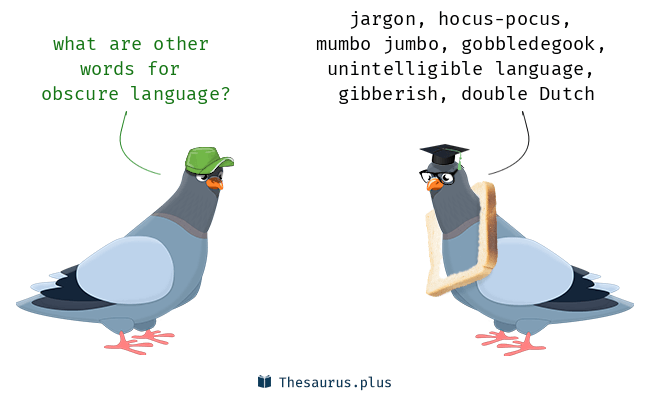
Which bothers you more, words that you probably wouldn’t know without a dictionary OR filling out OLEO and ARIA for the millionth time?

Both options had their proponents, so I’d like to give you my thoughts on each side of this cruciverbalist coin.


obscure_language

Obscure Over Overused

A well-constructed grid can overcome the occasional obscure entry. After all, since you have Across and Down entries, several accessible Across answers can hand you a difficult Down answer that you didn’t know.

You can assist with an informative clue. It might get a little lengthy, but like a well-written trivia question, you can often provide enough context to get somebody in the ballpark, even if they don’t know the exact word or phrase they need. If it FEELS fair, I think solvers will forgive some peculiar entries, as long as you don’t go overboard.

Also, if you’re a crossword fan, you’re probably a word nerd, and who doesn’t like learning new words?

As one contributor to the thread said, “I’d rather eke out a solution than fill in EKE OUT or EKE BY again.”


News-Keep-Calm-and-Carry-This-Overused-Phrase-to-the-Grave-for-College-Students

Overused Over Obscure

The very nature of crosswords demands letter arrangements that are conducive to building tight grids. Your vowel-heavy entries, your alternating consonant-vowel ABAB patterns, the occasional all-consonants abbreviation or all-vowels exhalation or size measurement… these are necessary evils.

But that doesn’t mean the cluing has to be boring. I absolutely love it when a constructor finds a new twist on an entry you’ve seen a billion times. I laughed out loud when Patti Varol clued EWE as “Baa nana?” because it was a take I’d never seen before.

Here are a few more examples of really smart ways I’ve seen overused entries clued:

  • “It’s never been the capital of England (and it surely won’t be now)” for EURO (Steve Faiella)
  • “Name-dropper’s abbr.” for ETAL (Patrick Berry)
  • “It’s three before November” for KILO (Andy Kravis)
  • “Fix plot holes, maybe” for HOE (Peter Gordon)
  • “50/50, e.g.” for ONE (Michael Shteyman). This one really plays with your expectations.
  • “Hawaiian beach ball?” for LUAU (George Barany)

Still, this is no excuse for going incredibly obtuse with your cluing just to be different. Making an esoteric reference just to avoid saying “Sandwich cookie” for OREO might be more annoying to a solver than just the overused answer itself.

On the flip side, you can treat them as gimmes, cluing them with familiar phrasing and letting them serve as the jumping-off points for longer, more difficult entries or the themed entries the puzzle is constructed around. Some familiar words are always welcome, particularly if a solver is feeling daunted with a particular puzzle’s or day’s standard difficulty.

(One poster even suggested pre-populating the grid with common crosswordese like OLEO, kinda like the set numbers in a Sudoku. I don’t think I’ve ever seen that approach before.)


conman1112

So, have we come to any conclusions today? Probably not.

As I said before, it’s a tightrope every constructor must walk on the way to finishing a crossword. Every constructor has a different method for getting across, a different formula for success. Some even manage to make it look effortless.

What do you think, fellow puzzlers and PuzzleNationers? Do you favor overused entries or obscure ones? Let us know in the comments section below. We’d love to hear from you!


Thanks for visiting PuzzleNation Blog today! Be sure to sign up for our newsletter to stay up-to-date on everything PuzzleNation!

You can also share your pictures with us on Instagram, friend us on Facebook, check us out on TwitterPinterest, and Tumblr, and explore the always-expanding library of PuzzleNation apps and games on our website!

Crosswordese in a Random Picture

It’s always fun when you encounter crosswordese in the wild. By definition, crosswordese involves words you only see in crosswords, so a real-world encounter is a rare and curious thing.

Someone posted the following picture on Reddit, in a post titled “How NYT constructors dress, presumably.”

(It differs wildly depending on the constructor, by the way.)

At first glance, there doesn’t seem to be much to it. But there are several classic crossword entries in this picture.

The A-LINE dress, the YSL on the purse, the ECRU shade. Quite the OLIO of puzzly elements.

Sure, the dress isn’t MIDI — though the coat might be! — but hey, beggars can’t be choosers.

Naturally, the commenters on that page suggested other crossword entries that might be out of sight, joking there’s an ETUI in her purse, an OBI missing from her coat, an EPEE in her concealed right hand, or ESTEE perfume in the air.

I for one suspect she’s close to her destination, her ETA just a SEC or two away.

Is she in EUR. somewhere? Perhaps near the RHINE or the RHONE or the AARE? Is she in OSLO?

Can you find any other examples of crosswordese lurking in this photo, fellow puzzlers and PuzzleNationers? Or maybe you have another picture packed with puzzly potential? Let us know in the comments section below! We’d love to hear from you.

Thanks for visiting PuzzleNation Blog today! Be sure to sign up for our newsletter to stay up-to-date on everything PuzzleNation!

You can also share your pictures with us on Instagram, friend us on Facebook, check us out on TwitterPinterest, and Tumblr, and explore the always-expanding library of PuzzleNation apps and games on our website!