Putting Clever Cluing to the Test?

crossword1

As a puzzler, there are few article titles that serve as more efficient clickbait than “6 CHALLENGING CROSSWORD PUZZLE CLUES THAT WILL LEAVE YOU CLUELESS,” so when I saw that title, fellow puzzlers, you know I clicked.

This article by the crew at Wealth Words claims to offer “the trickiest clues that have ever existed.” That is quite a bold statement. Shall we try our luck and see how we do?


Now, before we start, it’s worth noting that we’re at a huge disadvantage here, because any clue, easy or tough, can be made easier if you know some of the letters in the word thanks to words in the grid you’ve already placed that cross this particular entry. We don’t have any of those helper letters, so we’re going to have to rely solely on our sharp wits, wordplay skills, and love of punnery.

Okay, let’s get to it.

Clue #1: Leaning column? (9 letters)

Most crossword fans know that a question mark virtually always means there’s wordplay afoot, so you know you can’t take this clue at face value, which means anything relating to Pisa is probably out. If you focus on “leaning,” that could take you anywhere from Jenga to drunkenness, so let’s play with “column.” Other columns appear in graphs, Excel files, and newspapers.

A-ha. Newspaper column. And some of those “lean” to either the left or the right, depending on the author. This train of thought leads us to the intended answer OPED PIECE.

Grade: A- (It’s a solid clue where the answer doesn’t necessarily immediately jump out at you, but makes total sense once you’ve puzzled it out.)

Clue #2: Strips in a club (5 letters)

[Now, to be fair, “club” was capitalized in the clue on the webpage, but I felt like that was misleading, so I fixed it here. After all, capitalization can be used to great effect in crafty cluing — particularly if you conceal the capital word by making it the first word in the clue, which is always capitalized regardless — but here, it becomes an unnecessary red herring.]

This one is slightly harder, because you don’t immediately get the hint that there’s wordplay involved, since there’s no question mark.

This is one of my favorite kinds of clever cluing, the sort where our preconceived notions of word forms works against us. (Also, it sounds naughty, but isn’t, which I also quite enjoy.) At first glance here, the phrasing makes it sound like “strips” is a verb, when it’s really a plural noun.

And once you get into that mindset, you realize that we’re not talking about that kind of club, and the intended answer emerges: BACON.

Grade: A (Misdirection plus a tongue-in-cheek bit of lewdness? Great stuff.)

Clue #3: Group of crows (6 letters)

I have no idea how this one made it onto the list. Anyone who knows their animal groupings knows that a group of crows is a MURDER. There’s no tricky cluing or misdirection here, just something that might not be in the common knowledge. (But again, I think people are more likely to come up with this one that “exaltation of larks,” “smack of jellyfish,” or “parliament of owls.”)

Grade: D- (Could be difficult for some solvers, but only for unfamiliarity, not style.)

Clue #4: “Yep, perfectly clear” (7 letters)

Okay, this one has quotations around it, which both means it’s a spoken line and it’s likely non-standard, so you won’t find it in a dictionary. It’s probably a phrase, and used in casual conversation.

The answer, as it turns out, is I HEAR YA, which I don’t think any solver would come up with unless they had a few crossing letters filled in for them. The slangy spelling of YA and the informal wording altogether pretty much precludes this from being a “see-it-and-get-it” sorta clue.

Grade: C

Clue #5: [Boo-Hoo] (5 letters)

Brackets are used less commonly than quotation marks or question marks in crossword clue, so it’s more likely that a casual solver wouldn’t immediately recognize what to do with this clue. Usually, brackets indicate this is a non-traditional clue, either making an oblique reference to something or indicating it’s a non-verbal clue like a cough.

In this case, this is meant to be the actual sound of someone crying or something of that nature. So it could be something informal like CRYIN’ or TEARS (as opposed to the more traditional “in tears”) or something like that.

As it turns out, they were looking for I’M SAD. Which is pretty blah. It’s not a standard phrase, and comes off as a cheaply constructed way out of a bad corner, not a solid bit of fill to keep the puzzle interesting.

Grade: F

Clue #6: They come in last (3 letters)

This clue is fairly tough, because it’s both vaguely worded and has a curious letter count. It’s plural phrasing (with “they”), so that immediately makes you want to tack an S onto the end of the word. But it’s also such a short entry that a two-letter word plus S doesn’t seem to fit the clue.

So what comes in last? “End” would fit, if not for the plural phrasing. “P.S.” comes in last, but “P.S.’S” is really clunky, and I don’t recall ever seeing that pluralized.

So what were they looking for? XYZ. Ah. Alphabet entries. You’ll usually see entries like this centering around the first three letters (ABC) or a random string (“RST” seems to come up more often than most), and XYZ certainly fits the bill. But, in the end, it’s not a real entry, and it feels a little cheap, despite the decent wordplay involved in the cluing.

Grade: C-


So, what did I think of the Wealth Words “6 CHALLENGING CROSSWORD PUZZLE CLUES THAT WILL LEAVE YOU CLUELESS” challenge?

I thought it started off very strong with two clever, slippery clues that required you to play with the words and come at them from several angles before stumbling upon the correct solution, and I quite enjoyed those clues.

But the quiz took a real nose dive in quality starting with Clue #3, which had no wordplay at all. #4 and #5 relied heavily on being slangy non-standard verbiage rather than adept cluing or creative fill, and #6 was a bit of a cop-out, even if the cluing quality rebounded nicely.

All in all, I thought the specious entries outweighed the clever cluing on display early on, making for an underwhelming set of clues.

Final grade: C+.

What did you think of these group of challenging clues, fellow puzzlers and PuzzleNationers? Did you enjoy them or find them wanting? Let us know in the comment section below, we’d love to hear from you!


Thanks for visiting PuzzleNation Blog today! Be sure to sign up for our newsletter to stay up-to-date on everything PuzzleNation!

You can also share your pictures with us on Instagram, friend us on Facebook, check us out on TwitterPinterest, and Tumblr, and explore the always-expanding library of PuzzleNation apps and games on our website!

Puzzles and Brain Health: Finally Some Definitive Data?

For years now, brain health and puzzle-solving have been intertwined topics.

There have been many, MANY published studies touting all sorts of effects, both positive and negative, of solving puzzles. Alongside those studies, there have been numerous products of a puzzly nature that claim to do everything from improving memory to staving off Alzheimer’s, dementia, and other debilitating conditions.

I’ve been reading articles on the subject for more than six years now, and the results, for the most part, have been inconclusive. This is often due to small sample sizes for the experimental data, or evidence that leads to likelihoods rather than verifiable, repeatable, reliable data.

Across all of these articles, there are essentially three suppositions:

  • A. Solving puzzles helps maintain or improve brain function
  • B. Specific “brain-training” exercises, programs, or products help maintain or improve brain function more so than traditional/unfocused puzzle solving
  • C. Solving puzzles (whether traditional or “brain-training”) helps stave off conditions like dementia, Alzheimer’s, and memory loss later in life

When it comes to Supposition B, I’ve yet to see anything that proves a “brain-training” or “brain-boosting” puzzle regimen actually helps in a meaningful way. In fact, at one point, one of these “brain-training” companies had to pay a two-million-dollar fine for making promises that their program couldn’t verifiably deliver on.

[Image courtesy of SharpBrains.com.]

But let’s leave that nonsense aside for a moment and focus on Supposition A, the idea that solving puzzles is good for the brain.

For the first time, we have a study performed by a reputable organization with a sample size large enough that it may finally allow us to draw some decent conclusions. Two articles published this month in the International Journal of Geriatric Psychiatry have concluded that adults age 50 and older who regularly solve puzzles like crosswords and Sudoku have better brain function than those who do not.

The study, conducted by researchers from the University of Exeter, involved a test group of more than 19,000 participants.

From an article on Science Daily discussing the study:

Researchers asked participants in the PROTECT study . . . to report how frequently they engage in word and number puzzles and undertake a series of cognitive tests sensitive to measuring changes in brain function. They found that the more regularly participants engaged with the puzzles, the better they performed on tasks assessing attention, reasoning and memory.

From their results, researchers calculate that people who engage in word puzzles have brain function equivalent to ten years younger than their age, on tests assessing grammatical reasoning, and eight years younger than their age on tests measuring short term memory.

Yes, this is only one study, and yes, obviously more testing and sampling is needed to apply this to the millions upon millions of folks age 50 and older who might benefit from this. But it’s worth giving this topic deep consideration. A sample size of 19,000 is impressive, and there’s no profit or “brain-training” scam behind the study.

And, regarding Supposition C, while this study didn’t offer anything definitive, it remains a possibility. Dr. Anne Corbett of the University of Exeter Medical School said, “We can’t say that playing these puzzles necessarily reduces the risk of dementia in later life but this research supports previous findings that indicate regular use of word and number puzzles helps keep our brains working better for longer.”

How much longer, who can say? But, when it comes to better brain health, it seems we can finally say that puzzles are good for you. (I always suspected.)


Thanks for visiting PuzzleNation Blog today! Be sure to sign up for our newsletter to stay up-to-date on everything PuzzleNation!

You can also share your pictures with us on Instagram, friend us on Facebook, check us out on TwitterPinterest, and Tumblr, and explore the always-expanding library of PuzzleNation apps and games on our website!

View a Clue: Crosswordese Answers!

Last week, we brought back one of our trickiest recurring features, the View a Clue game!

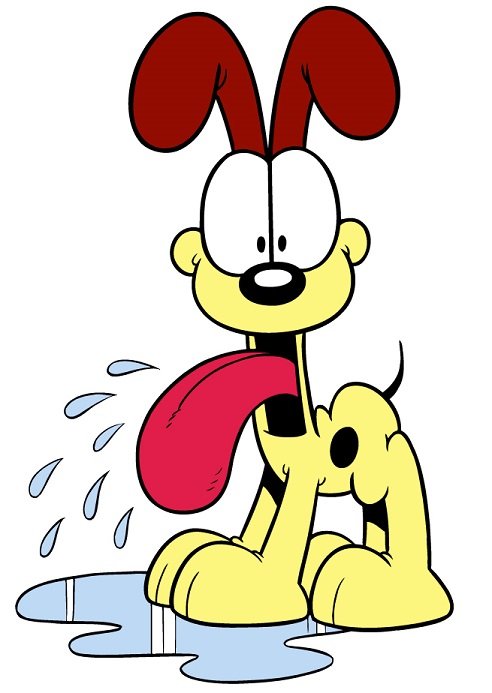
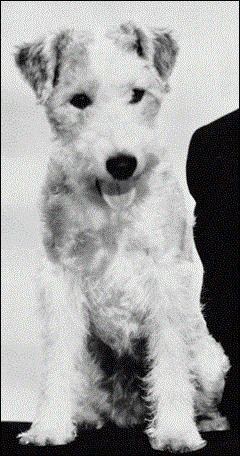
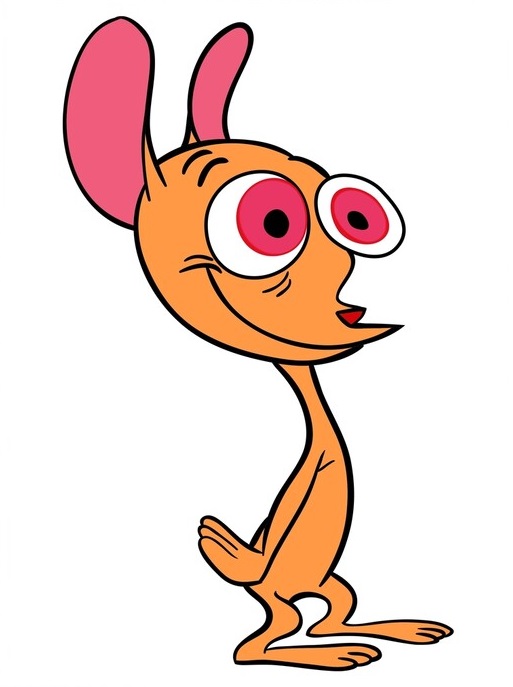
If you recall, we selected ten words that commonly show up in crossword grids — frequently and infamously enough that they’ve becomes crosswordese at this point —  to see if the PuzzleNation audience could identify them from pictures.

Without further ado, let’s get to it!


#1 (3 letters)

Answer: SST, aka supersonic transport

#2 (5 letters)

Answer: AERIE, a high nest for a bird of prey

#3 (3 letters)

Answer: TAW, a large marble used as a shooter

#4 (4 letters)

Answer: SERF, a medieval laborer bound to serving a feudal lord

#5 (5 letters)

Answer: AIOLI, mayonnaise flavored with garlic

#6 (4 letters)

Answer: YEGG, a safecracker

#7 (5 letters)

Answer: SABOT, a wooden shoe worn in European countries

#8 (4 letters)

Answer: OGEE, a pointed arch or molding in an S-shape

#9 (4 letters)

Answer: APSE, a semicircular vaulted area of a church

#10 (3 letters)

Answer: ELL, a building extension added at a right angle to the main building


How did you do? Let us know in the comments below!

Thanks for visiting PuzzleNation Blog today! Be sure to sign up for our newsletter to stay up-to-date on everything PuzzleNation!

You can also share your pictures with us on Instagram, friend us on Facebook, check us out on TwitterPinterest, and Tumblr, and explore the always-expanding library of PuzzleNation apps and games on our website!
The Indie 500 Crossword Tournament returns soon!

Four years ago, a new crossword tournament joined the ranks of the American Crossword Puzzle Tournament and Lollapuzzoola, immediately carving out its own niche in the puzzle world. The Indie 500 offered topnotch puzzles and a pie-fueled solving experience both live in Washington, D.C., and for solvers at home.

And it’s back! The fifth edition of The Indie 500 is happening on Saturday, June 1, and this year, the theme is “Going Around in Squares.”

This year’s tournament follows the same format as previous years: five preliminary puzzles of varying difficulty, plus a final puzzle for the top three scorers in both divisions.

[There’s also a fair amount of slapstick.]

Registration is open for the tournament! They’re at capacity for attending in person (there is a waiting list in case anyone drops out!), but worry not, because solving from home is only $10!

Not only that, but there’s a travel-themed meta suite that lets you name your own price, as well as access to the previous tournament bundles for $5 apiece. Those are super-affordable prices for some outstanding puzzles!

Andy Kravis, Erik Agard, and Neville Fogarty all make their fifth appearance as veteran constructors — understandable, since they’re also event organizers — and they’re joined once again by Angela Olson Halsted and Peter Broda, as well as tournament constructors Jenna LaFleur, Bryan Betancur, Janie Smulyan, Rebecca Falcon, and Yacob Yonas!

And, of course, there will be pie.

You can click here for the Indie 500 home page, and click here for a rundown of last year’s puzzles!

Will you be competing, or participating from home? Let us know in the comments below!


Thanks for visiting PuzzleNation Blog today! Be sure to sign up for our newsletter to stay up-to-date on everything PuzzleNation!

You can also share your pictures with us on Instagram, friend us on Facebook, check us out on TwitterPinterest, and Tumblr, and explore the always-expanding library of PuzzleNation apps and games on our website!

New Puzzle Sets for PDCW App and Daily POP Crosswords!

Hello puzzlers and PuzzleNationers!

We’re excited to announce new puzzle sets for both of our marvelous crossword puzzle apps! Yes, whether you’re a fan of our Penny Dell Crosswords App or our Daily POP Crosswords app, we’ve got something special for you!

First off, for Daily POP Crosswords users, we have our latest featured set, Superhero Fun!

Consisting of ten puzzles, all with superpowered themes, this puzzle set offers the smart, pop culture-savvy cluing you’ve come to expect from PuzzleNation, all in ten marvelous puzzles collected for your convenience and enjoyment!

The Avengers might have reached their Endgame, but we’re just getting started!

And for the Penny Dell Crosswords App, we have two new deluxe sets available!

If you’re looking for something sweet, we have the Dessert Deluxe bundle, and if you want a playful twist on crosswords, there’s the Games Deluxe bundle!

With special themed puzzles and loads of great crosswords at all difficulty levels for you to enjoy, these bundles are a fresh and fun way to relax and keep your puzzly wits sharp!

All three are available now for in-app purchase, so don’t miss out on these terrific new puzzle bundles!

Happy puzzling, everybody!


Thanks for visiting PuzzleNation Blog today! Be sure to sign up for our newsletter to stay up-to-date on everything PuzzleNation!

You can also share your pictures with us on Instagram, friend us on Facebook, check us out on TwitterPinterest, and Tumblr, and explore the always-expanding library of PuzzleNation apps and games on our website!
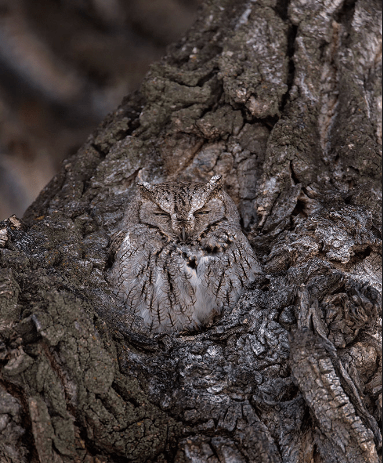
View a Clue: Crosswordese Edition!

Welcome to the latest edition of one of PuzzleNation Blog’s most visual features: the View a Clue game!

I’ve selected ten words that commonly show up in crossword grids — frequently and infamously enough that they’ve becomes crosswordese at this point — and I want to see if the PuzzleNation audience can identify them from pictures. It’s a visual puzzle I call View a Clue!

Without further ado, let’s give it a shot!


#1 (3 letters)

#2 (5 letters)

#3 (3 letters)

#4 (4 letters)

#5 (5 letters)

#6 (4 letters)

#7 (5 letters)

#8 (4 letters)

#9 (4 letters)

#10 (3 letters)


How many did you get? Let me know in the comments below! And if you have ideas for another View a Clue game, tell us below!

Thanks for visiting PuzzleNation Blog today! Be sure to sign up for our newsletter to stay up-to-date on everything PuzzleNation!

You can also share your pictures with us on Instagram, friend us on Facebook, check us out on TwitterPinterest, and Tumblr, and explore the always-expanding library of PuzzleNation apps and games on our website!