By this time, you know the drill. Follow-Up Friday is a chance for us to revisit the subjects of previous posts and bring the PuzzleNation audience up to speed on all things puzzly.
And today, I’m posting solutions to our Sharknado and Crosswordese puzzles from the last two weeks!
Two Follow-Up Fridays ago, I posted a deduction puzzle in honor of Sharknado 3 rampaging its way across TV screens all over the world, and I challenged you to complete the schedule of mayhem wrought by our five heroes with five different weapons across five different cities on five different days! (Whew!)
How did you do?
And that brings us to our second solution. Last week, we discussed crosswordese — those words that only seem to appear in crosswords, to the dismay and bafflement of casual solvers — and I created a 9×9 grid loaded with crosswordese.
Did you conquer the challenge?
ACROSS
1. Toward shelter, to salty types — ALEE
3. Arrow poison OR how a child might describe their belly button in writing — INEE
5. Flightless bird OR Zeus’s mother — RHEA
6. Hireling or slave — ESNE
8. “Kentucky Jones” actor OR response akin to “Duh” — DER
9. Compass dir. OR inhabitant’s suffix — ESE
12. Wide-shoe width OR sound of an excited squeal — EEE
15. No longer working, for short OR soak flax or hemp — RET
16. Like a feeble old woman OR anagram of a UFO pilot — ANILE
17. Actress Balin OR Pig ____ poke — INA
DOWN
1. Mean alternate spelling for an eagle’s nest — AYRIE
2. Old-timey exclamation — EGAD
3. Unnecessarily obscure French river or part of the Rhone-Alpes region — ISERE
4. Supplement OR misspelling of a popular cat from a FOX Saturday morning cartoon — EKE
7. Maui goose — NENE
10. An abbreviated adjective covering school K through 12 OR how you might greet a Chicago railway — ELHI
11. My least favorite example of crosswordese OR good and mad — IRED
12. Ornamental needlecase — ETUI
13. Movie feline OR “Frozen” character — ELSA
14. Shooting marble OR abbreviation for this missing phrase: “truth, justice, and ____” — TAW
I hope you enjoyed both of these challenging puzzles! If you haven’t had your fill of crafty puzzlers, worry not! We’ll be tackling another tough brain teaser in two weeks!
In the past, I’ve written about crosswordese, nemesis and irritant to many crossword solvers and constructors. For the uninitiated, crosswordese is shorthand for any and all obscure or curious words that you only encounter in crossword grids. From EPEE and OONA to Greek letters (ETA, RHO) and French rivers (AARE), these killer crossings are the bane of any solver’s existence.
And wouldn’t you know it, I encountered some crosswordese in a most unexpected place.
I was reading Patricia Marx’s book Let’s Be Less Stupid: An Attempt to Maintain My Mental Faculties, a humorous look at the common fear that our mental acuity declines as we get older. In the book, Marx references numerous ways she’s noted her brain working less efficiently than it used to, and she hilariously chronicles her attempts to combat this and keep her wits sharp.
As part of her ongoing efforts, she even created a crossword grid utilizing only tough crossword entries.
Her puzzle featured some truly great, funny clues, like “The side of the ship you want to be on if you don’t want your hair to get messed up” for ALEE and “No matter how bad your memory is, this is something to remember” for ALAMO.
While I wouldn’t count every entry in her grid as crosswordese, there were plenty of major offenders on her list. (You can check out the full puzzle in her book!)
And this gave me an idea. I would try my hand at creating my own 9×9 grid, composed entirely of crosswordese, utilizing some of the words from her list and some from lists submitted by fellow puzzlers.
[Forgive my nonstandard grid. I tried to go for the same homemade charm as Marx’s grid. Feel free to print out this post and try it out!]
ACROSS
1. Toward shelter, to salty types
3. Arrow poison OR how a child might describe their belly button in writing
5. Flightless bird OR Zeus’s mother
6. Hireling or slave
8. “Kentucky Jones” actor OR response akin to “Duh”
9. Compass dir. OR inhabitant’s suffix
12. Wide-shoe width OR sound of an excited squeal
15. No longer working, for short OR soak flax or hemp
16. Like a feeble old woman OR anagram of a UFO pilot
17. Actress Balin OR Pig ____ poke
DOWN
1. Mean alternate spelling for an eagle’s nest
2. Old-timey exclamation
3. Unnecessarily obscure French river or part of the Rhone-Alpes region
4. Supplement OR misspelling of a popular cat from a FOX Saturday morning cartoon
7. Maui goose
10. An abbreviated adjective covering school K through 12 OR how you might greet a Chicago railway
11. My least favorite example of crosswordese OR good and mad
12. Ornamental needlecase
13. Movie feline OR “Frozen” character
14. Shooting marble OR abbreviation for this missing phrase: “truth, justice, and ____”
Did you conquer this crosswordese-riddled grid? And what’s your least favorite example of crosswordese? Let me know! I’d love to hear from you!
By this time, you know the drill. Follow-Up Friday is a chance for us to revisit the subjects of previous posts and bring the PuzzleNation audience up to speed on all things puzzly.
While I couldn’t attend the tournament, I did download the tournament puzzles, and after a few weeks, I had the opportunity to sit down and tackle the six puzzles prepared for the event. And today, after a few weeks’ reflection, I thought I’d offer my thoughts on those puzzles, both for the organizers and for any interested PuzzleNationers who might be considering participating in the future.
[Note: I solved the PDF versions of these puzzles, which apparently differed in some ways from the PUZ versions.]
Puzzle 1: Welcome to D.C. by Erik Agard
The opening puzzle offered a solid challenge, utilizing the colors for the various lines of the Washington Metro as clues for the themed entries. (For instance, “Red Line” led you to the answer BASE PATH.)
Agard’s effort set the tone for the rest of the tournament with a some accessible pop culture-fueled clues as well as a fleet of strong, fair clues most puzzlers should have no difficulty cracking. A few more obscure references were made — an Internet meme and a Hunger Games “ship” name among them — but without hindering fair cluing.
Interesting grid entries included GINSU, YOUSE GUYS, and NIQAB, and my favorite clue was probably “Summer’s end?” for TOTAL.
Puzzle 2: Looseness of the Vowels by Peter Broda
Broda’s puzzle incorporated shared boxes — some grid squares were divided in half, allowing two vowels to be placed instead of one — and answering each themed clue required a two-word phrase that shared every consonant.
(For instance, clue 52 Across read “With 52 Across, what David Ortiz practices that annoys his neighbors?” And the grid, once filled, read B[I/A]GP[A/I]P[IE]S, a.k.a. BIG PAPI’S BAGPIPES. This is why the clue cites itself in “With 52 Across,” so that the solver knows the answer word applies twice)
Those neat touches of wordplay weren’t the only tough crossings, however. The crossing of two unusual phrases in BE GENTLE with LAYS STAX actually forced me to abandon the puzzle at one point and return to it later to complete.
Interesting grid entries included TV CHEF, ICE KING, and VISA BILL, and my favorite clue was “Former red giant” for USSR. (Being a science and astronomy geek, I was instantly misled by this one.)
Puzzle 3: Candy Bars by Finn Vigeland
Finn was chosen as the guest constructor to join the five fierce puzzlers who organized the Indie 500, and I was thoroughly impressed with the very clever construction of his grid. In Finn’s puzzle, certain paired black squares were replaced with a graphic of a candy bar, and it was up to the solver to deduce that each entry, either down or across, that touched the candy bar was missing either C, Y, or both.
[The candy bars were in color in the PDF, but I printed them in b and w for solving.]
For instance, in this section of the grid, DIS and ALL (clued as “Checker, for one” and “Word after straight or male, in social justice conversations,” respectively) were actually DISC and ALLY when you added the CY. [Get it? CandY bar?] Similarly, REST and ALTA were actually CREST and YALTA, and the across entry CLING WRAP was actually the theme entry CYCLING WRAP.
This was my favorite of the six puzzles in the tournament, one with a great hook and excellent execution.
Interesting grid entries included SENIOR GALA, DOT GOV, OH BEHAVE!, and PT BOATS, and my favorite clue was easily “Brian who crosswords would have you believe is the only musician worth knowing (other than 97-Across, maybe)” for ENO. (97-Across was, predictably, ONO.)
Puzzle 4: A Cute Puzzle by Andy Kravis
After a pair of heavy-thinking puzzles, Puzzle 4 was an excellent palate cleanser difficulty-wise, complete with solid cluing and some fun entries. Kravis’s puzzle had solvers adding an accented E to the end of themed entries in order to complete them. For instance, “A giant leap for elephant-kind?” was JUMBOJETE.
A well-constructed puzzle (quite possibly designed to lure solvers into a false sense of security before Puzzle 5 walloped them), this was probably the most accessible puzzle of the six, one that casual solvers would quite enjoy.
Interesting grid entries included MINAJ, TEAM USA, KOOPA, and A-MINUS, and my favorite clues were the mildly-risque pair of “Prince Albert’s can?” for both ARSE and LOO.
Fogarty’s puzzle was by far the toughest of the six, and I admit, it took me forever to uncover the hook: antonyms which crossed at the same starting box were swapped. For instance, 1-Across was “Numbskulled” for THICK and 1-Down was “Dilute” for THIN, but you had to place THICK as 1-Down and THIN as 1-Across.
Beyond that, challenging crossings like IDEA MAN and LAD MAG kept me guessing, and the creative grid entries left few crossword standards for any struggling solvers.
Interesting grid entries included ONE SEC, SHAKY CAM, FAIR GAME, XKCD, and IRISH STEW, and my favorite clue was probably “Number for the troops” for OVER THERE.
[Say, since we’re discussing crosswords, have you checked out the Penny Dell Crosswords App? This concludes our shameless plug.]
Puzzle 6: The Final Lap by Evan Birnholz
The closing puzzle of the tournament was offered in two difficulty levels: the Inside Track (designated for solvers who finished in the top 25% of the field in a crossword tournament with published standings in the past 5 years) and the Outside Track (designated for everyone else). I opted for the Outside Track, then looked over the cluing for the Inside Track.
This themeless closer was no layup, though; no matter which track you were on, the cluing relied on solid trivia knowledge and classic puzzle-solving skill. (Kudos to Evan for crafting a solid grid with tough AND tougher clues. And for dropping a much-appreciated Army of Darkness reference in the Inside Track clues.)
Interesting grid entries included WHAT ON EARTH?, MOON UNIT, EDIT MENU, and PIE CHART, and my favorite clue (among many I quite liked) was probably “Things a benched player might work on during practice” for ETUDES.
Overall, I thought the Indie 500 was an impressive series of puzzles, rich with cleverness and style. Puzzle 5 easily rivaled ACPT’s Puzzle 5 in terms of difficulty, and the cluing was topnotch. I look forward to its return next year, and hopefully some of you will join me in accepting the Indie 500 challenge!
Tricky clues can come in all shapes and sizes, from wordplay that sends you down the wrong path (like “Intel processor?” for SPY) to clues with some tongue-in-cheek humor (like “Car bomb?” for EDSEL). But perhaps the most diabolical are clues that rely on alternate pronunciations to deceive solvers.
These clues are especially crafty, because oftentimes, it’s only when spoken aloud that the alternate meaning reveals itself. There were two prime examples of this cluing style in the Indie 500 puzzles I’ll be reviewing later this week.
At first blush, the clue “Layers of rock?” seems to point toward STRATA or something similar, except the question mark indicates some sort of wordplay is afoot. But if you use lay-ers (as in “those who lay”) of rock, suddenly the answer is apparent: MASONS.
Similarly, the clue “Water tower?” seems straightforward until you consider the question mark. But pronounce tower tow-er (one that tows) and you’ve cracked it: TUG.
Friend of the blog and Penny Press crossword guru Eileen Saunders also contributed a terrific example, “Sewer junction?” for SEAM.
Of course, the perils of pronunciation are hardly restricted to the world of crossword cluing. One need only travel abroad and encounter some of the towns in England to discover some curious pronunciations awaiting them.
In the music video below, chap-hop artist Sir Reginald Pikedevant, Esq. offers a litany of examples of curious British pronunciations in his song “Shibboleth.”
In the video, he defines shibboleth as a word which distinguishes between group members and outsiders by the way it is pronounced. The word comes from the Hebrew Bible, where the word itself was used to distinguish between Ephraimites (who could not pronounce the word properly) and Gileadites (who could).
And while historical uses of shibboleths usually had unpleasant connotations, Sir Reginald’s video is simply a whimsical look at the weirdness of language:
And now, given the subject at hand, I have a challenge for you, my fellow puzzlers and PuzzleNationers!
Below I’ve posted a poem called “The Chaos,” designed to highlight the many irregularities in spelling and pronunciation in the English Language. Created by Dutch writer and teacher Gerard Nolst Trenite, it has appeared in various formats for nearly a century, and it’s a taxing read, to be sure.
I hereby challenge any member of the PuzzleNation readership to create a video of you reading the poem in its entirety! [Note: this is, in fact, a truncated version, but I feel it would be torturous to make you read all 274 lines of this version!]
So, if you accept the challenge, post your video on Facebook, Twitter, YouTube, or wherever, and send me a link! The most impressive performance will earn a suitably puzzly prize!
Good luck!
The Chaos
Dearest creature in creation,
Study English pronunciation.
I will teach you in my verse
Sounds like corpse, corps, horse, and worse.
I will keep you, Suzy, busy,
Make your head with heat grow dizzy.
Tear in eye, your dress will tear.
So shall I! Oh hear my prayer.
********
Just compare heart, beard, and heard,
Dies and diet, lord and word,
Sword and sward, retain and Britain.
(Mind the latter, how it’s written.)
Now I surely will not plague you
With such words as plaque and ague.
But be careful how you speak:
Say break and steak, but bleak and streak;
Cloven, oven, how and low,
Script, receipt, show, poem, and toe.
********
Hear me say, devoid of trickery,
Daughter, laughter, and Terpsichore,
Typhoid, measles, topsails, aisles,
Exiles, similes, and reviles;
Scholar, vicar, and cigar,
Solar, mica, war and far;
One, anemone, Balmoral,
Kitchen, lichen, laundry, laurel;
Gertrude, German, wind and mind,
Scene, Melpomene, mankind.
********
Billet does not rhyme with ballet,
Bouquet, wallet, mallet, chalet.
Blood and flood are not like food,
Nor is mould like should and would.
Viscous, viscount, load and broad,
Toward, to forward, to reward.
And your pronunciation’s OK
When you correctly say croquet,
Rounded, wounded, grieve and sieve,
Friend and fiend, alive and live.
********
Ivy, privy, famous; clamour
And enamour rhyme with hammer.
River, rival, tomb, bomb, comb,
Doll and roll and some and home.
Stranger does not rhyme with anger,
Neither does devour with clangour.
Souls but foul, haunt but aunt,
Font, front, wont, want, grand, and grant,
Shoes, goes, does. Now first say finger,
And then singer, ginger, linger,
Real, zeal, mauve, gauze, gouge and gauge,
Marriage, foliage, mirage, and age.
********
Query does not rhyme with very,
Nor does fury sound like bury.
Dost, lost, post and doth, cloth, loth.
Job, nob, bosom, transom, oath.
Though the differences seem little,
We say actual but victual.
Refer does not rhyme with deafer.
Foeffer does, and zephyr, heifer.
Mint, pint, senate and sedate;
Dull, bull, and George ate late.
Scenic, Arabic, Pacific,
Science, conscience, scientific.
********
Liberty, library, heave and heaven,
Rachel, ache, moustache, eleven.
We say hallowed, but allowed,
People, leopard, towed, but vowed.
Mark the differences, moreover,
Between mover, cover, clover;
Leeches, breeches, wise, precise,
Chalice, but police and lice;
Camel, constable, unstable,
Principle, disciple, label.
********
Petal, panel, and canal,
Wait, surprise, plait, promise, pal.
Worm and storm, chaise, chaos, chair,
Senator, spectator, mayor.
Tour, but our and succour, four.
Gas, alas, and Arkansas.
Sea, idea, Korea, area,
Psalm, Maria, but malaria.
Youth, south, southern, cleanse and clean.
Doctrine, turpentine, marine.
********
Compare alien with Italian,
Dandelion and battalion.
Sally with ally, yea, ye,
Eye, I, ay, aye, whey, and key.
Say aver, but ever, fever,
Neither, leisure, skein, deceiver.
Heron, granary, canary.
Crevice and device and aerie.
********
Face, but preface, not efface.
Phlegm, phlegmatic, ass, glass, bass.
Large, but target, gin, give, verging,
Ought, out, joust and scour, scourging.
Ear, but earn and wear and tear
Do not rhyme with here but ere.
Seven is right, but so is even,
Hyphen, roughen, nephew Stephen,
Monkey, donkey, Turk and jerk,
Ask, grasp, wasp, and cork and work.
********
Pronunciation — think of Psyche!
Is a paling stout and spikey?
Won’t it make you lose your wits,
Writing groats and saying grits?
It’s a dark abyss or tunnel:
Strewn with stones, stowed, solace, gunwale,
Islington and Isle of Wight,
Housewife, verdict and indict.
********
Finally, which rhymes with enough —
Though, through, plough, or dough, or cough?
Hiccough has the sound of cup.
My advice is to give up!
You can submit your videos to any of our social media platforms below! Good luck!
Everyone loves a little something extra, and that goes double for puzzle fans.
Whether it’s a hidden quote or a secret theme lurking in plain sight, a bonus answer revealed after a tough solve or a final twist that wows you with a constructor’s cleverness and skill, these little surprises are gifts every solver can appreciate.
In Sunday’s New York Times Crossword, what appears at first blush to be a simple themed puzzle — with poet WILLIAM CARLOS WILLIAMS paired with his poem THE LOCUST TREE IN FLOWER — turns out to be much more, as the entire poem is concealed within the grid!
While this is a particularly ambitious example, this is not an uncommon challenge for a constructor to tackle.
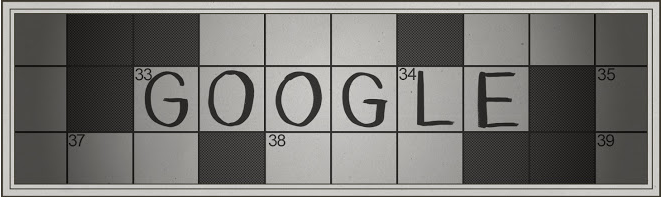
Sometimes, the bonus is announced upfront, as it was in Merl Reagle’s puzzle for the 100th anniversary of the crossword a few years ago. His puzzle was converted into a solvable Google Doodle, and Merl added a crafty word search element by hiding the word FUN multiple times in the grid.
Why “fun,” you ask? Because that was the set word in Arthur Wynne’s original “word-cross” puzzle over one hundred years ago!
[Click here if you haven’t tackled Merl’s marvelous puzzle.]
Our friends at Penny/Dell Puzzles have a recurring crossword variant, Revelation, which conceals a quotation in a standard crossword grid, using the same letters-in-circles technique as Jacob Stulberg did in his poem puzzle.
And, of course, I would be remiss in my duties if I didn’t mention the secret message reading out in both a New York Times crossword and a puzzle featured on The Simpsons, wherein Homer conceals an apology to Lisa inside a crossword with the help of Will Shortz.
Today, in the interest of both public service and better puzzling overall, I thought I’d present a brief list of dos and do-not-dos when it comes to constructing word search (or word seek) puzzles.
Now, full disclosure, I will be talking about PuzzleNation apps a bit here, but only because they’re great examples of well-crafted puzzles, and a little shameless self-promotion never hurt anybody. *smiles*
So, without further ado, let’s talk word searches!
DO:
Offer fun bonuses, like trivia, facts, and bonus entries to hunt down!
These additions can make for a richer, more fulfilling solving experience.
DO NOT DO:
Do NOT create a holiday word search without being very careful to edit out any questionable or inappropriate vocabulary.
For instance, these words do not belong in a kids’ Christmas word search.
DO:
Make sure your puzzle has audience-appropriate vocabulary and a family-friendly theme.
For instance, the Penny Dell Bible Word Search app features entire passages from the Bible, broken up into searchable words and phrases.
DO NOT DO:
Do NOT make a 50 Shades of Grey-themed word search and distribute it to middle school students!
Freshen up the word search formula with interesting and challenging variations.
[An Around the Bend word seek from Penny Press.]
Our friends at Penny/Dell Puzzles have some really clever variant word searches, like Missing Vowels, Missing List, Zigzag, and plenty of others. Whether you’re discovering bonus messages, finding craftily hidden words, or dodging red herrings planted by clever constructors, you’ll find plenty to keep you interested.
DO NOT DO:
Do NOT get a word search grid full of swearing and foul language tattooed on your lower back.
No, I’m not including a link or a picture on this one. Trust me, it exists, and it definitely belongs on the Do-not-do list.
Well, there you have it! Some important dos and do-not-dos of word searches and word seeks. With these few simple rules (and cautionary tales), you can craft high-quality, fun, worthwhile puzzles for friends, family, students, and more.




 PuzzCulture