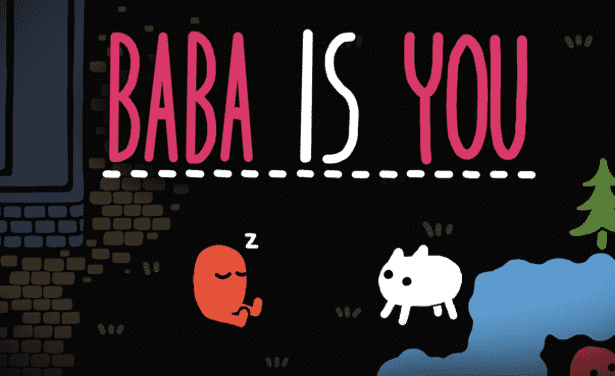
A Puzzle Game That Lets You Change the Rules of Puzzles!

[Image courtesy of Linux Game Consortium.]

Solving puzzles through different mediums can lead to unexpected and challenging solving experiences.

One advantage that video game puzzles have over their pencil-and-paper counterparts is that, while the paper puzzles are a one-stop shop for a puzzle experience, there’s no adaptation, no evolution, no development for the solver or chance to build upon what they’ve learned through multiple solves or repetition.

In video game puzzles, on the other hand, repetition is the name of the game. New skills and techniques are immediately tested by clever twists on established puzzles, so you’re never resting on your puzzly laurels.

For example, while discussing the classic puzzle platforming game Portal, my friend once described it as a game that reprograms your brain with each puzzle you solve, transforming alongside the player. (This is also a hallmark of many of the puzzle games offered by our friends at ThinkFun.)

[Image courtesy of Game Informer.]

That sort of reprogramming is at the heart of the puzzle experience in a new game called Baba Is You.

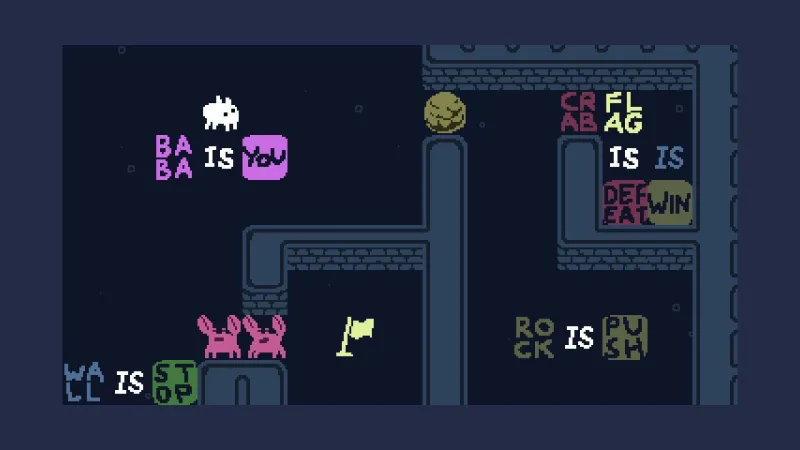
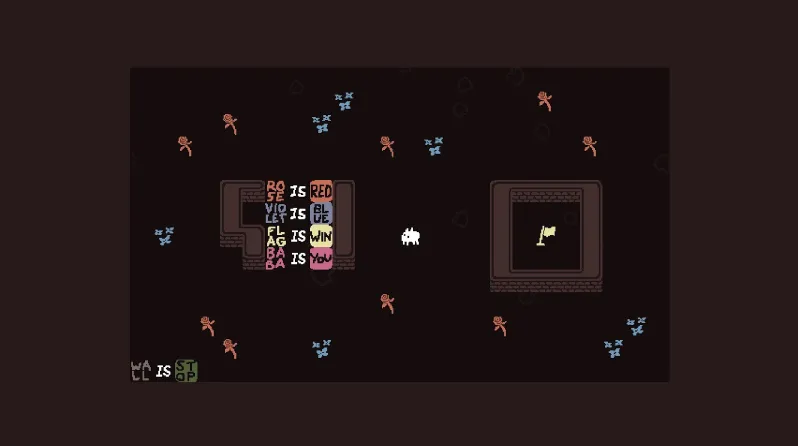
In Baba Is You, the gameplay consists of objects to move and manipulate, as well as word blocks that form rules for the game itself. You start off by being able to move Baba, a small rabbit-like creature, around obstacles, with the goal of reaching a golden flag. So, the word blocks read “Baba is you” and “flag is win,” which both tell you the starting rules and the goal.
[Image courtesy of Kotaku.]

By changing these word blocks, you change the rules, effectively reprogramming what you can do in each level.

Kotaku explains this concept well:

One clump might say “Baba is you,” which means Baba is the character you control. Another might say “Rock is push,” which means you can push rocks, or “Wall is stop,” which means you can’t walk through walls…

You rearrange individual words to solve the puzzles. There are usually multiple options, depending on where the words are placed. In the above example, you could remove “stop” from “wall” and pass through the barrier. You could attach “wall” to “is push” instead of “is stop” and push it out of the way. You could make yourself the wall by pushing the word “wall” before “is you.” Or you could make the wall the win condition and touch that instead of the flag.
[Image courtesy of Kotaku.]

So, essentially, you solve each puzzle by obeying the rules, changing the rules, and then obeying the new rules. And since puzzles are all about figuring out how to accomplish tasks by adhering to certain rules, this creates a fascinating new style of puzzle. It’s almost like improvisational comedy or Calvinball, except it’s not played for humor.

I don’t know that I’ve ever seen a puzzle game that lets you alter HOW you play as drastically and as simply as this. You literally make and break the rules here, depending on how clever you are.

Baba Is You is available for PC and Switch, and I look forward to seeing more diabolical puzzling like this in the future.


Thanks for visiting PuzzleNation Blog today! Be sure to sign up for our newsletter to stay up-to-date on everything PuzzleNation!

You can also share your pictures with us on Instagram, friend us on Facebook, check us out on TwitterPinterest, and Tumblr, and explore the always-expanding library of PuzzleNation apps and games on our website!

A Password Brain Teaser With an Unexpected Snag


[Image courtesy of The Next Web.]

One of the curious aspects of being a modern Internet user is figuring out how to manage your passwords. Most sites, whether commercial or recreational, have log-in screens or other account info, and it’s up to you to remember passwords for these numerous accounts.

You could use the same password over and over for everything, but that’s not a terribly safe choice. You could keep a list where you write down your different passwords to each site in order to keep them all straight, which is also not safe. You could opt to use a password-management service to handle them for you, which is a bit unwieldy for most users.

And if you need to come up with a new password for each account, you might find yourself employing a puzzly technique like Mira Modi’s in order to conjure up a password.

[Image courtesy of In the Black.]

Recently, Gizmodo writer Rhett Jones posed a password-centric brain teaser to his readers, asking why the seemingly safe-looking string “ji32k7au4a83” might not be a good choice for a password.

Can you puzzle out why?

I’ll give you a few moments to ponder it.

All set? Okay, here we go.

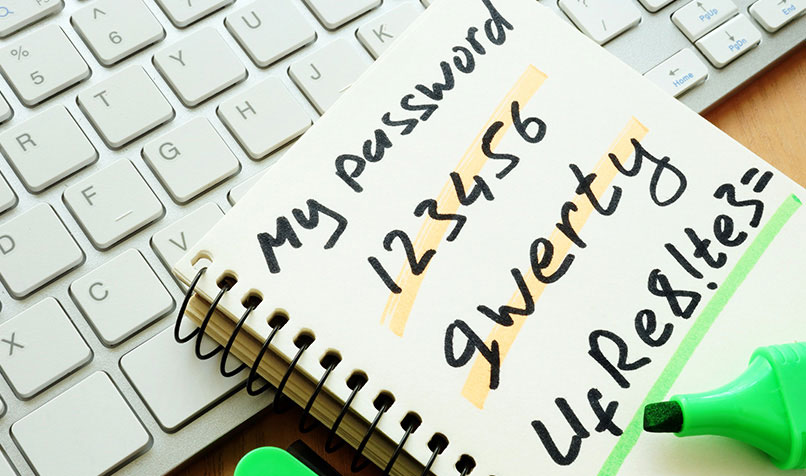
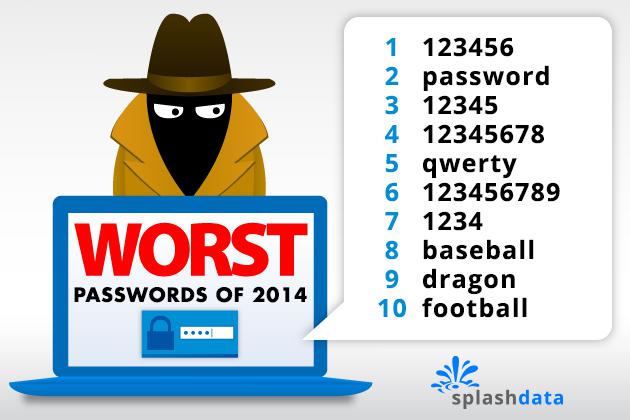
As it turns out, “ji32k7au4a83” is the Chinese equivalent of one of the worst choices for a password. Using the Zhuyin Fuhao system for transliterating Mandarin to English, “ji32k7au4a83” becomes “my password,” a top contender for terrible password ideas like those compiled below:

[Image courtesy of Ars Technica.]

Yup, as it turns out, that random string of letters and numbers isn’t particularly random after all.

You’d be better off using a technique suggested by one of my fellow puzzlers. To generate her random passwords, she composes a sentence related to the website, then uses only the first letter of each word in that sentence as the base for the password.

Toss in a number or two, and voila, you’ve got something that appears to be gibberish, but is easily recalled and reassembled for your own use.

Pretty diabolical! Give it a shot and let us know how it works for you!


Thanks for visiting PuzzleNation Blog today! Be sure to sign up for our newsletter to stay up-to-date on everything PuzzleNation!

You can also share your pictures with us on Instagram, friend us on Facebook, check us out on TwitterPinterest, and Tumblr, and explore the always-expanding library of PuzzleNation apps and games on our website!
A New Twist on a Classic Twisty Puzzle?

The Rubik’s Cube is an instantly recognizable icon of the puzzle industry. That simple pattern of colors on a 3×3 grid, the twisty turny puzzly challenge… it’s unmistakable.

Of course, that hasn’t stopped Rubik’s Cube devotees and puzzle designers from experimenting with new variations on this iconic idea. Just in the last few years, we’ve seen everything from a solvable Google Doodle to a smartphone-enabled solving tool, from self-solving cubes to 3D-printed designs from superfans. Heck, we’ve seen cubes the size of buildings! (We’ve even seen them animated!)

But we’ve never seen a Rubik’s Cube quite like this.

[Image courtesy of Gearbrain.]

Say hello to the Rubik Tilt, a $25 handheld Rubik-style twisty puzzle that mixes button pressing with rotating, turning, and tilting the device itself in order to manipulate a virtual Rubik’s Cube on its game screen.

The buttons on the back of the controller allow you to select which row or column of the Cube is being shifted by your real world maneuvering.

Now, you may very well be saying, “So what? What does the Rubik Tilt do that you can’t get from playing with an actual Rubik’s Cube?” And that is a very fair question.

And the designers at Super Impulse did think of that; yes, the Rubik Tilt does have one trick up its sleeve that the original Cube does not.

[Image courtesy of Gizmodo.]

It’ll offer you hints if you get stuck.

Yes, when the game detects a lapse in solving — such as when you’re stumped about how to proceed next — it offers hints on which rows and columns of the puzzle to focus on. Although the puzzle won’t go as far as walking you through solving a Cube, it does provide a little pushing and prodding to keep you going.

When you factor in that the game also keeps track of your solving time, you have a Rubik’s-solving experience that not only encourages you, but actually teaches you to be better at solving this classic, diabolical brain teaser.

And, like the best puzzles, it rewards determination, rather than doubling down on frustration.

It’s certainly a different take on the Cube we all know, but it remains a worthwhile experiment, a proud new entry in the grand tradition of puzzles that teach us to be better solvers.


Thanks for visiting PuzzleNation Blog today! Be sure to sign up for our newsletter to stay up-to-date on everything PuzzleNation!

You can also share your pictures with us on Instagram, friend us on Facebook, check us out on TwitterPinterest, and Tumblr, and explore the always-expanding library of PuzzleNation apps and games on our website!
An 80-Year-Old Literary Mystery Returns!

[The Doctor, of Doctor Who fame. No stranger to nonlinear stories.]

Avid readers and television watchers are probably familiar with the concept of nonlinear storytelling.

Whodunits often bounce forward and backward in time so that readers and detectives alike can reconstruct the events of the crime, and of course science fiction is filled to bursting with time-travel stories that tie the readers’ minds in knots. Bookworms are used to getting their story elements out of order.

But what if the entire novel was out of order? Imagine every single page out of place. Could you reassemble the story and solve the murder?

That was the question posed by Cain’s Jawbone, a 1934 novel by famed cryptic crosswords constructor Edward Powys Mathers, who published under the pseudonym Torquemada.

Readers were tasked with identifying the six victims of the killers, as well as who killed each victim. Not only that, but a successful solve also needed to include the correct order of all 100 pages of the novel.

A prize of 15 pounds was offered to the first reader who could unravel the mystery. That is no small feat, given that the number of possible page combinations is in the millions.

And yet, two solvers did submit solutions and get their prizes, even if the solution was never shared publicly.

85 years later, Cain’s Jawbone is returning to publication, allowing a new generation of puzzlers the chance to solve one of Torquemada’s greatest puzzles.

From publishing company Unbound’s announcement page:

Subscribers to Cain’s Jawbone will receive its 100 pages unbound in a box. This means that they can be spread out and placed next to each other – so much easier than when pages are bound, as in the original publication.

A space for notes is provided as well as a page to submit with the answer. Only solutions submitted on a page from the box will be eligible.

The competition is returning as well, and a prize of 1,000 pounds is being offered.

With a release date of September of this year, it will be fascinating to see how quickly modern solvers can unravel this classic mystery.


Thanks for visiting PuzzleNation Blog today! Be sure to sign up for our newsletter to stay up-to-date on everything PuzzleNation!

You can also share your pictures with us on Instagram, friend us on Facebook, check us out on TwitterPinterest, and Tumblr, and explore the always-expanding library of PuzzleNation apps and games on our website!

Puzzles… in… Space!

When you’re a puzzle enthusiast, you never know where your interest might take you, or what interesting and unexpected people you’ll encounter along the way. All sorts of folks enjoy puzzles, after all.

If you enjoy puzzles with trivia, you could bump into Who Wants to Be a Millionaire? winners or Jeopardy! champions like Ken Jennings. The New York Times has introduced us to several famous crossword enthusiasts. The British government is publishing puzzle books. Heck, actors Joel McHale and Neil Patrick Harris both included puzzles in their autobiographies!

Even astronauts are getting into the puzzly spirit!

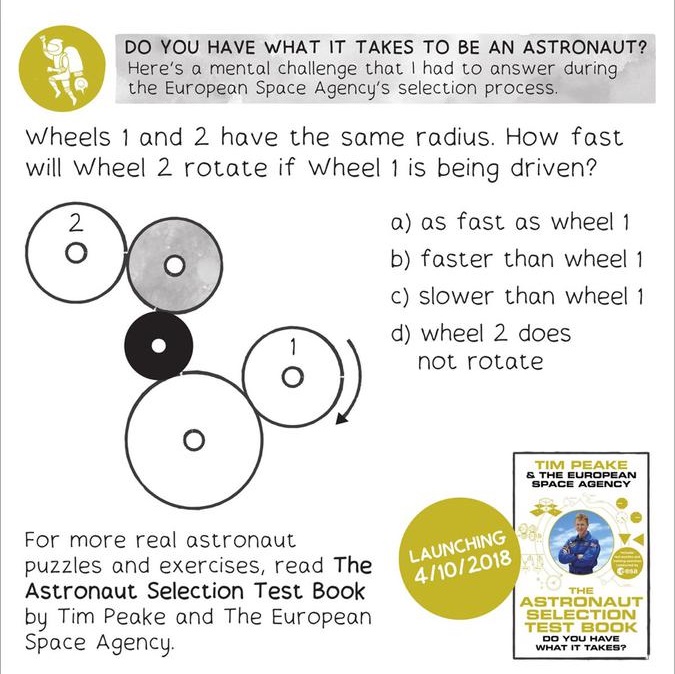
Astronaut Tim Peake spent half a year in one of the most fascinating places in the solar system: the International Space Station. He was the first British astronaut to serve under the banner of the European Space Agency, and the first British astronaut to perform a spacewalk.

Upon returning to Earth, he turned his attention to more literary efforts, penning three books about space. The third, published last year in partnership with the European Space Agency, takes readers behind the scenes of the ESA screening process for astronauts.

Yes, puzzles are part of the screening process for the ESA.

Would you like to try your hand at solving some of them?

How did you do? Let us know in the comments section below! We’d love to hear from you

And if you’d like, you can find more of these puzzles in Peake’s delightful book The Astronaut Selection Test Book: Do You Have What it Takes for Space?

Do you have what it takes? I suspect that you do, fellow puzzler.


Thanks for visiting PuzzleNation Blog today! Be sure to sign up for our newsletter to stay up-to-date on everything PuzzleNation!

You can also share your pictures with us on Instagram, friend us on Facebook, check us out on TwitterPinterest, and Tumblr, and explore the always-expanding library of PuzzleNation apps and games on our website!

The Art of Metal Brain Teasers

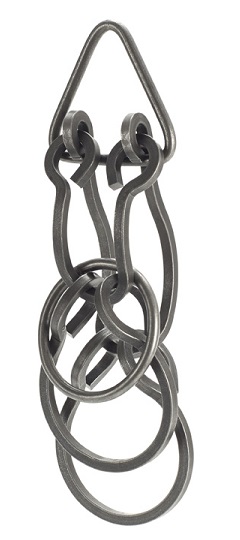
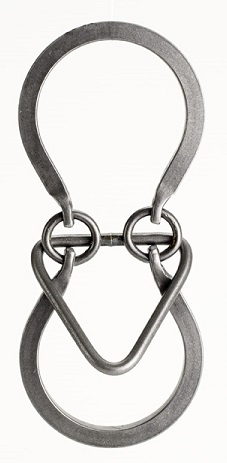
[Disentanglement puzzles, courtesy of Mr. Puzzle Australia.]

When we talk about people creating puzzles, certain standard materials come to mind.

Pen and paper. A computer program like Crossword Compiler. For brain teasers and puzzle boxes, wood is common. Recently, 3-D printers have made it possible to create plastic puzzles the likes of which no one has seen before.

But we rarely talk about metal.

When it comes to disentanglement puzzles, metal is where it’s at. Wood and plastic pieces can flex under pressure, making them more susceptible to a forced solution where one wasn’t intended. But with metal puzzles, you’ve pretty much only got one option: solve it as intended.

Metal brain teasers like those pictured above started out simply, made from twisted nails and used as puzzles in pubs for bar bets. (Some brain teasers made today still mimic the appearance of nails in honor of this rustic style of puzzling.)

They can be basic or complex, depending on how many pieces are involved, but the goal is usually to separate each puzzle into its component pieces.

Of course, these puzzles might look slight when compared to the heavy-duty ones produced by companies like our friends at Tucker-Jones House, whose Tavern Puzzles line combine complexity with artful craftsmanship to create some impressive and daunting puzzles.

Instead of completely dismantling the puzzle, Tavern Puzzles usually have a single element — a ring, a heart shape, a triangle — that you must free from the rest of the metal pieces.

[They have Valentine’s Day-themed puzzles too!]

But when it comes to metal puzzles, it’s hard to top this recent masterpiece by metalsmith Seth Gould.

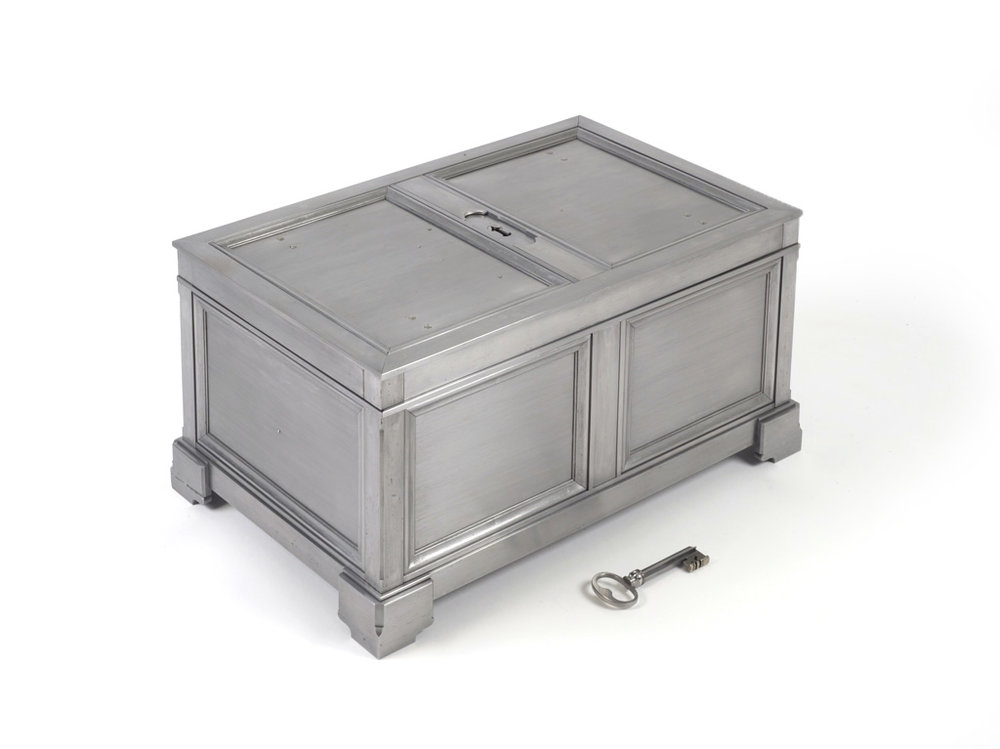
This is Coffer.

Yes, it looks like a simple chest and key, but as you’ve no doubt figured out, there’s far more to Coffer than meets the eye.

This puzzle took over two years to design and create, and it’s made from iron, steel, and brass.

Every piece was crafted by Gould himself, inspired by designs from between the 17th and 19th centuries, and the puzzle mechanism itself is his own design:

I received a BFA in Jewelry and Metalsmithing Design, and during the end of my time in school I became interested in forging. In fine metals I found that I worked well with the precision needed to create quality work, and in forging I was drawn to the malleability of the material and the scale in which I could work.

It was not until I visited Musée Le Secq Des Tournelles in Rouen, France shortly after graduation that I realized how those two interests could intersect. The locks and utilitarian objects I saw there were unlike anything I had ever seen, and still influence me today.

Now that is the ultimate in DIY puzzling.

Filmmaker Jesse Beecher chronicled the construction process and has posted a wonderful video on Vimeo that shows how much love and labor went into this marvelous metal puzzle:

Constructors and puzzle designers are continuing to push the envelope when it comes to mind-blowing, beautiful brain-teasing creations, and whether we’re talking paper, wood, metal, or 3D printing, there seems to be no limit to what puzzly minds can bring to life.


Thanks for visiting PuzzleNation Blog today! Be sure to sign up for our newsletter to stay up-to-date on everything PuzzleNation!

You can also share your pictures with us on Instagram, friend us on Facebook, check us out on TwitterPinterest, and Tumblr, and explore the always-expanding library of PuzzleNation apps and games on our website!