Puzzles Come to Animal Crossing for May Day!

animal-crossing-new-horizons-switch-hero

[Image courtesy of Nintendo.]

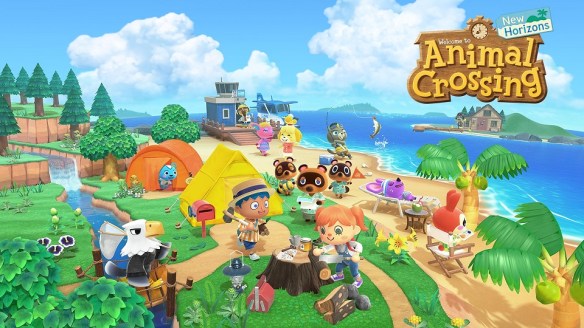
The latest edition of the video game franchise Animal Crossing — New Horizons — has been out for a few months now. But recently, they ventured into the world of puzzles as a special promotion.

Thankfully, friend of the blog Jennifer Cunningham — puzzler, artist, musicologist, and former Tabletop Tournament Champion — has returned to the blog with the lowdown on the recent May Day event.

So, without further ado, let’s turn things over to Jen for her piece on Animal Crossing: New Horizons.


Possibly one of the most anticipated video game releases of the year, Animal Crossing: New Horizons arrived at just the right time, hitting Nintendo Switch consoles at the end of March.

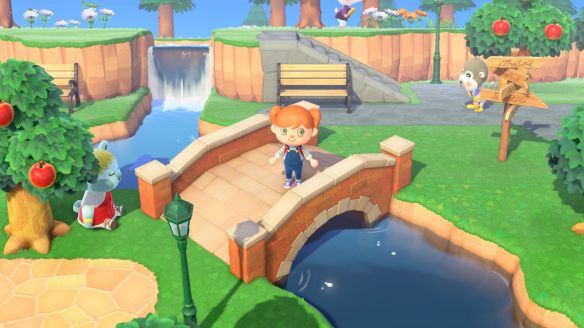
The latest installment in the Animal Crossing series finds its players arriving at a beautiful island paradise. There are multiple goals in the game including expanding your home, gaining wealth, collecting insects and fish to donate to the local museum (or to sell for profit), and of course improving your island’s appeal so that popular singer/songwriter K.K. Slider will play a concert for you and the other residents.
animal-crossing-new-horizons-guide

[Image courtesy of VG 24/7.]

Players across the world have gone wild for this game, making it their entertainment of choice while stuck at home at this uneasy time. The social aspect of the game, which allows players to virtually invite their friends to their islands, share gifts and resources, and even to chat, has helped many feel less isolated.

And the makers of Animal Crossing are doing their part to keep the game interesting and engaging for players who have likely been obsessively playing since the release date. As months change, so do your island’s insects and fish, and special events ensure players keep coming back. An Easter-themed event called Bunny Day saw players collecting eggs to build themed objects, and more recently an environmentally centered event called Nature Day encouraged activities related to planting trees and flowers.

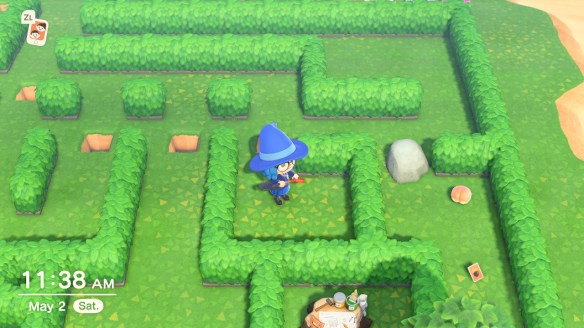
May Day on May 1st was part of the Nature Day celebration. Starting on this day, everyone’s favorite raccoon/tanuki mogul Tom Nook gave players a special ticket for a May Day Tour on a special getaway island via Dodo Airlines. Unlike other island excursions that players may take, this particular tour package had an unusual surprise. Players were transported to an island with a puzzly secret: a maze!
20200503_194628

[Image courtesy of Jennifer Cunningham.]

Normally Animal Crossing doesn’t involve much in the way of problem solving — it’s a pretty straightforward collect-and-build-style game — so to challenge players with a puzzle was a surprise.

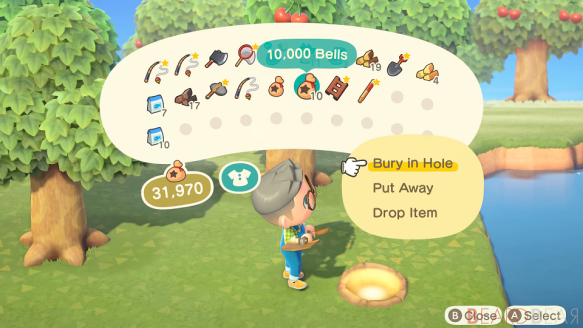
The entire May Day Tour island is composed of a hedge maze, blocked off in spots by boulders, trees, and shrubs. Using a simple shovel supplied at the maze entrance, players must collect resources such as fruit, wood, and iron ore to build more tools and make their way through the maze.
animal-crossing-new-horizons-money-tree

[Image courtesy of Newsweek.]

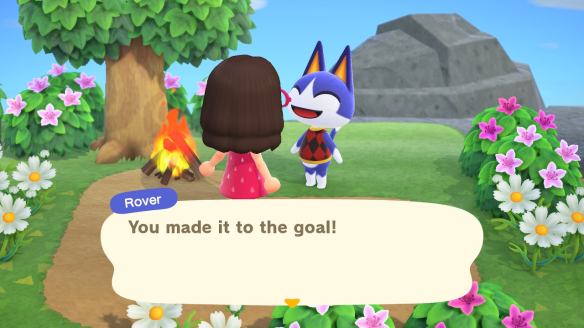
In addition, players could collect “Bell vouchers” which can be traded in for Bells (the game’s currency). At the end of the maze awaited the main prize as supplied by a mysterious returning character popular to fans of the game’s previous generations. (I admit as a new fan, this wasn’t a big draw for me, but for die-hard fans, this was a very big deal.)

The maze was intuitive, and it didn’t take long for me to figure out how to navigate it, although it does involve a lot of backtracking to meet the necessary steps in the correct order.
animal-crossing-new-horizons-may-day-tour-featured_feature

[Image courtesy of Super Parent.]

That said, the maze did offer some challenges. I completed my first attempt fairly quickly, but failed to maintain enough fruit in my stores to remove three boulders and access a group of bell vouchers. (For a bit of context, consuming fruit boosts players’ strength, allowing them to dig up whole trees or break boulders).

Thankfully the maze offered a reset option. It took me about three attempts to finally perform every necessary action in the correct order to collect all of the maze’s prizes.

animal-crossing-new-horizons-guide-may-day-event-rescue-services-reset

[Image courtesy of Animal Crossing World.]

Overall, while not the most challenging of puzzles, it was refreshing to do some problem solving in a game that can admittedly get a little repetitive. There was a hint within the game’s dialog that there may be more islands of this sort, and I do hope that is true. Likely these will be included in future events to keep players coming back for more.

If you haven’t jumped on the Animal Crossing bandwagon yet and want to try your luck at the maze before it’s too late, the May Day event runs through May 7.


Thank you Jen for that marvelous report!

Will you be participating in the May Day Animal Crossing event, fellow puzzlers and PuzzleNationers? Let us know in the comments section below. We’d love to hear from you!

Thanks for visiting PuzzleNation Blog today! Be sure to sign up for our newsletter to stay up-to-date on everything PuzzleNation!

You can also share your pictures with us on Instagram, friend us on Facebook, check us out on TwitterPinterest, and Tumblr, and explore the always-expanding library of PuzzleNation apps and games on our website!

Two Brain Teasers, Courtesy of Conway

John_H_Conway_2005_(cropped)

Last week, we penned a post celebrating the life and puzzly legacy of mathematician John Horton Conway, and several of our fellow PuzzleNationers reached out with their own thoughts or questions about Conway.

One recurring subject was about his love of puzzles and what kind of puzzles he enjoyed solving. So, naturally, I went hunting for some of Conway’s favorite puzzles.

As it turns out, Alex Bellos of The Guardian had me covered. Alex has a recurring puzzle feature on The Guardian‘s website where brain teasers and other mental trickery awaits intrepid solvers.

Years ago, Alex had asked Conway for suggestions for his column, and Conway offered up two tricky puzzles.

And now, I happily share them with you.


#1: The Miracle Builders

I had a window in the north wall of my house. It was a perfect square, 1 meter wide and 1 meter high. But this window never let in enough light. So I hired this firm, the Miracle Builders, who performed the impossible. They remodeled the window so it let in more light. When when they’d finished the window was a perfect square, 1 meter high and 1 meter wide.

How did they do it?


#2: The Ten Divisibilities

I have a ten digit number, abcdefghij. Each of the digits is different.

The following is also true:

  • a is divisible by 1
  • ab is divisible by 2
  • abc is divisible by 3
  • abcd is divisible by 4
  • abcde is divisible by 5
  • abcdef is divisible by 6
  • abcdefg is divisible by 7
  • abcdefgh is divisible by 8
  • abcdefghi is divisible by 9
  • abcdefghij is divisible by 10

What’s my number?

[To clarify: a, b, c, d, e, f, g, h, i, and j are all single digits. Each digit from 0 to 9 is represented by exactly one letter. The number abcdefghij is a ten-digit number whose first digit is a, second digit is b, and so on. It does not mean that you multiply a x b x c x…]


Did you solve one or both of these fiendish mind ticklers? Let us know in the comments section below! We’d love to hear from you.

Thanks for visiting PuzzleNation Blog today! Be sure to sign up for our newsletter to stay up-to-date on everything PuzzleNation!

You can also share your pictures with us on Instagram, friend us on Facebook, check us out on TwitterPinterest, and Tumblr, and explore the always-expanding library of PuzzleNation apps and games on our website!
Cultural Sensitivity and Crosswords: Where Is The Line?

crossword1

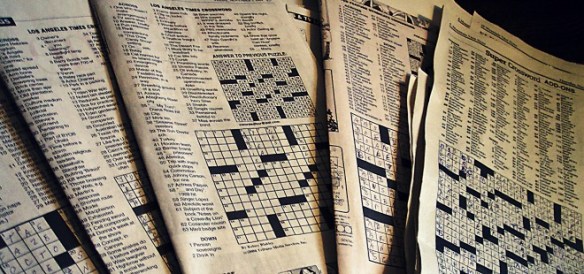
A few days ago, an entry in The New York Times Crossword caught the eye of a solver. That solver posted about it in the Facebook group “The Crossword Puzzle Collaboration Directory,” which is dedicated to encouraging new constructors to make and submit puzzles.

That post kicked off an intense debate about problematic entries and how to handle them. Not only is this topic far from settled, but it’s emblematic of a larger question: where is the line?

You see, one of the advantages of our modern Internet-savvy culture is that feedback is virtually instantaneous now. If someone is offended or troubled by an entry or clue in the Monday crossword, it doesn’t take days for a letter to the editor to arrive at the paper. It takes seconds to post online and reach a potential audience.

Of course, that rapid response is a double-edged sword, because hot takes and rush-to-judgment commentary are just as quick to spread.

Both sides of that double-edged sword were in full effect as the replies piled up on that original Facebook post. As those in agreement with the original poster offered their support, counterpoints rolled in, either in defense of the entry or the clue.

(Naturally, given that this is the Internet, some chose to expand on the topic in general disagreement with a culture they claimed was too sensitive and quick to condemn every little thing that offended them. But since those people are an incredible waste of time and energy and have little interest in genuine discussion, this will be my last mention of them.)

Other posters focused on the mechanics of the puzzle itself, pointing out easy fixes that would have prevented the potentially problematic word from appearing at all. Some of these folks sided with the original poster, pointing out that a word that is potentially problematic should be edited out, and it’s part of a constructor’s job to think of these things.

And that’s the question. How much should constructors and editors be taking the potentially problematic aspects of words into consideration when constructing?

True, it’s not always possible to anticipate every negative response to the words filling your grid or the accompanying clues. (Heck, we have numerous examples of words and clues slipping through that catch fire with part of the audience in the worst possible way.)

But is that part of a constructor’s job?

In my opinion, yes, it is.

Crosswords should be inclusive. They should be an engaging activity that evokes occasional frustration but eventual satisfaction, whether you’re completing a grid, unraveling a particularly tricky theme, or besting your previous solving time. It should be fun. It should be entertainment, a distraction.

It should NOT be a place where people feel excluded, or where personal or historical traumas surface because of cluing or grid fill.

For example, I don’t believe CHINK should appear in crosswords, even as “flaw in one’s armor,” because anyone casually glancing at the grid will only see that word, not necessarily the context.

We can do better.

[Image courtesy of Bogoreducare.org.]

Originally, I wasn’t going to mention the specific clue/entry at all, because the issue is larger than this one example. But knowing the word that offended our original poster adds context.

The entry was NOOSE, and the clue was “End of a hangman’s rope.”

For the poster, the associations surrounding both clue and entry were troubling. But, for the most part, the main reason for posting appeared to be twofold:

1. Pointing out that the word’s inclusion in the grid was easily avoidable
2. Asking if other constructors/aspiring constructors found the entry as problematic as she did

She wasn’t calling for peoples’ heads. She was opening a dialogue and inviting discussion. She made her personal feelings clear — by using the word “appalled” — but made the discussion about something larger than her individual reaction.

Problem-solving-crossword

Some replies concerned the clue more than the entry, pointing out that the noose was used for many other, non-negative uses. The general association of nooses with lynching was brought up, with some instantly making the connection while others felt it was unfair or hypersensitive to make that association. Others brought up the word LYNCH, asking if the entry was problematic even if the cluing was about director David or actress Evanna.

These aren’t easy questions to answer. This is obviously not a debate that will be concluded anytime soon. But it’s one worth having.

And when it comes to conclusions to draw from all this, I think the original poster said it best in one of her replies: “In my opinion, it’s better to err on the side of empathy.”

Amen.


Thanks for visiting PuzzleNation Blog today! Be sure to sign up for our newsletter to stay up-to-date on everything PuzzleNation!

You can also share your pictures with us on Instagram, friend us on Facebook, check us out on TwitterPinterest, and Tumblr, and explore the always-expanding library of PuzzleNation apps and games on our website!

The Best Puzzle Solvers in Young Adult Fiction

In the past, we have assembled super-teams of the best puzzle solvers in horror films, television, and literature. The goal was to highlight characters who stand out, the ones you’d want on your side, because they’re clever, decisive, and immensely capable.

In the fourth installment in this delightful series, we turn our attention to books for young adult readers, seeking out the quickest minds and the deftest problem solvers from the printed page.

So let’s meet (or revisit) some wickedly bright minds from teen-centric reads.


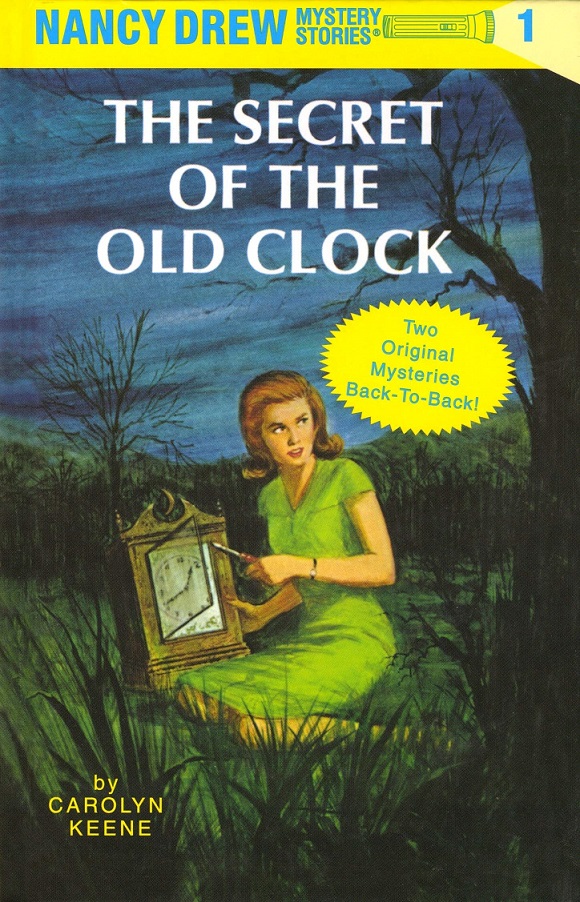
nancy drew

[Image courtesy of Amazon.]

Nancy Drew

Originally created as a female counterpart to the Hardy Boys, detective Nancy Drew has largely eclipsed them at this point, cementing her reputation as one of the most prominent teen detectives in literature. Nancy’s interest in numerous fields — psychology, language, and many others — served her well as she dove headlong into each case.

Her gift for association — making connections others miss — gave her a leg-up in locating clues and building cases before her lawyer father and the local police could do so. The criminal element in River Heights never left a puzzle that the diligent and outspoken Nancy couldn’t solve.

hermione-granger

[Image courtesy of Claire Fox Writes.]

Hermione Granger, Harry Potter series

When you’re a student of magic at one of the most dangerous schools in the world, you need to be sharp and ready. And Hermione Granger has those qualities in abundance. As studious as they come, Hermione is one of the puzzliest characters in modern literature. She brewed the notoriously difficult Polyjuice Potion, solved Professor Snape’s potion riddle, and deduced that Remus Lupin was a werewolf.

She’s as comfortable bending time to enhance her coursework (and save a few lives) as she is battling the gossip and lies of the treacherous Rita Skeeter. Numerous mysteries surrounding Hogwarts and Voldemort are solved by the trio of Ron, Harry, and Hermione, but without the stalwart and clever Miss Granger, Ron and Harry would’ve been out of luck.

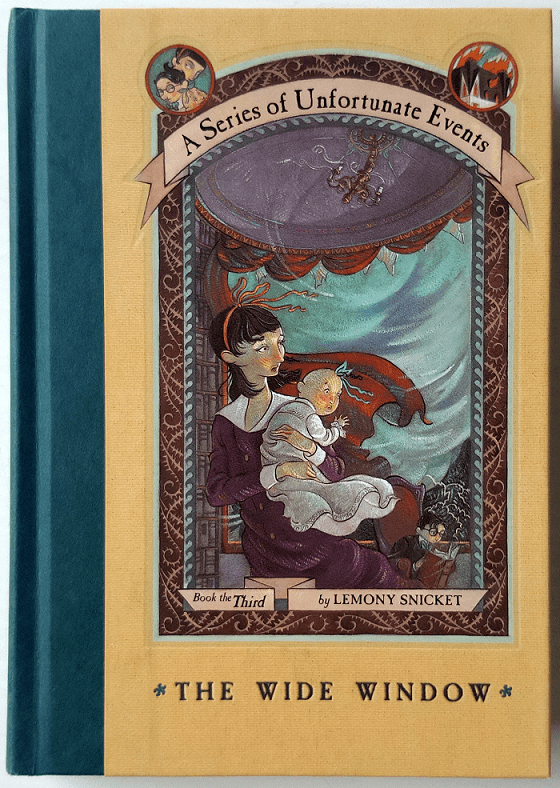
wide window

[Image courtesy of Thrifty Teachers.]

Violet Baudelaire, Lemony Snicket’s A Series of Unfortunate Events

The eldest of the three Baudelaire orphans, Violet has the most mechanical mind of the trio. She is a prolific inventor, making marvelous contraptions out of whatever’s handy, and often getting her and her siblings out of dangerous situations in the process. Pursued by the malevolent and greedy Count Olaf, Violet outwits Olaf on more than one occasion, paying close attention to him and tailoring her behavior accordingly.

Whether she’s inventing a grappling hook to save her sister or picking a lock to find evidence against Count Olaf, Violet has a mind made for puzzles, whether she’s putting things together or taking them apart. As imaginative as she is capable, no mechanical brain teaser could stymie her for long.

ender game

[Image courtesy of Heritage Auctions.]

Ender Wiggin, Ender’s Game series

Although Ender’s story is not as happy as some of the others in this list, as mistreated and manipulated as he is throughout the first book, he should absolutely be counted among the best puzzlers in young adult literature. He is a phenomenal tactician, first in laser tag competitions in zero gravity, then later in simulated interstellar combat scenarios as part of his command training.

Ender uses his cleverness to circumvent the final test and win an unwinnable battle. And when he discovers that the battle was NOT simulated, and he had in fact won a war through his clever ruthlessness, he turns his puzzly mind to figuring out the mistakes that led to the war in the first place. As his adventures continue, he unravels numerous mysteries, often saving lives in the process.

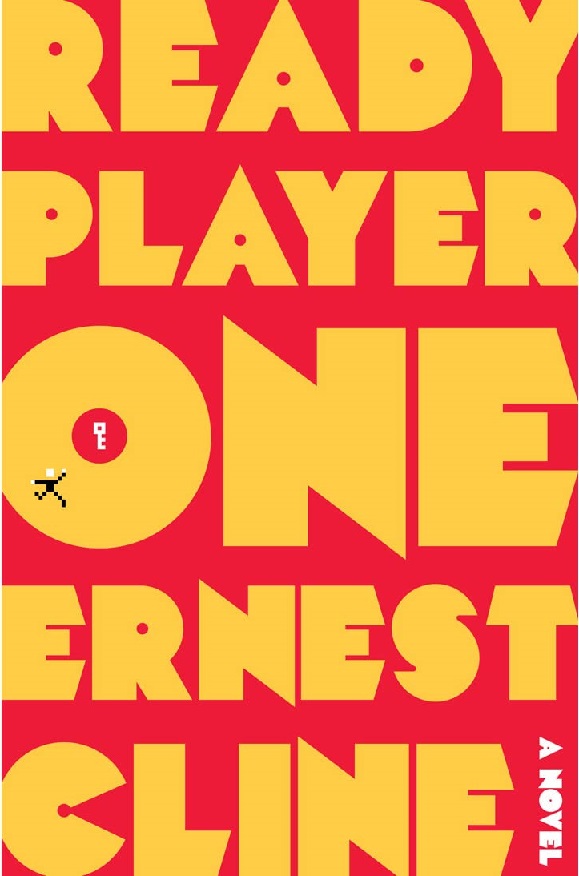
ready player one

[Image courtesy of Goodreads.]

Parzival, Aech, and Art3mis, Ready Player One

In a virtual world known as the OASIS — a fully immersive Internet where work, school, and recreation are conducted — the characters of Ready Player One are on the ultimate puzzle hunt. For five years, the prize has remained unclaimed, no matter how expansive or expensive the methods employed to find it. Entire corporations are dedicated to solving it, because the prize is nothing less than control of the OASIS itself.

Which makes it all the more impressive that game and puzzle-loving teenagers are the ones to uncover several of the keys needed to complete the hunt. They are clever, determined, and resourceful puzzlers who combine a thirst for knowledge, top-notch gaming skills, and impressive deductive reasoning to accomplish the seemingly impossible.

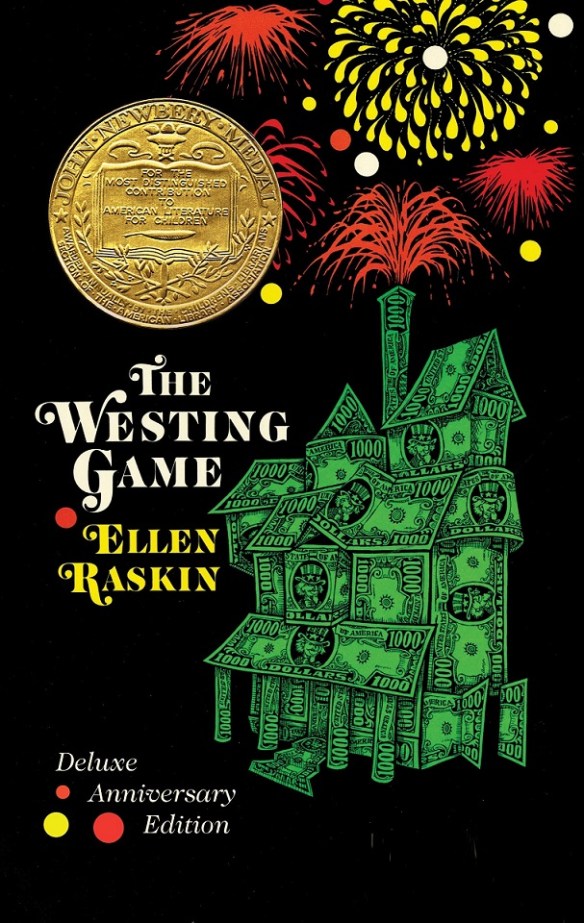
westing game

[Image courtesy of Amazon.]

Turtle Wexler, The Westing Game

When you find yourself — and everyone else in your apartment building — on the list of possible heirs for a dead millionaire’s fortune, you know something strange is going on. And if it’s a race to a fortune predicated on solving an intricate puzzle, solving a murder, and uncovering a mysterious secret, then Turtle Wexler is the person you want on your side.

Possessing a keen mind and some serious analytical chops — after all, she plays the stock market at 13 years old — Turtle’s intellect is nearly as quick as her shin-kicking feet. Another strong tactician, Turtle takes advantage of opportunities (and creating a few of her own), eventually winning the Westing Game.

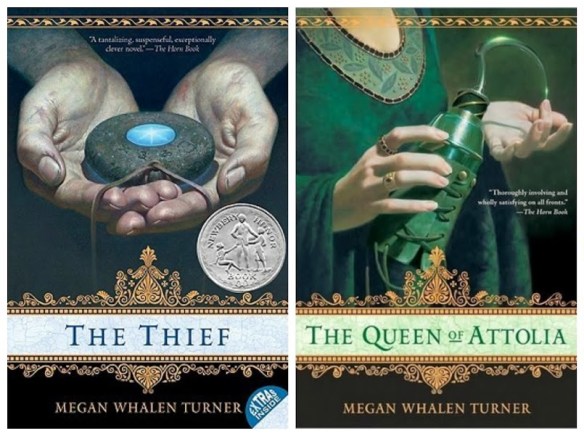
queen's thief

[Image courtesy of Christina Reads YA.]

Eugenides, The Queen’s Thief Series

The puzzles that Eugenides concerns himself with are far different than the ones tackled by other characters on this list. Eugenides is a master strategist, a chess player who must treat entire countries as his gameboard. Eugenides is observant and patient, playing out slow-burn tactics that can take months or years to come to fruition, all in the hopes of protecting those he serves.

It’s quite something to solve a puzzle in front of you, but it’s something else entirely to solve the next five puzzles before they’ve even shown themselves. Over the course of The Queen’s Thief series, Eugenides shows a tremendous understanding of how others think, what motivates them, and who can be trusted. There’s not a logic problem or a brain teaser around that Eugenides couldn’t plot his way past.

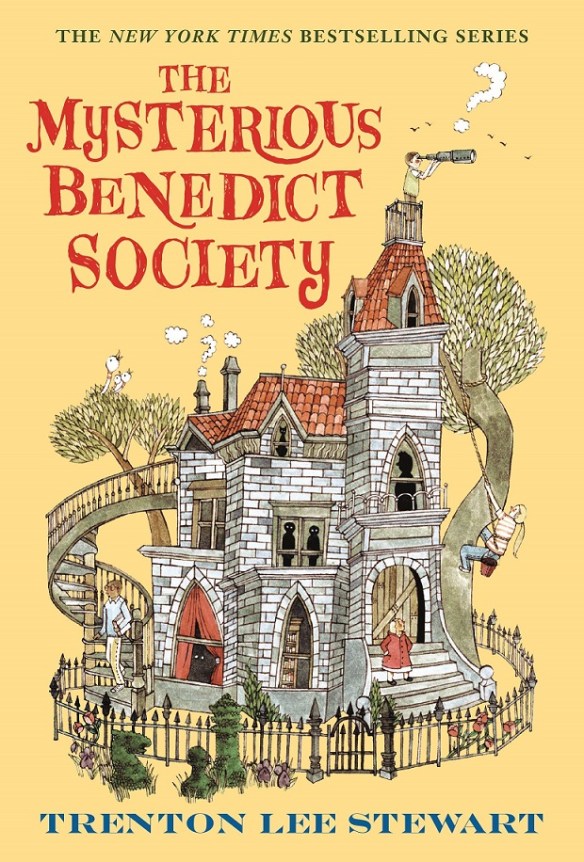
benedict

[Image courtesy of Amazon.]

Sticky, Constance, Kate, and Reynie, The Mysterious Benedict Society

If you’re looking for the most overtly puzzly quartet in young adult lit, this should be your first stop. These books are loaded to the brim with puzzles and mysteries, and this fearsomely brilliant foursome is equipped to handle any riddle, cipher, or brain teaser in their way.

Whether it’s Reynie’s logical deduction skills, Kate’s incisive ability to find shortcuts, Sticky’s memory and recall, or Constance’s penchant for finding patterns in plain sight, the sinister plans of Mr. Curtain (and any other puzzly evildoer out there) don’t stand a chance.


Did I miss any world-class puzzlers from famous (or obscure) works of young adult lit? Let me know in the comments section below! I’d love to hear from you!

Thanks for visiting PuzzleNation Blog today! Be sure to sign up for our newsletter to stay up-to-date on everything PuzzleNation!

You can also share your pictures with us on Instagram, friend us on Facebook, check us out on TwitterPinterest, and Tumblr, and explore the always-expanding library of PuzzleNation apps and games on our website!

Celebrating the Puzzly Legacy of John Horton Conway

The worlds of puzzles and mathematics overlap more than you might think. I’m not just talking about word problems or mathy brain teasers like the Birthday Puzzle or the jugs of water trap from Die Hard with a Vengeance.

For twenty-five years, Martin Gardner penned a column in Scientific American called Mathematical Games, adding a marvelous sense of puzzly spirit and whimsy to the field of mathematics, exploring everything from the works of M.C. Escher to visual puzzles like the mobius strip and tangrams. He was also a champion of recreational math, the concept that there are inherently fun and entertaining ways to do math, not just homework, analysis, and number crunching.

And on more than one occasion, Gardner turned to the genius and innovative thinking of John Horton Conway for inspiration.

John_H_Conway_2005_(cropped)

[Image courtesy of Wikipedia.]

Conway was best known as a mathematician, but that one word fails to encapsulate either his creativity or the depth of his devotion to the field. Conway was a pioneer, contributing to some mathematical fields (geometry and number theory among them), vastly expanding what could be accomplished in other fields (particularly game theory), and even creating new fields (like cellular automata).

Professor of Mathematics, Emeritus, Simon Kochen said, “He was like a butterfly going from one thing to another, always with magical qualities to the results.” The Guardian described him in equally glowing terms as “a cross between Archimedes, Mick Jagger and Salvador Dalí.”

lifep

[Image courtesy of Cornell.edu.]

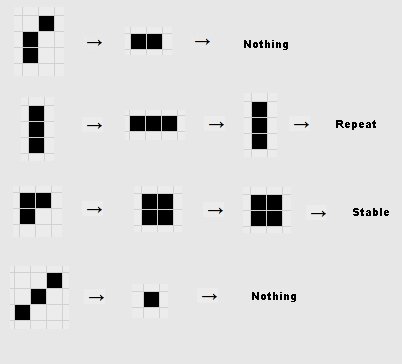
His most famous creation is The Game of Life, a model that not only visually details how algorithms work, but explores how cells and biological forms evolve and interact.

Essentially, imagine a sheet of graph paper. In The Game of Life, you choose a starting scenario, then watch the game proceed according to certain rules:

  • Any live cell with fewer than two live neighbors dies, as if by underpopulation.
  • Any live cell with two or three live neighbors lives on to the next generation.
  • Any live cell with more than three live neighbors dies, as if by overpopulation.
  • Any dead cell with exactly three live neighbors becomes a live cell, as if by reproduction.

The process plays out from your starting point completely without your intervention, spiraling and expanding outward.

It’s the ultimate if-then sequence that can proceed unhindered for generations. It is a literal launchpad for various potential futures based on a single choice. It’s mind-bending and simple all at once. (And you can try it yourself here!)

JHC-GOL-600x170px

[Image courtesy of Sign-Up.To.]

But that’s far from Conway’s only contribution to the world of puzzles.

Not only did he analyze and explore puzzles like the Soma cube and Peg Solitaire, but he created or had a hand in creating numerous other puzzles that expanded upon mathematical concepts.

I could delve into creations like Hackenbush, the Angel Problem, Phutball/Philosopher’s Football, Conway’s Soldiers, and more — and perhaps I will in the future — but I’d like to focus on one of his most charming contributions: Sprouts.

Sprouts is a pencil-and-paper strategy game where players try to keep the game going by drawing a line between two dots on the paper and adding a new dot somewhere along that line.

The rules are simple, but the gameplay can quickly become tricky:

  • The line may be straight or curved, but must not touch or cross itself or any other line.
  • The new spot cannot be placed on top of one of the endpoints of the new line. Thus the new spot splits the line into two shorter lines.
  • No spot may have more than three lines attached to it.

Check out this sample game:

sprouts

[Image courtesy of Fun Mines.]

It’s a perfect example of the playfulness Conway brought to the mathematical field and teaching. The game is strategic, easy to learn, difficult to master, and encourages repeated engagement.

In a piece about Conway, Princeton professor Manjul Bhargava said, “I learned very quickly that playing games and working on mathematics were closely intertwined activities for him, if not actually the same activity.”

He would carry all sorts of bits and bobs that would assist him in explaining different concepts. Dice, ropes, decks of cards, a Slinky… any number of random objects were mentioned as potential teaching tools.

Professor Joseph Kohn shared a story about Conway’s enthusiasm for teaching and impressive span of knowledge. Apparently, Conway was on his way to a large public lecture. En route, he asked his companions what topic he should cover. Imagine promising to do a lecture with no preparation at all, and deciding on the way what it would be about.

Naturally, after choosing a topic in the car, the lecture went off without a hitch. He improvised the entire thing.

Of course, you would expect nothing less from a man who could recite pi from memory to more than 1100 digits? Or who, at a moment’s notice, could calculate the day of the week for any given date (employing a technique he called his Doomsday algorithm).


Conway unfortunately passed away earlier this month, due to complications from COVID-19, at the age of 82.

His contributions to the worlds of mathematics and puzzles, not to mention his tireless support of recreational math, cannot be overstated. His work and his play will not soon be forgotten.

MAC31_BOOKS_COVERS_POST02

[Image courtesy of Macleans.]

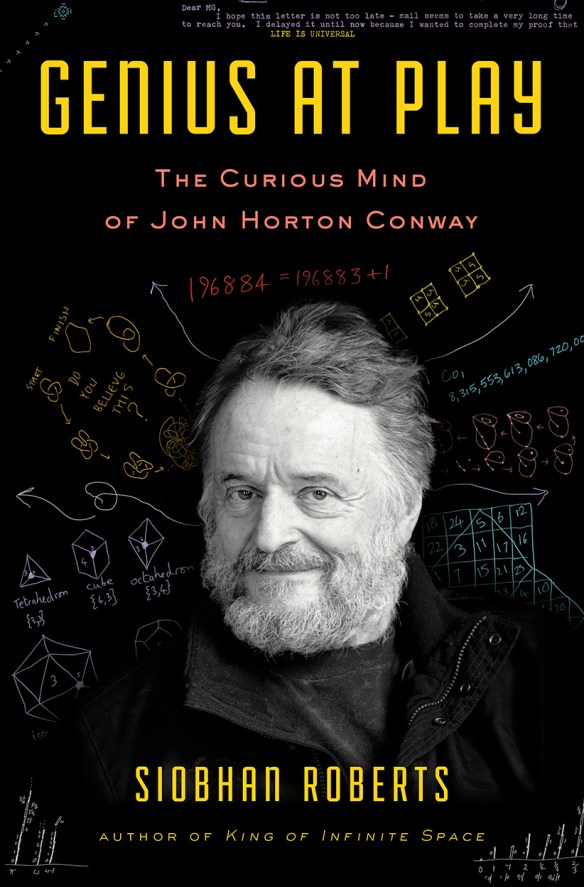
If you’d like to learn more about Conway, be sure to check out Genius at Play: The Curious Mind of John Horton Conway by Siobhan Roberts.

[My many thanks to friend of the blog Andrew Haynes for suggesting today’s subject and contributing notes and sources.]


Thanks for visiting PuzzleNation Blog today! Be sure to sign up for our newsletter to stay up-to-date on everything PuzzleNation!

You can also share your pictures with us on Instagram, friend us on Facebook, check us out on TwitterPinterest, and Tumblr, and explore the always-expanding library of PuzzleNation apps and games on our website!

View a Clue: Crossword Characters Answers!

A few weeks ago, we brought back one of our trickiest recurring features: the View a Clue game!

If you recall, I selected ten fictional characters that commonly show up in crossword grids — some have become crosswordese at this point — to see if the PuzzleNation audience could identify them from pictures.

Without further ado, let’s give it a shot!


#1 (4 letters)

view fcc 1

[Image courtesy of Heroes and Villains Fandom.]

Answer: ODIE, loyal and drooly companion of Garfield and his owner Jon Arbuckle


#2 (4 letters)

view fcc 2

[Image courtesy of Pinterest.]

Answer: ASTA, beloved dog of film detectives Nick and Nora Charles in the Thin Man series


#3 (3 letters)

view fcc 3

[Image courtesy of Redbubble.]

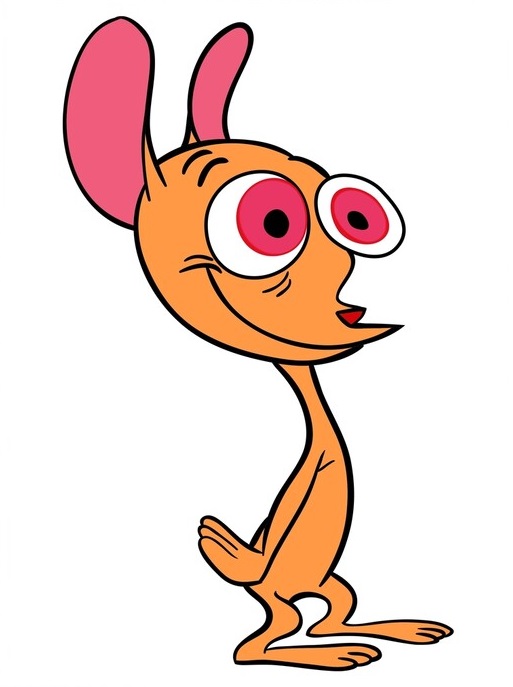
Answer: REN, from Nickelodeon’s Ren & Stimpy


#4 (4 letters)

view fcc 4

[Image courtesy of Disney Fandom.]

Answer: SMEE, Captain Hook’s right-hand man from the Peter Pan stories


#5 (4 letters) [I’ve included two possible characters for this one.]

view fcc 5a

view fcc 5b

[Images courtesy of E! Online and Wikipedia.]

Answer: ELSA


#6 (4 letters)

view fcc 6

[Image courtesy of Hulu.]

Answer: EYRE, more specifically Jane Eyre


#7 (4 letters)

view fcc 7

[Image courtesy of Amazon.]

Answer: IGOR, the assistant of Dr. Frankenstein


#8 (5 letters)

view fcc 8

[Image courtesy of Soap Central.]

Answer: ERICA, more specifically Erica Kane of All My Children


#9 (4 letters)

view fcc 9

[Image courtesy of Getty Images.]

Answer: AHAB, Captain of the Pequod from Moby-Dick


#10 (3 letters)

view fcc 10

[Image courtesy of Warner Bros.]

Answer: RIN, as in Rin Tin Tin, the famous Hollywood dog


How many did you get? Let me know in the comments below! And if you have ideas for another View a Clue game, tell us below!

Thanks for visiting PuzzleNation Blog today! Be sure to sign up for our newsletter to stay up-to-date on everything PuzzleNation!

You can also share your pictures with us on Instagram, friend us on Facebook, check us out on TwitterPinterest, and Tumblr, and explore the always-expanding library of PuzzleNation apps and games on our website!