A Legends of the Hidden Temple movie!

A lot of cool news has come out of San Diego Comic-Con this weekend. Teasers and trailers for dozens of movies and TV shows, surprise casting announcements, exciting new projects and more!

But one piece of news that might slipped under the radar was perhaps the puzzliest news of the convention: they’re making a Legends of the Hidden Temple movie!

In the mid-1990s, Legends of the Hidden Temple was a kids game show, a mix of puzzle-solving and Indiana Jones-esque adventure, an award-winning show that was all about cooperation, strategy, and outwitting foes rather than overpowering them.

Six teams of two would compete to see who would win the opportunity to enter the Temple and try to acquire the episode’s magical artifact (which changed from show to show). Host Kirk Fogg and a giant red-eyed stone head known as Olmec would challenge the players with trivia and physical challenges to see who would earn the right to test their speed and wits against the Temple.

I was a huge fan of the show because it didn’t rely solely on physical ability like so many other kids game shows did, and I’ve always been a sucker for Indiana Jones-style derring-do.

After crossing the moat, the members of the four teams that made it across first — be they the Purple Parrots, the Green Monkeys, the Red Jaguars, the Silver Snakes, the Blue Barracudas, or the Orange Iguanas — would find themselves on the Steps of Knowledge, answering questions about today’s artifact.

The first two teams to descend the steps would move on to the third round, where they would complete physical challenges to win the Pendants of Life, discs that would come in handy in the final round when the winning team braved the Temple.

The Temple itself was the puzzliest part of the show. As one team member tackled the labyrinthine Temple, hunting for the artifact, the other team member would wait in the wings, watching their performance. Moving from room to room by solving puzzles or accomplishing different tasks, the competitor would try to avoid the temple guards as they traversed the Temple.

(Those Pendants of Life could be exchanged for your freedom if you were captured by a temple guard. Get captured without one, and your turn is over, and the other member of the team would follow the path you’d made previously.)

The team as a whole had three minutes to find the artifact and escape the Temple in order to win the game.

And now, it’s going to be a TV movie!

It’s fun to see how much of the show they’ve worked into this trailer, and I hope the same adventuresome puzzle-solving spirit is an integral part of the storytelling.

After all, what good is a hidden temple without some Goonies-style puzzling?


Thanks for visiting PuzzleNation Blog today! Be sure to sign up for our newsletter to stay up-to-date on everything PuzzleNation!

You can also share your pictures with us on Instagram, friend us on Facebook, check us out on TwitterPinterest, and Tumblr, and explore the always-expanding library of PuzzleNation apps and games on our website!

5 Questions with Game Designer Andrew Looney

In honor of the 20th anniversary of Looney Labs this weekend, as well as the launch of the LooneyCon event today, we’re doing Follow-Up Friday a little differently today.

And so, welcome to another edition of 5 Questions, our recurring interview series where we reach out to puzzle constructors, game designers, writers, filmmakers, musicians, artists, and puzzle enthusiasts from all walks of life!

It’s all about exploring the vast and intriguing puzzle community by talking to those who make puzzles and those who enjoy them! (Click here to check out previous editions of 5 Questions!)

And I’m excited to welcome Andrew Looney as our latest 5 Questions interviewee!
pic243321

[Image courtesy of BoardGameGeek.com.]

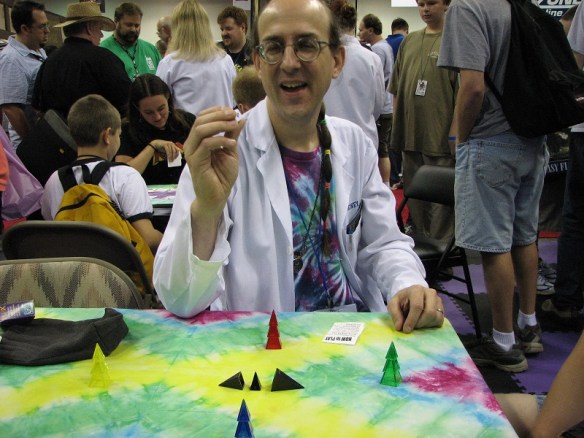
Andrew Looney is the chief game designer and co-founder of Looney Labs, a company specializing in games with serious replayability and dynamic rules that make every session a new experience. Founding the company in 1996 with his wife and partner-in-aerospace Kristin, he has gone on to launch such innovative games as Fluxx (and its many variations) and the Looney Pyramids series.

With two decades of experience in game design, he has presided over the growth of a major brand in games, one whose homegrown roots and values are still very much a part of the company’s fabric today.

Andrew was gracious enough to take some time out to talk to us in the days before LooneyCon, so without further ado, let’s get to the interview!


5 Questions with Andrew Looney

1. You’re celebrating twenty years of Looney Labs innovation and game design this month, and you’ve really cemented a reputation for fun games with a high replay value. How do you know when a game is right for your brand? And what role do you play in bringing these games to market?

I design everything we make myself. So I play a pretty big role. But the decision about what we publish next is not up to me… Ultimately, Kristin makes that call (although she gets input from everyone in the company and beyond).

When I feel that a game design is working, I’ll declare it ready for consideration, at which point it goes into the pool of possibilities. And some of my designs spend a lot of time waiting around in the pool before the company decides to publish them. In other cases, such as when I’m asked to create a game on a specific subject or when I come up with something particularly exciting, I have more deadline pressure.

But the ultimate test of when a game is ready is when everyone who plays it says, “This is great! Let’s play again!”

gaminggoh

[The heart and soul of Looney Labs, Andrew and Kristin Looney.
Image courtesy of WindyconBlog.]

2. In the last year, Looney Labs released more games than ever before, with new licensing deals for Fluxx variations like Batman Fluxx and Firefly Fluxx, a Mad Libs game, and a wildly successful Kickstarter campaign for Pyramid Arcade, a relaunch of sorts for your Looney Pyramids series. How is Year 20 of Looney Labs different from Year 1, and what lessons have you learned along the way?

Wow, the difference is so vast. Twenty years ago we were still working at our day jobs in the aerospace industry, and learning how to start a company in our spare time. We’re still living in the same house, but the similarities end there. For many years, we ran the business out of our house, but now it’s just our house again, since our company has an 11-room office suite up the road, where our 8 full-time employees work.

Twenty years ago I had an idea for a wacky new card game… now there are almost 20 different versions of that game on the market, that have sold almost 3 million copies, and our games are in about 20 different languages.

Twenty years ago, we were struggling to find a way to manufacture the little plastic pyramids needed for our first game idea. Now we’re about to release an incredible boxed set featuring twenty different games I’ve invented since then for the pyramids.

Plus we have a bunch of other cool games I’ve invented along the way! It’s amazing, I never would have believed it. Where will we be in another twenty years?
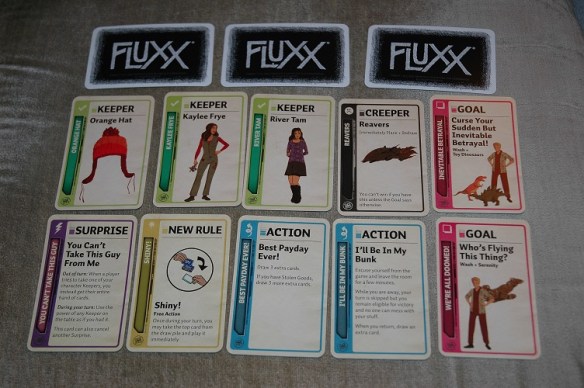
firefly2

[Sample cards from Firefly Fluxx, one of many games
released under the Looney Labs banner.]

3. You’ve created games of your own and helped others bring their games to life. What puzzles and board games, either in game-play style or in the experience of producing them for sale, have most influenced you?

I grew up on the old-school classics, so they were my obvious first influences. Sorry was an early favorite. Another was a sixties board game about the Civil War called Battle Cry. I think my first real game design effort was a small-scale, simplified version of Battle Cry I made as a kid, small and fast enough to be played at a restaurant during a meal. (Sadly, I lost that prototype long ago.)

Another early effort was combining the missile and warhead cards from Nuclear War with the board game Risk. Another of my earliest efforts was coding my own text adventure games, like Colossal Cave, a game so inspirational to me that it also first motivated my desire to program computers.

Kristin and I were independently inspired, during our high school days, by the dice game Cosmic Wimpout. Indie game companies like them are everywhere now, but at the time it was a revelation that such companies could exist. We were particularly inspired by their occasional newsletter and their grassroots approach to marketing.

My favorite card game from way back is Hearts, and certain elements of that game still inspire me, most notably the way it has two paths to victory (avoid taking points vs. take all the points).

Lastly, Fluxx was inspired by a conceptual game engine called Nomic, in which the game rules are created by the players as the game is played. I found Nomic to be an interesting idea, but felt I could do better…

I think a lot of game designers, and indeed inventors of every stripe, are driven by this sort of inspiration, the desire to improve on what someone else did, to go even further with the idea.

looneycon

4. What’s next for Andrew Looney and Looney Labs?

Well, the very next thing is LooneyCon, a micro-convention for fans of our games which we’re running this weekend! And as mentioned, this fall we’ll be releasing Pyramid Arcade, the culmination of everything we’ve been doing with the pyramid system these past 20 years.

Well, almost — it doesn’t include Zendo, which is too big to fit in Pyramid Arcade. But a new standalone edition of that game is something we’re planning separately, and we have some pretty neat ideas for that, too.

And I’ve got other exciting stuff planned for the future, including 3 completely new board games I’ve been developing for the past few years. Sorry, I can’t even tell you their names yet, let alone when they will be released, but I’m pretty satisfied by each one.

5. If you could give the readers, writers, aspiring game designers, and puzzle fans in the audience one piece of advice, what would it be?

“Don’t get left behind when the car goes into town.”

This is something my mom used to say (which I actually only learned at her funeral). It was a lesson she’d learned as a kid in rural Kansas, and it literally just refers to the limited availability of opportunities to catch a ride from the farm into town.

But I love it as a mantra for every fleeting chance we get at doing something fun. Pay attention to everything, because doors sometimes open and close quickly, and always say yes to travel and excitement!

Life is one big game, and whoever has the most fun wins!


A huge thank you to Andy for his time. Be sure to check out the Looney Labs site for updates on all things Looney, and check out their Facebook to keep up on all the activities for this weekend’s LooneyCon event, which starts today and runs through Sunday July 24, the actual 20th anniversary! I cannot wait to see what he has in store for us next!

Thanks for visiting PuzzleNation Blog today! Be sure to sign up for our newsletter to stay up-to-date on everything PuzzleNation!

You can also share your pictures with us on Instagram, friend us on Facebook, check us out on TwitterPinterest, and Tumblr, and explore the always-expanding library of PuzzleNation apps and games on our website!

A proposal most puzzly!

Tuesday’s post was all about the chaos and unpleasantness ensuing from a puzzly misunderstanding, so let’s make today’s post about puzzles bringing people together.

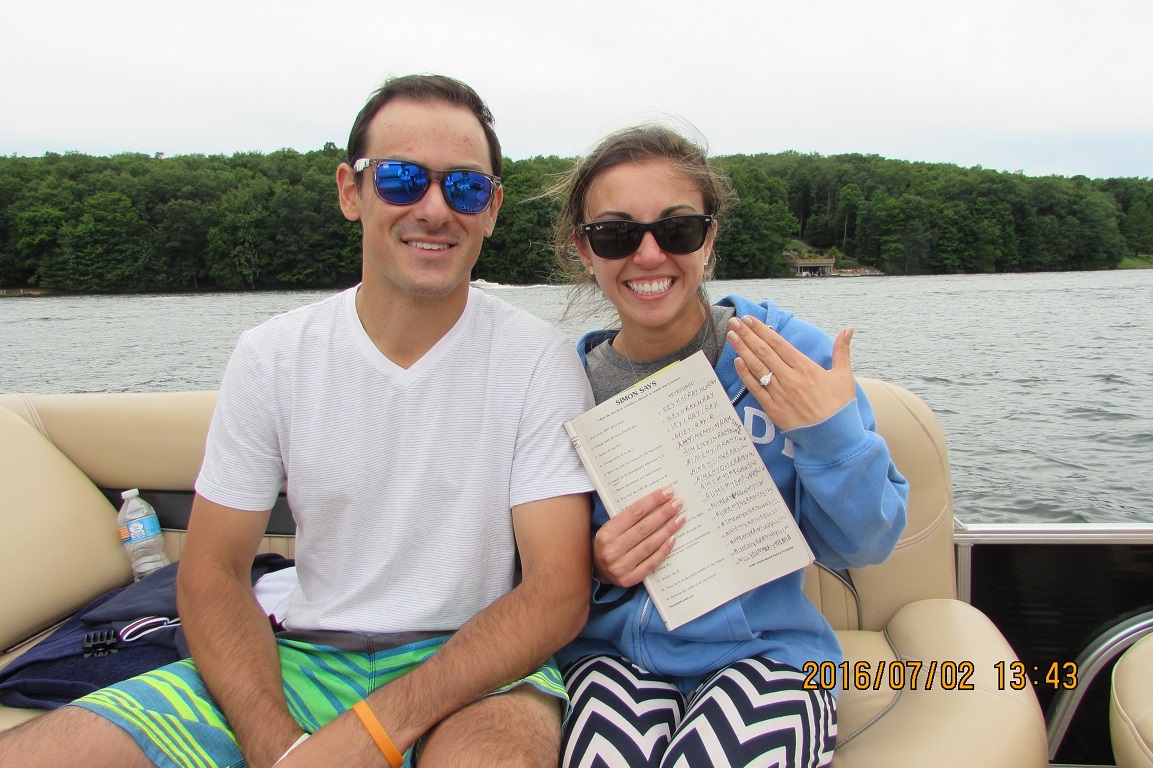
Oh yes, my fellow puzzlers and PuzzleNationers, we’ve got a puzzle-fueled engagement on our hands!

Our friends at Penny Dell Puzzles were contacted by a fellow named Bryan who wanted their assistance in crafting a puzzly proposal for his girlfriend.

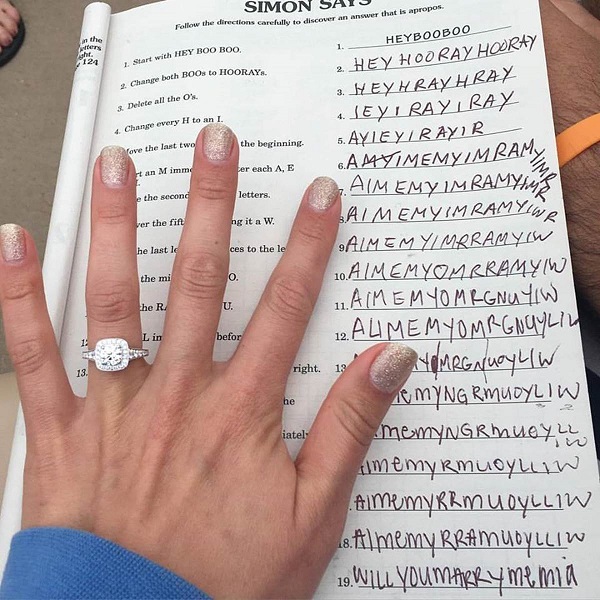
Bryan provided information and ideas for the folks at Penny to utilize, and a special Simon Says puzzle was constructed for the proposal and slipped into a short run of magazines during production. That way, the proposal would be concealed amidst many other puzzles, and his girlfriend wouldn’t suspect a thing! Diabolical!

(For the uninitiated, Simon Says is an instruction puzzle where you start with a phrase, follow various instructions on how to manipulate and change the letters in the phrase, and you end up with a completely new phrase, usually a pun or a play on the starting phrase.)

In this case, the puzzle started with an affectionate HEY BOO BOO, and 19 steps later, you end up with the fateful question WILL YOU MARRY ME MIA?

So… how did it go, you ask?

Success!

Bryan later told his puzzly cohorts:

The day couldn’t have turned out any better and the fact that she said yes definitely helped. We actually completed around half the book prior to the engagement and she had no clue that page was special. She was completely surprised as well as her parents and it took her until Line 17 to finally figure out what it said. Kudos to you guys for being able to draw it on for that long!

Congratulations to Bryan and Mia! I wish them nothing but the absolute best, and I hope they have many many happy years of love and puzzling ahead of them.

Our pals at Penny Dell Puzzles really outdid themselves on this one. Kudos indeed.

[For the story on the proposal the PDP crew assisted on last year, for another fellow named Bryan, click here!]


Thanks for visiting PuzzleNation Blog today! Be sure to sign up for our newsletter to stay up-to-date on everything PuzzleNation!

You can also share your pictures with us on Instagram, friend us on Facebook, check us out on TwitterPinterest, and Tumblr, and explore the always-expanding library of PuzzleNation apps and games on our website!

Puzzle Vandalism!

[Image courtesy of Milliande.com.]

It’s hard to know sometimes what qualifies as art.

Artists and entrepreneurs are constantly pushing the boundaries of visual and intellectual expression. Everything from paint and stone to light and shadow are used to realize artistic visions. Christo wraps buildings and calls it art.

That can make it tough for those who are less familiar with the fluid definition of art.

There was a famous incident back in May when a seventeen-year-old left his glasses on the floor of an art gallery and many patrons mistook them for an art installation.

This has only grown more complicated with the advent of interactive art pieces. Some works of art can only be viewed from a specific vantage point, while others actively engage patrons.

Recently a woman unintentionally vandalized a piece of art when she mistook it for part of an interactive exhibit.

And wouldn’t you know, that piece of art was based on a crossword puzzle.

[Image courtesy of Thoibao.today.]

The 91-year-old woman was visiting the Neues Museum in Nuremberg with a senior citizens group when she found the piece, “Reading-work-piece” by artist Arthur Koepcke, and began filling in the empty grid.

These days, you can understand her confusion and sympathize with her mistake. I mean, the exhibit did say “insert words,” after all. Those sound like instructions to me.

Plus the grid has remained incomplete since its creation in 1965. It’s about time somebody finished the puzzle.


Thanks for visiting PuzzleNation Blog today! Be sure to sign up for our newsletter to stay up-to-date on everything PuzzleNation!

You can also share your pictures with us on Instagram, friend us on Facebook, check us out on TwitterPinterest, and Tumblr, and explore the always-expanding library of PuzzleNation apps and games on our website!

It’s Follow-Up Friday: LooneyCon edition!

Welcome to Follow-Up Friday!

By this time, you know the drill. Follow-Up Friday is a chance for us to revisit the subjects of previous posts and bring the PuzzleNation audience up to speed on all things puzzly.

And for today’s blog post, we’re returning to one of my favorite subjects: puzzly events!

looneycon1

We’re closing in on a very special anniversary for a company PuzzleNationers know well. From Loonacy, Just Desserts, and Fluxx to Chrononauts, Mad Libs: The Game, and Pink Hijinks, many of their games have passed beneath the PuzzleNation Blog microscope!

That’s right, we’re one week away from the 20th anniversary of Looney Labs!

More specifically, it’s the 20th birthday of Fluxx, the very first Looney Labs game!

And how are the folks at Looney Labs celebrating this joyous occasion? Why, with their very own convention: LooneyCon!

From their Facebook page:

LooneyCon is a weekend long convention focused entirely on Looney Labs and our fans! What will we do at LooneyCon, you ask? We’ve got tournaments, giant game pieces, tie dying and craft projects, unpublished prototypes, and foreign language versions to try… We’re going to bring Andy’s Ice Breaker video game full console machine! Rare items will be given out… Grab your tickets before we sell out!

From July 22 to July 24, all things Looney Labs will be celebrated! They’ve got gaming tables, an auction where you can spend Looney Bucks earned during the event, rare versions of their most popular games, and the intriguing “Andy vs. Everybody” event pitting creator and game designer Andrew Looney against all comers!

So, if you’re near Chevy Chase, Maryland — or within traveling distance — reach out to them on Facebook and join in the fun!

For the full calendar of LooneyCon events, click here!


Thanks for visiting PuzzleNation Blog today! Be sure to sign up for our newsletter to stay up-to-date on everything PuzzleNation!

You can also share your pictures with us on Instagram, friend us on Facebook, check us out on TwitterPinterest, and Tumblr, and explore the always-expanding library of PuzzleNation apps and games on our website!

5 Questions with Constructor and Editor Patti Varol!

Welcome to 5 Questions, our recurring interview series where we reach out to puzzle constructors, game designers, writers, filmmakers, musicians, artists, and puzzle enthusiasts from all walks of life!

It’s all about exploring the vast and intriguing puzzle community by talking to those who make puzzles and those who enjoy them! (Click here to check out previous editions of 5 Questions!)

And I’m excited to welcome Patti Varol as our latest 5 Questions interviewee!

profilepic

If you’ve solved crosswords anywhere other than the New York Times for the last few years, you’re bound to have encountered Patti Varol’s clever constructing and crafty cluing. A regular of The Washington Post and other outlets, Patti is a topnotch constructor and a crossword pro.

She’s also no stranger to PuzzleNation Blog, as she has previously contributed advice for constructing your own crosswords and shared her victory at Lollapuzzoola two years ago with the PuzzleNation audience.

Patti was gracious enough to take some time out to talk to us, so without further ado, let’s get to the interview!


5 Questions for Patti Varol

1. How did you get started with puzzles?

I solved all kinds of puzzles with my grandparents when I was a kid, and games were a big part of family time when I was growing up. A few years after I finished college, I answered an ad for an editorial job with the crossword/variety department at Penny Press — the puzzle test and the interviews for that position, and then taking that job, well, that changed my life. Suddenly, puzzles and games were something to study from the inside out, to take apart and put back together better, to make from scratch. And that was just as much fun as solving them…and I was getting paid to do it.

puzzlebooks_zpstzpevapx

2. You keep awfully busy when it comes to puzzles. Can you fill the PuzzleNation audience in on your various puzzle jobs and how they differ from each other?

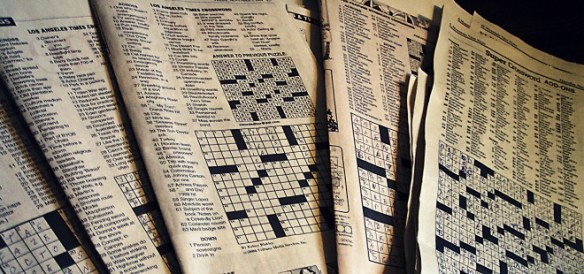
I do! I’m Rich Norris’s assistant at the L.A. Times Crossword, which means that I write some of his correspondence (I let constructors know what Rich likes or doesn’t like about the puzzles they’ve sent him), and I pre-edit some of the daily puzzles. I also send out the monthly constructor schedule notices and do some of our testing and fact checking.

I’m also the editor of The Crosswords Club, which is a monthly publication with six Sunday-sized crosswords. The puzzles are made by some of the best constructors in the business, so they are as fun as they are challenging. Each monthly envelope also has an extra word game, and all of the puzzles have explanatory blurbs with some trivia and etymology. It’s a really neat product – there’s really nothing else like it on the market.

And I also do puzzle testing/proofreading for a few other venues, including some crossword tournaments and puzzle magazines. And I’m a puzzle constructor for the CrosSynergy puzzle syndicate; my crosswords appear in The Washington Post roughly once a month. I also construct puzzles for the LA Times and Crosswords Club occasionally, and I mentor new constructors who seek out my help.

Every venue I work for has a different style guide and different target audience, so it’s a job in itself to keep them all straight. All of these different puzzle jobs have made me a strong, confident editor and constructor. I love what I do, and I love being good at what I do. And I’m only good at what I do because I’ve had the privilege to work with and learn from the best.

aid1316594-728px-make-crossword-puzzles-step-10

[Image courtesy of Wikihow.com.]

3. What, in your estimation, makes for a great puzzle? What do you most enjoy — or most commonly avoid — when constructing your own? What do you think is the most common pitfall of constructors just starting out?

A great puzzle has a spark to it — you know right away that it’s something original, fresh, and special. You learn something new, or you see something familiar from a new angle. It’s that aha! moment, that pop. I’m being maddeningly vague here, I realize, but the elements of a great puzzle are elusive and subjective.

That same pop comes when constructing a puzzle, too. Getting a tough grid to come together cleanly, realizing that the right pieces are finally all there in the right order — that can be even more satisfying than solving someone else’s puzzle.

New constructors always seem to start off with more than they can handle: they try to make a Sunday puzzle (21x) before they’ve mastered the smaller daily format, or they try to do a low-word-count themeless before they’re fully comfortable with the 15x themed format. Or they try to cram too much theme in a grid.

Start small, aim big, and you’ll get better with every grid.

4. Between the Timothy Parker plagiarism scandal and the recent Slate article about insensitivity and tone-deafness in cluing in the New York Times crossword, accountability has been a major topic this year in the world of puzzles. As a gatekeeper to getting published yourself, what changes would you like to see made in order to bring crosswords into the 21st century?

Change is already underway, and it’s exciting, because crosswords just keep getting better and better. Just as language evolves — words and their meanings can be as fluid as they can be subjective — so, too, do the media and art forms that rely on language.

crossword1

[Image courtesy of HomeSchoolSuccess.com.]

The conversations about crosswords, online and offline, illustrate clearly that the crossword community is made up of some of the smartest, most language-sensitive, funniest people you’ll ever meet. We’re in love with our craft, and sometimes we take ourselves and our work too seriously, which is what happens when you’re passionate about what you do. But it’s so important to remember that puzzles are entertainment, a happy diversion, and if we use language incorrectly or insensitively, we’re not providing that diversion. We have to take our fun very seriously!

When we’re polishing a puzzle, crossword editors have a very specific audience in mind — we know our solvers because we listen to them and because we’re solvers ourselves. Because of this larger, ongoing conversation, we know that our solving audience is bigger and more diverse than ever.

This presents an interesting challenge: how do you make every crossword accessible and fun for every solver, regardless of race, gender, or age? Maybe not every clue and every entry will resonate with every single solver, but as long as I’m not actively alienating a solver, and as long as I’m stretching, testing, and entertaining most of my solvers, I’m doing my job.

And there are so many crosswords available now! In addition to the newspaper dailies, there are paper subscription services like The Crosswords Club, plus email/blog subscriptions by so many talented constructors, and more puzzle books and magazines available on newsstands than ever before.

We’ll always have good, old-fashioned puzzles, but now we also have lively, fresh puzzles with more current pop-culture references. This, too, is what happens when you’re passionate about what you do: your art naturally reflects and includes the community it is a part of.

5. If you could give the readers, writers, aspiring constructors, and puzzle fans in the audience one piece of advice, what would it be?

Solve all the puzzles. All of them. Even the puzzles that, at first glance, look like the kind you don’t like, solve them. And if you don’t know the answers, look them up. There’s no such thing as cheating at a puzzle — it’s all simply research that makes you better at puzzles.

The more you look up, the more you will learn and remember for the next puzzle you solve. And if you want to learn how to make puzzles, or to get better at making puzzles, nothing will teach you more about how a puzzle works than getting stuck — and then unstuck — while solving one.


A huge thank you to Patti for her time. Be sure to check out The Crosswords Club, and follow her on Twitter for baseball tweets and updates on her latest projects! (Her website is currently under construction.) I cannot wait to see what she has in store for us next!

Thanks for visiting PuzzleNation Blog today! Be sure to sign up for our newsletter to stay up-to-date on everything PuzzleNation!

You can also share your pictures with us on Instagram, friend us on Facebook, check us out on TwitterPinterest, and Tumblr, and explore the always-expanding library of PuzzleNation apps and games on our website!