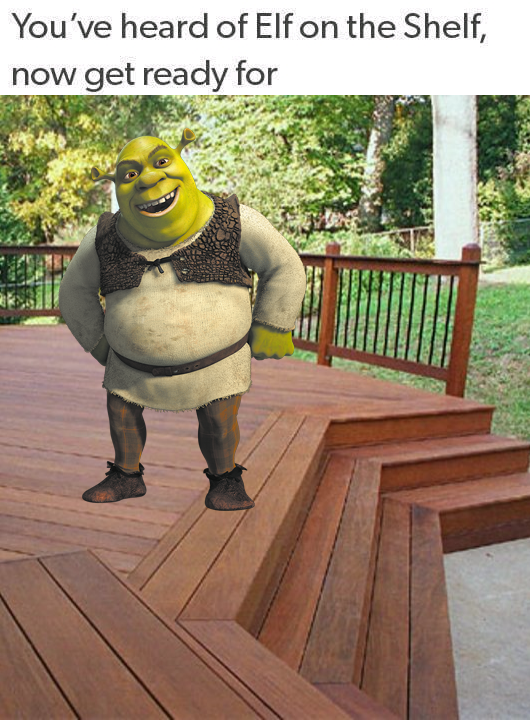
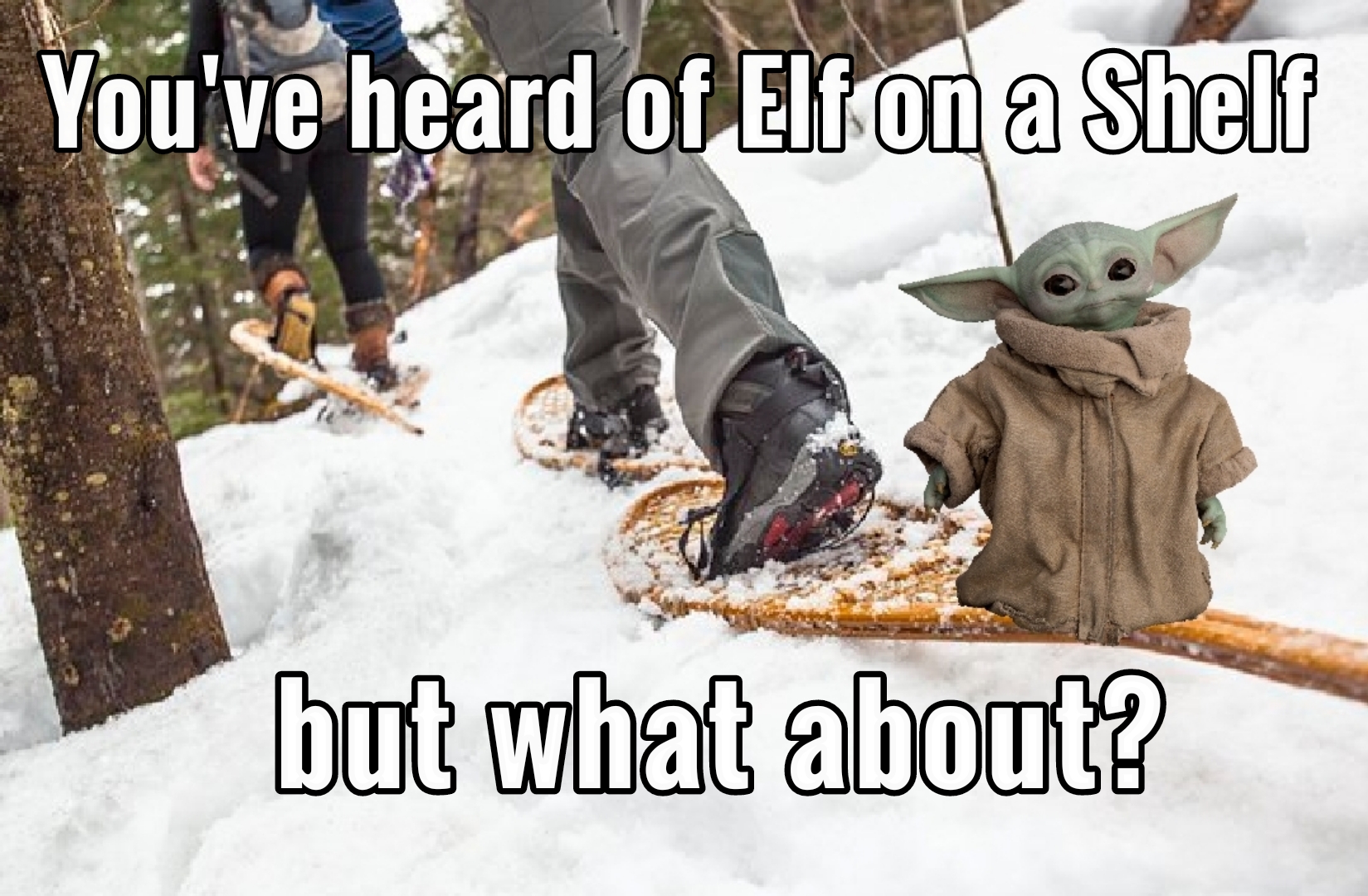
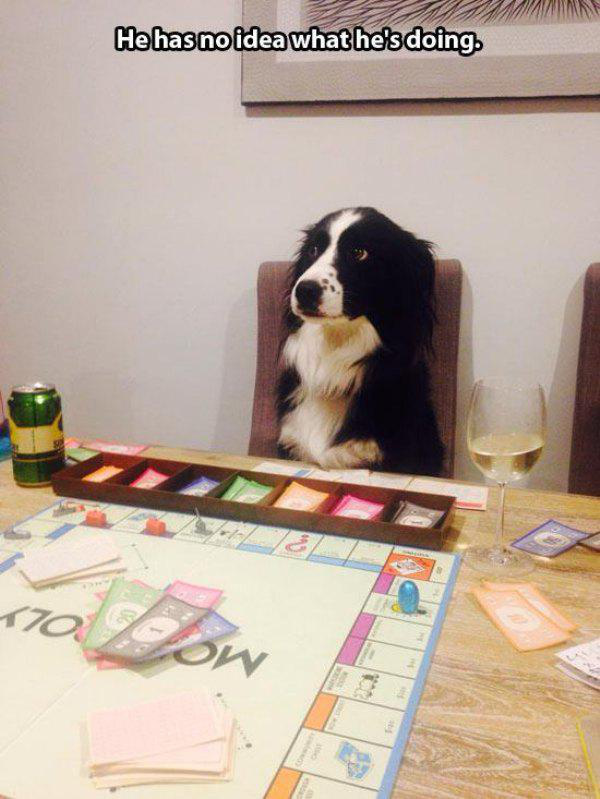
One of my favorite memes is “You’ve heard of Elf on a Shelf, now…”
Inspired by the family-friendly surveillance toy that took the world by storm, this meme (which dates back to 2016!) gives you the format of “elf on a shelf” and sets you up with a little visual puzzle to solve.
The image above, for instance, gives you Shrek on a deck!
The Puzzmo mini crossword is always accompanied by notes from the constructor and the editor. The comments from yesterday’s puzzle centered around anagrams, since the mini had not only an anagram in the theme entries — MAORI and MARIO — but actually had the word ANAGRAMMED crossing those entries.
In those comments, both Will Eisenberg and Brooke Husic discussed a really playful subset of cluing involving misdirection.
You give the solver an anagram, but present it is as a statement, rather than just saying “ABLE, to BALE.” When done properly, it takes a second for your brain to actually register the anagram, even though it’s right in front of you!
Will used the example “Ancients, for instance,” which cleverly employs the standard crossword trope of “for example / for instance / for one / e.g.” to conceal the anagram. Brooke had another banger example, offering “Anemone, to name one.”
I delved into the archives on Xwordinfo to look for other examples of this misdirection cluing style, and I found some fun ones. (Obviously, ANAGRAM isn’t an incredibly common entry, but I was genuinely surprised by the variety of options that awaited me in the archives.)
Back in 2011, Oliver Hill and Eliza Bagg gave us “Neo, for one,” which is such an effective misdirect than I can imagine writing the wrong answer more than once in the grid before realizing the trick, since this sort of clue is used so often for things like HERO or ROLE.
Other constructors phrased their anagrams as if they were slang or specialized jargon, leading solvers down the garden path while showing off their own impressive anagramming talents.
Ryan McCarty and Nelson Hardy gave us “Schoolmaster for the classroom, e.g.”
Margaret Saine offered “Illustration for an ill tourist?”
Sam Trabucco crafted “Nerd’s epithet for the president?”
Bryant White presented “Coasters for Socrates, e.g.”
Naturally, cryptic crossword or British-style crossword solvers probably suss out these clues faster, since this sort of stealthy wordplay is standard in cryptic cluing, where clues are written out like sentences, rather than the more direct cluing typically used in American crosswords. (Cryptic crossword icons Emily Cox and Henry Rathvon had one ANAGRAM clue in the Xwordinfo archives, the elegant “Broadcast of bad actors, e.g.”
Some constructors take it even further, employing the age-old trick of apropos anagrams for celebrities.
The Simpsons helped popularize knowledge of this game when Lisa learned that ALEC GUINNESS anagrams into GENUINE CLASS. Another famous one is CLINT EASTWOOD anagramming to OLD WEST ACTION. FLORENCE NIGHTINGALE aptly anagrams to FLIT ON, CHEERING ANGEL.
Patrick Merrell employed this nicely with his clue for ANAGRAM, “Horrid glances from Charles Grodin?”
I could go on and on listing examples, but Patrick’s clue is hard to top.
I’m obviously a huge fan of misdirectionclues, so it was a joy to deep-dive into a different genre of cluing and watch clever people work their magic. Hopefully you enjoyed taking this puzzly stroll with me.
The puzzle world is a relatively small one, and sadly, it grew smaller a few weeks ago, as friend of the blog Ann Santoro passed away.
Born July 26, 1936, Ann’s love of language and learning was evident throughout her life. She earned a Bachelor’s degree from the University of Pennsylvania and a Master’s degree from Cornell. She became a teacher herself, specializing in both English and Latin.
Penny Press’s owner Peter Kanter remembers discussing Latin with Ann:
I was always fascinated and impressed by Ann’s knowledge of the classics. She translated ancient Greek to Latin, and back. For a while I was on a Latin kick based on Ann’s example. Ann recommended a Latin primer and told me I should just get at it. She had no airs or pretensions about her hobby or her erudition. She made everything very matter of fact. She also told me her favorite translator of Homer. I think it was Lattimore or Lombardo.
I made a few half-hearted gestures at finding a Latin teacher; I got the Latin primer and I got the Lattimore and Lombardo translations. But I never did much with them. In the end I concluded that that was best left to Ann!
After her teaching career, Ann went on to work for Penny Press, where she was a fixture for decades, rising to the title of Senior Editor.
In fact, she was with the company for so long that there was a bit of a debate regarding when she actually started! Her “official” hire date is marked as 11/8/1976, but it’s more likely that she was freelancing for the company before then. I firmly believe she started back in 1974, meaning she spent fifty years coordinating and correcting pretypes for the company, shaping generations of puzzle editors.
And her pretypes were the stuff of legend. When she wasn’t schooling me on the differences between transitive and intransitive verbs, she was demanding verification of any slang or phrases she couldn’t find in reputable sources.
As Annamarie Spero of Penny Press pointed out:
Ann knew the rules of grammar forward and back. As a senior editor, she didn’t just point out an error; she explained why it was wrong so that editors could learn from mistakes and hone their skills, the hallmark of a good teacher.
In one of my favorite interactions with her, where we disagreed on the spelling of DeMille (Agnes de Mille uses two words, while Cecil B. DeMille uses one), she grew so exasperated with my spelling that she provided the incredible notation “SEE HIS TOMBSTONE.”
I looked up his tombstone and, lo and behold, it backed up my spelling, not hers. (I still have the “SEE HIS TOMBSTONE” note on my bulletin board.)
Of course, being such a stickler for grammar sometimes caused problems. Punny clues that played with language (and wandered outside traditional grammar) often got corrected by her in pretypes… until they were no longer punny OR effective. But with a stet and a chuckle, you moved on with your corrections, inevitably taking a LOT of Ann’s notes to heart.
One correction (regarding actor Emil Jannings) actually lead to a long friendship, as Annamarie Spero explains:
I met the cape-wearing, five-foot-tall powerhouse senior editor during my first year at Penny Press. She reviewed my blurbs for the Word Seek line of puzzle magazines. On one particular occasion, she and a long-time crossword editor were discussing a clue/answer that involved actor Emil Jannings, who co-starred with Marlene Dietrich in 1930’s “The Blue Angel.”
The editor was trying to think of his name and I said it, pronouncing it “AY-mill YAN-ings.” The editor corrected me, pronouncing it “EE-MEAL JAN-ings.” Ann then spoke up and said to the editor, “No, she’s [meaning me] right. It’s AY-mil YAN-ings. He was German.” (And that was the German pronunciation.) Ann was impressed and at that moment, I gained her respect, and we became friends.
Ann balanced her no-nonsense approach to pretypes with a love of learning and new experiences outside of work. In addition to her Latin studies, she shared Chinese cooking classes and jewelry making courses with crossword guru Eileen Saunders, and enjoyed sharing her vast knowledge of classical music with others.
She was also an early adopter of new technology! When e-books emerged into the market, Ann switched from a wholly physical reference library to a mostly digital one, and followed that by digitizing her CDs onto a music server.
Of course, this also led to a misunderstanding in one of my pretypes, when Ann couldn’t verify one of my clues… and turned to Urban Dictionary for explanation. Through tears of laughter, I explained why Urban Dictionary might not be the best resource for verification, and from that point on, Ann stuck to the more legitimate recommendations from Onelook.com.
Ann was uncompromising, fiercely opinionated, and keenly observant of the world around her. She made every puzzle magazine she touched better, and she educated a lot of solvers and editors alike along the way.
It’s so easy to imagine that she carried all the answers you’d ever need in her ubiquitous giant purse. Or, as Peter Kanter hoped, a copy of her favorite translation of Homer’s works.
There will truly never be another Ann Santoro. Ann, we’ll miss you.
Please forgive the delay in finalizing this post.
It took longer than usual to write, not only because I wanted to make sure I captured as much of Ann’s unique spirit as possible, but also because I wanted to reach out to friends and colleagues, both past and present, to share their thoughts about Ann.
Thank you to all the kind folks at Penny Press and beyond who shared their memories and anecdotes of Ann with me, and all of you, today.
Puzzly information is concealed in all sorts of ways. Rephrasings, anagrams, riddles, puns… these are all ways to challenge solvers by hiding information in plain sight.
But puzzle codes are one of the most prominent techniques… and one of the most ways to do so.
Codes in puzzles come in all shapes and sizes. And if you’re venturing beyond the confines of crossword-style puzzling, you’re bound to encounter a coded puzzle from time to time.
So, to better equip you for your puzzly sojourns in the future, today we’ll be breaking down a few common ways puzzles get encoded!
Letter Replacement
This is what you’ll see in your standard Cryptogram puzzle. Each letter in a quotation has been replaced with a different letter, and you need to notice utilize patterns, punctuation clues, and context in order to unravel what the letters in front of you truly represent.
Now, the order of letter replacement is usually randomized, but sometimes, a letter shift cipher has been applied. A letter shift cipher (like ROT13) means that there is a pattern to the letter replacement, rather than the randomness of traditional Cryptograms.
For example, A is actually M, B is actually N, and so on. Once you recognize the pattern, filling in the rest of the quote is easy.
Alphanumeric
After Letter Replacement, this is the most common style of coded puzzle. And like Letter Replacement codes, Alphanumeric puzzles can either be randomized or have a pattern.
For the former, each letter has been randomly assigned a number, and you need to figure out which number represents which letter. Our friends at Penny Dell Puzzles have a puzzle called Codewords that employs this code quite effectively:
By using a crossword-style or cryptic crossword-style grid, you can use letter repetition, placement, and frequency to figure out which letters go where.
But there are also alphanumeric puzzles that are not randomized. In these, each letter is replaced by the number that represents its order in the alphabet. A is 1, B is 2, all the way to Z is 26.
You can create a devious little puzzle by writing out a message, replacing each letter with its alphanumeric counterpart, and then jamming all the numbers together without spacing. Now the solver must figure out if that’s a 12 OR a 1 and a 2 next to each other.
There are also puzzles that rely on older telephone keypads, where each digit represented several letters of the alphabet. 2 is ABC, 3 is DEF, all the way to 9 is WXYZ.
So each number in the sequence can represent three or four possible letters, and you need to puzzle out the message.
Coded Math
Letter Replacement can also work in reverse, where numbers in an equation have been replaced with letters, and you need to figure out which letter represents what number. Sometimes you’ll see this with a long-division problem (often employing 10 different letters to represent the digits 0-9).
Other times, it’s more of a logic puzzle where several equations are listed in sequence, like A + C = 10 and C – B = 4, and you must use the relationships provided to figure out what letters represent what numbers.
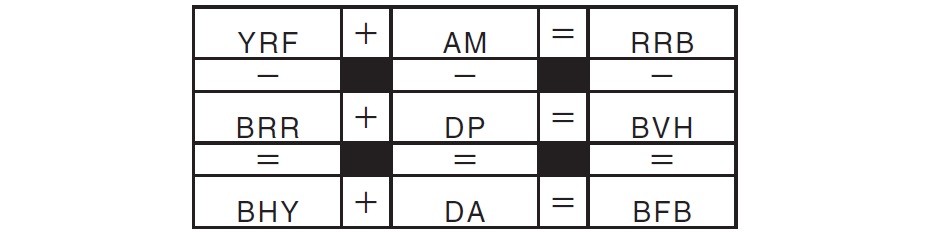
Another variation is combining Cryptogram-style letter replacement with logic puzzles. Imagine a 3×3 grid with equations overlapping, and all of the missing numbers are two, three, or four digits, but replaced with letters instead. This is called a Cross Arithmetic. Could you solve it?
Letter Blanks
Excluding letters from a word is also an effective way to create a puzzly code for someone.
There can be a pattern, like each word missing its center letter. (And then all the missing letters spell out a message).
Or perhaps there’s a pattern to the letters missing from several words (like a letter pair or a smaller word that’s been extracted from each incomplete word).
Or maybe there are multiple blanks in a word, and you need to figure out which letter fills every blank.
These are some of the codes and methods of obfuscation you’ll encounter in variety crosswords. How did you do? Did you unravel them all?
(Originally I was going to conclude this entry with Cryptic Crossword-style cluing, which is written in a coded language all its own, but I think that topic deserves a full blog post of its own.)
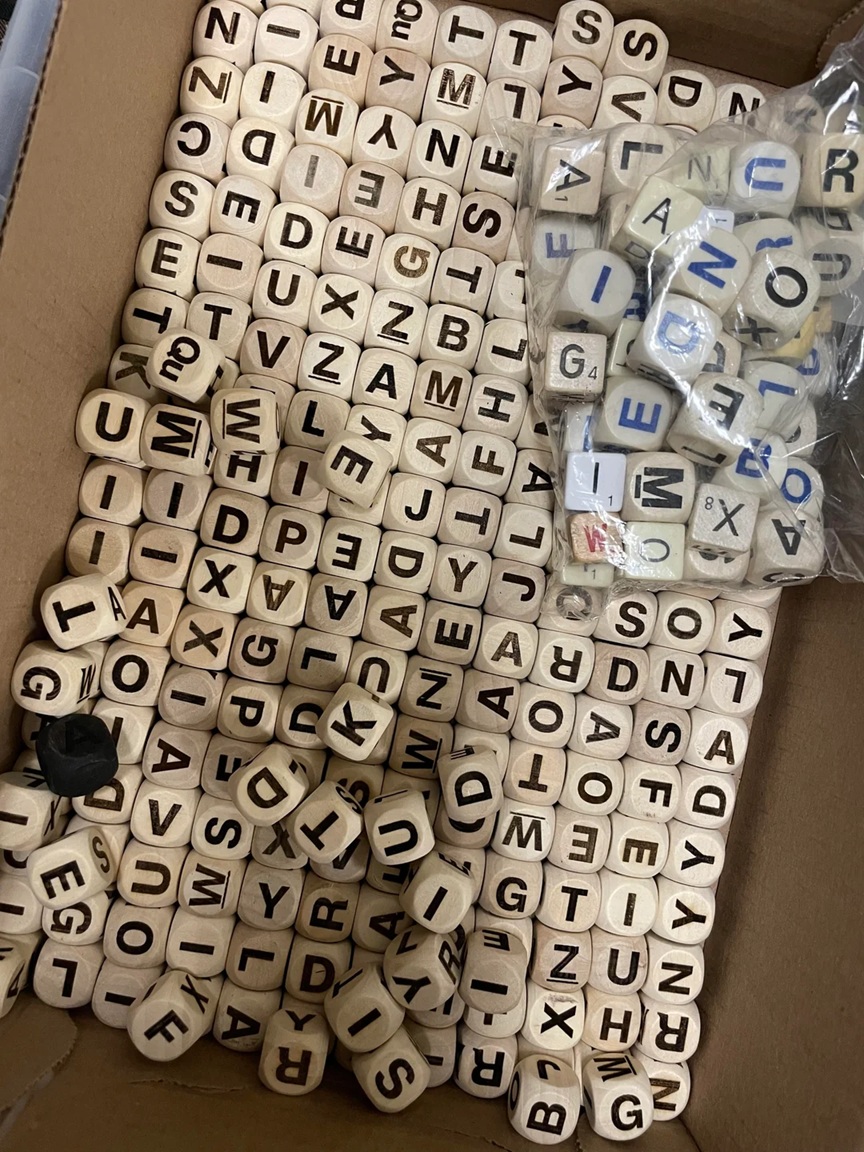
What would a Boggle grid look like that contained every word in the English language?
Well, there are somewhere between 1 million and 1.5 million words in the English language, so I imagine it would be pretty big.
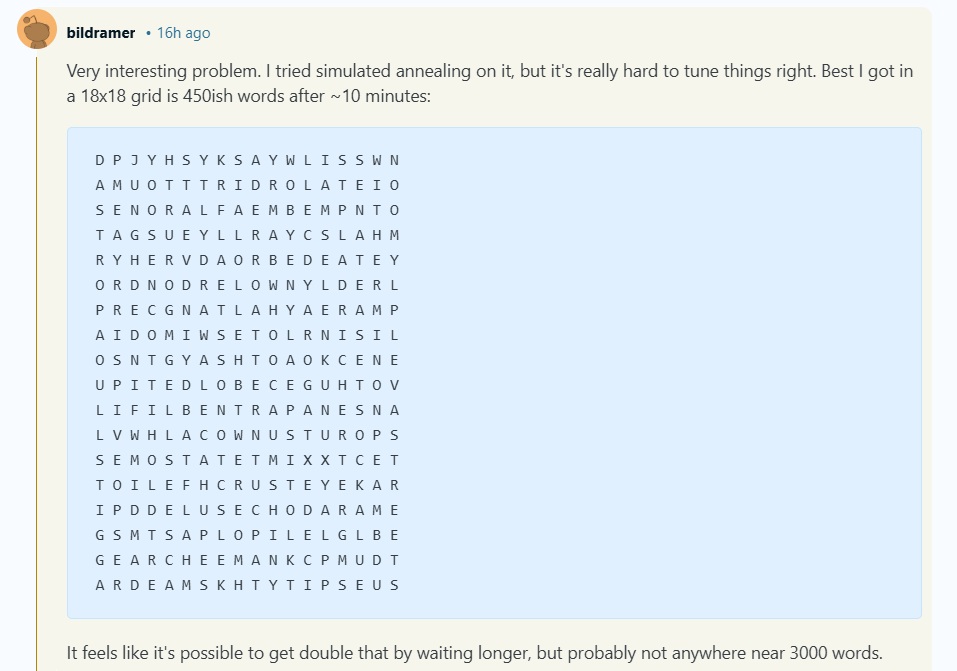
The redditor is an artist, and their goal is to make a sculpture composed of Boggle dice. And their concept is fascinating:
The idea for the piece is that it’s a linguistic Rorschach that conveys someone could find whatever they want in it. But it would be even cooler if it literally contained any word someone might reasonable want to say or write.
So, where do you start with something like this? Our artist has a suggestion:
To simplify, we could scope it to the 3000 most important words according to Oxford. True to the nature of Boggle, a cluster of letters could contain multiple words. For instance, a 2 x 2 grid of letter dice T-R-A-E could spell the words EAT, ATE, TEA, RATE, TEAR, ART, EAR, ARE, RAT, TAR, ERA. Depending on the location, adding an H would expand this to HEART, EARTH, HATE, HEAT, and THE...
What would be the process for figuring out the smallest configuration of Boggle dice that would let you spell those 3k words linked above? What if the grid doesn’t have to be a square but could be a rectangle of any size?
Naturally, creative minds accepted the challenge.
One user claimed that an online Boggle website called Squaredle has two 10×10 boards with just under 900 words of 4 or more letters.
Another user, a programmer, was able to create an 18×18 grid with approximately 450 words in under 10 minutes.
As you might expect, I was unable to resist diving into this one. But I’m not a programmer, so let’s do some meatball mathematics to get a sense of the scope of the puzzly conundrum before us.
We can extrapolate that if we get 450 words in an 18×18 grid, we’d need seven 18×18 grids connected to approach 3,000 words, assuming there’s some consistency in letter efficiency.
If we stick to the rectangular suggestion of the original post, a 63×36 rectangle (six 18×18 grids in a 2×3 arrangement, plus a 9×36 grid attached at the bottom) should allow for those 3,000 words.
Now, I can’t verify that. But 63×36 means 2,268 letters in the grid. Which, with a 3,000 word goal (including two- and three-letter words) kinda feels possible.
Of course, this is just to cover that 3,000 word list. Remember that the English language is estimated to contain between 1 million and 1.5 million words total.
That’s 333-and-a-third times more, if we use a million words. It’s 500 times more words if we assume 1.5 million words.
So, that’s 2,268 letters in our 3,000 word grid. Multiply that by 500 and you get 1,134,000 letters in the grid.
That means we’d need a grid that’s 1,065 x 1,065 to cover the entire English language.
So what does that mean in Boggle terms?
A standard six-sided die is 16 millimeters. That’s 17,040 millimeters, or 17.04 meters. That’s 67.09 inches. We’re talking about a Boggle game that’s FIVE AND A HALF FEET ACROSS.
That’s one heck of a Boggle grid.
Now, of course, these numbers are all estimates, and dubious ones at that. But I couldn’t resist TRYING to find an answer, even if it’s just a ballpark number.
You see, fellow puzzlers, this brand of puzzle efficiency tickles something in my brain, as there are several Penny Press puzzles I quite enjoy that employ a similar idea.
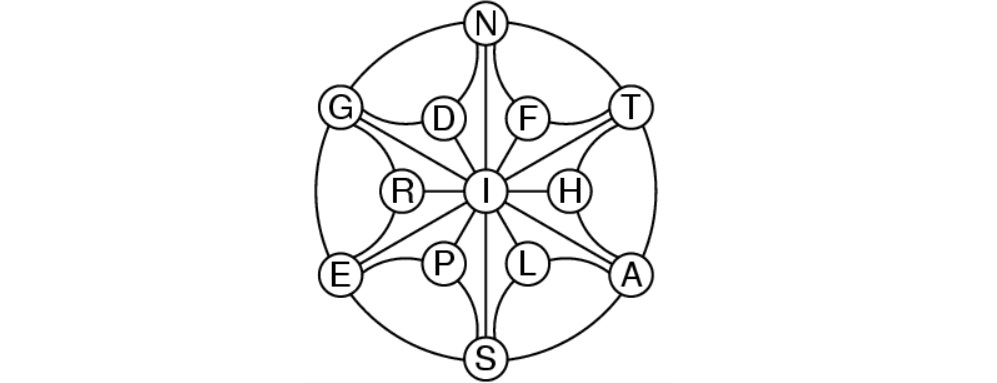
Starspell (pictured above) involves finding words in a star-shaped grid, except unlike Boggle, you can reuse letters. So you could bounce back and forth from A to N and spell BANANA, for instance.
Word Maze involves a small grid with many words hidden inside Boggle-style (though it’s actually a themed word list, meaning it’s not optimized to just cram as many words inside as possible).
Letter Perfect is a reversal of the idea, seeing if the solver can arrange letters in a mostly-empty 4×4 grid to fit every word in a given wordlist. It’s excellent training for a challenge like this, since you learn about efficiency of letter placement and how many words can spell out with neighboring letters if you’re clever.
I don’t know if any programmers will figure out how to build a language-spanning Boggle grid, but I look forward to seeing them try!
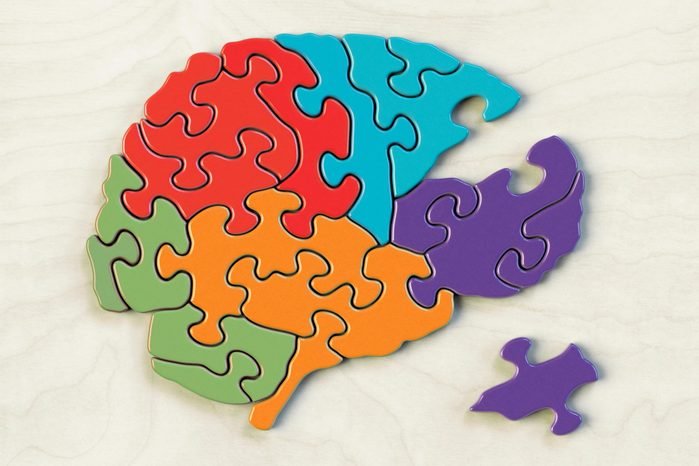
I was going through a collection of brain teasers a fellow puzzler gave me, and it occurs to me that “brain teaser” is one of the least specific puzzle terms around.
Riddles, logic and deduction, math puzzles, and wordplay games all fall under the brain teaser umbrella. So you never know what you’re gonna get. Are your math skills required? Your outside-the-box thinking? Your ability to pay attention to the specifics of the question itself?
In this collection alone, I found examples of each of these types of puzzles:
Riddle: Sometimes I’m green, sometimes I’m black. When I’m yellow, I’m a very nice fellow. That’s when I’m feeling mighty a-peeling. What am I?
Logic / deduction: 3 guys go into a hardware store, all looking for the same thing. William buys 1 for $1. Billy buys 99 for $2. Finally, Willie buys 757 for $3. What were they buying?
Math puzzle: The sum is 12 and the same digit is used 3 times to create the sum. Since the digit is not 4, what is the digit?
Wordplay: Which state capitals would you visit to find a ram, cord, bus, and dove?
So, if someone challenged you to a brain teaser, these would all be fair game. Would you be able to solve all four of them?
It’s possible you wouldn’t, because good and bad brain teasers alike employ tricks to keep you on your toes.
Some hide the answer in plain sight:
Homer’s mother has 4 children. 3 of them are named Spring, Summer, and Autumn. What is the 4th named?
Some use misdirection, purposely phrasing the question to get you thinking one way and steering you away from the real solution:
The big man in the butcher shop is exactly 6’4″ tall. What does he weigh?
In fact, both of these examples use plain sight (Homer, butcher shop) and misdirection (implying a pattern with seasons, specifying his height) to distract you.
I suspect you weren’t fooled by either of them, though.
Others try to overwhelm you with information so you bog yourself down in the details instead of clearly analyzing the problem at hand:
Nina and Lydia start from their home and each runs 2 miles. Nina can run a mile in 8 minutes 30 seconds and Lydia can run a mile in 9 minutes 10 seconds. When they finish running, what is the furthest apart they can be?
A lot of numbers get thrown at you, but they’re irrelevant, since the question only asks about the distance, not the time. So if they each run 2 miles, the furthest apart they can be is 4 miles. The rest is just smoke.
These are all effective techniques for teasing a solver’s brain. You’re given all the information you need to solve the puzzle, plus a little extra to distract, mislead, or overwhelm you.
Unfortunately, some brain teasers use unfair techniques to try to stump you:
Jacob and Seth were camping in June. Before going to sleep they decided to read a book. They both agreed to stop reading when it got dark. They were not fast readers, but they finished the entire encyclopedia. How?
Ignoring the fact that these two boys somehow brought an entire encyclopedia with them on a camping trip, we’re not actually given a lot of information here.
So that makes the intended answer seem like more of an insane leap than a logical jump to the conclusion: They were in Lapland, land of the midnight sun, and the sun didn’t set until September.
WHAT?
There’s no reasonable way for someone to reach this conclusion based on the information given. In fact, it makes less sense the more you read it. Presumably Jacob and Seth know where they are camping, and that it wouldn’t get dark for months. So why would Jacob and Seth agree to stop reading when it got dark IF THAT MEANT THEY’D BE READING UNTIL SEPTEMBER!?
This is gibberish, and you’d be surprised how often something like this gets passed off as acceptable in a collection of brain teasers. (I discussed a similar issue with detective riddles in a previous blog post.)
Let’s close out today’s discussion of the ins and outs of brain teasers with a few fun, fair examples, shall we?
In what northern hemisphere city can you find indigenous tigers and lions?
Scientists have found that cats are furrier on one side than the other. The side with the most fur is the side that cats most often lie on. Which side of a cat has more fur?
A woman married over 50 men without ever getting divorced. None of the men died and no one thought she acted improperly. Why?
Did you solve them all? Let us know! Also, please share your favorite brain teasers (or your tales of treacherous and unfair brain teasers) in the comments below!