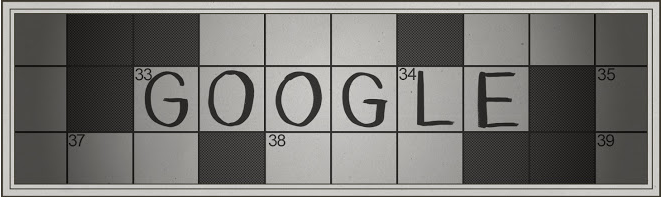
Touching a Piece of Puzzle History

Friend of the blog Peter Kanter came by the other day and showed me this curious piece of puzzle history that his brother had stumbled upon in a garage sale or a flea market.

Little did I realize I would soon be holding a puzzle that predates the crossword puzzle by over twenty years.

According to the instruction manual — which features rules for ten different spelling and anagramming games, one or two of which bear no small resemblance to Bananagrams in play style and spirit — this game was copyrighted in 1890 by McLoughlin Bros.

According to one of their catalogs, this game “consists of a box full of letters, so selected as to be most useful in a number of exceedingly interesting spelling games. The letters, printed on cardboard, are easily distinguished and handled. The box label is unusually bright and attractive.”

Yes, thanks to the wonders of the Internet, I’ve been able to do a little research on this marvelous find.

McLoughlin Bros. was a publishing firm based in New York that operated from the mid-1800s until the early 1900s. They specialized in children’s books and picture books, but also published linen books, games, paper dolls, puzzles, and toys.

They were among the first publishing houses to employ color printing techniques in products marketed specifically for children. (They also helped popularize the works of Thomas Nast, curiously enough.)

[A sampling of McLoughlin Bros.-style art, a style definitely reflected in the box art of the anagram game above.]

As it turns out, after the death of one of the founders, the company was sold to none other than Milton Bradley — makers of Battleship, Axis & Allies, Candyland, Connect Four, Operation, and Jenga, among many many others — who had continued success with some of the McLoughlin Bros. products, including mechanical paper toys called “Jolly Jump-Ups.” (You might know “mechanical paper toys” better as pop-up books.) Production of those toys was halted, however, during World War II, presumably to save materials for the war effort.

There is now a collector’s market for McLoughlin products — check out this listing for a game board produced by the firm — and if this anagram game is any indication, the color and striking artistic designs from a century ago still hold up today.

And although I can’t definitively say that this exact game predates the crossword, there’s no doubt that this sort of wordplay was delighting kids and adults alike well before Arthur Wynne’s “Word-Cross” puzzle saw the light of day.

How cool is that?


Thanks for visiting PuzzleNation Blog today! Be sure to sign up for our newsletter to stay up-to-date on everything PuzzleNation!

You can also share your pictures with us on Instagram, friend us on Facebook, check us out on TwitterPinterest, and Tumblr, and explore the always-expanding library of PuzzleNation apps and games on our website!

Max reviews the Boston Festival of Indie Games!

Hello Puzzlers and PuzzleNationers! Today we’ve got a special treat for you! The intrepid Max Galpern, 12-year-old game enthusiast and son of our Director of Digital Games Fred Galpern, will be taking over PuzzleNation Blog for the day!

[Max, trying out a new virtual reality game at Boston FIG.]

You may remember Max from his cameo appearance in our Laser Maze product review or his work in our first video review for Star Realms (alongside his dad).

I’m happy to hand over the reins to Max as he gives us the lowdown on the Boston Festival of Indie Games.

[Glenn’s note: the photo comments are my only contributions.]

Take it away, Max!


I went to the Boston Festival of Indie Games (FIG) on September 12 in 2015. This festival has been going on for many years now. It used to only show digital games and this year is the first year they’re introducing tabletop games.

[A brief glimpse of Boston FIG.]

First, I went into the tabletop showcase, and when I walked in I saw a big poster for EPIC, the card game. I’ve played EPIC before. Earlier this year, my dad backed the Kickstarter campaign, so we already have the game and really like it. I walked right over to the EPIC booth and played a game with my dad right away. I crushed him in the game we played!

[A sample of some of the stunning art featured in EPIC.]

EPIC is a card game that consists of 120 cards that are all different, and among them are 4 colors/factions: Red (evil), Green (wild), Yellow (good), and Blue (sage). If you know how to play Magic:The Gathering (MTG) you may pick this game up as easily as I did. It has many of the same abilities as MTG but worded differently. EPIC is a really fun game, and I totally recommend it.

After EPIC, I walked around and saw this game called PBL Robots.

[Here’s an illustration of a sample attack in PBL Robots.]

My dad and I walked past it and it looked pretty cool, so I wanted to check it out when we circled back. We walked around for awhile and then sat down to learn about PBL Robots. When the creators were explaining the rules, I realized I had thought of a game like this one many years ago.

You start with a base robot and a pilot. Then you play cards that may be an arm, a pair of legs, shoulders, an action, a hangar, crew members, or a better pilot. When you’re ready to attack, you roll dice according to the part you are attacking with and/or the part you are attacking. It was amazingly fun to play, and I hope to play it again.

After that I went to the video game section, where I tried a game called Space Jammers. It was pretty fun, and if you have a Windows computer you can play it at igs.io/spacejammers.

Next, I played a video game called Sylvio.

[Max, matching wits with Sylvio on a PC. Now THAT is focus…]

It’s a survival horror game where you take the role of a girl who records ghosts with a microphone. The sound in the game makes it even more creepy. It is a very fun game. If you like games like Slender you may like this too.

Last but not least, I played a game called Loose Nozzles by my Dad’s friend Chris Foster and his son Ian. It’s a fun game for iPad where you fly a rocket ship to save the stranded people below. I recommend this game for children of all ages to play.

[Ian welcomes you to give Loose Nozzles a try!]

This year’s Boston FIG was a blast, and I can’t wait for next year to revisit things I saw this year AND see new stuff.

P.S. My Dad bought a card game called Poop (it’s like Uno, but more gross). I accidentally left it at the festival but two awesome people who work there found it and are sending it to us. Thanks, Caroline & Shari!


Thanks for the terrific rundown, Max! We’ll have to have you back again soon.

For more info on the Boston Festival of Indie Games, click here! And if you’d like Max to take over more often, let us know in the comments below!

Thanks for visiting PuzzleNation Blog today! You can share your pictures with us on Instagram, friend us on Facebook, check us out on TwitterPinterest, and Tumblr, and be sure to check out the growing library of PuzzleNation apps and games!

PuzzleNation Product Review: Compose Yourself

Compose Yourself, ThinkFun’s latest offering, is unlike any product I’ve ever reviewed before, and that’s part of what makes it special. It is a single unending puzzle and a million different smaller puzzles all at once. It is literally as simple or as complex as you choose to make it.

You’re given sixty transparent cards (two copies each of thirty distinct note patterns). Each card features four different codes: one for the notes as they appear, one for the notes rotated 90 degrees, one for the notes backward, and one for the notes backward AND rotated 90 degrees. This allows for a staggering number of choices for a budding composer.

As you play around with placing the transparent cards in various order, you can log into the ThinkFun website and use the code provided to access a digital composing program.

[A picture of my first composition in progress…]

Input the codes from your layout of transparent cards in groups of four — as many as you wish! — and then click play. You can hear your new composition played on marimba, performed by an orchestra, or in both modes simultaneously!

Now, I confess, I am not a musically inclined person, but after fifteen minutes or so playing around with random cards — placing, flipping, reversing, and rotating them — I finally clicked play, and I was surprised by the results. (I’d unintentionally created a tune that felt perfect for the background of a Legend of Zelda game. *laughs*)

It feels like your work comes to life at your fingertips. And all you can think about is how to improve it, how to make the most of it, and how new cards will change it.

Each card represents part of a puzzle, and you may have no idea what the finished product will be, but that doesn’t make the process any less satisfying. This is old-school free-form creativity, like dipping your hands into a bucket of LEGOs, pulling out some pieces, and seeing what you can create.

ThinkFun has challenged us in the past with puzzlers like Houdini and Gravity Maze, and they’ve offered younger solvers the chance to learn coding in Robot Turtles and optics in Laser Maze, all while enjoying an experience that feels like play because it IS play.

But they’ve truly outdone themselves with Compose Yourself; it’s a learning experience, a creative experience, and a puzzly experience all at once. What a treat.

Thanks for visiting PuzzleNation Blog today! You can share your pictures with us on Instagram, friend us on Facebook, check us out on TwitterPinterest, and Tumblr, and be sure to check out the growing library of PuzzleNation apps and games!

Hidden in a crossword!

[A grid from BeekeeperLabs.com.]

Everyone loves a little something extra, and that goes double for puzzle fans.

Whether it’s a hidden quote or a secret theme lurking in plain sight, a bonus answer revealed after a tough solve or a final twist that wows you with a constructor’s cleverness and skill, these little surprises are gifts every solver can appreciate.

In Sunday’s New York Times Crossword, what appears at first blush to be a simple themed puzzle — with poet WILLIAM CARLOS WILLIAMS paired with his poem THE LOCUST TREE IN FLOWER — turns out to be much more, as the entire poem is concealed within the grid!

[Image sourced from Amy Reynaldo’s Diary of a Crossword Fiend.]

While this is a particularly ambitious example, this is not an uncommon challenge for a constructor to tackle.

Sometimes, the bonus is announced upfront, as it was in Merl Reagle’s puzzle for the 100th anniversary of the crossword a few years ago. His puzzle was converted into a solvable Google Doodle, and Merl added a crafty word search element by hiding the word FUN multiple times in the grid.

Why “fun,” you ask? Because that was the set word in Arthur Wynne’s original “word-cross” puzzle over one hundred years ago!

[Click here if you haven’t tackled Merl’s marvelous puzzle.]

Our friends at Penny/Dell Puzzles have a recurring crossword variant, Revelation, which conceals a quotation in a standard crossword grid, using the same letters-in-circles technique as Jacob Stulberg did in his poem puzzle.

And, of course, I would be remiss in my duties if I didn’t mention the secret message reading out in both a New York Times crossword and a puzzle featured on The Simpsons, wherein Homer conceals an apology to Lisa inside a crossword with the help of Will Shortz.

[Check out the full puzzle by clicking here.]

So, crossword fans, be vigilant! You never know what hidden treats are lurking inside seemingly innocuous puzzles.

Thanks for visiting PuzzleNation Blog today! You can share your pictures with us on Instagram, friend us on Facebook, check us out on TwitterPinterest, and Tumblr, and be sure to check out the growing library of PuzzleNation apps and games!

PuzzleNation Product Review: Gravity Maze

This week, we’ve got mazes on the brain, so it’s only appropriate that the folks at ThinkFun sent us a maze-based puzzle game to try out. Join me as we give the full PuzzleNation Blog treatment to Gravity Maze.

In a previous review, I accepted the challenge of ThinkFun’s Laser Maze, a logic game requiring players to direct, divert, and split an actual laser beam with mirrors in order to light up various targets on the board. You had to map out the beam’s path in your head and figure out how to place the game pieces in order to hit every target.

Impressively, Gravity Maze has raised the stakes, building on Laser Maze’s premise and adding a third dimension. Whereas Laser Maze only operated along length and width to cross the board, Gravity Maze’s falling marble has to be shuttled across the board while descending from its launch point as well.

With color-coded tower pieces of various heights and configurations — some levels have ramps to the next lowest level, others have open spaces, and still others house turns for the marble to navigate — it’s up to the solver to add only the pieces listed on the card in order to build the marble’s path to the red target box, each tower clicking into place.

There are 60 challenge cards that range in difficulty from beginner to expert. In the earliest challenges, there are only a few pieces on the board, and there’s a clever black dot system telling you which direction each set tower faces. But as you get accustomed to using the towers and move from beginner to intermediate cards, a new wrinkle is added: sometimes, a tower must be placed horizontally in order to complete the path.

And as you progress into advanced and expert cards, you have to get craftier. The marble often has to double-back, passing through the same tower multiple times on its way down.

Check out the path the marble takes to reach the red target box in this one:

[It’s hard to draw a line in three dimensions.]

You can see the colored ramps that direct the marble from the blue tower to the yellow to the green, and then back across. The marble then drops out of the blue tower and into the purple one beside it, where it makes a right turn, passes through the yellow tower, drops into the gray tower, and lands in the red target box.

This next-level spatial awareness offers a serious challenge to puzzlers of all ages, and I admit, some of these advanced and experts had me stymied for a bit.

Heck, sometimes, a tower must be used horizontally, but above the game board itself.

Gravity Maze is easily the most challenging ThinkFun product I’ve had the chance to tinker with, but that didn’t make it any less fun. The box says “Ages 8 to adult,” and I agree wholeheartedly. Puzzlers of any age will enjoy tackling these three-dimensional logic problems and seeing the marble wend its way into the target box.

[To check out other PuzzleNation reviews of ThinkFun products, click here.]

Thanks for visiting PuzzleNation Blog today! You can share your pictures with us on Instagram, friend us on Facebook, check us out on TwitterPinterest, and Tumblr, and be sure to check out the growing library of PuzzleNation apps and games!

Puzzles from the Last Frontier

No matter where you go, you’re bound to find some form of puzzle, whether it’s a riddle, a mechanical puzzle, a pen-and-paper puzzle, or a strategy game. For me, that’s one of the most interesting aspects of puzzle culture: the curious wrinkles and variations on puzzles that a particular place or national identity inspires.

While on vacation in Alaska last week, I found a few examples of puzzles with a wonderful Alaskan twist, and I thought I’d share them with the PuzzleNation audience.

One of the first things I noticed is that many Alaskan museums and wildlife centers employ puzzles to teach visitors about Alaska’s diverse ecosystem.

The Alaska Sealife Center was a particular favorite of mine. Located in Seward (only a few hours from Anchorage by train or car), the Sealife Center not only incorporated games to explain different fishing techniques (and the dangers of overfishing), but the gift shop was a treasure trove of puzzle books with a decidedly educational bent.

Clueless in Alaska caught my eye with its mix of visual and classic pen-and-paper puzzles, all geared toward instilling greater understanding of the animals Alaska is famous for.

Of course, I encountered crosswords and Sudoku puzzles in the local paper, but I was on the lookout for something with a bit more local flair.

And wouldn’t you know it, I discovered the perfect souvenir at the local Fred Meyer:

An Alaska-themed Rubik’s Cube, featuring both a unique color scheme and silhouettes of bears, caribou, eagles, moose, and wolves. With the 40th anniversary of the Rubik’s Cube this year, how could I not pick this up?

But classic board game fans, don’t feel left out! Turns out, the most famous board game of all time also has its own Alaskan variant:

Alaska-Opoly! It might be hard to pronounce, but it’s overflowing with local color and style.

As a puzzle fan, spotting these little beauties made me feel right at home, even four thousand miles away.

Thanks for visiting PuzzleNation Blog today! You can share your pictures with us on Instagram, friend us on Facebook, check us out on TwitterPinterest, and Tumblr, and be sure to check out the growing library of PuzzleNation apps and games!