PDP Tabletop Tournament: Round 1

The spirit of puzzly competition is alive and well. Not only are we still basking in the afterglow of the ACPT, but the third round of the World Puzzle Federation Puzzle Grand Prix is this weekend! AND registration for this year’s Indie 500 Crossword Tournament is now open!

But that’s not all!

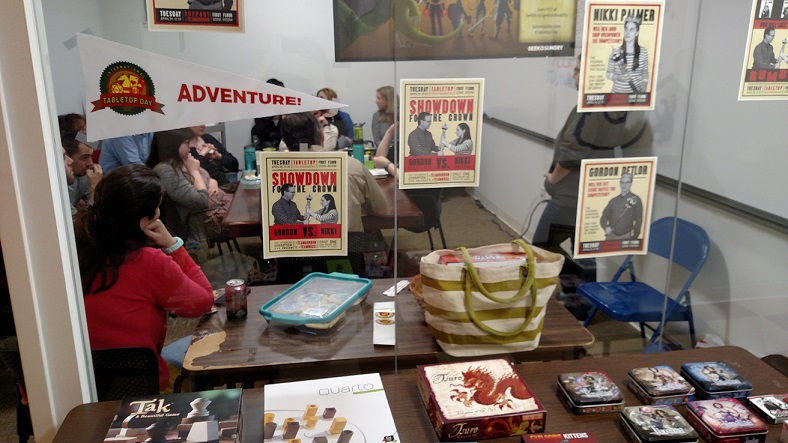
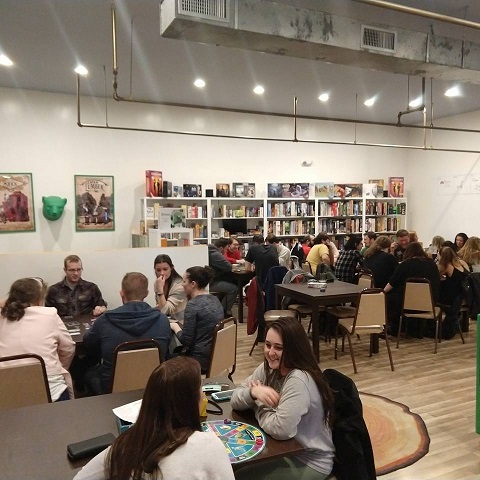
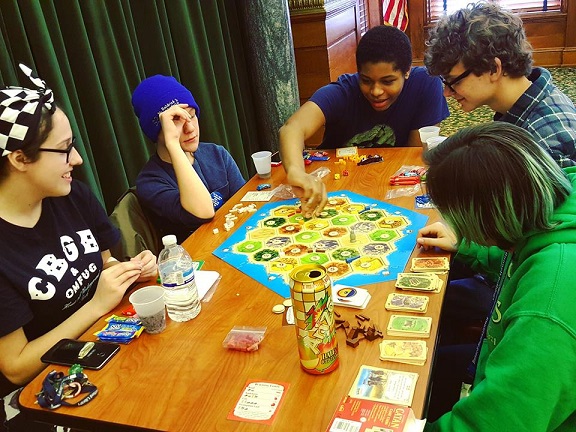
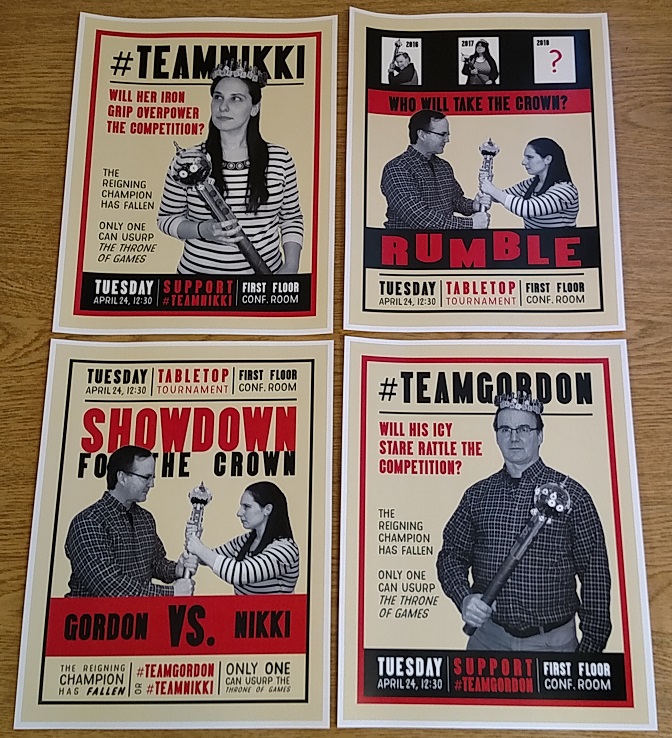
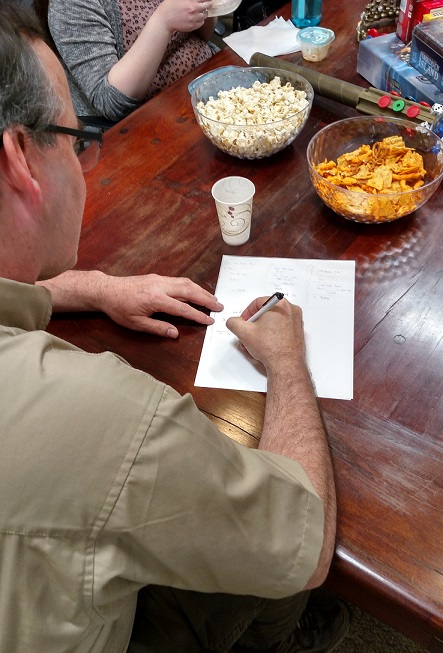
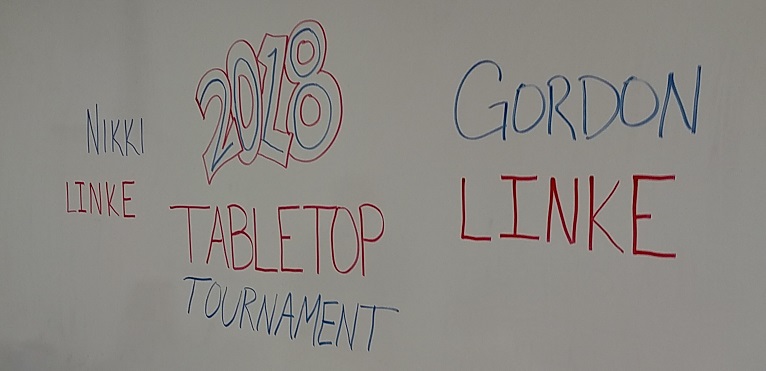
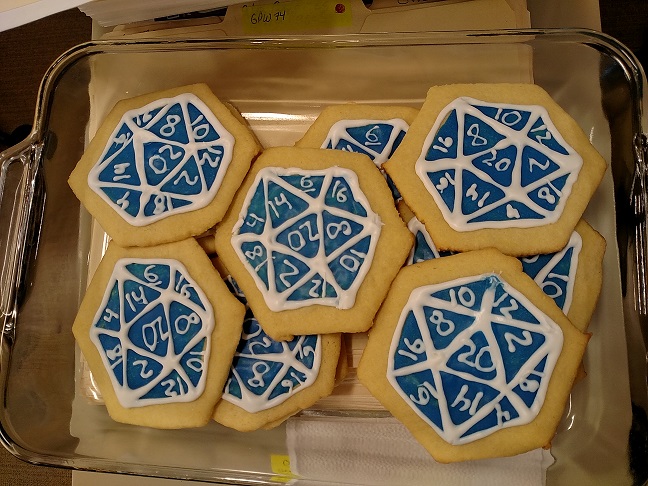
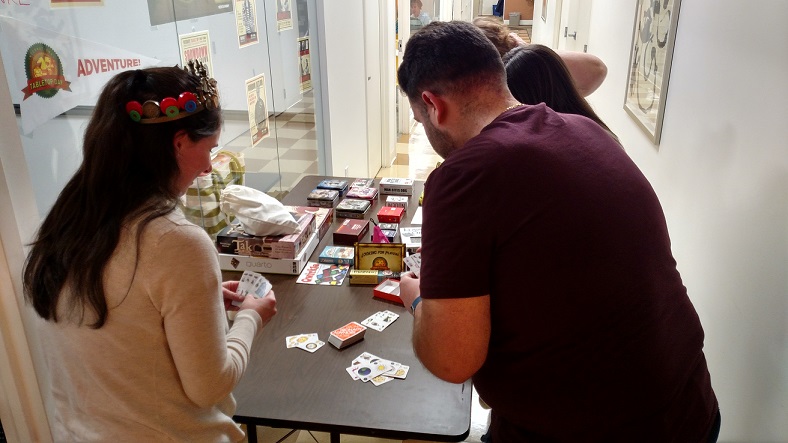
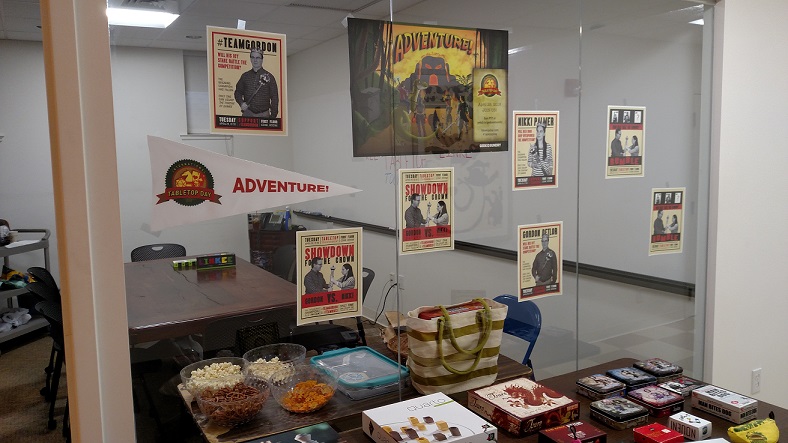
The crew at Penny Dell Puzzles put together a Tabletop Tournament in honor of the upcoming International Tabletop Day on Saturday, April 28.

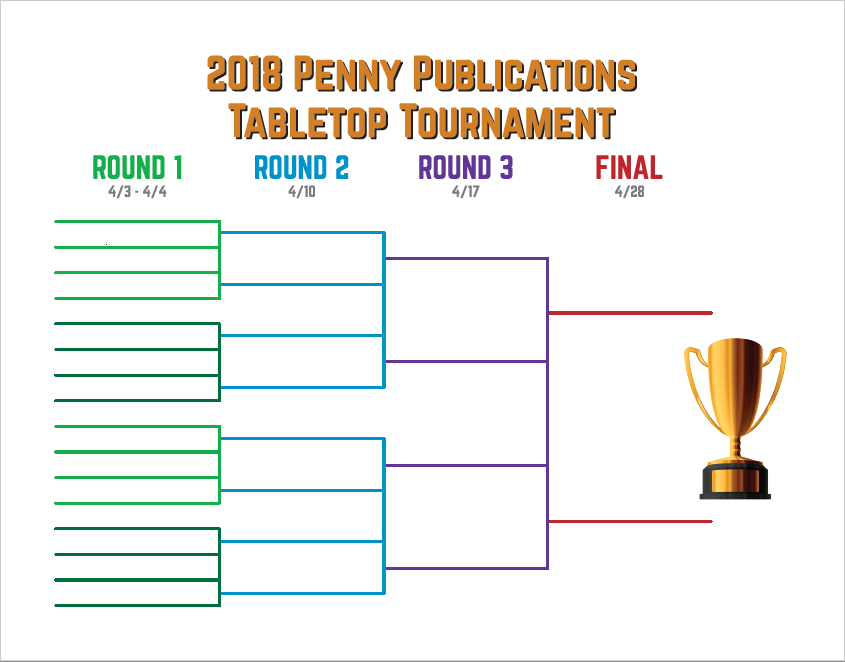
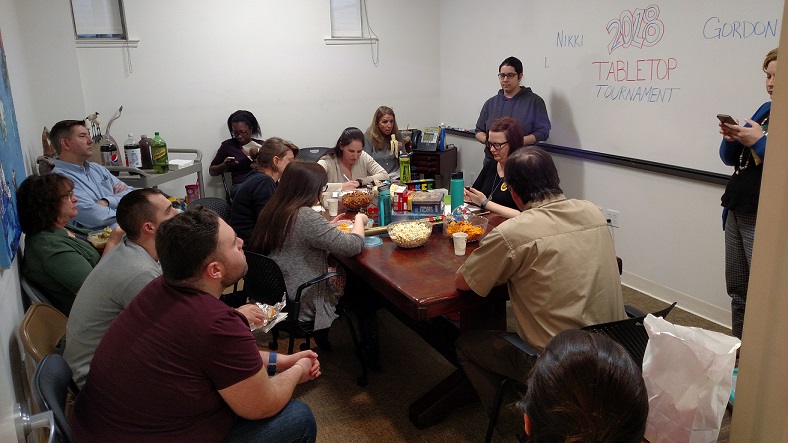
It’s a 16-person four-week tournament with different games to play every week, and round 1 kicked off this week. (This is actually the third year of the tournament, but this year has more competitors than ever before! Plus, both the 2016 and 2017 winners are competing again this year.)

One of the things I liked about the layout of the tournament is that there are no one-on-one match-ups until the final. Instead of a single-elimination tournament, competitors were slotted into groups of four. Each group of four would play two games, and the two winners (one from each game) would come from each foursome and move on to the next round.

The two games for Round 1? On the Dot and Bananagrams.

Bananagrams is a tile game where, much like Scrabble, players pull letter tiles and try to form small crossword-like grids. But in Bananagrams, you can anagram and rearrange the grid as needed, instead of being locked into using the words you’ve already played. Each player starts with a certain number of tiles, and each time you’ve used all your tiles, you say “Peel!” and each player grabs a new tile. This continues until the tile pile is depleted. Then the first player to complete their grid and say “Bananas!” is the winner, moving on to round 2.

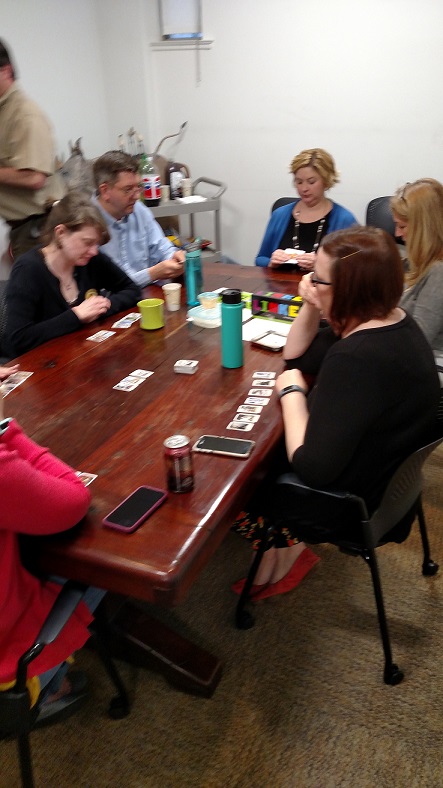
On the Dot is a pattern-matching game. Each player has four clear cards with randomly-placed colored dots on them, and it’s up to the player to arrange all four cards so that the colored dots showing match a given pattern. The first player to match three patterns would move on to the next round.

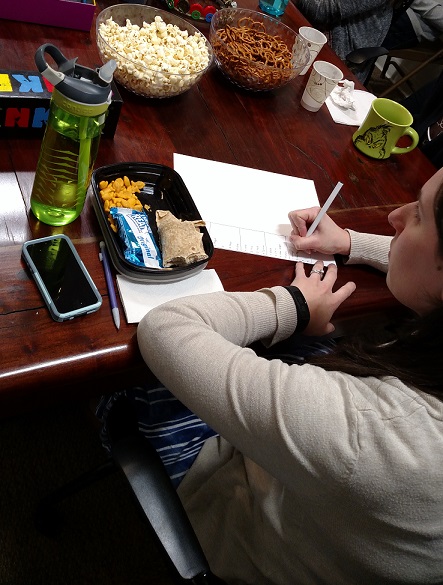
This two-winner-per-group arrangement is nice, because it offers people with different puzzle/game skills multiple chances to move on, instead of a one-and-done scenario. The two games also allow two different quartets to compete at the same time; as one group plays Bananagrams, the other plays On the Dot. Since we only had our lunch hour to complete round 1 (and 16 competitors crammed into the conference room), time was of the essence.

My group was first to compete in Bananagrams, and as the sole representative for PuzzleNation in the tournament, I was determined to make a strong showing for the brand.

Things started off smoothly. We had 21 tiles to start with, and I quickly formed a strong anchor word with DONKEY. But before long, my puzzly competitors proved their own skills were formidable, as cries of “Peel!” began to ring out, and the tile pile quickly diminished.

Honestly, I don’t think I said “Peel” once. I was always close to completing my grid, but never fast enough. But I seized my chance once the tile pile was empty. I only had a few letters left, and some quick anagramming had me confident. I called “Bananas!” and the judges came over to check my grid.

But alas, I’d made an error. I had originally played the word MAKO in part of the grid, then stole the M and A to form other words, intending to come back and fix that part later. But in my overzealousness, I left KO in the grid, which is not a word, so I was disqualified. Curses!

The player to my left was only about a half-second behind me, and she made no clumsy errors. Her grid was clean, and she was declared the first winner from our group to move on.

I would have to try my luck at On the Dot if I hoped to salvage the day.

We switched games with the other competing foursome at the table, and distributed the clear cards for the next contest: On the Dot.

Although I was disappointed with my performance in Bananagrams, I remained confident going into On the Dot, since I’m fairly strong in pattern-matching and similar forms of puzzling.

The first pattern to match was revealed, and we were off!

On the Dot really consists of two skills: being able to place the cards so the dots are in the right places AND hiding the dots and colors you don’t need. That second part can be more difficult than simply matching the pattern, honestly. If you need a yellow dot in a certain spot and nothing near it, it’s not good enough to have a yellow dot in that spot and a purple one right beside it.

I quickly cracked the first pattern, earning 1 point (and a few groans from the other competitors in my quartet).

I was able to follow that with two more victories, earning three points and a clean sweep. I was officially bound for Round 2. Huzzah!

Several other competitors that day turned in similarly dominating performances in On the Dot, while other rounds were hotly contested and came down to the wire.

The rounds of Bananagrams were a little bit slower, but still interesting. I wasn’t the only competitor who was snake-bit by improper words in Bananagrams that day. NAT disqualified one competitor, while NI disqualified another. (At least, according to the online Scrabble Dictionary we were using as our source. No matter what those knights say.)

One of the games ended in a deadlock, as neither player remaining could complete their grid. Another ended in so contentious a fashion that a tiebreaker game was needed to determine a winner!

Fortunately, the judges were prepared for this possibility, and a quick round of Slapzi was used to settle any such ties/issues.

Slapzi is a quick-reaction game where each player is dealt five double-sided cards. Each card has a unique image on each side — everything from dogs and fire hydrants to ladybugs and lawnmowers. Then a description card is played — “has two syllables” or “made of wood,” for instance — and the first person to play one of their cards that matches the description drops that card from their hand. The first person to empty their hand wins.

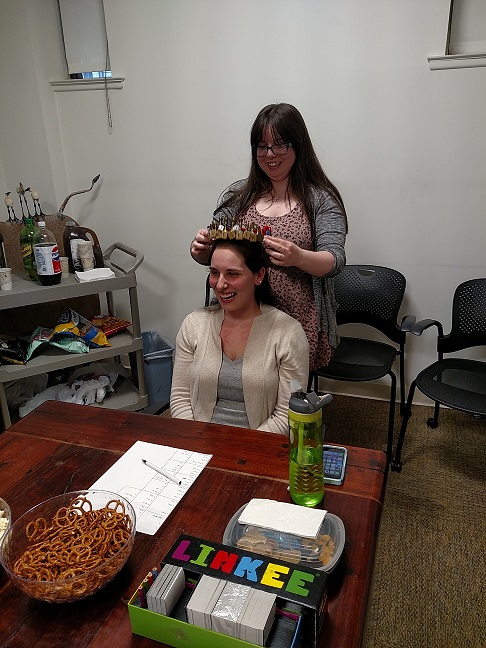
Between the three games, eight competitors moved on to round 2 (including last year’s champ), one step closer to a grand prize of a Game Night Gift Pack, complete with snacks!

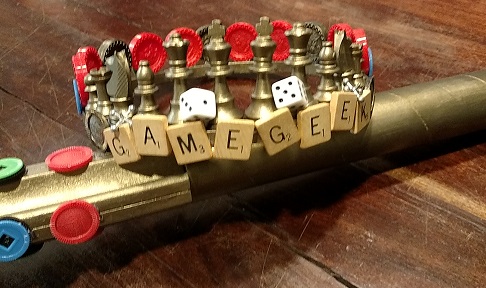
But that’s not all. The winner would also get a crown and scepter to carry around, in order to better lord their victory over their vanquished foes!

With a prize pack and a shot at becoming Tabletop Tournament Royalty on the line, things just got a lot more interesting.

To be continued…

[You can check in on the next round of the tournament live on Tuesday on our Instagram account!]


Thanks for visiting PuzzleNation Blog today! Be sure to sign up for our newsletter to stay up-to-date on everything PuzzleNation!

You can also share your pictures with us on Instagram, friend us on Facebook, check us out on TwitterPinterest, and Tumblr, and explore the always-expanding library of PuzzleNation apps and games on our website!
The Healing Power of Tetris

Despite the wealth of data out there — and all the “brain-boosting” apps and products claiming they’ll keep your brain in fighting trim — the verdict is still out on whether puzzle-solving can prevent or positively impact Alzheimer’s, dementia, or other age-related mental issues.

But that doesn’t mean that puzzles and puzzle games can’t help in other ways.

Researchers at the Karolinska Institute in Sweden have been treating people suffering from traumatic flashbacks — a form of accident-induced post-traumatic stress disorder — by having them play Tetris.

 Originally, the researchers tested this concept by showing unpleasant videos to test subjects and having them play Tetris for twenty minutes afterward. Their research showed that people who played the game — versus a control group that wrote about how they spend their time — suffered from fewer unpleasant and intrusive flashbacks or memories over the following week.

Apparently, the act of playing the game interferes with how people form the visual component of flashbacks. The gameplay doesn’t interfere with actual formation of memories, simply whether the brain will recall those unpleasant memories.

As it turns out, this might be a quality unique to Tetris or Tetris-style games. The same research team discovered that playing a quiz-style game made the flashbacks worse for those subjects than for the subjects who played no game at all after a traumatic event.

It appears that not only did Alexey Pajitnov create one of the most popular games of all-time, but that his legacy may also include helping the victims of traumatic events with their healing process. Amazing stuff.


Thanks for visiting PuzzleNation Blog today! Be sure to sign up for our newsletter to stay up-to-date on everything PuzzleNation!

You can also share your pictures with us on Instagram, friend us on Facebook, check us out on TwitterPinterest, and Tumblr, and explore the always-expanding library of PuzzleNation apps and games on our website!

April Fools! (Update: Solve Puzzles Like Never Before!)

Alas, we’re sad to inform you that PNVR — PuzzleNation Virtual Reality — the hot new tech on the puzzle scene, is just a delightful conjuring of the PN development crew. There’s no such thing.

(Not yet, anyway. Though, given how Ready Player One is performing in theaters, we might bump PNVR up the priority list.)

But we hope you enjoyed our little April Fools Day prank, particularly the free bonus coins for Daily Pop Crosswords at the end of the proverbial rainbow. It was great fun to cook up and execute, and the response from the PuzzleNation audience was terrific.

Thanks for a fun day, and keep your eyes peeled, because there are always fun, surprising ways to earn bonus coins and other great deals from PuzzleNation!

We’ll see you again soon, friends.

And please remember that puzzling and bike riding don’t mix.


Thanks for visiting PuzzleNation Blog today! Be sure to sign up for our newsletter to stay up-to-date on everything PuzzleNation!

You can also share your pictures with us on Instagram, friend us on Facebook, check us out on TwitterPinterest, and Tumblr, and explore the always-expanding library of PuzzleNation apps and games on our website!

Puzzles for a Good Cause!

[Image courtesy of Pinterest.]

The puzzle community is really amazing. It’s an incredibly open, friendly, and welcoming band of creators, miscreants, wordsmiths, and trivia buffs from all walks of life, united by a love of wordplay and the satisfying discovery of a solution, be it to a puzzle or a problem.

Basically, if you’re in a bind, if you need help, there’s usually a puzzler there by your side to back you up.

This blog has given me plenty of opportunities to detail wonderful charitable programs spearheaded by puzzlers in the past, and today, it’s my pleasure and my privilege to bring another to your attention, my fellow PuzzleNationers.

Like last year’s Puzzles for Progress (which inspired it!), Queer Crosswords is all about providing a small puzzly incentive to do some good and reach out.

Once you’ve donated to one of the worthy causes detailed here — including the ACLU, PFLAG, The Trevor Project, the Trans Women of Color Collective, and others — you can send a copy of your charitable receipt to Nate Cardin at queerqrosswords@gmail.com.

And in return, you’ll receive a PDF loaded with 22 pages of original puzzles by great constructors like Tracy Bennett, Todd Gross, Mark Halpin, Andrew Ries, Trip Payne, Jenna LaFleur, Andy Kravis, and more.

It’s a little puzzly thank you for playing your part in building a better world, and I applaud everyone involved in this venture.

[You can click here for full details on Queer Crosswords.]


Thanks for visiting PuzzleNation Blog today! Be sure to sign up for our newsletter to stay up-to-date on everything PuzzleNation!

You can also share your pictures with us on Instagram, friend us on Facebook, check us out on TwitterPinterest, and Tumblr, and explore the always-expanding library of PuzzleNation apps and games on our website!
Those Sudoku Puzzles Can Be Criminally Tough!

Even when I’m not thinking about puzzles or intending to learn about puzzles, puzzles find me.

I was reading one of the most recent editions of Ripley’s Believe It or Not!, those delightful compendiums of all things amazing, weird, and unlikely. Everything from world records and peculiar habits to once-in-a-lifetime events and mind-bending coincidences are found between the covers of these collections.

And one particular fact caught my eye:

Eighty-six prisoners at Exeter Jail in Devon, England, signed a formal letter of complaint claiming that a Sudoku puzzle in the local newspaper — the Exeter Express and Echo — on May 21, 2015, was impossible to solve.

I was instantly intrigued.

[Image courtesy of The Telegraph.]

Here is the message the prisoners sent to the editor of The Exeter Express and Echo:

Dear Sir/Madam, I am sadly writing this letter in A LOT of disappointment.

As you will see, I’ve enclosed last week’s Sudoko [sic] page and we (along with 84 other prisoners) believe you printed a ‘hard’ Sudoku which is IMPOSSIBLE to complete.

As being prisoners we are only aloud [sic] access to Thursday’s issue, so we couldn’t verify the truth.

Yours FAITHFULLY,

Michael Blatchford
Shane Smith

Yes, The Exeter Express and Echo is printed twice a week, and since the answers to Thursday’s puzzles appear on Monday, and the inmates don’t have access to Monday’s issues, they were unable to check their own work.

So, naturally, I had to see whether this Sudoku puzzle was as unsolvable as the inmates claimed.

Finding a copy of the puzzle wasn’t hard. Here, I’ll post it here, in case you want to try your hand at it yourself:

[Image courtesy of The Telegraph.]

So, is it impossible?

Well, no.

In all honesty, I’m not the strongest or the fastest Sudoku solver. But I did complete this puzzle, difficult as it was. I suspect, given time, you would complete it as well. I don’t mean to impugn the Sudoku skills of the Exeter Jail population. I’m just saying.

As it turns out, the inmates had made a few key mistakes, mostly in the middle section, and since they apparently solve in ink, it made things much harder.

But, in a lovely response, the staff at The Exeter Express and Echo promised to make Monday papers available to the inmates as well, so they can double-check their answers next time. That’s nice.

And here’s hoping their Sudoku solving has been smooth sailing ever since. Apparently, it has been, since Ripley’s has yet to mention them a second time.


Thanks for visiting PuzzleNation Blog today! Be sure to sign up for our newsletter to stay up-to-date on everything PuzzleNation!

You can also share your pictures with us on Instagram, friend us on Facebook, check us out on TwitterPinterest, and Tumblr, and explore the always-expanding library of PuzzleNation apps and games on our website!

ACPT 2018 Wrap-Up!

The 41st annual American Crossword Puzzle Tournament was this weekend, and puzzlers descended on the Stamford Marriott Hotel once again to put their puzzly skills to the test in what is lovingly known as “the Nerd Olympics.”

The tournament takes place over two days, with six puzzles to solve on Saturday, followed by one on Sunday. Then the top three finishers in the A, B, and C brackets solve the championship puzzle on whiteboards in front of the audience.

On Friday and Saturday night, there are often puzzle events, demonstrations, and panels by top puzzlers and figures in the puzzle world as well.

I made the journey down to Stamford myself Saturday morning, arriving with plenty of time to spare to prep our spot in the puzzle marketplace and say hello to friends and puzzly acquaintances. This year, I was joined at the Penny Dell Puzzles booth once again by my friend and partner-in-promotion Stacey Scarso.

The Penny Dell crew had a terrific setup as always, with a metric buttload of magazines to give away, including copies of The Crosswords Club and several flavors of Tournament Variety, Master’s Variety, and Dell Sunday Crosswords. They were also running a kickass promotion offering half-price on a year’s subscription to Crosswords Club, which is a great deal.

Plus we had a terrific sample puzzle for the Daily POP Crosswords app, constructed by the marvelous Angela Halsted! You can click this link for the answer grid AND a bonus offer for anyone who missed our ACPT tournament puzzle!

PLUS we held a contest to win a bundle of PDP puzzle swag, including a mug, a tote bag, an umbrella, and a bunch of puzzle magazines! All you had to do was solve a marvelous crossword variant puzzle cooked up by the folks at Penny Dell. (Though I did have a hand in writing some of the clues.)

And, yes, in their downtime between tournament puzzles, many competitors DO solve other puzzles.

At 9 AM, the tournament was two hours away, but the marketplace was up and running. There were puzzle magazines galore from the Village Bookstore (as well as a table of Merl Reagle’s puzzle books), a booth loaded with Nathan Curtis’s various puzzly projects, and ACPT-themed jewelry, key chains, teddy bears, magnets, and other items from All of the Things.

As competitors readied themselves for the day’s solving, I had plenty of time to see friends of the blog like Crosswords Club editor Patti Varol, crossword gentleman Doug Peterson, constructor Joanne Sullivan, and Penny Press variety editor Keith Yarbrough!

Perhaps the best part of attending the tournament is getting to chat with so many members of the puzzle community in one place. There were first-time attendees and enthusiastic rookies; apparently, contestants ranged in age from 17 to 92(!), and there was a 90-year-old rookie competing this year!

There were long-time puzzle fans who have been competing at ACPT for years, if not decades, many of whom were decked out in puzzle shirts, puzzle scarves, and other grid-heavy accoutrements.

One of the attendees even offered to buy the Crossword Puzzle Junkie shirt off my back! I assured him that that would work for him and literally no one else in attendance.

But I digress.

Many of the top constructors in the business were there, names like David Steinberg, Evan Birnholz, Joon Pahk, Peter Gordon, and more, along with former champions and first-rate competitors like Dan Feyer, Tyler Hinman, Howard Barkin, Ellen Ripstein, and Stella Zawistowski.

Getting to connect faces and personalities with names I know from tournaments like the Indie 500 is a real treat, and so many of the people in the puzzle world are genuinely nice, funny individuals. Not only that, but I also got to meet several fellow trivia fiends from the Learned League community!

The two hours before showtime passed quickly, and soon, the marketplace emptied and the ballroom filled as competitors took their seats for Puzzle 1.

Attendance jumped again this year, which meant not only was the main ballroom absolutely jam-packed with competitors, but an overflow room was needed to accommodate the nearly 700 solvers in Stamford!

When Puzzle 1 arrived, most competitors found Tracy Gray’s puzzle to be quick and fair. One solver in particular, constructor Erik Agard, delivered an absolutely blistering time, solving the puzzle in under 2 minutes! (A feat not seen since Dan Feyer did so in 2015.) It immediately rocketed Erik to the top of the leaderboard in impressive fashion.

Puzzle 2, constructed by prolific puzzler Zhouqin Burnikel, surprised some solvers with its difficulty. Then again, Puzzle 2 has been on the tougher side for at least the last few years, but I think many solvers forget that, given how legendarily difficult Puzzle 5 is every year. It’s easy to forget other puzzles can offer quite a challenge along the way.

Puzzle 3 was constructed by Mike Shenk, and served as a well-received palate-cleanser before the lunch break. Solvers scattered to the four winds in order to grab a bite to eat before returning by 2:30 for Puzzle 4.

[Even empty, all the dividers make the room feel packed…]

And what a Puzzle 4 it was. Constructed by Damon Gulczynski, this puzzle had a visual element that tripped up several top competitors. (An unclear blurb “explanation” didn’t help matters, and several competitors told me they would’ve been better off with no blurb at all.)

The judges were forced to actually explain the puzzle before competitors began Puzzle 5. It was a disappointing way for the second half of the tournament day to kick off.

Not only that, but one solver was mistakenly given Puzzle 5 to solve INSTEAD of Puzzle 4. He managed to solve it in the shorter time allotted, but couldn’t fairly solve Puzzle 4 afterward because of the explanation. I haven’t been able to follow up and find out what exactly happened to his score.

Finally, after the unexpected drama of Puzzle 4, it was time for Puzzle 5. This year, constructor Joel Fagliano did the honors, and according to competitors, it was as challenging as expected, really putting the craftiness and keen wits of the solvers to the test. (Apparently, computer solving program Dr. Fill failed to complete puzzle 5, one of its few slip-ups in an otherwise impressive year for the program.)

After the diabolical Puzzle 5, competitors closed out the day with Puzzle 6, constructed by Lynn Lempel, and declared it both fun and fair. The competitors dispersed to rest their brains (or solve more puzzles). We packed up the Penny/Dell table and headed for home.

And although I wasn’t present for Sunday’s tournament finale, I continued to get updates from friends and fellow puzzlers.

Puzzle 7, constructed by Patrick Berry, was what you might expect from a constructor of his caliber: elegant fill, very little crosswordese, and great fun.

Erik Agard remained at the top of the leaderboard, having kept a great solving pace after his outstanding performance on Puzzle 1 — a nice redemption for him after a heartbreaker last year, when an error dropped him out of finals contention after a strong performance overall.

So the final three would be Erik, Dan Feyer (7-time champ), and David Plotkin (a familiar name in the top ten).

Thankfully, this year, there was no repeat of last year’s flub where the B-level finalists got the A-level clues or anything like that. And there were no distinct time advantages among the top solvers.

It was simply a match-up of some of the fastest, sharpest puzzlers. (Including 2 rookies in the C-level final!)

You can watch the final puzzle being solved below, courtesy of Ben Zimmer:

Erik Agard would complete the puzzle first, solving it in under 5 minutes. By comparison, huge swathes of Dan and David’s grids were still empty at this point. It was a stunning showing for a very well-liked member of the puzzle community!

Dan Feyer would wrap the puzzle up in 9 minutes, with David Plotkin following at around 13.

As he had done all tournament, Erik solved with incredible speed and precision, claiming his first tournament victory!

And it was a strong showing for many other familiar names! Doug Peterson placed 14th (up from 18th last year!), David Steinberg placed 23rd (up from 28th!), and Patti Varol placed 74th (up from 103 last year!) out of a field of almost 700 participants. (And even with one eye tied behind his back, Keith Yarbrough managed an impressive performance as well!)

[I wonder how many competitors this tweet applies to…]

It’s always great fun to spend time with fellow puzzlers and wordplay enthusiasts, immersing myself in the puzzle community and enjoying all the charm and camaraderie that comes with it.

We’ll see you next year!


Thanks for visiting PuzzleNation Blog today! Be sure to sign up for our newsletter to stay up-to-date on everything PuzzleNation!

You can also share your pictures with us on Instagram, friend us on Facebook, check us out on TwitterPinterest, and Tumblr, and explore the always-expanding library of PuzzleNation apps and games on our website!