Board Games: 54% Tariff Increases and a Global Coalition to Keep Toys Tariff-Free?

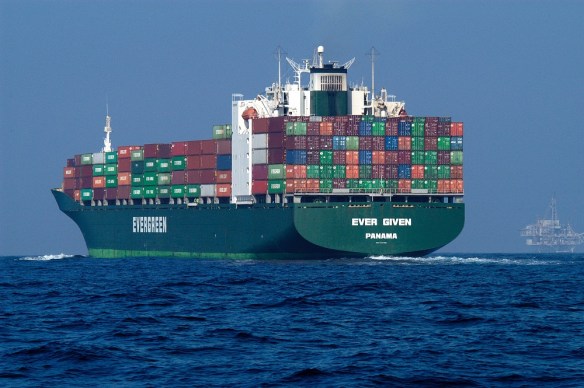
Image courtesy of wilsoncenter.org.

The insane stupid rodeo of tariff threats, retractions, delays, and new threats continues, and the board game industry is reeling.

Some companies are pausing Kickstarter pledge managers and rollouts until they consult with lawyers and printers. Others are cancelling projects outright.

And these companies are being incredibly honest and forthright with their audiences. I’ve seen at least a half-dozen posts from across the industry, and there are probably many others I’ve missed.

But I want to share one in particular.
The CEO of Steve Jackson Games, Meredith Placko, put out a post about the tariff situation and how it’s affecting the industry.

Feel free to click the link to check it out, but I’m going to post much of the text here as well, because it’s straightforward and informative. It avoids hyperbole and confronts the unpleasantness awaiting board game companies going forward. Plus it gives us real numbers to crunch.

(Meredith’s comments are in quotation marks, my comments in italics.)


“On April 5th, a 54% tariff goes into effect on a wide range of goods imported from China. For those of us who create boardgames, this is not just a policy change. It’s a seismic shift.

At Steve Jackson Games, we are actively assessing what this means for our products, our pricing, and our future plans. We do know that we can’t absorb this kind of cost increase without raising prices. We’ve done our best over the past few years to shield players and retailers from the full brunt of rising freight costs and other increases, but this new tax changes the equation entirely.”

Covering the board games industry has been a rollercoaster since COVID 19 reports in China emerged and factories began shutting down. Board game companies adapted quickly, but many suffered, and more than a few closed their doors.

I was hoping that would be the worst of it for the industry, but sadly, that’s obviously no longer the case. I can only imagine what the last five years have been like for board game creators.
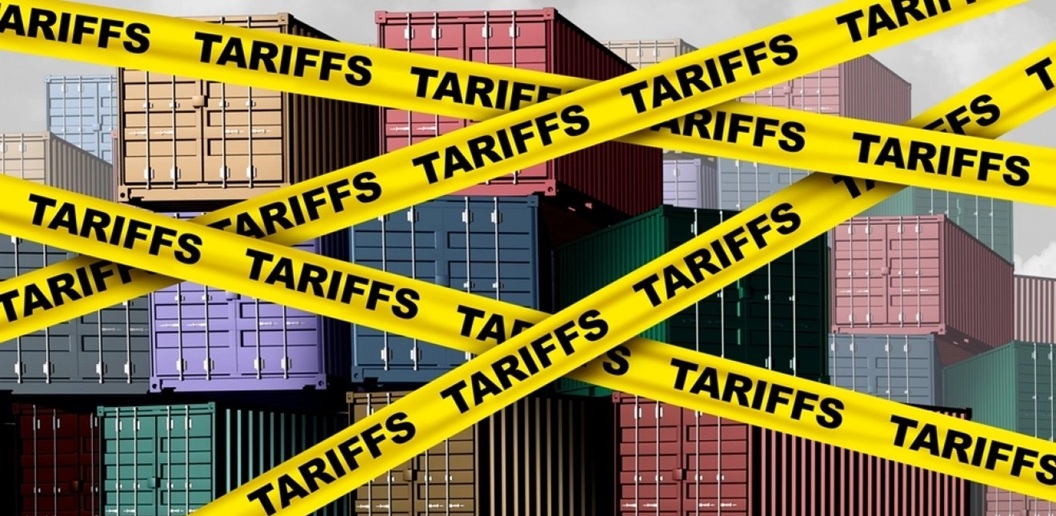
Image courtesy of The Wall Street Journal.

“Here are the numbers: A product we might have manufactured in China for $3.00 last year could now cost $4.62 before we even ship it across the ocean. Add freight, warehousing, fulfillment, and distribution margins, and that once-$25 game quickly becomes a $40 product. That’s not a luxury upcharge; it’s survival math.”

Getting real numbers has been a revelation, and I’ve been sharing this post all over in the hopes of people realizing the genuine effect these tariffs will have on businesses.

“Some people ask, “Why not manufacture in the U.S.?” I wish we could. But the infrastructure to support full-scale boardgame production – specialty dice making, die-cutting, custom plastic and wood components – doesn’t meaningfully exist here yet. I’ve gotten quotes. I’ve talked to factories. Even when the willingness is there, the equipment, labor, and timelines simply aren’t.

We aren’t the only company facing this challenge. The entire board game industry is having very difficult conversations right now. For some, this might mean simplifying products or delaying launches. For others, it might mean walking away from titles that are no longer economically viable. And, for what I fear will be too many, it means closing down entirely.

Tariffs, when part of a long-term strategy to bolster domestic manufacturing, can be an effective tool. But that only works when there’s a plan to build up the industries needed to take over production. There is no national plan in place to support manufacturing for the types of products we make. This isn’t about steel and semiconductors. This is about paper goods, chipboard, wood tokens, plastic trays, and color-matched ink. These new tariffs are imposing huge costs without providing alternatives, and it’s going to cost American consumers more at every level of the supply chain.”
Image courtesy of Etsy.

This is the real lesson here for anyone supporting these tariffs. You can’t just say you’re bringing manufacturing back to America. You have to DO it. You have to have the facilities, the manpower, the training, the materials, and the wherewithal. These tariffs aren’t just putting the cart before the horse, it’s pushing the cart down the hill and blaming gravity when it crashes.

“We want to be transparent with our community. This is real: Prices are going up. We’re still determining how much and where.

If you’re frustrated, you’re not alone. We are too. And if you want to help, write to your elected officials. Ask them how these new policies help American creators and small businesses. Because right now, it feels like they don’t.

We’ll keep making games. But we’ll be honest when the road gets harder, because we know you care about where your games come from – and about the people who make them.”


Hey folks, it’s your friendly neighborhood puzzle guy back again. (Just wanted to make it clear that everything you read going forward is me, not Meredith.)

It’s a rocky road ahead for board game companies.

Thankfully, we are already seeing industry leaders making moves to handle Trump’s tariffs.
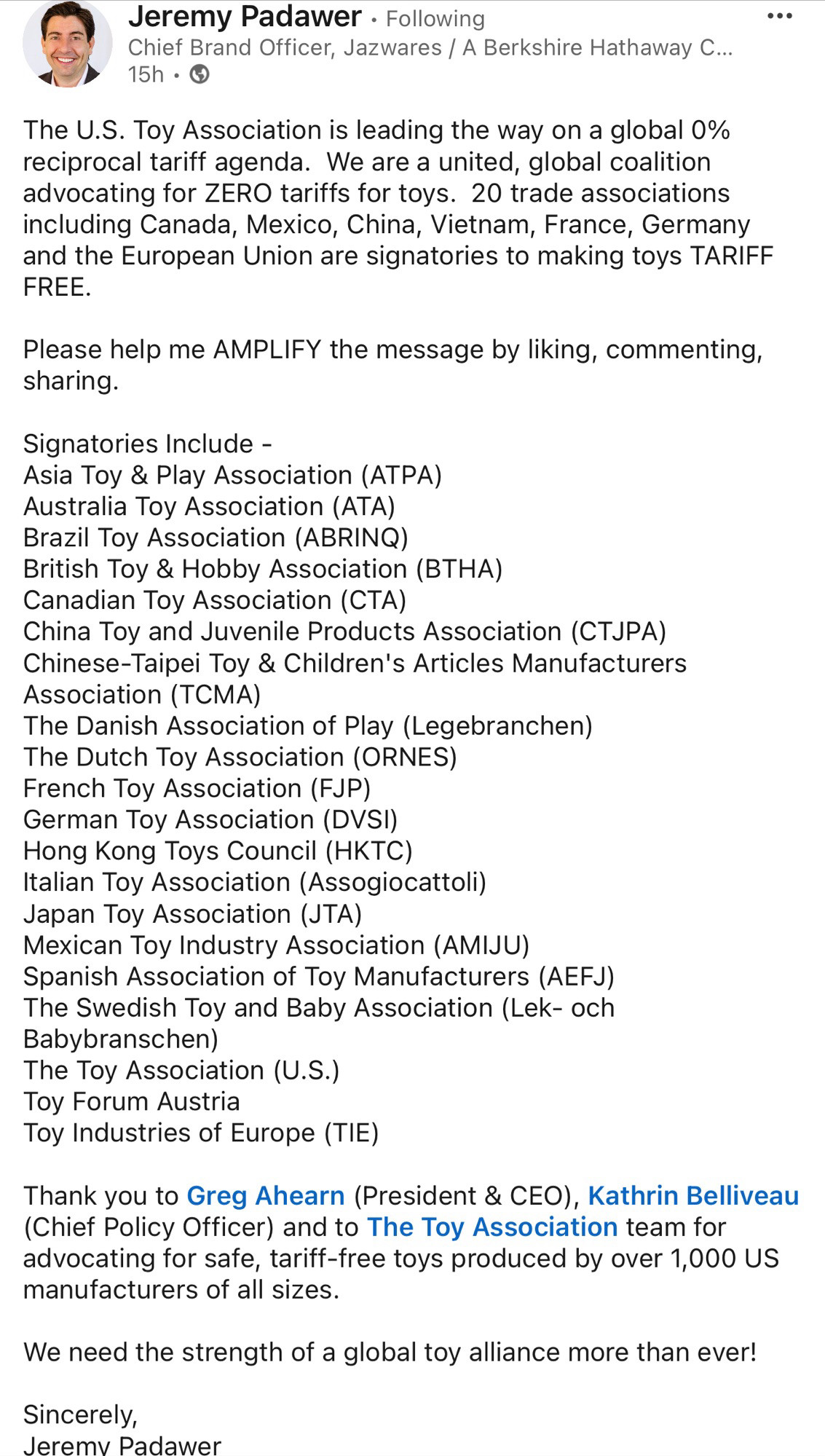
The U.S. Toy Association (founded over a hundred years ago!) is trying to forge a coalition with toy and trade associations across the world with the lofty goal of a global 0% reciprocal tariff on toys.

The list of organizations agreeing to work on this is impressive… and inspiring. Sure, it’s a business decision. My cynical little heart sees that.

But imagine if they succeeded and made toys tariff-free across the globe. What a gift to parents and children around the world that would be! What a boon that could be to game designers.

(I reached out to the U.S. Toy Association to confirm if board games and RPGs fall under the toy umbrella, but have not heard back yet.)


So, what can you do in the meantime?

Well, if you have the means to do so, reach out to your officials. Support local game companies. Speak up, loudly and often.

When you think of the board game industry, you probably think of the big companies, the big brands… but there’s only a few of them.

The VAST majority are small businesses led by passionate designers, creative minds, and hardworking people of all ethnicities, ages, backgrounds, and gender identities. They are a chorus of voices that make gaming better, that tell us stories about ourselves through gameplay, that bring history alive and challenge our minds, our reflexes, our collaboration, and our cunning.

THAT is the board game industry I want to see succeed.

I hope they can weather the storm.

Roll Them Bones!

Meme culture is constantly evolving. As new memes emerge, others are updated. They mutate, they cross over with other meme styles. It’s virtually a language at this point, a hyper-dynamic vernacular where the rules change as fast as the imagery.

And yet, old memes can resurface for new audiences and make an unexpected impact, like the one I stumbled across this week.

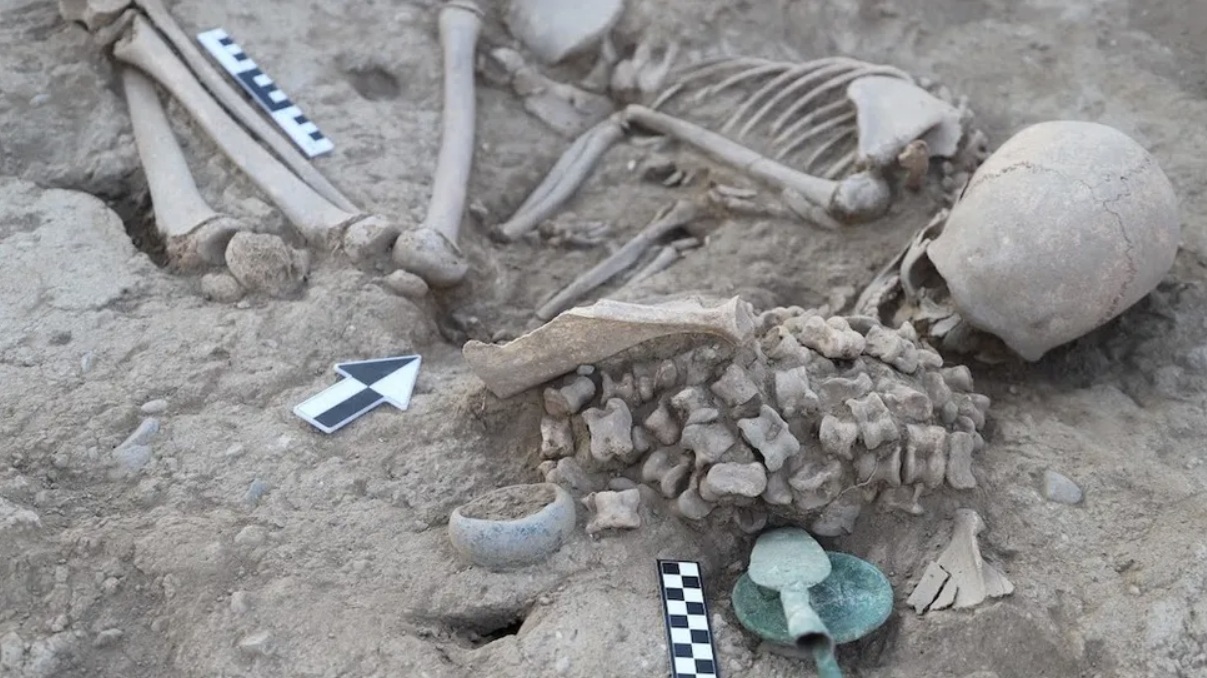
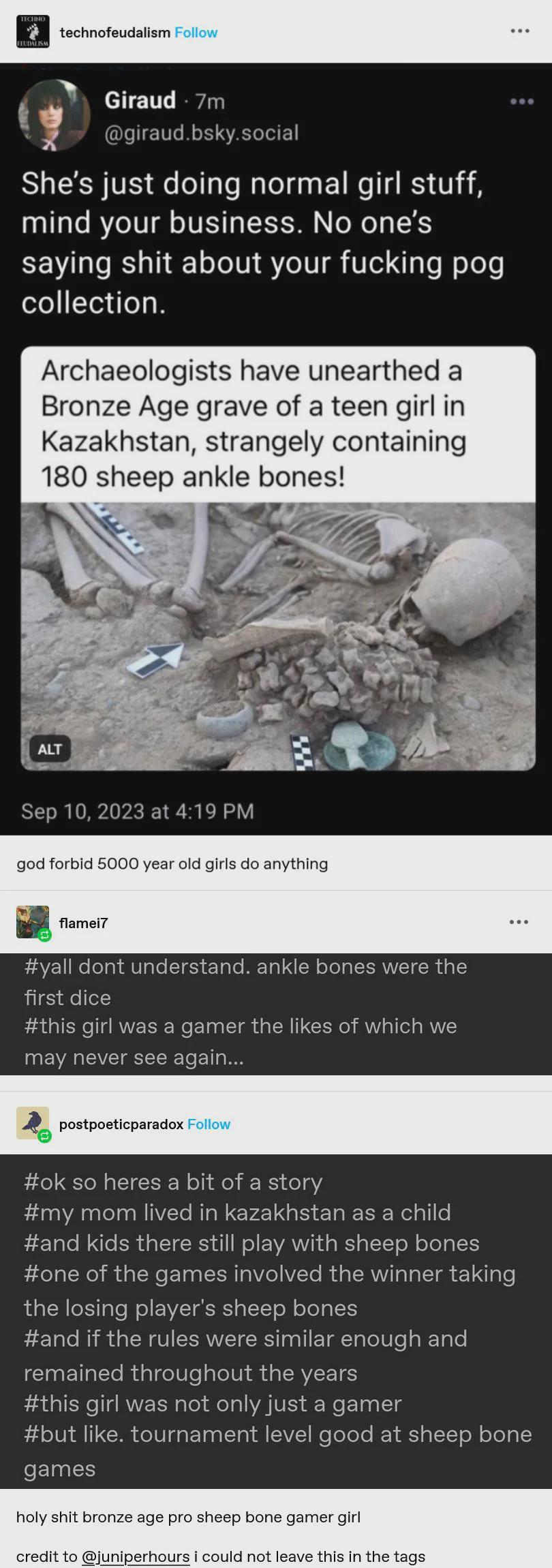
Two years ago, an archaeology report hit internet news feeds. Archaeologists in Kazakhstan uncovered the burial mound of a young girl, somewhere between the ages of 12 and 15. The grave dated back to the Bronze Age, about 5000 years or so.

But that wasn’t what caught the Internet’s attention.

It was the sheep bones that captured everyone’s imagination.

You see, she was buried with 180 ankle bones, also known as astragalus bones, from dozens and dozens of sheep.

Researchers were unsure of the significance of these bones, attributing them to cult practices, totems for meditation, or symbols of good luck to wish the deceased well in their transition to a new world.

Internet readers came to a different conclusion. They believed this young girl was a world-class gamer and these were her trophies, the spoils of victory.

Knuckle bones, ankle bones, and other small, easily-rolled bones have been associated with gaming for centuries. For many cultures, they were the first readily-available dice. This is true in Kazakhstan as well.

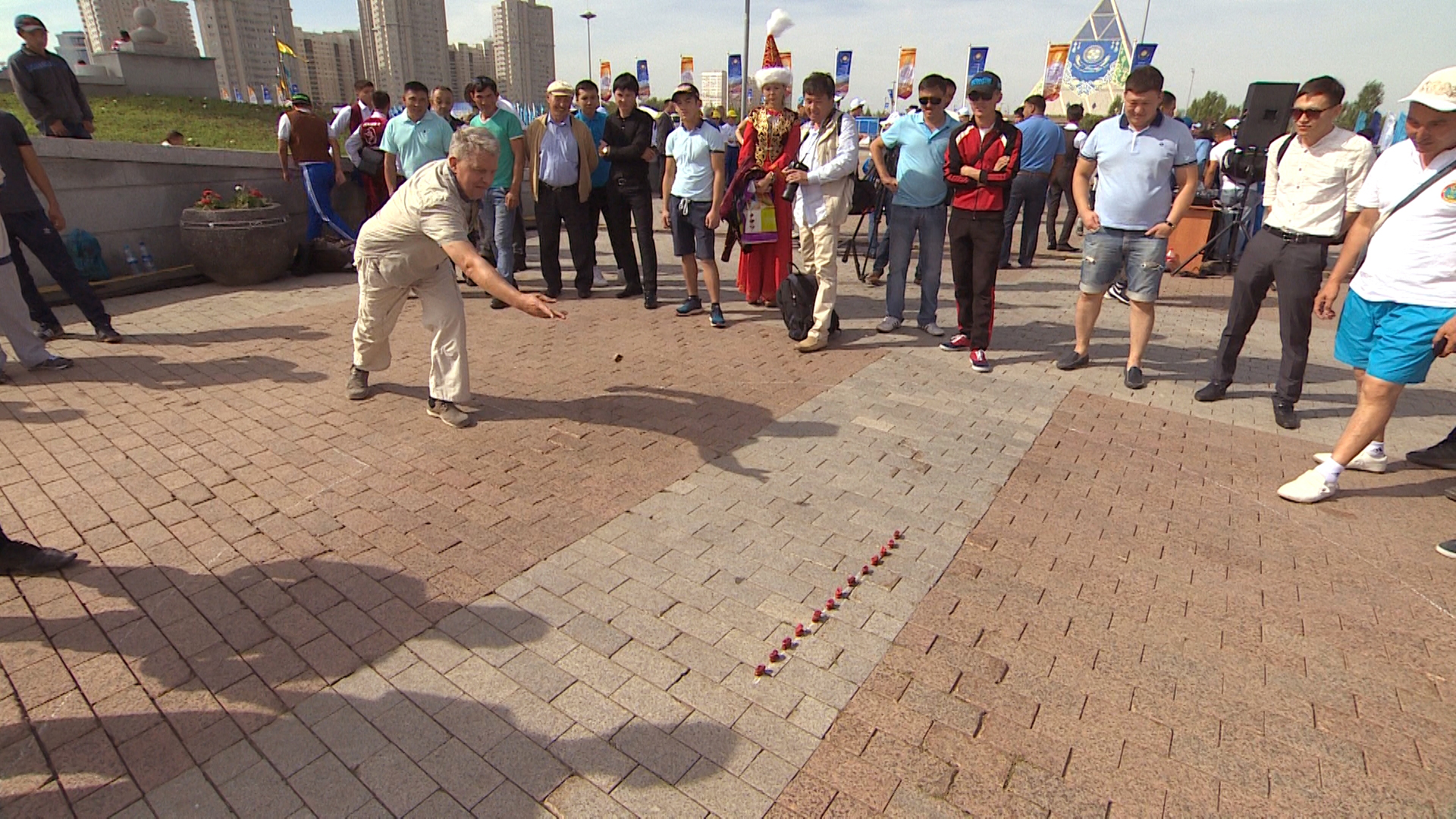
In fact, there is a Kazakh game called Assyk, and it’s similar to marbles. Players take an ankle bone and try to knock other ankle bones from the game space. It requires considerable skill, since you’re tossing the assyk from a distance.

Rules vary depending on your sources, but according to some articles about this traditional Kazakh game, winners would keep the ankle bones they knock out of the circle, just like in marbles, pogs, and other games of this nature.

So, if our Bronze Age assyk master followed this rule — and based on the number of bones in her grave, it’s a distinct possibility — that means she didn’t just dabble in this game… she dominated at it, collecting dozens of victories.

Appropriately, the Internet celebrated her as a pro gamer, a tournament-level champion with the hand-eye coordination to dominate modern games as easily as she did games of assyk around her village.

And honestly, how can you not love something like that? Everybody needs a hero, gamers included. A 5000-year-old Bronze Age astragalus-hoarding game sniper is not a bad place to start.

Happy sheep-bone-tossing, everyone!

Social Deduction Games and Blood on the Clocktower!

Social deduction games are terrific party activities. A social deduction game involves players being assigned secret roles or allegiances, and the goal of the game is to unravel these secret roles before the opposing side can eliminate you from the game.

Usually it means the good guys trying to root out the bad guys before the bad guys take power, kill the good guys, or outwit the good guys into acting against their own best interests.

There are a lot of social deduction games out there for you to enjoy. Ultimate Werewolf, Are You a Robot?, Salem 1692, The Resistance, and Secret Hitler are all affordable ones with tons of replay value. (Of course, for affordability, you can’t beat Mafia. You can play a round of Mafia with just a deck of cards, proving that social deduction games are more about the players than the game pieces.)

But, when it comes to social deduction games, one game stands head and shoulders above the rest in terms of complexity, variation, challenge, and immersion.

Blood on the Clocktower.

There are usually only a few different roles to play in social deduction games. In Are You a Robot?, there are humans and robots. In Ultimate Werewolf, villagers and werewolves. In Secret Hitler, there’s Liberals, Fascists, and Hitler. In Mafia, there are mafia members, townspeople, a doctor/guardian angel, and a detective.

The limited number of character archetypes allows you to introduce to new players to the game quickly, which is definitely a bonus for games that require a large number of people.

But these limited roles can also hurt replay value if your players are looking for more to sink their teeth into.

That’s where Blood on the Clocktower comes in.

Yes, there are only two teams (good and evil), but EVERY player gets their own role, including powers and requirements that change over the course of the three “nights” that the game takes place. Every role is unique, and victory or defeat can hinge on the special abilities of a single player.

Blood on the Clocktower is the Tri-Dimensional Chess to every other social deduction game’s Chess. There is so much going on, so much to keep track of, so many possibilities that you can’t help but fall fully into the immersion of the game. It’s your only chance to survive.

And the game is so involved that it lends itself well to be “performed.” Watching a great game of Blood on the Clocktower being played is sometimes just as fun as playing.

I have seen some amazingly entertaining actual play videos of Blood on the Clocktower. YouTube channels like Smosh and No Rolls Barred have played, and now, Good Time Society is hoping to fund a Kickstarter for a series of actual plays of the game:

Some of the best actual play personalities in the board game and roleplaying game are teaming up for this, and it looks like they’re going to make something special here.

So click this link if you’d like to contribute. If not, hopefully you’ll watch some of these actual play videos and check out the game for yourself.

Game companies continue to push the envelope in terms of storytelling, presentation, and immersion, and Blood on the Clocktower has become the new benchmark. Who knows what’s coming next!

Do you have a favorite social deduction game? Let me know in the comments below! (For me personally, I love the simplicity and replay value of Mafia!)

And happy deducing, everyone!

Nominees Announced for the World Video Game Hall of Fame!

Rochester, New York is the home of The Strong National Museum of Play, and they have a very important mission: to chronicle the history and importance of play.

Child development, social interaction, imagination… all of these key features in a healthy individual are facilitated by play, and the staff at The Strong help us not only understand that process, but celebrates it by hosting both the National Toy Hall of Fame and the World Video Game Hall of Fame under its brightly-colored umbrella.

As you might have guessed, puzzles and games play a significant role in The Strong’s work, and they’re represented in both Halls of Fame. Clue, Chess, Scrabble, the Rubik’s Cube, and Dungeons & Dragons are all inductees in the National Toy Hall of Fame, while Myst, Tetris, The Oregon Trail, and Where in the World is Carmen Sandiego? are among the puzzlier inductees on the video game side of things.

And The Strong have recently announced the nominees for this year’s class of video games to be inducted in the World Video Game Hall of Fame.

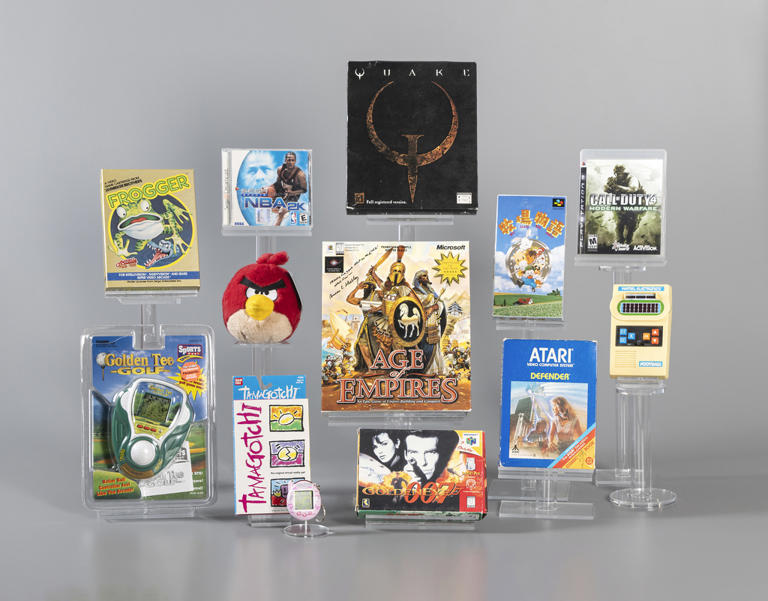
This year’s finalists for the 2025 class run the gamut from 8-bit classes, modern phenomenon, and games that took play to surprising new places, and they represent different genres, play styles, and aspects of gaming across decades.

The 2025 finalists are: Age of Empires, Angry Birds, Call of Duty 4: Modern Warfare, Defender, Frogger, Golden Eye, Golden Tee, Harvest Moon, Mattel Football, Quake, NBA 2K and Tamagotchi.

What a field! Everywhere from arcades (Frogger) to pocket games (Tamagotchi) are on display here, as well as social gaming both in person (Golden Eye) and online (Quake).

The nominees were chosen from thousands of nominations online. The field was then narrowed by staff members at The Strong based on “longevity, geographical reach, and influence on game design and pop culture.” Only a small handful of these finalists will be selected by an international committee of experts as this year’s inductees.

Everyone has an award show that they geek out over, and you’re probably not surprised to discover that these Halls of Fame are two of my favorite awards given out each year. I love seeing deserving games and puzzles get the spotlight they deserve for helping change how we play and interact with each other.

You can check out the full list of National Toy Hall of Fame inductees and World Video Game Hall of Fame inductees at these links. Do yourself a favor and take a stroll through not only your childhood, but the childhoods of generations past. It’s a real treat.

What toys and games would you like to see inducted in the future? Let us know in the comments below!

Fictional Games That Became Real!

Many TV shows, films, and novels help add character to their narrative universes by mentioning the games played by the characters.

Shows and franchises as wildly disparate as Battlestar Galactica, New Girl, It’s Always Sunny in Philadelphia, The Witcher, and Pretty Little Liars have fictional games that enrich their worlds.

But sometimes, either through clever marketing or the affection of fans, these games go from fictional recreational activities to real ones, crawling fully formed from the imagination to be enjoyed across tabletops worldwide.

Today, I’d like to introduce you to a few of them. Let’s play, shall we?


Tri-Dimensional Chess

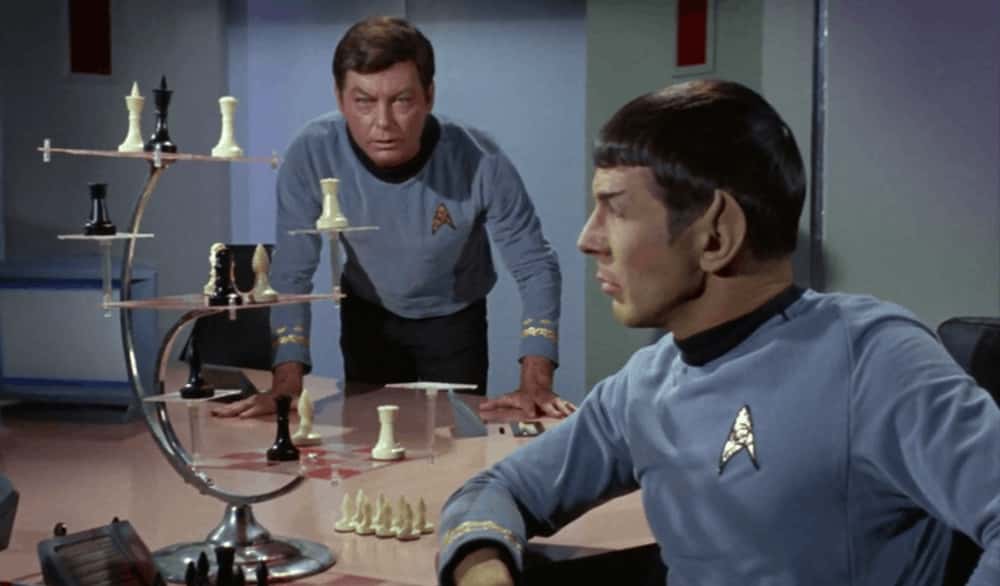
Star Trek has been a source of many fictional games and sports over the years. Dom-jot, Chula, Dabo, Parrises Squares, and Stratagema are some of the more famous ones, but the granddaddy of Star Trek games is Tri-Dimensional Chess.

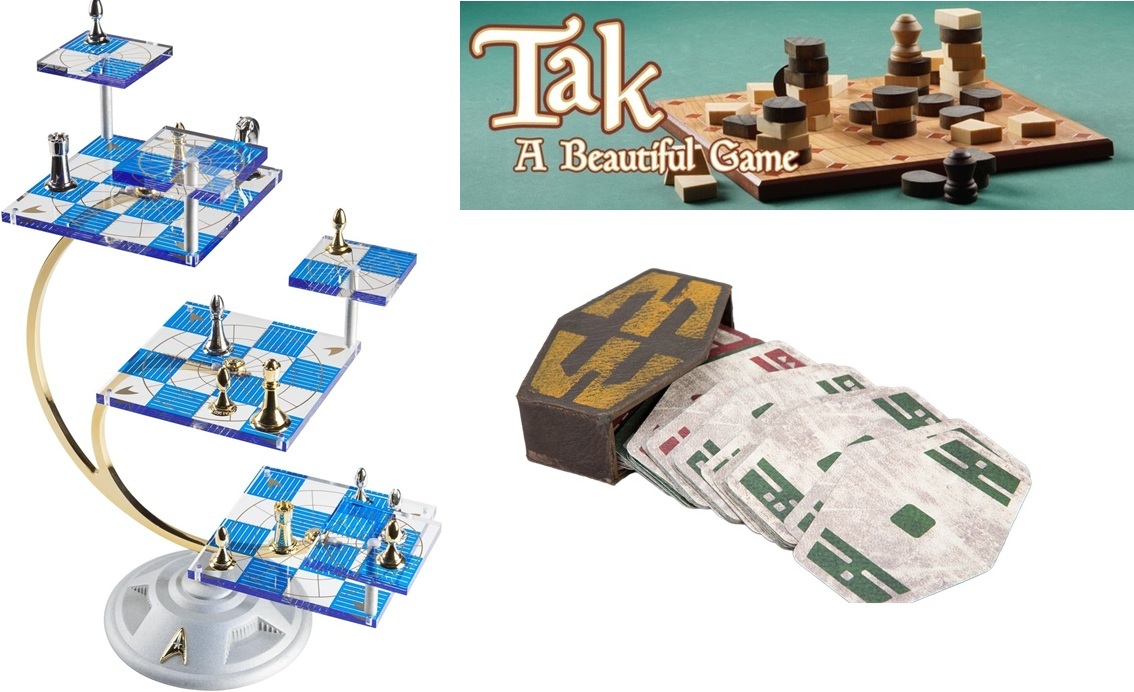
First appearing in the original series back in 1966, Tri-Dimensional Chess follows the normal rules of chess, but spread across different vertical levels. So a knight could move in its usual L-shaped format, but on its own board OR the boards above and below.

Over the years — and across different Star Trek series — we’ve heard stories about key maneuvers like the Aldabren Exchange and the Kriskov Gambit in games of Tri-Dimensional Chess, helping flesh out how influential the game is for several characters. (Heck, in one episode, Spock beats the Enterprise computer at the game, saving Kirk from a court martial!)

The Franklin Mint has released limited edition versions of the game on two occasions, and I’ve seen homemade games of Tri-Dimensional Chess at gaming and pop culture conventions over the years.

Chess remains incredibly popular — as do many variants of Chess — so it’s no surprise this fictional game made the leap to the real world. (I suspect the complicated three-person Chess game developed by Sheldon in The Big Bang Theory is less likely to make a similar leap. Especially since there are already three-person Chess games on the market today.)


Cones of Dunshire

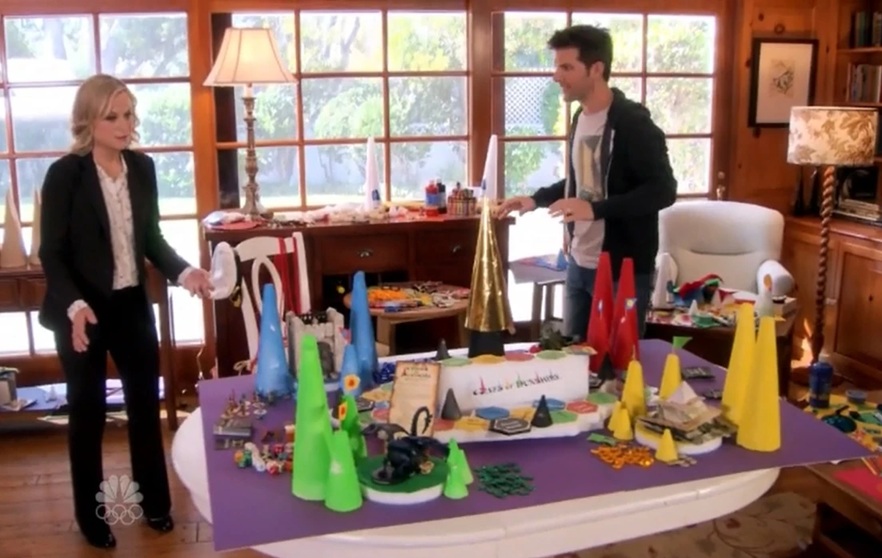
Ben Wyatt of Parks and Recreation enjoyed many nerdy pastimes, but Cones of Dunshire was his masterpiece.

Initially treated as a mistake, a nonsensical result of his boredom and frustrations, the game becomes a running gag in the show after Ben leaves a copy as a gift for the accounting firm that he has been hired by (and walked away from) several times during the show’s run.

Later, we find out the game has been commercially produced, and Ben stumbles across it when dealing with a dotcom company. He mentions that he invented it, but his claims are dismissed. He then proves not only his gaming skill but his authorship of the game when he beats the dotcom bosses in a tense playthrough.

It’s mentioned once that a gaming magazine called Cones of Dunshire “punishingly intricate,” a point that makes Ben proud.

Part of the fun of Cones of Dunshire (other than the parody of Settlers of Catan) is that the viewer never really understands what’s going on, so supposedly dramatic moments can be played for laughs. (I also appreciate that the name of the game is basically a fancy way of saying “dunce hat.”)

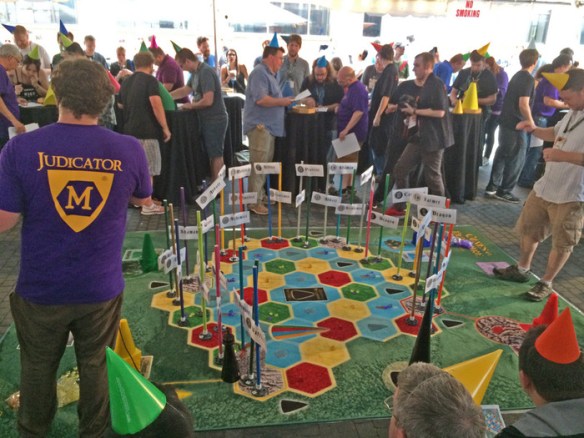
And, in the sort of cyclical storytelling that could only happen in a nerdly pursuit like board games, the company that made Settlers of Catan — Mayfair Games — produced a giant version of the game as part of a charity event at GenCon.

2783642-2767076242-563bb

Both the silliest and most ambitious game to cross from fictional to real, Cones of Dunshire is a nerdy highlight of a now classic sitcom.


tak1

Tak: A Beautiful Game

Originally introduced in Patrick Rothfuss’s Kingkiller Chronicles novels as a tavern game, Tak made the leap to the real world as a stretch goal in a Kickstarter campaign for another game.

Game designer James Ernest accepted the challenge of bringing the game to life, and his collaboration with Rothfuss created one of my all-time favorite board games.

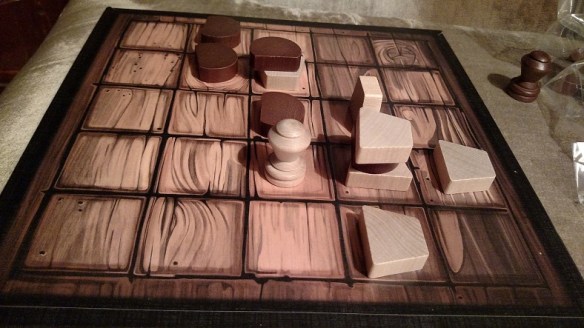
Tak has a very simple concept: two players each attempt to build a road connecting opposite sides of the game board. The first player to successfully complete their road wins.

tak2

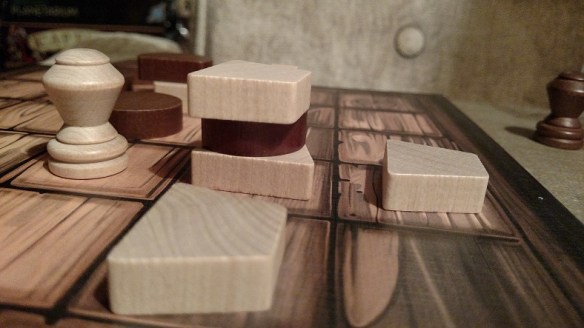
To do so, you place game pieces called stones, one at a time, on various spaces on the board. The stones can either be played flat (meaning they’re part of your road) or standing on edge (meaning they’re a wall, blocking any road’s passage through that space).

It’s a rare thing when a new game feels like something that could’ve been played in taverns centuries ago. For me, this is the gold standard when it comes to adapting fictional games to the real world.


Image courtesy of Glowforge.com

Pai Sho

A key storytelling device in the much-beloved show Avatar: The Last Airbender, Pai Sho was a tactical tile-based game that reinforced important themes in the show.

The game had many variants (often played differently depending on the faction or nation featured) but each had the feeling of an ancient game passed down across generations.

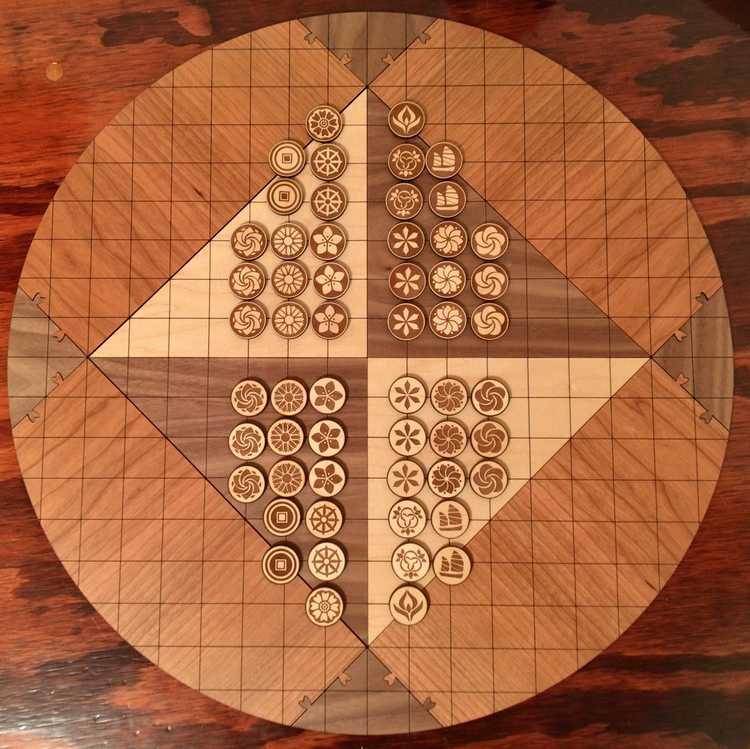
In the most popular variant, Skud Pai Sho, the goal is to form a harmony ring around the center point of the board. Players create harmonies by placing two harmonious tiles on the same line without other tiles or obstacles. There are gates, gardens, and lines that help dictate play, as well as multiple flower tiles for players to place that accomplish different things when placed properly.

There are entire forums and websites dedicated to the rules of Pai Sho and its many variants, and the thriving fan community that continues to nurture these games well after the show’s conclusion make this one of the most heartfelt and successful transitions from fictional to real life that I can think of.


Image courtesy of starwars.com.

Sabacc

In The Empire Strikes Back, we learn about the friendly rivalry between Lando Calrissian and Han Solo, and how a wager led to the Millennium Falcon changing hands.

But exactly how it happened was only revealed later in supplementary material like the Star Wars Visual Encyclopedia and the novel Lando Calrissian and the Mindharp of Sharu.

The second draft of the script for The Empire Strikes Back mentioned that Lando won Cloud City in a “sabacca” game, but by the time additional stories fleshed out the relationship between Lando and Han, the game had been shortened to Sabacc.

It’s sort of a combination of poker and Blackjack. You want the value of the cards in your hand to be as close to 23 or -23 as possible. Sounds simple, right?

Well, imagine a game of poker where the cards in your hand changed periodically unless you publicly locked them in by placing them on the table, where they stayed until the hand was over. That’s the basic idea behind Sabacc.

There were numerous fan versions of the game over the years, but now you can get Sabacc decks at Disney theme parks (alongside many, many, MANY other items).


Do you have a favorite fictional game that made the leap to the real world? Did we miss any major ones? Let us know in the comments below!

The more things change… (Tariffs and the Board Game Industry)

containership

Well, this is the worst kind of deja vu.

Five years ago, in February of 2020, I wrote a blog post about how the pandemic was affecting the board game industry, particularly regarding production and shipping from China and how it was hurting (sometimes crippling) board game companies.

And now, half a decade hence, I’m writing a blog post about another global disaster affecting the board game industry:

Donald Trump.

You see, the president’s “genius” plan to enact large tariffs against the US’s trade partners, forcing the American public to pay more for goods from China, Mexico, and Canada, is guaranteed to hurt many MANY industries, and the board game industry is one of them.

Already, game companies are reaching out to their customers with mailing list entries and blog posts and warning them of potential price hikes being forced upon them by this half-witted political stunt.

Atlas Games, for instance, issued a post this week about the current, frustrating, entirely-avoidable situation:

Unfortunately, there’s confusion and a distinct lack of clear guidance at this point. While Canada’s announcement of tariffs they’re levying in response clearly states that goods already en route to Canada aren’t subject to them, the Trump Administration has been contradictory on how and when US tariffs will actually be applied.

For example, two 40-foot shipping containers filled with our new game Vicious Gardens arrived in Seattle on Saturday. These games are on US soil, but they haven’t yet cleared customs. We don’t know if, when they do, we may be handed a tax bill equal to 10% of their value…

We also need to place orders NOW to reprint some of our popular titles. The Pops & Bejou game CULTivate is now published by Atlas Games. It’s out of stock, but we’ve had to delay the reprint because of the lack of clarity about these import taxes. During the election campaign, Trump threatened that tariffs on Chinese-made goods could be as high as 60% to 100%.

Unlike the president and his poor explanation of the current constantly-evolving tariff agenda, these game companies are striving to be as transparent about their circumstances as possible.

That kind of honesty goes a long way with customers, and while both the companies and customers will be feeling the squeeze of these new tariff-induced costs, hopefully the companies can still remain profitable and board game fans can still enjoy these wonderful play experiences.

Sadly, this is no surprise to industry insiders. Steve Jackson Games wrote about the consequences of the tariffs back in early November, and Stonemeier Games soon followed in early December.

A few days ago, CBS8 did a report about a local game shop in San Diego that expects to take a big hit when the tariffs land.

Some companies, like Monte Cook Games, are doing limited time discounts and sales to offset the upcoming tariff pricing. Some tabletop roleplaying game companies are already considering retreating from the physical game market entirely and focusing on PDF and downloadable products to remain profitable.

Much like the ripple effect of COVID in 2020, I suspect the effect of Trump’s tariffs will be felt for years to come.

But, unfortunately, like so many things these days, we’ll have to wait and see… and hope for the best… but expect the worst.