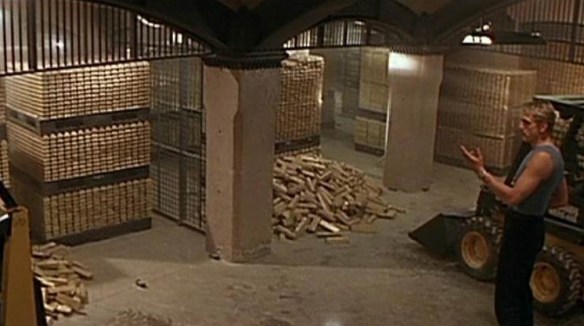
It’s Follow-Up Friday: Tetris Theology Edition!

Welcome to Follow-Up Friday!

For those new to PuzzleNation Blog, Follow-Up Friday is a chance for us to revisit the subjects of previous posts and update the PuzzleNation audience on how these projects are doing and what these people have been up to in the meantime.

And today, I’d like to return to the subject of Tetris for a moment.

This year marked the 30th anniversary of Tetris, one of the all-time favorite video games in history, and we’ve joined in the celebration with posts about a new Tetris world record in Philadelphia and the power of Tetris to curb the urge to snack.

A friend recently pointed me toward this comedy skit from CollegeHumor, which finally solves the riddle of where all those Tetris blocks come from.

And so, without further ado, I present The Tetris God:

Thanks for visiting PuzzleNation Blog today! You can share your pictures with us on Instagram, friend us on Facebook, check us out on TwitterPinterest, and Tumblr, and be sure to check out our library of PuzzleNation apps and games!

5 Questions with constructor Patrick Blindauer!

Welcome to another edition of PuzzleNation Blog’s interview feature, 5 Questions!

We’re reaching out to puzzle constructors, video game writers and designers, board game creators, writers, filmmakers, musicians, and puzzle enthusiasts from all walks of life, talking to people who make puzzles and people who enjoy them in the hopes of exploring the puzzle community as a whole. (Click here to check out previous editions of 5 Questions!)

And I’m excited to have Patrick Blindauer as our latest 5 Questions interviewee!

Any list of the top constructors in crosswords today simply has to include Patrick Blindauer. His puzzles have appeared in the New York Times, the Los Angeles Times, the American Values Club Crossword, GAMES Magazine, and numerous other outlets, and Patrick is known for his devilishly clever themes and challenging puzzle grids.

As a regular contributor to the American Crossword Puzzle Tournament and co-host of this year’s Lollapuzzoola, Patrick represents both classic crossword traditions and the enterprising spirit of today’s most innovative constructors, pushing boundaries and continuing to explore just how devious and delightful crosswords can be.

Patrick was gracious enough to take some time out to talk to us, so without further ado, let’s get to the interview!

5 Questions for Patrick Blindauer

1.) How did you get started with puzzles?

My parents instilled my love of puzzles and games from an early age. I remember my mom got me an educational toy called Mr. Light, and my dad had a subscription to GAMES Magazine, which I would flip through when he was done with it. I loved the visual puzzles and the contests, but I didn’t get into crosswords until many years later when I decided to give up cigarettes and take up solving.

It was one of the best decisions I ever made, simultaneously improving my health and leading me to a new hobby and eventually to a new career. After a year of solving I tried constructing, and after a year of constructing something clicked and I made my first sale (a Thursday for the NYT, which ran on 7/21/05).
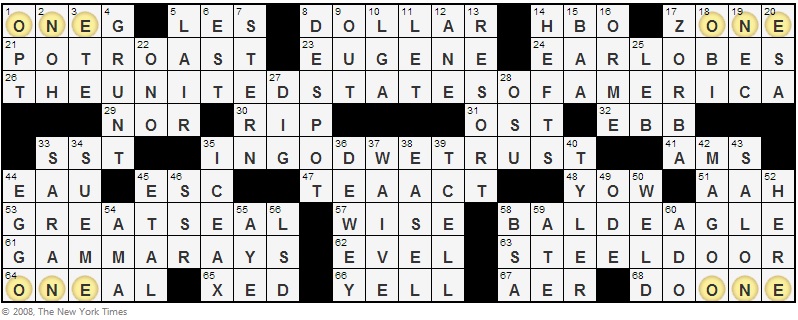
2.) Whether it’s the New York Times or the American Values Club Crossword, you’ve created some truly innovative and diabolical puzzles, like your famous dollar-bill-shaped crossword (featured above) or the New York Times puzzle from last year where multiple movie titles shared boxes. Do you have any favorite puzzles or clues, either your own or constructed by others? And on the flip side, what’s your least favorite example of crosswordese?

Thanks! Those are certainly the 2 New York Times crosswords which have gotten the most attention. Other favorites which spring to mind are my 7/4/07 New York Times puzzle*, the 12/17/09 New York Times puzzle I made with Francis Heaney, and the stuff I wrote for the NY Sun when I started out, which are collected in the book Patricks’ Puzzle Pandemonium: A Cavalcade of Crossword Craziness.

[*Glenn’s note: The 7/4/07 crossword was designed so that the letters “USA” could be found when certain boxes were shaded. It was no doubt a beast to construct. The 12/17/09 crossword was Noah’s Ark-themed, and animal names appeared side-by-side in the grid.]

I’m also the proud poppa of 5 Puzzlefests (interconnected xword suites with a final answer), which I offer through my website, and I’ve written a bunch of puzzle books (“Crossword Word Search” and “Wide-Screen Crosswords” are two of my favorites).

There are lots of other constructors whose work I enjoy, especially those who devise novel gimmicks that really push the envelope.

blindauer beard

My least favorite xwordese is probably LST, though I try to avoid all xwordese when I can. Coming up with a fresh SST clue is tough too, so I just avoid putting it in the grid in the first place.

[Glenn’s note: LST is an abbreviation for an amphibious military craft, short for Landing Ship Tank. SST is an abbreviation for supersonic transport, like the former Concorde.]

3.) You’re also a musician, and both the best puzzles and enjoyable musical performances often have a sense of flow and elegance about them. Do you ever find yourself relying on your more puzzly skills while performing, conducting, or teaching?

Not consciously, no, but maybe I should!

4.) What’s next for Patrick Blindauer?

I actually have something very exciting to announce: I’ve been commissioned to write a 6-puzzle set for the New York Times! It will run Monday-Saturday sometime this fall, and the plan is to make it a contest, as well. I’m thrilled and honored to have the opportunity to do something like this. Wish me luck!

5.) If you could give the readers, writers, and puzzle fans in the audience one piece of advice, what would it be?

Keep your pencil sharp and your mind even sharper.


Many thanks to Patrick for his time. You can check out his PuzzleFests and other puzzly works on his website, and be sure to follow him on Twitter (@pblindauer) to keep up on all things Patrick. (You can also learn more about the Lollapuzzoola tournament at BeMoreSmarter.com.) No doubt, Patrick will have something fiendishly fun for solvers soon.

Thanks for visiting PuzzleNation Blog today! You can share your pictures with us on Instagram, friend us on Facebook, check us out on TwitterPinterest, and Tumblr, and be sure to check out the growing library of PuzzleNation apps and games!

Meet a pious puzzler!

It’s always nice (and far less common) to read a news story that reveals a pleasant secret about someone famous. It seems like so much of our media coverage of celebrities is fixated on dirty little secrets, scandals, and unpleasantness of all sorts. It’s rare to discover something new about people in the public eye that enhances their reputations instead of demeaning them.

So when I stumbled across this article about a religious figure who secretly created puzzles for the masses, I knew I had to share such delightfulness with the PuzzleNation readership.

Yes, Europe once had its very own Puzzly Pope: Leo XIII!

Serving as Pontiff from 1878 to 1903, Pope Leo XIII occasionally published long, poetic riddles known as “charades” in a Rome newspaper called Vox Urbis, under the pseudonym “X.”

Pope Leo XIII’s charades were descriptions that solvers would decode by identifying certain words that were also syllables of a hidden answer word.

From the article:

One example of the pope’s Latin riddles talked of a “little boat nimbly dancing,” that sprung a leak as it “welcomed the shore so near advancing.”

“The whole your eyes have known, your pallid cheeks have shown; for oh! the swelling tide no bravest heart could hide, when your dear mother died,” continues the translation of part of the riddle-poem.

The answer, “lacrima,” (“teardrop”) merges clues elsewhere in the poem for “lac” (“milk”) and “rima” (“leak” or “fissure”).

Only eight of the Pope’s charades appeared in Vox Urbis, and despite His Holiness’s attempts to remain anonymous, the identity of “X” was uncovered a year after the first charade appeared in the Latin-language paper.

But an impressive 26 of Pope Leo XIII’s puzzles (many of which never seen before) were recently collected into a book, Aenigmata: The Charades of Pope Leo XIII, by students of the Italian middle school named in Pope Leo’s honor. (Sadly, the book doesn’t appear to be available for sale.)

While it’s fun to picture world leaders like President Clinton and pop culture superstars like Katy Perry and Jon Stewart solving crosswords, I must admit that it’s even more fun picturing Pope Leo XIII toiling over a perfect puzzle to entertain the masses.

And so, we welcome another intrepid puzzle constructor into the hallowed halls of puzzledom. Pope Leo XIII, anonymous riddlesmith and rebus master, we salute you!

Thanks for visiting PuzzleNation Blog today! You can share your pictures with us on Instagram, friend us on Facebook, check us out on TwitterPinterest, and Tumblr, and be sure to check out our library of PuzzleNation apps and games!

It’s Follow-Up Friday: Save a Shop Edition!

Welcome to Follow-Up Friday!

For those new to PuzzleNation Blog, Follow-Up Friday is a chance for us to revisit the subjects of previous posts and update the PuzzleNation audience on how these projects are doing and what these people have been up to in the meantime.

And today, I’d like to return to the subject of crowdfunding and puzzles.

I’m a sucker for a great puzzly Kickstarter or Indiegogo campaigns. We’ve covered several terrific ones in my time here at PuzzleNation Blog — including Baffledazzle and Board Games: Now Blind Accessible, both of which I’ll be updating you on in the coming weeks — and I love spreading the word about interesting and worthwhile projects that the PuzzleNation Community can take part in.

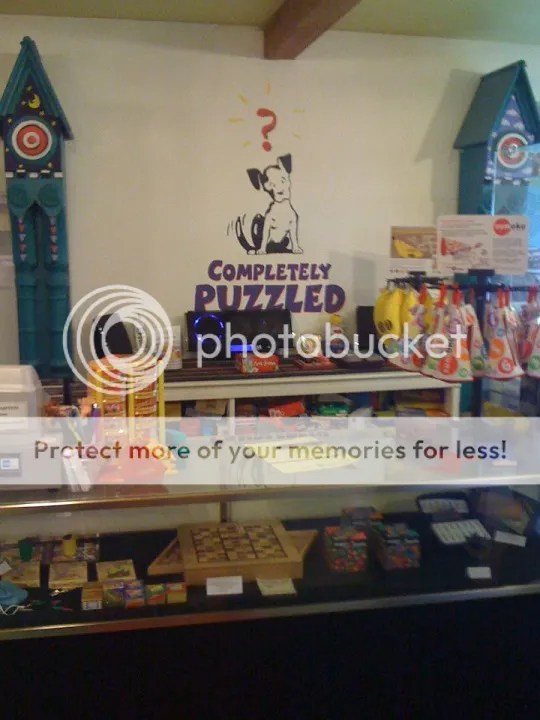
Today, I’ve got another good one for you. A friend of the blog pointed me toward the Indiegogo campaign for Completely Puzzled, a puzzle and game shop in Port Townsend, Washington, that is in danger of closing.

The intrepid Sara Kingsland, long-time patron of the store and puzzle lover, wants to keep the store open, and is hoping to revamp its image and restock on games and puzzles galore with the help of fellow puzzlers and game fans.

The Pacific Northwest is home to a lot of wonderful gamers, puzzlers, companies and shops that represent the best in puzzles and games, and it would be terrific if we could do something to help preserve that fine tradition of puzzle fun in Washington State.

For details and to donate, check out the Completely Puzzled Indiegogo page here. Good luck, Sara!

Thanks for visiting PuzzleNation Blog today! You can share your pictures with us on Instagram, friend us on Facebook, check us out on TwitterPinterest, and Tumblr, and be sure to check out our library of PuzzleNation apps and games!

PuzzleNation Book Review: Tic Tac Tome

Welcome to the tenth installment of PuzzleNation Book Reviews!

All of the books discussed and/or reviewed in PNBR articles are either directly or indirectly related to the world of puzzling, and hopefully you’ll find something to tickle your literary fancy in this entry or the entries to come.

Let’s get started!

Our book review this time around features an interactive challenge, as we match wits with Willy Yonkers’ Tic Tac Tome: The Book That Will Beat You at Tic Tac Toe.

Plenty of books can make you feel stupid, but it’s far more rare for a book to actually defeat the reader in one-on-one combat. Tic Tac Tome pits the player against the endless permutations of Tic-Tac-Toe, challenging you to avoid losses and draws and seek out the lone path that means victory against the diabolical book.

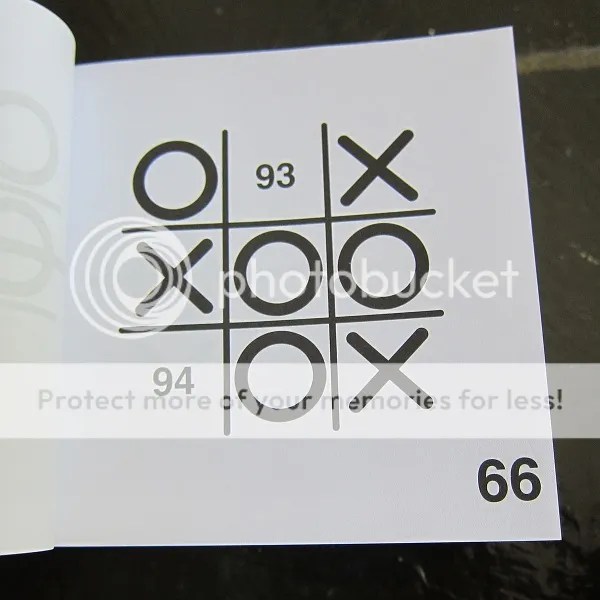
Playing is pretty simple. You choose where to place your X and turn to the page number indicated. On that page you’ll see your mark, as well as the book’s countering move. You then select your next move, and turn to that page number. And repeat until you’ve won, lost, or reached a draw.

[Both pictures courtesy of Winkbooks.net.]

This is an immensely clever idea, especially since the book offers you the chance to either go first or take the much more challenging route of letting the book make the crucial first move. (The richly smug and snarky introductory section, ostensibly written by the book itself as it taunts the reader, only adds to the charm.)

Unfortunately, I did encounter at least one error in the book (two pages had been misassigned or swapped), so be aware: there could be more errors lurking within the fourteen-hundred-plus pages of the book.

That being said, I enjoyed sparring with Tic Tac Tome, and I suspect most puzzle fans and Tic-Tac-Toe enthusiasts would also enjoy. This is prime coffee table book material.

[To check out all of our PuzzleNation Book Review posts, click here!]

Thanks for visiting PuzzleNation Blog today! You can share your pictures with us on Instagram, friend us on Facebook, check us out on TwitterPinterest, and Tumblr, and be sure to check out the growing library of PuzzleNation apps and games!

Puzzles in Pop Culture: Die Hard With a Vengeance

die-hard-with-a-vengeance-original

It’s summer, and when it comes to Hollywood, summer means big blockbuster action movies. One of my favorites is the Bruce Willis / Samuel L. Jackson modern classic Die Hard With a Vengeance.

For those who are unfamiliar with the film — shame on you! — it’s the third installment of the Die Hard franchise, featuring catchphrase-spouting New York City cop John McClane battling terrorists, criminals, and all sorts of unsavory characters.

In Die Hard With a Vengeance, a bomber named Simon is terrorizing the city and McClane is one of his playthings, forced to play Simon Says and accomplish increasingly difficult tasks that Simon sets before him. As McClane (and electrician Zeus Carver, who saves McClane from the first of Simon’s games) race around the city trying to prevent other bombs from going off, Simon enacts an elaborate scheme to rob the city.

Thankfully, McClane and Zeus have a knack for brain teasers and riddles, because several of Simon’s devious tasks require quick thinking and sharp puzzle skills.

diehardwithavengeance1

[One of the last movies to feature payphones as a key plot point…]

First, Simon hits them with a math problem:

As I was going to St. Ives, I met a man with seven wives. Each wife had seven sacks, every sack had seven cats, every cat had seven kittens. Kittens, cats, sacks, wives. How many were going to St. Ives?

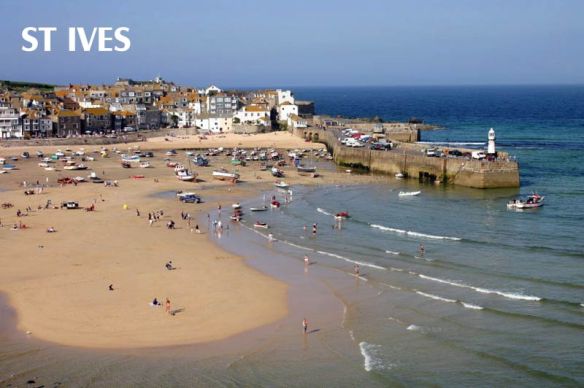
As McClane fervently tries to do multiplication in his head, Zeus realizes this isn’t a word problem, it’s a riddle. The man was going to St. Ives when he met this man, meaning the man was coming from St. Ives. So the wives, sacks, cats, and kittens are irrelevant. Only the narrator is going to St. Ives, so the answer to the riddle is 1.

stives-1886892

[Seems like a nice place to take your many wives…]

In their second puzzly task, Simon offers the following question:

“What has four legs and always ready to travel?”

McClane doesn’t get it, but Zeus immediately identifies it as an elephant joke for kids (although he doesn’t actually deliver the punchline: an elephant, because it has four legs and a trunk).

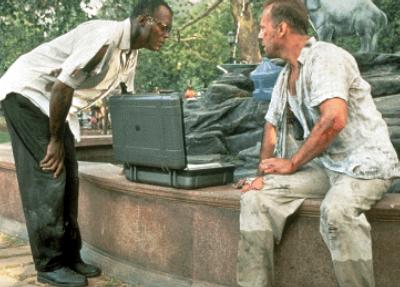
They quickly spot a nearby fountain with an elephant statue. Awaiting them is a suitcase bomb and two empty jugs. When McClane opens the suitcase, he accidentally arms the bomb, and Simon calls to inform them that the only way to disarm the bomb is to fill one of the jugs with exactly four gallons of water and place it on the scale in the suitcase.

die-hard-vengeance-laptop

[And they say what we learn in school has no practical, real-world applications…]

The problem is the two jugs hold 3 gallons and 5 gallons, respectively. Simon has set them up with another brain teaser, but one with a dire time limit to solve.

Thankfully, there are two ways to solve this brain teaser.

Method #1

  • Fill the 3-gallon jug and pour the water into the 5-gallon jug.
  • Refill the 3-gallon jug and pour the water into the 5-gallon jug until the 5-gallon jug is full, leaving 1 gallon in the 3-gallon jug.
  • Empty the 5-gallon jug and pour the 1 gallon of water from the 3-gallon jug into the 5-gallon jug.
  • Fill the 3-gallon jug again and empty it into the 5-gallon jug, leaving exactly 4 gallons in the 5-gallon jug.

Method #2

  • Fill the 5-gallon jug and pour that water into the 3-gallon jug until the 3-gallon jug is full, leaving 2 gallons in the 5-gallon jug.
  • Empty the 3-gallon jug and pour the 2 gallons of water from 5-gallon jug into the 3-gallon jug.
  • Refill the 5-gallon jug and pour that water into the 3-gallon jug until the 3-gallon jug is full, leaving 4 gallons in the 5-gallon jug.

Either way, you’ve disarmed the bomb. Good job!

140-billion-die-hard

[While Simon has McClane and Zeus run
all over the city, he has one specific goal…]

The final riddle Simon gives Zeus and McClane is another brain teaser masquerading as a math problem:

“What is 21 out of 42?”

At the time of the film’s release, there had been 42 presidents, so 21 out of 42 was President Chester A. Arthur, and Chester A. Arthur Elementary School was where Simon had hidden one of his bombs (a fake one, as it turns out) as a distraction.

In the end, McClane and Zeus outwit the cunning Simon, and once again, puzzle-solving skills save the day! Hooray!

Thanks for visiting PuzzleNation Blog today! You can share your pictures with us on Instagram, friend us on Facebook, check us out on TwitterPinterest, and Tumblr, and be sure to check out our library of PuzzleNation apps and games!