The Continued Uncertainty of Tariffs on Board Games

The ongoing stupidity, insanity, and outright graft involving the US’s approach to tariffs has been one of the most unpleasant subjects to cover in this blog.

The implementation of broad global tariffs on a whim (or based on a slight, real or imagined, against the gilded tinpot dictator who occupies the Oval Office) has made it challenging at best, and absolutely untenable at worst, for many game designers and manufacturers in the board game industry.

In the year since those tariffs were enacted, hundreds of board game projects have been canceled or drastically simplified to manage costs. Some brands, like Tokaido, have been sold to other companies to minimize costs. Print runs were lessened, and prices increased.

Image courtesy of The Wall Street Journal.

Companies like Greater Than Games and Final Frontier Games, as well as outlets like Boardlandia, have shut down entirely. Other companies like Cephalofair Games have been forced to fire or furlough staff, while games like Underdog Games have shut down operations temporarily in the hopes of weathering the tariff storm.

The tariff’s impact was put plainly by the owner of Avalanche Press, who stated that tariff costs would have covered the production costs of two additional games this year alone. Essentially, he was taking 3 copies of every game and throwing them in the dumpster.

Some game designers, like TinkerHouse Games, have sued the government in the hopes of clawing back those tariffs.

While the EuroGames industry thrives, the US has become such an unreliable trade partner that it’s unknown how many of those games will even reach American shores.

There was a brief bit of sun amidst the dark clouds last week as the Supreme Court struck down Trump’s tariffs as unconstitutional.

“Relief!” said Jamey Steigmaier of Stonemaier Games. “Relief that the tariff taxes can’t skyrocket on a whim tomorrow, a fear I’ve lived with every day since April,” he told Polygon via email.

Immediately, speculation ran rampant in board game spaces. Hopes that shipping and importing would become cheaper again, and that those game companies in hibernation could return.

Unfortunately, the long-term effects of the tariffs would still be evident. All those companies that folded because of the tariffs are still gone. All that inventory that cost two or three times as much as expected to ship… those costs still need to be covered.

All those more expensive game components, all those attempts to find US-based manufacturing for these games — a manufacturing infrastructure that is no closer to existing than it was a year ago when the tariffs were haphazardly implemented.

All that tariff money that those companies will probably never see back.

Image courtesy of wilsoncenter.org.

The board game industry has been decimated, decades of growth wiped out in less than a year.

But sadly, only one avenue for applying tariffs has been closed to Trump.

He has since spitefully announced an increase in global tariffs instead through another governmental mechanism, and the industry must wait again with bated breath to see how bad it will be when the latest tsunami hits.

It’s exhausting to watch as a board game fan, so I can only imagine how absolutely brutal it must be as a game designer or employee of a game company.

I can only hope this very public defeat is the first of many in favor of independent creators.

In the meantime, support puzzle and game creators whenever and however you can. It’s more important than ever to find small joys wherever possible, whether it’s inside a black-and-white grid or at the table with friends, rolling dice.

Happy playing, friends.

Relaxing Games: More Tranquil Than Tactical

Everybody has a copy of Monopoly lying around, but that’s not really the most relaxing game experience, is it?

Most of the classics, however fun, are also pretty competitive. But what about games that help restore your spirit, ease your anxiety, and put you in a good mood?

As much fun as co-op games like Forbidden Island, The Oregon Trail Card Game, and Castle Panic! can be, they can also be a little stressful. And if you’re looking to relax, those might not be the games for you.

So today, I thought we could turn our attention to games that will help you enjoy a more calming gameplay experience.


Now, before I get started, I’m well aware that you might not have these games at the ready. Maybe you’re a jigsaw family and you find calmness and distraction in placing those last few satisfying little pieces and completing the image. Or maybe you like making your own fun with pencil and paper.

Whatever your jam, as long as you’re engaging in play and passing the time in fun ways, you’re already ahead of the game.
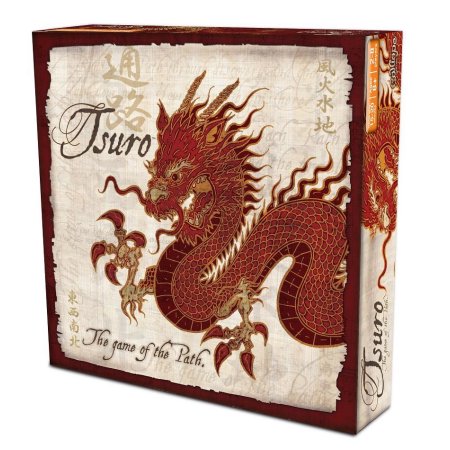

When I asked fellow game enthusiasts for games that are mellow and relaxing, the first one that always comes to mind is Tsuro.

In Tsuro, up to 8 players adopt the role of flying dragons soaring through the sky. Each player chooses from the tiles in their hands in order to build paths on the board, representing their paths through the sky. Naturally, these paths will eventually intersect, and you need to be careful to avoid colliding with another dragon or following a path right off the edge of the board. (Both of those scenarios cause you to lose.)

Despite the potential for competition, most Tsuro games are peaceful affairs as everyone enjoys watching their dragon token loop and swirl across various intersecting paths, hoping to be the last dragon standing on the board. It’s a beautiful, simple game that only takes about twenty minutes to play, and it’s the perfect palate cleanser after a more stressful round of some other game.

beforetherewerestars

[Image courtesy of Board Game Geek.]

Some of the most enjoyable and low-key game experiences are storytelling games. I could recommend one with high-fantasy flavor like Once Upon a Time or one with a tongue-in-cheek Addams Family-esque humor like Gloom. But the one that piques my interest the most is based in mythology and sharing stories around a fire.

In Before There Were Stars…, players claim constellation cards to use in crafting the origin story of the world itself. Each player shares how things were in the beginning, at the dawn of civilization, when a great hero emerges, and at the end of days. Along the way, players grant each other points — little star-shaped point tokens, naturally — for their favorite story moments, as everyone encourages each other in creating epic mythologies.

Although there can be a winner based on points, playing this game always feels more like a storytelling session than a competition, and it can lead to some unforgettable gaming moments.

[Image courtesy of Starlit Citadel.]

Tokaido is another game about movement, but in a very different vein. Players in this game are all travelers, journeying across Japan’s famed East Sea Road from Kyoto to Edo. Whereas most travel-based games are about reaching a destination first, Tokaido is about reaching a destination with the widest array of meaningful experiences.

Along the way, your character can meet new people, enjoy new cuisines, collect souvenirs, visit hot springs, and visit scenic locales. You add experience points for these events (and acquire achievement cards) that represent your traveler partaking of these experiences.

This elegant game bypasses traditional competition entirely, building a unique game mechanic out of living your best life.

[Image courtesy of Board Game Quest.]

Sagrada is another wonderfully visual game about individual accomplishment. In this game, each player is building a stained glass window using different colored dice. No dice of the same color can neighbor each other, so you need to be strategic about how you place the dice you roll.

Each window is different, and has certain rules for maximizing points. (A certain pane can only be a certain color, or a certain die value, etc.) The players can boost their scores by selecting cards that reward them with points if they create certain patterns within their stained glass window.

Except for competing for the best point total at the end, there’s virtually no interaction between players. You’re all simply working simultaneously on the best window, which is a gameplay style that breeds camaraderie more than competitiveness. It’s genuinely encouraging to see fellow players make good choices in dice placement to create the most beautiful, elegant window patterns.

[Image courtesy of Starlit Citadel.]

For a change of pace, let’s look at a game that’s more about interaction with other players. Dixit is a gorgeous card game where each player is given a handful of cards, each depicting a different, unique, evocative piece of art.

Player 1 will choose a card from their hand and say a word or phrase to the other players that has some connection to that card. It could reference color, or part of the imagery. It could be a joke, or an idiom, or a song lyric. The goal is to be vague, but not too vague. The other players will then each select a card from their hand that could also be described by Player 1’s statement, and the cards are all shuffled face down so no one can see who submitted what card.

The cards are then all placed face up, and each player (except Player 1) votes on which piece of art they think Player 1 chose. Player 1 gets points if some (but not ALL) players chose his card. (If every player chooses it, the clue was too easy, and Player 1 gets no points.) And any other player’s card that earns votes also earns that player points.

This sort of associative gameplay really encourages your imagination and teaches you about how the other players think. There’s no other game quite like it on the market today, and it makes for an intriguing, low-key gaming experience.
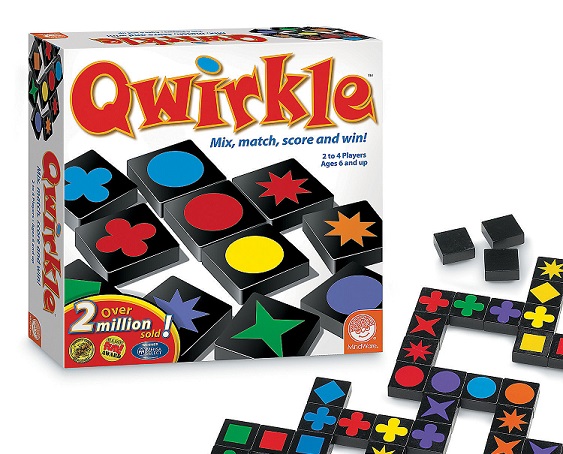
Finally, let’s close out today’s post with a classic tile game that mixes Uno-style color- and pattern-matching with Mexican Train Dominoes-style gameplay. Qwirkle is a bit more competitive than the other games on today’s list, but it’s still a game more about collaborating than outdoing your opponents.

By placing different tiles onto a shared play area — either by matching colors or matching symbols — players earn points. If you complete a Qwirkle — a pattern of all six colors for a given shape or all six shapes in the same color — you earn bonus points.

The lighthearted gameplay style lends itself to friendly competition rather than the cutthroat mien evoked by games like Monopoly. Qwirkle’s not about grinding the other players down, it’s about adding to a colorful world in interesting, inventive new ways.


Thanks for visiting PuzzleNation Blog today! Be sure to sign up for our newsletter to stay up-to-date on everything PuzzleNation!

You can also share your pictures with us on Instagram, friend us on Facebook, check us out on TwitterPinterest, and Tumblr, and explore the always-expanding library of PuzzleNation apps and games on our website!

A Relaxing Game Night!

The world can be a very stressful place. We live under a constant deluge of news and information, and it’s so easy to get overwhelmed by it all. And while games can be a wonderful escape, you need the right games to restore your spirits and put you in a good mood.

As much fun as co-op games like Forbidden Island, The Oregon Trail Card Game, and Castle Panic! can be, they can also be a little stressful. And if you’re looking to relax, or to chill out after a long week, those might not be the games for you.

So today, I thought we could turn our attention to games that are as tranquil as they are tactical, in the hopes of helping my fellow PuzzleNationers enjoy a calm gameplay experience.


When I asked fellow game enthusiasts for games that are mellow and relaxing, the first one that always comes to mind is Tsuro.

In Tsuro, up to 8 players adopt the role of flying dragons soaring through the sky. Each player chooses from the tiles in their hands in order to build paths on the board, representing their paths through the sky. Naturally, these paths will eventually intersect, and you need to be careful to avoid colliding with another dragon or following a path right off the edge of the board. (Both of those scenarios cause you to lose.)

Despite the potential for competition, most Tsuro games are peaceful affairs as everyone enjoys watching their dragon token loop and swirl across various intersecting paths, hoping to be the last dragon standing on the board. It’s a beautiful, simple game that only takes about twenty minutes to play, and it’s the perfect palate cleanser after a more stressful round of some other game.

[Image courtesy of Starlit Citadel.]

Tokaido is another game about movement, but in a very different vein. Players in this game are all travelers, journeying across Japan’s famed East Sea Road from Kyoto to Edo. Whereas most travel-based games are about reaching a destination first, Tokaido is about reaching a destination with the widest array of meaningful experiences.

Along the way, your character can meet new people, enjoy new cuisines, collect souvenirs, visit hot springs, and visit scenic locales. You add experience points for these events (and acquire achievement cards) to represent your traveler partaking of these experiences.

This elegant game bypasses traditional competition entirely, building a unique game mechanic out of living your best life.

[Image courtesy of Board Game Quest.]

Sagrada is another wonderfully visual game about individual accomplishment. In this game, each player is building a stained glass window using different colored dice. No dice of the same color can neighbor each other, so you need to be strategic about how you place the dice you roll.

Each window is different, and has certain rules for maximizing points. (A certain pane can only be a certain color, or a certain die value, etc.) The players can boost their scores by selecting cards that reward them with points if they create certain patterns within their stained glass window.

Except for competing for the best point total at the end, there’s virtually no interaction between players. You’re all simply working simultaneously on the best window, which is a gameplay style that breeds camaraderie more than competitiveness. It’s genuinely encouraging to see fellow players make good choices in dice placement to create the most beautiful, elegant window patterns.

[Image courtesy of Starlit Citadel.]

For a change of pace, let’s look at a game that’s more about interaction with other players. Dixit is a gorgeous card game where each player is given a handful of cards, each depicting a different, unique, evocative piece of art.

Player 1 will choose a card from their hand and say a word or phrase to the other players that has some connection to that card. It could reference color, or part of the imagery. It could be a joke, or an idiom, or a song lyric. The goal is to be vague, but not too vague. The other players will then each select a card from their hand that could also be described by Player 1’s statement, and the cards are all shuffled face down so no one can see who submitted what card.

The cards are then all placed face up, and each player (except Player 1) votes on which piece of art they think Player 1 chose. Player 1 gets points if some (but not ALL) players chose his card. (If every player chooses it, the clue was too easy, and Player 1 gets no points.) And any other player’s card that earns votes also earns that player points.

This sort of associative gameplay really encourages your imagination and teaches you about how the other players think. There’s no other game quite like it on the market today, and it makes for an intriguing, low-key gaming experience.

Finally, let’s close out today’s post with a classic tile game that mixes Uno-style color- and pattern-matching with Mexican Train Dominoes-style gameplay. Qwirkle is a bit more competitive than the other games on today’s list, but it’s still a game more about collaborating than outdoing your opponents.

By placing different tiles onto a shared play area — either by matching colors or matching symbols — players earn points. If you complete a Qwirkle — a pattern of all six colors for a given shape or all six shapes in the same color — you earn bonus points.

The lighthearted gameplay style lends itself to friendly competition rather than the cutthroat mien evoked by games like Monopoly. Qwirkle’s not about grinding the other players down, it’s about adding to a colorful world in interesting, inventive new ways.


Hopefully these suggestions will make your game nights a little more mellow. And if you’re looking for puzzlier ideas for a tranquil game night, check out our reviews for ThinkFun’s Kaleidoscope Puzzle and Looney Labs’ Zendo, both of which might scratch your puzzly itch in a relaxing fashion.

Thanks for visiting PuzzleNation Blog today! Be sure to sign up for our newsletter to stay up-to-date on everything PuzzleNation!

You can also share your pictures with us on Instagram, friend us on Facebook, check us out on TwitterPinterest, and Tumblr, and explore the always-expanding library of PuzzleNation apps and games on our website!