

When it comes to puzzly video games, Tetris is the granddaddy of them all.
Yes, there are some amazing puzzle games that have come along in the years since — Portal, The Talos Principle, and Baba Is You, to name just a few — but Alexey Pajitnov’s creation is ubiquitous. It’s part of our cultural fabric. Everyone knows Tetris with just a glance.
And people are still innovating with Tetris decades later.
Previously I’ve written about variations on Tetris that have caught my eye.
There’s Hatetris, where the computer gives you the worst possible piece on every turn, as well as Lovetris, where the computer gives you the exact piece you need to clear a single line.
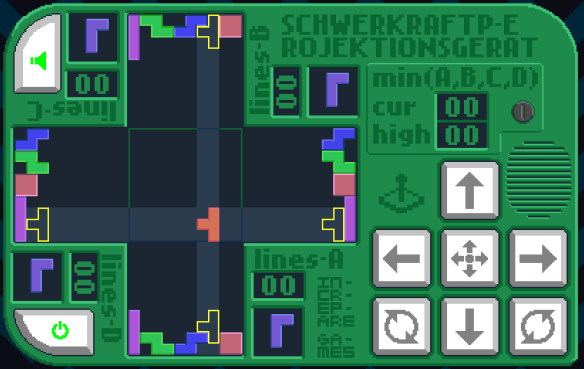
There’s also Schwerkraftprojektionsgerät, aka 4-directional Tetris, where you have four Tetris games running at once.
So when a new version of Tetris catches my eye, you know I’m gonna give it a shot.
Say hello to Uraomotetris, aka Uraomote Tetris, the creation of gamer and programmer Hirai_Sun.
Uraomote (ウラオモテ) is a Japanese term meaning “two sides” or “front and back,” which is very thematically appropriate, particularly with the stark black and white color scheme.
And although it looks like a two-player game, like the old Push Mode from Tetris DS, this is actually a single-player game.
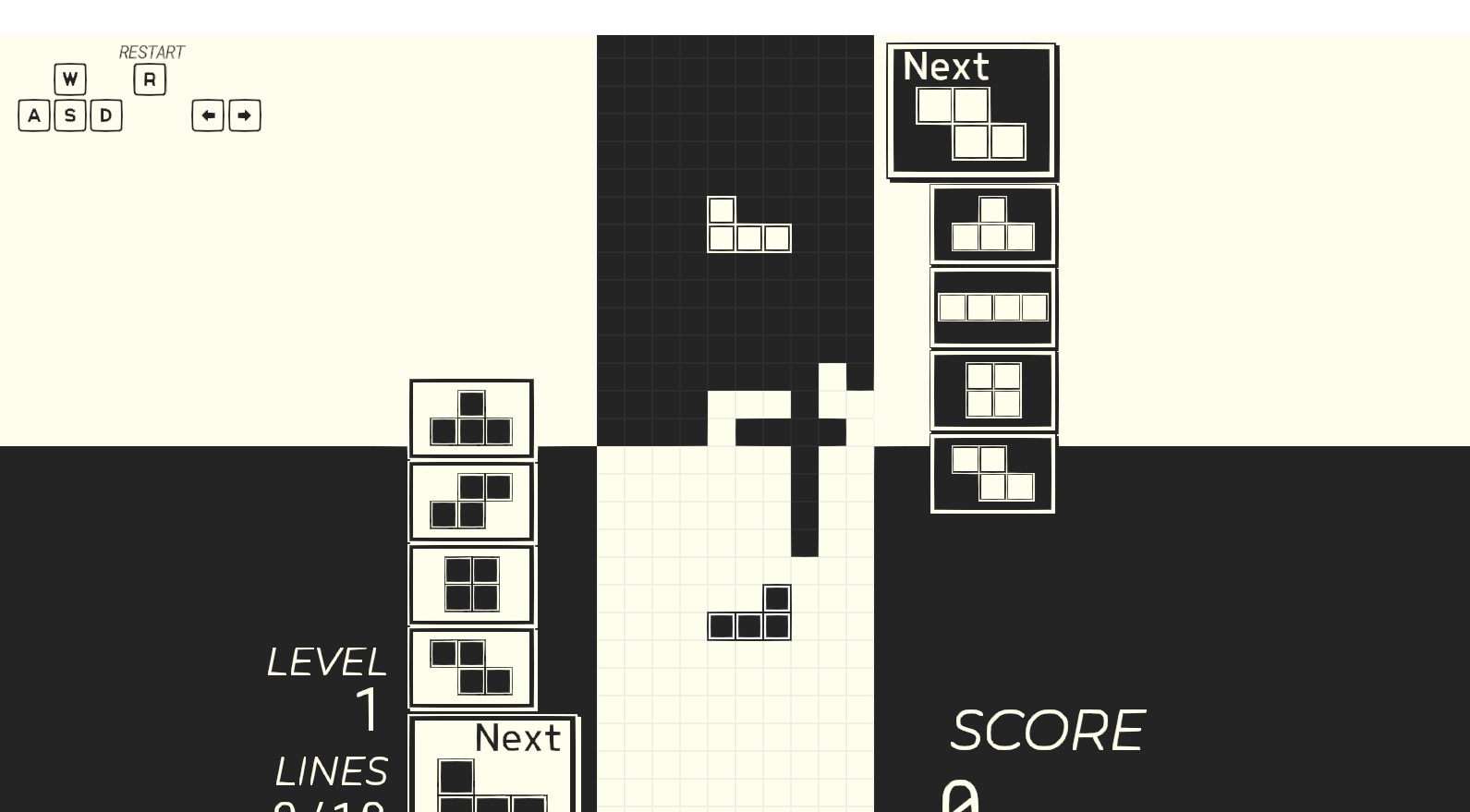
Your goal is to play the game simultaneously from above and underneath, using the white pieces falling from above and the black pieces rising from below.
You control the rotation of pieces with the arrow keys, and the placement of them with the A, S, D, and W keys. It takes a little getting used to, but once you get into the rhythm of placing one white piece, then one black piece, back and forth and back and forth, it becomes a really engaging puzzle.
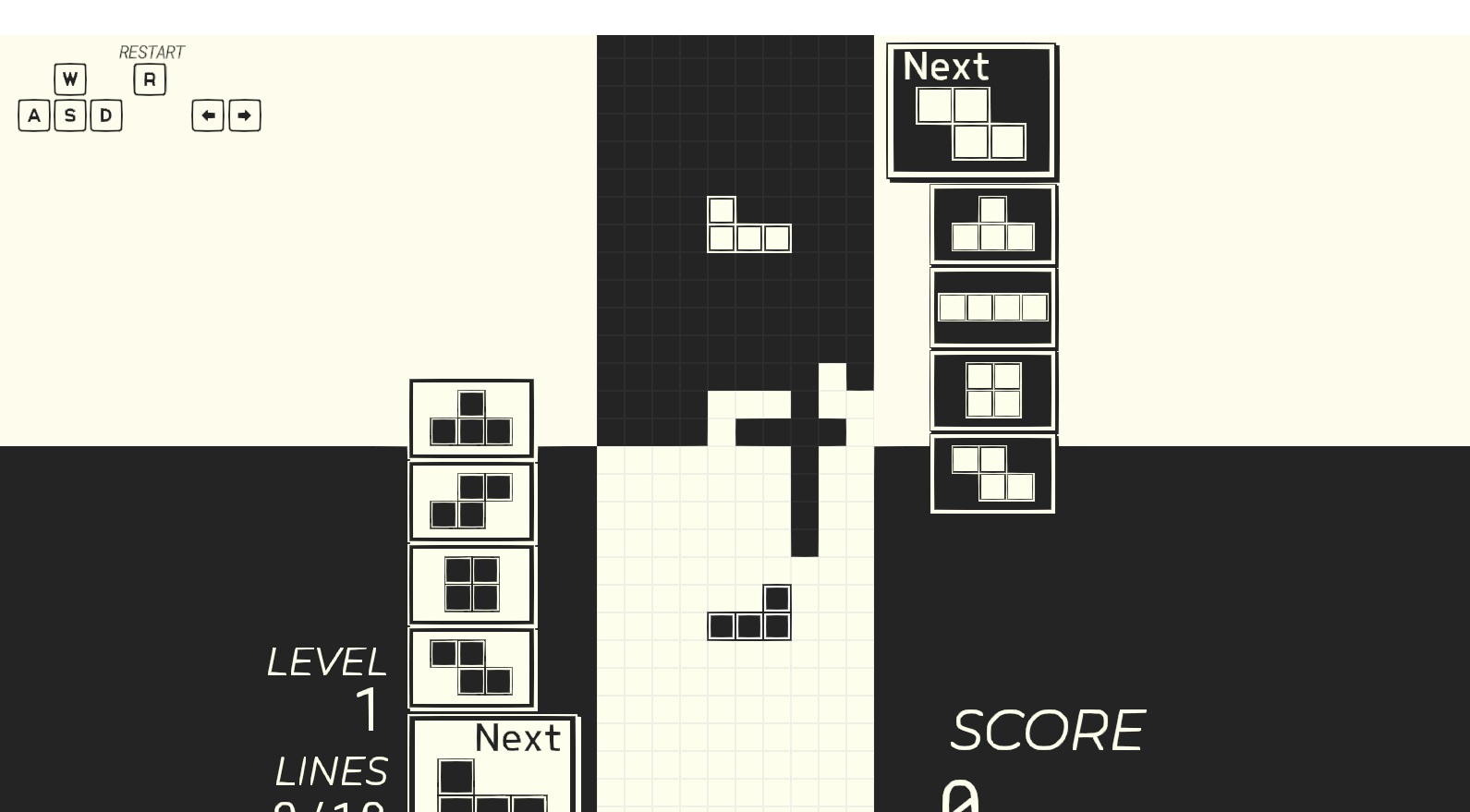
You’re not just trying to think in terms of cancelling lines, you’re also trying to set yourself up for success from both sides. You begin plotting two and three moves ahead. You’re stoked when the same piece arrives from above and blow, so you can strategize.
Of course, then I would manage to hit the wrong key and mess it all up.
But a more dexterous player could have an absolute blast with this game.
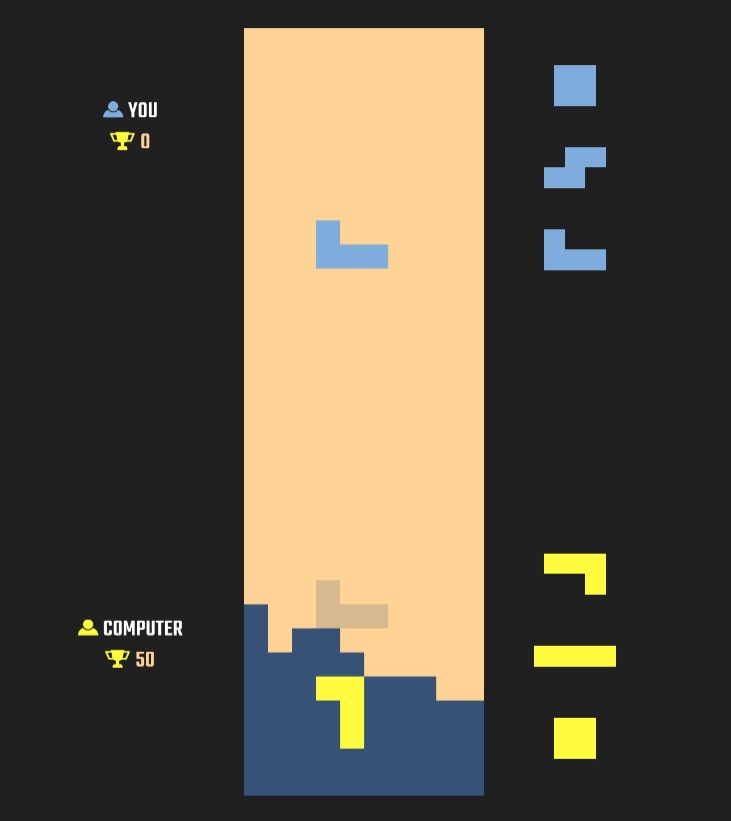
Oh, and if you wanted a two-player competitive version, you can check out Tetrio.io. It allows you to play against the computer in single player or share your link with a friend to compete against them.
The goal is to push your opponent past their border (yours to the north, theirs to the south) by completing lines and lowering their playfield.
This is honestly a great way to practice for Uraomotetris. Once you’ve gotten into the habit of playing your side while defending against your opponent’s, it helps you visualize playing both sides simultaneously on your own.
There’s a wonderful sense of balance in Uraomotetris, because unlike most versions of Tetris, where you’re aiming for the bottom and eliminating lines and pieces, in this game, you really want to keep it as close to the center line as possible.
Your very goal is not to do what you do in every other version of Tetris.
It’s very zen, in a way, and quite lovely. (But also weirdly nerve-wracking at the same time.)
Have you tried any Tetris variants, fellow puzzler? Let me know in the comments section below! I’d love to hear from you.
 PuzzCulture