Apps you can play in a snap!

stopwatch

Last week, I did a rundown of board games and card games you can play in under 15 minutes. Games that were travel-friendly were also highlighted, since they tend to be quick-to-play and easy-to-learn.

But when it comes to quick-play games that are travel-friendly, you can’t get much easier or more accessible than the puzzle and game apps on your phone! Whether you’re stuck in traffic, trapped at the dentist’s office, or hiding in the bathroom during a family gathering, these are always ready to play!

android_zpsc9tsleav

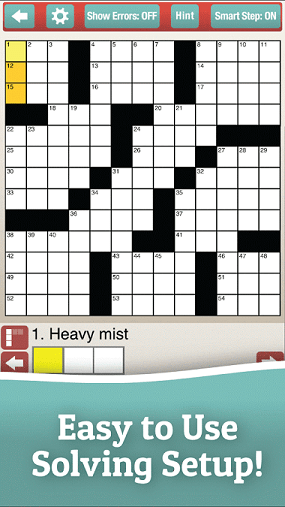
Naturally, we have to start with the Penny Dell Crossword App! Not only do you have smart navigation to move you to partially filled-in entries and dozens upon dozens of the best crosswords around, but there’s the free daily puzzle for all app users! Plus, it’s available for both Android and iOS users!

farkle

For the dice game fans in the readership, Farkle is a quick-play version of Yahtzee. You roll six dice, looking for three of a kind, three pairs, and other key combinations in order to earn points. It’s an easy game to pick up whenever you wish, making it ideal for players on the move.

wordbrain

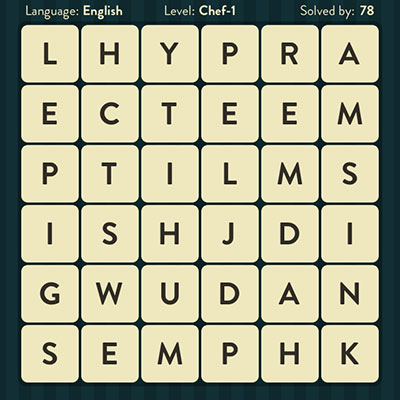
If you’re a word seek or word search enthusiast, Wordbrain might be right up your alley. This Boggle-style game is all about finding words spelled out in grids. As the grids get bigger, more words are hidden inside, and the difficulty level increases. But when it comes to quick-play games, the early rounds of Wordbrain are tough to match for sheer speed.

[The Boggle variant Ruzzle was also mentioned by several PuzzleNationers.]

7littlewords

7 Little Words is a clued puzzle where you assemble the answers from two- and three-letter chunks in the grid below. It’s a clever variation on crosswords, and it can be surprisingly challenging to cobble together the correct words when you stare at odd letter combinations like NHO or OOV.

minimetro

For a quick-play resource management game, there’s Mini Metro. It’s up to you to construct and maintain a subway line for commuters. The more you can deliver between stations efficiently, the better. It’s a bright, colorful, engaging way to test your puzzly skills.

[Other puzzly building games include Triple Town, where you combining matching items in threes to build up a neighborhood into a town, and City2048, which applies the same tile-matching as the number game 2048, but in order to build a city.]

bejeweled_007

Bejeweled Blitz also got several recommendations from members of the PuzzleNation readership. It offers the same pattern-matching that made Bejeweled and Candy Crush such big hits, but does so with only sixty seconds of gameplay. So if you’re looking for some match-3-style gaming without a big time commitment, this might be the puzzle app for you.

reallybadchess

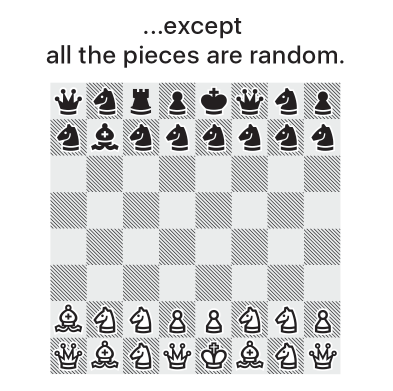
Finally, we’ve got Really Bad Chess, a puzzly take on the classic game. The main difference? You don’t know what pieces you’re going to end up with until you start a match. It completely upends most of the strategy that goes along with traditional chess, which makes it endlessly replayable.

Honorable mentions go to QuizUp (a Trivial Pursuit-style trivia game) and Joon Pahk’s Guess My Word, as well as all the board game adaptations like Settlers of Catan, Ticket to Ride, and Splendor, that experienced players could play quickly, but don’t necessarily fit the bill.

Are there any favorite quick-play apps of yours that I missed? Let me know! I’d love to hear from you!


Thanks for visiting PuzzleNation Blog today! Be sure to sign up for our newsletter to stay up-to-date on everything PuzzleNation!

You can also share your pictures with us on Instagram, friend us on Facebook, check us out on TwitterPinterest, and Tumblr, and explore the always-expanding library of PuzzleNation apps and games on our website!

It’s Follow-Up Friday: Games Across the World edition!

Welcome to Follow-Up Friday!

By this time, you know the drill. Follow-Up Friday is a chance for us to revisit the subjects of previous posts and bring the PuzzleNation audience up to speed on all things puzzly.

And today, I’d like to revisit International Games Day!

The American Library Association has been promoting community through gaming for years with International Games Day, and last Saturday, November 15, was the latest edition of this marvelous holiday.

Libraries across the world opened their doors to puzzle fans, board game devotees, card players, gamers, and especially families, inviting them to socialize and share culture through a common medium: games!

I’ve been meandering through photo archives, checking out all the great events and fun ways people have gotten into the IGD spirit.

Check out this giant-sized Settlers of Catan board, created by one intrepid dad so more kids could get in on the fun!

Each year, game and puzzle companies donate to libraries, giving both needy libraries and newbie game players the chance to try out some terrific games. This year was no exception, as Ravensburger, USAopoly Games, Steve Jackson Games, and Looney Labs all donated games to various libraries in support of this terrific holiday.

[Two tweets from a grateful librarian after some awesome donations to their upcoming IGD event.]

But, of all the anecdotes I’ve encountered, my favorite concerns an event hosted at last year’s International Games Day: the Global Gossip Game.

You know the game Telephone, right? Where you whisper a message in your friend’s ear, and they whisper what they heard to another person, and so on and so on, and eventually, you see how the original message has changed from the beginning?

Imagine that, but touching all 7 continents.

From the ALA.org site:

The game began in Geelong, Australia, as “Play is training for the unexpected” (from a paper by biologists Spinka, Newberry and Bekoff).

It then traveled through Antarctica, Asia, Africa and Europe, then branched twice in the Americas. The three endings on the day were:

“I love the world” in Washington, DC;
“Zombie” in Winlock, Wash.; and
“Clouds travel around the world” in Talkeetna, Ark.

In all, the GGG had 840 participants and ran for 29 hours straight, through 74 libraries in 18 international jurisdictions and 6 languages. The longest branch traveled 114,609 kilometers (71,230 miles), and the total distance traveled was 151,927 kilometers (94,423 miles).

Now THAT is some international community building.

Thanks for visiting PuzzleNation Blog today! And remember to check out our Facebook Giveaway for the chance to win a free puzzle app download!

Are you game for this?

[GameHaus Cafe in Glendale, California.]

A few months ago, I wrote about the increasing popularity of bar trivia nights, as well as the growing trend of puzzly sister events like Puzzled Pint‘s bar puzzles.

As it turns out, coffee shops and cafes are also getting in on the action by putting their own spin on the perfect marriage of game-and-drink: the board game cafe.

[The Haunted Game Cafe in Fort Collins, Colorado]

Friend of the blog Peter Kanter pointed me toward a New York Times Sunday edition article covering a board game cafe with an impressive pedigree.

The Uncommons, billed as Manhattan’s first and only board game cafe, awaits puzzle and board game fans at 230 Thompson Street in New York City. Located at the former site of the Village Chess Shop, a New York gaming institution in its own right, The Uncommons charges a mere $5 fee to try out any of the games adorning the shop’s many shelves.

Everything from Mouse Trap to Settlers of Catan can be found there, including two favorites of mine that were apparently new to the author of the NYT article. (In an otherwise positive and enlightening article, she refers to Tsuro, a wonderful path-laying tile game, as “a complicated-looking setup,” and Qwirkle, a color-and-shape-matching game mixing elements of Uno and Mexican Train dominoes, as “abstract.”)

But The Uncommons is hardly the only board game cafe making a name for itself.

[Snakes and Lattes in Toronto, Ontario, Canada]

In addition to the cafes pictured in this post, the Spielbound Board Game Cafe in Omaha, Nebraska — which, much like The Uncommons, was partially crowdfunded by Kickstarter donations — is building a strong reputation as a Midwest bastion of family-friendly board game goodness.

Not only are board game cafes a terrific way to socialize with fellow puzzlers and board game aficionados, but you can try out a game before investing in your own copy. AND you can inject some revenue into a local business. It’s win-win-win.

Is there a board game cafe near you, fellow puzzlers? I’ve heard great things from a friend about one in the Winston-Salem area of North Carolina, and I’d love to hear more about the spots near you!

Seeing board games moving beyond the hobby shops and out into the social arenas of towns and cities is terrific, bringing us all one step closer to global puzzle-game domination.

Thanks for visiting PuzzleNation Blog today! You can share your pictures with us on Instagram, friend us on Facebook, check us out on TwitterPinterest, and Tumblr, and be sure to check out the growing library of PuzzleNation apps and games!

Tile style puzzling!

Tile puzzles and tile games have been with us for centuries, but I daresay they’ve never been as prominent in our game/puzzle culture as they are these days.

Let’s start with the basics: dominoes.

Chinese Dominoes, which are slightly longer than the regular ones pictured above (not to mention black with white pips), can be traced back to writings of the Song Dynasty, nearly a thousand years ago. Dominoes as we know them first appeared in Italy during the 1800s, and some historians theorize they were brought to Europe from China by traveling missionaries.

The most common form of playing dominoes — building long trains or layouts and trying to empty your hand of tiles before your opponent does — also forms the core gameplay of other tile-based games, like the colorful Qwirkle, a game that combines dominoes and Uno by encouraging you to create runs of the same shape or color.

A tile game with similarly murky origins is Mahjong, the Chinese tile game that plays more like a card game than a domino game. (Mahjong is commonly compared to Rummy for that very reason.)

Mahjong has been around for centuries, but there are several different origin stories for the game, one tracing back to the Ming Dynasty (1368-1644), another to the days of Confucius (500 BC). The gameplay itself is about matching tiles (called melds) to build winning hands.

Rummikub, another tile game (but with numbers instead of characters on the tiles) also resembles card games in its gameplay, and anyone who has played Texas Rummy or Go Fish will instantly recognize the gameplay of building runs (1, 2, 3, 4 of the same color, for instance) and sets (three 1s of different colors, for instance).

All of these games employ pattern matching and chain thinking skills that are right in the puzzler’s wheelhouse, but some more modern tile games and puzzles challenge solvers in different ways.

The game Carcassonne is a world-building game wherein players add tiles to an ever-growing landscape, connecting roads and cities while placing followers on the map in order to gain points. Here, the tiles form just one part of a grander strategic puzzle, one encouraging deeper plotting and planning than some other tile games.

The Settlers of Catan also involves tile placement, but as more of a game starter, not as an integral part of the gameplay. Both Fluxx: The Board Game and The Stars Are Right employ tile shifting as a terrific puzzly wrinkle to their gameplay.

Our friends at Penny/Dell Puzzles have a puzzle combining crosswords and tiles, Brick by Brick, which encourages the solver to place the “bricks” on the grid and fill in the answers.

And, of course, I’d be remiss if I didn’t mention the most popular electronic tile game in modern memory, Tetris.

Tetris — which turns 30 this year! — requires quick thinking, good spatial recognition, and an ability to plan ahead (especially for those elusive four-block pieces that can eliminate four rows at once!). There are plenty of puzzles that employ similar tiles — Blokus, tangrams, and pentominoes come to mind — but none that have engendered the loyalty of Tetris.

Last but not least, there are the sliding-tile puzzles. These puzzles take all the challenge of tile placement games like Dominoes and add a further complication: the tiles are locked into a frame, so you can only move one tile at a time.

Frequently called the Fifteen Puzzle because the goal is to shift all 15 numbered tiles until they read out in ascending order, sliding-tile puzzles are chain solving at its best. Whether you’re building a pattern or forming a picture (or even helping a car escape a traffic jam, as in ThinkFun’s Rush Hour sliding-tile game), you’re participating in a long history of tile-based puzzling that has spanned the centuries.

Heck, even the Rubik’s Cube is really a sliding-tile game played along six sides at once!

[Be sure to tune in on Thursday, when I explore tile-based word games like Scrabble!]

Thanks for visiting the PuzzleNation blog today! You can like us on Facebookfollow us on Twitter, cruise our boards on Pinterest, check out our Tumblr, download our puzzle iBooks and apps, play our games at PuzzleNation.com, or contact us here at the blog!

Where brilliance meets joyous frivolity…

Two weeks ago, we celebrated the 29th birthday of Tetris in a blog post, and I referenced the famous MIT prank where a giant game of Tetris was played on the side of a building.

This prank is one of the most recent in a long line of “hacks”, and MIT students have performed some impressive feats of creative whimsy along the way.

From a fire hose drinking fountain in 1991 to the installation of a shower stall in a common area in 1996, from turning the dome into R2-D2 (as pictured in our opening picture) to the “discovery” of an elevator in the remains of the demolished Building 20 (purportedly leading to a secret subbasement), these are top-tier pranks executed by some of the cleverest students in the world.

The Great Dome is often the palette of choice for MIT hacks, having featured a Triforce from the Legend of Zelda video games, the TARDIS from Doctor Who (which appeared all around campus), a fire truck, the Batman symbol, and numerous other Hack endeavors.

Here, the Apollo lunar lander looks down on a statue of Athena also added by industrious students. (Apollo watching over Athena, how apropos.)

One year, board games invaded campus. Giant versions of Cranium, Mousetrap, and Settlers of Catan appeared around campus, and all of the helpful maps around campus were altered to feature Risk gameplay.

Another time, an enormous game of Scrabble appeared on the wall, complete with MIT-inspired words fluttering in the breeze.

To honor the posting of XKCD’s 1000th comic — a comic that has also made appearances on this blog — XKCD comics appeared all over campus, often spelling out “1000”.

A Newton’s Cradle with imagery inspired by the Portal video game series appeared in 2012

But the best part of MIT hacks? Wondering just how the heck they managed to pull it off without anyone seeing. Like the urban legends behind stories of cars disassembled and reassembled in a professor’s office, the technological wizardry and sneaky cunning required for these marvelous pranks makes MIT Hack enthusiasts fellow puzzlers in spirit AND practice.