A Secret Egyptian Code Hiding in Plain Sight?

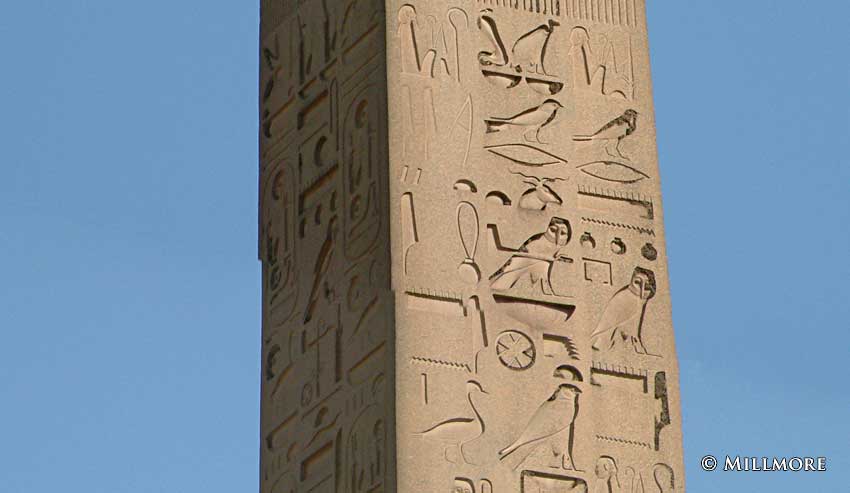
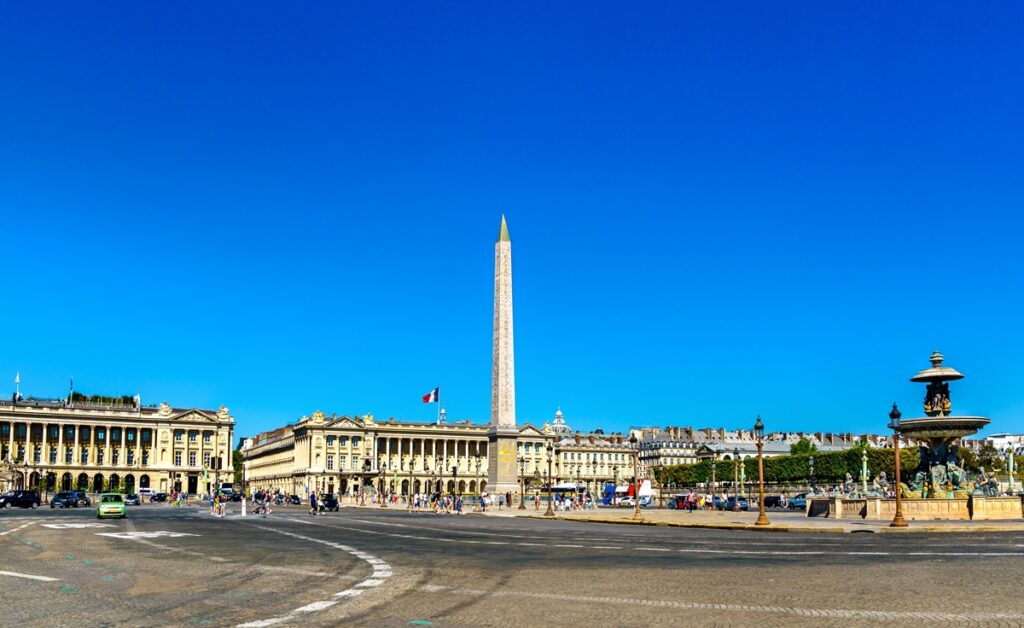
Thirty-three hundred years ago, an obelisk was carved in ancient Egypt. It stood at the entrance of the Luxor temple as part of a pair.

Almost two hundred years ago, the obelisk was given to France by Egypt’s ruler. It stands at the Place de la Concorde in Paris, thousands of miles from its sibling in Egypt.

Two centuries of students and tourists and philosophers and photographers and scholars gazing at the obelisk, reading the intricately carved hieroglyphs.

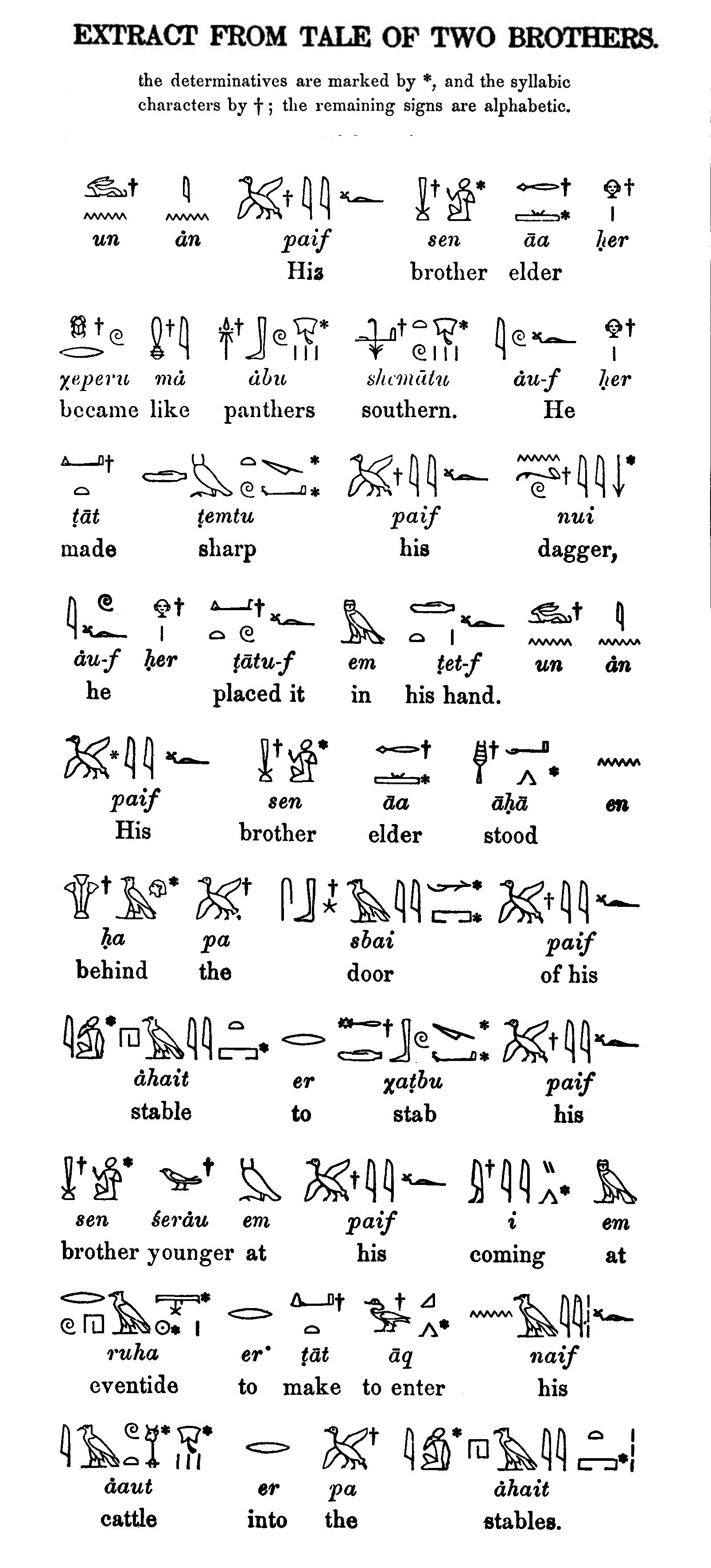
Hieroglyphs were traditionally written in columns reading downward. But there are also left and right directional markers, marking the beginning of a sentence, often indicated by which direction a human or animal figure is facing.

As you can see, the placement of different symbols allows them to combine with others, both vertically and horizontally, to create different words or concepts.

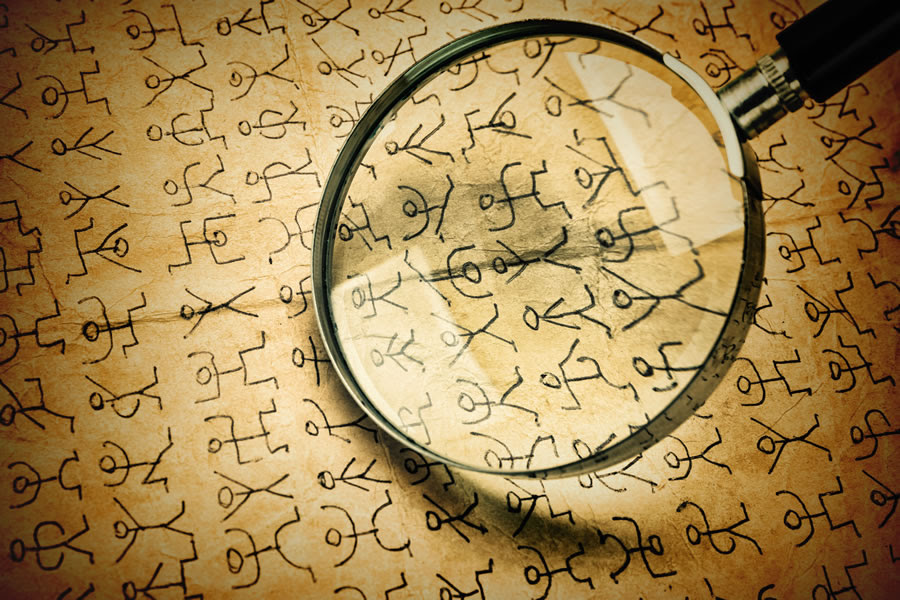
And whomever did the inscriptions on the obelisk used the multidirectionality of the language to conceal messages in plain sight.

Even after centuries of study, it took a keen eye and some lucky conditions for Egyptologist Jean-Guillaume Olette-Pelletier to uncover the hidden messages.

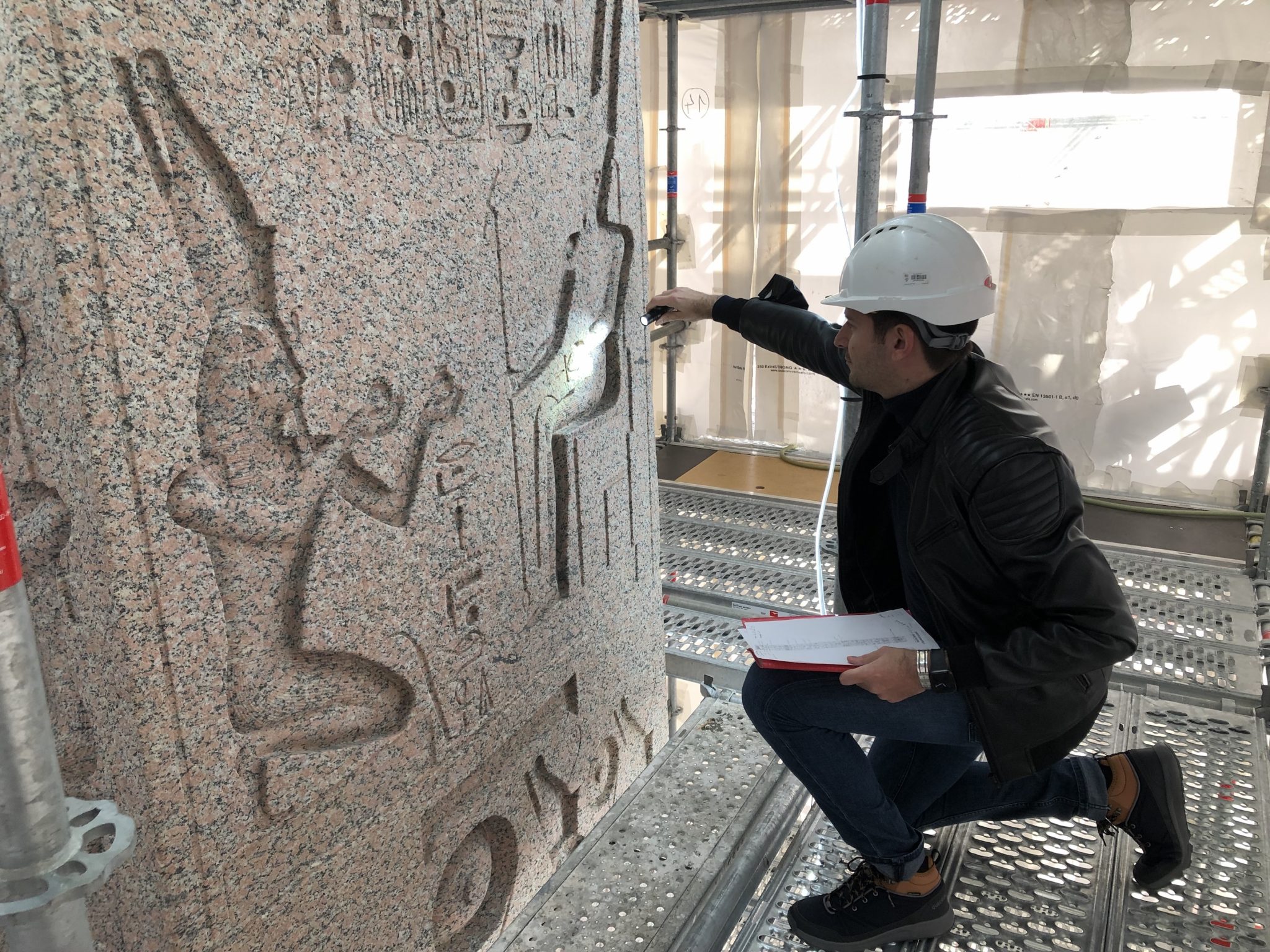
You see, the obelisk was surrounded by scaffolding as part of its renovations, and this allowed Olette-Pelletier to get up close to the highest point of the obelisk and observe the inscriptions rarely seen by casual observers.

The hidden messages required him to read the hieroglyphs horizontally rather than vertically, and at a particular angle as well. This three-dimensional study of the inscriptions, known as crypto-hieroglyphs, allowed the creator to conceal messages that didn’t simply sing the praises of Pharaoh Ramses II, but actually point to his rulership as divine right, claiming his power came directly from the gods themselves.

It was propaganda, intended to reinforce the pharaoh’s status in the eyes of the elites of Egypt, cloaked in messages for the common people. (One of the messages, for instance, could only be seen by those arriving by boat, a privilege available only to the elite.)

For example, from an article in EuroWeekly News:

“People had not noticed that under [one of the drawings] of the god Amun, there is an offering table. This allows us to discover a sentence where no element is missing: an offering that the king gives to the god Amun,” Olette-Pelletier told BFMTV. Combinations of the newly identified inscriptions produce additional meanings in what’s called three-dimensional cryptography. In total, the Egyptologist identified seven encrypted messages across the obelisk’s various facades. He explained that the enigmatic text can only be understood by walking around the monument.

Imagine the creator of the obelisk, carving with specific angles and readers in mind, an iconic gift to the pharaoh… only for the code to be cracked thousands of miles away, thousands of years in the future, by a different kind of elite.

The puzzly kind.

That’s amazing.

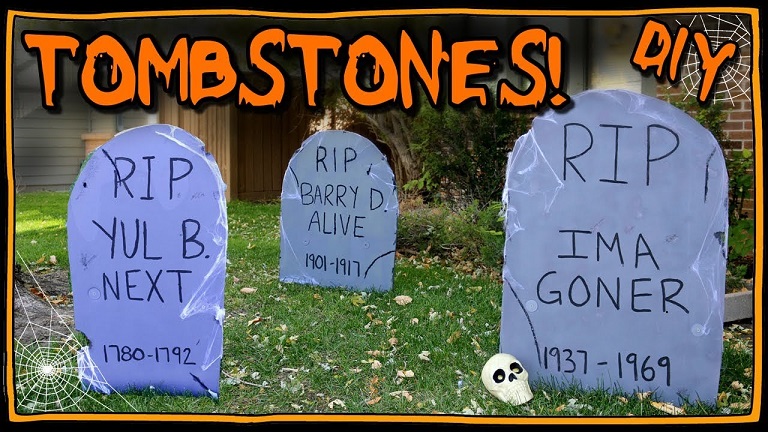
Puzzly Tombstones for October 1st!

[Image courtesy of How To With Kristin.]

It’s October 1st, and for many folks, it’s the official start of the spookiest of seasons, aka the lead-up to Halloween.

One of the things I really enjoy about the weeks before Halloween is seeing the decorations go up, and wondering just how elaborate they’re going to get. One house near me does a big fake spider web every year that’s made out of rope and dominates half of their yard!

But it’s the little fake tombstones that get me. It’s a simple thing, but I quite enjoy how people always put something interesting on them. Sometimes it’s funny inside jokes, or silly punny names like Bart Simpson would use to prank Moe the bartender on The Simpsons.

And it occurs to me that we as puzzlers could get in on this. Puzzly tombstone decorations! Why not?

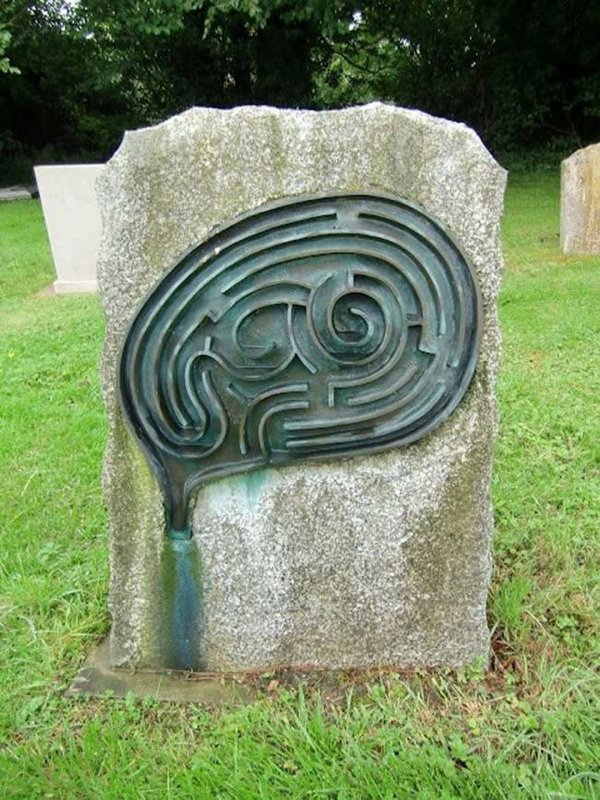
Here are a few real-world examples to spark some ideas for you.

This gorgeous design adorns the gravestone of Michael and Elisabeth Ayrton. He was a painter and sculptor, and she was a writer.

It’s simple, but quite lovely.

headstone0

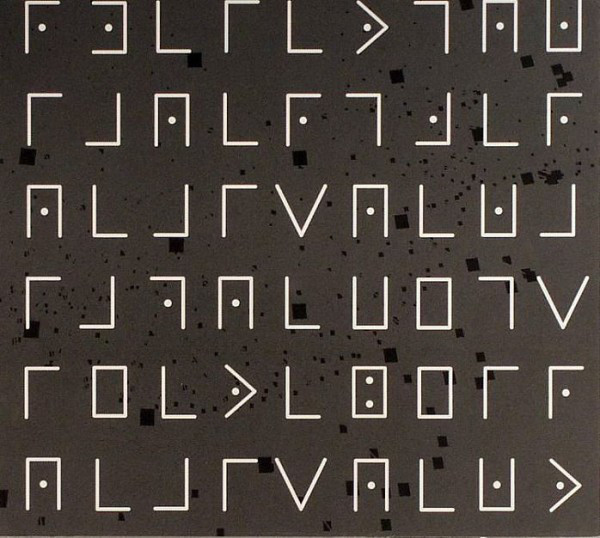
If you wanted, you could recreate this puzzly tribute that took passersby a century to finally unravel.

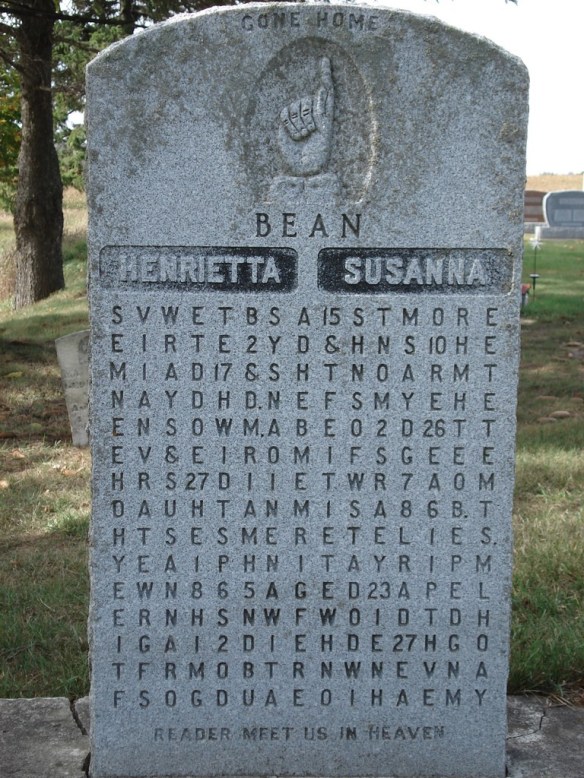
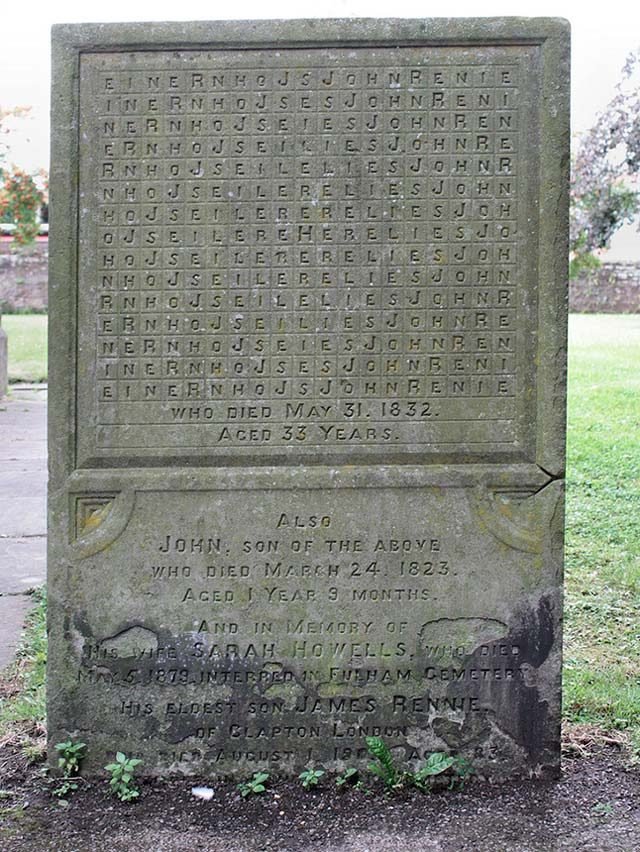
In a similar vein, this tombstone hides a simple message in thousands of different ways, if you know where to get started.

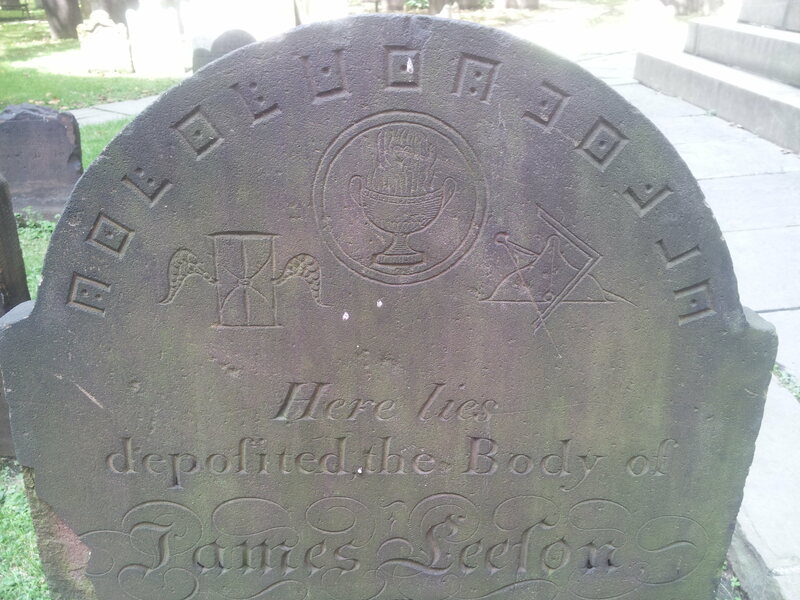
You could hide a coded message on them, like James Leeson did with his own tombstone in the Trinity Churchyard in Manhattan.

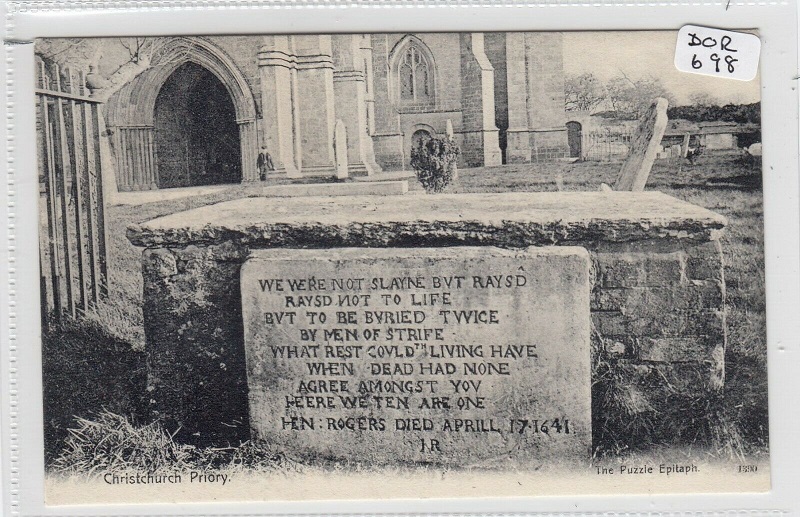
You could even offer a riddle or puzzly epitaph for people to solve, like this one found on the gravestone of Henry Rogers in Christchurch Priory in Dorset.

So what do you think, fellow PuzzleNationers? Will you be decorating with any puzzle-inspired tombstones? Or maybe you have something else that’s puzzle-inspired in store for Halloween.

Let us know in the comments section below! We’d love to hear from you.


dailypopwsicon

Well, summer’s over, but we still have deals galore for you to check out. You can find them on the Home Screen for Daily POP Crosswords and Daily POP Word Search! Check them out!

Thanks for visiting PuzzleNation Blog today! Be sure to sign up for our newsletter to stay up-to-date on everything PuzzleNation!

Spies, Crosswords, and Secret Messages!

secret message

There are loads of ways to hide secret messages in puzzles. The field of cryptography is built around it. Many meta puzzles have a special secret lurking inside their clever constructions. Heck, our friends at Penny Press even have an entire word seek called Secret Message.

But have you ever noticed that there’s a strange fascination in pop culture with secret messages in crosswords?

No, I don’t mean constructors hiding quotations, poems, or word seeks in their crosswords, though those are impressive feats of cruciverbalism.

I’m talking about stories about actual secret messages concealed in crossword grids, meant to be hidden from even the most diligent solvers, only a special few possessing the keys to finding the hidden words.

Oh, believe me, it’s definitely a thing.

Look no further than the first Crossword Mysteries movie. The film opens with a murdered art gallery owner with a crossword in his pocket. And it turns out that a devilish criminal mastermind was submitting puzzles to Tess’s daily crossword that contained hidden instructions for robberies to be conducted that day. Diabolical!

You might laugh, but this is hardly the only time we’ve seen crime, secret messages, and crosswords combined. It was a plotline in the radio show The Adventures of Superman, and Lois Lane’s life once depended on Superman’s ability to solve a crossword puzzle.

There are any number of mystery novels, cozy and otherwise, that contain hidden messages in crosswords. Nero Blanc’s Anatomy of a Crossword and Corpus de Crossword come to mind, as do any number of murder mysteries where a strange message scribbled on a crossword grid turn out to be a pivotal clue to catch the killer.

And there’s an even more curious subset of this in pop culture: crosswords and spycraft.

I could give you a simple example, like Bernie Mac’s character in the Ocean’s 11 remake pretending to solve a crossword, but actually writing down key information about the casino for the upcoming heist.

But that’s not really a secret message IN a crossword. No, it’s more of a secret message ON a crossword, though it is a bit of decent spycraft.
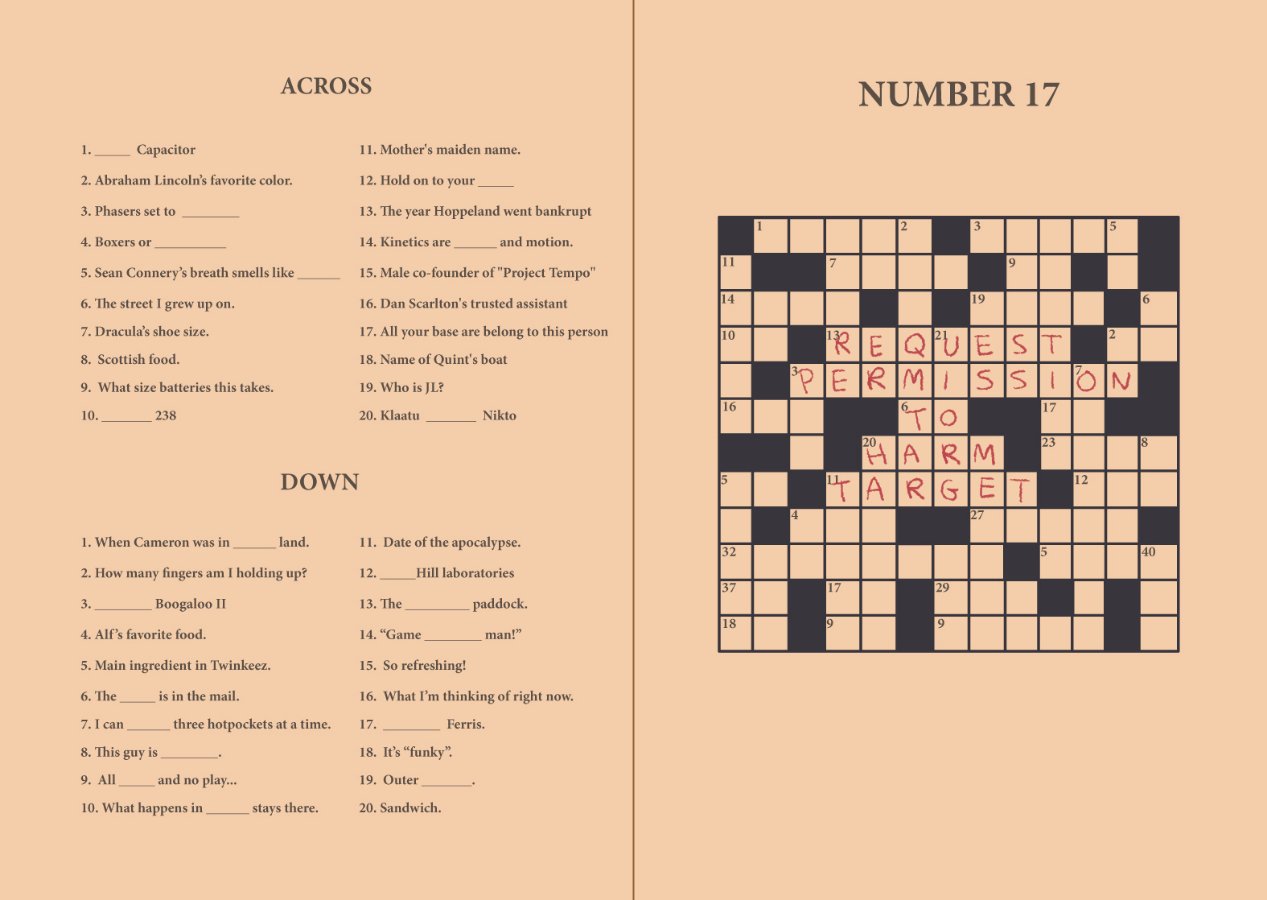
CnwtMc9UMAAssmH

[From Spy vs. Guy.]

Let’s talk about spies and their crosswords, then.

In the TV show Burn Notice, former (and occasionally current) spy Michael Weston sometimes received hidden messages from his previous spy organization through the crossword, though we’re not given much info on how this is achieved.

In the James Bond prequel novel Double or Die, it’s actually the young Bond’s teacher who sneaks a secret message into a puzzle. He’s also a cryptic crossword editor, and he convinces his kidnappers to allow him to submit a crossword to the newspaper, because if he didn’t, it would let people know all was not well.

Naturally, the kidnappers didn’t spot the clues to his current location that the teacher had hidden in the puzzle. Bond, even in his youth, manages to do so with ease.
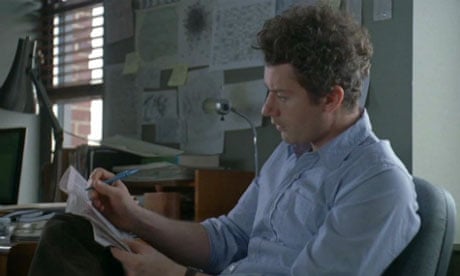
Rubicon-008

In the short-lived TV show Rubicon, crosswords are at the center of a fascinating unsolved mystery. An intelligence agent named Will finds out his mentor committed suicide after seeing a four-leaf clover.

He then finds a pattern across several crosswords that leads him to believe his mentor’s death is somehow connected to the pattern in the crosswords, and he tells his superior about it.

And soon after investigating it himself, Will’s superior is also found dead. Unfortunately, we never get a resolution for this story, but it certainly fits the bill.

So yes, the curious connection between secret messages and crosswords in pop culture is definitely a thing.

But did you know it also extends beyond fiction? Yup, I’ve got some real-world examples for you too.

Back in June of 1944, physics teacher and crossword constructor Leonard Dawe was questioned by authorities after several words coinciding with D-Day invasion plans appeared in London’s Daily Telegraph.

The words Omaha (codename for one of Normandy’s beaches), Utah (another Normandy beach codename), Overlord (the name for the plan to land at Normandy on June 6th), mulberry (nickname for a portable harbor built for D-Day), and Neptune (name for the naval portion of the invasion) all appeared in Daily Telegraph crosswords during the month preceding the D-Day landing.

So it was possible (though highly improbable) that Dawe was purposely trying to inform the enemy of Allied plans, and the powers that be acted accordingly. In the end, no definitive link could be found, and consensus is that Dawe either overheard these words himself or was told them by his students — possibly slipped by soldiers stationed nearby — and placed them into his grids unwittingly.

Yes, this was just a big misunderstanding. But sometimes, accusations like this have real-world consequences.

In Venezuela, a newspaper has been accused multiple times of hiding encrypted messages within their daily crossword puzzles in order to incite revolt against the government.

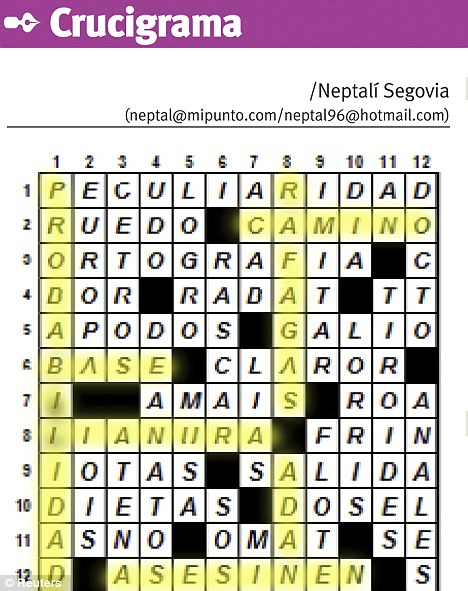
Another Venezuelan newspaper was accused of concealing messages ordering the assassination of a public official named Adan, the brother of President Hugo Chavez!
article-0-130C1EBE000005DC-570_468x591

Some of the answers considered suspicious in the grid included “Adan,” “asesinen” (meaning “kill”), and “rafaga” (which can mean either a burst of gunfire, or a gust of wind).

Apparently this confluence was considered enough to warrant a half-dozen members of the intelligence service visiting the newspaper’s editorial office.

Now, were these cases of genuine secret messages being passed through the crossword, or were these coincidental events that appeared credible because the crossword/secret message concept has been part of pop culture for decades?

I leave that question to you, fellow puzzlers.

Can you think of any examples of crosswords with secret messages in pop culture or intersections of crosswords and spycraft that weren’t mentioned here? Let us know in the comments section below! We’d love to hear from you.


dailypopwsicon

Well, summer’s over, but we still have deals galore for you to check out. You can find them on the Home Screen for Daily POP Crosswords and Daily POP Word Search! Check them out!

Thanks for visiting PuzzleNation Blog today! Be sure to sign up for our newsletter to stay up-to-date on everything PuzzleNation!

Musical Cryptography: Hiding Messages in the Music!

R-944801-1218936757.jpeg

In previous posts, we’ve explored many ways that messages can be encrypted or hidden. We’ve talked about legendary encryption methods like Caesar ciphers and Vigenere ciphers, as well as simpler auditory ones like Morse code and tap codes. We’ve seen encryptions through blinking lights, woven through crossword grids, and even knitted into scarves.

But did you know that composers can encode messages in their music, and have done so for centuries?

No, we’re not talking about subliminal messaging or tales of backwards messages hidden in metal songs. We’re talking about musical cryptography, and it turns out there’s not just music between the notes, but messages among them as well.

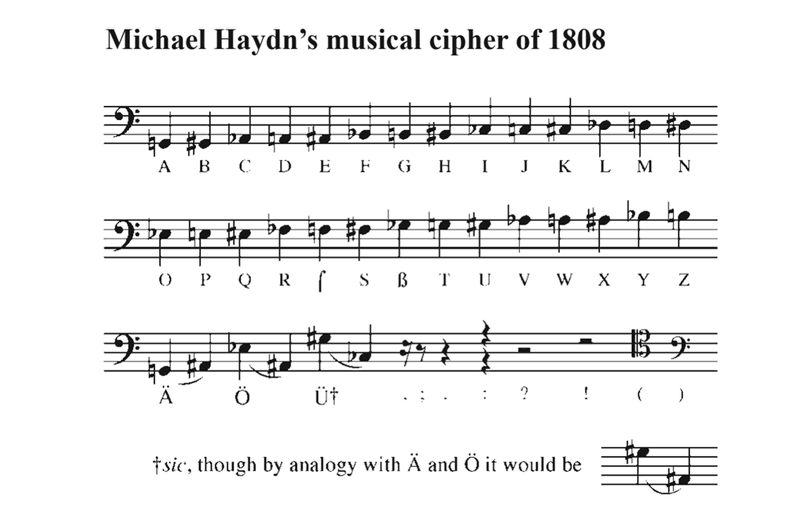
haydn

Now, to be fair, there is no evidence that musical encryption has ever been used for spycraft. (Sorry, Outlander fans.) Most of the time, composers simply entertained themselves by hiding the letters of their name or the names of others into compositions just because they could.

This sort of musical wordplay appears in compositions by Ravel, Debussy, and Shostakovich among others. Johann Sebastian Bach did this often enough that the succession of notes B-A-C-H is now called a Bach motif.

According to Western Michigan University Music Professor David Loberg Code:

Sometimes a musical version of a name is a subtle reference in the piece of music… Often it is very prominent; it is the main theme of the piece and is heard over and over. In that case, whether or not you know exactly how the composer translated the name into musical pitches, it is obvious that it is meant to be heard… They were not secretive about it.

It even proved therapeutic for some composers.

Johannes Brahms incorporated the notes A-G-A-H-E in bars 162 to 168 of the first movement in his 1868 piece “String Sextet No. 2 in G major.” By doing so, he included the name of Agathe von Siebold, a young woman he had fallen in love with. He and Agathe made plans to wed, but he later broke off the engagement to focus on his musical career.

But, by encoding her name into one of his works, he both honored her and gave himself closure on a relationship that would never be.

notes

The musical nature of this encryption technique makes it effective — because casual listeners wouldn’t notice anything hidden — but it also means that longer messages are harder to include naturally.

You see, the “spelling” can affect the music. Obviously, the more complex the message, the more it interferes with the actual musical composition and flow of the piece. To the untrained ear, this wouldn’t necessarily jump out, but to a trained ear, or at least a person experienced in reading music, it would be fairly obvious that something was amiss.

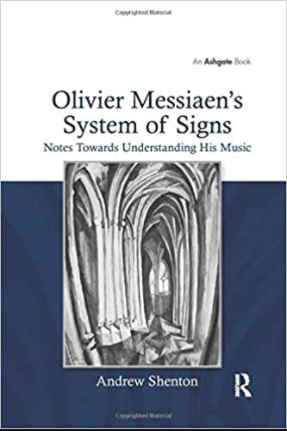
Musical ciphers are attributed to various composers (like Haydn) and even to writers like Francis Bacon, but arguably the greatest success story in musical cryptography goes to French composer Olivier Messiaen.

messiaen

His cipher matched a different note to each of the 26 letters in the alphabet. Unlike many other composers, he managed to develop a cipher that closely mirrored his own compositional style. Because of the similarities between his cipher and his traditional musical works, there was less of a chance that listeners would detect anything was off.

He managed to translate the words of philosopher Thomas Aquinas into an organ piece called “Méditations sur le mystère de la Sainte Trinité,” and cryptographers and musical historians alike praise him for doing so with complex rhythms and rich tones without spoiling his own works.

It’s clear that it takes both an artistic flair and a puzzler’s mind to make the most of musical cryptography. But then again, those two pursuits have crossed paths many times before, as evidenced by musically minded solvers like Dan Feyer, Patrick Blindauer, Jon Delfin, and friend of the blog Keith Yarbrough.

Perhaps the best of musical cryptography is yet to come.

[For more details on musical cryptography, check out this brilliant Atlas Obscura article by Christina Ayele Djossa.]


Thanks for visiting PuzzleNation Blog today! Be sure to sign up for our newsletter to stay up-to-date on everything PuzzleNation!
You can also share your pictures with us on Instagram, friend us on Facebook, check us out on TwitterPinterest, and Tumblr, and explore the always-expanding library of PuzzleNation apps and games on our website!

Puzzles in Plain Sight: Secret Message in Hollywood Edition!

3847c

[Image courtesy of MathTutorDVD.]

I am fascinated by codebreaking, secret codes, and that whole subgenre of puzzle solving. Probably because I’m pretty bad at it.

Don’t get me wrong, I can crack your bog-standard cryptogram or alphanumeric message. I’m fairly good at identifying patterns and deciphering codes when it comes to simple three-, four-, and five-digit answers in most escape room scenarios.

But when you start getting into encryptions where a letter’s meaning can shift as the coded message evolves — like the one employed by a devious 10-year-old kid in a puzzly letter to Santa years ago — and I quickly find myself stymied.

It leaves me all the more impressed when I read about codebreaking efforts as ambitious as ENIGMA and as silly (and, yet, still quite impressive) as Futurama fans cracking the multiple alien codes in the show just from random snippets.

But codebreaking isn’t just about cleverness, pattern-recognition, and determination.

Sometimes, it’s about knowing where to look.

For instance, in Los Angeles, there have been secret messages being transmitted in plain sight for decades.

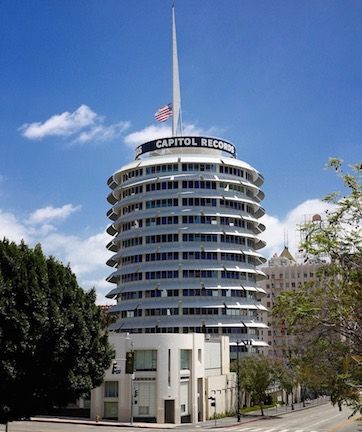
Just cast your eyes to the light atop the Capitol Records building in Los Angeles.

The building was designed to look like a stack of records on a turntable, complete with the spindle pointing skyward. It opened in 1956, and the president of Capitol Records at the time, Alan Livingston, wanted the light to send out a message in Morse code. On opening day, Leila Morse — the granddaughter of Samuel Morse, inventor of Morse code — turned the light on.

The secret message being broadcast? “Hollywood.”

The message blinked away for decades. But it wasn’t the only message the light atop Capitol Records would send over the years.

In 1992, to celebrate the fiftieth anniversary of Capitol Records, the code was changed to “Capitol 50” for the entire year. Then it went back to the traditional “Hollywood” code.

4f1dcfb619b03bea8cc82d43356f2977

A decade later, it was changed again. What was the message? A secret announcement that would excite millions of pop music fans…

“Katy Perry. Prism. October 22, 2013.”

But as far as anyone can tell, nobody noticed. This teaser announcement never made the local or national news.

And so far, there hasn’t been a secret message since. At least, not that anyone has noticed.

Still, best keep your eyes on that light. You never know if your favorite artist might send you a secret signal. And it sure beats looking for backwards messages in heavy metal songs.


Thanks for visiting PuzzleNation Blog today! Be sure to sign up for our newsletter to stay up-to-date on everything PuzzleNation!
You can also share your pictures with us on Instagram, friend us on Facebook, check us out on TwitterPinterest, and Tumblr, and explore the always-expanding library of PuzzleNation apps and games on our website!

The Puzzling Art of Letterlocking

letterlocking

[Image courtesy of Letter Writers Alliance.]

When you think about puzzles and personal security, what comes to mind?

Do you think of puzzle boxes, those delightfully tricky little wooden creations with all their sliding pieces and hidden compartments? Or does your mind go to encryption, the art of concealing your message in plain sight with ciphers, scytales, and other techniques meant to baffle anyone but those in the know?

Some puzzle box designs date back centuries, and ciphers can be traced back even further. (One is named after Caesar, after all.)

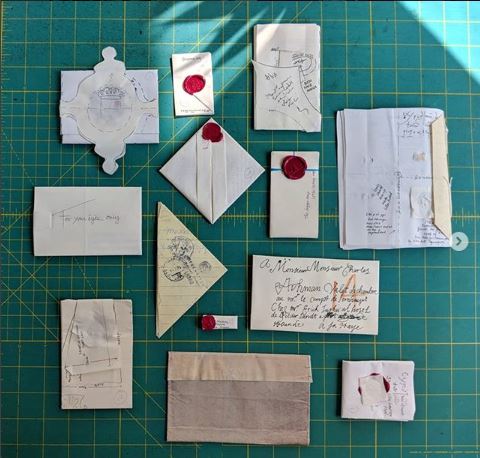
But there’s another centuries-old puzzly procedure you might not know about, and it kept letters and messages safe using nothing more than paper and wax.

butterflylock

[Image courtesy of ibookbinding.com.]

This technique is known as letterlocking. It involves a mix of precise folds, interlocking pieces of paper, and sealing wax in order to create a distinctive design or pattern.

Although the pattern itself can work like a puzzle — requiring a particular trick to unfold it and reveal the message without ripping or damaging the letter — that’s only a secondary line of defense. The true goal of letterlocking is to reveal tampering. The folding techniques are distinctive, and the wax creates points of adhesion.

If you receive a letter and the folds are done (aka redone) incorrectly, or the wax is smeared (or the paper ripped where the wax would have held it tight), then you know the letter has been compromised.

daggertrap

[Image courtesy of ibookbinding.com.]

Some examples of letterlocking trace back to the 13th century, and key figures like Queen Elizabeth I, Machiavelli, Galileo, and Marie Antoinette employed letterlocking security in the past. Mary, Queen of Scots, wrote a message and letterlocked it with a butterfly lock six hours before her beheading. (For a more modern reference, letterlocking was employed in the Harry Potter films as well, most famously in Dumbledore’s will.)

The various techniques involved are as distinctive as knots. The triangle lock. The dagger-trap. The pinwheel letter. And some historians believe that those techniques imply connections between some of the important players in history.

For instance, both poet John Donne and the spymaster of Queen Elizabeth I employed a similar letterlocking style. Did they share a common source, or even an instructor in common? Or did a particular letterlocking technique provide a clue as to the contents of the letter within?

Letterlocking is a historical curiosity that was seemingly lost to time after the proliferation of the envelope and other security techniques, but it is slowly being rediscovered by a new generation, as well as reverse engineered by scientists and scholars. Yale and MIT both have teams exploring the burgeoning field of letterlocking.

Museums are discovering treasure troves of letterlocked messages by going directly to the source: post offices. A cache of 600 undelivered letters in the Netherlands, for instance, are being analyzed by researchers.

trianglelock

[Image courtesy of Atlas Obscura.]

It’s a remarkable thing, really, this union of centuries-old skills with twenty-first century knowledge. These are puzzles, frozen in time, waiting to be solved and placed into the larger picture of history.

Letterlocking is nothing less than a rare and beautiful art combining puzzles and privacy, as elegant as it is clever. There are no doubt many more secrets to be found behind the folds, slits, and wax seals of these lovingly crafted messages.


Thanks for visiting PuzzleNation Blog today! Be sure to sign up for our newsletter to stay up-to-date on everything PuzzleNation!
You can also share your pictures with us on Instagram, friend us on Facebook, check us out on TwitterPinterest, and Tumblr, and explore the always-expanding library of PuzzleNation apps and games on our website!