Puzzles in Pop Culture: The West Wing

In previous editions of Puzzles in Pop Culture, I’ve recapped classic episodes of M*A*S*H and MacGyver, as well as the numerous puzzly plotlines that’ve been featured on The Simpsons over the years.

But when it comes to erudite, hilarious references to solving crosswords, you’d be hard-pressed to find sharper puzzle-infused dialogue than the moments featured in episodes of Aaron Sorkin’s landmark political drama The West Wing.

Set in the West Wing of the White House, the show focused on the lives of the president and his advisors and staffers as they navigated political situations at home and abroad. To this day it’s a regular feature on most reviewers’ lists of the top television shows of all-time.

And in a show noted for sparkling wit and all kinds of intellectual wordplay, it’s hardly a surprise that the New York Times Crossword was referenced in the very first episode.

In the video below, Chief of Staff Leo McGarry is frustrated with the Times for misspelling the name of Muammar Qaddafi, and his attempts to contact the editor of the Times Crossword and get it corrected are stymied at every turn:

The White House staff’s dubious relationship with crosswords is revisited in the season 3 episode Dead Irish Writers. This time around, as the president’s wife Abbey prepares for both a birthday party and a potential ruling on her medical license, the President busies himself with a crossword in his own inimitable style:

Beyond the spirited humor of both scenes, there’s a marvelous undercurrent of how smart people react when their intellectual superiority is challenged. Leo responds by trying to correct what he sees as an egregious error, while the President bends the rules to suit his own expectations.

In addition to being a wonderful launchpad for the show’s signature rapid-fire banter, it’s a simple and effective way of shedding light on how each character views the world and his role in it. (With writing and direction this layered and engaging, it’s easy to see how The West Wing earned an astounding 26 Emmy Awards!)

Even as subplots in a much-larger narrative, these puzzles added color and personality to scenes that took us inside the minds of these characters. Pretty impressive for crosswords that are only mentioned briefly.

Puzzles… is there anything they can’t do? =)

Thanks for visiting the PuzzleNation blog today! You can like us on Facebook, follow us on Twitter, cruise our boards on Pinterest, check out our Classic Word Search iBook (recently featured by Apple in the Made for iBooks category!), play our games at PuzzleNation.com, or contact us here at the blog!

Answers to the PuzzleNation Punderful Halloween Costume Game!

Happy Day-After-Halloween, puzzlers and PuzzleNationers! (Also known as Candy Coma Day…)

It’s time for the answers to our PuzzleNation Punderful Halloween Costume Game! How did you do? Let’s find out!


PuzzleNation’s Punderful Halloween Costume Game: Answers!

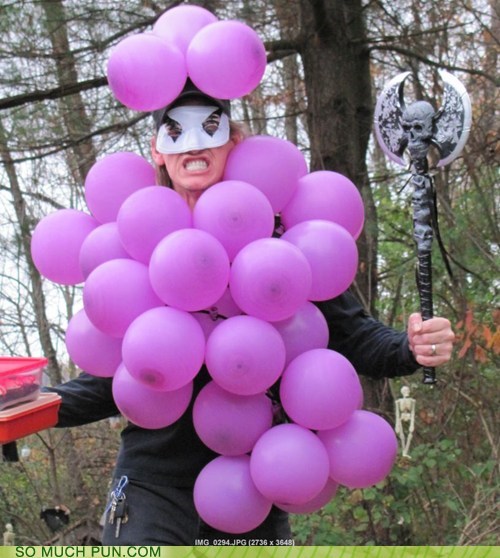
#1

halloween1

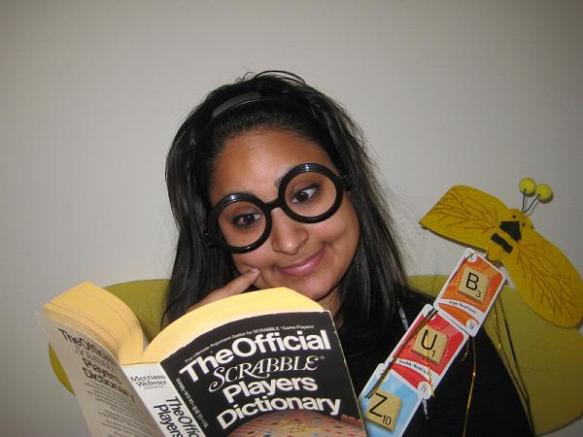
She’s a spelling bee!

#2

halloween2

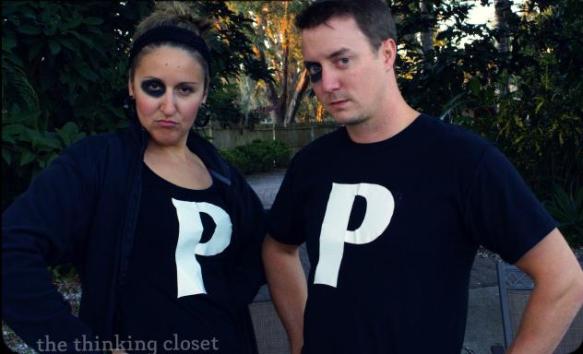
They’re the Black-Eyed P’s! [picture courtesy of ThinkingCloset.com]

#3

halloween3

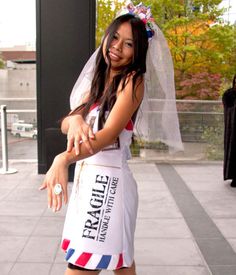
Why, it’s a lovely Mail-Order Bride!

#4

halloween4

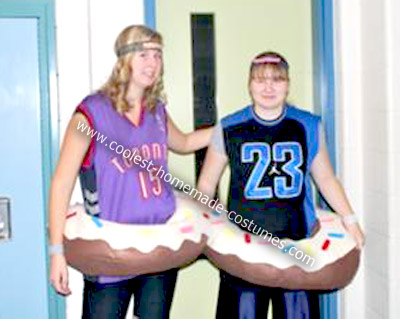
Dunkin’ Donuts!

#5

halloween5

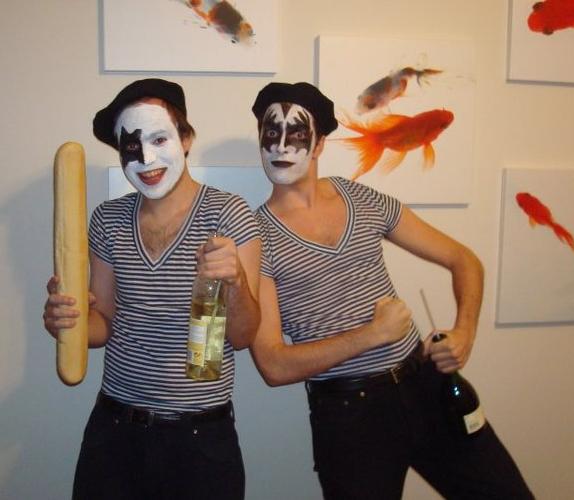
French kiss!

#6

halloween6

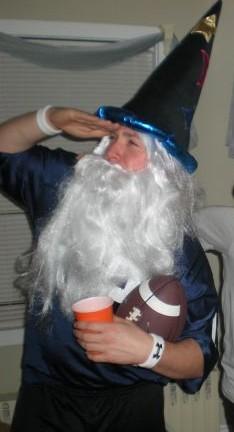
It’s fantasy football for all to enjoy!

#7

halloween7

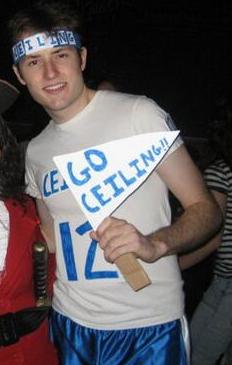
He’s a ceiling fan!

#8

halloween8

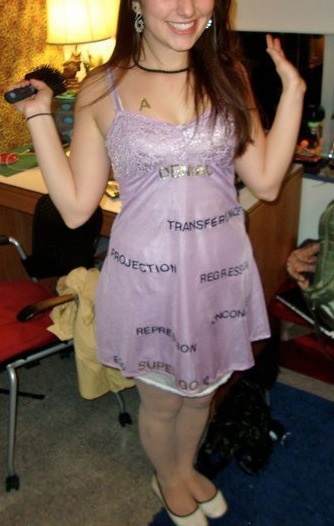
What a lovely Freudian slip!

#9

halloween9

It’s the Grapes of Wrath!

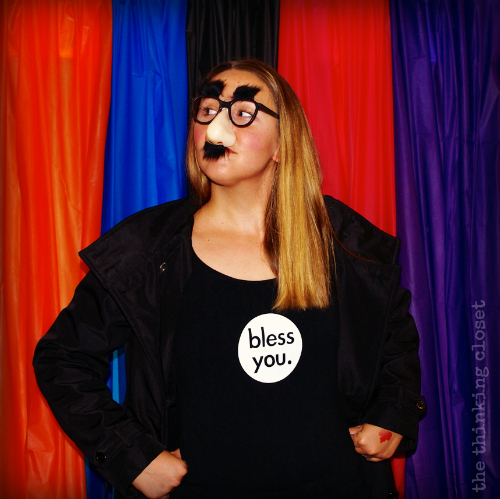
#10

SONY DSC

She’s a blessing in disguise! [picture courtesy of ThinkingCloset.com]

So how did you do, PuzzleNationers? I hope you enjoyed our little Halloween Costume challenge. Has this inspired you to create a punny costume of your own for next year? Let us know!

Thanks for visiting the PuzzleNation blog today! You can like us on Facebook, follow us on Twitter, cruise our boards on Pinterest, check out our Classic Word Search iBook (recently featured by Apple in the Made for iBooks category!), play our games at PuzzleNation.com, or contact us here at the blog!

PuzzleNation’s Punderful Halloween Costume Game!

Happy Halloween, puzzlers and PuzzleNationers!

One of the best things about Halloween is guessing what people’s costumes are. Clever costumes can be great fun — like these puzzle-themed costumes we featured last year! — and I’m a particular fan of costumes that only cost a few bucks to put together, because they really let your creativity shine through.

Punny costumes lend themselves to the low-budget costume style brilliantly. For instance, this year I’m gathering three pals with flashlights, magnifying glasses, hawaiian leis and party hats, because we’re a Search Party.

And I figured that punny costumes would make for a perfect Halloween game for my fellow puzzlers!

It’s simple. I post a picture, and you guess what the costume is.

For example:

halloweenexample

Did you get it? He’s a chick magnet!

I’ve compiled ten costumes for you to figure out. Let’s see how many you can get!

PuzzleNation’s Punderful Halloween Costume Game!

#1

halloween1

#2

halloween2

#3

halloween3

#4

halloween4

#5

halloween5

#6

halloween6

#7

halloween7

#8

halloween8

#9

halloween9

#10

SONY DSC

So how did you do, PuzzleNationers? I hope you enjoyed our little Halloween Costume challenge. Were there any great punny costumes we missed? Let us know! And happy Halloween to you!

[We’ll be posting the answers tomorrow! Many thanks to our photo sources: Buzzfeed, The Thinking Closet, So Much Pun, and Tim Helbig.]

Thanks for visiting the PuzzleNation blog today! You can like us on Facebook, follow us on Twitter, cruise our boards on Pinterest, check out our Classic Word Search iBook (recently featured by Apple in the Made for iBooks category!), play our games at PuzzleNation.com, or contact us here at the blog!

PuzzleNation Book Review: World Peace and Other 4th-Grade Achievements

Welcome to the sixth installment of PuzzleNation Book Reviews!

All of the books discussed and/or reviewed in PNBR articles are either directly or indirectly related to the world of puzzling, and hopefully you’ll find something to tickle your literary fancy in this entry or the entries to come.

Let’s get started!

Our book review post this time around features John Hunter’s World Peace and Other 4th-Grade Achievements.

What did you do in fourth grade, fellow puzzlers? Did you master long division, or delve into the history of the Civil War, or expand your vocabulary skills? The kids in John Hunter’s fourth-grade class negotiated lucrative trade agreements, solved global warming, and saved the world.

Yeah, I know. I feel like a slacker now too.

I frequently post articles that reinforce my heartfelt belief that puzzles and the skills we develop solving puzzles make the world a better, more interesting place. And the World Peace Game, John Hunter’s marvelous brainchild, takes empty-space learning to a whole new level.

Instead of regimented, test-based education, empty-space learning encourages students to learn and fail by doing, developing social skills, a deeper sense of the world’s complexity, and an appreciation for hard questions.

The World Peace Game is a fantastic example of what empty-space learning can do. A weeks-long interactive experiment wherein students try to solve real-world problems in a complex, multitiered simulation, kids will tackle poverty, war, environmental cataclysm, terrorism, ethical dilemmas, and more as they manage their imaginary nations.

World Peace and Other 4th-Grade Achievements chronicles the lessons Hunter has learned from developing and running the World Peace Game for groups of all ages, offering dozens of examples of problems encountered — and circumvented — by young minds, each with a core lesson and something to celebrate.

This is pure puzzle-solving at work on a massive, cooperative scale, and just reading this book gave me hope for the future. World Peace and Other 4th-Grade Achievements is a warm, funny, utterly optimistic testament to what creativity and innovative problem solving can accomplish.

[For further information on the World Peace Game, as well as World Peace and Other 4th-Grade Achievements, click here.]

Thanks for visiting the PuzzleNation blog today! You can like us on Facebook, follow us on Twitter, cruise our boards on Pinterest, check out our Classic Word Search iBook (recently featured by Apple in the Made for iBooks category!), play our games at PuzzleNation.com, or contact us here at the blog!

Bonus Friday Post: Scottish Reminder Edition!

Hello puzzle friends and PuzzleNationers, I just have a few quick reminders to drop in this bonus Friday post!

Last week, I wrote about the National Museums Scotland invitation to the public to assist in reconstructing a 1200-year-old Scottish relic, and that website went active today! So if you’d like to put your puzzly skills to work for the greater good, check it out!

But hey, if you’re looking for something a little less challenging, you could always check out our Classic Word Search iBook (all three volumes available here!) or the Crossword app our friends at Penny/Dell Puzzles put together (available here!) for some puzzly fun.

Thanks so much for your enthusiasm and support, and enjoy your weekend!

5 Questions with Constructor and Puzzle Archivist David Steinberg

Welcome to the eighth edition of PuzzleNation Blog’s interview feature, 5 Questions!

We’re reaching out to puzzle constructors, video game writers and designers, writers, filmmakers, and puzzle enthusiasts from all walks of life, talking to people who make puzzles and people who enjoy them in the hopes of exploring the puzzle community as a whole.

And I’m excited to have David Steinberg as our latest 5 Questions interviewee!

With crosswords published in both the New York Times and Los Angeles Times by the age of 15, David practically has crosswords in his DNA. He’s the crossword editor for The Orange County Register’s numerous publications, as well as the founder of the Pre-Shortzian Puzzle Project, an ongoing effort to digitize every New York Times crossword from before Will Shortz took over as editor. And he’s accomplished all of this before the age of 18!

David was gracious enough to take some time out to talk to us, so without further ado, let’s get to the interview!

5 Questions for David Steinberg

1.) How did you get started with puzzles?

I started doing puzzles when I was very young — in early elementary school, maybe even kindergarten, I was doing puzzles in books my parents bought me. I was really into Jumble puzzles — I remember that one year, my elementary school had congratulatory “graduation” ads parents could buy to help support the school, and my mom designed one for me that was a Jumble puzzle.

But I didn’t really get into crosswords until I was twelve. My dad had been trying to do the crosswords in The Seattle Times, and I liked watching him and trying to help. My mom noticed my interest and thought I might like seeing the documentary Wordplay, so we checked it out of the library. I saw how Merl Reagle built a puzzle by hand and thought maybe I could do one, so the next day I did. And that was how I got started.

2.) With the Pre-Shortzian Puzzle Project, you’ve established yourself as one of the key preservers of Puzzle History. Can you give the PuzzleNation readership an update on where the project stands right now and your projections for the future?

Thanks! As I write this, more than 12,100 puzzles have been digitized, or “litzed.” [Glenn’s note: As of publication today, the total is over 12,900.] We’re working backwards in time — we started in 1993 and are now litzing puzzles from 1961. We’re currently proofreading puzzles from 1980; all the pre-Shortzian puzzles from 1981 through November 20, 1993, are posted on XWord Info.

We’re in the middle of our third litzing contest, “Litzstarter,” and the goal is to reach 13,000 puzzles by the end of October. I’m hoping we finish litzing all the available puzzles by the end of 2014. I say “available,” because quite a few puzzles that were scheduled for publication in The New York Times were never published because of newspaper strikes. They likely appeared in other publications, however, and after all the puzzles we have are litzed, I’ll be launching an effort to track down the missing puzzles.

The proofreading is progressing at a slower pace because we only have a few proofreaders. My hope is that after the litzing is done, some of the litzers will become proofreaders. Finishing all the proofreading will probably take several more years, but I want the litzed puzzles to have as few mistakes in them as possible.

(Interestingly, many pre-Shortzian puzzles contain editorial errors — in most cases, we’re leaving those in, sometimes with notes that will be added later, so that the litzed puzzles will be accurate representations of what originally appeared in the paper. When the errors appear to be simply typesetting mistakes, we usually correct them.)

One other thing that’s happened recently is that I won a Davidson Fellows Scholarship for the Pre-Shortzian Puzzle Project. This award was very gratifying, because it demonstrated that the project is of value to a wider community, not just to cruciverbalists.

3.) The hundredth anniversary of the crossword is fast approaching. Given your familiarity with puzzles both past and present, what does the hundredth anniversary mean to you? And what are the odds people in the future will be celebrating the crossword’s bicentennial with similar gusto?

The hundredth anniversary of the crossword puzzle means a lot to me — it shows just how long patterns of black and white squares have fascinated solvers. It’s amazing how much the crossword puzzle has evolved since Arthur Wynne’s first construction in 1913 — from crossing a bunch of words in the dictionary to symmetrical grids and entries from the news to complex themes like rebuses and entries reading backwards!

I wonder how crosswords will continue to evolve as new terms become in-the-language and new theme types become more widely used — perhaps they’ll be superseded by some completely different puzzle type. Either way, I think the 200th anniversary of the crossword puzzle will be very significant!

4.) What’s next for David Steinberg?

Between running the Pre-Shortzian Puzzle Project, editing crosswords for the Orange County Register’s associated newspapers, constructing my own crosswords, and going to school, I don’t have much time to look ahead! But I do plan on going to college in a couple of years and hope to eventually become a software engineer. I plan on continuing to construct and edit crosswords, though, for the rest of my life!

5.) If you could give the readers, writers, and puzzle fans in the audience one piece of advice, what would it be?

One piece of advice I have for puzzle solvers is never to get too locked into answers you fill in that aren’t flat-out gimmes. Crossword constructors like to use a lot of misdirection — at times, I’ve had to erase five or six answers in a single corner before being able to finish! Erasing guesses and starting a puzzle with a clean slate can also be very helpful.

Similarly, crossword constructors shouldn’t get too locked into a particular fill and should explore all options — you never know what possibilities are out there until you explore everything!

Many thanks to David for his time. You can follow the progress of the Pre-Shortzian Puzzle Project on their website, as well as David’s editorial efforts on the Orange County Register website. David continues to set records (most recently for the greatest age difference between collaborating constructors, when he worked with 99-year-old Bernice Gordon), and will no doubt be influencing the puzzle world for a long, long time to come.

Thanks for visiting the PuzzleNation blog today! You can like us on Facebook, follow us on Twitter, cruise our boards on Pinterest, check out our Classic Word Search iBook (recently featured by Apple in the Made for iBooks category!), play our games at PuzzleNation.com, or contact us here at the blog!