PuzzleNation Product Review: Shadows in the Forest

[Note: I received a free copy of this game in exchange for a fair, unbiased review. Due diligence, full disclosure, and all that. And this concludes the disclaimer.]

Strategy games come in all shapes and sizes, so if you want to stand out these days, you have to bring something special or unique to the table. And with Halloween fast approaching, a strategy game with some spooky mechanics would really hit the spot.

ThinkFun’s latest strategy game, Shadows in the Forest, fits the bill nicely, delivering one bright idea with a twist: it’s played in the dark.
Designed for 2-7 players, ages 8 and up, Shadows in the Forest is essentially an elaborate round of Hide and Seek.

One player is the Seeker, a lantern-wielding explorer who is wandering the woods searching for Shadowlings, peculiar creatures that lurk in the shadows and are vulnerable to light. The other players are the Shadowlings, working together to stay out of the light and thwart the Seeker.

So how do you play?
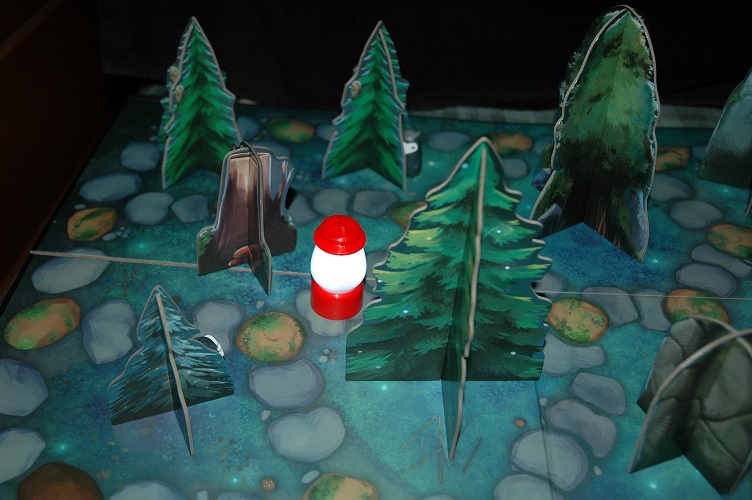
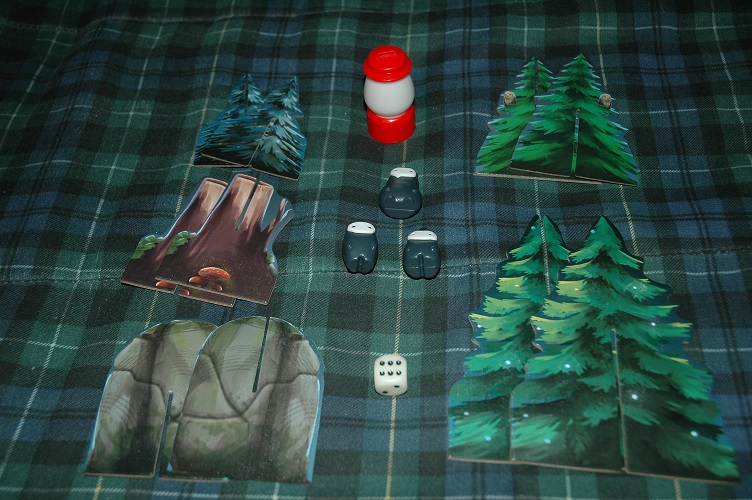
First, you set up the board, assembling and placing the physical obstacles — trees, stumps, rocks, etc. — that will create shadows for the Shadowlings to hide in.

Then, place the lantern on one of the red stones in the pathway on the board. Turn on the lantern and shut off the lights. (You’ll want it as dark as possible to really immerse everyone in the game and make the most of both the lantern and the glow-in-the-dark die that comes with the game.)

Now the Seeker has to shut their eyes as the other players place the Shadowlings in the shadows created by the lantern.

Once the Seeker opens their eyes, the game begins.
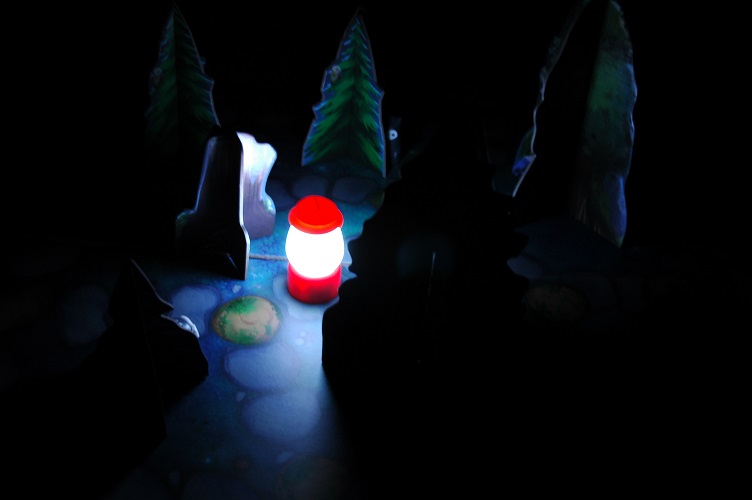
The Seeker uses the die to determine how many spaces the lantern moves. Any Shadowlings revealed by the lantern during the Seeker’s turn are frozen in place, and the Seeker takes their masks. Those unmasked Shadowlings are unable to move until they are unfrozen by other Shadowlings.

Once the Seeker’s turn is done, the Seeker closes their eyes, and the Shadowlings move. Unlike the Seeker (whose lantern has to stick to the path), the Shadowlings can be moved anywhere on the board. They don’t need to stick to the path or adhere to a die roll to determine how far they can travel.

The only rule for them? They cannot move anywhere the light touches. They must stick to the shadows. (There’s no jumping, climbing, or otherwise bypassing the light. The Shadowling’s movement can curve or turn, but must be an unbroken line along the board.)

[This Shadowling is caught in the light, and therefore frozen.]

The goal of the Seeker is to freeze all of the Shadowlings and take their masks. The goal of the Shadowlings (who play as a team) is to gather every Shadowling on the board in the same shadowy place.

It’s an intriguing hook for a game, but unfortunately, the instruction manual is vague and not terribly intuitive. It does a poor job of explaining both how the Shadowlings move and how they unfreeze Shadowlings touched by the light.
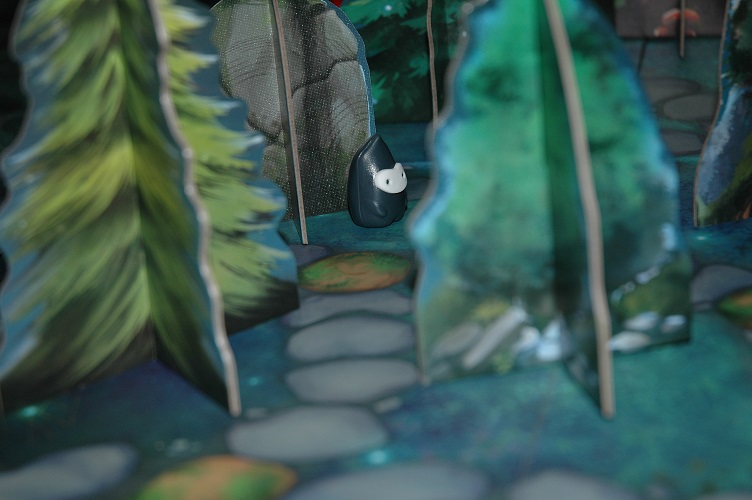
In each of our test games, we had to resort to house rules and clarifications in order to play the game. For instance, even while hiding, we decided the Shadowlings should face outward (away from the obstacle), so their masks would shine brighter if the light revealed them. Additionally, we made Shadowling players trace their intended path along the board with their finger first, in order to reveal if they touched the light of the lantern at any point.

As for the freezing/unfreezing rules, we decided that any Shadowling that lost its mask couldn’t move, even if the lantern’s movements plunge them back into the dark. Only when another Shadowling touched them in the dark could the mask be returned and the Shadowling unfrozen. (This may very well be the intended way to play, but the instructions are unclear, so it’s hard to tell.)

Once we’d established these ground rules, the game really came together.

[Can you see both Shadowlings?]

It becomes a battle of strategy. The Seeker tries to reveal and freeze the Shadowlings in place while searching for others, while the Shadowlings must outmaneuver the lantern, stay in the shadows, rescue their pals, and mass in one place.

It’s amazing how a simple movement of the lantern piece can not only bisect the board and pin down the Shadowlings, but alter the shadows on the board in unexpected ways.

The obstacles are easy to assemble and disassemble, and the battery-operated lantern (batteries included!) throws off a surprising amount of light for its size. The Shadowlings are adorable, each with their own little look and personality, and yet, easily vanishing into the darkness. This game has style to burn.
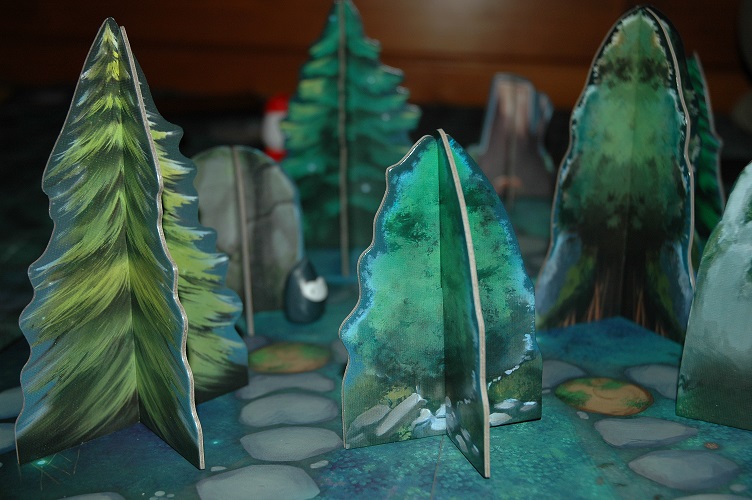
Although adults can play the game, we found that games either ended very quickly (if the Seeker rolls poorly or the Shadowlings were massed on the far side of the board from the lantern) or lasted a very long time (similar to chess games where the pieces on both sides are depleted and players simply chase each other around the board endlessly).

But when playing with younger solvers, the Shadowling team play and the convention of playing in the dark made for a unique gaming experience — particularly if an adult is the Seeker, and one adult joins the Shadowling team of younger players. Seeing the kids conspire against the adult to lurk in the shadows is a delight.

In the end, Shadows in the Forest is a fantastic idea for a game that, while not executed to perfection, still makes for a fun time.

ThinkFun’s Shadows in the Forest is currently available at Target, Amazon, and participating retailers, for $24.99.


Thanks for visiting PuzzleNation Blog today! Be sure to sign up for our newsletter to stay up-to-date on everything PuzzleNation!

You can also share your pictures with us on Instagram, friend us on Facebook, check us out on TwitterPinterest, and Tumblr, and explore the always-expanding library of PuzzleNation apps and games on our website!
PuzzleNation Product Review: Lexicon-GO!

[Note: I received a free copy of this game in exchange for a fair, unbiased review. Due diligence, full disclosure, and all that. And this concludes the disclaimer.]

You might think that if you’ve seen one letter-tile game, you’ve seen them all. But you’d be wrong.

Every word-forming game, from great-granddaddy Scrabble on down, has its own quirks and idiosyncrasies, and some of them have tricks up their sleeves that make for a truly unique puzzle game experience.

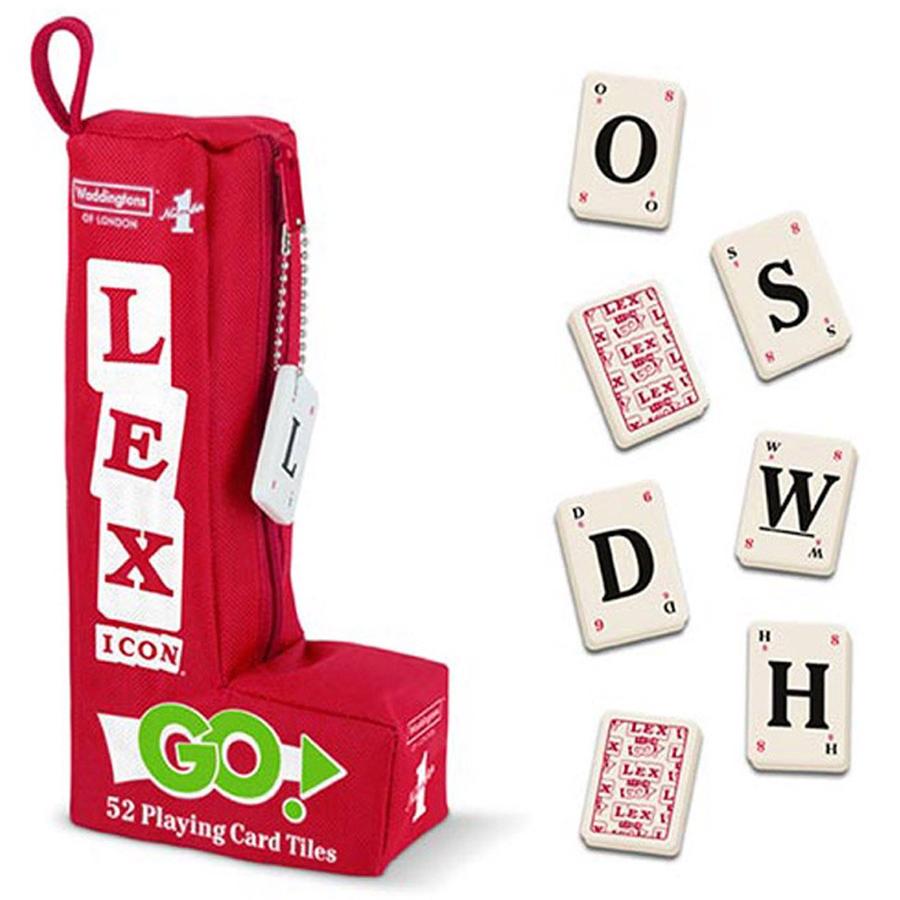
And very few of them have the urgency of Lexicon-GO!, a travel-friendly game distributed by Winning Moves UK.

Designed for 2-4 players, ages 8 and up, Lexicon-GO! is as devilishly simple as it is frenetic.

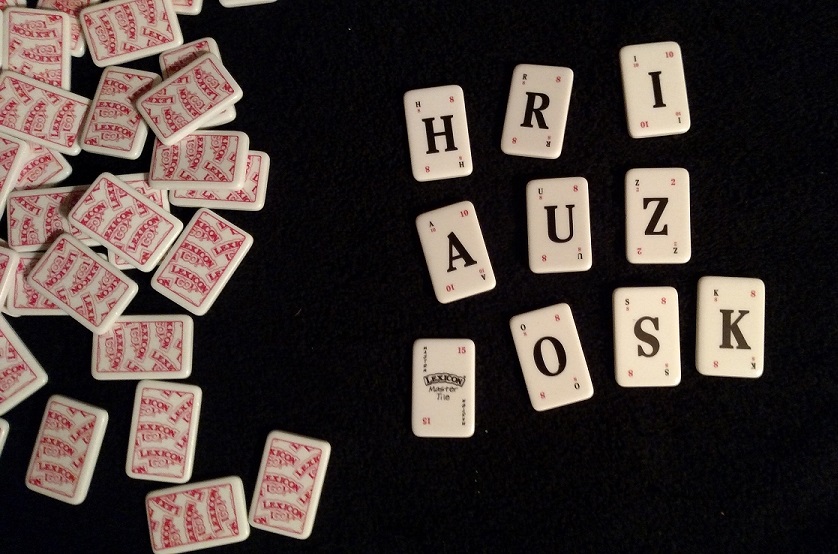
Each player draws ten tiles from the draw pile, and tries to form words with all ten of them faster than their opponents.

And not just any words will do. There are no one-letter words, plurals, proper nouns, acronyms, and abbreviations allowed as answer words.

In most letter-tile games, it’s all about your own anagramming and word-forming skills; there’s very little direct interaction with your opponents. (Unless you’re both going for the same tile in the draw pile, that is.)

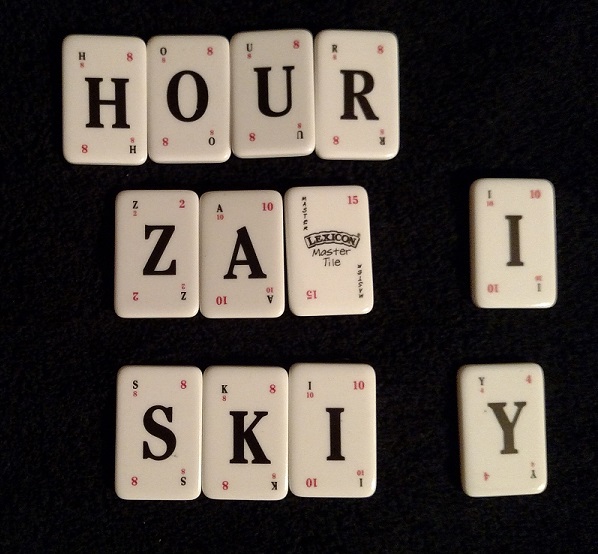
But Lexicon-GO! rewards both interactive thinking and aggressive, advantageous play. You can add your letters to the words being formed by other players (adding a T to the word SKI below to make SKIT, for instance).

Or you could swap out a letter in another player’s word with one of your own (making ZAP into ZIP and taking the A, or making SKI into SKY and taking the I, for instance).

Of course, this move only works if you’re forming a new, acceptable word. You can’t just throw in any letter and steal one you need.

[Once the wild card title is set, it remains that letter for the rest of the round, even if another player steals it. Until this round is done, for instance, the master tile is a P.]

Be the first one to use or dispose of all ten of your letters, and you win the round. The first player to win five rounds wins the game!

(Naturally, we’ve found that most players tend to focus on simply forming their words the fastest, ignoring chances to interact with and/or sabotage their opponents. So we introduced a house rule that every player must either swap a letter with another player’s word or add a letter to another player’s word. It certainly made for more strategic and chaotic gameplay!)

Now, you may have noticed that the tiles also have number values, not unlike the tiles in Scrabble and other tile-scoring games.

That’s because there’s a second path to victory, if you play Original Lexicon (or Master Lexicon) rules, which are helpfully provided with the game.

In Original Lexicon, the rules are the same, including winning a round by being the first to use or dispose of all ten tiles. But instead of everyone else simply conceding the round, they instead add up the point values of their letter tiles. After a few rounds, any player who passes 100 points is out, and the last player standing wins.

That variation makes the game much more tactical. If you know other players are faster at word-forming and anagramming than you, you can mitigate the damage to your score by getting rid of high-value tiles through swapping with the draw pile or adding your letters to the words of other players.

The larger tiles do mean that the game contains fewer letter tiles than other letter-tile games, which might hamper replayability in the long run.

Of course, on the flip side, larger tiles mean that both younger players and older players (who might have visual impairment issues, for instance) can enjoy Lexicon-GO! more than a game with smaller letter tiles.

As always, there’s a trade-off in any design choice.

Lexicon-GO! builds on the strong reputation of the letter-tile games that preceded it, while adding to the genre in engaging, fun ways.

The focus on lightning-quick play (as well as the encouragement to deviously interact with other players) adds some pleasant spice to the genre, rewarding outside the box thinking and puzzle-solving for younger minds and older alike.

This game gives the letter-tile classics a serious run for their money.

Lexicon-GO! is available from Winning Moves UK, Barnes & Noble, Amazon, and other participating retailers.


Thanks for visiting PuzzleNation Blog today! Be sure to sign up for our newsletter to stay up-to-date on everything PuzzleNation!

You can also share your pictures with us on Instagram, friend us on Facebook, check us out on TwitterPinterest, and Tumblr, and explore the always-expanding library of PuzzleNation apps and games on our website!

Kickstarter Roundup: Ad Quest!

A well-designed board game can make nearly any endeavor a fun and engaging gameplay experience.

Sure, there are games where you endure monstrous onslaughts (Castle Panic!, Dead of Winter), cure outbreaks (Pandemic), escape dungeons (Welcome to the Dungeon, Escape: The Curse of the Temple), and conquer rival civilizations (Small World, Risk).

But there are also games where you manage a farm (Agricola), grow bamboo (Takenoko), run a newspaper (Penny Press), or build a stained glass window (Sagrada). Your goal doesn’t have to be earth-shaking to be worthwhile and engrossing.

And there’s a game currently seeking funding on Kickstarter that fits the latter pattern. You might not be slaying dragons or toppling empires, but you will definitely be in for the fight of your life.

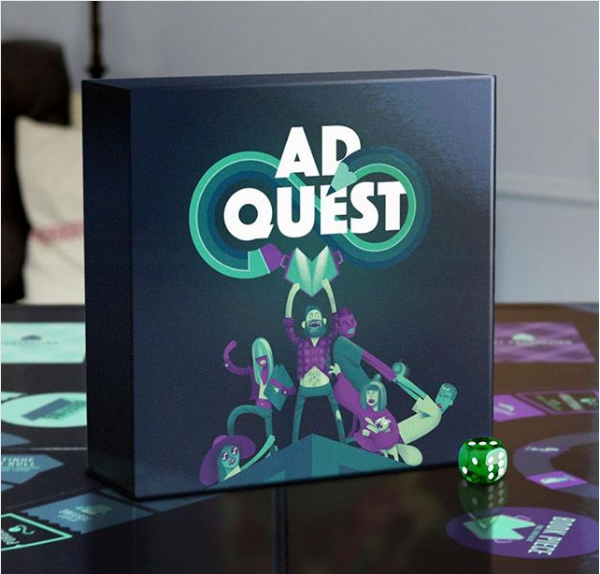
The game is called Ad Quest, and I think you should give it a look.

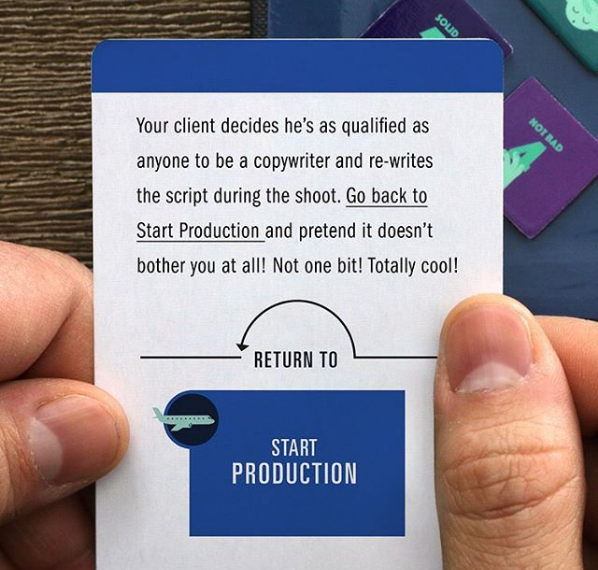
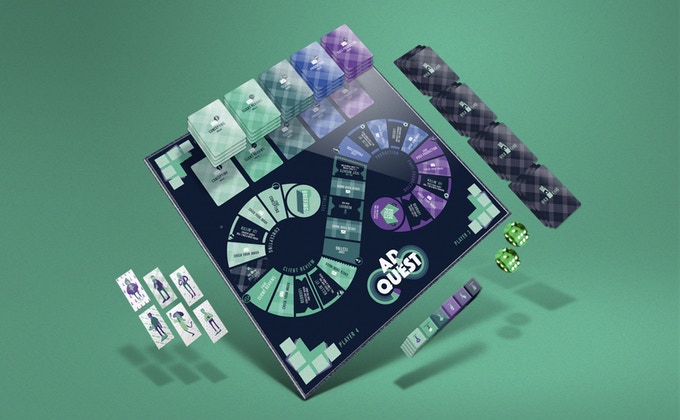
Ad Quest places you in the shoes of an advertising creative team. You’ll conceive your ideas, deal with clients, test your ad, produce it, and polish it until it’s a shining example of your work, fit for your portfolio.

Designed with a razor-sharp wit and a potent dose of cynicism, Ad Quest creates a challenging and entertaining gauntlet for you and your fellow players to run, peppered with obstacles like focus groups, rogue clients, and celebrity meltdowns.

The game board is sleek, the cards are wonderfully designed, and the game strikes an elegant balance between real-world frustrations and clever design, ensuring that you’ll be kept on your toes throughout the entire game.

You can check out the Kickstarter campaign here, and be sure to follow the Ad Quest Instagram account for more details, pictures, and behind the scenes glimpses into the game and design process. Additional details can also be found at adquestgame.com.

I think creators Adam Samara and Michael Camarra have a real winner on their hands here.


Thanks for visiting PuzzleNation Blog today! Be sure to sign up for our newsletter to stay up-to-date on everything PuzzleNation!

You can also share your pictures with us on Instagram, friend us on Facebook, check us out on TwitterPinterest, and Tumblr, and explore the always-expanding library of PuzzleNation apps and games on our website!
Citizen Shoutout: Game Shop Edition!

Welcome to the second installment of a brand-new monthly feature on the blog, Citizen Shoutout!

Each edition of Citizen Shoutout is an opportunity to say thank you. It allows us to put the spotlight on folks in the PuzzleNation community who contribute to the world of puzzles and games in a meaningful way.

And in our sophomore edition, I’d like to highlight my friendly local neighborhood game shop, Gamer’s Gambit!

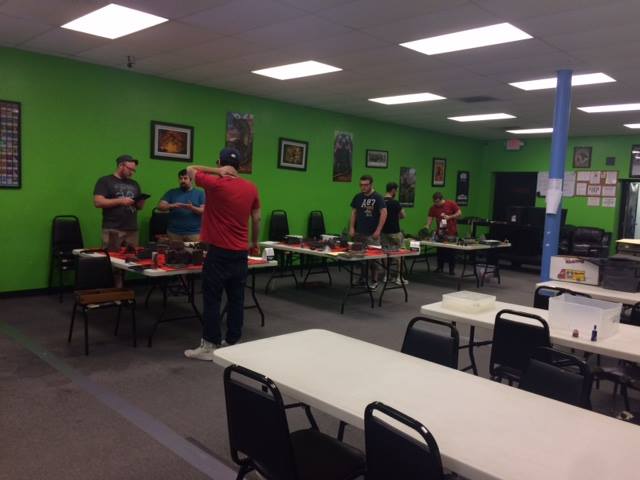
Danbury, Connecticut is the home of Gamer’s Gambit, a combination comic book store, hobby shop, and hub of gaming activities of all shapes and sizes.

Boasting one of the widest ranges of games for sale in any store in the state, the store is a one-stop shop for all sorts of board games, card games, dice games, roleplaying games, escape room games, and even some video games. Along one wall, there’s a bevy of comic titles and graphic novels, along with all sorts of accessories, collectibles, and gaming paraphernalia. From Funko Pops to paint for miniatures, they’ve got everything.

But behind the game shelves, trade paperbacks, dice, and snacks, there’s the highlight of the store: the play area.

The tables are big enough to accommodate character sheets, DM screens, miniatures, and maps for an immersive Dungeons & Dragons game, yet narrow enough to allow for competitive rounds of card games like Magic: The Gathering.

And the game room is often the centerpiece of whatever’s planned for that day. With demos for new games, tournaments, regular game nights, costume events, and release parties for comic books, board games, and card games, there’s always something going on in the store.

The staff is friendly and knowledgeable, making their recommendations more reliable than most. After all, you’re getting the skinny from fellow gamers and roleplayers.

I can’t say enough good things about Gamer’s Gambit. It’s a great place to shop, try out new games, and mingle with fellow game enthusiasts. I’m proud to highlight the shop in our latest Citizen Shoutout.

But what about next month? I’m glad you asked.

In the future, I’d like to take suggestions from my fellow puzzlers and PuzzleNationers for those we highlight in each month’s post.

It could be a puzzler or designer who inspires you, a constructor who challenged you or surprised you with a puzzle, or someone who did something kind in a puzzly way.

Maybe you have a favorite local game shop / hobby shop where you meet other puzzlers, or that introduced you to a favorite game. Maybe your local library held an event that piqued your puzzly interest.

Maybe you’d like to give a shoutout to an escape room you think others would enjoy, or to a puzzly event (a scavenger hunt, a tournament, a collaborative event, etc.) or to someone who went above and beyond to make a puzzly experience truly memorable.

You can submit your suggestions for the next Citizen Shoutout on Facebook, on Twitter, or in the comments section below. We’d love to hear from you.


Thanks for visiting PuzzleNation Blog today! Be sure to sign up for our newsletter to stay up-to-date on everything PuzzleNation!

You can also share your pictures with us on Instagram, friend us on Facebook, check us out on TwitterPinterest, and Tumblr, and explore the always-expanding library of PuzzleNation apps and games on our website!

PuzzleNation Product Review: Star Trek Fluxx and Star Trek: TNG Fluxx

[Note: I received a free copy of this game in exchange for a fair, unbiased review. Due diligence, full disclosure, and all that.]

Innovation is part of the fabric of the puzzle/game industry. Constructors and game designers are constantly pushing the envelope, finding new ways to reinvent the puzzles and games we love in order to create new solving and playing experiences. Every new wrinkle is a step forward, and Looney Labs has been at the forefront of that movement for years now.

And it’s only fitting that Fluxx, a card game all about dynamic gameplay and ever-shifting rules, continues to grow, evolve, and adapt, adding new gameplay mechanics to an already loaded bag of tricks.

Their newest release also fits that ambitious aesthetic. After all, the Star Trek series has always been about boldly going where no one has gone before. Today, we’re doing the same as we review Star Trek Fluxx, Star Trek: The Next Generation Fluxx, and a special expansion pack.

For the uninitiated, Fluxx is a straightforward card game. You collect keeper cards and put them into play. Different combinations of keeper cards complete different goals, and each player has the chance to put different keeper cards and goal cards into play in order to win. So you might find yourself working toward completing the goal at hand when suddenly somebody plays a new goal, and the object of the game changes.

Along the way, players affect how the game is played by utilizing action cards and new rule cards which alter what players can and can’t do. Suddenly, you’ll have to trade your hand with another player, or start drawing three cards each turn instead of one.

Star Trek Fluxx marries the chaotic gameplay of the now-classic card game with familiar characters and themes from the iconic science fiction franchise to create a fresh and enjoyable play experience.

The special touches are immediately identifiable, as the title at the top of every single card is written with the famous Star Trek font.

Even as you collect and play cards bearing the images of beloved characters like Kirk, Uhura, and Spock, you’ll find yourself on a strange new world, as unfamiliar new actions and obstacles appear in your path. I encountered Action cards I don’t recall ever seeing in previous Fluxx games, like Taxation, which requires every other player to give you one card from their hands, and Brain Transference, where you switch seats, cards, Keepers, and Creepers with another player.

Not only that, but lurking in the deck amidst rules, keepers, and goals is an Ungoal, a card that works like a goal, except when all of the conditions on the card are met, everyone loses.

But that unpleasantness is balanced nicely by the many references to the classic show featured throughout the game. As a long-time Star Trek fan, it warmed my heart to see the goal card Majel’s Voice, which credits actress Majel Barrett (wife of Star Trek creator Gene Roddenberry) in her dual roles as Christine Chapel and the voice of the Starfleet computers in future editions of the series (as well as Deanna Troi’s mother, Lwaxana, in The Next Generation).

I was also delighted to see the Fizzbin card, which features ridiculous rules reminiscent of the fictional game Kirk and Spock make up as a distraction in the episode “A Piece of the Action.”

These clever touches not only add depth to the gameplay, but serve as welcome nerdy reminders to fans of the series, little inside jokes that entertain, even as they wink and nod in tongue-and-cheek fashion.

The Star Trek: The Next Generation edition of Fluxx covers a lot of the same ground as Star Trek Fluxx — including a special font for the card titles, Ungoals, and gameplay mechanics built around the technology like the Transporter — but adds numerous little touches that make for an enjoyably distinct play experience.

The Holodeck, for instance, comes into play with several cards, proving to be just as big a distraction (and occasionally, annoyance) as it was in the TV show. Some of the Keeper cards also grant additional actions to the players who use them — like taking additional cards, resolving Creepers that would prevent you from winning the game, etc. — that make them more desirable and handy than Keepers in other editions of the game.

Not only that, but the cards are packed to capacity with inside jokes and fun references to events from the series. From the officers’ poker night to Picard’s harrowing declaration that “There Are Four Lights,” many of the show’s most memorable moments are reflected in some way in the gameplay.

Heck, there’s even a rule card that rewards you for communicating using only names and numbers like the aliens in the classic episode “Darmok.” It’s a super-clever idea based on a much-loved episode of the show.

Star Trek: The Next Generation Fluxx has all of the strengths embodied by Star Trek Fluxx, but still feels like it was created specifically for fans of the Picard years. It’s an elegantly balanced approach.

And, for the very first time, two Fluxx games have been designed so that you can combine and mix them to create a unique play experience!

Although there’s nothing stopping you from mixing Fluxx games — the card backs always look the same, after all — sometimes differing games don’t mesh well, spoiling the fun. But in this case, not only were the two games designed to have similar elements — crew members, technology, ships named Enterprise — but there’s a small bonus pack, The Bridge Expansion, which is crafted to make the most of merging your two games.

Yes, much like the Borg, you can assimilate each game’s individual strengths into a single, unified core.

With goals that encourage crossovers between the two shows, as well as a rule card called The 5 Card Mission (referencing the U.S.S. Enterprise’s original 5-year mission), The Bridge Expansion allows for double the Fluxx-fueled chaos and fun.

Whether you’re choosing to play one of these new star-spanning editions of the game, or combining all three products for the ultimate Star Trek Fluxx experience, you are guaranteed to be surprised and amused. Looney Labs games continue to innovate, entertain, and grow in both complexity and cleverness, and they’ve truly outdone themselves this time around.

[Star Trek Fluxx, Star Trek: The Next Generation Fluxx, and The Bridge Expansion are all available now from Looney Labs and certain online retailers.]


Thanks for visiting PuzzleNation Blog today! Be sure to sign up for our newsletter to stay up-to-date on everything PuzzleNation!

You can also share your pictures with us on Instagram, friend us on Facebook, check us out on TwitterPinterest, and Tumblr, and explore the always-expanding library of PuzzleNation apps and games on our website!
PuzzleNation Product Review: Vault Assault

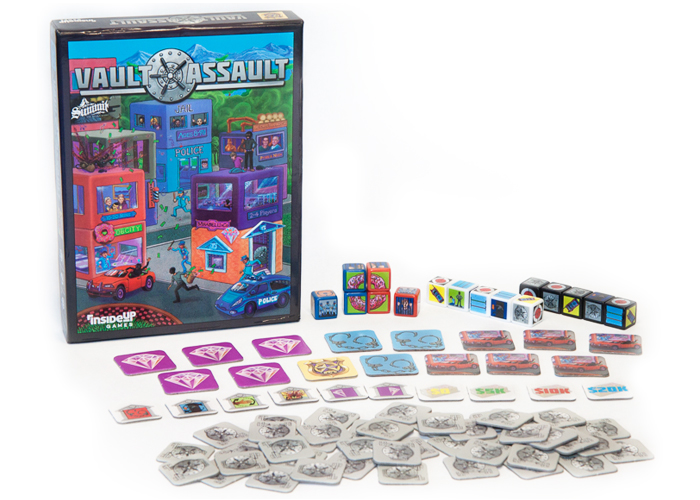
There is no rivalry in the world of make-believe more iconic than cops versus robbers, and rarely has that classic dynamic been as frenetic and as fast-paced as it is in the dice game we’re reviewing today, Vault Assault.

The goal of the robbers is to acquire as much wealth as possible and then escape before the cops arrive. The goal of the cops is to minimize the amount the robbers acquire/get away with and capture the robbers before they can escape.

Each round, the players will portray both the cops and the robbers, allowing players opportunities to both rack up lots of ill-gotten gains and minimize the loot captured by the other players.

Each round consists of two phases: the Diamond Heist and the Vault Assault.

In the Diamond Heist phase, the cops and robbers each line up five of their dice. (The cops do so secretly, laying out an arrangement of three alarm symbols, one dye-pack symbol, and one diamond symbol in any order they choose.) The robbers lay out five wire symbols, and then choose one to flip, trying to match the one they flip to the diamond symbol the cops have secretly chosen.

Essentially, the Diamond Heist is part strategy, part luck as the robbers try to steal the diamond by cutting wires to the security system, while the cops lay dye-pack traps to ensnare the robbers. Either the cops will begin the Vault Assault with an advantage or the robbers capture a diamond tile as part of their loot.

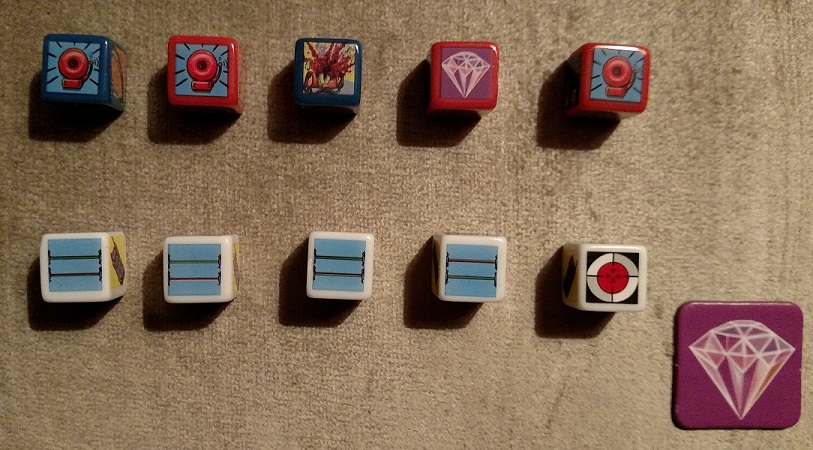
[In this scenario, the robbers chose poorly, and triggered the alarm, meaning that the cops will start with one die already rolled when the Vault Assault starts. The robbers could have opted to flip another die in the hopes of finding the diamond, but in the end, they opted not to risk giving the cops a greater advantage.]

Once the Diamond Heist phase is concluded, the Vault Assault begins, and the game kicks into another gear.

Tenzi- or Yahtzee-style dice rolling and quick decision-making become crucial as both cops and robbers try to roll specific patterns in order to complete tasks. As the robbers roll to steal from the vault (or each other), to interfere with the cops, or to escape, the cops are trying to complete rolls in order to fuel up, arrive at the crime scene, engage the robbers, and arrest them.

Both sides roll their dice at the same time, making for an incredibly chaotic and fun play experience that simulates the kind of stress you might be under if you were really robbing a bank and trying to get out before the cops arrived. Between robbers filling their coffers (and forcing the cops to reroll their dice) while the cops confiscate some of the stolen loot while trying to arrest the bad guys, it’s a very competitive and adrenaline-inducing sequence of events.

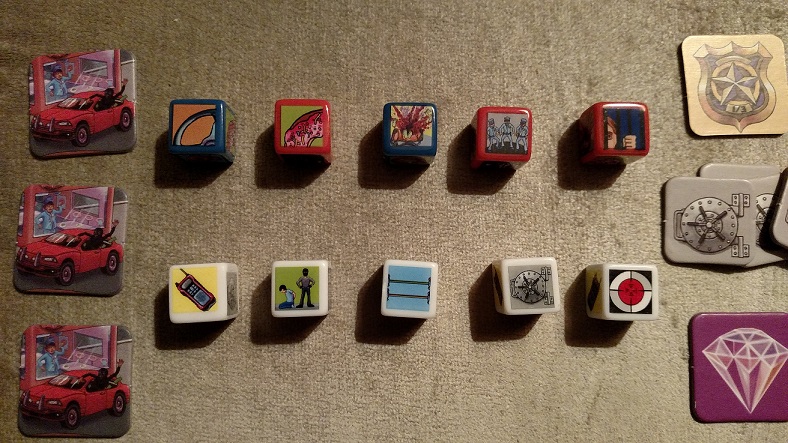
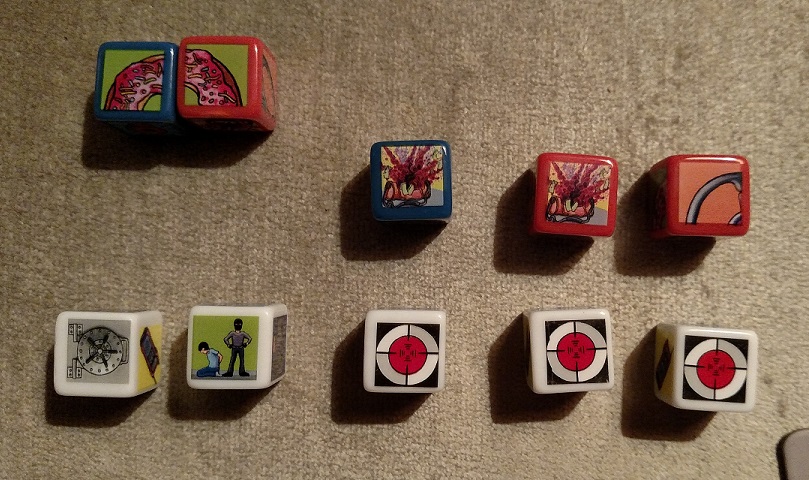
In this scenario, the cops have two out of the four doughnut symbols up (meaning they’re halfway to completing the first task en route to arresting the robbers). But they also have two dye-packs up, and two more dye-packs would allow them to remove several Vault Tiles from the robber’s stacks, meaning the robbers would have less loot. Would you choose to keep rolling for doughnuts or to hamper the robbers with dye-packs?

On the robber side, they have three targets, meaning they’re one away from stealing a Vault Tile from another player and adding to their loot. But they also have a green hostage symbol up, which they can put aside in order to make the cops immediately reroll all of their dice. Would you choose to go for the steal or to disrupt the cops’ efforts?

In addition to all that interplay, some of the vault tiles also trigger actions that can hamper your gameplay. A handcuffs symbol, for instance, means you have to roll your dice with your wrists together until the end of the turn (as if you’re handcuffed). These little roleplay-centric details add a playful edge to the game, injecting a bit of silliness into gameplay that could otherwise turn somewhat cutthroat.

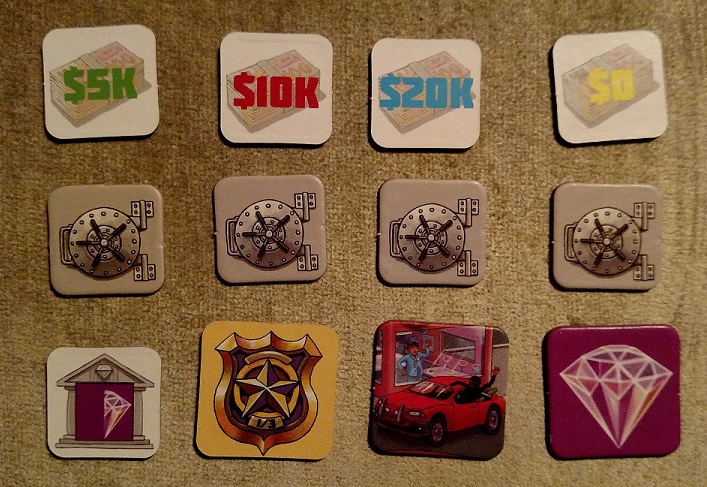
One several rounds have elapsed, the players (both cops and robbers) total up the value of the loot in their getaway cars, and the player with the highest total wins. Oh, and those Diamond Heist tiles? They’re worth $40,000 apiece!

[With Vault Tiles ranging in value from 0 to $20,000, a diamond tile could be a real game-changer for your loot total at the end of the game.]

Vault Assault is less about long-term strategy and more about being able to make good decisions in the heat of the moment. If you’re able to put your puzzly mind to work making the most of the dice rolls in front of you — both to increase your profits and hamper your opponents, whether you’re a cop or a robber at the time — then you’ll probably come out ahead.

Of course, that’s more of a one-on-one mindset. And with three-player and four-player/team rules to allow for different combinations of players, you can implement some wider strategic gameplay. In three-player games (1 cop and 2 robbers), have one robber focus on hampering the cops while the other raids the vault (and then switching, so both robbers can cash in). In four-player/team games (two cops, two robbers), one cop can focus on recovering stolen goods while the other works on arresting players. There’s plenty of fun to be had with the format.

Can you cash in, hold the cops at bay, and make your escape, or will the cops nab you and all your ill-gotten goods before you make it out the door? And in the end, will you make a better cop or a robber?

[Vault Assault, published by Inside Up Games, is available through their website, as well as certain online retailers.]


Thanks for visiting PuzzleNation Blog today! Be sure to sign up for our newsletter to stay up-to-date on everything PuzzleNation!

You can also share your pictures with us on Instagram, friend us on Facebook, check us out on TwitterPinterest, and Tumblr, and explore the always-expanding library of PuzzleNation apps and games on our website!