5 Questions for Acrostics Constructor Cynthia Morris

Welcome to 5 Questions, our recurring interview series where we reach out to puzzle constructors, game designers, writers, filmmakers, musicians, artists, and puzzle enthusiasts from all walks of life!

It’s all about exploring the vast and intriguing puzzle community by talking to those who make puzzles and those who enjoy them! (Click here to check out previous editions of 5 Questions!)

And I’m excited to welcome Cynthia Morris as our latest 5 Questions interviewee!

wfdyxqwf

An author, editor, and puzzler, Cynthia is the mastermind behind Acrostics by Cyn, her online acrostic puzzle empire. Her brand is soon expanding to eight puzzle-book titles that mix crossword-esque cluing with intriguing themes and quotation-style content.

Cynthia was gracious enough to take some time out to talk to us, so without further ado, let’s get to the interview!


5 Questions for Cynthia Morris

1. How did you get started with puzzles? What drew you to acrostic puzzles more than other styles, like crosswords, word seeks, or encrypted puzzles?

I got started at a really early age, thanks to my mom. She was a former schoolteacher who knew how important it is to exercise our brains every day, so one year during summer break from school — I think I was 8 years old — she offered to pay me $10 for every book of puzzles I completed, cover-to-cover, without peeking at the answers in the back.

I chose variety puzzle books — I’m pretty sure they were the Dell puzzle magazines that were sold at the grocery stores. I thought they looked like the most fun. I had never even heard of acrostic puzzles at the time, but as soon as I discovered them, I was hooked. 

I had always loved books and also loved to write, so the combination of quotations from books and crossword-style clues was completely irresistible to me. Plus I loved that acrostic puzzles are a bit like solving a mystery, because the clues lead you to a fun or funny quote at the end, instead of just a grid filled with words.

I remember that I would solve the acrostic puzzles in the variety books first, and then race through the rest of the puzzles as quickly as possible so my mom would buy me another volume and I’d have more acrostic puzzles to solve.

We ended the $10-per-book deal when summer was over, but I was totally addicted to acrostics by then, and kept solving. It turned out to be a lifelong addiction.
cyn-acrostics

2. What, in your estimation, makes for a great puzzle? What do you most enjoy — or try hardest to avoid — when constructing your own?

I love themed puzzles — and I especially love when a puzzle is “slyly themed,” so that when you finish the puzzle, you realize that far more clues/answers pertain to the quotation solution than you knew when you were solving it. I love learning something new, whether it’s from the clues and answers, or from the quotation solution.

I love clever or funny clues, as well as those that have a bit of misdirection thrown in.  I love a good quotation solution. And I love punny, groan-worthy puzzle titles — which is something I’ve picked up from my husband, Bryan. I write all of my puzzle titles with him in mind, and if I get a chuckle out of him I know I’m on the right track.

My favorite part of constructing? I don’t think I can answer that one, because I enjoy every aspect of it. I love selecting the quotations, although this often takes way longer than it should because I’ll open a book with the intention of skimming it for a good quote, and end up reading the whole thing! I love deconstructing the quotation solution into a word list, which is just as much fun as solving a puzzle. And I love writing the clues, especially trying to come up with clever clues that will make my solvers laugh.

I avoid dictionary definition clues as much as possible. I include a few in each puzzle as “gimmes,” because otherwise it can be difficult to get a toehold on a puzzle, but they’re not my favorites — I like to be more creative than that when it comes to clues. And I make a conscious effort not to copy any other constructor’s style — I’ve worked hard to develop my own signature style.

3. You have acrostic books for younger solvers and older solvers. What’s more challenging: creating an engaging puzzle for a younger solver or creating a truly difficult but fair puzzle for an established solver?

You’d think my AnimaCrostics series, which are easy, animal-themed puzzles for kids and new acrostic solvers, would be the easiest to construct, but this isn’t the case. They’re just as difficult to create as my challenging puzzles for adults.

Technically, I’m much more limited when it comes to which words I can use as answers, because I have to be sure they’re words that are in children’s vocabularies. Then again, one of my goals is to help kids expand their vocabularies, so I like to include a few words in each puzzle that may be a bit of a stretch for them at first. It’s a difficult balancing act, so I put a great deal of effort into every one of those short, easy puzzles.

Creatively speaking, AnimaCrostics are also a bit of a challenge, but a fun one. When I was first constructing them I had about 75 kids at a local elementary school for testers, and one thing was clear: Kids like gross stuff. They love learning about things like vulture vomit and hippo poop and fish farts. The puzzles with these types of quotation solutions were the biggest hits, and the puzzles that kept the kids coming back for more. So I try to include as many of them as I can in each book, along with other fun animal facts.

I originally called this series Kids’ Krostics, but it turned out that many adults who were new to acrostic puzzles were enjoying them as well, and even snagging the books from their kids when they weren’t in use. So I renamed this series AnimaCrostics to make it clear that these puzzles are fun for everyone, not just kids.

My two other series, American Acrostics and CynAcrostics, are equally difficult to construct, but for different reasons. 

am-acrostics

Each volume of American Acrostics tells a story — the history of the United States (Volume 1), the story of American inventors (Volume 2), tales about our presidents and first ladies (Volume 3), and fun facts about each state (Volume 4, forthcoming). Finding the specific quotations I need for these volumes can be challenging. But I love that sort of challenge, which involves bringing about 80 library books home at a time, because I get to read so many wonderful books while searching for quotations. 

Choosing quotations for CynAcrostics is a bit easier, because I keep a running file of quotes I come across in books I’m reading. For example, I already have all my quotations for CynAcrostics Volume 3: You Don’t Say? selected, and I haven’t even started constructing those puzzles yet! I’m a rabid reader, and I have very eclectic tastes, so the CynAcrostics are a fun way to share quotations from the wide range of books I read. 

Both my American Acrostics and CynAcrostics series include themed puzzles — some volumes more than others. Themed puzzles are more challenging to construct than your average acrostic puzzle, because the goal is to include as many clues/answers related to the theme of the quotation solution as possible, but to clue them in such a way that the theme isn’t too obvious, which would make the puzzle too easy.

Overall, I think finding the right difficulty level — whether the puzzles are geared for adults or kids — is one of the hardest parts of the construction process. I try to include a mix of easy, medium, and difficult puzzles in each volume, but of course a puzzle that’s easy for one person may be difficult for another. Over the years, I’ve come to realize that it’s impossible to please all of the solvers all of the time, so I just focus on constructing the best puzzles I can, and hope my solvers enjoy them.

4. What’s next for Cynthia Morris?

On the puzzle front, I’m finishing up my eighth volume of puzzles, American Acrostics Volume 4: The Puzzling States of the Union. This may be my favorite volume yet.  I’ve managed to find really great, quirky quotation solutions, and because the puzzles are themed, I’ve learned a lot of fun trivia about each state. I’m really looking forward to sharing this volume, and hope to have it available in time for the holidays.

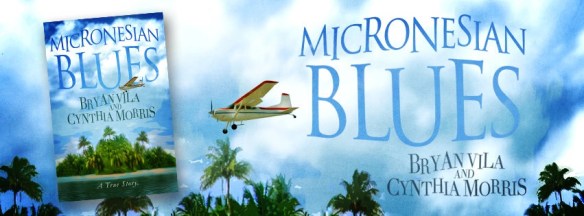
As an author/editor of nonfiction books, I also have exciting news. My book, Micronesian Blues (co-authored with my husband, Bryan Vila) is in development with actor Patrick Dempsey’s production company (Shifting Gears) and Cinemax. A Cinemax original TV series based on the book is in the works, and I hope to have more information about this project to share soon.
micronesian-blues

We’re working with an absolutely fabulous team of folks — in addition to Patrick Dempsey, Emmy-winning director Greg Yaitanes and New York Times bestselling author Jonathan Tropper are on board — so we couldn’t be happier with this project. (Of course, as soon as we signed on with Patrick’s production company, I couldn’t resist constructing a celebratory puzzle based on a quote from his Grey’s Anatomy character, Derek Shepherd. I ended up using it in CynAcrostics Volume 2: Reel-y?)

I also continue to work as an editor, and I have several other books in progress, so I certainly can’t say I’m ever bored.

5. If you could give the readers, writers, aspiring constructors, and puzzle fans in the audience one piece of advice, what would it be?

Just one? Yikes!  I’m not known for my brevity. OK, here goes:

I view acrostic puzzle construction as an art, and my goal with each puzzle I construct is to hone my craft. For readers, this may provide some insight into how much of ourselves we constructors put into each acrostic puzzle. For my fellow puzzle writers, I’m sure you can relate to this. For puzzle fans, this means that your feedback is invaluable to me. And for aspiring constructors, this means that no matter how many acrostic puzzles you’ve solved, it takes more time than you might imagine to become good at constructing, so be prepared for that. I’ve been constructing for 11 years now and I’m still learning to be a better constructor all the time, as both my skills and my understanding of what constitutes a good puzzle evolve.


A huge thank you to Cynthia for her time. You can check out all the acrostic offerings from her on her website here, and be sure to follow her on Twitter for the latest updates and puzzles!

Thanks for visiting PuzzleNation Blog today! Be sure to sign up for our newsletter to stay up-to-date on everything PuzzleNation!

You can also share your pictures with us on Instagram, friend us on Facebook, check us out on TwitterPinterest, and Tumblr, and explore the always-expanding library of PuzzleNation apps and games on our website!

Identity and Gender in The New York Times Crossword

[Image courtesy of the Odyssey Online.]

Only two months ago, I wrote a blog post about a Slate article discussing how The New York Times crossword can be socially tone-deaf at times. So it’s heartening today to write about a New York Times crossword puzzle that’s progressive, one that is bringing the conversation forward instead of feeling out-of-touch.

On Thursday, September 1, the paper published a crossword by constructor Ben Tausig. Even on the surface, this was a rare puzzle, because it allows for multiple entries that fit a given definition. These puzzles are known as Quantum puzzles or Schrödinger puzzles.

The most famous example is the 1996 Election Day crossword pictured below, which “predicted” the outcome of the election quite cleverly by allowing for either CLINTON ELECTED or BOB DOLE ELECTED to read out, depending on how the solver answered seven down clues.

In Ben Tausig’s puzzle, there are four across entries and four down entries that each allow for two possible answers. For instance, 67 Across is clued “Tough stuff to walk through” and the answer can be FIRE or MIRE. That entry crosses 60 Down, which is clued “Word that can precede sex,” allowing for the answers SAME or SAFE.

What separates Tausig’s puzzle from this elite group of masterfully constructed Quantum crosswords is what it represents on a social inclusiveness level.

The letter variability — allowing for M or F to appear in the box and still fit the definition — is a wonderful metaphor for the fluidity of gender, especially in the limiting, but generally accepted, binary concept of male or female. Having GENDER FLUID as the revealer entry helps demystify both the theme and the topic at hand for solvers.

[Click here to see a larger version of the grid.]

As constructor Ben Tausig says in his XwordInfo write-up of the puzzle:

The theme letters don’t move from M to F or from F to M, in the manner of a binary, but float in an unresolved place in between. That’s a simple but reasonable way of representing queer sexuality — as a forever-exploration of identity and desire.

And although those two concepts only scratch the surface of the rich panoply of emerging terms and definitions with which people can express their gender or identity, this is an excellent step forward.

Kudos to Tausig and the crew at The New York Times crossword for a puzzle that’s elegant and inclusive in more ways than one.


Thanks for visiting PuzzleNation Blog today! Be sure to sign up for our newsletter to stay up-to-date on everything PuzzleNation!

You can also share your pictures with us on Instagram, friend us on Facebook, check us out on TwitterPinterest, and Tumblr, and explore the always-expanding library of PuzzleNation apps and games on our website!

5 Questions with Constructor and Editor Patti Varol!

Welcome to 5 Questions, our recurring interview series where we reach out to puzzle constructors, game designers, writers, filmmakers, musicians, artists, and puzzle enthusiasts from all walks of life!

It’s all about exploring the vast and intriguing puzzle community by talking to those who make puzzles and those who enjoy them! (Click here to check out previous editions of 5 Questions!)

And I’m excited to welcome Patti Varol as our latest 5 Questions interviewee!

profilepic

If you’ve solved crosswords anywhere other than the New York Times for the last few years, you’re bound to have encountered Patti Varol’s clever constructing and crafty cluing. A regular of The Washington Post and other outlets, Patti is a topnotch constructor and a crossword pro.

She’s also no stranger to PuzzleNation Blog, as she has previously contributed advice for constructing your own crosswords and shared her victory at Lollapuzzoola two years ago with the PuzzleNation audience.

Patti was gracious enough to take some time out to talk to us, so without further ado, let’s get to the interview!


5 Questions for Patti Varol

1. How did you get started with puzzles?

I solved all kinds of puzzles with my grandparents when I was a kid, and games were a big part of family time when I was growing up. A few years after I finished college, I answered an ad for an editorial job with the crossword/variety department at Penny Press — the puzzle test and the interviews for that position, and then taking that job, well, that changed my life. Suddenly, puzzles and games were something to study from the inside out, to take apart and put back together better, to make from scratch. And that was just as much fun as solving them…and I was getting paid to do it.

puzzlebooks_zpstzpevapx

2. You keep awfully busy when it comes to puzzles. Can you fill the PuzzleNation audience in on your various puzzle jobs and how they differ from each other?

I do! I’m Rich Norris’s assistant at the L.A. Times Crossword, which means that I write some of his correspondence (I let constructors know what Rich likes or doesn’t like about the puzzles they’ve sent him), and I pre-edit some of the daily puzzles. I also send out the monthly constructor schedule notices and do some of our testing and fact checking.

I’m also the editor of The Crosswords Club, which is a monthly publication with six Sunday-sized crosswords. The puzzles are made by some of the best constructors in the business, so they are as fun as they are challenging. Each monthly envelope also has an extra word game, and all of the puzzles have explanatory blurbs with some trivia and etymology. It’s a really neat product – there’s really nothing else like it on the market.

And I also do puzzle testing/proofreading for a few other venues, including some crossword tournaments and puzzle magazines. And I’m a puzzle constructor for the CrosSynergy puzzle syndicate; my crosswords appear in The Washington Post roughly once a month. I also construct puzzles for the LA Times and Crosswords Club occasionally, and I mentor new constructors who seek out my help.

Every venue I work for has a different style guide and different target audience, so it’s a job in itself to keep them all straight. All of these different puzzle jobs have made me a strong, confident editor and constructor. I love what I do, and I love being good at what I do. And I’m only good at what I do because I’ve had the privilege to work with and learn from the best.

aid1316594-728px-make-crossword-puzzles-step-10

[Image courtesy of Wikihow.com.]

3. What, in your estimation, makes for a great puzzle? What do you most enjoy — or most commonly avoid — when constructing your own? What do you think is the most common pitfall of constructors just starting out?

A great puzzle has a spark to it — you know right away that it’s something original, fresh, and special. You learn something new, or you see something familiar from a new angle. It’s that aha! moment, that pop. I’m being maddeningly vague here, I realize, but the elements of a great puzzle are elusive and subjective.

That same pop comes when constructing a puzzle, too. Getting a tough grid to come together cleanly, realizing that the right pieces are finally all there in the right order — that can be even more satisfying than solving someone else’s puzzle.

New constructors always seem to start off with more than they can handle: they try to make a Sunday puzzle (21x) before they’ve mastered the smaller daily format, or they try to do a low-word-count themeless before they’re fully comfortable with the 15x themed format. Or they try to cram too much theme in a grid.

Start small, aim big, and you’ll get better with every grid.

4. Between the Timothy Parker plagiarism scandal and the recent Slate article about insensitivity and tone-deafness in cluing in the New York Times crossword, accountability has been a major topic this year in the world of puzzles. As a gatekeeper to getting published yourself, what changes would you like to see made in order to bring crosswords into the 21st century?

Change is already underway, and it’s exciting, because crosswords just keep getting better and better. Just as language evolves — words and their meanings can be as fluid as they can be subjective — so, too, do the media and art forms that rely on language.

crossword1

[Image courtesy of HomeSchoolSuccess.com.]

The conversations about crosswords, online and offline, illustrate clearly that the crossword community is made up of some of the smartest, most language-sensitive, funniest people you’ll ever meet. We’re in love with our craft, and sometimes we take ourselves and our work too seriously, which is what happens when you’re passionate about what you do. But it’s so important to remember that puzzles are entertainment, a happy diversion, and if we use language incorrectly or insensitively, we’re not providing that diversion. We have to take our fun very seriously!

When we’re polishing a puzzle, crossword editors have a very specific audience in mind — we know our solvers because we listen to them and because we’re solvers ourselves. Because of this larger, ongoing conversation, we know that our solving audience is bigger and more diverse than ever.

This presents an interesting challenge: how do you make every crossword accessible and fun for every solver, regardless of race, gender, or age? Maybe not every clue and every entry will resonate with every single solver, but as long as I’m not actively alienating a solver, and as long as I’m stretching, testing, and entertaining most of my solvers, I’m doing my job.

And there are so many crosswords available now! In addition to the newspaper dailies, there are paper subscription services like The Crosswords Club, plus email/blog subscriptions by so many talented constructors, and more puzzle books and magazines available on newsstands than ever before.

We’ll always have good, old-fashioned puzzles, but now we also have lively, fresh puzzles with more current pop-culture references. This, too, is what happens when you’re passionate about what you do: your art naturally reflects and includes the community it is a part of.

5. If you could give the readers, writers, aspiring constructors, and puzzle fans in the audience one piece of advice, what would it be?

Solve all the puzzles. All of them. Even the puzzles that, at first glance, look like the kind you don’t like, solve them. And if you don’t know the answers, look them up. There’s no such thing as cheating at a puzzle — it’s all simply research that makes you better at puzzles.

The more you look up, the more you will learn and remember for the next puzzle you solve. And if you want to learn how to make puzzles, or to get better at making puzzles, nothing will teach you more about how a puzzle works than getting stuck — and then unstuck — while solving one.


A huge thank you to Patti for her time. Be sure to check out The Crosswords Club, and follow her on Twitter for baseball tweets and updates on her latest projects! (Her website is currently under construction.) I cannot wait to see what she has in store for us next!

Thanks for visiting PuzzleNation Blog today! Be sure to sign up for our newsletter to stay up-to-date on everything PuzzleNation!

You can also share your pictures with us on Instagram, friend us on Facebook, check us out on TwitterPinterest, and Tumblr, and explore the always-expanding library of PuzzleNation apps and games on our website!

Puzzle Culture: Tone-Deaf Cluing?

The latest comic on Hayley Gold’s wonderful webpage Across and Down brought an article on Slate to my attention, and I wanted to share my thoughts on the subject.

The article by Ruth Graham was entitled “Why Is the New York Times Crossword So Clueless About Race and Gender?” and the centerpiece of the article was last week’s Tuesday puzzle, particularly the 31-Down clue “Decidedly non-feminist women’s group” for HAREM.

Ick.

HAREM is a troublesome word to clue as it is, one of those filler words that makes crosswords feel so behind-the-times, like PAGAN (which is always clued like “heathen” instead of as someone non-aligned with the bigger religions).

[A crossword that looks as old-timey as modern ones sometimes feel…]

Even the clues that pass for innocuous when it comes to HAREM, like “Sultan’s bevy of beauties,” are a little unpleasant, as if some tuxedo-clad goon is describing the contestants for Miss America, another antiquated practice that should go by the wayside.

But I’m getting off track here.

Graham’s point was about women and people of color being poorly treated by insensitive, thoughtless cluing, and she clearly did her homework while commenting on incidents in the past:

“Hateful” and “awful” may seem a bit harsh for what reads like a lame attempt at cheekiness. But the clue is certainly tone-deaf. And it’s not the first time a puzzle’s un-PC cluelessness has annoyed people. In 2012, the answer ILLEGAL was clued with: “One caught by the border patrol.” The offensive use of illegal as a noun set off a brouhaha that made its way to Univision.

In 2013, a national puzzle syndicate apologized for using the clue “Shylock” for the answer JEW. And in November, Shortz issued a mea culpa for the clue “Exasperated comment from a feminist.” Answer: MEN — presumably with an invisible exclamation point and flying sweat out of a Cathy comic.

[Image courtesy of TheGloss.com.]

I’m surprised she left out the granddaddy of them all when it comes to crossword insensitivity: the June 6, 2008 crossword that featured ETHNIC CLEANSING as 11-Down. (Special thanks to Eric Berlin’s website and Rex Parker’s blog for helping me track down the exact date on that one.)

She went on to discuss the dearth of women and people of color in puzzle constructing — something that is slowly changing, thankfully — as well as the tendency to only bring black culture into crosswords with “homies” and “thugs” in order to clue words like HOOD and GANGSTA, but there was one style of cluing that I feel should also be discussed in the same light.

You’ll see foreign words often clued with the English equivalent, and then some indicator of a foreign place. “One, in Seville” for UNO, or “Sea, in Paris” for MER. That’s all well and good.

[Image courtesy of Tumblr.]

But I’ve always been a little uncomfortable with clues like “June, to Juan” or “Left, to Pablo” that are meant to follow the same format. Picking names that are stereotypically associated with a given culture or ethnicity may not be as overtly hostile as cluing “Gangsta rap characters” as THUGS, but it’s certainly not MUCH better.

And we should do better. Crosswords are a cultural microcosm, representing the commonalities and peculiarities of our language in a given time and place. They represent our trivia, our understanding, our cleverness, our humor, and, yes, sometimes our shortcomings.

But if each crossword is a tiny time capsule, we should try our damnedest to have it represent the best of us.


Thanks for visiting PuzzleNation Blog today! Be sure to sign up for our newsletter to stay up-to-date on everything PuzzleNation!

You can also share your pictures with us on Instagram, friend us on Facebook, check us out on TwitterPinterest, and Tumblr, and explore the always-expanding library of PuzzleNation apps and games on our website!

Puzzle Plagiarism, Part 3: Parker Out

After months of nothing, things are suddenly moving forward with the Universal Uclick/USA Today puzzle plagiarism scandal.

A quick recap: Programmer Saul Pwanson and constructor Ben Tausig uncovered a pattern of unlikely repeated entries in the USA Today and Universal crosswords, both of which are edited by Timothy Parker.

Eventually, more than 65 puzzles were determined to feature “suspicious instances of repetition” with previously published puzzles in the New York Times and other outlets, with hundreds more showing some level of repetition.

Parker “agreed to temporarily step back from any editorial role for both USA Today and Universal Crosswords” in March.

Last week, there was finally a new development, as Universal Uclick stated that they’d confirmed “some” of the allegations against Parker, and he’d be taking a three-month leave of absence.

That underwhelming semi-admission of Parker’s guilt led to calls for a boycott of USA Today and Universal Uclick, and many other game companies and puzzle constructors have followed suit.

So where are we now?

Well, as reported by Oliver Roeder of FiveThirtyEight, Christopher Mele of the New York Times, and Deb Amlen of Wordplay, Timothy Parker is out as editor of the USA Today crossword.

According to Gannett, who publishes USA Today:

No puzzles that appear in Gannett/USA TODAY NETWORK publications are being edited by Timothy Parker nor will they be edited by Timothy Parker in the future.

This still leaves some important details up in the air. For one thing, Parker is still employed by Universal Uclick, even if USA Today and Gannett won’t be using any puzzles he’s touched.

We also don’t know who will be taking his place providing puzzles for USA Today and other Gannett publications.

According to Oliver Roeder:

Fred Piscop, who has been interim editor, told me that his position was temporary unless he was officially informed otherwise, and that there was nothing else he could tell me at this point. A call to Universal Uclick was not returned.

Clearly things are far from settled for Parker, Universal Uclick, and USA Today.

Regarding the #gridgate boycott, one of the outspoken organizers had this to say:

As far as we can tell, USA Today and its parent company Gannett just vowed not to use puzzles edited by Timothy Parker ever again. That bold statement — sure, months late, but welcome nonetheless — was all we were looking for. If they stick to their word, we’ll stop our boycott. We can’t claim credit for the result, but we can say that our friends shining a flashlight on the wrongdoing did help get USA Today to speak out publicly and settle the score.

We’re maintaining the boycott of Universal Uclick, though. They’re continuing to employ someone they’ve admitted is a plagiarist—someone who apparently plagiarized our friends’ work. And just because USA Today isn’t buying Parker’s puzzles doesn’t mean no one else will. We can’t even be sure if the person editing the puzzles isn’t Parker, because he’s made a habit of hiding behind pseudonyms. So we’ll keep this boycott going until we’re sure they’ve got a plan for puzzles that aren’t edited by someone they think is a plagiarist.

Uclick, the ball’s in your court.


Thanks for visiting PuzzleNation Blog today! Be sure to sign up for our newsletter to stay up-to-date on everything PuzzleNation!

You can also share your pictures with us on Instagram, friend us on Facebook, check us out on TwitterPinterest, and Tumblr, and explore the always-expanding library of PuzzleNation apps and games on our website!

The Indie 500 Crossword Tournament returns soon!

Last year, a new crossword tournament joined the ranks of the American Crossword Puzzle Tournament and Lollapuzzoola, immediately carving out its own niche in the puzzle world. The Indie 500 offered top-notch puzzles and a pie-fueled solving experience both live in Washington, D.C., and for solvers at home.

And it’s back! The second edition of The Indie 500 is happening on Saturday, June 4, and this year, it’s all decked out in a prom motif.

I reached out to the team behind last year’s event, and constructor/director Andy Kravis was happy to answer my questions and offer some insight into this year’s event.

Andy has been published in the New York Times, the Chronicle of Higher Education, the Los Angeles Times, and other venues, and he was excited to discuss this year’s tournament with the PuzzleNation audience.

1.) I’m very glad to see The Indie 500 returning for a second year. What did you learn from the inaugural event, and what are you hoping to change/improve?

We’re glad to be back! Here’s a list of things we learned from the inaugural Indie 500:

How to run a crossword tournament.

None of us had ever done anything like this before, so every step was brand new to us. We all went into it knowing that building our own crossword tournament from the ground up was going to be a lot of work, but I don’t think any of us fully appreciated how much work it would be until we were already neck-deep in it. We started planning about a year in advance, and one thing I learned is that it takes almost exactly a year to plan a successful Indie 500, even with a team of five directors and a ton of wonderful volunteer test-solvers and staffers.

As for the tournament itself, a lot of our more ambitious ideas — writing a meta suite to raise funds for the tournament, using a new scoring system, having a contest to find a tourney puzzle by a new constructor — worked out really well, so we brought them back this year. We got some great feedback from attendees about which puzzles they enjoyed most, which parts of the program worked well, and so on, all of which we incorporated into our planning for this year. On the whole, the tournament will look a lot like last year’s: five preliminary puzzles of varying difficulty, plus a finals puzzle for the top three scorers in both divisions.

I would say the most visible change we’re making is getting lots of new faces involved. After last year’s event, Evan Birnholz was hired as the Washington Post‘s new crossword constructor (whoo!), and Neville Fogarty entered the last year of his Ph.D program, so they both had to step away from their directorial duties. We were thrilled to bring on Angela Olson Halsted, who’s been a terrific addition to our team, and we’ve also gotten to work with a lot of really talented constructors this year as well.

We’re always open to ideas of how to improve the tournament experience, so feel free to e-mail us at xwordtournament@gmail.com if you have suggestions.

[Andy, alongside Sara Nies, solves at the 2015 Lollapuzzoola event.]

2.) Last year’s theme was racing, and this year’s theme is prom. What about prom appealed to the team more than other possibilities?

We knew almost immediately after wrapping last year’s tournament that we wanted this year’s Indie 500 to be prom themed. The biggest upside, and the main reason we chose it as our theme, is that we really wanted to see what we could do when working with other new constructors in teams. By bringing on prom dates, we now have the opportunity to showcase not just the work of our contest winner but also of the additional constructors we’ve invited. Some of our constructing teams bring very different voices to the constructing process, and it’s been really cool to see how those styles have meshed. And of course you don’t have to take a date to prom — you can go solo, or you can go with a group — and we’ve also kept that in mind while planning the tournament.

We also love the aesthetics of prom. As we tossed around ideas for this year’s tournament, we kept returning to the similarities between a disco ball and a crossword grid, and Raina Zheng did an awesome job designing this year’s logo with that idea in mind. It was easy for us to see the aesthetics of crosswords in disco balls, tuxedos, limousines, and dance floors, and it’s also fun for us to think of ways to inject some of the colorful elements of prom back into a crossword tournament.

Plus, our tradition of playing entrance music for our finalists makes possibly more sense with a prom theme than it did with a racing theme.

In a broad metaphorical sense, I think prom is more in line with what we’re about than racing anyway. Racing seems like a natural fit for a crossword tournament — it’s an individual pursuit that’s about speed (plus the checkered flag and the Indy/Indie pun were too good to resist). But I think what’s great about crossword tournaments is that crossword people have an excuse to get together and have fun and celebrate.

[Possible crossword prom looks?]

3.) One of my favorite aspects of The Indie 500 is that you hold a contest for constructors to join the team and contribute a puzzle to the tournament. Last year’s winner was Finn Vigeland, and this year’s winner is puzzle newcomer Sam Trabucco. What sort of response did you get when you announced this year’s contest, and what made Sam stand out?

Those of you who solved last year’s puzzles know just how lucky we were to get Finn’s submission. We got a lot of excellent puzzles that year, quite a few of which we’ve since been pleased to see published in venues like AV Club and Fireball Crosswords.

We chose Finn’s puzzle because it had a unique combination of clean and lively fill, clues with a clear voice, and a tricky theme that had the potential to incorporate a unique visual element (namely, the candy bars that ended up going in the grid). The version of the puzzle that ran during the tournament ended up being one of my favorite puzzles that year.

[One of the candy bars from Finn Vigeland’s Indie 500 puzzle.]

We didn’t get quite as many submissions this year, and yet picking a winner was just as tough. After narrowing the group of submissions to four or five entries that stood out to us as the best of the bunch, we debated for a long time before picking the puzzle that turned out to be Sam’s. Without giving too much away, what we liked about Sam’s submission was that the theme was something we hadn’t seen before, and the fill was really fresh and showed a point of view.

One thing I want to mention is that after we unblinded the submissions, we were really disappointed not to have received more entries from women and people of color. We’ve already started talking about what we can do to encourage more submissions from that pool of talent next year. This is a top priority for us in running the best indie crossword tournament we can.

4.) Finally, and most importantly, will there still be pie?

Yes, there will be pie. In fact, we’re considering a Pie-Only division in 2017.

Thanks to Andy for taking the time out to answer my questions! You can check out the full details on The Indie 500 by clicking here!

(I’m already signed up to solve from home, and I can’t wait to see this year’s puzzles.)


Thanks for visiting PuzzleNation Blog today! Be sure to sign up for our newsletter to stay up-to-date on everything PuzzleNation!

You can also share your pictures with us on Instagram, friend us on Facebook, check us out on TwitterPinterest, and Tumblr, and explore the always-expanding library of PuzzleNation apps and games on our website!