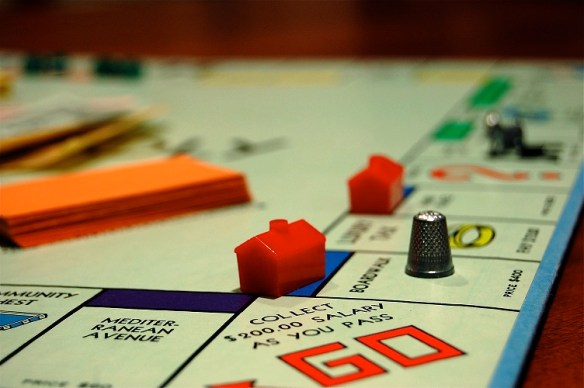
Winning Monopoly With Math!

I’m always on the hunt for tips to make myself a better puzzler and gamer. Sometimes you stumble across those tips in unexpected places.

For instance, I was reading, of all things, a book about mathematics and Christmas — The Indisputable Existence of Santa Claus: The Mathematics of Christmas — and inside, I found a statistical analysis of the best strategy for winning a game of Monopoly.

Yes, we’ve discussed this topic before, but even that previous deep-dive into the mechanics of the game wasn’t as thorough or as revealing as the work by Dr. Hannah Fry and Dr. Thomas Oleron Evans in this Christmas-fueled tome of facts and figures.

They started with a breakdown of how your first turn could go, based on dice rolls. This is the same breakdown as in our previous post, but with some important differences. For instance, they also considered the chances of going to jail after multiple doubles rolls.

Also, they covered the statistical impact of how landing on card spaces can affect where you land on your first turn. The Community Chest is a curveball, because of the possible sixteen cards, three will send you somewhere on the board: Go, Mediterranean Ave, and Jail.

A simple statistical analysis is complicated even further by the Chance cards — nearly half of the sixteen cards send you elsewhere: Go, Income Tax, St. Charles Place, Pennsylvania Railroad, Illinois Ave., Jail, and Boardwalk.

If you extrapolate forward from this point, you uncover some interesting patterns:

The orange property set benefits from all the ex-cons leaving their cells, and after their next turn the reformed criminals will likely end up somewhere between the reds and yellows… Illinois Avenue, with its own dedicated Chance card directing people to it, gets an extra boost, making it the second most visited square on the board.

The property that is visited least frequently is Park Place, where players spend just 2.1% of their time.

Check out this graph. This shows potential earnings from each complete color set, with the dotted line marking the point where your purchase of the property is canceled out by how much the property has earned in rent thus far. Everything above that is profit.

As you can see, blue and brown properties start close to the dotted line, because they’re affordable to buy and build on. The standouts on this graph are New York Avenue (which earns $30 a roll up through thirty rolls statistically) and Boardwalk, which is an expensive investment, but pays off handsomely down the line, remaining the top earning spot past thirty rolls.

Of course, that’s only single properties, and you can’t build on single properties. Let’s look at a chart for full color set revenue:

Some of our previous findings change radically. Boardwalk’s rating drops significantly, because of Park Place’s relative infrequency of being landed on (as we mentioned above).

So which properties should you nab to give yourself the best chance of winning? Well, that depends on how long the game lasts.

The average game of Monopoly takes approximately thirty turns per player, so the larger the number of players, the longer the game will last.

So, for a two-player game, your best bet is to go after the light blue or orange sets, since they’re better in the short term, and the odds are in your favor if the game stays short.

In a three- or four-player game, the orange and red sets are better, because the game is likely to last a while.

And if five or more people are playing, you’re really playing the long game, so the green set becomes your best chance for success.

What about building on those properties? Well, Fry and Evans considered that as well. If you’re playing against multiple opponents and know you’ll be in for a long game, then you definitely want to buy and place houses. But don’t fear if the first house takes a long time to start paying for itself.

As it turns out, your best strategy is to put three houses on your properties as quickly as possible, because the third house is the fastest to recoup on investment. So once the three houses are in place on each property, you can rest for a bit and regenerate your bank before investing further.

And there you have it. Better gaming through mathematics! The only thing better would be, well, playing practically any other game.

Kidding! (But not really.)


Thanks for visiting PuzzleNation Blog today! Be sure to sign up for our newsletter to stay up-to-date on everything PuzzleNation!

You can also share your pictures with us on Instagram, friend us on Facebook, check us out on TwitterPinterest, and Tumblr, and explore the always-expanding library of PuzzleNation apps and games on our website!
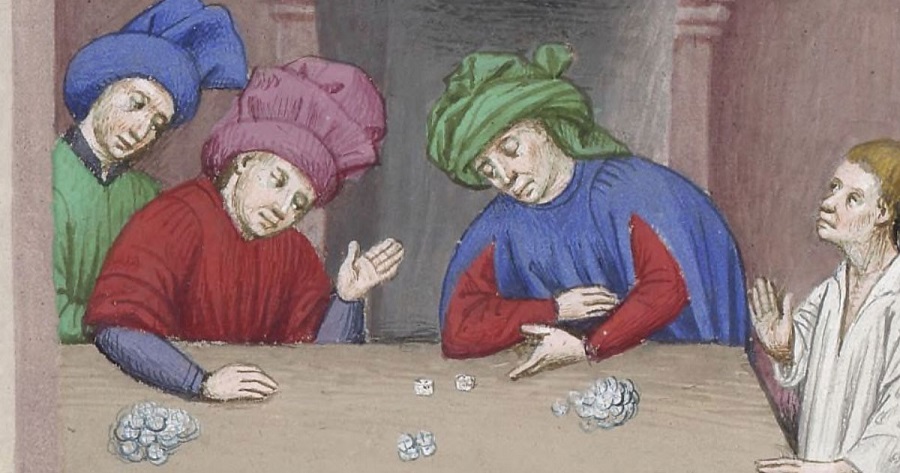
A Relatively Modern Idea: Fairness in Dice Rolling

[Image courtesy of Larsdatter.com.]

This may come as a surprise to you, fellow puzzlers, but fairness was not always a priority when it came to rolling dice.

Nowadays, whether you’re going after that elusive Yahtzee, hoping for doubles to earn another roll in Monopoly, or trying to roll sevens in a game of craps, the basic concept behind throwing dice is that every outcome of a six-sided die has an equal chance to appear. Unless you’re dealing with loaded or gimmicked dice, your odds should be 1 in 6.

But a recent study by researchers from the American Museum of Natural History and the University of California, Davis, has revealed that fairness in dice rolling didn’t really become a concern for dice users until the Renaissance. Researchers gathered dice spanning 2000 years of human history to explore why this was the case.

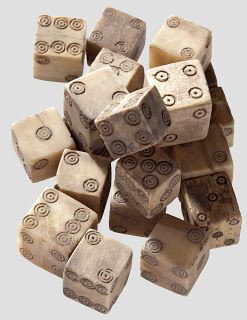
[Image courtesy of Wikipedia.]

From an article on Science Alert:

Roman-era dice, the researchers found, were a mess when it came to shape. They were made from a variety of materials, such as metal, bone and clay, and no two were shaped entirely alike. Many were visibly lumpy and lopsided, with the 1 and 6 on opposite sides that were more likely to roll up.

In fact, it seems like variety was the name of the game in Roman times, since the number configurations, shape, and size were inconsistent across the board, although dice were fairly common in the time period.

[Image courtesy of Pinterest.]

The Dark Ages led to a downturn in dice frequency, as they become very rare between the years 400CE and 1100CE.

The use of dice rebounds after 1100, and are most commonly found in ancient Mesopotamia and Egypt in what is known as the primes configuration, meaning that opposite numbers add up to prime numbers. 1 pairs with 2, 3 pairs with 4, and 5 pairs with 6.

There was a reinvigorated focus on the mechanics of chance and calculating probability, thanks to names like Galileo and Pascal, as well as a spirit of greater scientific understanding overall. Those Renaissance influences led to both a standardized shape for dice and a change in the numbering system. At this point, most dice convert to the sevens configuration, where opposite sides add up to seven (1 pairs with 6, 2 pairs with 5, and 3 pairs with 4).

[Image courtesy of Smithsonian.com.]

And according to lead researcher Jelmer Eerkens, cheating may have been on the mind of manufacturers going forward. “Standardizing the attributes of a die, like symmetry and the arrangement of numbers, may have been one method to decrease the likelihood that an unscrupulous player had manipulated the dice to change the odds of a particular roll.”

That change from variable shapes, sizes, and designs reflects a sea change in thinking towards dice and chance. Before, the shape didn’t matter because the results were attributed to Fate or some greater outside force, but later on, an understanding of chance and probability pushed standardization of dice forward.

In the end, it’s amazing how much of our culture and worldview, both past and present, can be revealed by exploring how we solve puzzles and play games.


Thanks for visiting PuzzleNation Blog today! Be sure to sign up for our newsletter to stay up-to-date on everything PuzzleNation!

You can also share your pictures with us on Instagram, friend us on Facebook, check us out on TwitterPinterest, and Tumblr, and explore the always-expanding library of PuzzleNation apps and games on our website!

Monopoly: Pondering the New Cheaters Edition

Monopoly is probably the most famous branded board game in the world. (I include the word “branded” because you can easily argue that Chess or Go or Mah-jongg are equally famous and/or played by as many people.)

There are hundreds of themed variations covering everything from state landmarks to Star Wars. It seems like everyone owns a copy of the game, even if it doesn’t seem to be all that popular these days.

Maybe that’s because we play it wrong. After all, in the instruction book, it plainly states that if a player lands on an unowned property and doesn’t wish to buy it, it immediately goes to auction to the highest bidder. Did you ever play with that rule? It certainly seems like it would speed things up!

And did you know that Edward Parker, former president of Parker Brothers, was quoted as saying that forty-five minutes was the appropriate length for a game?

Forty-five minutes? I can’t remember a single Monopoly game that lasted fewer than two hours.

Then again, maybe it doesn’t matter anymore. Things are about to change. The game is in the news once more after the announcement that Hasbro will be releasing a Cheaters Edition of the game.

[Cheaters that get caught are handcuffed to the board itself!
Image courtesy of USA Today.]

You might consider this to be a shameless attempt to cash in by being “edgy” or lean on cynicism already rampant regarding a game that seems to encourage selfish capitalist choices. That has certainly been the reaction of some game enthusiasts on the Internet.

I read a comment on Facebook where someone was disillusioned by this news, since “by buying this, you acknowledge that you’re playing a board game with someone who is likely enough to cheat that you bought a special version of the game with that exact expectation.”

The commentor went on to share his disappointment in the idea that “your response to that person cheating is not to stop playing games with them, but instead is to shame them by clipping them to the board game as though that were somehow more shameful than getting caught cheating your friends in a game with literally zero at stake.”

That’s certainly one way to look at it — though I suspect that’s partially colored by the fact that this person clearly didn’t enjoy the game in its original form to begin with.

[Image courtesy of Grey Mass Games.]

Of course, there’s an alternative view, one that encourages crafty gameplay over the monotonous steamrolling that many of us experienced in the past with a game like this. (Who doesn’t remember landing on the developed property of an older sibling and getting taken to the cleaners?)

Instead, the game encourages you to think outside the box. In that way, it could become something more akin to a poker game with tells and bluffing, or the casual manipulations you’d find in a round of Sheriff of Nottingham.

According to USA Today, “the game features naughty tasks to complete, such as skipping spaces or removing another player’s hotel from their property without them noticing.”

Since the game’s not out yet, we don’t know how far you’re allowed to go with your chicanery.

I’m sure some players will try to take more than $200 when they pass Go, but what about…?

  • Can you hide cash up your sleeve in order to avoid playing more Luxury Tax at 20%?
  • Can you gaslight players into forgetting that you mortgaged that property, flipping it over and collecting rent on it once more?
  • Can you bribe other players into letting you pass through their properties without paying?
  • CAN YOU SOMEHOW CHARGE FOR FREE PARKING?

[Image courtesy of Monopoly.wikia.com.]

We’ll have to wait and see.

Will you be picking up the Cheaters Edition of Monopoly, fellow puzzlers? Let us know in the comments section below!


Thanks for visiting PuzzleNation Blog today! Be sure to sign up for our newsletter to stay up-to-date on everything PuzzleNation!

You can also share your pictures with us on Instagram, friend us on Facebook, check us out on TwitterPinterest, and Tumblr, and explore the always-expanding library of PuzzleNation apps and games on our website!
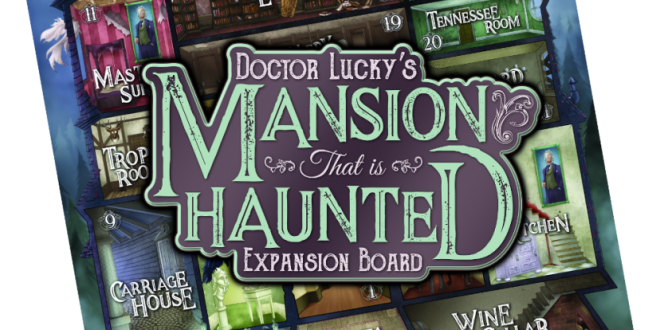
PuzzleNation Product Review: Doctor Lucky’s Mansion That Is Haunted

[Note: I received a free copy of this game in exchange for a fair, unbiased review. Due diligence, full disclosure, and all that.]

Some board games are known for their iconic characters. You know the Monopoly guy, all the folks from Candyland, the mouse from Mouse Trap, the cast of suspects from Clue, and more. But one of the flagship characters from Cheapass Games might be new to you. His name is Doctor J. Robert Lucky, and players have been trying to kill him for twenty years now.

The game Kill Doctor Lucky has taken many forms over the decades — including several versions where players tried to save the infamous doctor instead — but the newest variation takes things in a spookier direction.

In today’s review, we look at Doctor Lucky’s Mansion That Is Haunted.

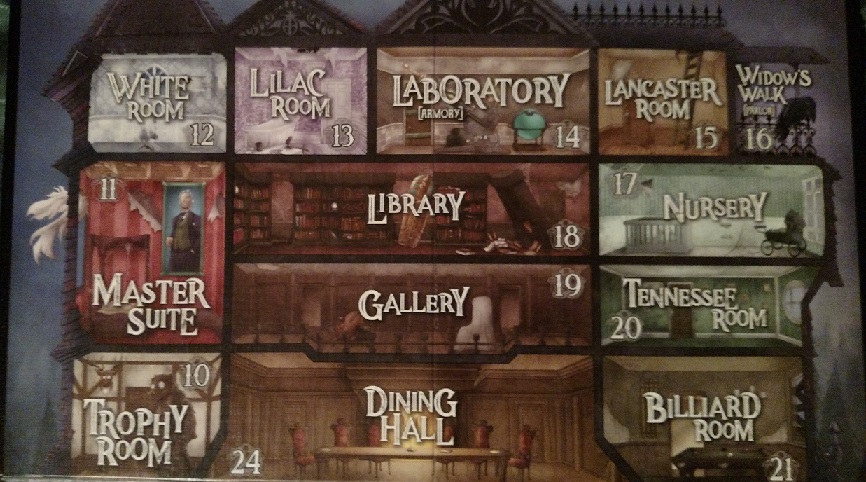
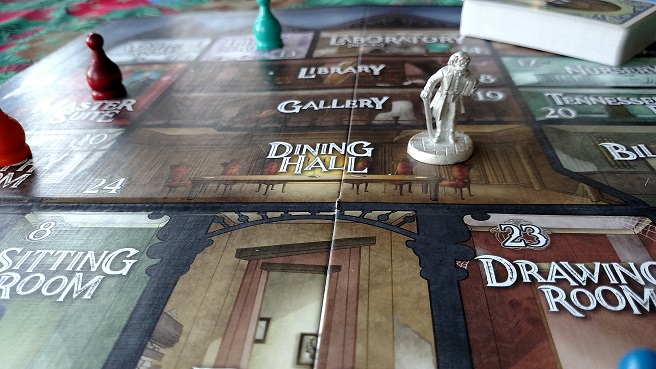
[Just half of the new game board.]

This expansion includes a new game board and new instructions, but that’s all; everything else you need to play is contained in the Deluxe 19.5th Anniversary Edition of Kill Doctor Lucky, including cards and tokens.

The endgame is also the same: kill Doctor Lucky before another player does. And while the same rules apply — you have to be alone in the room with Doctor Lucky and out of sight of every competitor — this expansion adds one curious wrinkle: all of the players are ghosts.

You see, in Doctor Lucky’s Mansion That Is Haunted, Doctor Lucky is trying to sell off his famous mansion, but the ghosts who also reside there wish for Doctor Lucky to stay, and they’ll go to any lengths to keep him around.

And you might not think that one curious wrinkle could radically change a game, but you’d be wrong. The fact that you’re a ghost means you can pass through walls, ceilings, and floors. That is a huge alteration in both strategy and game mechanics.

You can more quickly maneuver into a room with the Doctor, but you can also thwart your opponents by sneaking into a neighboring room and spoiling their murder attempt by observing the proceedings through an open door.

After all, it saves a lot of time to pass through a wall instead of leaving a room, moving down the hall, and entering the next. (Passing between floors is an even bigger time saver! Slipping through the ceiling and dropping in on someone is a marvelous feeling.)

Factor in the secret portals connecting several of the rooms, and suddenly the mansion is much more accessible.

This expansion harkens back to the early days of Cheapass Games — when they would send you the necessary pieces for their game and encourage you to harvest the extra bits (like dice and tokens) from games you already owned, thereby saving money all around — while adding new touches and revitalizing a game you already know quite well.

Plus, if Kill Doctor Lucky seems less family-friendly than you’d prefer, you can always call this Spook Doctor Lucky and give it a Scooby-Doo-esque twist.

Doctor Lucky’s Mansion That Is Haunted (and the Deluxe 19.5th Anniversary edition of Kill Doctor Lucky) are available from Cheapass Games. And the expansion is also featured in this year’s Holiday Puzzly Gift Guide!


Thanks for visiting PuzzleNation Blog today! Be sure to sign up for our newsletter to stay up-to-date on everything PuzzleNation!

You can also share your pictures with us on Instagram, friend us on Facebook, check us out on TwitterPinterest, and Tumblr, and explore the always-expanding library of PuzzleNation apps and games on our website!

Birds have a monopoly on Monopoly!

monopoly

The folks at Monopoly are constantly trying new things in order to stay relevant in today’s ever-evolving game market.

When they celebrated Monopoly’s 80th anniversary in 2015, some of the games were sent out with real money instead of Monopoly money, which is a fantastic idea to promote the game.

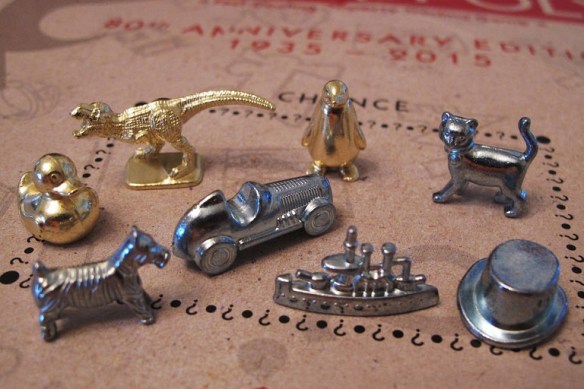
In 2013, though, they tried something different, offering a more permanent change. They replaced the token of the iron with a token of a cat. Hazel the Cat. I was less enthused with this change.

But, hey, it’s just one token. No big loss. You’ve still got Scottie the dog, the thimble, the race car, the boot, the battleship, the wheelbarrow, and the top hat.

zr3dxm4wrz9r0cjlmmpk

[Image courtesy of Gizmodo.]

Well, that’s no longer the case.

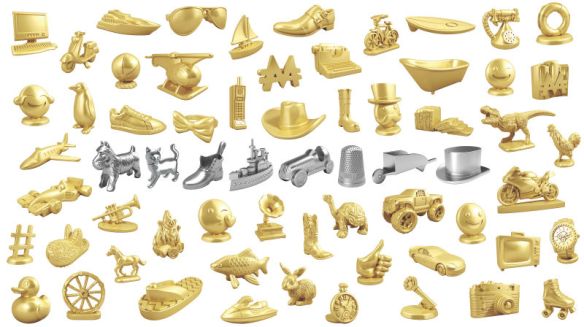
Back in January, Hasbro launched an Internet poll to determine a new lineup of tokens for editions of the game going forward. You could vote to keep the current lineup, or you could select nominees from a list of dozens of possible replacements.

Those potential replacements included a goldfish, a trumpet, a telephone, a monster truck, a life preserver, a beach ball, a set of cufflinks, a bulky old cellphone, a bunny slipper, and several emoji faces.

Hasbro announced the results of their poll, and several of the original tokens didn’t make the cut.

bn-sn614_0317th_j_20170317191408

[Image courtesy of The Wall Street Journal.]

That’s right. Not only did Hazel the Cat stick around — ugh! — but the boot, the wheelbarrow, and the thimble are gone.

They’ve been replaced with a rubber duck, a penguin, and a Tyrannosaurus rex.

Now, let’s be fair. A T-rex token is awesome. I can get behind that. But a rubber duck and a penguin? Were all the voters really really into Batman Returns or something? (As they pointed out on Gizmodo, all of the winners are weird birds.)

Granted, I for one am grateful that none of the stupid emoji characters — like the crying-laughing face or the smooch face — made it into the game.

But to see the thimble go hurts. I conducted an informal poll among my fellow game fans and puzzlers, and the thimble and Scottie the dog were far and away the most popular.

Oh well. At least now there’s the option for a rule about a T-rex stomping someone’s house and causing property damage. That would be one heck of a Chance card.


Thanks for visiting PuzzleNation Blog today! Be sure to sign up for our newsletter to stay up-to-date on everything PuzzleNation!

You can also share your pictures with us on Instagram, friend us on Facebook, check us out on TwitterPinterest, and Tumblr, and explore the always-expanding library of PuzzleNation apps and games on our website!
Puzzle Romance!

puzzlelove

Hello there, fellow puzzlers and PuzzleNationers!

It’s Valentine’s Day, and in lieu of our usual post touting different ideas for celebrating love in a puzzly way — since it’s a bit short-notice for those ideas — we thought we’d share some of our favorite tales of puzzle romance.

(Of course, if you ARE looking for ideas, you’re welcome to click here. Just saying.)

escalators1

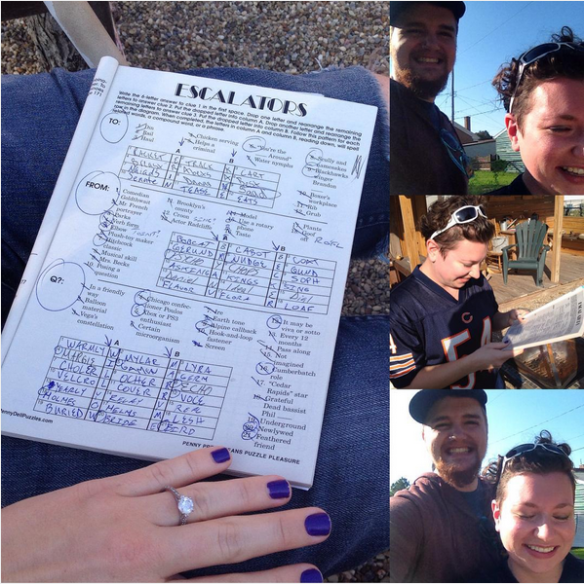
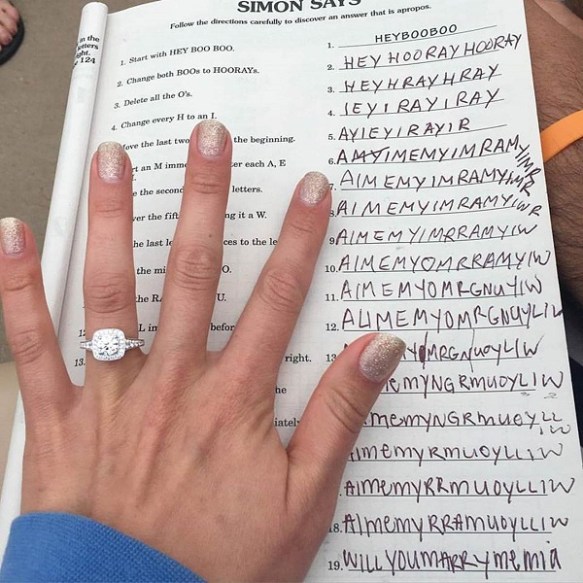
In the past, I’ve had the privilege of reporting on two puzzly proposals that were quite brilliantly facilitated by our friends at Penny Dell Puzzles. Each time, the gentleman in question — both times named Bryan, oddly enough — asked that the proposal be hidden in a favorite puzzle, slipped into one of their puzzle books. The first time, it was Escalators, the second, Simon Says.

Both times, the plans were executed to perfection, and both times, the lovely fiancees-to-be said yes.

weddingpost1

(We’ve also previously shared the stories of proposals couched in a game of Monopoly and a Rubik’s Cube.)

But my favorite story of puzzle romance involves two friends of mine who are both devotees of cryptic crosswords. (For the sake of anonymity, I’ll call them Carol and George.)

Carol and George are one of those brilliantly matched couples that makes you smile just thinking of them. Marvelously compatible interests and senses of humor and general weirdness that makes relationships worthwhile.

George had several gifts picked out for Carol, but he wanted to surprise her with a little something extra, a bit of diabolical sweetness only a true puzzle devotee would love.

So, before Carol received each small token of affection, she was given a cryptic crossword (also known as a British-style crossword) clue to solve. Cryptic crossword clues involve both cunning wordplay and a definition. The number after the clue provides the number of letters in the answer word.

cryptic

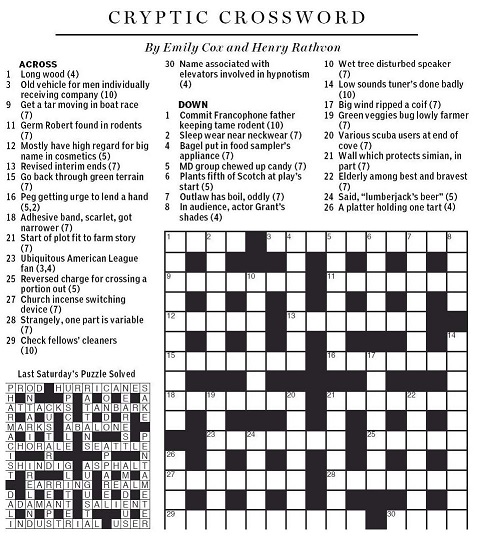
[A cryptic crossword by constructors Cox and Rathvon,
courtesy of National Post Cryptic Crossword Forum.]

Here are the clues George created. Hopefully you can figure out the answers just as Carol did!

Really glitchy web address loaded between Tuesday and first of year (5)

Found, amidst mishap, pyramid’s content (5)

Begin tortured existence (5)

Thine enemy, in the end, belonging to us both (5)

Plus, there’s an added bonus: the four five-letter answers, when placed in order, form a phrase.

Hopefully, there will be some wonderful new stories of puzzle romance to come. Maybe even tonight! If you have a story to share, comment below! We’d love to hear it!


Thanks for visiting PuzzleNation Blog today! Be sure to sign up for our newsletter to stay up-to-date on everything PuzzleNation!

You can also share your pictures with us on Instagram, friend us on Facebook, check us out on TwitterPinterest, and Tumblr, and explore the always-expanding library of PuzzleNation apps and games on our website!