The Riddle of the Two Guards

Hey there, fellow puzzler. Stop me if you’ve heard this one before:
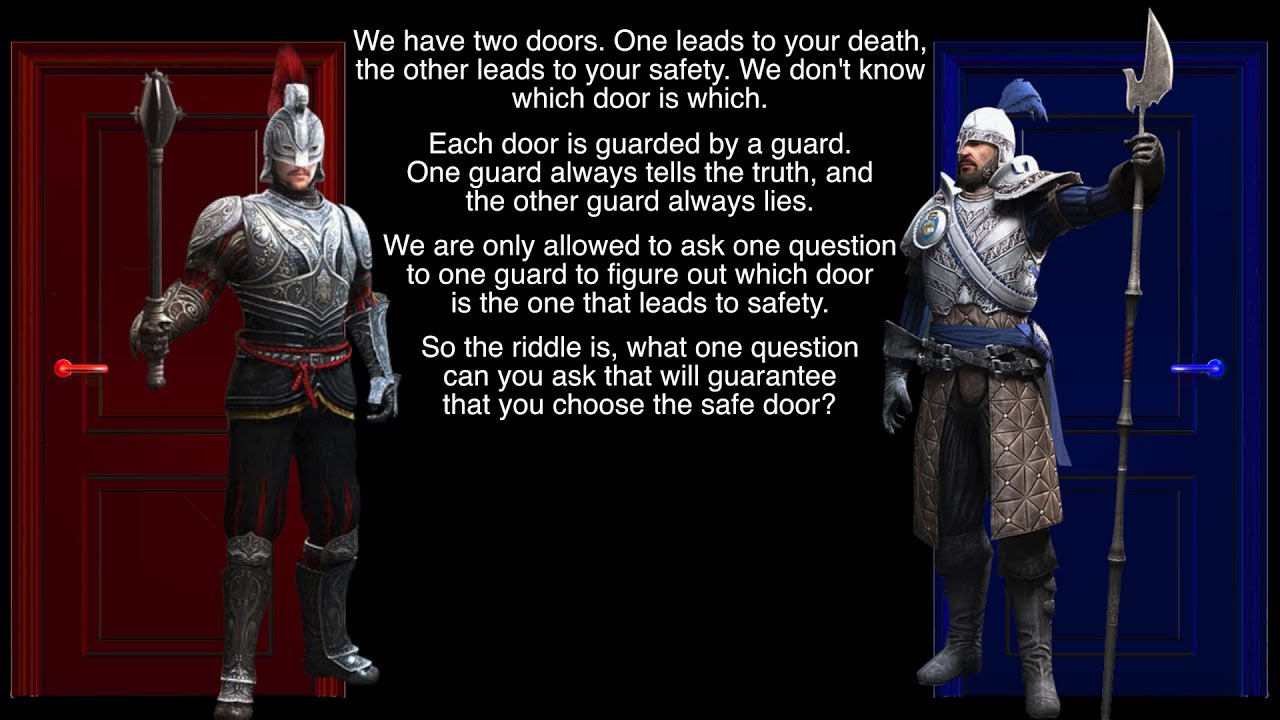
Ah yes, the riddle of the two guards. Also known as the two doors puzzle, the two guards/two doors puzzle, and, my personal favorite, that awful crap riddle.

It’s easily the most famous example of a Knights and Knaves logic puzzle, which all work off the idea of individuals who always lie or always tell the truth, and a solver who needs to deduce how to proceed.

I think the best and most colorful presentation of the riddle was in the film Labyrinth, thanks to Jennifer Connolly and some very lovely puppetry:

I’ve always wondered about this riddle. Is there a sign posted that explains the rules? Because otherwise, you’d assume the guard who tells the truth would have to explain the rules…

Unless the one who lies tells you the rules, which are a lie, and it’s a trap and you’re totally screwed!

Geez, this is getting complicated already.
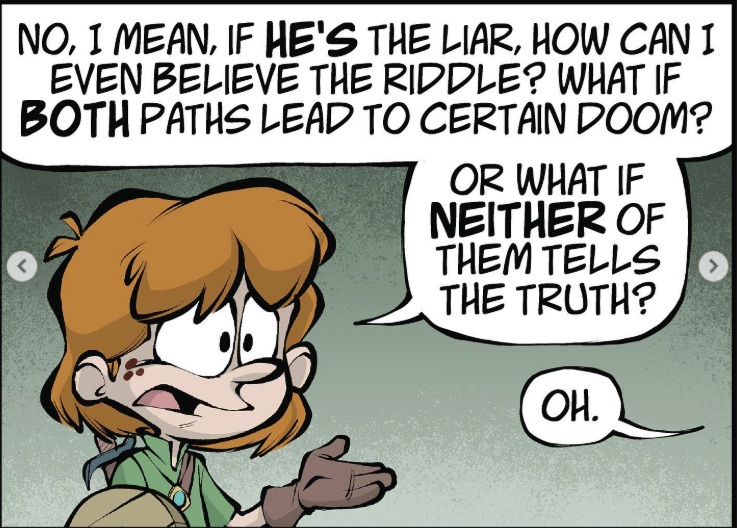
Oh good, I’m not the only one who agonizes over this sort of thing. Image courtesy of Crabgrass Comic.

Let’s assume the rules are fair. There’s a guard who always lies and a guard who always tells the truth, and you need a single question to root out which door is the safe one to enter.

The traditional answer is to ask one guard which door the OTHER guard would say leads out.

But what if one of the guards is INVISIBLE?!

If the guard you asked is the one who lies, then he will lead you astray by telling you (falsely) that the other guard—the truthful guard—will point you towards door B. This makes door A the safe bet.

If the guard you ask is the one who tells the truth, he will tell you (honestly) that the other guard—the lying guard—will point you towards door B. This makes door A the safe bet.

In both cases, the outcome is the same: walk through the opposite door.
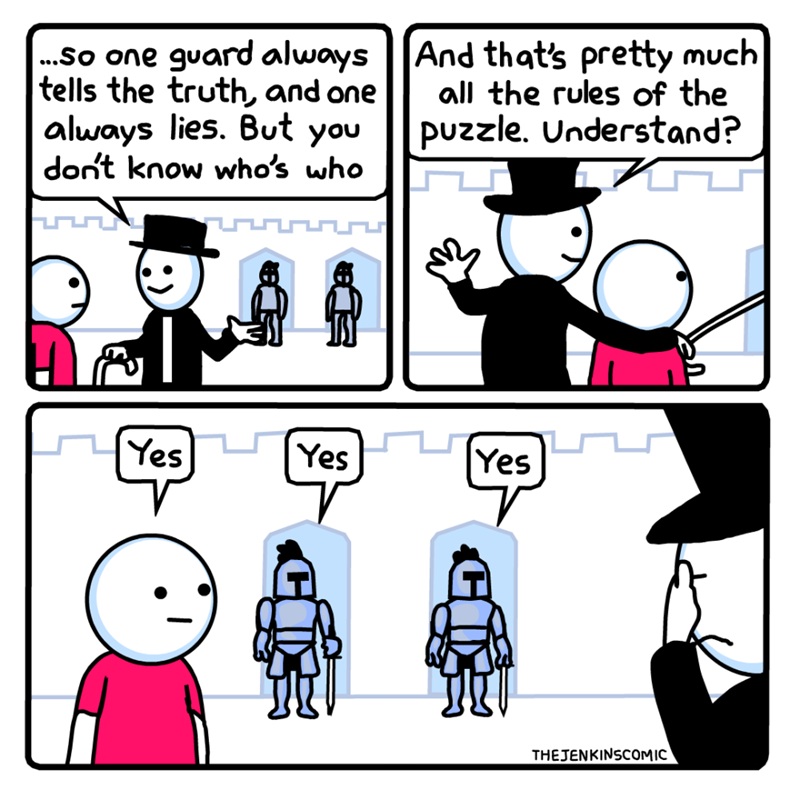
Naturally, people have tried to find ways around this.

Some suggest that you ask the guards to walk through their respective doors and report back what they see. I don’t know that this would work, because it’s not clear if the guards would have to follow your orders. Also, we don’t know if certain doom for US would be certain doom for the guards. If they both walk out totally fine, it probably won’t work.

For another option, you can act in typical Dungeons and Dragons-fueled fashion and use what I call the direct approach:
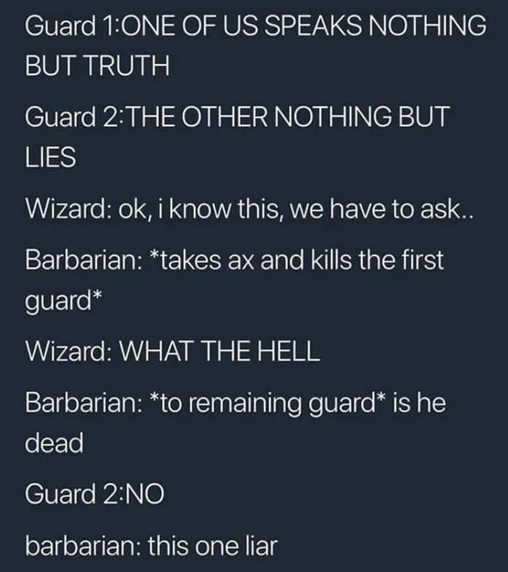
But unfortunately, it misses the meat of the riddle. It’s not just knowing which guard lies and which guard tells the truth, it’s about knowing which door to take as well.

Of course, if you believe the folks at XKCD, there are consequences for cleverness as well:
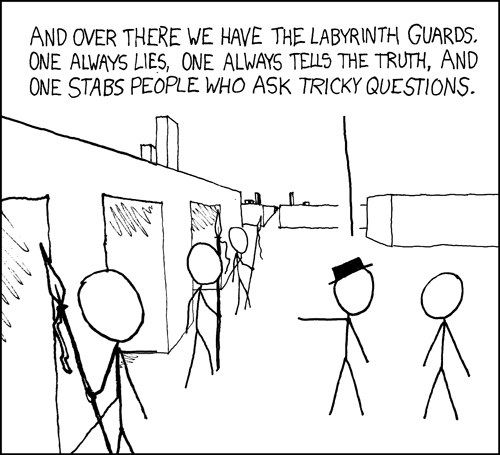
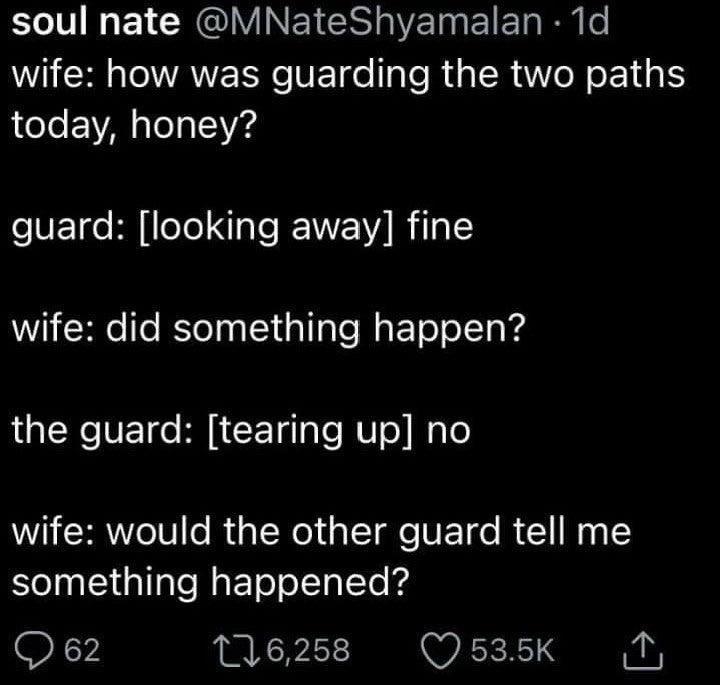
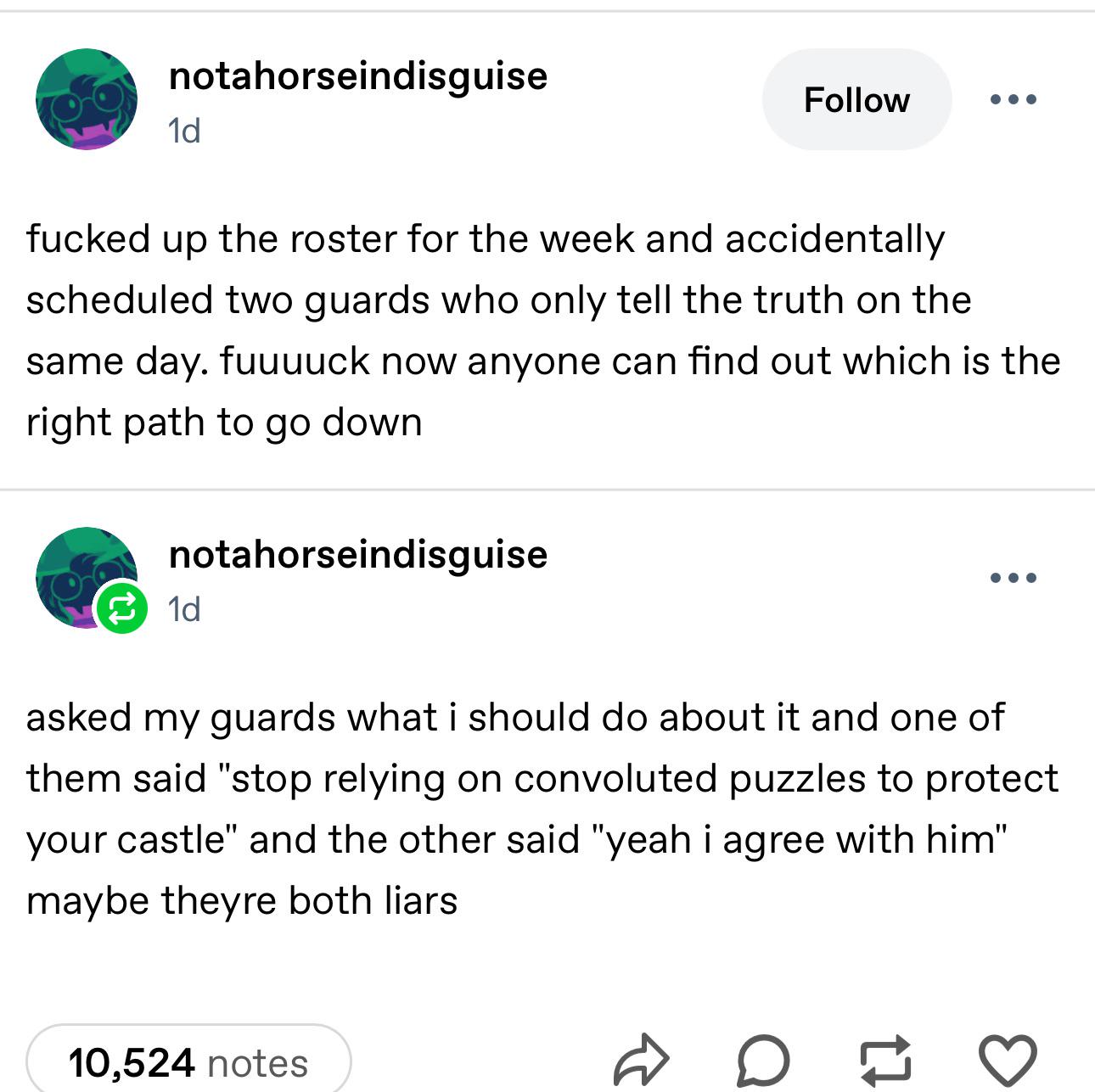
Although it is a riddle easily given to weasel words and pedantry, it has led to some wonderful comedy.

This joke, for instance, gives us some much-needed backstory to the guards and their current circumstances:
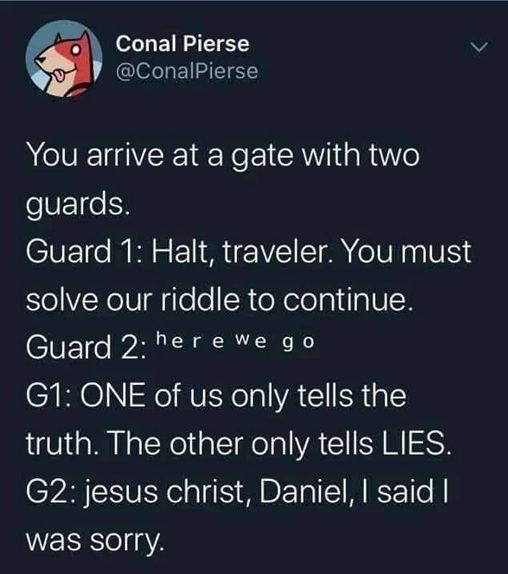
In a similar vein, this one lets us see one guard’s life after clocking out for the day:
I also enjoy this one, which ponders what sort of person would employ a riddle like this as a security measure in the first place:

So I put it to you, fellow puzzler: how would you tackle the riddle of the two guards? Labyrinth style? Barbarian style? Or have you conjured up a different question to ask the guards?

Let us know in the comment section below. We’d love to hear from you!

A New Medium for Optical Illusions: Quilting?

Optical illusions are puzzles for the eye, a visual treat that tricks you into seeing things that aren’t there. These inspired bits of perceptual trickery can fool you into thinking near is far, big is small, or two dimensions are really three.

The advent of computers has helped push the boundaries of optical illusions, with eye-catching tessellations and visual effects that confuse the eye into thinking they see moving objects or impossible figures.

This makes it all the more impressive when people can accomplish the same in a purely physical medium.

Like quilting.

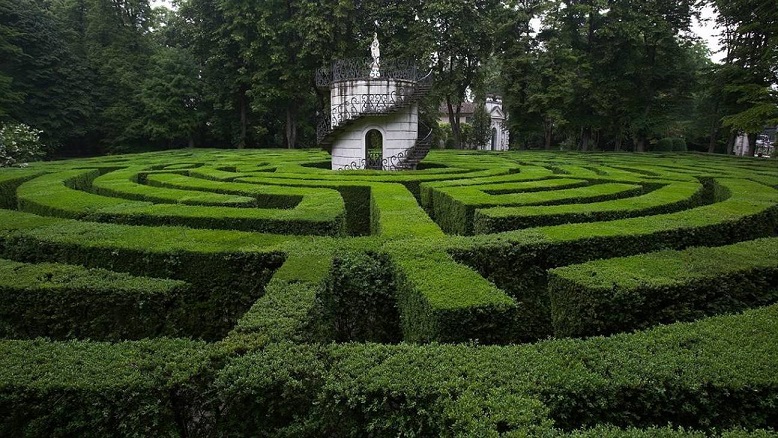
People accomplish some amazing designs with quilting, like this labyrinth quilt:

The dimension in this one is fantastic. (Though the puzzle nerd in me must point out that it’s not exactly solvable. Even to a minotaur.)

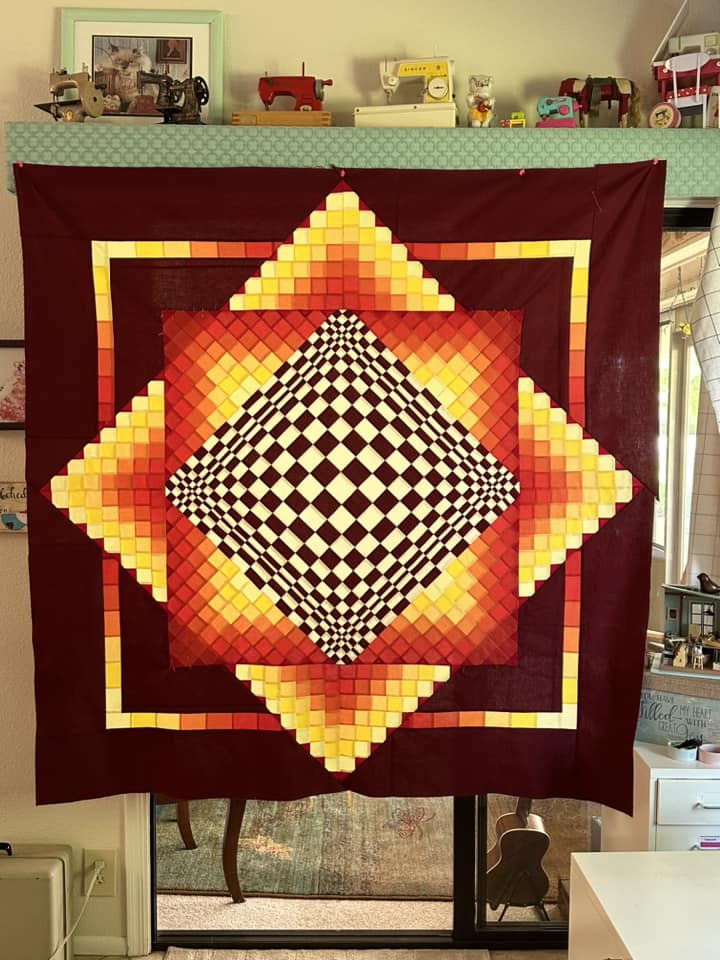
And then there’s this eye-popping wonder:

I can only imagine the amount of work required to get all of those squares cut and positioned the right way to create that bulging illusion in the middle of the checkerboard pattern. Talk about ambitious!

Quilts like those above are incredible efforts. But they feel doable. They feel natural when you look at them, even as they wow you with their exacting detail.

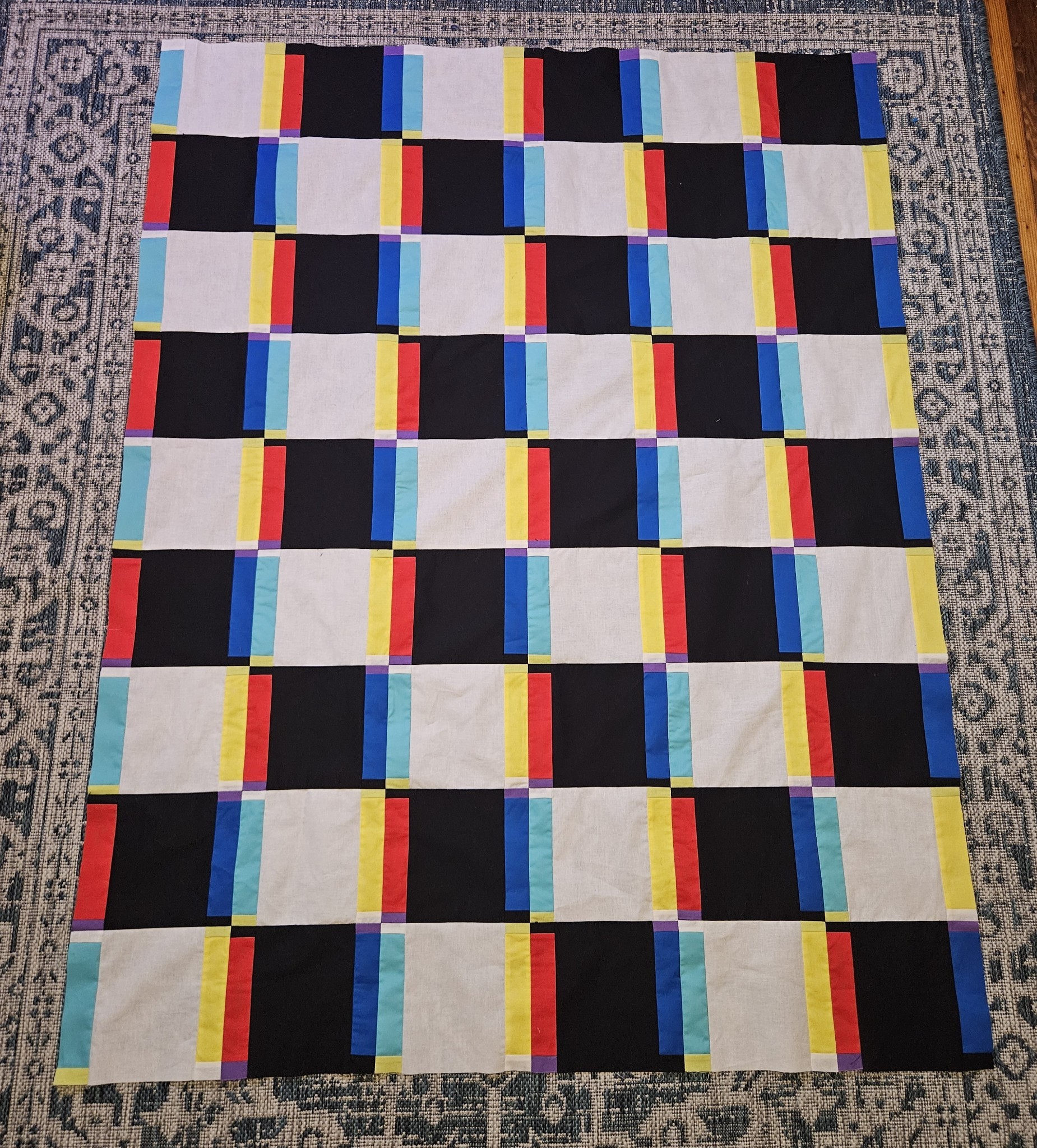
But nothing has amazed me quite as thoroughly as this glitch quilt pattern designed by Modern Groove Quilts.

The precision and color play required to create this illusion is a mathematical wonder.

It’s literally hard to look at! My eyes keep protectively sliding away from the design just to prevent my brain from struggling with it.

It feels like my computer screen is malfunctioning.

Using a rug as a backdrop is one thing, but in the wild, where nature is crisp and clear and the quilt appears blurry, it’s a baffling visual experience.

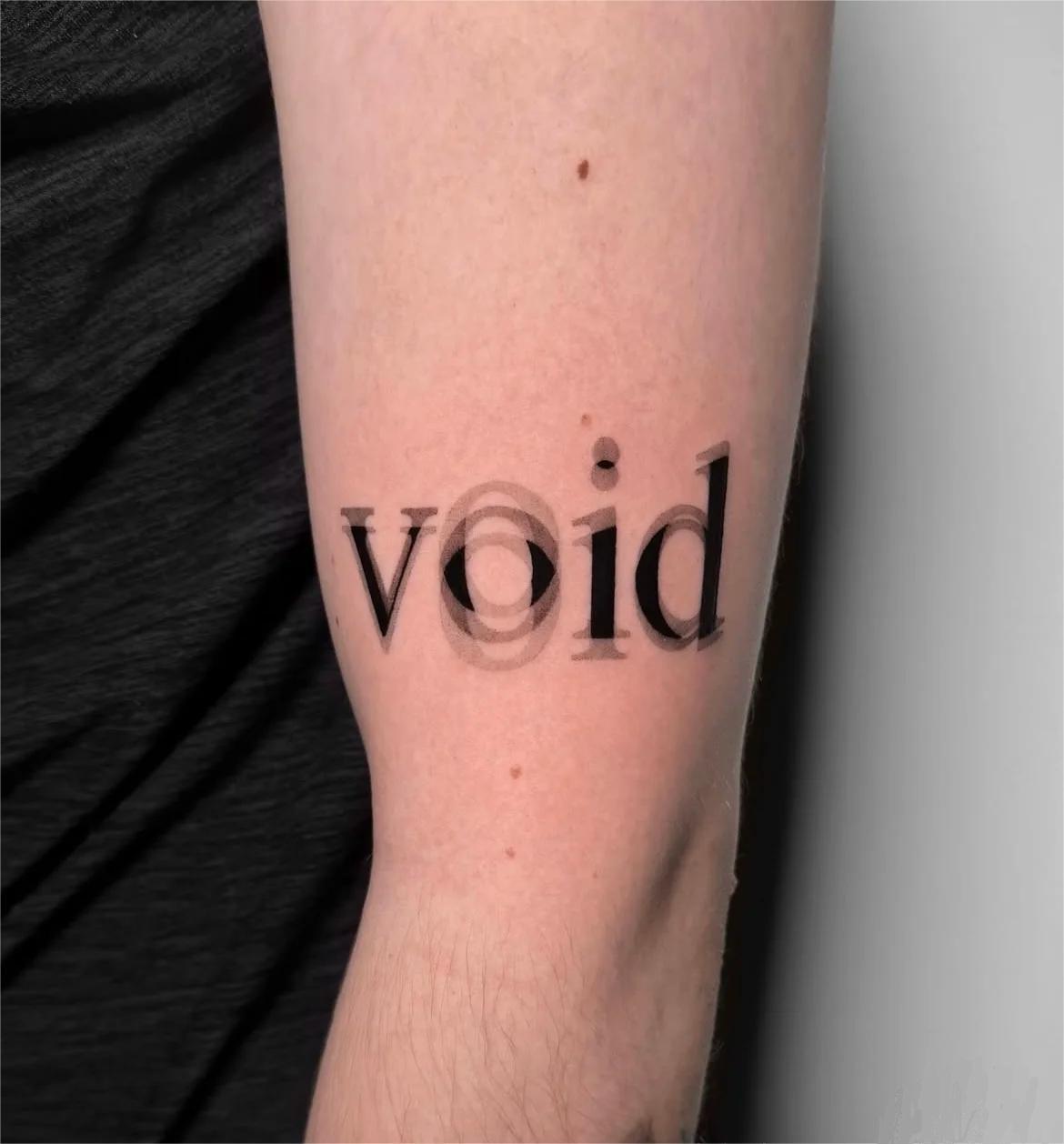
The only thing I can liken it to? This tattoo that looks blurred but isn’t:

These artistic, handmade optical illusions really show that, computer-assisted or not, it’s the ever-evolving ingenuity of creators that keeps the world full of wonder and creative achievement.

Now everyone, go stare at something boring and rest your eyes for a while.

(Oh, and check out the other patterns available from Modern Groove Quilts!)

Happy puzzling, everyone!

Minotaurs Don’t Make Sense?

When you think of mazes, there’s probably no figure more iconic than the legendary minotaur.

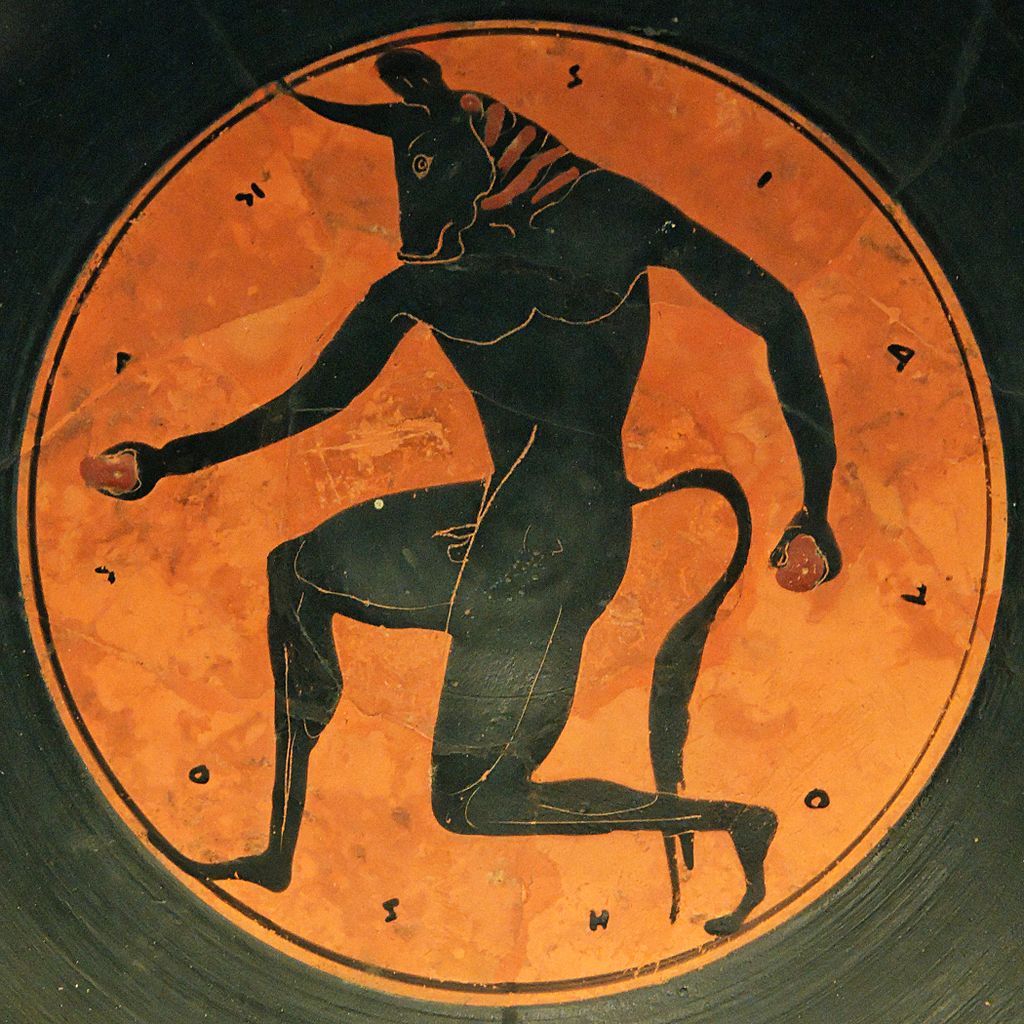
The Bull of Minos — the direct translation of “minotaur” — called an elaborate labyrinth on the island of Crete home. This labyrinth, built by Daedalus, was said to be inescapable.

Even if you’re not a fan of Greek mythology, you probably know the basics of the story. Unsolvable maze. Half-man, half-bull. It’s all pretty simple.

So you can imagine my surprise when I stumbled upon not one, but TWO different videos talking smack about one of my favorite mythical creatures!

The first one discussed the intelligence of the minotaur:

Now, a very simple misconception lay at the heart of this video. The speaker is conflating two different definitions of labyrinth.

The first is the traditional idea of an elaborate maze full of intricate passageways, blind alleys, and torturous complexity.

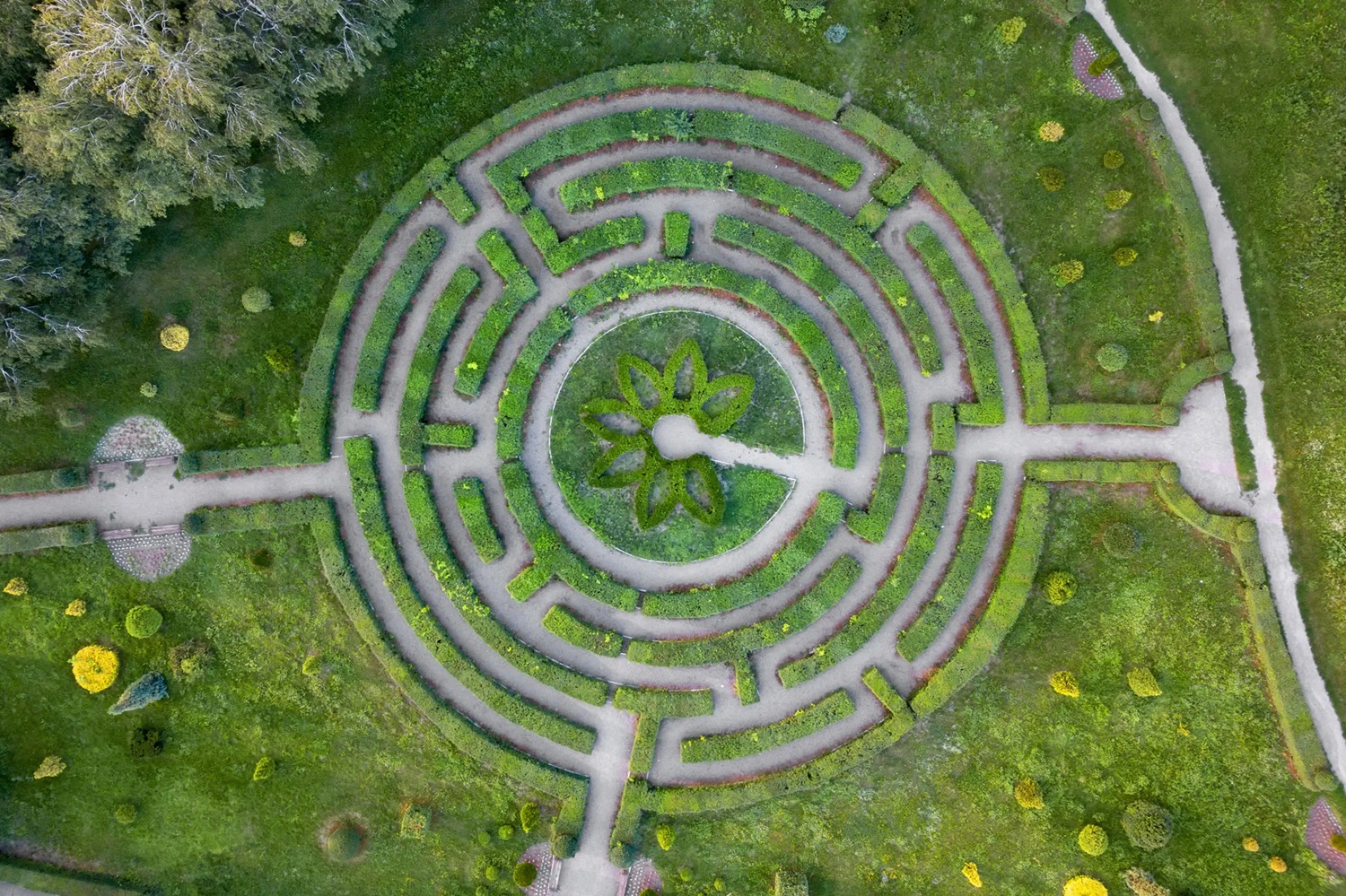
The second refers to labyrinth gardens, which are designed to be walked slowly, meditatively, and take you on a journey through a series of paths and concentric circles, but one that can be easily navigated or escaped. None of the trickery or challenge of a traditional labyrinth.

So when the above video claims that a minotaur would have to be pretty stupid to fail to escape the labyrinth, they’ve got the wrong labyrinth in mind.

This brings us to the second video of the day, which discusses how minotaurs have been adapted for the Dungeons & Dragons roleplaying game:

The speaker claims that D&D’s minotaurs don’t make sense, since they “can never get lost in a maze and will always find a way out.”

So, I went to verify what he said.

He referred specifically to the 5th edition version of the minotaur, so I checked both the 5th edition Monster Manual and the Monsters of the Multiverse sourcebook released later.

In the MM, all I find is this: “the minotaur can perfectly recall any path it has traveled.”

So what? There are a LOT of paths in a labyrinth, and remembering which ones you’ve walked doesn’t necessarily make you better at finding your way out.

Plus, how long is a path? How is the start or end of a path defined? Maybe our life is one LONNNNNG path, and he’s gotta recall ALL of it?!

Image courtesy of Wikipedia.

This ability is restated in the Monsters of the Multiverse book as “you always know which direction is north”. That’s it. Cool. That’s great for navigation, but also not terribly helpful when it comes to solving mazes.

So I’m not really sure where he’s getting the whole “effortlessly defeats mazes” thing. I mean, the original Minotaur never bested the labyrinth. He was killed by Theseus there.

But, for the sake of thoroughness, I grabbed my 3rd edition Monster Manual off the shelf to see what it had to say about minotaurs.

The book states that minotaurs can’t ever become lost and are “immune to maze spells” (which banish someone to an extradimensional labyrinth).

“Can’t ever become lost” is incredibly open to interpretation. Does it always know the way out of a place? Or does it always know WHERE it is in a vague sense? There’s a big difference between knowing where the exit of a labyrinth is and simply knowing you’re in a labyrinth.

Like, if I know I’m in New York City, does that mean I have any idea where I’m going? Not necessarily.

Image courtesy of Do You Maze.

So, where does this leave us?

Well, in short, it tells me that people don’t necessarily know what a labyrinth is or what it means to have the skills of a minotaur.

After all, do we know if the original Minotaur ever really wanted to leave? He got regular deliveries of food, and was otherwise left to his own devices.

Doesn’t sound so bad, really. Anyone know a labyrinth that’s hiring right now?

A Labyrinth of Curiosities

The Museum of Jurassic Technology in Culver City, Los Angeles, has been described as labyrinthine, with its dimly lit, densely populated corridors. Whereas many might think of a labyrinth as something to solve, a challenge to puzzle their way through, the museum will not reward you for seeking a definitive path through its halls. The message of this small building packed with glowing dioramas; wall-mounted phones; ghostly, operatic wailing; a rooftop, dove-flocked garden; and countless other gems, is that there are many true paths and many contradictory realities in the world.

Please do not saw through the walls of the museum.

A 2018 profile of the museum argues that your visit will be most fulfilling if you “lose yourself,” not if you find your way. No need to mimic Theseus—the mannequin hands displaying cat’s cradle configurations on the second floor have the only string you’ll need on this journey.

Even the most intricate, bedeviling maze has walls, some kind of structure to give your lost wandering a shape. The Museum of Jurassic Technology is no exception, grouping its exhibits according to five thematic categories: Pins and Needles, Shoes and Stockings, Body Parts and Secretions, Thunder and Lightning, and Insects and Other Living Things. A wide range of curiosities inhabit this taxonomy, from skulls and horns, to plaques bearing folk wisdom about bees, to photographs of the dogs that the USSR sent into space. One room appears almost to pulse with vibrant stereofloral radiographs “revealing,” according to their accompanying description, “unexpectedly complex internal architecture and graceful geometries, [and reminding] us of jellyfish or gothic cathedrals.”

Another room is papered in letters supposedly written to Mount Wilson Observatory. Eight years ago, when I finished touring the museum for the second day in a row, I purchased from the gift shop a bound collection of these letters, entitled No One May Ever Have the Same Knowledge Again. Fittingly, I have always struggled with where in my own home library’s categorical structure to place this book—Science? Urban studies? Science fiction? Inevitably, I always capitulate to slotting it in alongside poetry books, naming poetry a kind of grab-bag genre and also honoring the beauty of lines from the letters like, “The moon is a sphere and it works the clouds by night; it is not a Planet, & should not be interfered with.”

Please do not eat the Moon.

Whether any of these letters were ever actually written to Mount Wilson Observatory is a mystery, as is the question of whether the Italian opera diva highlighted in one exhibit ever lived to sing a single aria. Lawrence Weschler’s book Mr. Wilson’s Cabinet of Wonder: Pronged Ants, Horned Humans, Mice on Toast, and Other Marvels of Jurassic Technology is an enthralling work of investigation into the museum—its background, its design, its veracity. And not for lack of admirable effort, the book offers little to no conclusive evidence one way or the other as to how rooted in fact the exhibits, altogether, may be.

A one-star review of the museum on Tripadvisor ends, “I wish I’d stayed home and read the newspaper instead.” If some semblance of fact-checking and predictable, familiar organizational categories is important to you, then yes, the newspaper might be preferable to taking a trip to this dimly lit cabinet of wonder. If, in contrast, you want to feel like the Minotaur, lost in a labyrinth and caught between realms (human and animal, factual and fantastical), then the Museum of Jurassic Technology is the perfect destination. While the museum did temporarily close down during the early stages of the pandemic, admission is now available via advance appointment Thursday through Sunday. If you’re ever in Los Angeles, go ahead; resist the urge to solve the maze or the mysteries and plan to lose yourself instead.


You can find delightful deals on puzzles on the Home Screen for Daily POP Crosswords and Daily POP Word Search! Check them out!

Thanks for visiting PuzzleNation Blog today! Be sure to sign up for our newsletter to stay up-to-date on everything PuzzleNation!

A Labyrinth of Stone and Puzzly Invention

Many artistic and creative endeavors have a puzzly element to them. But it’s hard to think of one more intricate and puzzly than the construction of dry stone walls and structures.

Dry stone walls are built without mortar, relying entirely on careful selection and placement of stones that interlock and reinforce each other. Anyone who has ever enjoyed a game of Tetris, solved a brain teaser about fitting pieces into a particular space, or packed a bag for a long vacation has engaged in this sort of puzzling.

But dry stone structures put those piece placement skills to the test. They’re load-bearing collaborations.

Stone creations built in this manner can be found all over the world, from the English countryside to the mountainous heights of Machu Picchu.

But in the Dalby Forest, inside North York Moors National Park in England, ambitious puzzlers are taking this marvelous endeavor a step further.

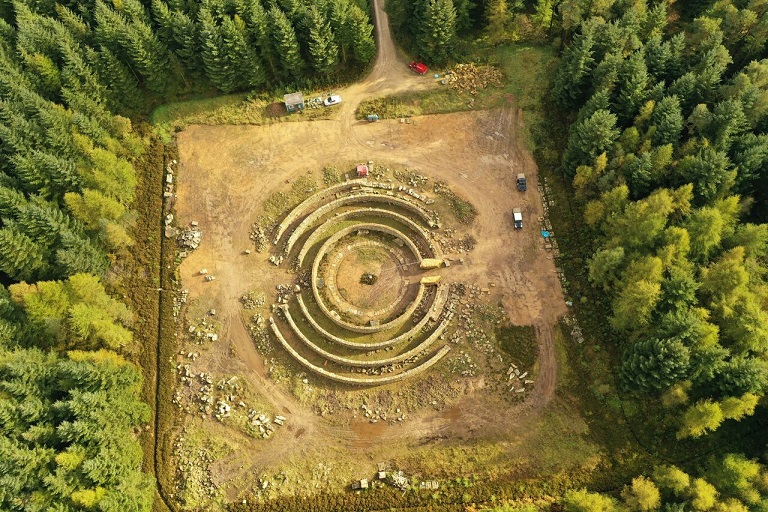
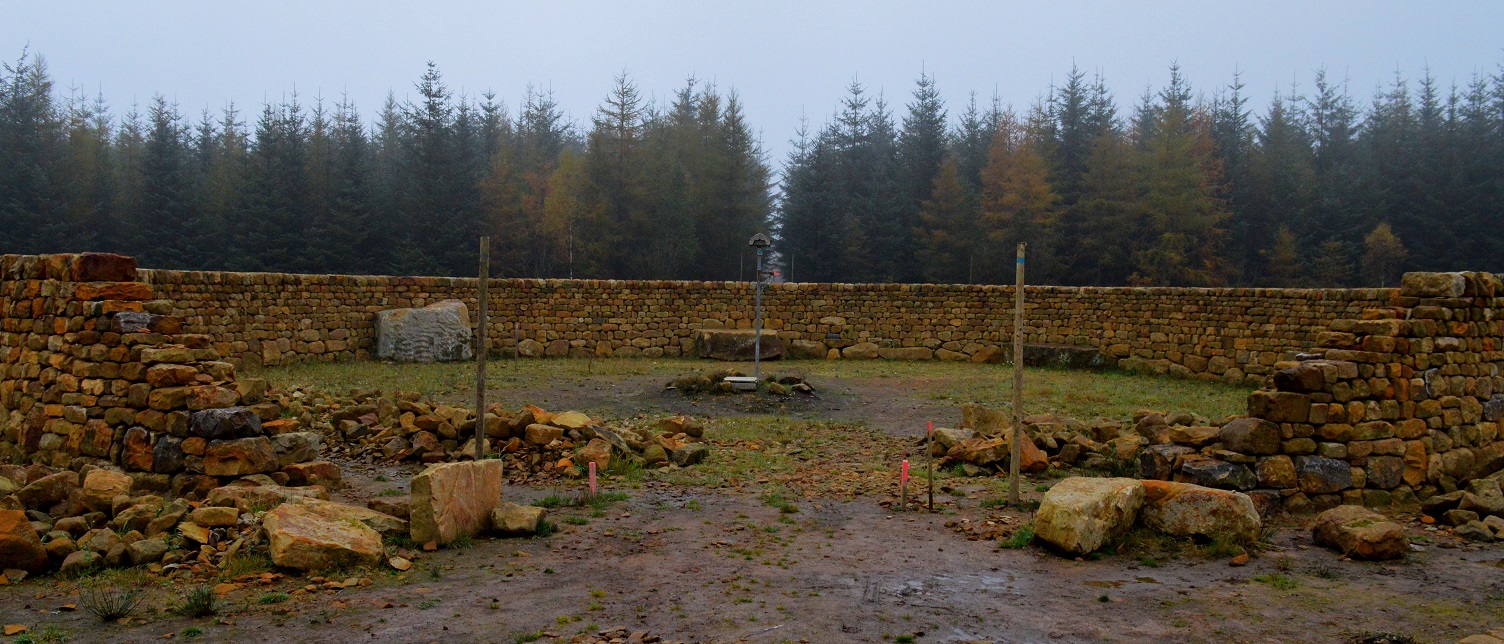
They’re creating a labyrinth entirely from dry stone walls.

Yes, if all goes to plan, by 2024 this will be the home of the world’s largest dry stone wall maze.

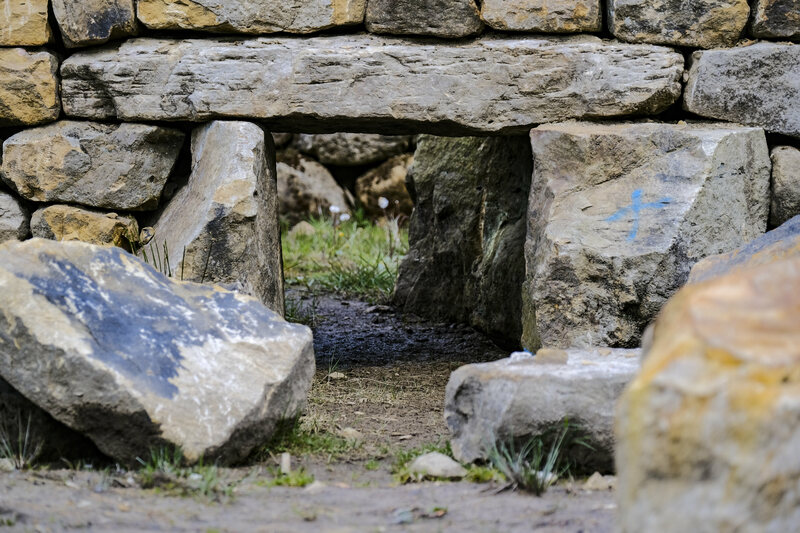
Four inner circular walls, surrounded by five square outer walls, as well as small holes for wildlife and children to use as shortcuts (known as smout holes), will form a 260-square-foot labyrinth.

(Plus the designers plan to periodically update and rearrange the maze through the use of phantom gates — a technique for disguising passageways not in use — to encourage return solvers.

The first stone was placed in 2014, and a decade later, more than four thousand TONS of sandstone will reside there, assembled into a mind-boggling artifact of monstrous puzzly proportions.

Made from nothing more than stone and human ingenuity, we could soon see the completion of an iconic work of puzzly wonder. I for one cannot wait to see how it all turns out.


   dailypopwsicon

Treat yourself to some delightful deals on puzzles. You can find them on the Home Screen for Daily POP Crosswords and Daily POP Word Search! Check them out!

Thanks for visiting PuzzleNation Blog today! Be sure to sign up for our newsletter to stay up-to-date on everything PuzzleNation!

Another A-maze-ing Visit to Animal Crossing: New Horizons!

20200503_194628

There are plenty of terrific video game puzzles out there. Whether you’re talking about video games where the vast majority of the gameplay is puzzle solving (like Myst, Portal, The Witness) or games in other genres that still use puzzles in creative ways (Resident Evil, Silent Hill, Uncharted), puzzles are part of the fabric of video games.

But sometimes, it’s almost more interesting when people introduce puzzly elements to non-puzzle games, because it shows off the creativity, cleverness, and skill of the designer.

People have designed escape room-style puzzles in Super Mario Maker (not to mention working calculators!) and Minecraft is known for its user-generated puzzly challenges.

But I don’t think I ever expected Animal Crossing: New Horizons to end up as a refuge for puzzly minds.

animal-crossing-new-horizons-switch-hero

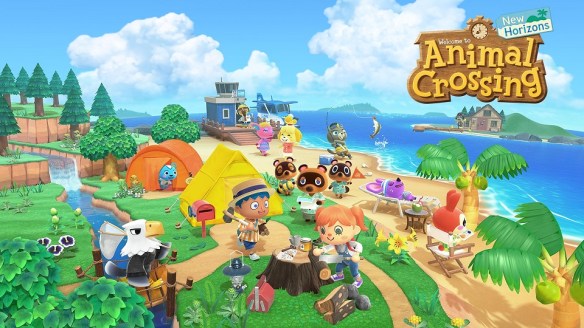
For the uninitiated, Animal Crossing: New Horizons is a game where each player gets their own island, on which they can build a house, create their own paradise, and interact with fellow players. You can collect animals, plants, fruit, and other resources to craft items. There are tasks to complete, and more characters will arrive to explore your island.

We previously reported on Animal Crossing back in May of 2020 when guest blogger Jen Cunningham discussed their May Day event. During the event, game designers created a special island with a maze and a series of tasks for players to complete as they solved the twisty turny path before them. It was a big success, one of many for the game in 2020.

But as it turns out, that’s not the only maze to be found if you go island-hopping in this popular game.

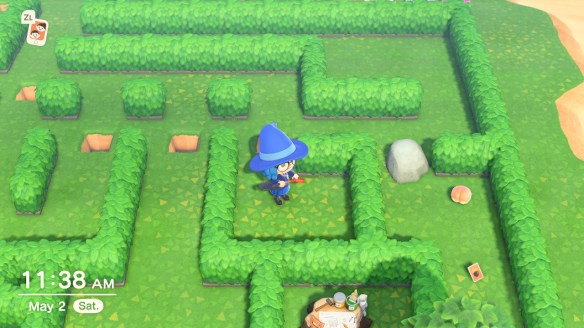
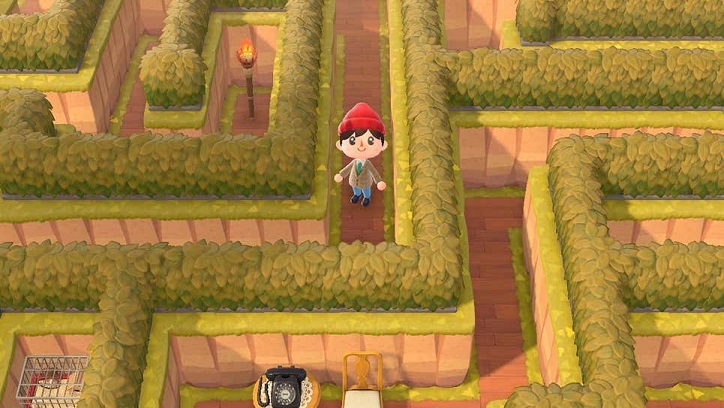
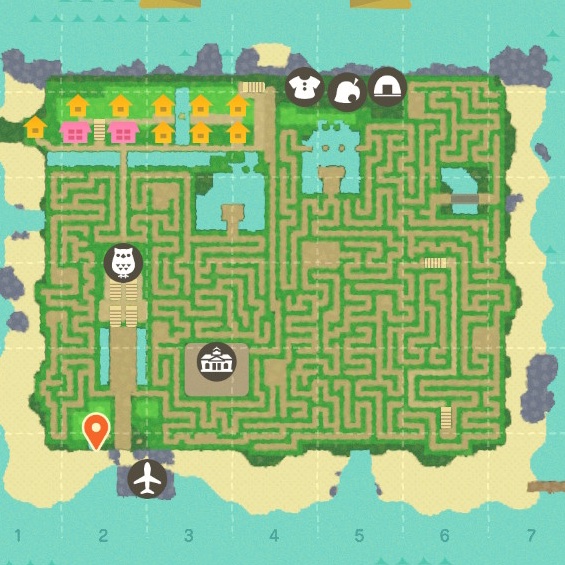
No, a user named Avery Monsen spent about two weeks turning his island into a diabolical labyrinth of his own design. After deep diving into the game, the creation of Avery’s maze was driven by two factors:

1. It was more fun than the traditional game play
2. It would make the game virtually unplayable, which would make it easier to put down for a while.

And it looks like his plan succeeded. Once the maze was finished, he put the game away. (He recently returned to the game to check out a programming update.)

Apparently, the maze is complex enough to cause travel from any key location to any other key location to last ten minutes. And for a game where you’re free to explore wherever, ten minutes to get from place to place is an eternity.

“I wouldn’t say I forgot about my maze, but I definitely forgot how much of a hassle it is. It’s a nightmare,” Monsen said. “So, I took a few screenshots and posted them to my Twitter. I was very quickly flooded with people who were impressed by my dedication and terrified by my obsession. Both of these reactions are valid.”

He has shared the address code so that other players can visit his island and try their hand at his now-famous labyrinth. “I hope people enjoy my island and I hope it doesn’t make me look totally nuts,” he said.

Who knows what other puzzly works are lurking out there in the world of Animal Crossing: New Horizons, just waiting to be revealed?


   dailypopwsicon

Treat yourself to some delightful deals on puzzles. You can find them on the Home Screen for Daily POP Crosswords and Daily POP Word Search! Check them out!

Thanks for visiting PuzzleNation Blog today! Be sure to sign up for our newsletter to stay up-to-date on everything PuzzleNation!