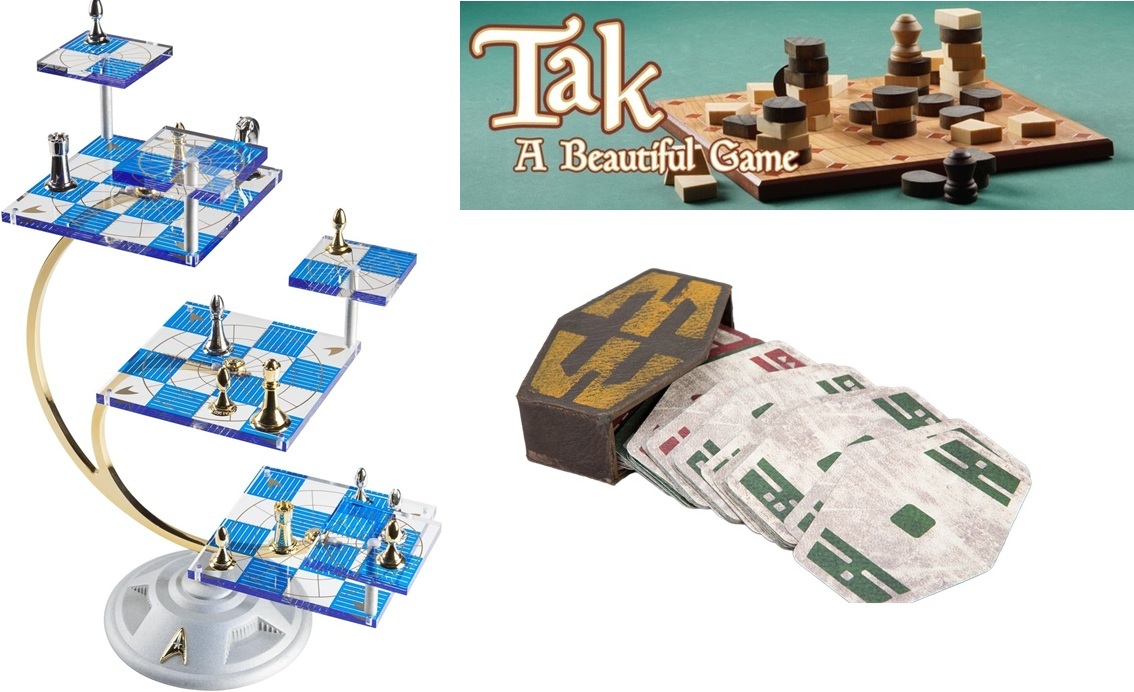
Fictional Games That Became Real!

Many TV shows, films, and novels help add character to their narrative universes by mentioning the games played by the characters.

Shows and franchises as wildly disparate as Battlestar Galactica, New Girl, It’s Always Sunny in Philadelphia, The Witcher, and Pretty Little Liars have fictional games that enrich their worlds.

But sometimes, either through clever marketing or the affection of fans, these games go from fictional recreational activities to real ones, crawling fully formed from the imagination to be enjoyed across tabletops worldwide.

Today, I’d like to introduce you to a few of them. Let’s play, shall we?

Tri-Dimensional Chess

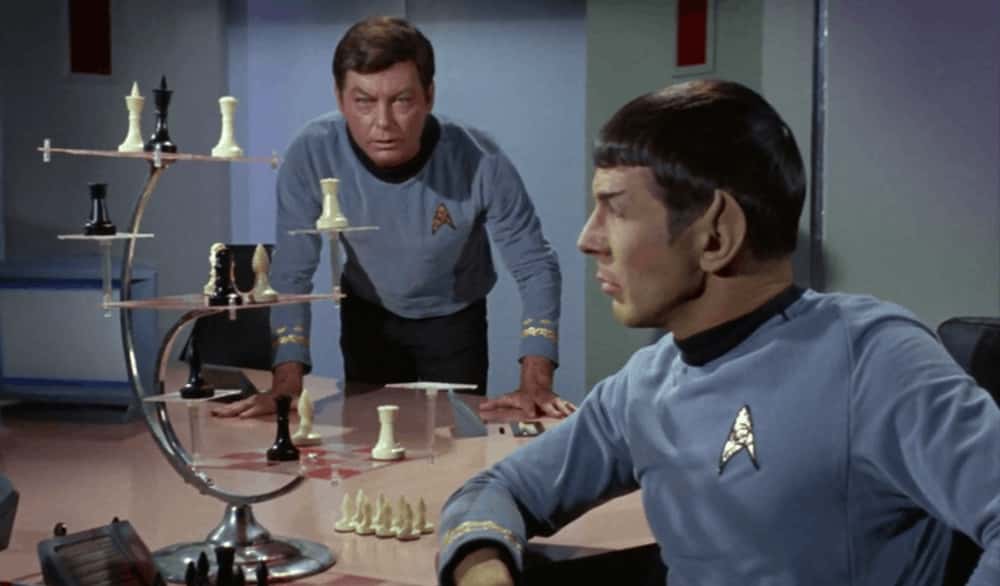
Star Trek has been a source of many fictional games and sports over the years. Dom-jot, Chula, Dabo, Parrises Squares, and Stratagema are some of the more famous ones, but the granddaddy of Star Trek games is Tri-Dimensional Chess.

First appearing in the original series back in 1966, Tri-Dimensional Chess follows the normal rules of chess, but spread across different vertical levels. So a knight could move in its usual L-shaped format, but on its own board OR the boards above and below.

Over the years — and across different Star Trek series — we’ve heard stories about key maneuvers like the Aldabren Exchange and the Kriskov Gambit in games of Tri-Dimensional Chess, helping flesh out how influential the game is for several characters. (Heck, in one episode, Spock beats the Enterprise computer at the game, saving Kirk from a court martial!)

The Franklin Mint has released limited edition versions of the game on two occasions, and I’ve seen homemade games of Tri-Dimensional Chess at gaming and pop culture conventions over the years.

Chess remains incredibly popular — as do many variants of Chess — so it’s no surprise this fictional game made the leap to the real world. (I suspect the complicated three-person Chess game developed by Sheldon in The Big Bang Theory is less likely to make a similar leap. Especially since there are already three-person Chess games on the market today.)

Cones of Dunshire

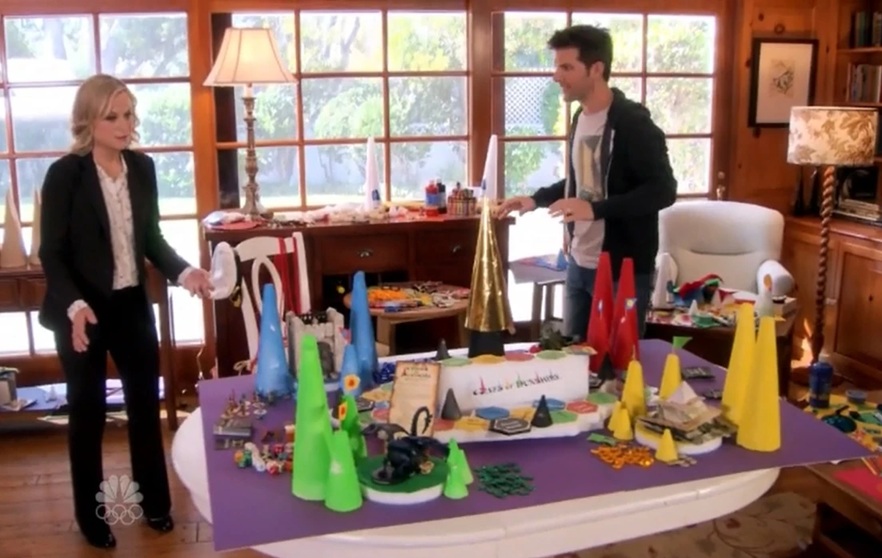
Ben Wyatt of Parks and Recreation enjoyed many nerdy pastimes, but Cones of Dunshire was his masterpiece.

Initially treated as a mistake, a nonsensical result of his boredom and frustrations, the game becomes a running gag in the show after Ben leaves a copy as a gift for the accounting firm that he has been hired by (and walked away from) several times during the show’s run.

Later, we find out the game has been commercially produced, and Ben stumbles across it when dealing with a dotcom company. He mentions that he invented it, but his claims are dismissed. He then proves not only his gaming skill but his authorship of the game when he beats the dotcom bosses in a tense playthrough.

It’s mentioned once that a gaming magazine called Cones of Dunshire “punishingly intricate,” a point that makes Ben proud.

Part of the fun of Cones of Dunshire (other than the parody of Settlers of Catan) is that the viewer never really understands what’s going on, so supposedly dramatic moments can be played for laughs. (I also appreciate that the name of the game is basically a fancy way of saying “dunce hat.”)

And, in the sort of cyclical storytelling that could only happen in a nerdly pursuit like board games, the company that made Settlers of Catan — Mayfair Games — produced a giant version of the game as part of a charity event at GenCon.
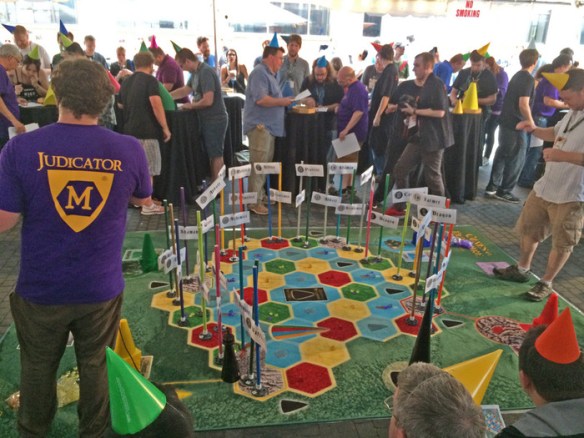
2783642-2767076242-563bb

Both the silliest and most ambitious game to cross from fictional to real, Cones of Dunshire is a nerdy highlight of a now classic sitcom.

tak1

Tak: A Beautiful Game

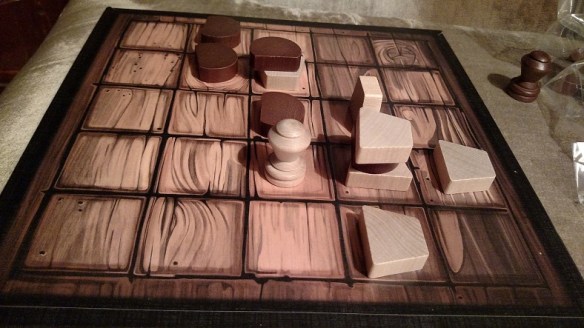
Originally introduced in Patrick Rothfuss’s Kingkiller Chronicles novels as a tavern game, Tak made the leap to the real world as a stretch goal in a Kickstarter campaign for another game.

Game designer James Ernest accepted the challenge of bringing the game to life, and his collaboration with Rothfuss created one of my all-time favorite board games.

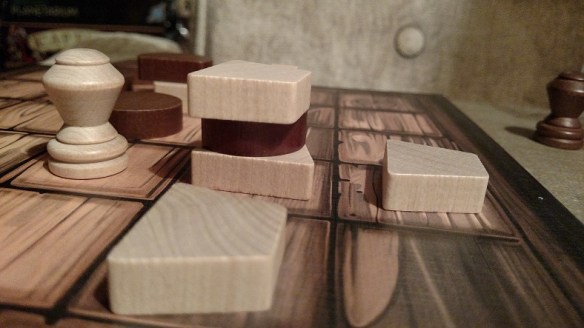
Tak has a very simple concept: two players each attempt to build a road connecting opposite sides of the game board. The first player to successfully complete their road wins.
tak2

To do so, you place game pieces called stones, one at a time, on various spaces on the board. The stones can either be played flat (meaning they’re part of your road) or standing on edge (meaning they’re a wall, blocking any road’s passage through that space).

It’s a rare thing when a new game feels like something that could’ve been played in taverns centuries ago. For me, this is the gold standard when it comes to adapting fictional games to the real world.
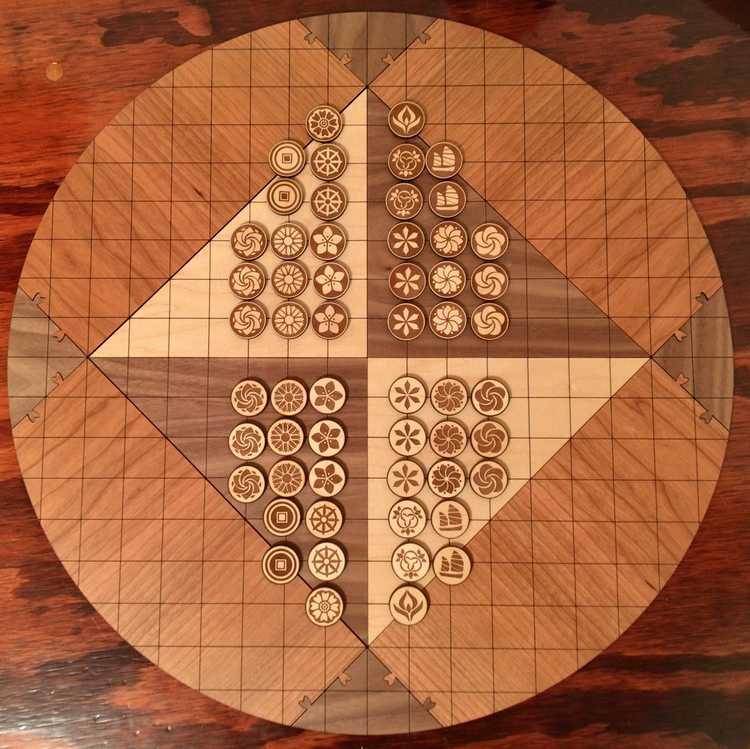

Image courtesy of Glowforge.com

Pai Sho

A key storytelling device in the much-beloved show Avatar: The Last Airbender, Pai Sho was a tactical tile-based game that reinforced important themes in the show.

The game had many variants (often played differently depending on the faction or nation featured) but each had the feeling of an ancient game passed down across generations.

In the most popular variant, Skud Pai Sho, the goal is to form a harmony ring around the center point of the board. Players create harmonies by placing two harmonious tiles on the same line without other tiles or obstacles. There are gates, gardens, and lines that help dictate play, as well as multiple flower tiles for players to place that accomplish different things when placed properly.

There are entire forums and websites dedicated to the rules of Pai Sho and its many variants, and the thriving fan community that continues to nurture these games well after the show’s conclusion make this one of the most heartfelt and successful transitions from fictional to real life that I can think of.


Image courtesy of starwars.com.

Sabacc

In The Empire Strikes Back, we learn about the friendly rivalry between Lando Calrissian and Han Solo, and how a wager led to the Millennium Falcon changing hands.

But exactly how it happened was only revealed later in supplementary material like the Star Wars Visual Encyclopedia and the novel Lando Calrissian and the Mindharp of Sharu.

The second draft of the script for The Empire Strikes Back mentioned that Lando won Cloud City in a “sabacca” game, but by the time additional stories fleshed out the relationship between Lando and Han, the game had been shortened to Sabacc.
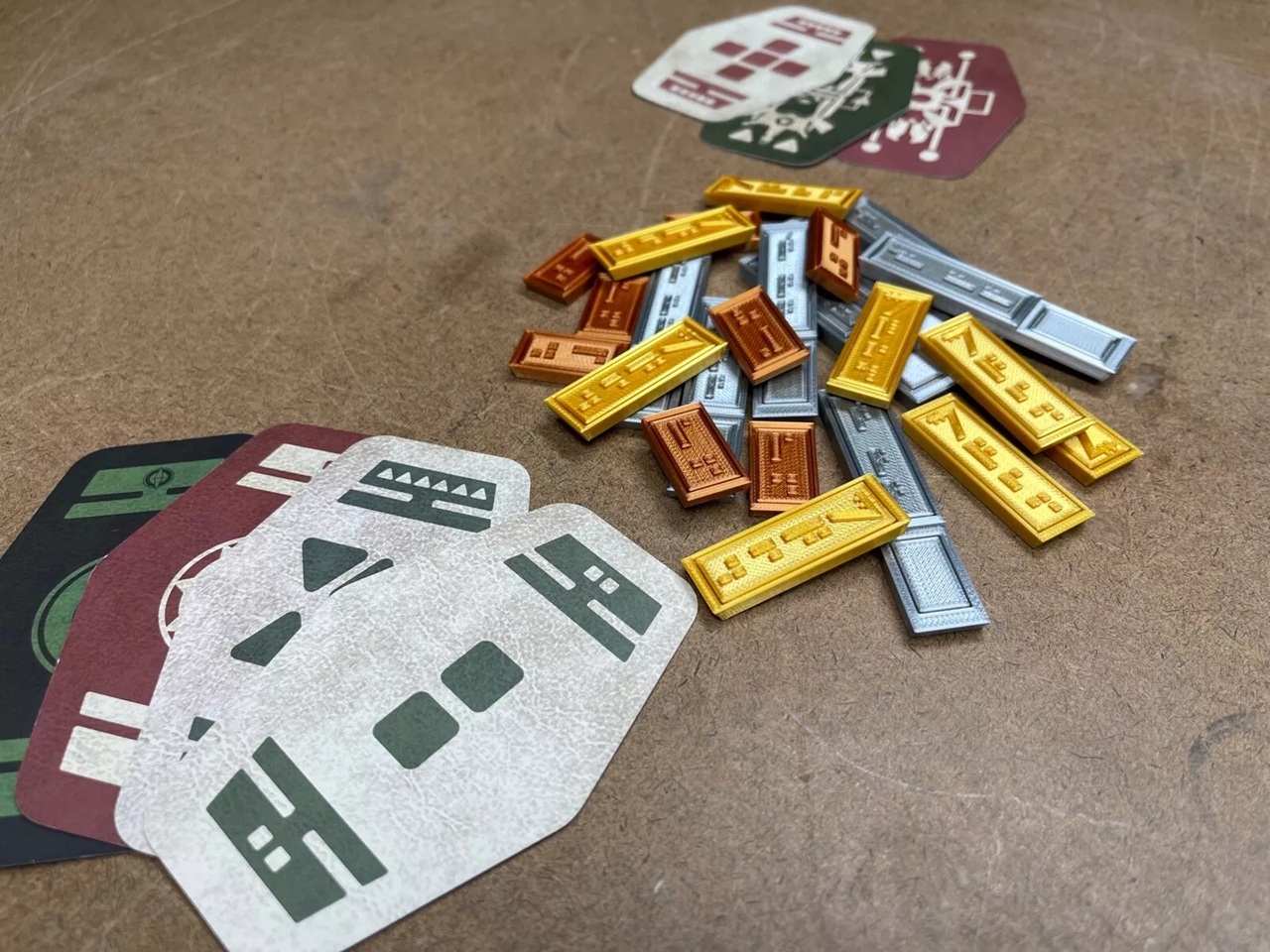
It’s sort of a combination of poker and Blackjack. You want the value of the cards in your hand to be as close to 23 or -23 as possible. Sounds simple, right?

Well, imagine a game of poker where the cards in your hand changed periodically unless you publicly locked them in by placing them on the table, where they stayed until the hand was over. That’s the basic idea behind Sabacc.

There were numerous fan versions of the game over the years, but now you can get Sabacc decks at Disney theme parks (alongside many, many, MANY other items).


Do you have a favorite fictional game that made the leap to the real world? Did we miss any major ones? Let us know in the comments below!

PuzzleNation Product Review: Star Trek Fluxx and Star Trek: TNG Fluxx

[Note: I received a free copy of this game in exchange for a fair, unbiased review. Due diligence, full disclosure, and all that.]

Innovation is part of the fabric of the puzzle/game industry. Constructors and game designers are constantly pushing the envelope, finding new ways to reinvent the puzzles and games we love in order to create new solving and playing experiences. Every new wrinkle is a step forward, and Looney Labs has been at the forefront of that movement for years now.

And it’s only fitting that Fluxx, a card game all about dynamic gameplay and ever-shifting rules, continues to grow, evolve, and adapt, adding new gameplay mechanics to an already loaded bag of tricks.

Their newest release also fits that ambitious aesthetic. After all, the Star Trek series has always been about boldly going where no one has gone before. Today, we’re doing the same as we review Star Trek Fluxx, Star Trek: The Next Generation Fluxx, and a special expansion pack.

For the uninitiated, Fluxx is a straightforward card game. You collect keeper cards and put them into play. Different combinations of keeper cards complete different goals, and each player has the chance to put different keeper cards and goal cards into play in order to win. So you might find yourself working toward completing the goal at hand when suddenly somebody plays a new goal, and the object of the game changes.

Along the way, players affect how the game is played by utilizing action cards and new rule cards which alter what players can and can’t do. Suddenly, you’ll have to trade your hand with another player, or start drawing three cards each turn instead of one.

Star Trek Fluxx marries the chaotic gameplay of the now-classic card game with familiar characters and themes from the iconic science fiction franchise to create a fresh and enjoyable play experience.

The special touches are immediately identifiable, as the title at the top of every single card is written with the famous Star Trek font.

Even as you collect and play cards bearing the images of beloved characters like Kirk, Uhura, and Spock, you’ll find yourself on a strange new world, as unfamiliar new actions and obstacles appear in your path. I encountered Action cards I don’t recall ever seeing in previous Fluxx games, like Taxation, which requires every other player to give you one card from their hands, and Brain Transference, where you switch seats, cards, Keepers, and Creepers with another player.

Not only that, but lurking in the deck amidst rules, keepers, and goals is an Ungoal, a card that works like a goal, except when all of the conditions on the card are met, everyone loses.

But that unpleasantness is balanced nicely by the many references to the classic show featured throughout the game. As a long-time Star Trek fan, it warmed my heart to see the goal card Majel’s Voice, which credits actress Majel Barrett (wife of Star Trek creator Gene Roddenberry) in her dual roles as Christine Chapel and the voice of the Starfleet computers in future editions of the series (as well as Deanna Troi’s mother, Lwaxana, in The Next Generation).

I was also delighted to see the Fizzbin card, which features ridiculous rules reminiscent of the fictional game Kirk and Spock make up as a distraction in the episode “A Piece of the Action.”

These clever touches not only add depth to the gameplay, but serve as welcome nerdy reminders to fans of the series, little inside jokes that entertain, even as they wink and nod in tongue-and-cheek fashion.

The Star Trek: The Next Generation edition of Fluxx covers a lot of the same ground as Star Trek Fluxx — including a special font for the card titles, Ungoals, and gameplay mechanics built around the technology like the Transporter — but adds numerous little touches that make for an enjoyably distinct play experience.

The Holodeck, for instance, comes into play with several cards, proving to be just as big a distraction (and occasionally, annoyance) as it was in the TV show. Some of the Keeper cards also grant additional actions to the players who use them — like taking additional cards, resolving Creepers that would prevent you from winning the game, etc. — that make them more desirable and handy than Keepers in other editions of the game.

Not only that, but the cards are packed to capacity with inside jokes and fun references to events from the series. From the officers’ poker night to Picard’s harrowing declaration that “There Are Four Lights,” many of the show’s most memorable moments are reflected in some way in the gameplay.

Heck, there’s even a rule card that rewards you for communicating using only names and numbers like the aliens in the classic episode “Darmok.” It’s a super-clever idea based on a much-loved episode of the show.

Star Trek: The Next Generation Fluxx has all of the strengths embodied by Star Trek Fluxx, but still feels like it was created specifically for fans of the Picard years. It’s an elegantly balanced approach.

And, for the very first time, two Fluxx games have been designed so that you can combine and mix them to create a unique play experience!

Although there’s nothing stopping you from mixing Fluxx games — the card backs always look the same, after all — sometimes differing games don’t mesh well, spoiling the fun. But in this case, not only were the two games designed to have similar elements — crew members, technology, ships named Enterprise — but there’s a small bonus pack, The Bridge Expansion, which is crafted to make the most of merging your two games.

Yes, much like the Borg, you can assimilate each game’s individual strengths into a single, unified core.

With goals that encourage crossovers between the two shows, as well as a rule card called The 5 Card Mission (referencing the U.S.S. Enterprise’s original 5-year mission), The Bridge Expansion allows for double the Fluxx-fueled chaos and fun.

Whether you’re choosing to play one of these new star-spanning editions of the game, or combining all three products for the ultimate Star Trek Fluxx experience, you are guaranteed to be surprised and amused. Looney Labs games continue to innovate, entertain, and grow in both complexity and cleverness, and they’ve truly outdone themselves this time around.

[Star Trek Fluxx, Star Trek: The Next Generation Fluxx, and The Bridge Expansion are all available now from Looney Labs and certain online retailers.]


Thanks for visiting PuzzleNation Blog today! Be sure to sign up for our newsletter to stay up-to-date on everything PuzzleNation!

You can also share your pictures with us on Instagram, friend us on Facebook, check us out on TwitterPinterest, and Tumblr, and explore the always-expanding library of PuzzleNation apps and games on our website!