5 Questions with PuzzleNation Programmer Mike O’Neil

Welcome to 5 Questions, our recurring interview series where we reach out to puzzle constructors, game designers, writers, filmmakers, musicians, artists, and puzzle enthusiasts from all walks of life!

It’s all about exploring the vast and intriguing puzzle community by talking to those who make puzzles and those who enjoy them! (Click here to check out previous editions of 5 Questions!)

For the entire month of August, I’ll be introducing the PuzzleNation readership to many of the members of the PuzzleNation team! So every Thursday this month, you’ll meet a new name and voice responsible for bringing you the best puzzle apps on the market today!

And I’m excited to kick things off with Mike O’Neil as our latest 5 Questions interviewee!

Mike is part of our dynamite programming team, maintaining the high level of quality we know PuzzleNationers expect of us and helping push us into new puzzly arenas. A musician and long-time video-game fan as well, Mike is enthusiastic, sharp, and immensely capable, part of the well-oiled machine that makes PuzzleNation a brand to watch!

Mike was gracious enough to take some time out to talk to us, so without further ado, let’s get to the interview!


5 Questions with Mike O’Neil

1. How did you get started with puzzles and games?

I’ve been a video-game addict my whole life, so when I got to college I eventually decided to make them for a living. Puzzles and puzzle solving have always been a part of being a big-time gamer, so I’ve been puzzle solving since I got the gamer bug as a kid, though my favorite magazine-type puzzles are word searches.

2. Programming, puzzles, and music all demand a strong sense of balance and flow to create an immersive and productive experience. As a musician, does that ever influence your work in unexpected or insightful ways?

I would say that it’s more of the opposite, where programming has influenced my musicianship. The biggest common feature of all three is patience, so growing up solving puzzles was good training for practicing guitar.

Also, working on a piece of music can actually be like solving a puzzle because every person is different, so I often need to “solve the puzzle” to figure out exactly how I’m going to be able to pull off a particular riff/lick/lead/etc, which could be radically different from how the next person would do it.

3. What do you do in your off-time? What helps you relax or mentally recharge after a long week of puzzling?

My biggest off-time activities are video games and music, though those can all be a bit mentally challenging and not often the greatest unwinding activity. If things get really heavy I often do some urban hiking around NYC. It’s very stimulating and can last for hours (I once walked all 33 miles around the perimeter of Manhattan. My feet hated me for a week.)

4. What’s next for Mike O’Neil?

What’s next is working with the PN team to get more and more types of puzzle apps out there. Crosswords are great, but we have so much potential with our tools and team that the sky’s the limit. I’m looking forward to seeing what we come up with.

[Crosswords ARE great! Have you checked out the Penny Dell
Crosswords App for both iOS and Android devices? /shameless plug.]

5. If you could give the readers, writers, programmers, aspiring game designers, and puzzle fans in the audience one piece of advice, what would it be?

One piece of advice is to make sure that the solution you come up with for your current problem is the best one, not necessarily the fastest or most slick. When I was mentoring students back at the Electronic Arts Academy, my main goal was to make sure that they don’t start implementing solutions for simple tasks with the super fancy, super complicated-type things you do in school. A good general rule is to imagine someone has to take over your work the next day, so make sure it’s easily understandable.


A huge thank you to Mike for his time. I can’t imagine a better way to introduce a month of PuzzleNation-fueled interviews and content!

Thanks for visiting PuzzleNation Blog today! Be sure to sign up for our newsletter to stay up-to-date on everything PuzzleNation!

You can also share your pictures with us on Instagram, friend us on Facebook, check us out on TwitterPinterest, and Tumblr, and explore the always-expanding library of PuzzleNation apps and games on our website!

5 Questions with Constructor and Editor Patti Varol!

Welcome to 5 Questions, our recurring interview series where we reach out to puzzle constructors, game designers, writers, filmmakers, musicians, artists, and puzzle enthusiasts from all walks of life!

It’s all about exploring the vast and intriguing puzzle community by talking to those who make puzzles and those who enjoy them! (Click here to check out previous editions of 5 Questions!)

And I’m excited to welcome Patti Varol as our latest 5 Questions interviewee!

profilepic

If you’ve solved crosswords anywhere other than the New York Times for the last few years, you’re bound to have encountered Patti Varol’s clever constructing and crafty cluing. A regular of The Washington Post and other outlets, Patti is a topnotch constructor and a crossword pro.

She’s also no stranger to PuzzleNation Blog, as she has previously contributed advice for constructing your own crosswords and shared her victory at Lollapuzzoola two years ago with the PuzzleNation audience.

Patti was gracious enough to take some time out to talk to us, so without further ado, let’s get to the interview!


5 Questions for Patti Varol

1. How did you get started with puzzles?

I solved all kinds of puzzles with my grandparents when I was a kid, and games were a big part of family time when I was growing up. A few years after I finished college, I answered an ad for an editorial job with the crossword/variety department at Penny Press — the puzzle test and the interviews for that position, and then taking that job, well, that changed my life. Suddenly, puzzles and games were something to study from the inside out, to take apart and put back together better, to make from scratch. And that was just as much fun as solving them…and I was getting paid to do it.

puzzlebooks_zpstzpevapx

2. You keep awfully busy when it comes to puzzles. Can you fill the PuzzleNation audience in on your various puzzle jobs and how they differ from each other?

I do! I’m Rich Norris’s assistant at the L.A. Times Crossword, which means that I write some of his correspondence (I let constructors know what Rich likes or doesn’t like about the puzzles they’ve sent him), and I pre-edit some of the daily puzzles. I also send out the monthly constructor schedule notices and do some of our testing and fact checking.

I’m also the editor of The Crosswords Club, which is a monthly publication with six Sunday-sized crosswords. The puzzles are made by some of the best constructors in the business, so they are as fun as they are challenging. Each monthly envelope also has an extra word game, and all of the puzzles have explanatory blurbs with some trivia and etymology. It’s a really neat product – there’s really nothing else like it on the market.

And I also do puzzle testing/proofreading for a few other venues, including some crossword tournaments and puzzle magazines. And I’m a puzzle constructor for the CrosSynergy puzzle syndicate; my crosswords appear in The Washington Post roughly once a month. I also construct puzzles for the LA Times and Crosswords Club occasionally, and I mentor new constructors who seek out my help.

Every venue I work for has a different style guide and different target audience, so it’s a job in itself to keep them all straight. All of these different puzzle jobs have made me a strong, confident editor and constructor. I love what I do, and I love being good at what I do. And I’m only good at what I do because I’ve had the privilege to work with and learn from the best.

aid1316594-728px-make-crossword-puzzles-step-10

[Image courtesy of Wikihow.com.]

3. What, in your estimation, makes for a great puzzle? What do you most enjoy — or most commonly avoid — when constructing your own? What do you think is the most common pitfall of constructors just starting out?

A great puzzle has a spark to it — you know right away that it’s something original, fresh, and special. You learn something new, or you see something familiar from a new angle. It’s that aha! moment, that pop. I’m being maddeningly vague here, I realize, but the elements of a great puzzle are elusive and subjective.

That same pop comes when constructing a puzzle, too. Getting a tough grid to come together cleanly, realizing that the right pieces are finally all there in the right order — that can be even more satisfying than solving someone else’s puzzle.

New constructors always seem to start off with more than they can handle: they try to make a Sunday puzzle (21x) before they’ve mastered the smaller daily format, or they try to do a low-word-count themeless before they’re fully comfortable with the 15x themed format. Or they try to cram too much theme in a grid.

Start small, aim big, and you’ll get better with every grid.

4. Between the Timothy Parker plagiarism scandal and the recent Slate article about insensitivity and tone-deafness in cluing in the New York Times crossword, accountability has been a major topic this year in the world of puzzles. As a gatekeeper to getting published yourself, what changes would you like to see made in order to bring crosswords into the 21st century?

Change is already underway, and it’s exciting, because crosswords just keep getting better and better. Just as language evolves — words and their meanings can be as fluid as they can be subjective — so, too, do the media and art forms that rely on language.

crossword1

[Image courtesy of HomeSchoolSuccess.com.]

The conversations about crosswords, online and offline, illustrate clearly that the crossword community is made up of some of the smartest, most language-sensitive, funniest people you’ll ever meet. We’re in love with our craft, and sometimes we take ourselves and our work too seriously, which is what happens when you’re passionate about what you do. But it’s so important to remember that puzzles are entertainment, a happy diversion, and if we use language incorrectly or insensitively, we’re not providing that diversion. We have to take our fun very seriously!

When we’re polishing a puzzle, crossword editors have a very specific audience in mind — we know our solvers because we listen to them and because we’re solvers ourselves. Because of this larger, ongoing conversation, we know that our solving audience is bigger and more diverse than ever.

This presents an interesting challenge: how do you make every crossword accessible and fun for every solver, regardless of race, gender, or age? Maybe not every clue and every entry will resonate with every single solver, but as long as I’m not actively alienating a solver, and as long as I’m stretching, testing, and entertaining most of my solvers, I’m doing my job.

And there are so many crosswords available now! In addition to the newspaper dailies, there are paper subscription services like The Crosswords Club, plus email/blog subscriptions by so many talented constructors, and more puzzle books and magazines available on newsstands than ever before.

We’ll always have good, old-fashioned puzzles, but now we also have lively, fresh puzzles with more current pop-culture references. This, too, is what happens when you’re passionate about what you do: your art naturally reflects and includes the community it is a part of.

5. If you could give the readers, writers, aspiring constructors, and puzzle fans in the audience one piece of advice, what would it be?

Solve all the puzzles. All of them. Even the puzzles that, at first glance, look like the kind you don’t like, solve them. And if you don’t know the answers, look them up. There’s no such thing as cheating at a puzzle — it’s all simply research that makes you better at puzzles.

The more you look up, the more you will learn and remember for the next puzzle you solve. And if you want to learn how to make puzzles, or to get better at making puzzles, nothing will teach you more about how a puzzle works than getting stuck — and then unstuck — while solving one.


A huge thank you to Patti for her time. Be sure to check out The Crosswords Club, and follow her on Twitter for baseball tweets and updates on her latest projects! (Her website is currently under construction.) I cannot wait to see what she has in store for us next!

Thanks for visiting PuzzleNation Blog today! Be sure to sign up for our newsletter to stay up-to-date on everything PuzzleNation!

You can also share your pictures with us on Instagram, friend us on Facebook, check us out on TwitterPinterest, and Tumblr, and explore the always-expanding library of PuzzleNation apps and games on our website!

The Indie 500 Crossword Tournament returns soon!

Last year, a new crossword tournament joined the ranks of the American Crossword Puzzle Tournament and Lollapuzzoola, immediately carving out its own niche in the puzzle world. The Indie 500 offered top-notch puzzles and a pie-fueled solving experience both live in Washington, D.C., and for solvers at home.

And it’s back! The second edition of The Indie 500 is happening on Saturday, June 4, and this year, it’s all decked out in a prom motif.

I reached out to the team behind last year’s event, and constructor/director Andy Kravis was happy to answer my questions and offer some insight into this year’s event.

Andy has been published in the New York Times, the Chronicle of Higher Education, the Los Angeles Times, and other venues, and he was excited to discuss this year’s tournament with the PuzzleNation audience.

1.) I’m very glad to see The Indie 500 returning for a second year. What did you learn from the inaugural event, and what are you hoping to change/improve?

We’re glad to be back! Here’s a list of things we learned from the inaugural Indie 500:

How to run a crossword tournament.

None of us had ever done anything like this before, so every step was brand new to us. We all went into it knowing that building our own crossword tournament from the ground up was going to be a lot of work, but I don’t think any of us fully appreciated how much work it would be until we were already neck-deep in it. We started planning about a year in advance, and one thing I learned is that it takes almost exactly a year to plan a successful Indie 500, even with a team of five directors and a ton of wonderful volunteer test-solvers and staffers.

As for the tournament itself, a lot of our more ambitious ideas — writing a meta suite to raise funds for the tournament, using a new scoring system, having a contest to find a tourney puzzle by a new constructor — worked out really well, so we brought them back this year. We got some great feedback from attendees about which puzzles they enjoyed most, which parts of the program worked well, and so on, all of which we incorporated into our planning for this year. On the whole, the tournament will look a lot like last year’s: five preliminary puzzles of varying difficulty, plus a finals puzzle for the top three scorers in both divisions.

I would say the most visible change we’re making is getting lots of new faces involved. After last year’s event, Evan Birnholz was hired as the Washington Post‘s new crossword constructor (whoo!), and Neville Fogarty entered the last year of his Ph.D program, so they both had to step away from their directorial duties. We were thrilled to bring on Angela Olson Halsted, who’s been a terrific addition to our team, and we’ve also gotten to work with a lot of really talented constructors this year as well.

We’re always open to ideas of how to improve the tournament experience, so feel free to e-mail us at xwordtournament@gmail.com if you have suggestions.

[Andy, alongside Sara Nies, solves at the 2015 Lollapuzzoola event.]

2.) Last year’s theme was racing, and this year’s theme is prom. What about prom appealed to the team more than other possibilities?

We knew almost immediately after wrapping last year’s tournament that we wanted this year’s Indie 500 to be prom themed. The biggest upside, and the main reason we chose it as our theme, is that we really wanted to see what we could do when working with other new constructors in teams. By bringing on prom dates, we now have the opportunity to showcase not just the work of our contest winner but also of the additional constructors we’ve invited. Some of our constructing teams bring very different voices to the constructing process, and it’s been really cool to see how those styles have meshed. And of course you don’t have to take a date to prom — you can go solo, or you can go with a group — and we’ve also kept that in mind while planning the tournament.

We also love the aesthetics of prom. As we tossed around ideas for this year’s tournament, we kept returning to the similarities between a disco ball and a crossword grid, and Raina Zheng did an awesome job designing this year’s logo with that idea in mind. It was easy for us to see the aesthetics of crosswords in disco balls, tuxedos, limousines, and dance floors, and it’s also fun for us to think of ways to inject some of the colorful elements of prom back into a crossword tournament.

Plus, our tradition of playing entrance music for our finalists makes possibly more sense with a prom theme than it did with a racing theme.

In a broad metaphorical sense, I think prom is more in line with what we’re about than racing anyway. Racing seems like a natural fit for a crossword tournament — it’s an individual pursuit that’s about speed (plus the checkered flag and the Indy/Indie pun were too good to resist). But I think what’s great about crossword tournaments is that crossword people have an excuse to get together and have fun and celebrate.

[Possible crossword prom looks?]

3.) One of my favorite aspects of The Indie 500 is that you hold a contest for constructors to join the team and contribute a puzzle to the tournament. Last year’s winner was Finn Vigeland, and this year’s winner is puzzle newcomer Sam Trabucco. What sort of response did you get when you announced this year’s contest, and what made Sam stand out?

Those of you who solved last year’s puzzles know just how lucky we were to get Finn’s submission. We got a lot of excellent puzzles that year, quite a few of which we’ve since been pleased to see published in venues like AV Club and Fireball Crosswords.

We chose Finn’s puzzle because it had a unique combination of clean and lively fill, clues with a clear voice, and a tricky theme that had the potential to incorporate a unique visual element (namely, the candy bars that ended up going in the grid). The version of the puzzle that ran during the tournament ended up being one of my favorite puzzles that year.

[One of the candy bars from Finn Vigeland’s Indie 500 puzzle.]

We didn’t get quite as many submissions this year, and yet picking a winner was just as tough. After narrowing the group of submissions to four or five entries that stood out to us as the best of the bunch, we debated for a long time before picking the puzzle that turned out to be Sam’s. Without giving too much away, what we liked about Sam’s submission was that the theme was something we hadn’t seen before, and the fill was really fresh and showed a point of view.

One thing I want to mention is that after we unblinded the submissions, we were really disappointed not to have received more entries from women and people of color. We’ve already started talking about what we can do to encourage more submissions from that pool of talent next year. This is a top priority for us in running the best indie crossword tournament we can.

4.) Finally, and most importantly, will there still be pie?

Yes, there will be pie. In fact, we’re considering a Pie-Only division in 2017.

Thanks to Andy for taking the time out to answer my questions! You can check out the full details on The Indie 500 by clicking here!

(I’m already signed up to solve from home, and I can’t wait to see this year’s puzzles.)


Thanks for visiting PuzzleNation Blog today! Be sure to sign up for our newsletter to stay up-to-date on everything PuzzleNation!

You can also share your pictures with us on Instagram, friend us on Facebook, check us out on TwitterPinterest, and Tumblr, and explore the always-expanding library of PuzzleNation apps and games on our website!

5 Questions with Author Elizabeth Singer Hunt!

Welcome to 5 Questions, our recurring interview series where we reach out to puzzle constructors, game designers, writers, filmmakers, musicians, artists, and puzzle enthusiasts from all walks of life!

It’s all about exploring the vast and intriguing puzzle community by talking to those who make puzzles and those who enjoy them! (Click here to check out previous editions of 5 Questions!)

And I’m excited to welcome Elizabeth Singer Hunt as our latest 5 Questions interviewee!

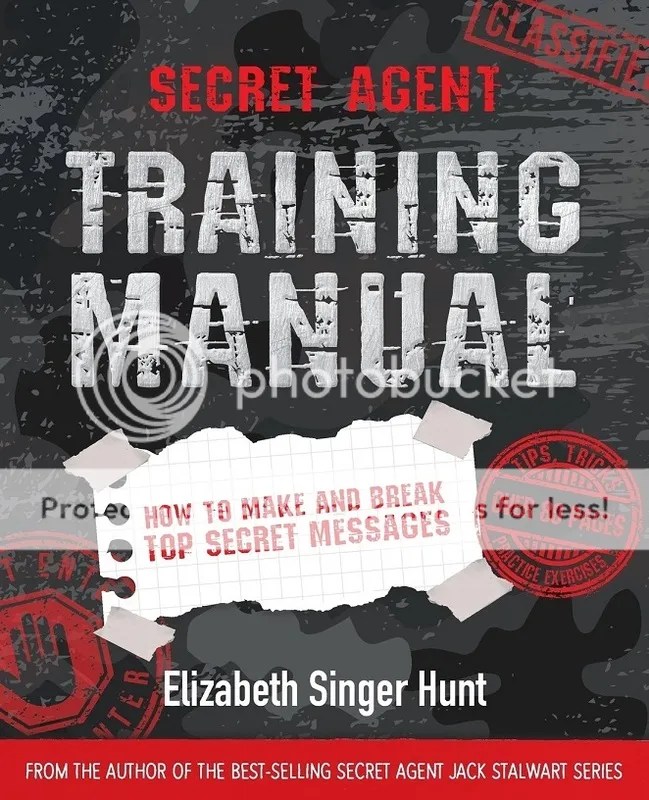
Elizabeth Singer Hunt is the author behind the globe-spanning Jack Stalwart books, a young adult series featuring a nine-year-old secret agent, with over two million books sold to her credit! She’s recently expanded into the world of puzzles with the publication of the Secret Agent Training Manual, a terrific introductory guide to codecracking and concealment.

Anagrams, ciphers, scytales, and encoding with other letters, numbers, or symbols are all explained with easy-to-understand instructions and plenty of examples. She even provides sample encryptions to crack, letting readers practice their newfound skills and techniques, giving young readers the chance to become their own Jack Stalwart-style secret agents!

Elizabeth was gracious enough to take some time out to talk to us, so without further ado, let’s get to the interview!


5 Questions for Elizabeth Singer Hunt

1. What inspired the adventures of Jack Stalwart?

As a young girl, I struggled to read. It wasn’t so much that reading was a problem for me. I couldn’t find any books that I identified with. I grew up in a small town in Louisiana, and spent most of my weekends fishing, crabbing, playing with frogs and tossing around footballs. Basically, I was a tomboy. It was difficult to find books that I could relate to since most of the ‘girl’ books were about friendship issues, horses and fairies.

At around that same time, Raiders of the Lost Ark opened in theatres. That movie introduced me to archaeology and adventure, and showed me that there was a world outside of Louisiana. As a southern girl, I had no idea that places like ‘Nepal’ and ‘Peru’ even existed!

When I was in my late twenties, I decided to take a crack at writing a children’s book series. I drew upon my childhood experiences and inspirations to create the series’ main character, nine-year-old Jack Stalwart. Jack moonlights as a junior secret agent for the Global Protection Force, or GPF. In every book, he’s sent on a mission to an exotic locale in order to protect one of the world’s most precious treasures.

Millions of children around the world have fallen in love with Jack, largely because they identify with him and want to be like him. He’s like a pint-size Indiana Jones, sprinkled with a bit of James Bond and written for the nine-year-old ‘reluctant reader’ me.

Did they, in turn, inspire the Secret Agent Training Manual, or was that meant to be a standalone creation?

Over the years, I have received thousands of emails from children asking how they can become a secret agent like Jack. So I thought it would be fun to create a series that introduced them to basic secret agent/spy skills. Code-breaking seemed a natural place to start! The first book in the series is called How to Make and Break Top Secret Messages. Subsequent books will discuss basic spy craft and the history of intelligence gathering.

2. Are you a puzzle fan yourself, or did your aptitude with encryption and codebreaking puzzles come out of your research and work as a writer?

A little bit of both! I have always had an affinity and aptitude for word puzzles. My favorite game growing up was Boggle and to this day, I am the family Boggle Champion! Recently, my children and I discovered Bananagrams.

It’s right up my alley, since it relies on the ability to quickly arrange and re-arrange letter tiles into words. That being said, I didn’t know too much about the world of cryptography (except for some of the basics) until I began researching for this book.

Do you have a favorite method of encryption or one that didn’t make it into the SATM?

I am fascinated by all of the methods of encryption featured in the book because each has its use depending upon the situation. I suppose my favorite is the ‘cipher’ because it’s ever-changing and difficult for the average person to solve without a key.

3. Let’s talk a little bit about your writing process, since composing a novel is a puzzle in itself. Do you start with characters, plot, certain scenes in your head already? How do you approach the process of writing a book?

Good question! It depends upon the type of book that I am writing.

For my (fiction) Jack Stalwart chapter book series, I have a fairly unorthodox way of writing. I establish the setting, mission and villain and then I start writing! Everything is free-flowing, and little is planned. I love movies and am extremely influenced by film, so in a way I am writing as though I am watching a film play out before my eyes.

For the (non-fiction) Secret Agent Training Manual book, things needed to be a lot more structured. Research was done, notes were taken and the book was organized from the most basic cryptographic methods to those that took a bit more time and thought to decode. Most of this book was handwritten, while many of my fiction books are typed onto a computer screen from the get-go.

4. What’s next for Elizabeth Singer Hunt?

I’m excited to say that Costco is planning an exclusive nationwide launch of the Jack Stalwart series in volume form next month, i.e. in April of 2016. That means that children across the country will be able to enjoy the Jack Stalwart series four books at a time in a specially produced keepsake volume.

Besides this news and the launch of the Secret Agent Training Manual book, I’ve also recently published the first book in a new middle grade series called Swamp Mysteries: The Treasure of Jean Lafitte. The series chronicles the adventures of four twelve-year-old friends as they solve paranormal mysteries in the swamps and bayous of Louisiana. It’s a bit like Scooby-Doo with a southern twist.

5. If you could give the readers, writers, and puzzle fans in the audience one piece of advice, what would it be?

As my mother always says, “There’s always a solution to everything. Persevere!”

When I first had the idea for the Jack Stalwart series, I shopped it around to various agents and publishers and they promptly rejected it. I could have felt sorry for myself and given up. But I believed in the idea and in myself. So, I found a solution to the problem. I published it myself, i.e. hired an editor, illustrator, designer and found a local printer to produce the books. I printed thousands of Jack Stalwart books, and sold them personally to as many booksellers as I could find.

After five months of hard work, the series caught the attention of an agent and the head of children’s fiction at Random House UK. (I was living in England at the time). Random House acquired the Jack Stalwart series, and commissioned me to write a total of fourteen books.

The rest as they say is history. Had I listened to the naysayers, Jack Stalwart never would have existed and I never would have had a career as an author. Thankfully, I took my mother’s advice. It’s the same advice that I would give to anyone with a dream. Never give up. Be resourceful, and persevere.


A huge thank you to Elizabeth for her time. Be sure to visit her website for updates on her latest projects. I cannot wait to see what she has in store for us next!

Thanks for visiting PuzzleNation Blog today! Be sure to sign up for our newsletter to stay up-to-date on everything PuzzleNation!

You can also share your pictures with us on Instagram, friend us on Facebook, check us out on TwitterPinterest, and Tumblr, and explore the always-expanding library of PuzzleNation apps and games on our website!
It’s Follow-Up Friday: Schools and Spheres edition!

Welcome to Follow-Up Friday!

By this time, you know the drill. Follow-Up Friday is a chance for us to revisit the subjects of previous posts and bring the PuzzleNation audience up to speed on all things puzzly.

And today, I’d like to return to the subject of Kickstarter philanthropy!

[Image credit: for-preneur]

I’ve written about crowdfunding a lot in this blog, because over the last few years, platforms like Kickstarter and Indiegogo have changed how many puzzles and games are created, funded, and brought to market.

There’s a virtual board game and card game renaissance stemming from these websites, and many puzzle constructors are bypassing traditional publishing formats and taking their puzzle suites and projects straight to the audience this way.

But there’s also the opportunity to give back to your community in meaningful ways.

I recently stumbled across the Kickstarter campaign for StrataSphere, a strategy puzzle game from Family Games America that really caught my eye.

Like a next-level version of Connect Four and KerPlunk, StrataSphere challenges you to place your sliding tabs in various slots around the cube, then use them to drop your spheres to the bottom layer first.

But what most intrigued me about the project wasn’t the puzzle itself, but one of the crowdfunding options being offered. Instead of just pledging for a copy of the game for yourself, you could pledge a little more money and donate a copy of the game in your name to a school of your choosing. Puzzle philanthropy.

I reached out to the team at FGA to find out more about the project, and had the opportunity to chat with Paulette Hall, communications director for FGA.

Where did the idea for StrataSphere come from?

The game was originally envisioned and developed by German designer Claudia Herz, who originally named it BallCube. Claudia remembers that after spending time sketching and offering the idea to other game publishers she finally made a handmade sample of acrylic glass and presented it at a trade-show not too far from her home.

The reaction and feedback was overwhelming. People wanted to know everything about the game and know where it can be purchased. This is what encouraged her to pursue the project. With a combination of inspiration from Claudia and outer-space, we renamed the game StrataSphere 2.0.

For people unfamiliar with FGA, what sort of puzzles and puzzle-games are your bread and butter? Is StrataSphere a traditional FGA-style puzzle, or is it a new direction for you?

FGA’s tag-line, Learning Through Laughter, has been been incorporated into all of our gift, game, and puzzle products since being established in 1987. StrataSphere 2.0 is not so much a puzzle but a strategy tabletop game that is a more contemporary modern addition to our line of products.

Our more popular items include eco-friendly wooden games and puzzles like Cathedral, Don’t Break The Bottle, and our wood and wire puzzles. While this strategy game is new to FGA, FGA is not new to strategy games.

The option for supporters to donate an additional copy to a school of their choosing is one I’ve never seen before, and I’m surprised more Kickstarter campaigns haven’t utilized it. Is this the first product that has incorporated this sort of program? Is this a long-term goal for FGA going forward?

FGA helped raise funds for actor Ted Danson’s American Oceans Campaign in the late ’80s and early ’90s with their environmental games and puzzles such as Endangered and Colorful Kingdom. A percentage of sales was also given to the ASPCA.

Donations of FGA products go out yearly to schools and organizations. A big part of FGA is our ability to give back, and we wanted to start 2016 with a campaign that will help us continue to do that. Our students are our future, and the state of our school systems has geared our focus of this campaign to get valuable learning material back into our schools and into their hands.

I think this is not only a really exciting puzzle game, but a worthwhile cause as well. You can check out all the details on the StrataSphere Kickstarter page. They’re more than halfway to their funding goal, and I sincerely hope they make it there and beyond.


Thanks for visiting PuzzleNation Blog today! Be sure to sign up for our newsletter to stay up-to-date on everything PuzzleNation!

You can also share your pictures with us on Instagram, friend us on Facebook, check us out on TwitterPinterest, and Tumblr, and explore the always-expanding library of PuzzleNation apps and games on our website!

5 Questions with Constructor Brendan Emmett Quigley

Welcome to another edition of PuzzleNation Blog’s interview feature, 5 Questions!

We’re reaching out to puzzle constructors, video game writers and designers, board game creators, writers, filmmakers, musicians, and puzzle enthusiasts from all walks of life, talking to people who make puzzles and people who enjoy them in the hopes of exploring the puzzle community as a whole.

And I’m overjoyed to have Brendan Emmett Quigley as our latest 5 Questions interviewee!

A professional puzzle constructor for almost 20 years, Brendan is one of the top names when it comes to crosswords with strong craftsmanship and clever cluing. One of the most prolific contributors to The New York Times Crossword in the modern era, his puzzles have appeared everywhere from GAMES Magazine and The Los Angeles Times to Wired.com and The Crosswords Club.

In addition to the two puzzles he constructs every week for his website, he’s created many puzzle books of his own, and contributed puzzles to an American Red Cross fundraiser for Hurricane Sandy victims. (He also masterminded Puzzle #5 at this year’s American Crossword Puzzle Tournament, the puzzle only a few dozen solvers managed to conquer in the time allotted.)

Brendan was gracious enough to take some time out to talk to us, so without further ado, let’s get to the interview!

5 Questions for Brendan Emmett Quigley

1.) How did you get started with puzzles?

I started making puzzles at a very early age. In Kindergarten art class, specifically. We were given 11×17 sheets of paper and told we could draw anything. I drew mazes. Shortly after that, I realized I could make the puzzles more complicated if I eschewed crayons and used finely sharpened pencils. When I discovered GAMES Magazine, sometime in second grade, I was hooked and became a puzzler for life.

I didn’t get into crosswords until much later. It was a way to while away the hours at a miserable summer job in 1995. After a whole summer of dutifully attempting (and not necessarily succeeding) at solving the Times crossword, I was determined to make and sell one. Which I did by January of 1996. I haven’t stopped since.

2.) What, in your estimation, makes for a great puzzle? (Other than your signature knack for stacking long entries.) What do you most enjoy — or most commonly avoid — when constructing your own? What do you think is the most common pitfall of constructors just starting out?

A good original and hopefully funny theme is all you need to make a great puzzle.

The most common pitfall for newbies is unoriginal themes, or ones that don’t employ enough wordplay. The English language is full of nuances, we should exploit them.

[Check out Brendan’s latest collection, Sit & Solve® Marching Bands!
For more information on marching band puzzles, click here!]

3.) Will Shortz has credited you with bringing some hipness to the New York Times Crossword with your cluing and entry-word choices. Do you have any favorite clues or entries that have appeared there, either in your puzzles or puzzles by other constructors?

Mike Shenk once wrote the clue “Strips in a club” for BACON, and well, that’s a classic.

4.) What’s next for Brendan Emmett Quigley?

I think I’m going to have a beer.

5.) If you could give the readers, writers, and puzzle fans in the audience one piece of advice, what would it be?

Don’t do drugs. Be drugs.


Many thanks to Brendan for his time. Check out his website for twice-weekly puzzles, and be sure to follow him on Twitter (@fleetwoodwack) for updates on all things Quigley. I look forward to solving whatever he cooks up next.

Thanks for visiting PuzzleNation Blog today! You can share your pictures with us on Instagram, friend us on Facebook, check us out on TwitterPinterest, and Tumblr, and be sure to check out the growing library of PuzzleNation apps and games!