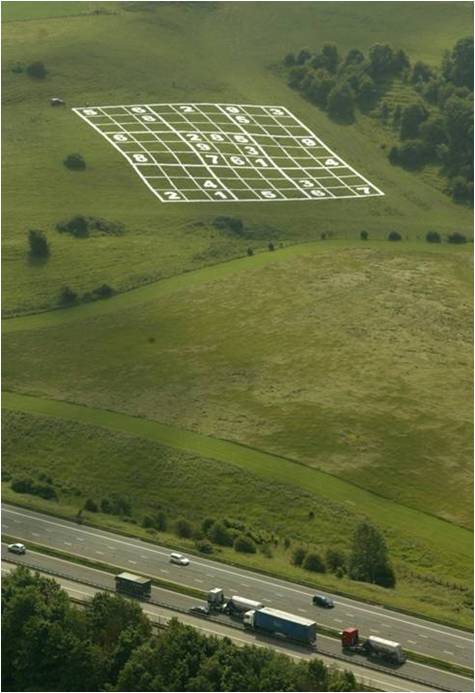
We’re dressed To the Nines and this is the Number Place to be!
I waxed both lyrical and nostalgic about Sudoku in yesterday’s post, so let’s get down to business with today’s bonus puzzle!
I’ve got two different versions of a Cluedoku puzzle for you.
Like Sudoku, Cluedoku involves placing the digits 1 through 9 into each row, column, and 3×3 square in the grid. But unlike Sudoku, there are no set letters.
Instead, you have 81 clues, one for every cell in the grid. Once you’ve solved a clue and placed a number in the grid, standard Sudoku rules apply: that number will only appear once in a row, column, or 3×3 square.
I hope you enjoy this variation on the traditional Sudoku format. And if you have a favorite Sudoku variant that ISN’T Cluedoku, feel free to share it in the comment section below! I’d love to hear from you.
Tomorrow, 9/9, is International Sudoku Day. And while I have a special Sudoku puzzle planned for tomorrow, I wanted to take some time today to talk about this puzzle.
Because, honestly, Sudoku is kind of amazing.
It’s a logic puzzle — a deduction puzzle — that looks like a math puzzle. (And, in fact, its genuinely mathier cousins Kenken and Cross Sums/Kakuro don’t have a tenth of the audience that Sudoku does.)
It’s one of the very few puzzles I can think of that requires no introduction, no words, no guidance. If you just look at that grid, you inherently know what you need to do.
That’s a very rare thing. I mean, sure, if you look at a logic puzzle — the premise, the grid, the hints to help eliminate things — you can pick it up quickly. A crossword is fairly universal, but still requires the outside knowledge of vocabulary, facts, and wordplay each solver brings.
Sudoku is clean, simple, and irrefutable. It crosses linguistic and cultural barriers with ease.
And yet, it took decades to become an overnight sensation.
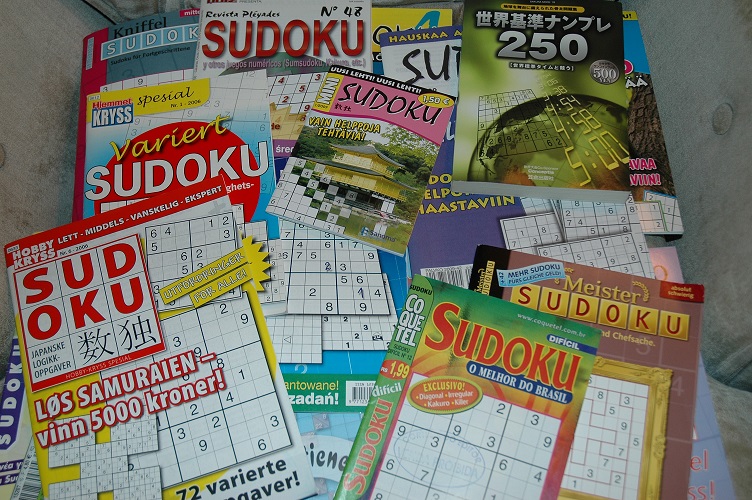
Similar puzzles can be traced back to France in the 1890s, but Sudoku as we know it was featured in Dell Pencil Puzzles and Word Games in 1979 under the name Number Place (though it has also been called To The Nines), thanks to constructor Howard Garns.
Links to a solvable online version of each of those two puzzles are here and here. Try out these half-century-old puzzles!
Wayne Gould kickstarted a UK Sudoku craze after creating a generation program for the puzzles and selling it to The Times in London.
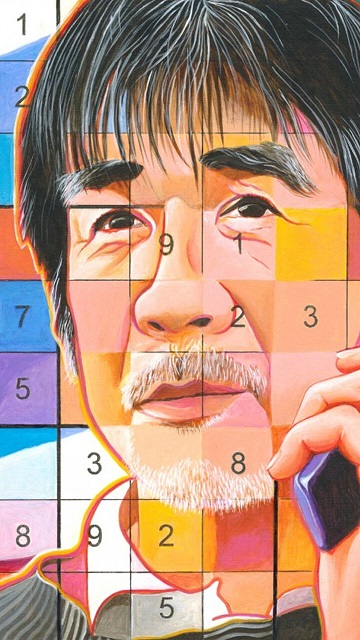
Maki Kaji began championing Sudoku in the 1980s in Japan with his puzzle magazine Nikoli, and he’s why most people know the puzzle as Sudoku now. (Originally the puzzle was called Suuji wa dokushin ni kagiru, or “numbers should be single.” Maki later took the suggestion to shorten it to Sudoku.)
We can literally track the puzzle’s expansion across the years, and its rebirth as Sudoku in the 2000s, because many puzzle solvers have lived through Sudoku’s entire modern lifespan.
And it’s baffling, isn’t it? That Sudoku feels so timeless and universal, but is relatively young, as puzzles go.
We’ve been playing with words for far longer than we’ve been playing with numbers. Anagrams and riddles go back centuries upon centuries. They’ve been playing Go in China for more than 2,500 years, and the Royal Game of Ur dates back to the third millennium BC.
Sudoku is just a pup compared to them, but it’s among the most widely solved and recognizable puzzles.
I’ve spent a lot of timing thinking about (and writing about) Sudoku over the years. A decade ago, I tried to calculate how many of the 5-and-a-half billion possible unique Sudoku puzzles had been published up to that point.
And yet, I’m still fascinated by every new twist. I try every variant I see clever constructors come up with. I inevitably watch every video where someone solves the hot new “impossible” Sudoku.
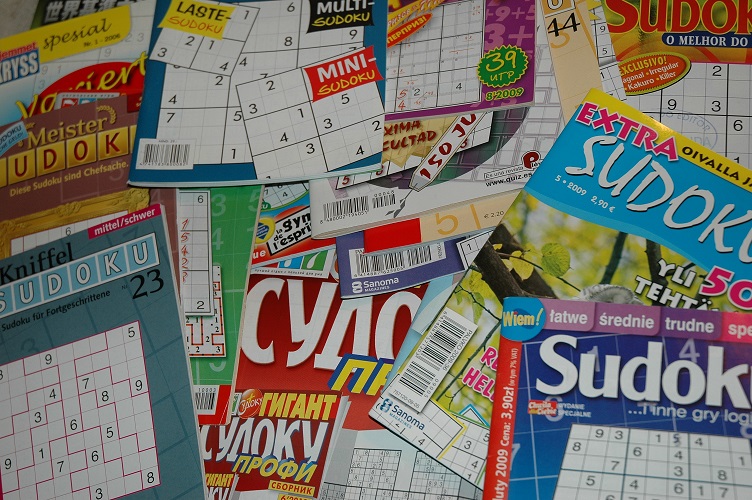
In less than half the time crosswords have been around, Sudoku has swept across the world and become a household name.
True, there haven’t been any Sudoku musical revues or pop songs — at least, not that I’m aware of! — but it remains one of the most ubiquitous pen-and-paper puzzles in the world today.
“Numbers should be single.” Maybe. But I like the message of Number Place better: every number in its place. An unsolved Sudoku grid shan’t remain empty for long.