PuzzleNation Product Review: ThinkFun’s Robot Turtles

ThinkFun has always specialized in games that educate as you play, from the optics and angles of Laser Maze and the chain problem-solving of Gravity Maze to its Brain Fitness line of puzzles-for-one.

Robot Turtles is their newest game, designed for players age 4 and up, and the premise of the game is quite intriguing: it’s a board game designed to teach young minds rudimentary programming skills.

[The first game board the Turtle Masters will encounter.]

Robot Turtles is a game where players have to navigate their turtles to their chosen gem. In order to do so, the player (or Turtle Master) plays cards that dictate the turtle’s movements. An adult or older sibling serves as the Turtle Mover, following the instructions of each Turtle Master as each card is played.

As the Turtle Masters grow more proficient at selecting their cards and directing their turtles toward the gems, the Turtle Mover sets up more difficult game boards, incorporating towers to navigate around, crates to push, and even ice towers to melt with lasers! The solutions to each game board grow more complicated, and the Turtle Masters must plan steps in advance in order to reach the gem.

There are no losers in Robot Turtles; each player selects cards until their turtle reaches its gem. But the real genius behind the game is that the Turtle Masters are learning the basics of programming as they play. The player lays out sequences of commands (move forward, turn right, activate laser, move forward, etc.), and then “run” the program by having the Turtle Mover execute each command.

[Here, one Turtle Master has navigated his turtle between two towers, melted an ice tower with the laser, and awaits the next command: to cross the puddle left behind by the ice tower. This turtle’s gem can be seen on the left, behind a wall of towers.]

As players develop, they can program small macros by replacing a sequence of cards with a “function frog” card, saving several moves and reaching the gem sooner. (There’s even a “bug” button for each player to hit when they’ve played an incorrect card, allowing them to remove the last card played and try again. Players are debugging the programming as they play!)

With a Turtle Mover determining the difficulty of the game board (there are a few suggestions from ThinkFun, but parents and siblings are encouraged to create new challenges for the Turtle Masters), the game has the potential for endless variations, all of which encourage players from age 4 and up to plan more detailed, more challenging “programs” for their turtles.

[One of the tougher suggested layouts.
A bit different from the starter layout, isn’t it?]

Robot Turtles is a fine addition to the ThinkFun lineup. The mechanics are simple, the educational aspect is couched in enjoyable steps, and everybody wins. Robot Turtles was the most backed board game in Kickstarter history, and in your very first game, you’ll easily see why. I can’t wait to serve as Turtle Mover again for the young programmers in my family.

Last year, in one of our earliest editions of 5 Questions, author Robin Sloan said, “I really do think that, in the year 2013, people ought to know how to code, at least a little bit.” I think Robot Turtles could play a big part in making that a reality.

Thanks for visiting PuzzleNation Blog today! You can share your pictures with us on Instagram, friend us on Facebook, check us out on TwitterPinterest, and Tumblr, and be sure to check out the growing library of PuzzleNation apps and games!

It’s Follow-Up Friday: Library Gaming edition!

Welcome to Follow-Up Friday!

By this time, you know the drill. Follow-Up Friday is a chance for us to revisit the subjects of previous posts and bring the PuzzleNation audience up to speed on all things puzzly.

And today, I’d like to return to the subject of puzzle-game holidays!

[Once again, a board game brings a family together…]

In the past I’ve written plenty about International TableTop Day, the holiday dedicated to social gaming and puzzling. But did you know that in less than two weeks, another puzzle-game holiday arrives?

That’s right, November 15 is International Games Day, an event organized by the American Library Association “to celebrate the mutually-reinforcing power of play and learning.”

From the I Love Libraries website:

Libraries are about sharing culture and information, and games are a form of culture that you often have to share – you often can’t experience them without another player!

They’re also good for brain health, and foster important life skills like socialization, theory of mind and systems literacy. Plus, they’re fun!

Whether video games, tabletop games, social games or other kinds of games, they’re all a part of culture whose importance is only becoming clearer with time. And that means we need to foster the kind of smart engagement that libraries support, for games as well as books.

And while International TableTop Day is synonymous with board games, card games, and roleplaying games, International Games Day encompasses all of the above and more, including online videogames, trivia games, and any other games you can think of.

It’s a terrific opportunity to come out to support both games and your local library, and maybe make a few new friends along the way!

Let us know if you’ll be participating in International Games Day, PuzzleNationers! We’d love to see pictures and hear all about it!

Thanks for visiting PuzzleNation Blog today! You can share your pictures with us on Instagram, friend us on Facebook, check us out on TwitterPinterest, and Tumblr, and be sure to check out the growing library of PuzzleNation apps and games!

PuzzleNation Product Review: Bananagrams Wild Tiles

Scrabble used to be the only letter-tile game in town, but a decade ago, Bananagrams entered the playing field, and it’s quickly become one of the most recognizable names in puzzle gaming.

And I’ll let you in on a little secret: while I’d known them by reputation, I’d never actually played a round of Bananagrams. So when presented with the opportunity to try out the newest member of the Bananagrams family — Bananagrams Wild Tiles — I was definitely looking forward to putting my puzzly skills to the test.

For those unfamiliar with Bananagrams, it’s a word formation game with a sense of urgency and freedom. Your goal is to use all the tiles in your hand to build words that cross and interact as they would in a standard letter-tile game, but with no board to restrict the words. And your opponents are building their own grids at the same time. It’s a race to complete your grid by arranging and rearranging the letters, putting your vocabulary and anagram chops on display.

Bananagrams Wild Tiles offers a spin on the familiar Bananagrams formula — there are six Wild Tiles, depicting the Bananagrams monkey mascot, and these tiles can represent any letter of the alphabet. That’s right, these are six get-out-of-trouble free cards in monkey tile form.

This seems like a minor change, but it makes a major difference in gameplay, since one Wild Tile can add serious adaptability to your hand, upping the stakes.

When playing with fewer players, I highly recommend limiting the tile pile to 3 Wild Tiles; otherwise, the game goes too quickly. (My friends and I also introduced another variant playing style, only allowing one Wild Tile — the one attached to the zipper of the Bananagrams bag — which was awarded to whoever made the most horrendous banana/monkey pun during the first round.)

Bananagrams Wild Tiles is a perfect gateway game to introduce puzzles both younger and older who might’ve been put off by the more rigid, more intimidating aesthetic of Scrabble. With its lighthearted packaging, free-form gameplay, and endless replayability, this one is a winner.

Thanks for visiting PuzzleNation Blog today! You can share your pictures with us on Instagram, friend us on Facebook, check us out on TwitterPinterest, and Tumblr, and be sure to check out the growing library of PuzzleNation apps and games!

Answers to the PuzzleNation Punderful Costume Game!

It’s time to reveal the puns behind our second annual PuzzleNation Punderful Costume Game!

We challenged you to figure out these clever costumes, so let’s see how you did!


PuzzleNation’s Punderful Halloween Costume Game!

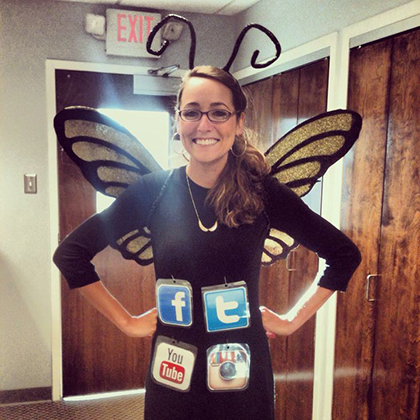
#1

costume2

She’s a social butterfly!

#2

costume3

That’s one smart cookie!

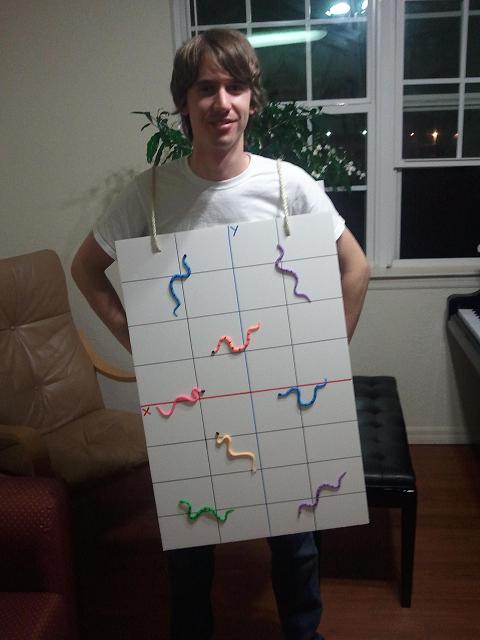
#3

costume4

It’s snakes on a plane!

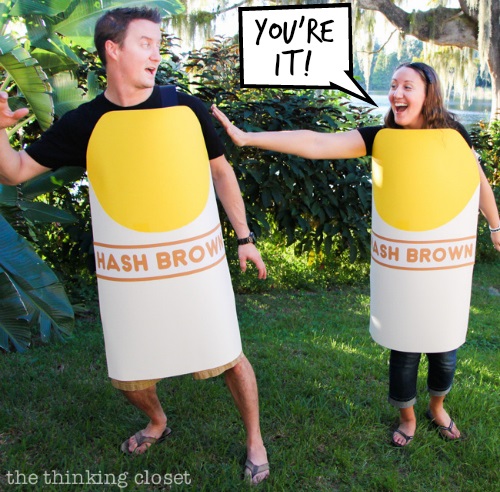
#4

costume5

Check out that #hashtag!

[Picture courtesy of the cleverboots at The Thinking Closet.]

#5

costume6

It’s shrimp on the barbie!

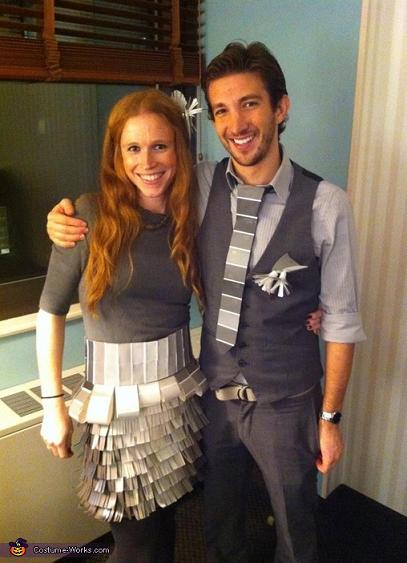
#6

costume7

Why, it’s 50 shades of gray, of course!

#7

costume8

Who doesn’t love a Lincoln log?

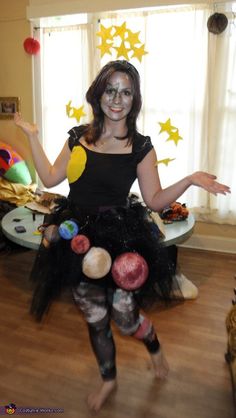
#8

photo by Sarah A. Miller/Tyler Morning Telegraph

Miss Universe, at your service.

#9

costume10

She’s fit as a fiddle!

#10

costume11

It’s Snow (Walter) White!


How did you do, PuzzleNationers? Did this inspire any punny costume ideas for you? Let us know!

Thanks for visiting PuzzleNation Blog today! You can share your pictures with us on Instagram, friend us on Facebook, check us out on TwitterPinterest, and Tumblr, and be sure to check out the growing library of PuzzleNation apps and games!

It’s Follow-Up Friday: Halloween Puns Edition!

Happy Halloween, puzzlers and PuzzleNationers!

Last year, we marked the spookiest of holidays by posting some punny costumes for you to figure out, and it’s only appropriate that we celebrate Halloween AND Follow-Up Friday by bringing you a second edition of the PuzzleNation Punderful Costume Game!

It’s simple. I post a picture, and you guess what the costume is.

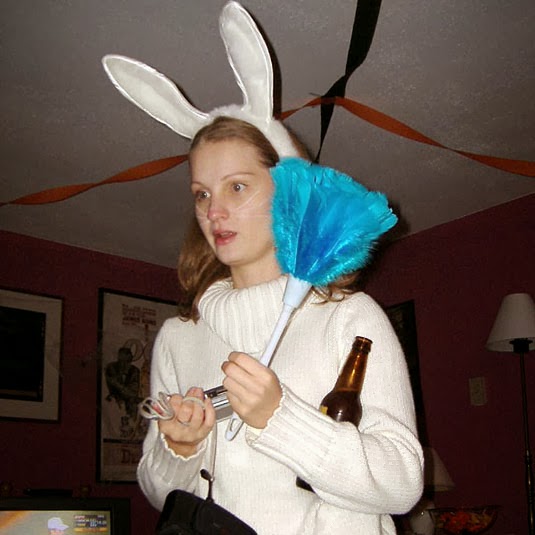
For example:

costume1

She’s a dust bunny!

I’ve compiled ten costumes for you to figure out. Let’s see how many you can get!


PuzzleNation’s Punderful Halloween Costume Game!

#1

costume2

#2

costume3

#3

costume4

#4

costume5

[Picture courtesy of the cleverboots at The Thinking Closet.]

#5

costume6

#6

costume7

#7

costume8

#8

photo by Sarah A. Miller/Tyler Morning Telegraph

#9

costume10

#10

costume11


How many did you get? Have you seen any great punny costumes we missed? Let us know! And Happy Halloween!

Thanks for visiting PuzzleNation Blog today! You can share your pictures with us on Instagram, friend us on Facebook, check us out on TwitterPinterest, and Tumblr, and be sure to check out the growing library of PuzzleNation apps and games!

Puzzles in Pop Culture: Are You Afraid of the Dark?

Everyone loves a good scary story, especially around Halloween, myself included. In fact, the only thing I like better than a good scary story is a good scary story with some puzzling included.

So, in the spirit of the spooky season, I thought we could delve into one of my favorites from Nickelodeon’s Saturday night (SNick) lineup: Are You Afraid of the Dark?

[Submitted for the approval of the Midnight Society…]

Are You Afraid of the Dark? was an anthology series, centered around a group of young storytellers who called themselves The Midnight Society. Each week, one of them would offer up a terrifying tale (but not too terrifying, because it was Nickelodeon, after all), oftentimes reminiscent of classic horror stories like “The Monkey’s Paw,” or episodes of The Twilight Zone or The Outer Limits.

Most of them featured your standard horror tropes — vampires, ghosts, evil magicians, cursed items — but a few of them dove headfirst into the puzzle-game realm, pitting the protagonists against fiendish foes with only their puzzly wits to protect them.

[Nope, not THAT pinball wizard.]

In “The Tale of the Pinball Wizard,” a young man named Ross gets a job at the mall, only to disobey his new boss by playing a pinball machine he discovered in the back room. Playing well past closing time, he leaves the store and finds himself locked inside the mall, where the storyline of the pinball game has come to life!

Battling the dark knight and trying to ensure the princess reaches the throne, Ross outwits the villains (with a bit of puzzly tactical finesse) and wins the game, forgetting a classic video game trope: when the game’s over, you go back to start. As his wronged boss looks down on him from outside the pinball game, Ross realizes he’s trapped… just in time for a giant pinball to loom menacingly from the top of the mall escalator.

(Yes, most of the “morals” of each story involved listening to your elders, not venturing off on your own, and generally being less of a brat.)

They would return to the game-comes-to-life gimmick later in “The Tale of the Forever Game,” where a jerkish young man plays a Jumanji-like game with his friends as the unwitting pieces. If he loses, he takes the place of his cursed opponent, condemned to lure other unsuspecting jerks into playing weird, poorly-scripted board games.

In one game-inspired story, “The Tale of the Zombie Dice,” a young gambler named Tate wagers a year’s worth of free arcade games against the not-in-any-way-transparently-evil Mr. Click, the arcade’s owner.

[Nope, not these Zombie Dice.]

As you might expect, Tate loses, and ends up shrunk down and locked away, intended to be sold overseas as a pet! (I know, very weird.) It’s up to his friend Alex to save the day (but not before first losing a round of Zombie Dice, because, you know, high stakes and all that).

Alex goes in double-or-nothing against Mr. Click, and gets to choose the wager. Alex, while not a gambler, employs an old-school bar bet brain teaser, betting that he can finish two big mugs of soda before Mr. Click can finish one small glass.

(His only condition? Mr. Click can’t start drinking until Alex has finished the first of his mugs. Mr. Click suspects Alex has a trick up his sleeve, like he’ll move Mr. Click’s glass, so Alex lays down a new rule: neither player can touch the other’s drinking glass.)

When Mr. Click agrees on the condition that Alex drink three mugs of soda, Alex instantly accepts, because crafty villains are rarely crafty enough to see a good guy scamming them. The bet is on!

If you figured out that Alex finishes his first mug and puts it down right over Click’s glass, congratulations! You’re smarter than this week’s villain.

Thwarted by the wager he accepted, Mr. Click is defeated and Tate is freed. (They never mention if Alex gets any free games at the arcade.)

But when it comes to puzzly stories, you have to go all the way back to the very first episode for the best one: “The Tale of the Phantom Cab.”

It’s a slightly-convoluted tale of two boys taken to a house in the woods by a strange cab, and confronting the weirdo who lives there, Dr. Vink. Said weirdo challenges the boys to answer riddles like “How far can you walk into the woods?” (To the credit of our protagonists, they knock out most of the riddles with ease.)

But when one riddle proves too tricky, the boys end up back in the cab. You see, the cab is actually a ghost cab, reliving the same deadly crash over and over again, and if the boys don’t solve the last riddle, their fate is sealed.

Thankfully, one of the boys solves the riddle in the nick of time, and they escape. But, seriously who would want their life resting on the riddle “what has no weight, can be seen by the naked eye, and if put in a barrel it will make the barrel lighter?”

It just goes to show you: it’s always good to keep your puzzly skills sharp, because you never know when you’ll have to outwit monsters, villains, and things that go bump in the night.

Thanks for visiting PuzzleNation Blog today! You can share your pictures with us on Instagram, friend us on Facebook, check us out on TwitterPinterest, and Tumblr, and be sure to check out the growing library of PuzzleNation apps and games!