What Can YOU Solve In Under a Second?

Oh yes, it’s Rubik’s Cube time once again.

Every time I think I’ve seen everything someone can do with a Rubik’s Cube, a month or two later, another amazing video appears on the Internet, proving me wrong.

We’ve covered Rubik’s Cubes a lot on this blog. We’ve seen them solved underwater, while being juggled, during a skydive, and yes, we’ve seen them solved in increasing faster times.

As of last year, the record for a robot solving a Rubik’s Cube was .637 seconds. That robot, Sub1, has been the Guinness World Record holder ever since.

Until now, it seems.

That’s a right, a pair of engineers — Ben Katz and Jared Di Carlo — have nearly halved that world record with what they call their “Rubik’s Contraption.” This cube-solving bot posts a solving speed of .38 seconds.

Their machine is so fast that they had to program it to only allow one motor to move at a time. You see, in previous runs, more than one motor would try to move, and the cube would be RIPPED APART.

This lightning-fast robot is still waiting review by the team from Guinness, so, for now, Sub1’s record stands.

But for how long?


Thanks for visiting PuzzleNation Blog today! Be sure to sign up for our newsletter to stay up-to-date on everything PuzzleNation!

You can also share your pictures with us on Instagram, friend us on Facebook, check us out on Twitter, Pinterest, and Tumblr, and explore the always-expanding library of PuzzleNation apps and games on our website!

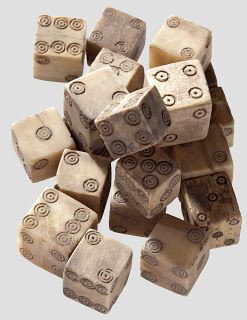
A Relatively Modern Idea: Fairness in Dice Rolling

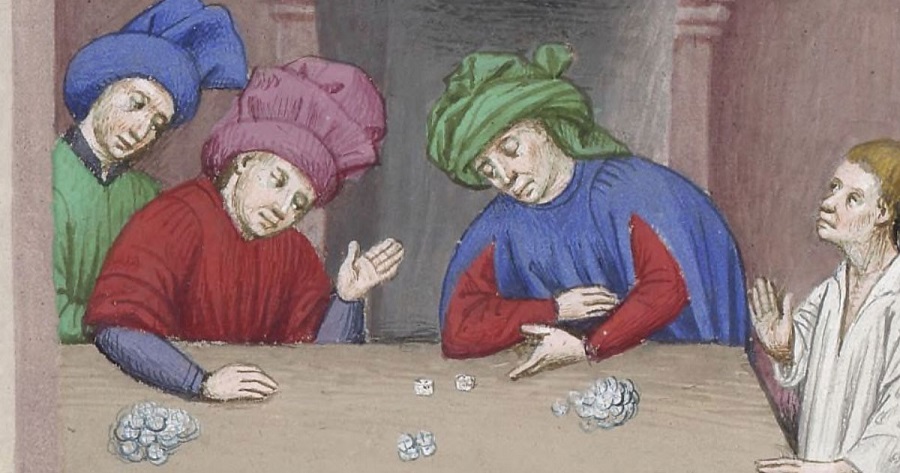
[Image courtesy of Larsdatter.com.]

This may come as a surprise to you, fellow puzzlers, but fairness was not always a priority when it came to rolling dice.

Nowadays, whether you’re going after that elusive Yahtzee, hoping for doubles to earn another roll in Monopoly, or trying to roll sevens in a game of craps, the basic concept behind throwing dice is that every outcome of a six-sided die has an equal chance to appear. Unless you’re dealing with loaded or gimmicked dice, your odds should be 1 in 6.

But a recent study by researchers from the American Museum of Natural History and the University of California, Davis, has revealed that fairness in dice rolling didn’t really become a concern for dice users until the Renaissance. Researchers gathered dice spanning 2000 years of human history to explore why this was the case.

[Image courtesy of Wikipedia.]

From an article on Science Alert:

Roman-era dice, the researchers found, were a mess when it came to shape. They were made from a variety of materials, such as metal, bone and clay, and no two were shaped entirely alike. Many were visibly lumpy and lopsided, with the 1 and 6 on opposite sides that were more likely to roll up.

In fact, it seems like variety was the name of the game in Roman times, since the number configurations, shape, and size were inconsistent across the board, although dice were fairly common in the time period.

[Image courtesy of Pinterest.]

The Dark Ages led to a downturn in dice frequency, as they become very rare between the years 400CE and 1100CE.

The use of dice rebounds after 1100, and are most commonly found in ancient Mesopotamia and Egypt in what is known as the primes configuration, meaning that opposite numbers add up to prime numbers. 1 pairs with 2, 3 pairs with 4, and 5 pairs with 6.

There was a reinvigorated focus on the mechanics of chance and calculating probability, thanks to names like Galileo and Pascal, as well as a spirit of greater scientific understanding overall. Those Renaissance influences led to both a standardized shape for dice and a change in the numbering system. At this point, most dice convert to the sevens configuration, where opposite sides add up to seven (1 pairs with 6, 2 pairs with 5, and 3 pairs with 4).

[Image courtesy of Smithsonian.com.]

And according to lead researcher Jelmer Eerkens, cheating may have been on the mind of manufacturers going forward. “Standardizing the attributes of a die, like symmetry and the arrangement of numbers, may have been one method to decrease the likelihood that an unscrupulous player had manipulated the dice to change the odds of a particular roll.”

That change from variable shapes, sizes, and designs reflects a sea change in thinking towards dice and chance. Before, the shape didn’t matter because the results were attributed to Fate or some greater outside force, but later on, an understanding of chance and probability pushed standardization of dice forward.

In the end, it’s amazing how much of our culture and worldview, both past and present, can be revealed by exploring how we solve puzzles and play games.


Thanks for visiting PuzzleNation Blog today! Be sure to sign up for our newsletter to stay up-to-date on everything PuzzleNation!

You can also share your pictures with us on Instagram, friend us on Facebook, check us out on Twitter, Pinterest, and Tumblr, and explore the always-expanding library of PuzzleNation apps and games on our website!

The Puzzly Legacy of Edgar Allan Poe

[Image courtesy of the Poetry Foundation.]

Edgar Allan Poe is one of the most influential writers in all of American literature. Not only did he come to epitomize all things ghastly and unnerving in Gothic horror with chillers like “The Tell-Tale Heart” and “The Cask of Amontillado,” but he also trailblazed the detective fiction genre with his character C. Auguste Dupin.

He also made an impact on the world of puzzles.

[Image courtesy of the National Cryptologic Museum Foundation.]

Those familiar with Poe’s works of fiction probably think I’m referring to his story “The Gold-Bug,” one of, if not the first, stories to not only mention cryptography, but to include a substitution cipher (a cipher where each letter in the alphabet is represented by a different letter, number, or symbol).

In “The Gold-Bug,” an unnamed narrator meets the unusual William Legrand, a man obsessed with restoring his family’s lost fortune. Legrand shows off a large scarab-like insect, the titular gold bug. A month later, the narrator and Legrand are reunited when the obsessed Legrand (along with his servant Jupiter) goes off on a expedition to discover the location of the buried treasure of the legendary Captain Kidd.

As it turns out, a piece of paper Jupiter used to collect the gold bug had traces of invisible ink on it, revealing a cipher containing instructions for how to find Kidd’s gold.

[Image courtesy of Bookriot.]

But this was far from Poe’s only dalliance with codebreaking. In fact, he helped popularize the art and science of cryptography with a series of articles in a Philadelphia publication called Alexander’s Weekly Messenger.

In December of 1839, he laid out a challenge to his readers, boasting that he could crack any substitution cipher that readers submitted:

It would be by no means a labor lost to show how great a degree of rigid method enters into enigma-guessing. This may sound oddly; but it is not more strange than the well know fact that rules really exist, by means of which it is easy to decipher any species of hieroglyphical writing — that is to say writing where, in place of alphabetical letters, any kind of marks are made use of at random. For example, in place of A put % or any other arbitrary character –in place of B, a *, etc., etc.

Let an entire alphabet be made in this manner, and then let this alphabet be used in any piece of writing. This writing can be read by means of a proper method. Let this be put to the test. Let any one address us a letter in this way, and we pledge ourselves to read it forthwith–however unusual or arbitrary may be the characters employed.

For the next six months, Poe tackled every cipher sent to Alexander’s. According to Poe, he received around a hundred ciphers, though historians have stated that only 36 distinct ciphers appeared in Alexander’s Weekly Messenger, 15 of which had solutions or partial solutions printed.

Nonetheless, it’s believed that Poe solved each of those 36 ciphers.

[Image courtesy of Awesome Stories.]

He followed up this impressive feat with an essay about cryptography in July of 1841 for Graham’s Magazine, “A Few Words on Secret Writing,” in which he discussed ancient methods of encryption and decryption, name-dropping codebreaking icons like Trithemius, Vigenere, and others.

He also published two cryptograms for the readers to solve, both submitted by a man named W.B. Tyler, “a gentleman whose abilities we highly respect.” Poe claimed he didn’t have time to solve either cryptogram, leaving them to the readers to crack. (Naturally, some scholars theorize that W.B. Tyler was none other than Poe himself.)

It would be over a century before the first verifiable solution to a W.B. Tyler cryptogram appeared. Professor Terence Whalen published his solution to the first Tyler cryptogram in 1992, and even offered a $2500 prize to whomever could solve the remaining Tyler cryptogram.

[Image courtesy of Cryptiana.web.]

That prize was claimed 8 years later by a Canadian software expert named Gil Broza, who cracked what turned out to be a polyalphabetic cipher, one in which several substitution alphabets are used.

Naturally, Poe’s interest in secret messages and codebreaking has led some to suspect that secret messages are lurking in his poetry and works of fiction. (Similar conspiracy theories abound regarding the works of Shakespeare.)

To be fair, there is something to this theory.

In a manner similar to Lewis Carroll hiding Alice Liddell’s name in an acrostic poem at the end of Through the Looking-Glass, Poe dedicated a poem to friend and poet Sarah Anna Lewis by hiding her name, one letter per line, in the poem itself.

[Image courtesy of The Baltimore Post Examiner.]

Of course, Poe’s method was more intricate than Carroll’s. The S in Sarah was the first letter on the first line, the A was the second letter on the second line, the R was the third letter on the third line, and so on. (Hiding coded messages in plain sight in this manner is known as steganography.)

And to this day, the hunt is on for secret messages in Poe’s works, particularly his more esoteric and oddly worded pieces. For instance, his prose poem “Eureka” — a musing on the nature of the universe itself, which actually proposed a Big Bang-like theory for the birth of the universe well before scientists offered the same theory — is believed to contain some sort of secret message or code.

Poe stated on more than one occasion that “human ingenuity cannot concoct a cipher which human ingenuity cannot resolve.” So if there is a code lurking in his works, someone will surely find it.

And in the meantime, we can still enjoy the chills, the grand ideas, and the mysteries he left behind. That’s quite a puzzly legacy.


Thanks for visiting PuzzleNation Blog today! Be sure to sign up for our newsletter to stay up-to-date on everything PuzzleNation!

You can also share your pictures with us on Instagram, friend us on Facebook, check us out on Twitter, Pinterest, and Tumblr, and explore the always-expanding library of PuzzleNation apps and games on our website!

Congratulations to Elm City Games!

I talk a lot about the puzzle/game community, my fellow puzzlers and PuzzleNationers, and so on, and that’s because, deep down, the community is one of my favorite things about being a puzzler and game enthusiast.

There are many cool, inspiring, and brilliant people that contribute so much to the world of puzzles and games, making it ridiculously fun to be a part of, and today, I’d like to give a shout-out to one particular member of that community.

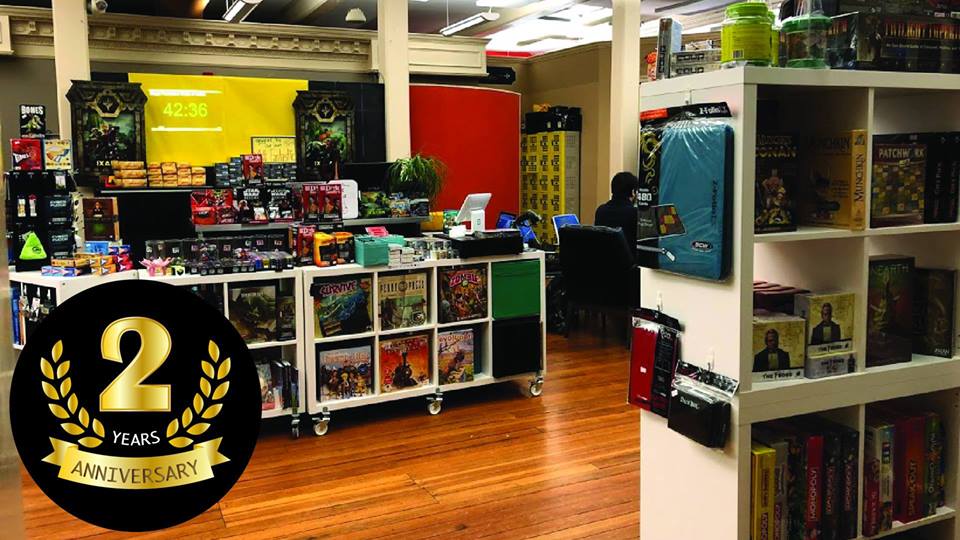
Elm City Games is celebrating its second anniversary this Saturday with a party and potluck event, and I’m overjoyed for them. They truly put the “Friendly” in Friendly Local Game Shop, representing the best aspects of the puzzle/game world.

I got to explore Elm City Games when they hosted the first Connecticut Festival of Indie Games back in May of 2016. They threw open their doors to dozens of aspiring and established game designers and a slew of game fans, and to this day, it remains one of the best puzzly events I’ve ever had the privilege of attending.

One of the coolest and most inclusive spots in Connecticut for game lovers, they even host board game mixers on Fridays so you can meet fellow players and try out any number of games from their incredible in-house library. (They’ve also cultivated a choice selection of games for purchase in the store, including rarities and lesser-known titles.)

To celebrate the occasion, they’re hosting events all day (starting at noon) like learn-to-play sessions of Dungeons & Dragons, game tournaments, and more!

What more can I say? It’s a great spot run by rad people. So if you’re anywhere near New Haven, CT, on Saturday, swing by to wish Matt and Trish well, enjoy some games, and support a terrific local hub for all things great about gaming.

[Elm City Games is located on the 2nd floor at 760 Chapel Street, New Haven.]


Thanks for visiting PuzzleNation Blog today! Be sure to sign up for our newsletter to stay up-to-date on everything PuzzleNation!

You can also share your pictures with us on Instagram, friend us on Facebook, check us out on Twitter, Pinterest, and Tumblr, and explore the always-expanding library of PuzzleNation apps and games on our website!

A Brand New Puzzle Bundle for the Penny Dell Crosswords App!

That’s right, fellow puzzlers and PuzzleNationers! It’s a special Wednesday bonus post to deliver an unexpected treat for fans of the Penny Dell Crosswords App!

We’ve just released a terrific puzzle collection to brighten up your dreary February days!

Value Pack 1 is loaded with 150 topnotch puzzles — that’s more than you’d get with one of our deluxe sets! — and it’s available for in-app purchase for both Android and iOS users right now!

With razor-sharp clues and the world-class construction you’ve come to expect from PuzzleNation, you can’t go wrong with this fantastic deal!

We’re dedicated to bringing you the best puzzle-solving experience available, right in your pocket, ready to go at a moment’s notice! That’s the PuzzleNation guarantee.

Happy solving everyone!


Thanks for visiting PuzzleNation Blog today! Be sure to sign up for our newsletter to stay up-to-date on everything PuzzleNation!

You can also share your pictures with us on Instagram, friend us on Facebook, check us out on Twitter, Pinterest, and Tumblr, and explore the always-expanding library of PuzzleNation apps and games on our website!
Two Puzzly Events: One Soon, One Today!

If you’re looking for puzzly events in the very near future to keep your solving skills sharp, then this is the post for you.

After all, the 41st annual American Crossword Puzzle Tournament is only six weeks away! Yup, on March 23rd to the 25th, puzzlers shall descend on the Stamford Marriott Hotel once again to put their puzzly skills to the test in what is lovingly known as “the Nerd Olympics.”

I’ve attended the event for several years now, and it is always one of the highlights of the puzzle year. The tournament itself takes place over two days, with six puzzles to solve on Saturday, followed by one on Sunday. Then the top three finishers in the A, B, and C brackets solve the championship puzzle on whiteboards in front of the audience.

On Friday and Saturday night, there are puzzle events, demonstrations, and panels by top puzzlers and figures in the puzzle world as well.

It’s a terrific way to not only see how you’d fare in a tournament setting, but also to meet many of your fellow puzzlers, including prominent constructors and previous tournament winners!

(Click here to read our rundown of last year’s event, and click here to visit the Facebook page for attendees and new solvers to share info and learn more about the event!)

But maybe March is too far away for you. What if you’re looking for a puzzly challenge right now?

Well then, The World Puzzle Federation has you covered, because The WPF Puzzle Grand Prix returns today!

With similar rules to the Sudoku Grand Prix (which kicked off last month), the Puzzle Grand Prix consists of multiple rounds over the course of the year, spanning all types of puzzles, including kakuro, deduction puzzles, and more.

And although only members of the WPF are active competitors for those rankings, you can still solve each round’s puzzles and see how you fare against the best in the world!

The Turkish team have prepared the puzzles for Round 1, which will be available from noon on February 9, 2018 (GMT + 1 hour) to 11:59 PM on February 12, 2018 (GMT + 1 hour).

So what do you say, PuzzleNationers? Do you accept the challenge of the Puzzle Grand Prix?

Let us know in the comments below! We’d love to hear from you!


Thanks for visiting PuzzleNation Blog today! Be sure to sign up for our newsletter to stay up-to-date on everything PuzzleNation!

You can also share your pictures with us on Instagram, friend us on Facebook, check us out on Twitter, Pinterest, and Tumblr, and explore the always-expanding library of PuzzleNation apps and games on our website!