Two Epic Treasure Hunts Come to an End!

Image courtesy of Go.ActiveCalendar.com

Boy, it’s been a good week to be a treasure hunter!

First, the trophy stashed away in Massachusetts by Project Skydrop was found.
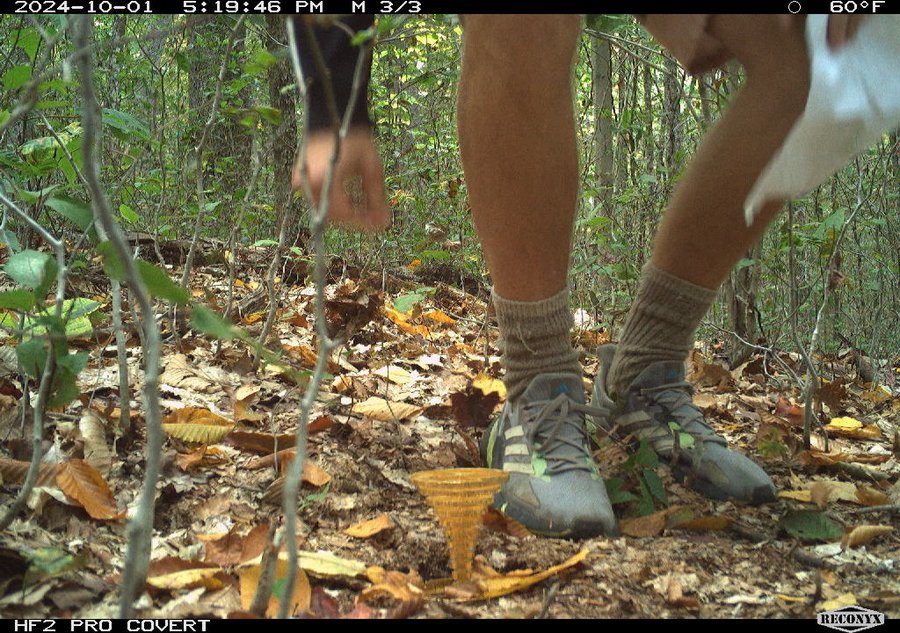
This trophy, valued at $26,000, is only part of the prize, since the trophy contained a code that granted the lucky treasure hunter who found it access to a prize pool of over $87,000! This prize pool was composed of entry fees from the many treasure hunters who signed up for the hunt.

Since the prize was found faster than Project Skydrop organizers predicted, they offered $100 each to the first twenty people to guess the exact coordinates of the now-claimed treasure. The deadline for that second-place prize is today, so I’m definitely curious how many folks were able to claim that c-note.
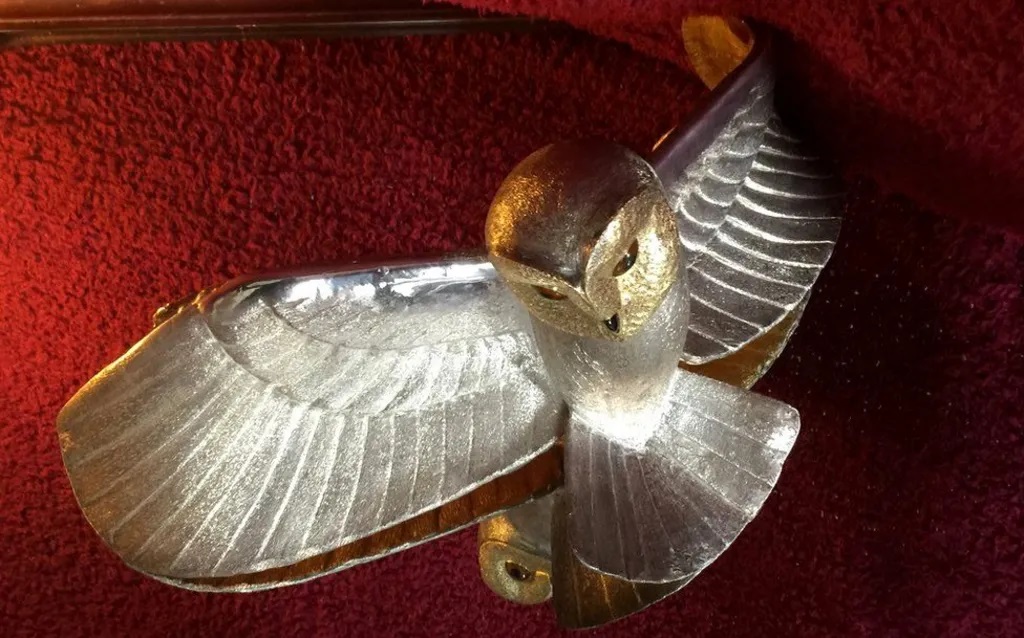
But that was only the beginning of big treasure hunt news, as the hunt for the Golden Owl has also reportedly come to an end.

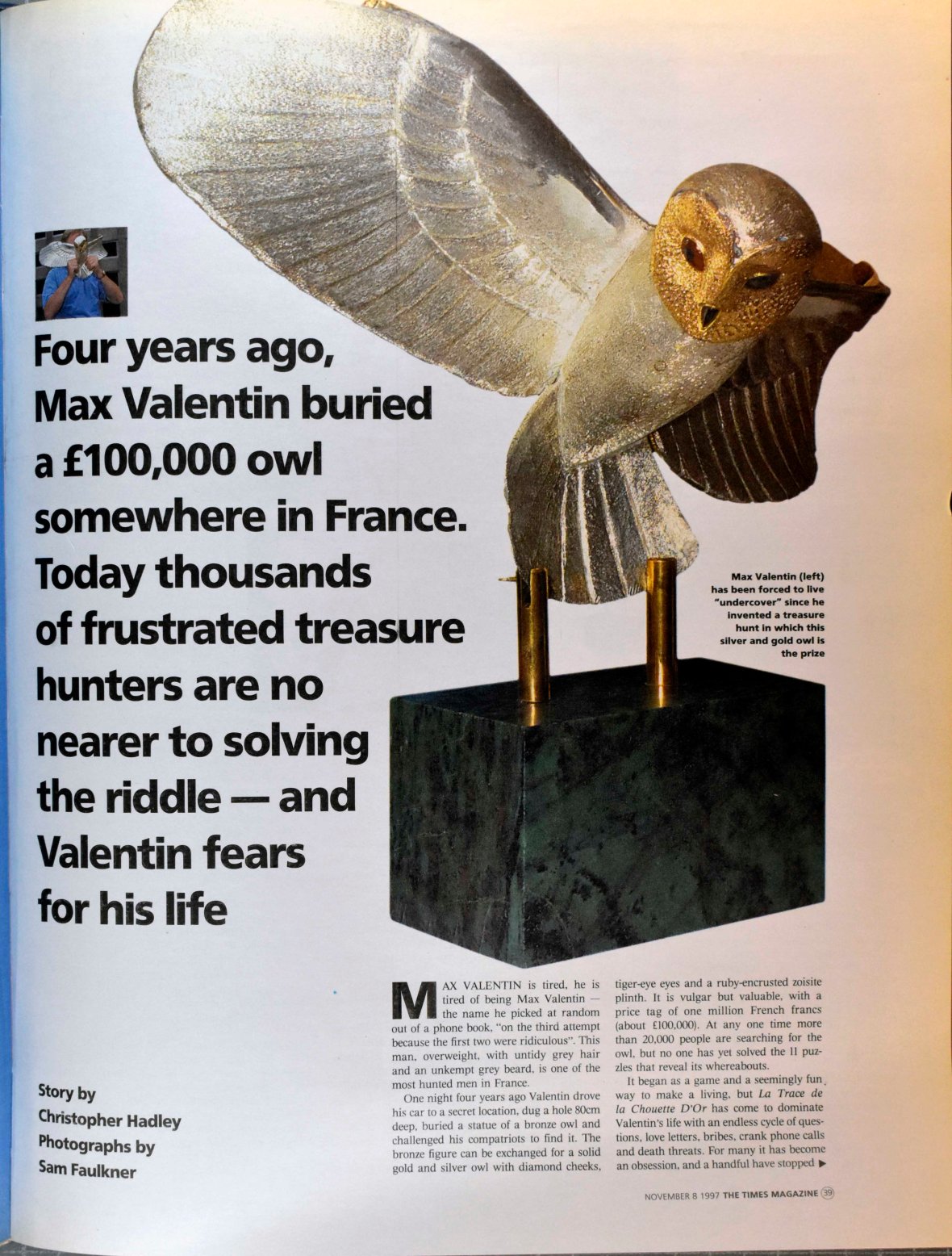
In 1993, the book On the Trail of the Golden Owl was published, igniting a thirty-year search for the titular owl. Solvers had to parse Max Valentin’s eleven riddles to locate the owl, and for decades, the prize eluded even the most ardent solvers.

Hilariously, the creator intended for the hunt to last for only a few months, open to both amateur hunters and experts. “If all the searchers put all their knowledge together, the owl would be found in… two hours”. This sounds like the folks behind Monopoly who claim the game can be played in 45 minutes.

Three years ago, the artist for the original book, Michel Becker, took over the hunt from author Regis Hauser (aka fictional treasure hunt creator Max Valentin), going so far as to dig up the owl to confirm it was still there.

There was supposed to be a bronze owl there (to be exchanged for the actual golden owl, worth over $100,000), but Becker found a rusty iron one instead. He replaced it with a bronze owl, buried it, and continued the hunt for another three years. Chouetteurs — the owl-seeking treasure hunters — got back to work.

Until last week when the owl was finally discovered.
As reported by the BBC, the hunt came to an end in France on October 3rd. Details have been scarce, and hunters around the world have been told to stop looking.

“We confirm that the replica of the golden owl was dug up last night, and that simultaneously a solution has been sent on the online verification system… It is therefore now pointless travelling to dig at any place you believe the cache might be situated.”

Some solvers are relieved that the hunt is finally over, while others are skeptical, believing that instead of hard work and puzzly grit, the prize was found by metal detector instead (which would be expressly against the rules). Still others are disappointed not to have more information, if only to see how tantalizingly close they may have gotten to the correct solution.
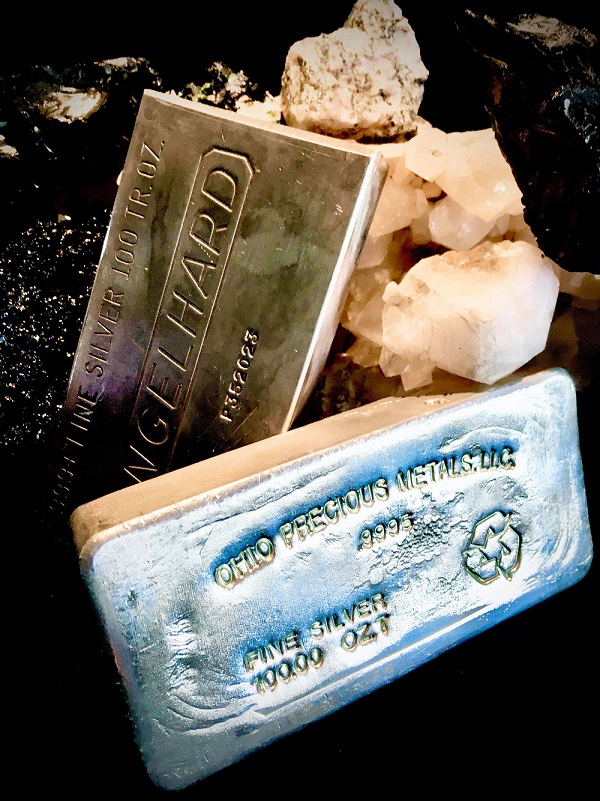
The trials and tribulations of the hunt over the years have only added to its legend.

The puzzle hunt lasted so long that it outlived the original publisher of the book, which caused the golden owl to be seized as a bankruptcy asset, something that required four years of legal wrangling to resolve.

The hunt also sadly outlived its creator, who passed in 2009. Some chouetteurs blame the stresses of legal proceedings surrounding the hunt for hastening the death of Hauser.

Two years later, it took the dedicated efforts of a group of treasure hunters to prevent Becker from selling the owl, forcing judicial intervention and saving the hunt from a premature end.

What a saga.

With the end of both the Golden Owl hunt and Forrest Fenn’s treasure hunt a few years ago, this leaves The Secret as the longest ongoing puzzle hunt in the world at this time.

But maybe some intrepid puzzler out there is already cooking up the next great puzzly treasure hunt. I suppose only time will tell.
An Immersion Course in the Language of Images

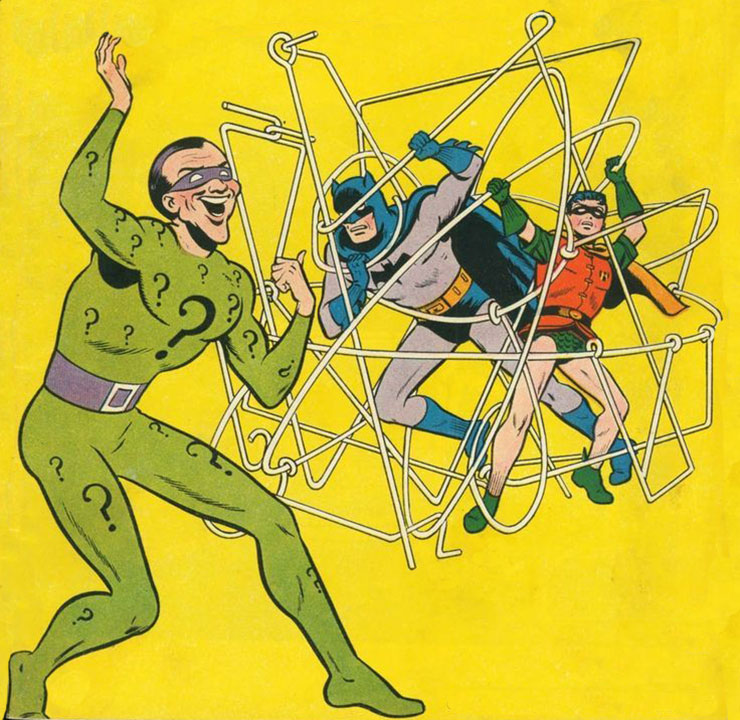
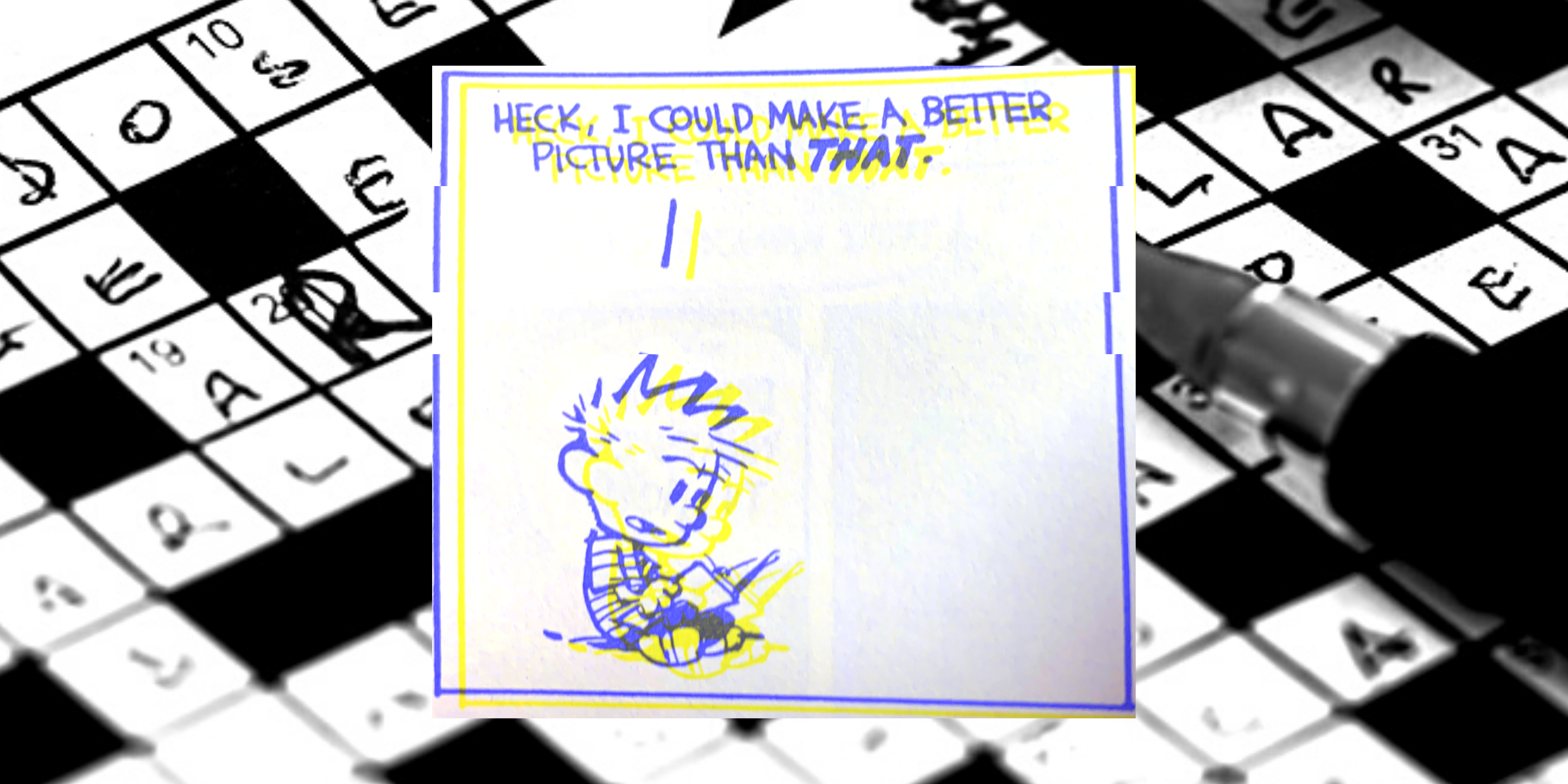
A lot can happen inside a series of squares. An Oscar-winning actor might meet a basketball star, or your favorite song might intersect with the punny punchline of a joke. Gimmicky grid construction might reveal hidden gems! Gotham might be saved from the Riddler’s clutches! Calvin and Hobbes might sculpt an army of gruesome snowmen! Krazy Kat might introduce newspaper readers to gender fluidity! You might discover new facets of your own artistic voice!

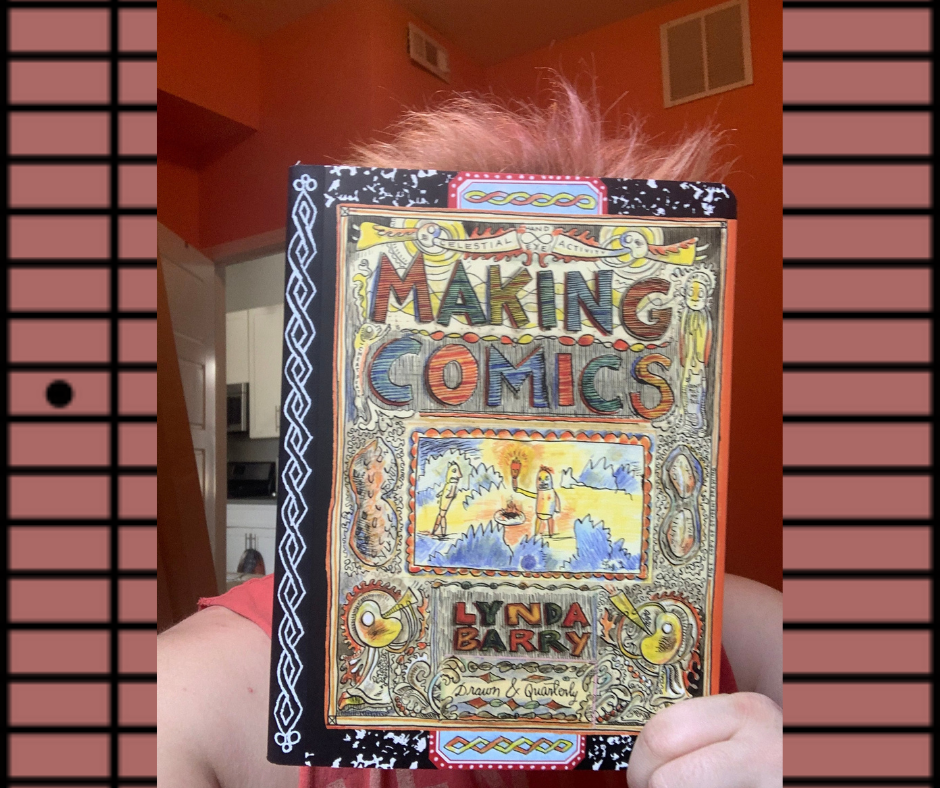
There’s a good chance you already fill in creative arrangements of squares on a regular basis, enriching your brain’s language centers by solving crosswords. Why not take this ritual a step further? Lynda Barry’s Making Comics begins with the reminder, “There was a time when drawing and writing were not separated for you,” and she shows us that it is possible to return to such a time. By partaking in the book’s exercises, you can learn to reunite images and language in your mind, to “practice the language of the image world.”

If you feel like your language centers need a good jolt, comic-making might be a perfect new hobby, and Making Comics is the perfect introductory text for puzzle fans. As Barry explains, the book’s exercises “take advantage of a basic human inclination to find patterns and meaning in random information,” and who loves patterns more than puzzlers? For instance, one simple exercise she says that anyone can do is drawing a scribble and then figuring out how to turn it into a monster. It’s that simple.

Your blogger with the book in question.

Many of the pattern-finding exercises in Making Comics’ treasure trove are collaborative, depending on a classroom setting or simply a creative partnership among friends. Others, however, can be done in solitude, including the exercises I’m going to take you through below. To prepare: Barry recommends, when just starting out, working with black Flair pens, a composition notebook (preferably not made from recycled materials), index cards (blank on one side), and basic 8.5×11 printer paper. She describes the composition notebook as “a place rather than a thing,” and says that you should try to keep it by your side like a faithful dog. “Making comics involves the same daily practice that learning any language does,” so keeping your materials handy is crucial.

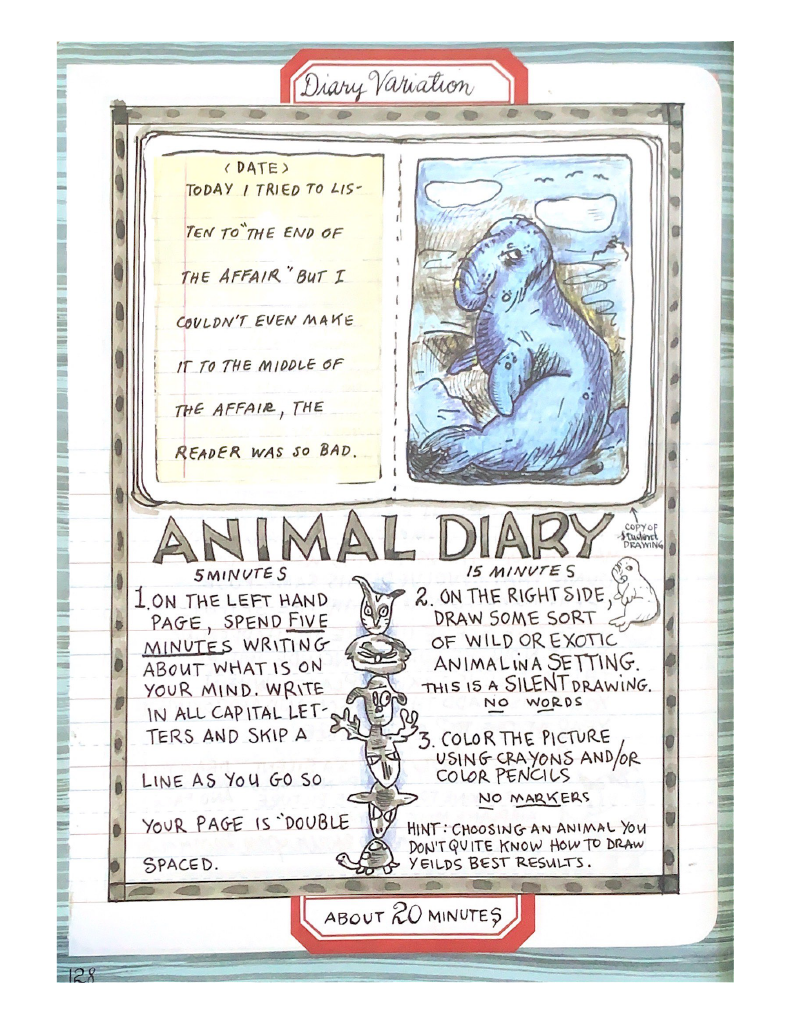
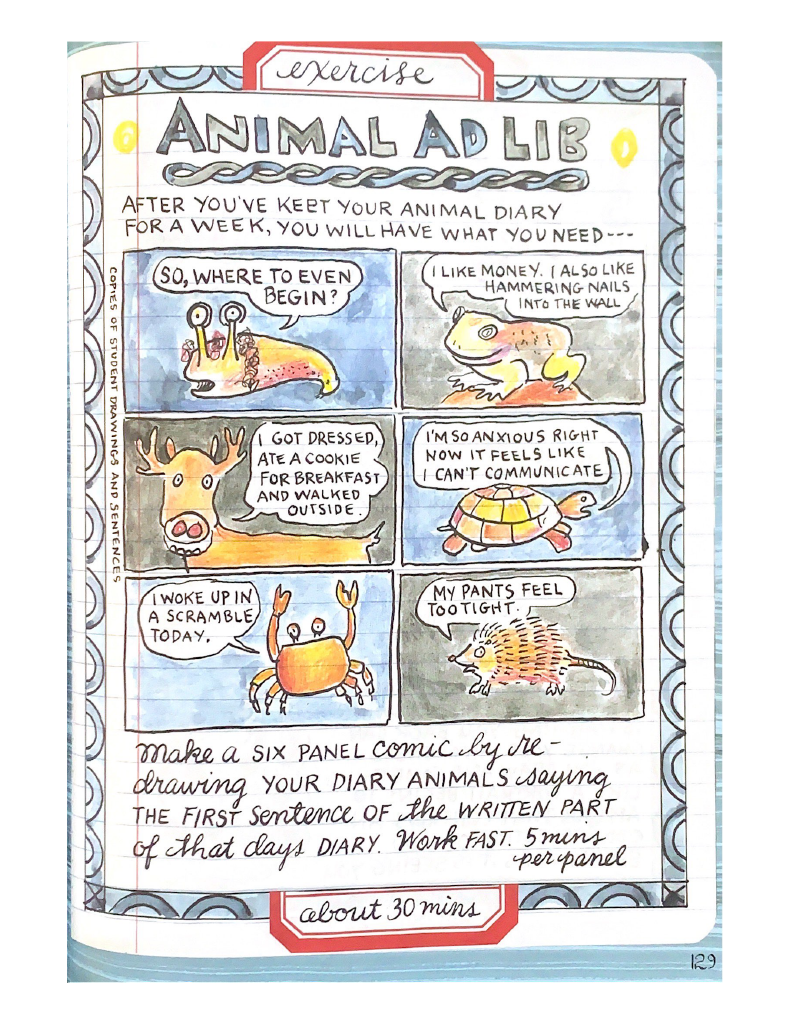
Do you have your materials? Great! Let’s dive into the Animal Diary and consequent Animal Ad Lib, instructions pictured below!

More of Barry’s comics wisdom can be found on her Tumblr and Instagram, or of course, if you’re hooked, you can always pick up a copy of the book. It’s a full immersion course in a new language, in a new way of seeing.


For more fun, daily forays into the world of language, there’s Daily POP!

You can find delightful deals on puzzles on the Home Screen for Daily POP Crosswords and Daily POP Word Search. Check them out!

Thanks for visiting PuzzleNation Blog today! Be sure to sign up for our newsletter to stay up-to-date on everything PuzzleNation!

The Sestina and You

Last week, we began to explore a rich riddle together: “How is a poem like a puzzle?” We discussed a couple of important answers, but overlooked the immediately obvious answer that both begin with “P” and have—at least, for a significant portion of English-speakers—two syllables. This may seem overly superficial, but those similarities are nothing to sneeze at! When we’re talking about puzzles and poems, letters and length are deeply important.

With regard to syllables, our post discussed the puzzly limitations of forms like haiku, which become increasingly challenging as you write. Even more challenging than the haiku is the sestina, a French form that requires expert-level problem-solving skills.

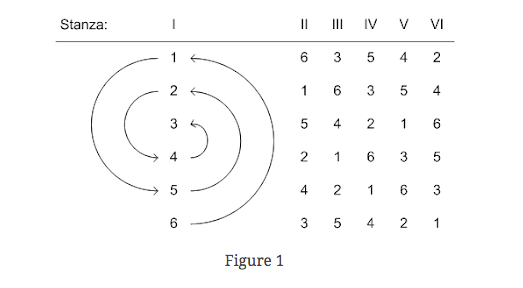
Typically unrhymed (though rhyming would only add an extra fun brain-bending element), a sestina is a thirty-nine-line poem made up of six six-line stanzas plus a final three-line stanza known as an “envoi.” The same six line-ending words appear in each stanza, though mixed up like a Boggle cube into a different, strict order in each stanza. If we label the last word of each of the first six lines 1, 2, 3, 4, 5, 6, then the last word of each of the stanzas afterward follows this pattern:

Stanza two: 6, 1, 5, 2, 4, 3

Stanza three: 3, 6, 4, 1, 2, 5
Stanza four: 5, 3, 2, 6, 1, 4
Stanza five: 4, 5, 1, 3, 6, 2
Stanza six: 2, 4, 6, 5, 3, 1

The final envoi of three lines must contain all six of the ending words. Three of the words will come at the end of the lines, and the other three words will be contained within.

Thus, once the six ending words are established in the first stanza, the ending words of the following stanzas are set in stone, turning the exercise of writing poetry into an elaborate game of fill-in-the-blank. The more wedded you are to having your poem make a lick of sense, the more crucial it becomes to tap into your puzzle brain to determine what jigsaw pieces of language could possibly go inside the parameters established by the “corner pieces” that are these ending words.

Sestina diagram via http://aka-arcadia.blogspot.com/2009/03/sestina-and-double-sestina.html. What other brainteasery poetic limits might we invent if we start placing numbers on different labyrinthine shapes?

Sestina examples that follow the rules of the puzzle:

Farm Implements and Rutabagas in a Landscape by John Ashbery

A Miracle for Breakfast by Elizabeth Bishop

Forage Sestina by Marilyn Hacker

And one sestina example that breaks them:

Deleting Names (A Decaying Sestina) by Lawrence Schimel

Even if you don’t consider yourself a poet, if word puzzles are your jam, we invite you to try your hand at a sestina, and watch as it unlocks the puzzler inside!


First—consider warming up your verbal, puzzling centers by taking our crosswords or word searches for a spin!

You can find delightful deals on puzzles on the Home Screen for Daily POP Crosswords and Daily POP Word Search. Check them out!

Thanks for visiting PuzzleNation Blog today! Be sure to sign up for our newsletter to stay up-to-date on everything PuzzleNation!

25 Days of Coding Puzzles to Save Christmas!

Advent calendars come in all shapes and sizes.

Some share traditional Bible verses, others share chocolates or small trinkets. You can find advent calendars with mini Funko Pop figurines inside, LEGO sets, ornaments, flavors of tea, socks, beverages, candle scents… practically anything comes in advent calendar form these days.

I have friends who do a holiday movie advent calendar each year, which gives them a different holiday movie to watch each day en route to Christmas. Our holiday gift guide featured an escape room advent calendar with a puzzle to solve to tell you which door to open next!

As it turns out, programmers and code-minded puzzlers have an advent calendar of their own to enjoy. It’s known as Advent of Code.

[Some participants even share their solving efforts on YouTube!]

Each day leading up to Christmas, tens of thousands (possibly hundreds of thousands!) of programming enthusiasts log onto the Advent of Code website to find out what the day’s two-part challenge is.

Yup, two puzzles await solvers every day. (Completing the first one on a given day unlocks the second puzzle.) Each one requires them to put their coding skills to the test in order to solve various problems or complete particular tasks. Participants can code their solutions in the programming language of their choice, and are rewarded with a gold star each time they successfully solve a problem.

Each year, the Advent of Code challenges are built around a unique story. This year, for instance, involves Santa’s elves losing the keys to Santa’s sleigh, dropping them into the ocean.

Thankfully, the elves are equipped with a submarine for just such an emergency, and with the programmer’s help, they need to complete their underwater quest to save Christmas.

So far, the coding puzzles have involved everything from figuring out how to pilot the submarine and eluding a hungry whale to escaping a sea cave and mapping the floor of an ocean trench.

Advent of Code has been running annually since 2015, and attracts coding enthusiasts of all skill levels. Some simply enjoy the challenge, while others seek to be one of the top 100 fastest solvers, landing on an elite leaderboard of competitors.

And not only has creator Eric Wastl built a new holiday tradition for many puzzle-minded programmers out there, but he’s also inspired communities of coding fans to come together. (The subreddit for Advent of Code has over 35,000 members!)

I look forward to reading how the elves’ submarine adventure ends. If you’re interested in finding out more about Advent of Code, check out their website here.


   dailypopwsicon

Treat yourself to some delightful deals on puzzles. You can find them on the Home Screen for Daily POP Crosswords and Daily POP Word Search! Check them out!

Thanks for visiting PuzzleNation Blog today! Be sure to sign up for our newsletter to stay up-to-date on everything PuzzleNation!

Hosting A Holiday Puzzle Hunt?

If you’re looking to spruce up Christmas morning with a puzzly challenge, or maybe prevent the kids from tearing through that wrapping paper in record time, you could create a mini holiday puzzle hunt for them to extend the holiday fun a little longer.

There are several ways to do this. You could have Santa leave them a treasure map to follow. You could create a scavenger hunt with different places to check. Or you could create a puzzle hunt where each clue or puzzle leads to the next and has to be solved in order.

But how do you flesh it out and keep it seasonal? We’ve got a host of suggestions awaiting you. Sprinkle a few of these across the house on Christmas morning and you’ll be sure to delight the puzzly denizens of your home after Santa has come and gone.


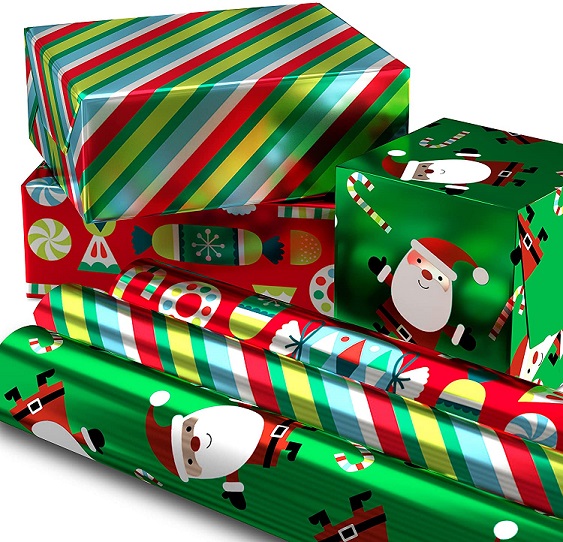
Maybe they have to look for gifts wrapped in a particular type of wrapping paper. Perhaps there are clues written on them or hidden inside, or maybe the wrapping paper itself sends them on to their next clue.

If it’s more of a scavenger hunt-style of game, the wrapping paper approach is perfect. They could be stashed around the house, waiting to be found, and there’s no threat of them being mixed up with the actual gifts.

Perhaps there are puzzle pieces at the bottom of their stockings, and they have to work together to assemble them and figure out where to go next. (Craft stores have plain white mini jigsaw puzzles, you could write out or draw out clues, mix up the pieces, and distribute them in several spots with ease.)

Did Santa leave a clue when he sampled the milk and cookies left out of him? Maybe a gingerbread man points the kids in a certain direction, or Santa urges the children to have breakfast before the festivities start (pushing them toward another clue in the kitchen AND toward a healthy Christmas breakfast in the morning).

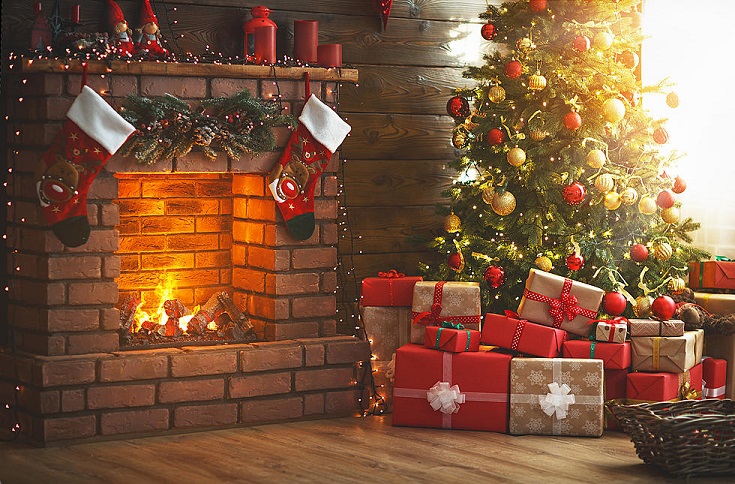
Your Christmas tree is also perfect for concealing clues and puzzly elements. With lights and ornaments galore, it’s the ideal spot to hide things, whether it’s letters that spell things out, or numbered clues to be solved in order. You could even hang different numbers of various objects (6 candy canes, 3 silver stars, 4 photo ornaments) that are used as a code later to unlock something.

Does the Elf on a Shelf have a clue? Did it see something, or can it point them in the right direction? Is there a paper chain of snowflakes where the different branches of the snowflake are highlighted like clock hands?

Once you start looking at the trappings of the holiday in a puzzly way, you’ll find more and more methods for stashing hints and elements of your puzzle hunt anywhere and everywhere.

Hopefully these suggestions got you off to a good start! Have you hosted a holiday puzzle hunt or celebrated the holidays in a puzzly way, fellow PuzzleNationers? Let us know in the comments section below! We’d love to hear from you.


   dailypopwsicon

Treat yourself to some delightful deals on puzzles. You can find them on the Home Screen for Daily POP Crosswords and Daily POP Word Search! Check them out!

Thanks for visiting PuzzleNation Blog today! Be sure to sign up for our newsletter to stay up-to-date on everything PuzzleNation!

A Punny Costume Challenge Full of Tricks and Treats for Halloween!

Happy Halloween, puzzlers and PuzzleNationers!

One of the best things about Halloween is guessing what people’s costumes are. Clever costumes can be great fun, and I’m a huge fan of costumes that only cost a few bucks to put together, because they really let your creativity shine through.

Punny costumes lend themselves to the low-budget costume genre brilliantly. So it’s only appropriate that we celebrate Halloween in the puzzliest way possible — by looking at some punny costumes!

It’s simple. I post a picture, and you guess what the costume is.

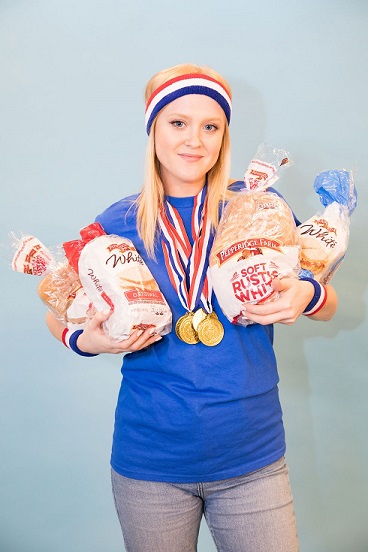
For example:

puncostume2021 ex

She’s the family breadwinner!

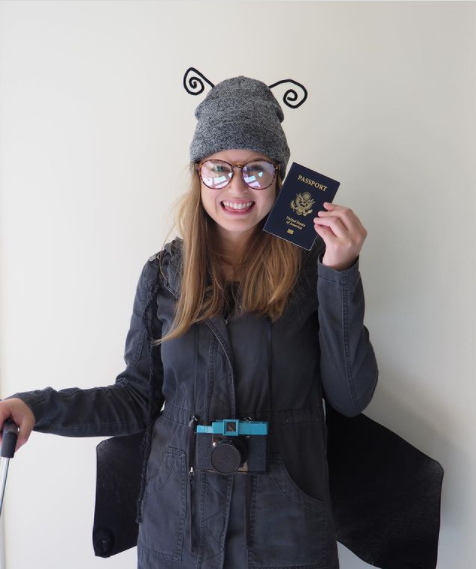
I’ve compiled ten costumes for you to figure out. Let’s see how many you can get!


PuzzleNation’s Punderful Halloween Costume Game!

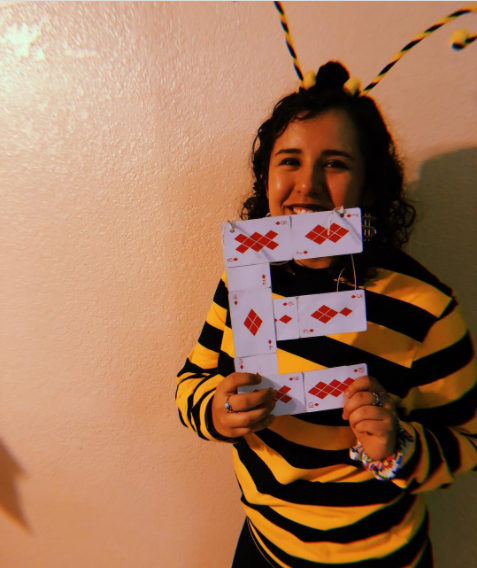
#1

puncostume2021 01

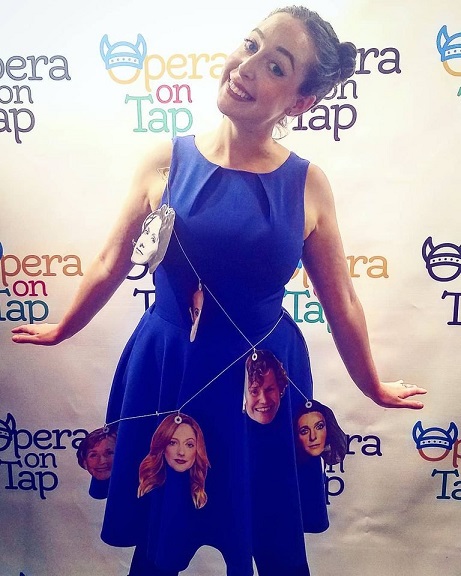
#2

puncostume2021 02

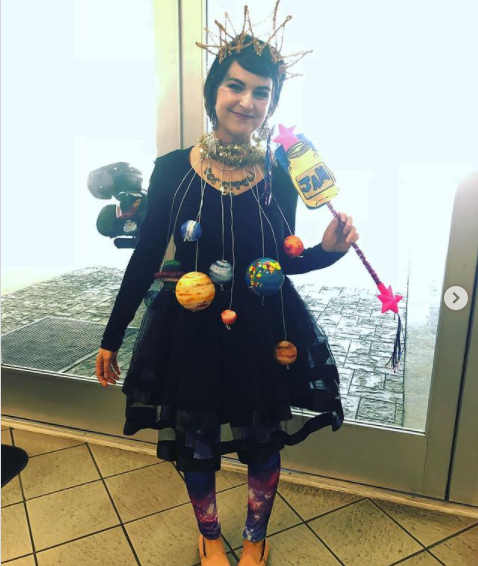
#3

puncostume2021 03

#4

puncostume2021 04

#5

puncostume2021 05

#6

puncostume2021 06

#7

puncostume2021 07

#8

puncostume2021 08

#9

puncostume2021 09

#10

puncostume2021 10

[All photos will be accredited in our answer post next week!]


How many did you get? Have you seen any great punny costumes we missed? Let us know in the comments section below. We’d love to hear from you. And Happy Halloween!

dailypopwsicon

Halloween is almost here, and we have some spookily good deals for you to check out. You can find them on the Home Screen for Daily POP Crosswords and Daily POP Word Search! Check them out!

Thanks for visiting PuzzleNation Blog today! Be sure to sign up for our newsletter to stay up-to-date on everything PuzzleNation!