The Solution to the Kryptos Puzzle: Up for Auction Soon!

Kryptos.

No, sorry, we’re not doing a post about Superman’s dog.

Instead, today we’re discussing how the solution to one of the great unsolved cryptographic mysteries of our time is going up for auction in October.

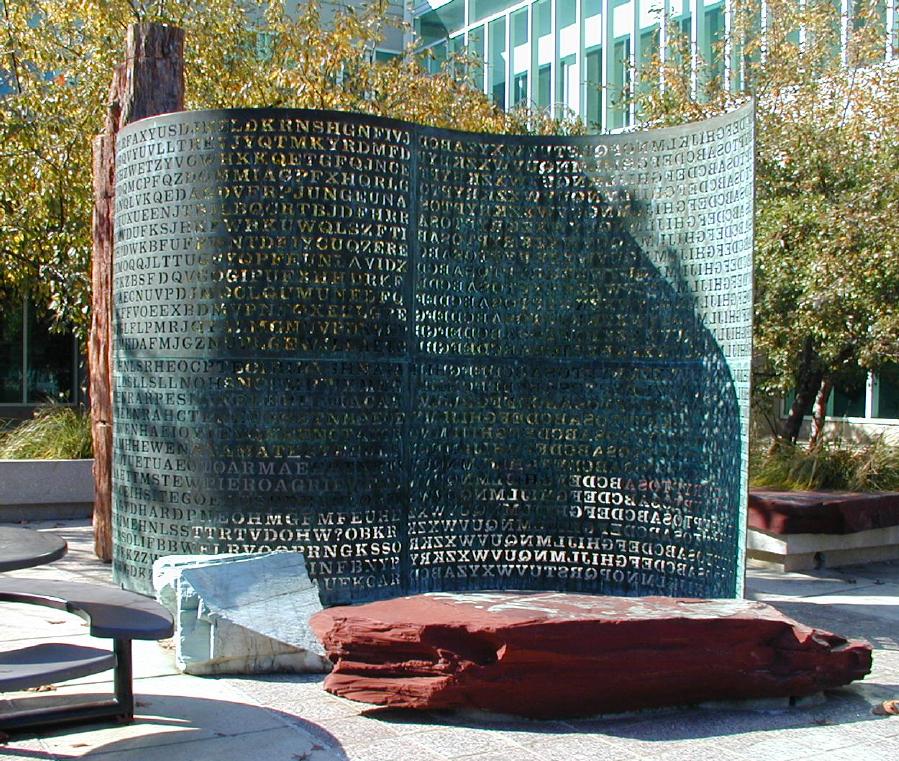
For the uninitiated, Kryptos is a flowing sculpture made of petrified wood and copper plating, sitting over a small pool of water. It was revealed to the world in 1990, coded by former chairman of the CIA’s Cryptographic Center Edward Scheidt, and designed by artist Jim Sanborn. Designed to both challenge and honor the Central Intelligence Agency, for decades Kryptos has proven to be a top-flight brain teaser for codebreakers both professional and amateur.
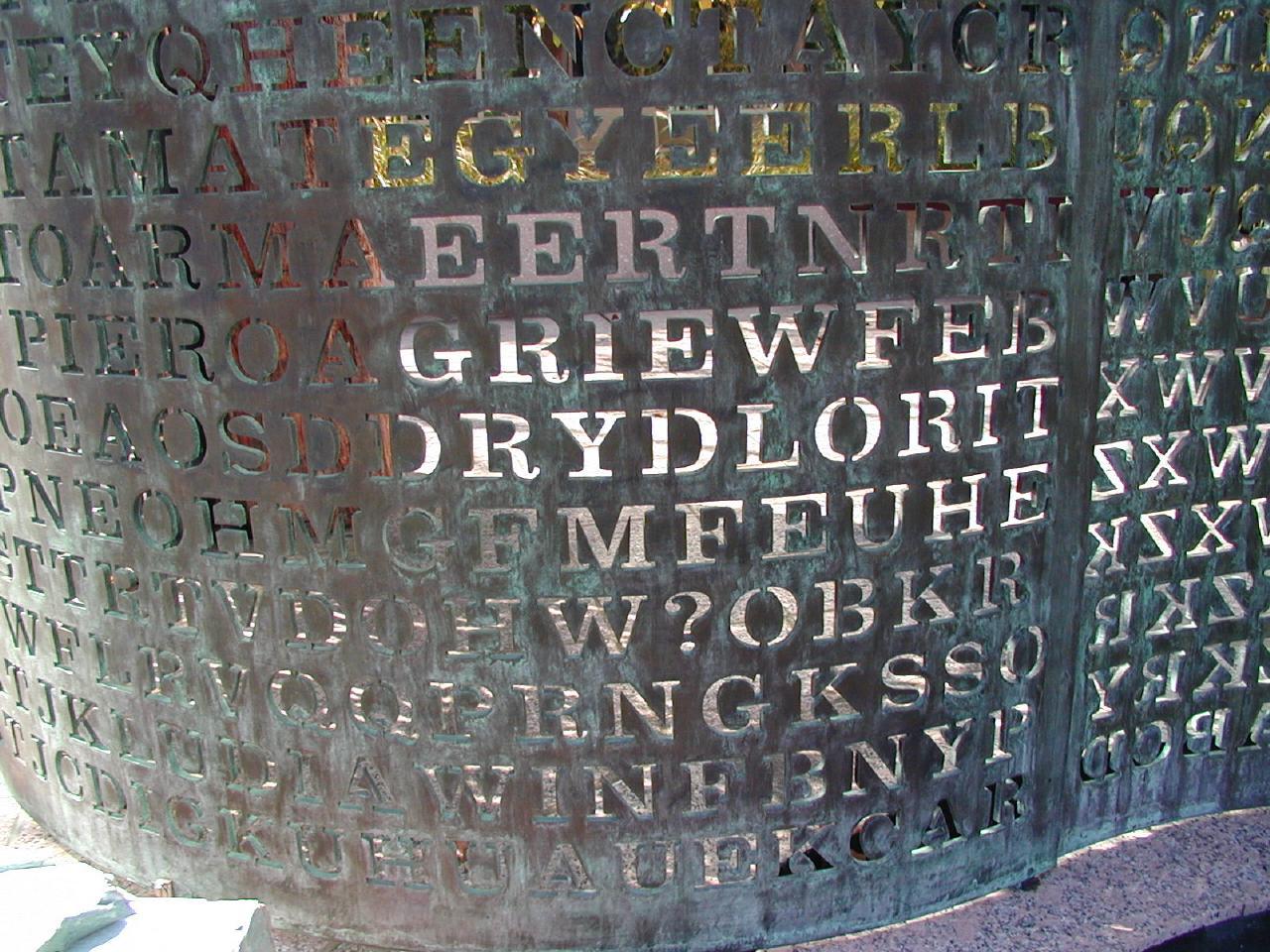
There are four distinct sections, utilizing different forms of encryption. And amazingly, the fourth section continues to elude codecrackers to this very day.

It took nearly a decade before anyone announced a solution to the first three encryptions. A computer scientist named Jim Gillogly announced in 1999 that he had cracked passages 1, 2, and 3 with computer assistance.

The CIA, not to be one-upped, then revealed that one of their own employees, an analyst named David Stein, had solved those same three passages the year before, using only pencil, paper, and lunchtime man-hours.

But a 2013 Freedom of Information Act request into records of the National Security Agency revealed that an NSA team actually cracked those same three passages back in 1993 as part of a friendly rivalry between the NSA and CIA, provoked by former NSA director and then-deputy CIA director William O. Studeman.

Image courtesy of G.A. Matiasz

Passage 1 employs a Vigenère cipher, a letter-shifting cipher that has been used for centuries, also known as a periodic polyalphabetic substitution cipher, if you want to get fancy with it.

The message, penned by Sanborn himself, reads Between subtle shading and the absence of light lies the nuance of iqlusion. [Iqlusion is an intentional misspelling of “illusion.”]

Passage 2 also employs a Vigenère cipher, but utilizes a different keyword than Passage 1. The message, also composed by Sanborn, points toward something hidden nearby:

It was totally invisible. How’s that possible? They used the earth’s magnetic field. x The information was gathered and transmitted undergruund to an unknown location. x Does Langley know about this? They should: it’s buried out there somewhere. x Who knows the exact location? Only WW. This was his last message. x Thirty eight degrees fifty seven minutes six point five seconds north, seventy seven degrees eight minutes forty four seconds west. x Layer two. [Again, there’s an intentional misspelling here with “undergruund.”]

Passage 3 uses a transposition cipher, which relies on the positioning of given letters in order to properly spell out a message. The message is inspired by the words of Howard Carter, the archaeologist who opened King Tut’s tomb:

Slowly, desparatly slowly, the remains of passage debris that encumbered the lower part of the doorway was removed. With trembling hands I made a tiny breach in the upper left-hand corner. And then, widening the hole a little, I inserted the candle and peered in. The hot air escaping from the chamber caused the flame to flicker, but presently details of the room within emerged from the mist. x Can you see anything? q [Again, there’s an intentional misspelling with “desparatly.”]

Although some codebreakers believe the misspellings of “iqlusion,” “undergruund,” and “desparatly” are simply Sanborn’s crafty attempts at misdirection, others believe they are clues hinting at how to crack Passage 4, which is only 97 characters long.

Sanborn has even offered hints to help frustrated solvers in their efforts to unravel the mystery of Passage 4. In 2006, he revealed that letters 64 through 69 in the passage, NYPVTT, decrypt to “Berlin.”

And in 2014, Sanborn revealed that letters 70 through 74, MZFPK, decrypt to “clock.” So the message has something to do with the Berlin Clock, although Sanborn has stated “there are several really interesting clocks in Berlin.”

Image of the Berlin Clock courtesy of Secret City Travel.com

Finally, in 2020, Sanborn revealed that letters 26 through 34, QQPRNGKSS, decrypt to “northeast.”

And yet, despite all these hints and several decades, K4 remains unsolved. (And to those hoping that AI will prove smarter than humans in this instance, that hasn’t been the case. Sanborn revealed to The New York Times that he has received solutions devised by ChatGPT and described them as “nothing short of fairly silly.”


So, if you win the auction, what do you get?

  • the handwritten K4 code, complete with a signed typed letter by Ed Scheidt, the CIA employee and cryptographer behind all four Kryptos codes
  • the copper model submitted to the CIA as a sample of the final piece
  • photographs relating to the creation of Kryptos
  • the original dedication pamphlet signed by late CIA director William Webster
  • copies of the coding charts used to encode Kryptos

And apparently, being the secretkeeper for Kryptos can be profitable. Sanborn grew weary of fielding dairy requests and queries for solutions, clues, and other data, and actually started charging a $50 fee for replies. He claims this fee has earned him $40,000 a year!

Sadly, Sanborn feels that he no longer has “the physical, mental or financial resources” to maintain his role as the keeper of K4’s secret, and wishes to hand that responsibility to another, which would allow him time to focus on other artistic endeavors.

And given that he’ll be turning 80 around the same time that the auction should be wrapping up, it’s fair to say he has more than earned this retirement from Kryptos.

The online auction of Kryptos by RR Auction begins on October 17 and closes on November 20 at 7 p.m. ET.

Will you be bidding, fellow puzzler? I fear my budget of — *checks wallet* — $29 is not going to get it done.

Riddles of the Heart!

puzzlelove

I’ve always been a sucker for a story where puzzlers help make someone’s life better, their world a little bit more magical. I’ve had the privilege of constructing and facilitating several puzzly marriage proposals, for instance.

But there’s something even more heartwarming when it’s anonymous puzzlers helping a stranger with a puzzly dilemma. Like the time online puzzlers saved Christmas by decoding a kid’s encrypted wish list to Santa for his baffled mother.

This time around, it’s not Christmas magic, it’s a potential romance.

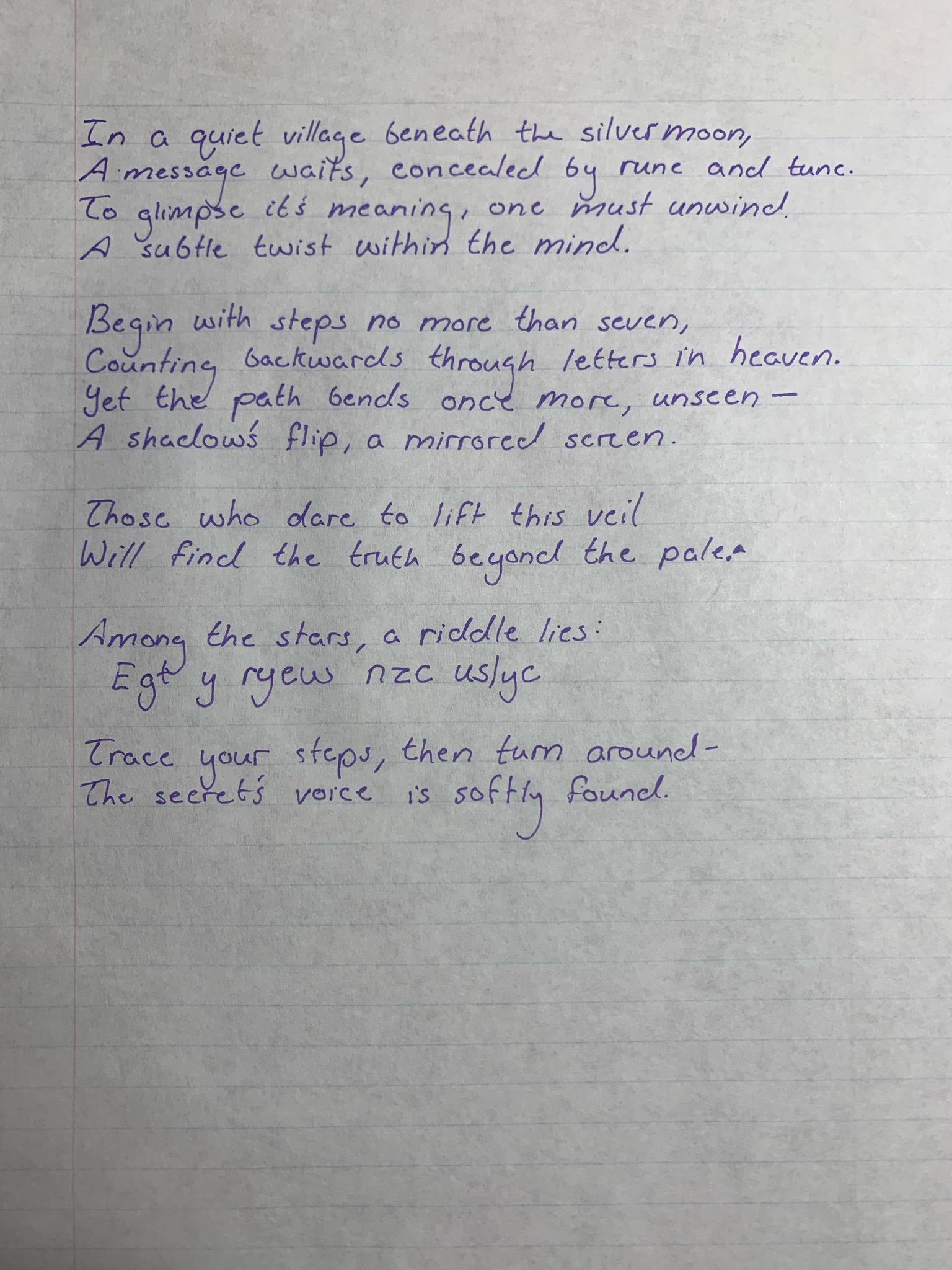
In a recent Reddit post, a request for help went out the puzzliest of D&D players:

I asked someone out using a riddle, and they responded with another one, but now I can’t solve it. We both dm at our local game store, and we’re running games tomorrow, I need a quick solution. I don’t need someone to give me the answer, but can someone please help walk me through how to solve this?

First off, that’s very cute.

Secondly, my dude, they responded to a riddle with your riddle. That’s a yes, my friend! Congrats.

As you might expect, his fellow riddle fans and puzzle fiends quickly explained how to find the solution, hoping that this marvelous exchange of riddles leads to more! Everyone loves a meet-cute, especially a puzzly one!

But what about you, fellow solver? Could you crack it?

I’ll give you a bit of space before I reveal how to solve it.

.

..

….

…..

……

…….

……

…..

….

..

.

Ready? Okay, let’s get to the riddle itself.

Egt y ryew nzc uslyc

This is clearly a single substitution cipher, also known as a simple substitution cipher, where each letter represented by another.

You could tackle this in a brute force way, treating it like a cryptogram. We know that “y” is going to be A or I. The most common three-letter word is “the”, which is a good place to start. At the very least, we can probably assume that “c” is the letter E, since it’s at the end of several words.

But the poem tells us how to solve it.

Start with the “letters in heaven,” your alphabet.

ABCDEFGHIJKLMNOPQRSTUVWXYZ

We get references to a mirrored screen or a shadow’s flip, so let’s try the alphabet backwards and placed underneath.

ABCDEFGHIJKLMNOPQRSTUVWXYZ
ZYXWVUTSRQPONMLKJIHGFEDCBA

We’re told to count backwards with steps no more than seven.

So let’s take the first letter in our secret message, E. Counting backwards (and wrapping around the alphabet again), that brings us to X. And in the mirror of X, we have C.

Continuing, seven letters back from G is Z, and in the mirror, A. Seven letters back from T is M, and in the mirror, N.

Egt Y ryew nzc uslyc
CAN

Continue for all the letters, and you get your answer written in the stars (presumably replying to his riddle):

Can I pick the movie?

Here’s hoping we get some updates in the future (or more riddles) from this pair of dice-rolling riddle-crafting delights.

And let’s offer one more huzzah for the anonymous puzzlers who helped crack the code!

Puzzlers… is there anything they can’t do?

A Way to Make Impossible Objects… Less Impossible?

One of the most remarkable things about humans is that we can envision impossible things. Our imagination allows us to go well beyond what is physically and scientifically achievable to ponder the furthest reaches of creativity.

And no, I’m not just talking about the mythical 15×15 crossword with only fifteen words across and no black squares. THOUGH WE CAN DREAM, CAN’T WE?

Sorry, I digress.

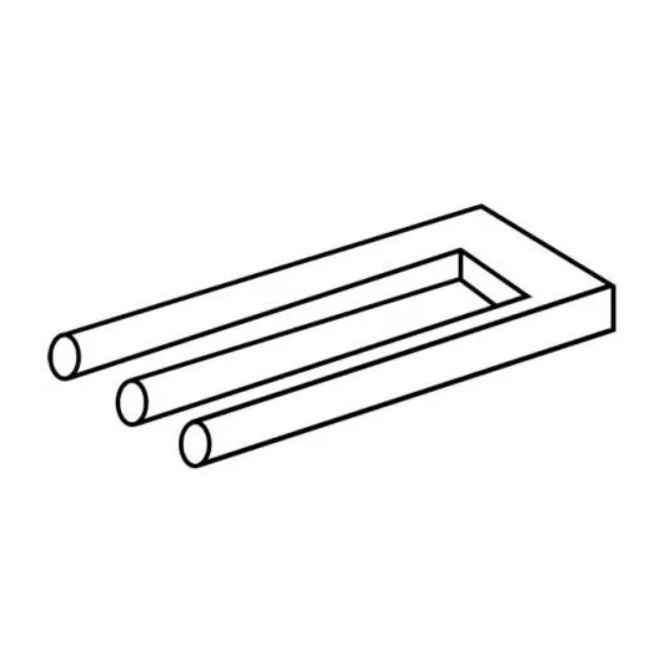
When I say impossible objects, I’m talking about things like the impossible trident (pictured above) or the Penrose triangle (pictured below).

These are impossible objects, things that play with our perceptions in a two-dimensional environment like a drawing, but cannot be created in a three-dimensional environment without cutting or bending them.

Or they couldn’t, until very recently.

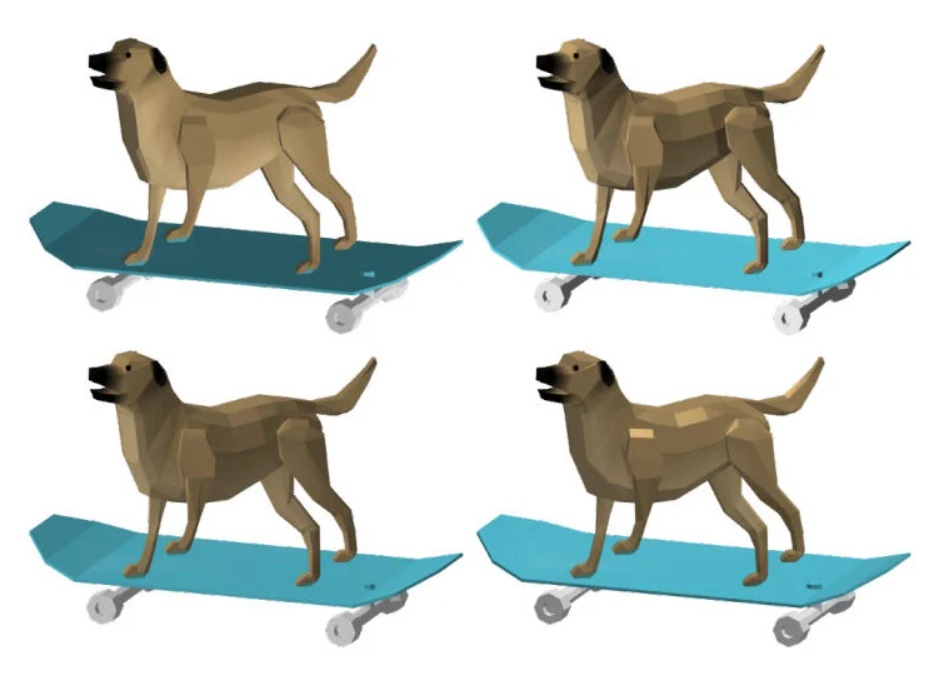
Researchers at MIT have announced their new software program, which they call Meschers, designed to create representations of these impossible objects with greater dimension than a drawing.

It’s not quite three-dimensional, because the shapes are impossible, but these “2.5-dimensional” representations allow us to process them visually as if they were completely three-dimensional.

Usually, the optical illusion of an impossible object falls apart when viewed from a different angle.

But the Meschers program — the name combines M.C. “Escher” and “meshes” — allows scientists and mathematicians a better model they can use to perform calculations and study different variables without the limits of two-dimensional representations.

It’s hard to predict where programming like this will take us. MIT PhD student Ana Dodik says the program could eventually aid in research across fields as varied as thermodynamics, architecture, and geometry.

They also said the code for the software will be released to the public, so you’ll have the opportunity to create some impossible objects yourself soon!

But, until then, please enjoy this Meschers rendering of the impossible dog, complete with different lighting effects.

Happy visualizing, everyone!

Mo(i)re Mind-Bending Art!

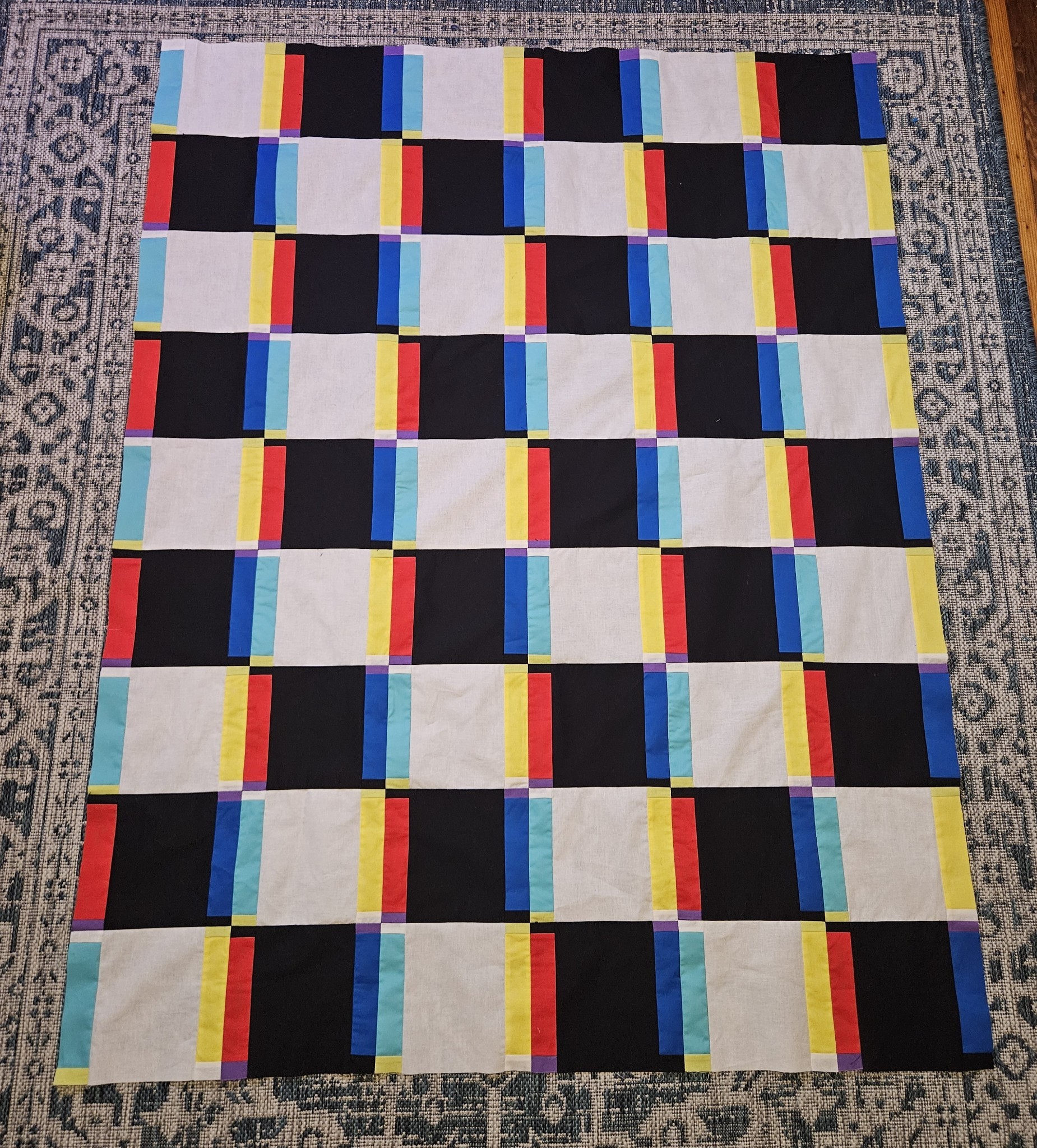
Back in January, I shared a visually baffling image I’d stumbled across: a glitch quilt. The quilt was purposely sown with opposing colors to make it look BLURRY, and it’s as clever as it is hard to look at.

I’ve always been a sucker for optical illusions, which I consider puzzles for the eye. They’re a visual treat that tricks you into seeing things that aren’t there. These inspired bits of perceptual trickery can fool you into thinking near is far, big is small, or two dimensions are really three.

And I’ve been fascinated ever since by this growing subset of glitch art where incredible precision is required to create physical art that looks fuzzy, uncertain, or even moving from the right angle.

So you can imagine my joy when I found this YouTube short:

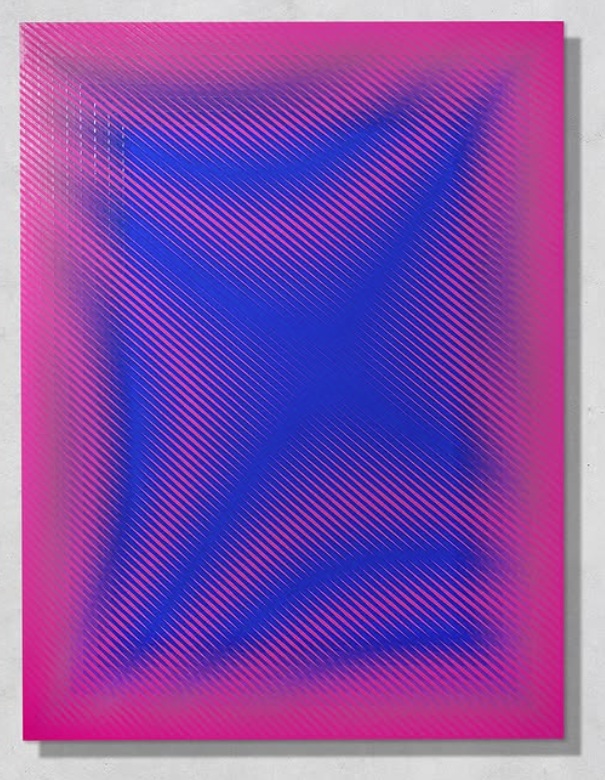
This is the work of artist Enzo Prina, a physical media artist who specializes in Moiré art.

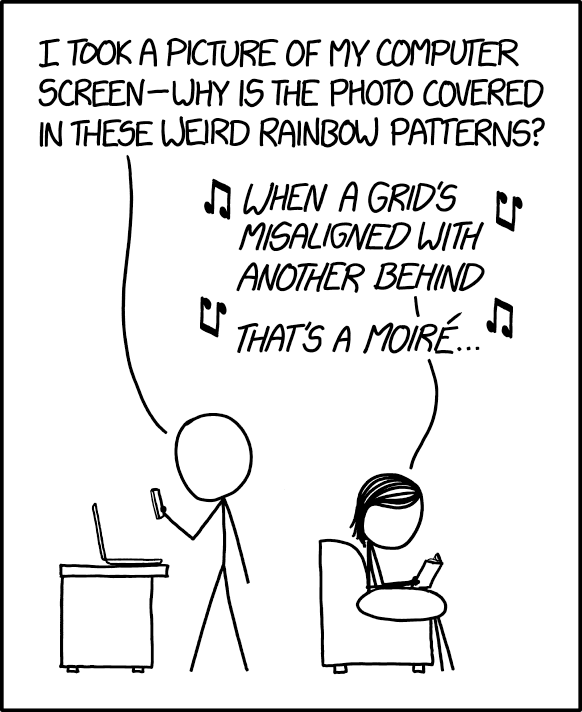
What is Moiré, you may ask? Well, XKCD has a fun explanation:

But please allow me to elaborate.

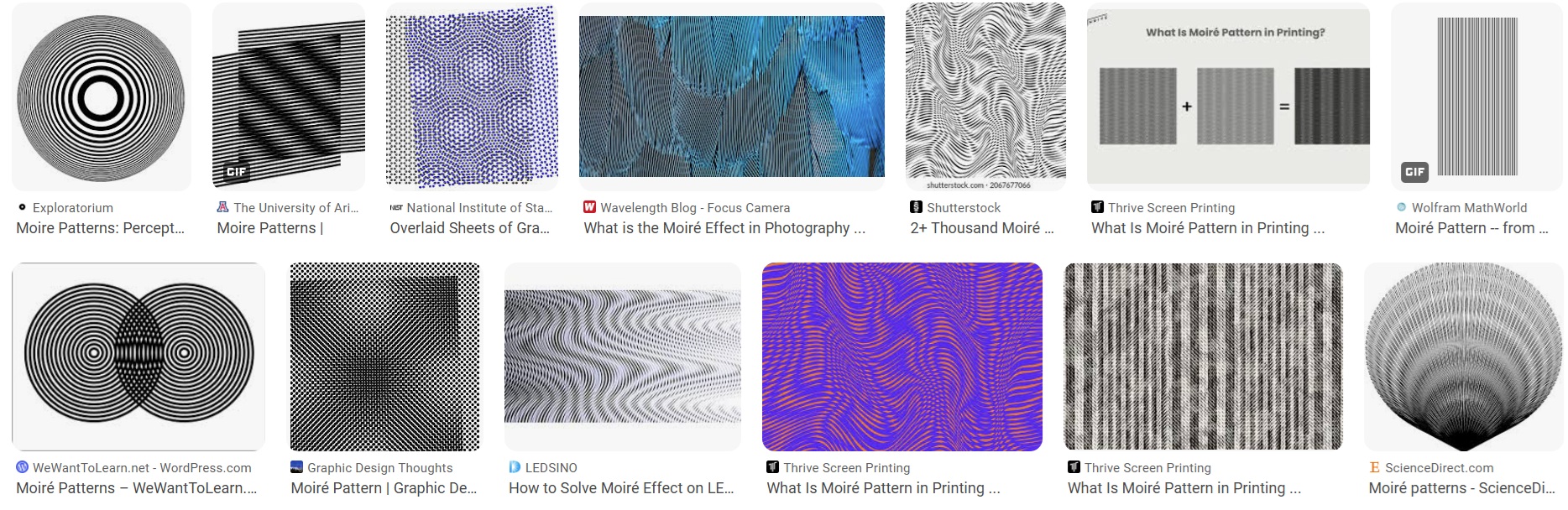
Moiré, which is both a mathematical and an artistic term, is the use of two or more overlapping grid patterns with regular spacing to create an interference pattern.

By overlapping these intricately formed and carefully spaced patterns at an angle to each other (and not directly lined up), you create the eye-catching patterns you see above.

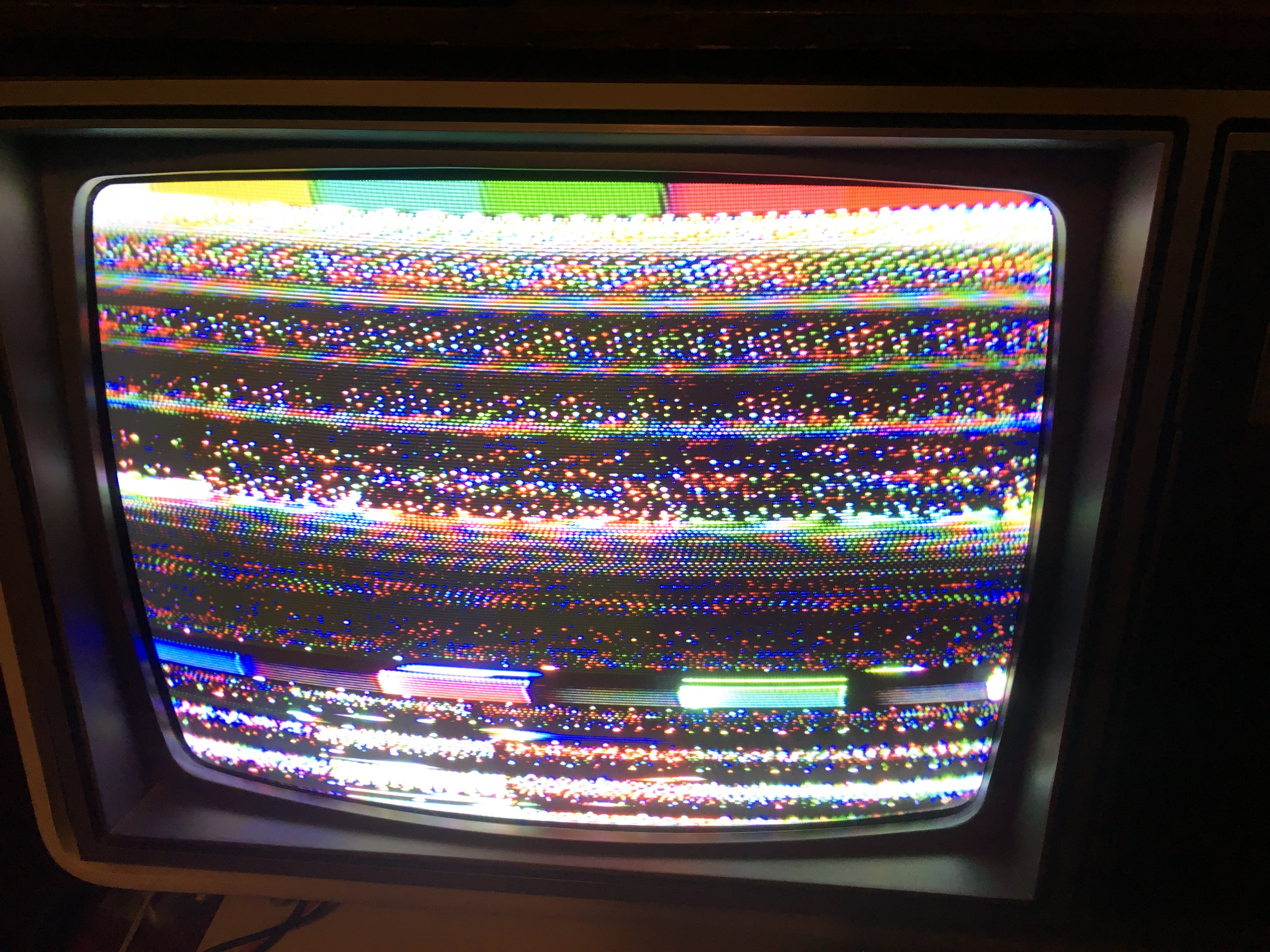
Moiré patterns are all around us. If you’ve ever seen a Houndstooth jacket on an old television program, or tried to photograph a TV screen or computer screen at the wrong angle, you’ve no doubt noticed a Moiré pattern.

Here’s an example a bit too close to home: one of the images from my recap and review of Mystery Island: Winner Takes All.

While making Moiré patterns isn’t difficult, you can see that Prina’s work is far more complex than simply layering two patterns. He maps out his designs with tape, meticulously pulling layer by layer of tape strands from his work as he paints it, making the creation process as gorgeous and mind-bending as the final product.

It’s truly something to behold, both during and after.

Prina claimed on LinkedIn back in January that he’d just started making art again after a ten-year break, and clearly that break has reenergized him, as his work continues to evolve and diversify in fascinating ways.

This intersection of art and mathematics really struck a chord with me. It’s not surprisingly, really, given that I’ve had Tom Lehrer on the brain for days, and he similarly combined math and artistic whimsy to create works of art that played with perception and imagination.

What a treat.

Now everyone, go stare at something boring and rest your eyes for a while.

Happy puzzling, everyone!

Real or Fake Game: TV Shows!

Truth is often stranger than fiction, as they say, and as someone who regularly creates quizzes, games, and puzzles for friends to unravel, that’s a core tenet of one of my favorite game styles: Real or Fake Games.

Real or Fake Games are quite simple. I present the player(s) with something — a headline, an animal, a fortune cookie fortune, the plot synopsis of an episode of The Simpsons — and they have to tell me if it’s real or fake.

So today, I’ve crafted a Real or Fake Game for you, fellow puzzler. Below are titles of TV shows, accompanied by a brief description. Can you sort the genuine article from the ones I made up?

Let’s find out!


1: Something Rotten in Denny’s

In this short-lived translation of Hamlet into an American restaurant, Ham tries to endure the mistreatment of management and find happiness while serving big ol’ stacks of pancakes.

2: Small & Frye

Nick Small and Chip Frye are a private-eye team with a twist. Frye has the ability to shrink to six inches in height, which gives him a slight advantage in investigating cases.

3: The Secret Diary of Desmond Pfeiffer

A black English nobleman is chased out of England due to gambling debts and becomes President Abraham Lincoln’s valet during the civil war. Oh, and it’s a comedy. About slavery.

4: Byrds of Pray

A comedy about all the shenanigans involved in running a small-town church that’s ALL about the fundraisers, this stars George Gaynes as Reverend Nehemiah Byrd, a bumbling priest who means to do good… but does it badly.

5: Occasional Wife

When his boss won’t promote unmarried men, Peter strikes a deal with a pretty young woman named Greta Patterson. If Greta pretends to be Peter’s wife, in return Peter will pay for her art lessons and set her up in an apartment two floors above his. (All their scampering up and down the fire escape gave the unnamed man who lived in the apartment between them — credited as Man-in-Middle — quite a bit to watch!)

6: Dial S for Santa

Yeah, this one has Santa Claus helping his detective daughter solve crimes in his off-time during the year. By checking the naughty list, sneaking into houses through the chimney, and occasionally throwing coal to distract bad guys, Santa (played by Ed Asner) and a young Teri Polo give this one socks.

7: The Second Hundred Years

A 33-year-old prospector in 1900 is buried in a freak Alaskan avalanche. 67 years later another avalanche thawed him out and he was returned alive to his astonished 67-year-old son and 33-year-old grandson. Although chronologically Luke was 101 years old, physically he was still 33 years old, just like his grandson. The two looked nearly identical but acted nothing alike.

8: The Vidocq Society

Appearing on TV two decades before true crime conquered the world, this short-run pseudo-documentary follows volunteer detectives and off-duty law enforcement solving cold cases. Too gritty for the time, people would be ALL over this one nowadays.

9: The Same Deep Waters as You

In the heyday of the soap opera boom, a harbor town is a haven for smuggling, betrayal, and sexy PG trysts. Featuring a little-seen cameo from young Tom Hanks, as well as soap opera powerhouses Eric Braeden and Deidre Hall, this late ’70s offering only lasted two seasons.

10: Mr. Smith

A top secret formula bestows upon an orangutan the power of speech and an IQ of 256. Now smarter than most humans, the orangutan formerly known as Cha Cha was given the name Mr. Smith and a job with the United States government as a consultant, advising top-level politicians on the most classified of subjects. He dressed in suits and wore glasses.

11: Woops!

An ensemble comedy about the six least likely survivors of a nuclear accident. The series was set in the aftermath of accidental global nuclear war, started when two boys playing with a toy at a parade accidentally set off a nuclear missile, which soon led to a nuclear apocalypse.

12: The Carolina

A sinister drama about a hotel frequented by celebrities (based on the Dakota), The Carolina jammed drug abuse, murder, and satanic rituals into only eight episodes, ending on a completely bonkers note when a secret spiral staircase in the basement leads directly to Hell!

13: West Virginia, MD

Three years before Dr. Quinn, Medicine Woman and The Adventures of Brisco County, Jr., we got a funny frontier doctor with a cowboy twist in West Virginia, MD. This gun-toting doctor was screwed out of his reputation and ventured west to help out during the gold rush. Kind to Indians and women (SHOCKER), this show only lasted one season.

14: Flockstars

A group of eight celebrities engage in sheepherding. The stars, which included actresses, a rapper, and a Paralympic athlete, were mentored by sheepherding experts. Its one saving grace was how attractive the shepherds who mentored the celebrities were.

15: Poochinski

The touching story of a police officer whose soul is absorbed into a flatulent bulldog’s body after he is killed in the line of duty. Voiced by Peter Boyle, Stanley Poochinski is easily the weirdest crime show character in history.

16: Dead at 29

One of the first edgy cable dramas, this one-season wonder features a young woman on the run from the government after escaping a lab after being experimented on. When a plague causes half the population to die the day before their 30th birthday, Callie Sparrow discovers that she and other subjects were helping the government CREATE the plague, not cure it.

17: Pour One Out

A middle-aged bartender (played by James Cromwell) has a knack for getting people to admit their secrets, and he teams up with (you guessed it!) a police detective to solve mysteries in a gritty Gotham-esque New York City neighborhood. But when they discover a mob boss is immune to his powers, they must go on the run to protect themselves and take Big Vinnie down.

18: Manimal

This single-season NBC sci-fi show followed Dr. Jonathan Chase, who inexplicably had the power to turn into any animal at will, and used his power to solve crime.

19: The Cuddlebugs!

What if bed bugs, but cute? This failed kids show featured the weird world between your mattress and the boxspring, and for some reason was populated with brightly colored bugs. For totally understandable reasons, this one only lasted 30 episodes.

20: Oh Sit!

The original title of this series was Extreme Musical Chairs. Basically, contestants compete in ridiculous obstacle courses while a live band plays in the background, and their performance determines how much money they win.


Were you able to tell the real TV shows from the figments of my imagination? Did you remember some of these short-lived television disasters? Let me know in the comments section below, I’d love to hear from you!

A Summer Camp for Games?

Hey, are you in the Boston area and looking for the perfect summer activity for the young game designers in your life?

You should check out the Dice and Design Games Summer Camp in Belmont, MA!

This summertime gaming festival of fun is the creation of Caro Murphy, an award-winning game designer who not only founded the Boston Festival of Indie Games, but has lectured on game design at the university level and contributed heavily to Disney’s Star Wars: Galactic Starcruiser interactive experience and Club Drosselmeyer events like this year’s Cthulhu Luau!

They’ve put together a five-day program to teach kids about game design and help them create their own card games, board games, roleplaying games, or LARPs, whatever interests them!

With morning and afternoon sessions to choose from, this seems like an awesome way to get the youngsters in your life started on a lifelong journey of game creating, appreciating, and collaborating.

Go to diceanddesign.com for more details on this event. (Thank you to the team at Club Drosselmeyer for spreading the word!)

Do you know of any other kid-friendly puzzly or game-fueled events happening this summer, fellow puzzlers? Let us know in the comments section below! We’d love to hear from you.