There’s so much going on this week in the intertwined worlds of puzzles and games to get into, so let’s skip the intro and get to the good stuff!
Boswords Summer Tournament registration is open!
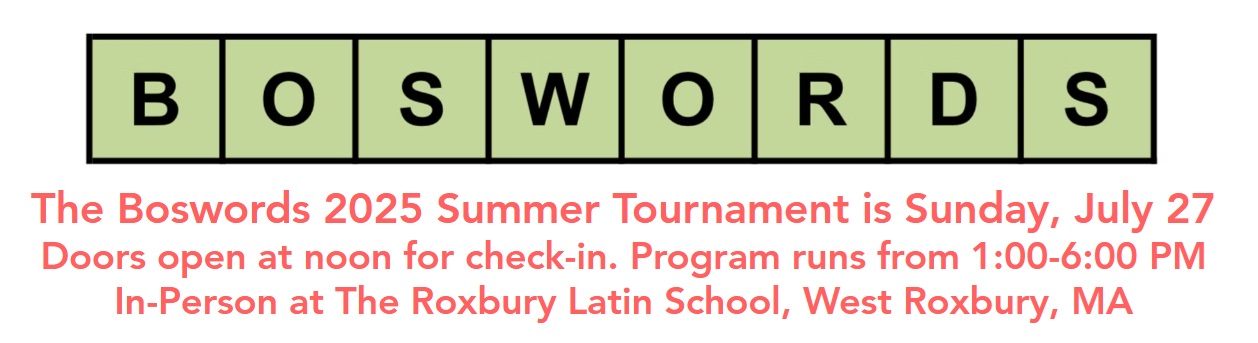
Sunday July 27th marks the latest edition of the Boswords crossword puzzle tournament, and that’s only six weeks away! Thankfully, registration is now open to reserve your spot in this year’s event.
You can participate either in-person or online (as an individual or in pairs) and test your mettle in 5 themed puzzles and a themeless championship puzzle constructed by a marvelous lineup of cruciverbalists: Ross Trudeau, Chandi Deitmer, Hemant Mehta, John Harrington, Mary Tobler, and Quiara Vasquez!
Go to boswords.org for details, to register, or to sample content from previous Boswords events!
Westwords this weekend!
Boswords may be six weeks in the future, but the second annual Westwords Crossword Tournament is happening this Sunday, June 22nd!
This event is also being held both in-person and online, with four themed puzzles and two themeless/freestyle puzzles to challenge solvers. The list of constructors for this year’s event is quite impressive: Amie Walker, Caitlin Reid, David Steinberg, Kevin Christian, Nate Cardin, and Willa Angel Chen Miller!
Last, but certainly not least, Free RPG Day is this Saturday, June 21st.
The concept behind Free RPG Day is simple. All over the world (but mostly in the United States), local game shops, hobby shops, and other outlets team up with RPG publishers to distribute new, fresh, and most importantly, free material for all sorts of different roleplaying games, systems, and settings.
Explore the world of roleplaying games at your friendly local game shop and pick up some game quickstarts and free swag along the way!
Will you be participating in any of these puzzle- and game-fueled activities this weekend, fellow puzzler? Let us know in the comments section below. We’d love to hear from you!
Debuting on the weekend of June 28th and 29th, the WCCC is composed of two events: an individual online championship on the 28th (which is open to any and all competitors) and a World Cup-style offline team championship format on the 29th.
The individual championship involves two cryptic grids, each of which must be solved within 30 minutes. Click here to register!
But please be aware that you’re competing in IST — Indian Standard Time — so you’ll have to adjust your schedule accordingly to have a chance at the cash prize for the top three solvers!
The World Cup Final is being held in person in London on the 29th, and consists of two rounds. The first puzzle will whittle down the field of competitors to the four top contestants from four different countries, who will then compete onstage to solve the final puzzle.
Some of the World Cup competitors have been invited for their past puzzly achievements, but there is an offline preliminary for anyone seeking to try their hand (and can be in London on the day in question to compete).
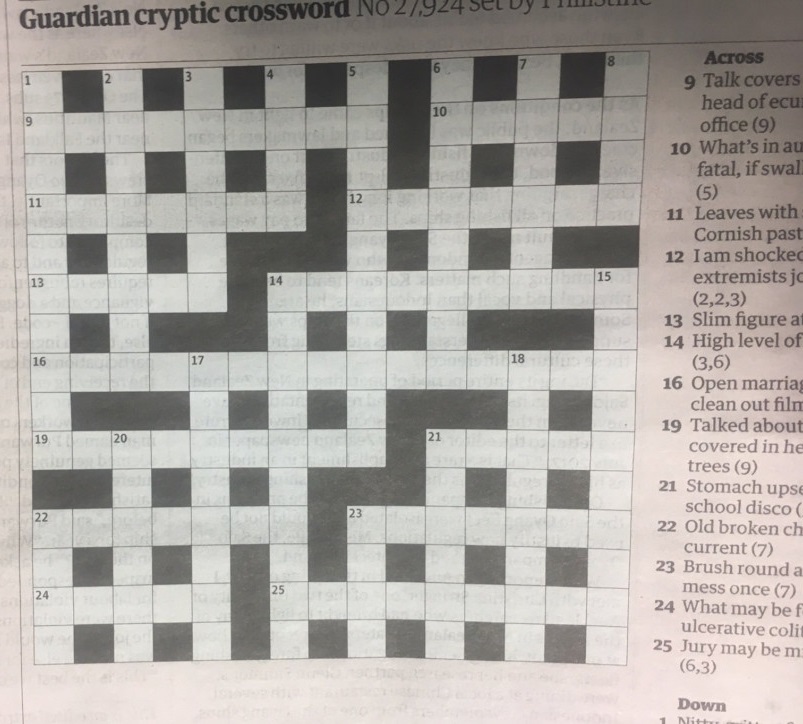
This looks like my scribblings while solving a cryptic… minus the wedding ring, that is.
I’m definitely not the fastest cryptic crossword solver, so I’m not sure I’ll try my hand at this competition… this year. But if it returns next year, I might just shoot my shot.
Cryptic crossword solving involves many of the same skills as American-style crosswords, but there’s also the wordplay element that makes it quite a different experience for those unaccustomed to that puzzly style.
Will you be trying your hand at competitive cryptic crossword solving, fellow puzzlers? Let us know in the comments section below, we’d love to hear from you!
I see that question a lot. And the advice offered to new solvers varies. Sometimes they’re pointed particular crossword outlets promising a more newbie-friendly solve. You certainly don’t want someone tackling a crossword too difficult for their skill level and getting discouraged.
Often, they’re told to just plug away at it, since the only way to get better at crosswords… is by solving crosswords.
None of this advice is wrong. I’m sure people follow these suggestions and slowly start to enjoy this puzzly world that many of us have embraced for decades.
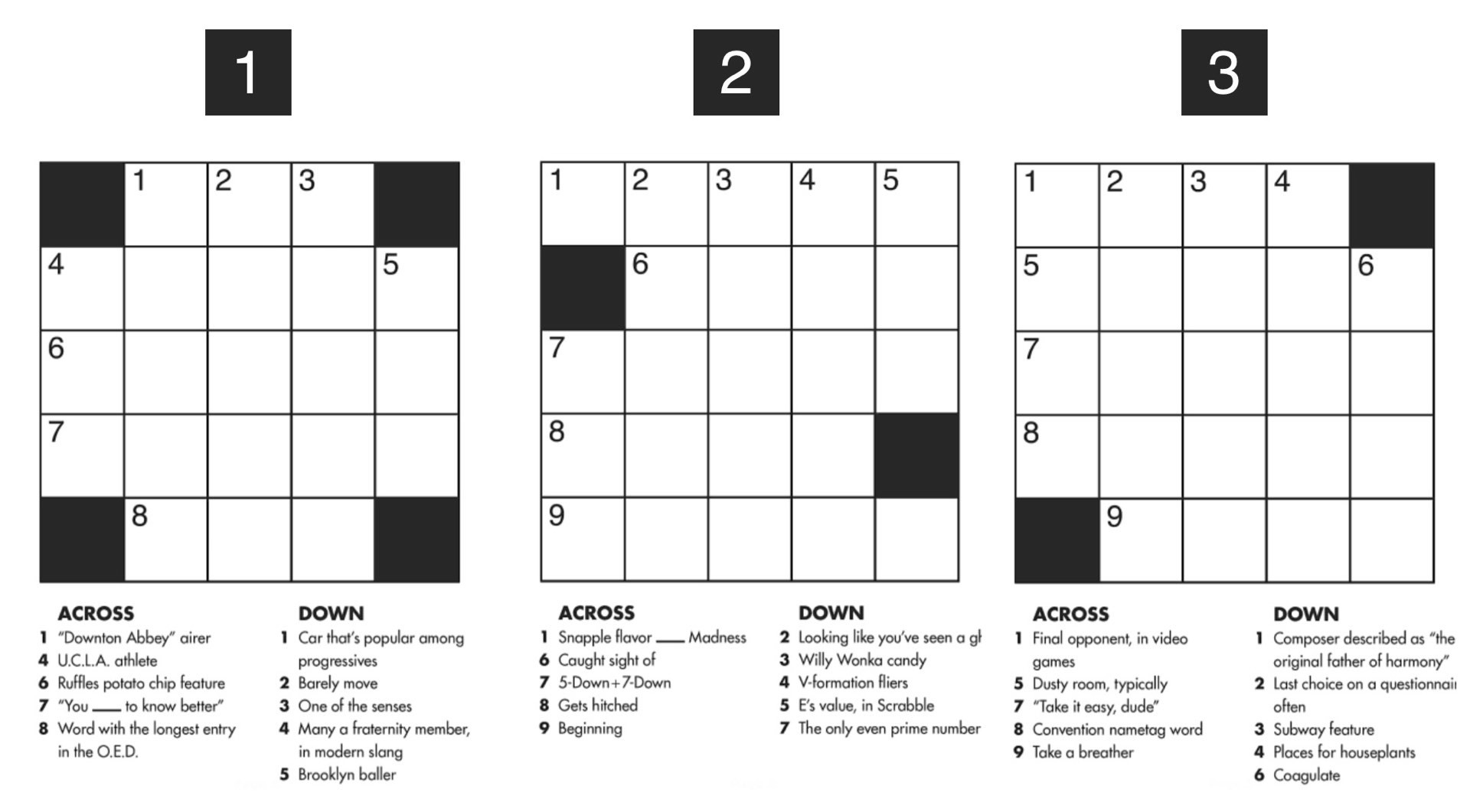
You might think that Mini Crosswords, like those featured in the New York Times puzzle app, are the way to go. But while the grid is smaller, that also means new solvers have fewer chances to find crossings and work on their solving.
Imagine a regular crossword. A Mini is essentially one corner of the grid. If you started a crossword in one corner, and didn’t get any entries, you can move to another spot. But if you’re stumped on a Mini, where do you go?
I also think the running timer feature — although obviously not a necessity for solvers — can add to a new solver’s anxiety. If you’re stumped, and you’re just sitting there, watching the timer tick away, that’s going to eat at your confidence a bit.
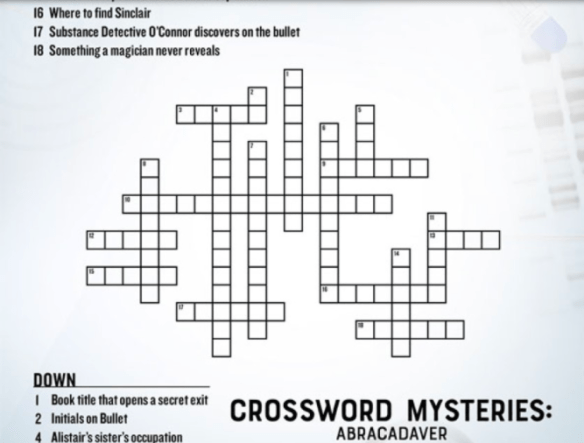
You might think that crisscross-style puzzles (like the one above) would be less intimidating, since they don’t have the same dense grid surrounded by clues that crosswords have, but I’ve found that folks don’t warm to those quickly. No matter how well-constructed the crisscross, it tends to remind people of activity books for kids, and no one wants to feel patronized when trying out a new hobby or giving it another go.
Not only that, but they are missing one of the most helpful components to crossword solving: all the overlapping letters! In a crossword, you have two chances at every single box because of the across and down clues. But in a crisscross, you usually only have one or two points of overlap, so if the clue isn’t helpful or intuitive, you’re just stuck. That doesn’t build solver confidence.
I do have a suggestion, though.
I’ve tried this with several friends and acquaintances who had sworn off crosswords entirely, and not only introduced them to a new puzzle they didn’t know, but opened their eyes to the possibility of more puzzle solving in the future.
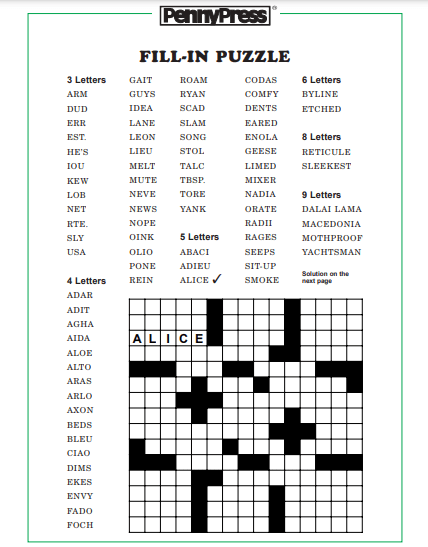
For the uninitiated, fill-ins utilize the same general grid style as a crossword. But instead of answering numbered clues to place the words in the grid, you’re already given the answer words, organized by word length. Your task is to place them all into the grid, using other words and letters in the grid to guide you.
It’s closer to Sudoku-style solving than crosswords, because you’re eliminating options in a logical manner, rather than figuring out clues to place the words.
I believe solving fill-ins helps remove the intimidation factor of crosswords in three ways:
1. No trivia or outside knowledge is required, which removes a huge burden from a solver who has probably felt overwhelmed by crossword cluing in the past.
2. It makes empty crossword grids less intimidating. Do you ever have those moments where you read three or four crossword clues in a row and you don’t immediately conjure up answers? And then you look at all those empty spaces in the grid and feel dumb? It happens. But fill-ins often have a set word to get you started, and once you start placing letters, recognizing useful crossings, and filling the grid, all that goes away.
3. Fill-ins help strengthen another skill valuable in crossword solving: letter-blank recognition. If you see B _ U _ , a regular solver instantly starts listing off possibilities: BOUT, BLUE, BLUR, BAUD, etc. But a new solver — who might not have that reflexive knowledge of possible words — can read through the list of four-letter words and see what fits, helping to build that mental lexicon for future solving.
After solving a handful of fill-ins, word placement goes quicker, confidence in filling in those letter blanks increases, and empty grids become fields of potential puzzle fun, not stark empty spaces.
I’ve suggested fill-ins to several crossword-shy or puzzle-shy friends, and usually, a few weeks later or so, they start asking what other puzzles are out there, or where a good place to start with crosswords might be. And that’s a win.
The American Crossword Puzzle Tournament was this past weekend, and unfortunately I wasn’t able to attend. I did my best to keep up with the event through social media, enjoying everyone’s observations, jokes, highlights, victories, trials and tribulations.
One message in particular stuck out to me, though.
I can’t remember if it was posting the results after the sixth or the seventh puzzle, but they remarked that they were excited to see some new blood in the top ten.
I couldn’t help but laugh, because all the names were pretty familiar to me.
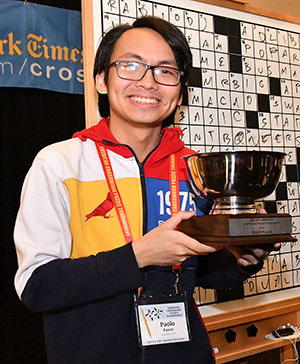
Paolo Pasco won the tournament for the second year in a row, dominating the final puzzle with a record-breaking time of 3 minutes and 45 seconds. (Solver Paul Edward did the math on Facebook and calculated that Paolo spent less than 34 minutes across the 8 puzzles that weekend. WOW.)
Will Nediger and former champ Dan Feyer duked it out for second place, with Will edging out Dan by ONE SECOND, solving the puzzle in 4 minutes and 38 seconds. What a nailbiter!
The next day, after the tournament was over, I still had that message lurking in my brainspace.
Now, anyone who reads this blog can tell that I’m a nerd for many things. I’m a nerd for puzzles, games, and RPGs. I’m a nerd for trivia.
And I am absolutely a nerd for statistics. I love numbers and analysis and compiling data.
So I read through the full results available for each tournament going back years, focusing on the top ten from this year’s tournament and reflecting on their ACPT careers. I had to see if that “new blood” message had any merit or not, and I figured this was the best way to find out.
Let’s see, shall we?
Emily O’Neill
Emily has been competing since 2005 (unless there’s a name change involved, which is possible), and has been in the top ten twice. She has been in the top 30 ten times!
Glen Ryan
Glen has been competing since 2013 (where he placed 3rd in Division B), and has been in the top ten five times. He has been in the top 30 ten times!
Al Sanders
Al has been competing since 1999 (where he placed in the top three), and has been in the top ten TWENTY times. He has been second place twice and in the top 3 seven times. He has never ranked lower than 21!
Stella Zawistowski
Stella has been competing since 2001, and has been in the top ten THIRTEEN times. She has been in the top 30 nineteen times!
Andy Kravis
Andy has been competing since 2011, and has been in the top ten six times. He has been in the top 30 ten times!
Tyler Hinman
Tyler has been competing since 2001 and is a seven-time champion! He has been in the top ten NINETEEN times (including five times in a row at second place and fourteen times in the top three). He was the Division B winner in his second appearance.
David Plotkin
David has been competing since 2010, and has been in the top ten TWELVE times. He has been in the top 3 six times and has never ranked lower than 28th!
Dan Feyer
Dan has been competing since 2008 and is a nine-time champion! He has been in the top ten SIXTEEN times (literally every time except his first tournament appearance).
[It’s not until the final two names that we really get anyone who qualifies as new blood.]
Will Nediger
Will has been competing since 2021 and has been in the top 3 twice. He has been in the top ten three times (meaning every time he’s competed).
Paolo Pasco
Paolo has been competing since 2021 and is a two-time champion! He has been in the top ten five times (every time he’s competed). He was also the Division B winner in 2022.
You have to go back to the year 1998 to find a tournament that didn’t feature one of these ten people as a solver. That’s amazing!
Originally, I was just going to focus on the top ten solvers from this year’s tournament and their many accomplishments.
But as I was going through the rankings year by year, I was struck by how many names I recognized, and how many times I got to see those names. I got to experience the tournament community as a microcosm across literal decades.
I watched the changing of the guard as some names slowly slipped out of the top ten and were replaced by others. Names like Anne Erdmann and Trip Payne and Jon Delfin and Ellen Ripstein and Douglas Hoylman. I was more familiar with some than others.
The slow evolution of solvers really struck both the puzzle nerd in me and the history nerd in me. I ventured back before my own career in puzzles started (back in 2003).
I’ve never competed at the ACPT, but I attended the event for several years, working the Penny Press / Puzzlenation table in the common area, and I grew familiar with a lot of attendees. Puzzle people are genuinely nice folks, and so many of them were happy to visit for a bit, introducing themselves, checking out our magazines, and taking advantage of our pencil sharpeners.
Everyone was so friendly, sharing their excitement for the event and letting me know their thoughts on each puzzle as the tournament went on. It really is a delight.
(Just don’t start a conversation about which pencils are the best for solving and you’ll be fine!)
New blood or not, the crossword scene is clearly thriving, and I can’t wait to see what next year’s tournament brings.
The Puzzmo mini crossword is always accompanied by notes from the constructor and the editor. The comments from yesterday’s puzzle centered around anagrams, since the mini had not only an anagram in the theme entries — MAORI and MARIO — but actually had the word ANAGRAMMED crossing those entries.
In those comments, both Will Eisenberg and Brooke Husic discussed a really playful subset of cluing involving misdirection.
You give the solver an anagram, but present it is as a statement, rather than just saying “ABLE, to BALE.” When done properly, it takes a second for your brain to actually register the anagram, even though it’s right in front of you!
Will used the example “Ancients, for instance,” which cleverly employs the standard crossword trope of “for example / for instance / for one / e.g.” to conceal the anagram. Brooke had another banger example, offering “Anemone, to name one.”
I delved into the archives on Xwordinfo to look for other examples of this misdirection cluing style, and I found some fun ones. (Obviously, ANAGRAM isn’t an incredibly common entry, but I was genuinely surprised by the variety of options that awaited me in the archives.)
Back in 2011, Oliver Hill and Eliza Bagg gave us “Neo, for one,” which is such an effective misdirect than I can imagine writing the wrong answer more than once in the grid before realizing the trick, since this sort of clue is used so often for things like HERO or ROLE.
Other constructors phrased their anagrams as if they were slang or specialized jargon, leading solvers down the garden path while showing off their own impressive anagramming talents.
Ryan McCarty and Nelson Hardy gave us “Schoolmaster for the classroom, e.g.”
Margaret Saine offered “Illustration for an ill tourist?”
Sam Trabucco crafted “Nerd’s epithet for the president?”
Bryant White presented “Coasters for Socrates, e.g.”
Naturally, cryptic crossword or British-style crossword solvers probably suss out these clues faster, since this sort of stealthy wordplay is standard in cryptic cluing, where clues are written out like sentences, rather than the more direct cluing typically used in American crosswords. (Cryptic crossword icons Emily Cox and Henry Rathvon had one ANAGRAM clue in the Xwordinfo archives, the elegant “Broadcast of bad actors, e.g.”
Some constructors take it even further, employing the age-old trick of apropos anagrams for celebrities.
The Simpsons helped popularize knowledge of this game when Lisa learned that ALEC GUINNESS anagrams into GENUINE CLASS. Another famous one is CLINT EASTWOOD anagramming to OLD WEST ACTION. FLORENCE NIGHTINGALE aptly anagrams to FLIT ON, CHEERING ANGEL.
Patrick Merrell employed this nicely with his clue for ANAGRAM, “Horrid glances from Charles Grodin?”
I could go on and on listing examples, but Patrick’s clue is hard to top.
I’m obviously a huge fan of misdirectionclues, so it was a joy to deep-dive into a different genre of cluing and watch clever people work their magic. Hopefully you enjoyed taking this puzzly stroll with me.
And we’ve got news on a crossword convention, upcoming tournaments, a worthwhile puzzle-fueled charity endeavor, and a new Hallmark puzzly mystery debuting tonight.
So, without further ado, let’s get to the puzzle news roundup!
Crossword Con
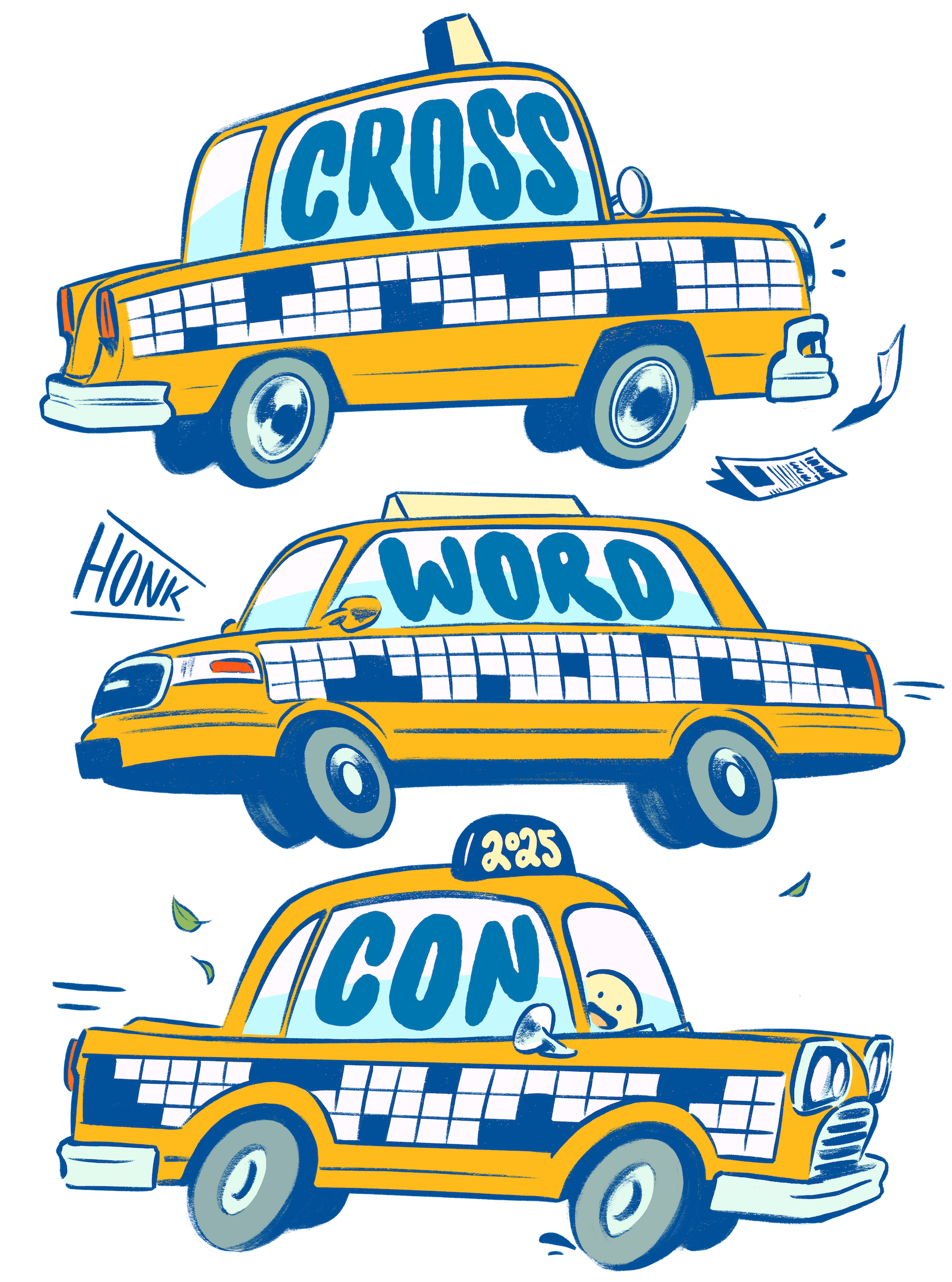
April 4th marks the second annual Crossword Con, presented by the puzzle app Puzzmo.
Crossword Con is all about bringing together crossword fans and constructors to discuss crosswords as a cultural touchstone and an art form.
For their second outing, the organizers are casting their eyes to the future, asking “what’s on the horizon for crosswords, and what changes are already bubbling just beneath the surface?”
Although it’s only a half-day event, it is certainly jam-packed with notable names with plenty to offer on the subject of crosswords! Speakers and guests include Kate Hawkins, Will Nediger, Ada Nicolle, Brendan Emmett Quigley, Laura Braunstein, Rob Dubbin, Natan Last, Adrienne Raphel, and Brooke Husic.
With Crossword Con in New York and the American Crossword Puzzle Tournament starting the same day in Stamford, April 4th is certainly an eventful day for crossword fans all over (and particularly those in New England).
Crossword Tournaments
And speaking of crossword tournaments, if you’re a competitive crossword fan, the gears are already in motion for puzzly challenges all year long.
The registration for October’s Midwest Crossword Tournament opens on April 2nd, just a few days before this year’s American Crossword Puzzle Tournament (April 4th through the 6th) will be held.
And the activities alongside this year’s tournament are a doozy. There’s an event celebrating the 20th anniversary of the “Wordplay” documentary, a magical puzzly performance from David Kwong, and an acrostics event on Friday night!
Lots of competitive puzzle fun coming up!
These Puzzles Fund Abortion 5
There’s a long history of activism and advocacy through puzzles. Women of Letters, Grids for Good, Queer Qrosswords… these are just a few prominent examples of constructors and creators donating their time and puzzly efforts to benefit the world at large.
And for the fifth year in a row, cruciverbalists and editors have united to help fund safe and affordable abortion care.
These Puzzles Fund Abortion 5 contains 23 puzzles “centered around social and reproductive justice themes,” all for a minimum donation of $25.
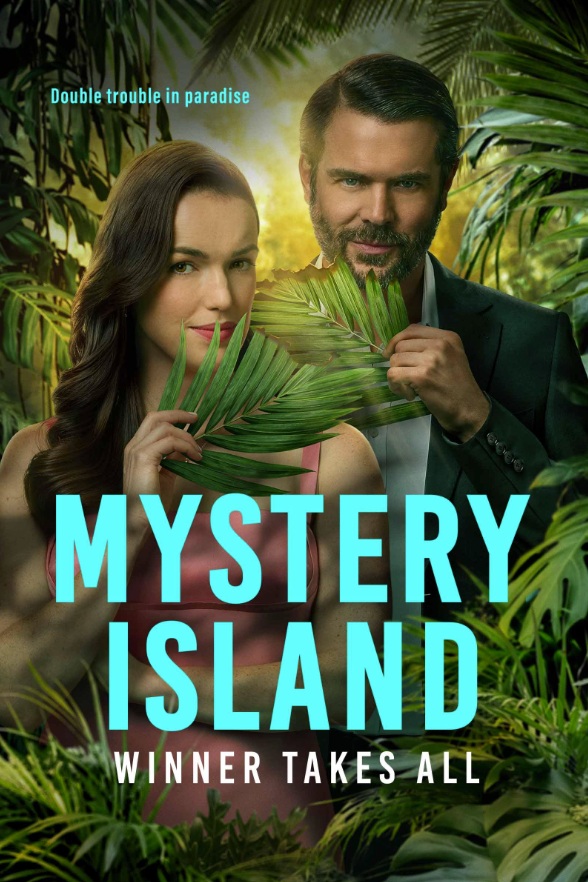
In the original, a luxury private island murder mystery experience turns real when a dead body is found during the event. It falls to psychologist Dr. Emilia Priestly and detective Jason Trent to unravel riddles, deceit, and shadowy motives to solve the murder.
In tonight’s sequel, we return to the island for another murder mystery game, this time created by our crime-solving duo of Emilia and Jason. With a cash prize on the line, tensions are already high, but things take a dark turn when an employee turns up dead during the game.
Anyone who enjoyed my recaps and reviews of Hallmark’s Crossword Mysteries will be happy to hear that I will be reviewing not only the new Mystery Island sequel, but the original as well!
Mystery Island: Winner Takes All debuts tonight at 8 PM Eastern on Hallmark Mystery.
Phew! So much puzzly goodness going on. Will you be attending any crossword events this year? Let us know in the comments below.







 PuzzCulture