A PuzzleNation First Look: Setka

Making a new puzzle is challenging. You have to strike a balance between established solving styles (those that are familiar and effective) and innovative twists, mechanics, and variations, all without making the puzzle too convoluted, too tedious, too easy, or too hard.

In the world of crosswords, some variant success stories include Double Trouble, cryptic crosswords, Brick by Brick, and diagramless. With Sudoku, there are variants like Extreme Sudoku (aka X-Sudoku or Diagonal Sudoku), Samurai Sudoku, and Word Sudoku.

I’m always on the lookout for new puzzles and variations to try out, so when the folks behind Setka contacted me, I was more than happy to try out their puzzle brand and explore their signature attempt to combine Sudoku and clued-puzzle elements.

setka1

In short, Setka puzzles start with a single word. The consonants of that word not only form the answers to the clues, but also provide the letters to place in the accompanying grid.

For example, if the starting word was INFORM, the key letters would be N, F, R, and M. Every clue answer would feature one or more of those letters. The answer words, like the starting word, ignore the vowels. So you could have answers like NeaR, MoRoN, or MaiNFRaMe. (In the case of duplicate letters, like ReRaN, any duplicates are dropped, so the key letters here would be RN.)

And since there are four letters, there would be an accompanying 4×4 grid for you to fill in, where no letter is repeated in any row or column, Sudoku-style.

To place the letters, the clues are numbered, and the relevant cells in the grid are numbered to match. So, for NeaR (let’s say it’s clue 2), there would be two neighboring cells in the grid with a number 2 in them, and you could place the letters as RN or NR. Words that are three letters or above can read backward, forward, or in an L-shape in the grid.

This mechanic separates Setka from other clued or letter-placement puzzles, because you need both the clue answer AND the Sudoku no-repeats rule in order to complete a grid. Without the clue answers, there can be alternate solves where grid letters swap. And without the Sudoku-style placement, it would be virtually impossible to actually place the answer letters into the grid, because there’s more than one way to do so.
setka2-1

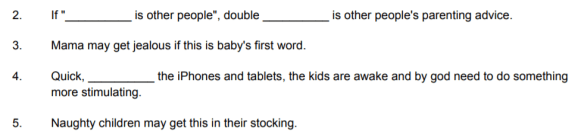
The cluing style alternates between standard crossword-style clues (but usually longer and a little more conversational or trivia-based) and fill-in-the-blank clues. The clues also fit the theme established by the starting word. For instance, the clues above all have to do with kids, which fits the puzzle’s theme word, CHILD.

It takes time to get used to seeking out answer words from the given consonants (since you have to supply any vowels or duplicate consonants missing in order to come up with the correct answer word), but once you’re a few puzzles in, it becomes second nature and a fun component to the solving experience.

Setka puzzles range in size from 4×4 to 7×7, with its signature size being 5×5. Honestly, 5×5 is really where it becomes a proper puzzle. With a 4×4 grid, once you have a few letters placed, it becomes an elementary logic puzzle and you don’t really need the clues.
setka3

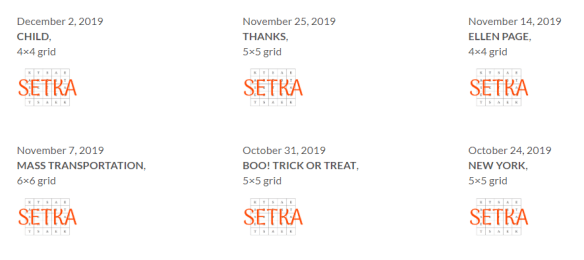
[A selection of Setka sizes and themes.]

The puzzle itself is reminiscent of another puzzle we tried late last year — Cluedoku — but Setka’s letter-based theme and smaller grids make for a far more sustainable puzzle going forward, and the mechanic of placing the words in the grid (rather than just individual letters/numbers) adds an intriguing wrinkle to the solve.

All in all, I enjoyed trying out Setka — I solved a half-dozen or so puzzles to get a feel for different sizes and difficulties — and I think they’ve forged an engaging and clever combination of crossword-style cluing and Sudoku-style solving.

You can try Setka for yourself on their website, either playing interactive versions of Setka on the site or printing and solving PDF copies of Setka puzzles. They also offer a subscription where you can receive a Setka puzzle each week along with news and updates.

What do you think of Setka, fellow puzzlers and PuzzleNationers? Let us know in the comments below! We’d love to hear from you.


Thanks for visiting PuzzleNation Blog today! Be sure to sign up for our newsletter to stay up-to-date on everything PuzzleNation!

You can also share your pictures with us on Instagram, friend us on Facebook, check us out on TwitterPinterest, and Tumblr, and explore the always-expanding library of PuzzleNation apps and games on our website!
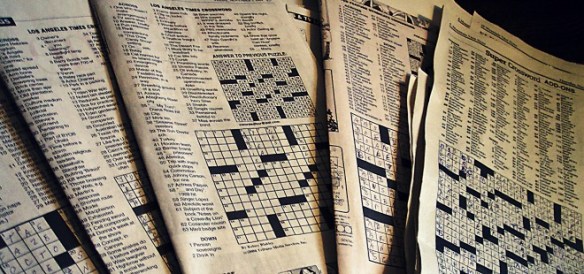
A Month of Puzzly Celebration!

January is a good month for puzzles and puzzly pursuits. Not only is National Puzzle Day coming up soon, but there are two delightful anniversaries for us to celebrate.

Two years ago this month, one of the newer parts of the puzzle community was founded: The Crossword Puzzle Collaboration Directory.

This Facebook group is part gathering place for established and aspiring constructors and part resource for constructors of all skill levels.

People post and share information about everything from grid construction, editing programs, and cluing advice to networking, test-solving, and encouraging feedback.

Inexperienced and aspiring constructors meet and collaborate with established names. Obstacles, problems, and questions are handled with equal care and support. Heck, some constructors even post rejection notices they’ve received in order to share the valuable feedback it contains.

It’s become a hub for discovering and supporting underrepresented voices in puzzles as well, not only encouraging valuable new partnerships, but hopefully recruiting the next generation of constructors for all backgrounds.

It’s been a pleasure to watch this community grow and evolve as newer constructors become more confident and established voices launch new puzzly projects. I can’t wait to see what emerges from this marvelous endeavor in the months and years to come.

The second anniversary to celebrate this month belongs to domino master, kinetic artist, and friend of the blog Lily Hevesh, aka Hevesh5, who is celebrating 11 years as a domino artist and YouTuber.

Over the past decade, Lily has evolved from a foundling YouTuber with a few dozen dominoes into an influential member of the world domino community. She has designed works of kinetic art for films, TV shows, and special events, as well as Guinness World Records and collaborations involving hundreds of thousands of dominoes.

Continually pushing the boundaries of what you can do with dominoes — from chains and Rube Goldberg devices to literal works of art — Lily has amassed more than two million followers on YouTube and transformed a small hobby into a thriving business and contributing member of her community.

I’m overjoyed to see her ambitious plans for the future, especially after being a fan for so long. Every new video shows off her incredible range and talent, and I look forward to seeing what new wonders she has in store for us all in the future.

Happy Anniversary, Crossword Puzzle Collaboration Directory!
Happy Anniversary, Lily!

And happy puzzling to you, fellow puzzlers and PuzzleNationers!


Thanks for visiting PuzzleNation Blog today! Be sure to sign up for our newsletter to stay up-to-date on everything PuzzleNation!

You can also share your pictures with us on Instagram, friend us on Facebook, check us out on TwitterPinterest, and Tumblr, and explore the always-expanding library of PuzzleNation apps and games on our website!
The Unexpected Return of Timothy Parker

Of all the names I expected to see pop up in puzzles in the new year, Timothy Parker wasn’t one of them.

For the uninitiated, Timothy Parker was the crossword editor for Universal’s syndicated puzzle and USA Today, both of which are owned by Universal Uclick. He touted himself as “America’s most solved crossword constructor.”

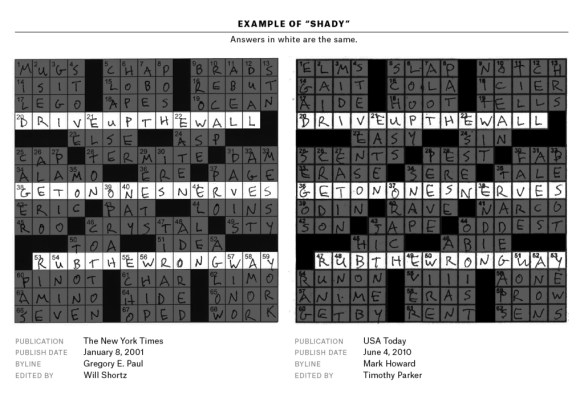
And almost four years ago, devastating accusations of plagiarism emerged regarding Parker’s conduct as a crossword editor. In a story broken by FiveThirtyEight.com, more than 60 puzzles were flagged for suspicious patterns of repeated entries, grids, and clues with previously published puzzles in The New York Times and other outlets. (Hundreds more showed some level of repetition.)

crossword-finals-shady

Additionally, a pattern of puzzles re-published under fake names or Parker’s name — rather than the name of the actual constructor who submitted the puzzle — also emerged.

In response — eventually — Universal Uclick released a statement that Parker “agreed to temporarily step back from any editorial role for both USA Today and Universal Crosswords.” The company later confirmed “some” of the allegations against Parker, and he was placed on a three-month leave of absence. He was soon removed as editor for the USA Today crossword. (The question of whether he was still employed by Universal Uclick would linger for years to come.)

After all the kerfuffle, Parker seemingly vanished. Except for the occasional joke on Twitter (or scathingly clever puzzle) referencing the story, that was it.

parkerplag

[Image courtesy of Evan Birnholz.]

Until last week, that is.

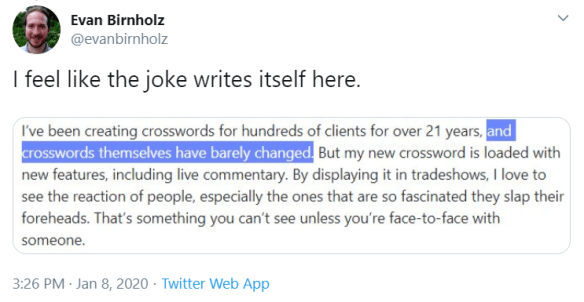
In a promotional article on ExpoTor, Parker touted the strength and drawing power of his puzzle brand, taking the opportunity not only to toot his own horn, but to settle a few old scores.

From the article:

Thirdly, be aware of snakes in the grass. As you get more and more successful, there will be more and more snakes slithering around trying to degrade your work in hopes of boosting theirs. This is common in any industry but is particularly relevant in my industry. I once had a D-list constructor for the Washington Post actually convince a gullible major newspaper reporter that one of my family-oriented crossword themes contained a secret “rape” joke.

This preposterous and asinine assumption was then actually written up by a reporter who stated I had “hidden” a rape joke in my crosswords. Having a G-rated, family-oriented brand for 21 years, this could have been devastating to the brand. But in my case, solvers who have known my work for years came to my rescue, and not only chastised the D-list constructor responsible for this nonsense but also the reporter as well. The article stayed up for a couple of hours and was quickly removed.

Both the supposed “D-list constructor” and the supposed “gullible major newspaper reporter” gladly identified themselves, pointing out that the article — you know, the one that was quickly removed back in 2017? — is still up on HuffPost today.

chloroformgrid

[Image courtesy of Huffpost.]

As for the secret rape joke, the grid contained the message “PSST HEY DOES THIS OLD RAG SMELL LIKE CHLOROFORM TO YOU.” The clue? “Run away from anyone who says this.”

Good lord. That’s about as overt a rape joke as I’ve ever seen that didn’t actually include the word “rape.”

Parker concludes the point with “The lesson learned here is rivals are rarely an asset to your brand.” You’d think a better lesson to learn — other than “don’t make offensive comments the centerpiece of your crossword” — would be “Don’t waste time in the middle of a promotional pitch grinding an ax that makes you look petty, incompetent, and insensitive.”

scratching-head

[Image courtesy of biaphysio.]

Now, fellow puzzler, you might very well be asking yourself, “why waste blog post space on a topic like this?” That’s a fair question.

But I think it’s important to identify and call out problematic members of a community. Parker has never once admitted any fault or claimed any responsibility for the plagiarism scandal years ago. He has never apologized to the hardworking constructors whose work was stolen and/or reused without credit.

And for him to make such snide comments about another constructor — a well-respected one, I might add, with vastly higher standards for what constitutes a quality puzzle — reflects poorly on the entire field.

It’s been my privilege to meet and interact with dozens of top-flight constructors and puzzle editors. And the vast majority of them are good people, Evan included. They’re decent, creative, often brilliant, and frequently incredibly supportive of their fellow constructors.

Meanwhile, Parker claims that “Timothy Parker Crosswords is a brand that’s known worldwide.” That’s true, though DeLorean and Ponzi are also brands known worldwide.

Thankfully, USA Today and Universal Crosswords (part of Andrews McMeel Syndication) are both in more capable, reliable, and honest hands, being edited by Erik Agard and David Steinberg, respectively.

Here’s hoping the trend toward editors who support and respect both their fellow constructors and the crossword audience continues onward into 2020 and beyond.


Thanks for visiting PuzzleNation Blog today! Be sure to sign up for our newsletter to stay up-to-date on everything PuzzleNation!

You can also share your pictures with us on Instagram, friend us on Facebook, check us out on TwitterPinterest, and Tumblr, and explore the always-expanding library of PuzzleNation apps and games on our website!
The Decade in 10 Words?

botd

[Image courtesy of TV Guide.]

For the last few weeks, we’ve all been awash in lists. Whether it’s covering the year or the decade, there are Best Of, Worst Of, Most Influential, Most Scandalous, Most Underrated, Most Overrated, and many many more.

Heck, we’ve had a bit of fun with year-end lists ourselves in the last week, though we tried not to overdo it.

Smithsonian Magazine even got in on the trend with a recent article. They summarized the 2010s through ten words that made their debut in The New York Times crossword this decade.

It’s an intriguing hook for a list, offering context and brief histories for words like MEME, SEXT, TWEET, BARISTA, and LGBT while discussing their greater social and cultural impact.

Sadly, there were a few times that I felt like the article came up short when representing both crosswords and the puzzle audience in general.

lolmeme

[Image courtesy of YouTube.]

I mean, come on. LOL? Yes, the entry appeared a staggering 48 times during the decade, but it’s been around since the ’90s! This was like IPOD finally making it into crossword grids just in time for iPods to not be a thing anymore. (Thankfully, IPADS salvaged some of those grids.)

They would have been better off including BAE, which is not only more modern (making the first of 10 NYT appearances in 2017), but feels significantly less eyeroll-worthy in this day and age.

I was also less-than-impressed by this statement, which accompanied the entry N.L. EAST:

“Jeopardy!” contestants are notorious for their aversion to sports, a weakness shared by many members of the cruciverbal clique. As it turns out, sports are a big part of American cultural life and have been for quite some while…

This is an embarrassing, reductive cliche that feels straight out of Revenge of the Nerds. There are plenty of sports-savvy constructors and solvers (which explains how N.L. EAST and A.L. EAST ended up in the Times crossword twenty times in total).

The idea that crosswords and sports are mutually exclusive domains isn’t just ridiculous, it’s insulting.

crossword1

I don’t mean for this post to feel like a takedown of the Smithsonian Magazine piece, because for the most part, it was a breezy examination of the decade through the lens of crosswords.

I appreciated the spotlight put on clues for the entries LGBT/LGBTQ, though perhaps a more illuminating glimpse into growing representation of the LGBTQIA+ community would have been mentioning Ben Tausig’s quantum puzzle from September of 2016, which introduced the entry GENDERFLUID to the Times crossword.

Although the entry itself has only appeared twice in the Times thus far, its inclusion in Tausig’s puzzle was noteworthy because it not only introduced the word to new eyes, but deftly explained the idea itself through its theme.

The letter variability — allowing for M or F to appear in a grid square and still fit the definition, a la FIRE/MIRE — is a wonderful metaphor for the fluidity of gender, especially in the limiting, but generally accepted, binary concept of male or female.

To have a puzzle not only debut an important new word, but to provide such valuable context for it in a clever, kind, fun mechanic represents not just where crosswords as a whole are going, but how they can help push us in a better direction in a unique way.

That feels like a more worthwhile note to conclude the decade on than 48 LOLs.


Thanks for visiting PuzzleNation Blog today! Be sure to sign up for our newsletter to stay up-to-date on everything PuzzleNation!

You can also share your pictures with us on Instagram, friend us on Facebook, check us out on TwitterPinterest, and Tumblr, and explore the always-expanding library of PuzzleNation apps and games on our website!

Puzzly New Year’s Resolutions

happy-new-year-2020-with-lights

[Image courtesy of Dayfinders.]

It’s a new year, and with a new year comes new resolutions and goals, born from the welcome idea that the slate has been wiped clean and the next 365 days are full of possibilities.

That’s as true for puzzle solvers and constructors as it is for anyone else. On Twitter, I’ve seen puzzlers resolving to tackle every NYT crossword, or the daily Sudoku, or simply the jigsaw puzzles in their closets.

The folks over at the Crossword Puzzle Collaboration Directory (which is closing in on its two-year anniversary, by the way!) have also been sharing their puzzly resolutions. Writing clues faster, finishing crosswords or getting them submitted, improving the quality of their grid fill, publishing a cryptic or a themeless, and submitting to new editors or outlets were among the many worthwhile resolutions proposed.

There were also some marvelously open-minded suggestions, like employing proper Chinese PinYin to spell Lao-Tzu/Lao-Tze “Lao Zi,” or pushing for entries like NAAN, ROTI, DAL, and others to be considered acceptable fill, not crosswordese.

travelmugsmall

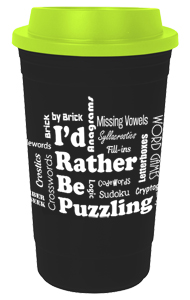
And as you might expect, I have a few puzzly resolutions of my own.

In the coming year, I resolve to:

  • get through the backlog of puzzles that has slowly accumulated over the past year
  • keep track of the number of puzzles I solve each month
  • organize my voluminous library of puzzle books
  • (and complete the unfinished ones)
  • (and probably donate a bunch of the ones I haven’t touched)

Have you made any puzzly resolutions, fellow puzzlers and PuzzleNationers? Let us know in the comments section below! We’d love to hear from you!


Thanks for visiting PuzzleNation Blog today! Be sure to sign up for our newsletter to stay up-to-date on everything PuzzleNation!

You can also share your pictures with us on Instagram, friend us on Facebook, check us out on TwitterPinterest, and Tumblr, and explore the always-expanding library of PuzzleNation apps and games on our website!
There’s a Little Something Extra in These X-Words…

Crossword constructors can be fiendishly clever, so there’s often something extra lurking inside a crossword grid, if you know where to look.

Sometimes it’s easy to spot. There are shaded areas or circled letters to reveal the hidden bonus answers that add a touch of pizzazz to a grid.

For instance, our friends at Penny/Dell Puzzles have a recurring crossword variant, Revelation, which conceals a quotation in a standard crossword grid.

The New York Times crossword has also featured this gimmick in puzzles plenty of times, perhaps most notably in a May 2015 puzzle where both poet WILLIAM CARLOS WILLIAMS and the title of his poem THE LOCUST TREE IN FLOWER read down the sides of the grid, and the circled letters within the grid concealed the poem in full!

[Image sourced from Amy Reynaldo’s Diary of a Crossword Fiend.]

For his puzzle featured in an episode of The Simpsons, constructor Merl Reagle famously snuck a message into another New York Times crossword puzzle, allowing Homer to apologize to Lisa for his transgressions in the most public puzzly forum possible.

If you went diagonally from the upper left to the lower right of the grid, the statement “Dumb dad sorry for his bet” could be found.

[Image courtesy of The Guardian.]

Whether it’s a hidden quotation or a secret message hiding amidst the black squares and crisscrossing entries, these bonus answers offer a final little twist that wow solvers, leaving them shaking their heads at the cleverness and skill of constructors.

A puzzle in The Wall Street Journal recently reminded me of another surprise that a crafty constructor can spring on an unsuspecting solver.

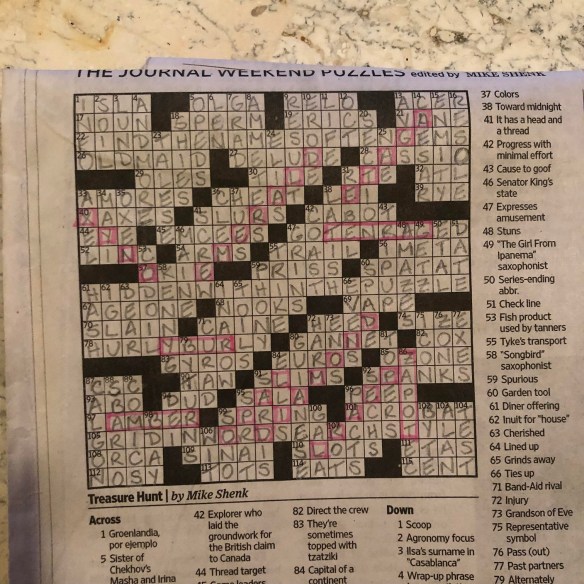
This particular puzzle from September 28th of this year had instructions instead of the usual themed answers. If you read 22 Across, 61 Across, and 105 Across, you received the following message: Find the names of ten gems / hidden within the puzzle / grid in word search style.

wordsearchxwd

[Image courtesy of Reddit.]

Yes, the appropriately titled “Treasure Hunt” by Mike Shenk had jewels hidden among the answers in the grid, reading horizontally, vertically, and diagonally, just as they would in a word seek or word search.

Although this led to a few awkward entries — GOT ENRAGED is a bit clunky for an answer, even if the goal is to hide GARNET backwards within it — the grid is mostly great, and the spread of gems — from DIAMOND and EMERALD to ONYX and TOPAZ — is impressive. (I particularly liked RUBY reading out backwards in HURLYBURLY.)

I haven’t encountered many of these word search-style crossword surprises over the years, but there is one other prominent example that came to mind.

In his second appearance in today’s post, Merl Reagle constructed a special puzzle to celebrate the 100th anniversary of the crossword in 2013.

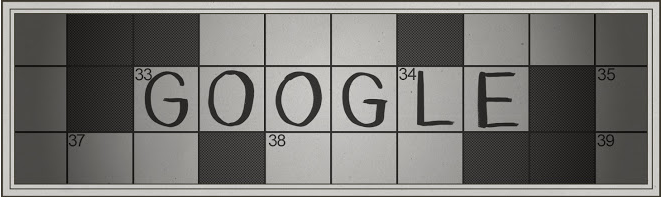
His puzzle was converted into a solvable Google Doodle — you can still solve it here! — and Merl added a crafty word search element by hiding the word FUN multiple times in the grid.

Why “fun,” you ask? Because that was the set word in Arthur Wynne’s original “word-cross” puzzle over one hundred years ago.

Believe me, constructing a great crossword grid is taxing enough. Adding touches and tricks like these just ratchet up both the difficulty involved and the skill level required to make the whole endeavor a harmonious success.

Kudos to those, past and present, who have pulled it off with such style.


Thanks for visiting PuzzleNation Blog today! Be sure to sign up for our newsletter to stay up-to-date on everything PuzzleNation!

You can also share your pictures with us on Instagram, friend us on Facebook, check us out on TwitterPinterest, and Tumblr, and explore the always-expanding library of PuzzleNation apps and games on our website!