How to Get Started in Games

vaSBal7l

[Image courtesy of The Board Game Family.]

So, it’s after Christmas, and you’ve been gifted with a new game, or a roleplaying book, or someone showed you a new card game and you want to know more. Or your New Year’s Resolution is to learn more games, play more games, solve more puzzles, or even make some puzzles yourself.

Basically… how do you get started?

Here. You get started right here. I’m going to run down my favorite guide books for gaming, puzzles, tabletop play, roleplaying, and more, creating the perfect first step to a new world of play for you.

Let’s get cracking!


My first recommendation is also the most recently published book on my list.
vcVRmRHl

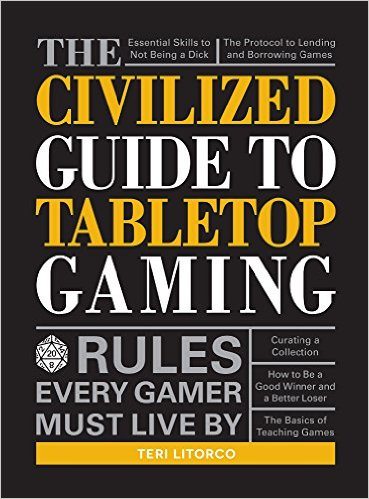
The Civilized Guide to Tabletop Gaming by Teri Litorco is a perfect introduction to all things gaming. This delightfully nerdy tome is loaded with thoughtful advice covering everything from choosing new games to teaching them to others, as well as building a game group for regular sessions or roleplaying games, and more.

From how to deal with cranky gamers to how to host your own major gaming events, Teri has dealt with every obstacle imaginable, and she offers her hard-won first-hand knowledge in easily digestible tidbits. Even as an experienced tabletop gamer, roleplayer, and puzzler, I found this to be a very worthwhile read, and I think you will too.
W3RSBUWl

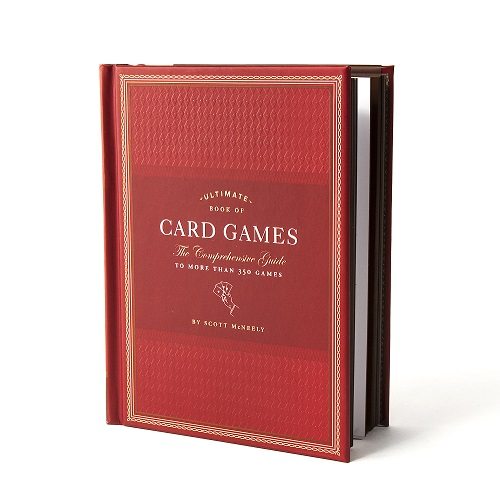
If card games are your poison, then what you need is a copy of The Ultimate Book of Card Games by Scott McNeely.

What separates this book from many other card game books — namely the ones attributed to Hoyle (the vast majority of which had nothing to do with him) — is that it doesn’t claim to be the definitive source. It provides the key rules for how to play, and then offers numerous variations and house rules that expand and refine gameplay.

There are more than 80 pages of variations of Solitaire alone! Kids games, betting games, games for two, three, four or more, this is my go-to guide for everything that can be played with a standard deck of cards.
a4VHXBpl

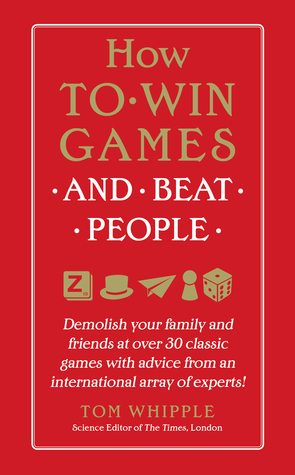
What if you’re already a fan of games, but you want to play them better? If that’s your goal, check out How to Win Games and Beat People by Tom Whipple.

Monopoly, Jenga, Hangman, Operation, Trivial Pursuit, Twenty Questions, Checkers, Battleship… heck, even Rock, Paper, Scissors is covered here. With advice from top players, world record holders, game creators and more, you’ll find advice, tactics, and fun facts you won’t see anywhere else.

For instance, did you know that letter frequencies in Hangman are different from letter frequencies in the dictionary? ESIARN is the way to go with Hangman, not ETAOIN.

That’s just one of the valuable nuggets of info awaiting you in this book.


Do you have any favorite books about puzzles and games that I missed? Let me know, I’d love to hear about them!

Thanks for visiting PuzzleNation Blog today! Be sure to sign up for our newsletter to stay up-to-date on everything PuzzleNation!

You can also share your pictures with us on Instagram, friend us on Facebook, check us out on TwitterPinterest, and Tumblr, and explore the always-expanding library of PuzzleNation apps and games on our website!

PuzzleNation Product Review: Tak•tak

When it comes to strategy puzzle games, no matter how complex or how simple the actual game mechanics, the game itself hinges on the two players involved. After all, two extremely tactical puzzlers can make checkers look like chess.

Now, imagine a game that combines the pattern-matching of Uno, the strategy of chess, and the mechanics of Upwords, and adds a scoring element to boot. It might sound complicated, but I promise, it’s as simple as checkers.

Tak•tak is a two-player strategy scoring game designed by the folks at Twizmo Games, and it’s another puzzle game brought to life thanks to a successful crowdfunding campaign. Although Twizmo Games is best known for twisty puzzles (or Rubik’s Cube-style puzzles), they’ve taken a strong step into the traditional board game market with Tak•tak.

Each player starts with 12 tiles, each tile bearing a different score (10, 20, 30, or 40) and a different color (green, blue, or yellow). The two rows nearest the player form that player’s safe zone. The three rows in the middle are the war zone.

Your goal is to get as many points as possible into your opponent’s safe zone by stacking your tiles, crossing the war zone, and either capturing or maneuvering around your opponent’s tiles. You can only move forward (either straight or diagonally), so this is a game about tactics and initiative.

You build your stacks by matching either point values or colors. For instance, you can stack a yellow 20 and a yellow 40, or a yellow 30 and a green 30, and either of those new stacks would represent 60 points. This enables you to move more tiles around the board quickly. (But careful: once you’ve stacked tiles, they stay stacked for the rest of the game.)

But those matching rules also apply to your opponent’s tiles! When you and your opponent cross paths in the war zone, you can stack your tiles onto theirs and steal those points for yourself. (The stacks you make from your own tiles can only go three tiles high, but stacks made from your tiles AND your opponent’s tiles can go as high as you want! Heck, a stack might change owners several times and tower over the game board!)

The game ends when one player has no more available moves. (There are other ways to end the game if you choose to use the advanced game play rules, but we’ll stick with the basic rules for now.) And then it’s time to count your tiles.

You earn points for all of the tiles you’ve moved into your opponent’s safe zone (including any of your opponent’s tiles that are in stacks you control), plus points for any tiles your opponent never moved into the war zone. (Meaning they were never “in play.”) Highest score wins!

Tak•tak builds a lot of versatility and play possibilities into a game with checkers-simple mechanics, and the more you play, the more fun it is to delve deeper into tactics and strategy. It was worth losing 50 points for keeping a few tiles in my safe zone when they prevented a stack of my opponent’s tiles from scoring.

The clever mix of classic game-play elements not only makes Tak•tak so easy to dive into, but also ensures new players can more time actively playing and less time worrying about learning the rules (a common downfall for more complicated strategy games).

The designers claim the game is appropriate for ages 8 through 108, and I think they’re right on the money.


Thanks for visiting PuzzleNation Blog today! You can share your pictures with us on Instagram, friend us on Facebook, check us out on TwitterPinterest, and Tumblr, and be sure to check out the growing library of PuzzleNation apps and games!

Prep for College the Puzzly Way!

It’s summer here in the United States, which means many high-school graduates are already looking forward to starting college. But for those soon-to-be freshmen, as well as high schoolers looking for an edge before university, have you considered puzzles and board games?

Now, it comes as no shock to me, but this article from the U.S. News and World Report website might surprise some, since it lists puzzles and board games as two of its five tools to develop critical thinking skills before college!

Naturally, I’ve been an advocate of puzzles as a learning tool for a long time, so it’s gratifying to see a major publication sharing the same views and ideas.

From the article:

Collections of crossword puzzles, logic problems, riddles, sudoku, word problems and word searches can be found at your local bookstore or library. The puzzles in these books are a wonderful strategy to activate different parts of your brain for a round or two of mental gymnastics, and many collections even discuss what each puzzle is meant to target within the mind.

Allow me to expand on this for a bit. Different puzzles can target different skills, so which puzzles you solve can make a big difference when it comes to critical thinking.

Crosswords encourage deduction (figuring out words from a few common letters) and a facility with wordplay (dealing with crafty clues and alternate definitions), while word searches offer great practice in pattern recognition and quick reaction times.

And the demand that Sudoku puzzles place on active attentiveness and concentration exercises parts of the brain associated with forming new memories, encouraging better memory retention.

[All three of the above pics come from our line of puzzle apps! Perfect for puzzly pre-college practice! Shameless plug now concluded!]

But the article also mentioned that certain board games can be excellent tools for honing valuable mental skills for college.

Choose board games that require more than luck – namely, strategy – for players to win. Any game where players must carefully consider their next move, recognize patterns and remember details will aid in honing critical thinking skills.

The article goes on to suggest some classics, like Chess, Checkers, and Mastermind for learning chain-thinking (planning several steps ahead) as well as Scrabble and Boggle (speedy information analysis, as well as word formation) and Clue and Risk (anticipating and reacting to the gameplay of others).

But I think they’re excluding some prime examples of board games that could benefit younger minds.

  • You could pick a cooperative game like Pandemic or Forbidden Island, which not only encourage strategic thinking, but teamwork and the free exchange of ideas (something that forced group exercises in school never really managed).
  • You could choose a rapid-change game like Fluxx (either the board game or the card game), which forces the players to adapt quickly to constantly changing rules and gameplay (a perfect microcosm of problem-solving in the real world, where things rarely remain static for long).
  • You could select a mixed-play game like The Stars Are Right, which incorporates several forms of gameplay (in this case, pattern-forming, tile-shifting, and a strategic card game akin to Magic: The Gathering or Munchkin) and forces players to exercise different forms of strategy and puzzle-solving all at once.

Just think about it. You could turn Family Game Night or Family Puzzle Time into College Prep Time in a snap. It’s win-win, or perhaps even win-win-win. What could be simpler, or more fun, than that?

Thanks for visiting PuzzleNation Blog today! You can share your pictures with us on Instagram, friend us on Facebook, check us out on TwitterPinterest, and Tumblr, and be sure to check out our library of PuzzleNation apps and games!