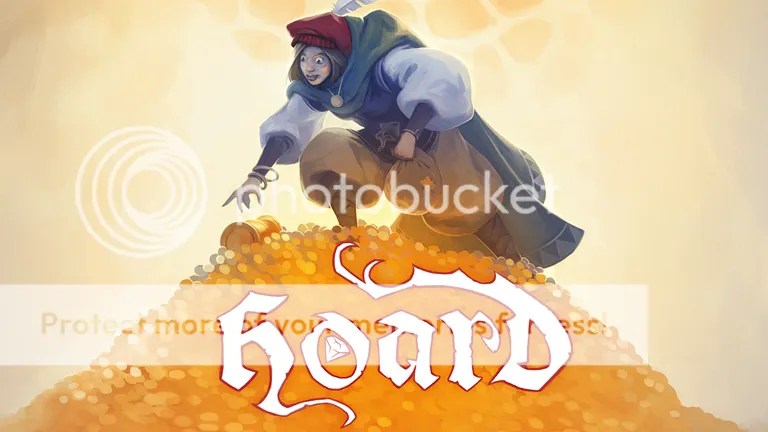
PuzzleNation Product Review: Hoard

Stealing a dragon’s treasure is an iconic adventure trope, a classic test of a hero’s mettle or a thief’s craftiness. But do you have the skills and luck necessary to pilfer from a sleeping dragon and get away clean?

In the card game Hoard, you’ll get your chance to do exactly that as you and your fellow players maneuver around a sleeping dragon, trying to collect matching sets of treasure while defending yourself from or attacking your fellow plunderers, all with the ever-present threat of a slumbering fire-breathing beastie looming over you.

In fact, waking the dragon (or lulling it back to sleep) is a key part of the game play, since it could be to your advantage to wake the dragon after securing some treasure for yourself.

Hoard combines the resource management aspect of numerous other card games with the luck and wherewithal of Memory. As you move around the board, you have the choice to look at one of the dragon’s treasure cards. You can either take that card, or you can leave it (and hope you remember what you found there, in case you need it later). If you leave the card, you’ll instead draw a random card from the deck.

You might find helpful treasure, a sword to attack with, a shield to defend with, a way to wake the dragon, or a way to soothe the dragon. The variety of cards makes the relatively small playing area a rich field, rife with possibilities.

Wait a minute, why would you WANT to wake a dragon?

Simple. You play for several rounds, and each round can only end in one of three ways:
A.) The last card from the deck is pulled
B.) A player begins a turn with no cards in their hand
C.) The dragon wakes up

So, if you’ve secured a good bit of treasure and you think you’ll win that round, it’s to your advantage to wake the dragon and end the round before the other players can catch up.

Only the players with the top two point totals (amassed from making treasure sets and other related card patterns, similar to Go Fish) receive victory points at the end of the round.

The first player to five victory points wins the game.

The strategy involved is what makes this a terrific game for puzzle fans. You need to make sure that you keep finding matching sets of treasure (both by remembering what cards are around the dragon and seeing which cards you get from the deck), defend your treasure from the other players, and avoid getting outfoxed in manipulating the dragon.

The mechanics of the game are simple, but the sheer number of options available to the player — as well as the element of chance involved — make for a very replayable game experience. One round, the dragon could be your greatest ally, while another time, the dragon wakes at the worst possible moment for you and your meager treasure hoard.

A great game for families, casual players, and hardcore board gamers alike, Hoard is gorgeous, well-executed, and great fun.

Hoard is a Cheeky Parrot Games product, available online now!


Thanks for visiting PuzzleNation Blog today! Be sure to sign up for our newsletter to stay up-to-date on everything PuzzleNation!

You can also share your pictures with us on Instagram, friend us on Facebook, check us out on TwitterPinterest, and Tumblr, and explore the always-expanding library of PuzzleNation apps and games on our website!

PuzzleNation Product Review: The Oregon Trail Card Game

For gamers and puzzlers of a certain age, there are many fond memories of a certain historical journey that tested your wits, your luck, your tactical skills, and your endurance. I’m speaking, of course, of The Oregon Trail, a computer-game classic that not only taught millions of young minds about the perilous journey, but probably introduced most of them to the concept of death by dysentery.

Ick.

For those not in the know, The Oregon Trail was a computer game designed to explore 19th-century pioneer life on the long journey between Independence, Missouri, and Oregon’s Willamette Valley. Players would manage food, supplies, and the pace of the trek in their covered wagon, occasionally dealing with dangers like disease, thieves, broken equipment, accidents, and treacherous rivers to cross.

A classic in the eyes of many, this beloved game has made the jump from the digital realm to the analog one with a card-game variation released this year by Pressman Toys.

Pressman Toys have outdone themselves with this nostalgia-fueled adaptation. The trail cards themselves evoke the classic black-and-green screen of old-school computers, while the supply and calamity cards are pixelated in a style more akin to 8-bit video games.

I daresay, though, that the card game is harder than the computer game. I don’t know that I’ve ever encountered a game that stacks the deck against the player quite so brutally.

To make the journey to Oregon successfully, players must traverse 50 trail cards, avoiding illness and unpleasant twists of fate along the way (represented by the calamity cards that come up all too often), managing meager supplies, and testing their luck against river crossings (where a roll of the die determines your fate).

This quickly becomes a strategic battle of resource management, trying to hold onto fort and town cards for as long as possible (since they provide some of the rare opportunities to gain new supplies), playing trail cards (which must link up in a continuous line), and deciding whether it’s better to spend medicine and clean water supplies on saving fellow players stricken by illness or letting players die and hoarding supplies for the survivors.

I’ve played the game a few times now — each session has lasted about 30 minutes, with the team failing to reach Oregon both times (though we made it more than halfway on the second try) — and it remains an engaging, enjoyable play experience. Yes, it can be disheartening to see a player die early on (as I did by rattlesnake bite in my very first turn one game), but the group play experience — pitting all of you against the game itself — is only enhanced by the difficulty.

There are some aspects of the computer game — hunting, for instance — missing from the card-game experience, but I suspect the development of simple house rules (like spending a bullet card and letting a handful of dice rolls determine your success hunting, to more closely recreate the computer game’s hunting mechanic, for instance) would enrich the gameplay.

Whether you’re a fan of the classic computer game or a newcomer to the franchise, I suspect The Oregon Trail will delight you (and challenge you!) like few card games ever have.

[The Oregon Trail Card Game is available at Target stores and through online outlets.]


Thanks for visiting PuzzleNation Blog today! Be sure to sign up for our newsletter to stay up-to-date on everything PuzzleNation!

You can also share your pictures with us on Instagram, friend us on Facebook, check us out on TwitterPinterest, and Tumblr, and explore the always-expanding library of PuzzleNation apps and games on our website!

It’s Follow-Up Friday: Kickstarter Roundup edition!

Welcome to Follow-Up Friday!

By this time, you know the drill. Follow-Up Friday is a chance for us to revisit the subjects of previous posts and bring the PuzzleNation audience up to speed on all things puzzly.

And today, I’d like to return to the subject of crowdfunding.

2182c85d8c75501073538b61e615b14f_original

First, let’s talk about Herbaceous. Ed and the Herbaceous team were hoping for $6500 to make the game a reality, and they absolutely crushed that goal!

The final total was a staggering $59,032! Congrats to everyone involved, and kudos to all the PuzzleNationers that contributed!

And in the spirit of such marvelous Kickstarter success, let’s take a look at four very different projects that might appeal to puzzle fans and game enthusiasts!

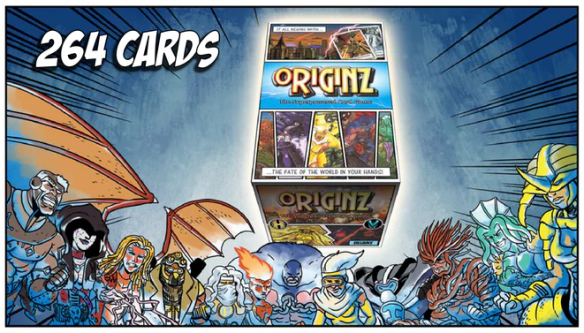
originz

I missed my chance to try out Originz: The Superpowered Card Game at the CT FIG event earlier this year — though you can try it out at the CT FIG mid-year event this weekend in Newington, CT! — but I definitely like what I’ve seen from their Kickstarter campaign.

In this deck-building game, you try to equip your villain or hero with the best mix of powers imaginable to keep your foes at bay! This accessible game is richly illustrated and detailed, a sure-fire hit with any fans of superheroics in your household.

arch2o-into-mystery-by-eric-clough-01

If you’re looking for a more traditional style of puzzling, there are only a few days left to get in on the ground floor of LightBox, a Rubik’s-style light-up puzzle box.

By rotating and rearranging the layers of plastic that form the cube, you will illuminate different layers and create different patterns of light! Whether you’re solving to create a particular pattern or to shut the LightBox off entirely, you’re sure to work your brain into knots with this curious puzzle box.

worddomination

And speaking of short deadlines, there are only a few days left to contribute to Word Domination, an intriguing mix of Scrabble-style spelling and a strategy card game.

The concept is devilishly simple: by spelling words, you acquire artifacts to help you in your criminal escapades. The mix of tactical spelling — sometimes, shorter words have more value than longer words — with the roguish qualities of an evildoer allow for all sorts of gameplay possibilities.

I don’t think I’ve ever seen these two puzzle-game formats combined like this before, and the result could be something great.

b081a19a52e3bd99bf7a00754d2d77f0_original

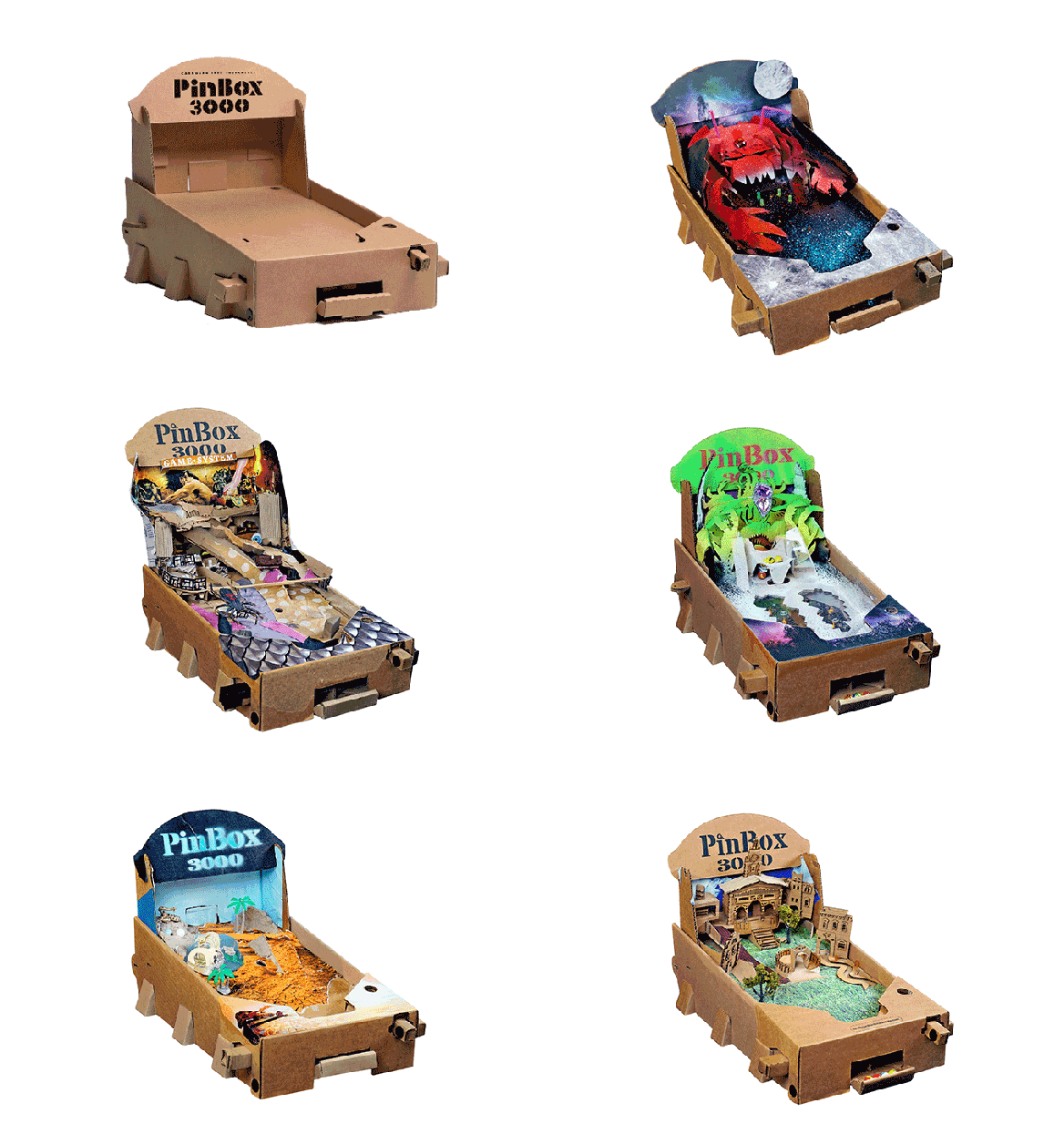
Our fourth and final project today has the most potential, simply because of its design. It’s the PinBox 3000, and it’s a foundation for designing, decorating, and constructing your very own pinball game.

Merging DIY possibilities with a classic form of game play seems like a no-brainer, and I can’t believe we haven’t seen something like this on the market before. This is the perfect community builder, and I can foresee forums and Pinterest pages popping up all over, as fans and creators share their unique designs. What an awesome palette to work with!

Hopefully one or more of these projects piques your interest, my fellow puzzlers and PuzzleNationers! I wish all of these creators the best of luck in shepherding their brainchildren toward success!


Thanks for visiting PuzzleNation Blog today! Be sure to sign up for our newsletter to stay up-to-date on everything PuzzleNation!

You can also share your pictures with us on Instagram, friend us on Facebook, check us out on TwitterPinterest, and Tumblr, and explore the always-expanding library of PuzzleNation apps and games on our website!

Herbaceous: A Card Game That Grows on You!

I’m always on the lookout for new board games or card games that I think will interest the PuzzleNation readership, and today, I think I’ve got something special.

Many games center around combat, territory acquisition, player elimination, and other aggressive forms of gameplay that can alienate younger players and families alike. But what if there was a game where the toughest decision is what to plant in your garden?

Fellow puzzlers and PuzzleNationers, I give you…Herbaceous.

You have herb cards and container cards, and your goal is to collect the best combination of herbs to pot in your private garden. You do this by drawing herb cards and either planting them in your private garden or placing them in the community garden, where they might be snatched up by other players hoping to bolster their own private gardens.

It’s a simple, accessible game mechanic that makes it perfect for players of all ages, quick to learn but offering enough variety and strategy to give it plenty of replay value.

I reached out to Eduardo Baraf, who is part of the creative team and managing the Kickstarter, to discuss this intriguing family-friendly game.

What separates Herbaceous from other games?

Herbaceous stands out because it has accessible, welcoming gameplay that provides great player moments and dynamics. Certainly the art and subject matter of Herbaceous also grabs people’s attention.

As both a game designer and a game enthusiast, what aspect of the game most appeals to you?

The ease with which I can play it with anyone in my family and extended family. Cousins, Aunts, Grandparents, etc.

Ed backs up his claims of inviting all-ages gameplay by having his mother explain how to play the game:

And best of all, the game is already funded! So if you donate, you’ll be contributing to a game with stretch goals already in mind and plenty of support. Also, given Ed’s successful track record with crowdfunded campaigns, I have great confidence in this game reaching many satisfied supporters and customers.

[Brief Kickstarter explanation for the uninitiated: Although there are no guarantees when it comes to Kickstarter or other crowdfunding platforms, donating to already-funded projects gives you a much-higher chance of receiving the finished product in a timely fashion, since you’ve already crossed one of the major thresholds — securing the minimum funding to make the game — eliminating the chance for disappointment that the project might be cancelled because it didn’t make its minimum funding goal.]

So if you’re looking for a fun, non-combative game to play with family and friends, Herbaceous just might be what you’re looking for.

Click here for all of the details on the game and the Kickstarter campaign!

Thank you to Ed for taking the time out to answer our questions! Best of luck with the game!


Thanks for visiting PuzzleNation Blog today! Be sure to sign up for our newsletter to stay up-to-date on everything PuzzleNation!

You can also share your pictures with us on Instagram, friend us on Facebook, check us out on TwitterPinterest, and Tumblr, and explore the always-expanding library of PuzzleNation apps and games on our website!

5 Questions with PuzzleNation Social Media Manager Glenn Dallas

Welcome to 5 Questions, our recurring interview series where we reach out to puzzle constructors, game designers, writers, filmmakers, musicians, artists, and puzzle enthusiasts from all walks of life!

It’s all about exploring the vast and intriguing puzzle community by talking to those who make puzzles and those who enjoy them! (Click here to check out previous editions of 5 Questions!)

For the entire month of August, I’ll be introducing the PuzzleNation readership to many of the members of the PuzzleNation team! So every Thursday this month, you’ll meet a new name and voice responsible for bringing you the best puzzle apps on the market today!

And we’re continuing this series with me, your friendly neighborhood PuzzleNation blogger, as our latest 5 Questions interviewee!

My name is Glenn Dallas, and I’m not only lead blogger for PuzzleNation Blog, but also Social Media Manager for PuzzleNation, maintaining and providing content for all of our social media platforms. A lifelong puzzler and board game enthusiast, I try to infuse every blog post with that same level of dedication and passion. Hopefully, I succeed.

I consider it a privilege for me to take some time out to talk to the PuzzleNation audience, so without further ado, let’s get to the interview!


5 Questions with Glenn Dallas

1. How did you get started with puzzles and games?

Looking back, it seems like puzzles and games were always around. My mother has always been a dedicated crossword solver. I can remember my older sister playing “School” with me and my younger siblings, using brain teasers and puzzles from old issues of GAMES Magazine as “lessons.” The classic board games were played often — Monopoly, Sorry, Mouse Trap, Battleship, even Trivial Pursuit, which I was probably too young for. But I’ve always been a trivia nerd.

Although formal puzzling fell by the wayside as I got older, wordplay and riddles and the like remained a recurring interest. I would often create puzzle content for friends’ websites or my own blog that involved Say That Again?-style rewording, palindromes, puns, anagrams, portmanteaus, brain teasers, and other forms of wordplay. (And, for a bit of context for long-time internet users, I’m talking about Geocities and Angelfire websites, as well as a blog that pre-dated LiveJournal.)

I got back into puzzles more directly in college when I began playing Dungeons & Dragons and other role-playing games, because I enjoyed challenging my players with tests beyond the usual monster hunts. So mechanical puzzles, sliding-block puzzles, and more Myst-style puzzle-solving became an interest (along with riddles and such).

After college (and a stint as a TV cameraman), I had an interview at Penny Press and was hired as a puzzle editor, bringing my amateur puzzly skills into a professional setting working on traditional (and non-traditional!) pen-and-paper puzzles like word seeks, crosswords, cryptograms, fill-ins, etc. And more than a decade later, I’m still at it.

2. You’re one of the senior members of the PuzzleNation team, dating back to its earliest days. How has your work for PuzzleNation changed over time and what can you tell us about PuzzleNation as it evolves and moves forward?

That’s true! Originally, I was just pitching in occasionally as a product tester — helping look for bugs or problems with early versions of apps — and I started providing ideas for content to our social media person for Facebook posts. I was a big proponent early on of expanding our efforts to include a blog; it’s a great centerpiece to a social media platform (and one that allows for more control than your average Facebook post).

But I also wanted PuzzleNation Blog to be a hub for all things puzzles and puzzle games, because there’s not really anywhere like that on the Internet. If you like movies, there’s IMDb. If you like books, there’s Goodreads. You’ve got Gizmodo for tech, science, and sci-fi, and Board Game Geek for board games. And although there are plenty of terrific crossword blogs out there, there’s not one central place to go to talk about puzzles in general. I always envisioned PuzzleNation Blog as that place.

When our previous social media person left the company, I was already writing blog posts once or twice a week (alongside Eric Berlin, who was our top contributor to the blog in its early days), and I inherited his position, along with the Facebook, Twitter, and Pinterest accounts that went with them. (I have since added Tumblr and Instagram to our bevy of social media platforms.)

So, as you can see, I’ve gotten a bit busier as time passed, expanding my duties and becoming the lead blogger on the site, writing three (and sometimes more) blog posts a week.

[Here I am, hard at work trying to beat a stuffed teddy bear in Jenga… and failing.]

I feel like the blog has grown and matured into what I originally envisioned — though there’s always room for expansion and improvement! — and my goal right now is continue maintaining that level of interest and quality.

As for our Facebook, Twitter, and other social media outlets, I’m always looking to encourage more interaction with the PuzzleNation audience. I’m hoping at some point to have recurring puzzle features on every platform. (For now, we’ve got the Insta-Anagram game every Monday on Instagram, and the Crossword Clue Challenge every weekday on Facebook and Twitter.)

3. The crossword has been around for over a hundred years, and many puzzles (whether pen-and-paper or mechanical) have roots that can be traced back even farther. What, in your estimation, gives puzzles such lasting appeal?

I think it’s the Eureka! moments that keep people coming back. They’re certainly what I find the most enjoyable and the most motivating factor. And puzzles provide those in spades.

[Image courtesy of tnooz.com.]

When you approach a particularly fiendish brain teaser, or a crossword clue that keeps eluding you, or a mechanical puzzle that has you stymied, and then suddenly, that light bulb appears over your head. You’ve cracked the code, found the hidden latch, connected the missing pieces, made a deductive leap that would make Sherlock Holmes proud…those Eureka! moments never fail to make it all worthwhile.

And when you work with puzzles, you get to see those moments more often than most people.

4. What’s next for Glenn Dallas and PuzzleNation Blog?

For me, quite a bit. My writing partner and I just launched a new promotional blitz for the novel we published last year, Sugar Skulls (my first novel!), and I’m deep into several ongoing writing projects, one of which is on track to wrap up before the end of the year.

On the side, I’m a freelance book reviewer, and I recently posted my 1,200th book review. I’ve also started work on another in-office murder mystery that I’m hoping to run at our summer picnic event next month. (And I’ll be sure to share pictures here and on Instagram of that!)

As for PuzzleNation Blog, I’m proud to announce that, after the recent success of our PuzzleNation team series of interviews, 5 Questions will be returning as a regular, recurring feature on the blog!

It will be at least once a month (but hopefully twice a month), and I’ve already lined up our first guest for September, with more terrific puzzlers, constructors, and personalities to follow!

5. If you could give the readers, writers, puzzlers, and puzzle fans in the audience one piece of advice, what would it be?

Make time for yourself every day to do something that fuels you. If you want to write, write something every day, whether it’s just a haiku or a journal entry or a limerick or whatever. If you like games, play a round at lunch with friends or coworkers. There are plenty of quick-play games and puzzles that fit that bill. (Oooh, that gives me an idea for a blog post…)

But I digress.

We spend so much time worrying about, well, everything, it’s easy to let the good stuff, the stuff that reinvigorates you and keeps your spirits up, fall by the wayside. So make a little time for you every day. It does wonders.


Thanks for visiting PuzzleNation Blog today! Be sure to sign up for our newsletter to stay up-to-date on everything PuzzleNation!

You can also share your pictures with us on Instagram, friend us on Facebook, check us out on TwitterPinterest, and Tumblr, and explore the always-expanding library of PuzzleNation apps and games on our website!

The Connecticut Festival of Indie Games, Part 2!

And we’re back!

Yup, I attended the CT FIG event last Saturday, and there were so many great games to talk about that I simply couldn’t get the job done on Tuesday. So we’re back with the second half of my event recap.

Last time, I focused on games that are available now or will be soon; this time around, it’s all about games in development!
ctfig29

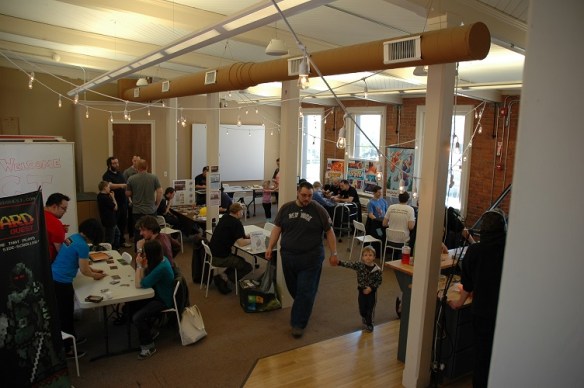
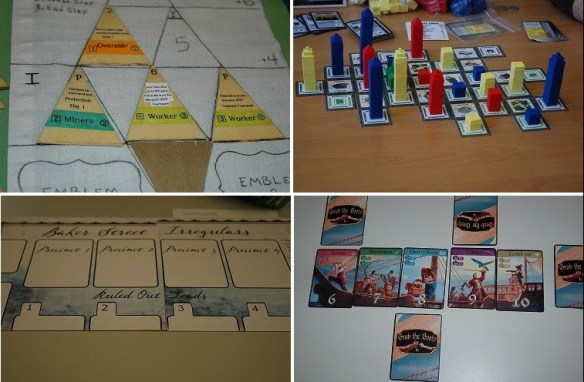
I’d say that more than half the games at the event were in development or not yet published. Some were clearly in beta testing or working with a prototype, hoping to gauge the interest level of puzzle and game fans. Others were gearing up for Kickstarter campaigns, or in the middle of one, or had even tried Kickstarter previously, only to go back to the drawing board. Still others were hoping to impress game publishers or make contacts to help take their games to the next level.

It was interesting and insightful to see the creative process at work here, not only to observe how crowdfunding has revitalized the puzzle-game and board-game markets, but simply to watch firsthand as designers interact with players and learn from each and every playthrough.
ctfig7047

And, to be honest, it’s fun and invigorating to be around enthusiastic people. Virtually everyone I met at the CT FIG was genuinely excited to talk about their games, and they clearly loved what they do. For many of them, these prototype and unreleased games are their babies, their pride and joy, and they were absolutely stoked to show them off.

That’s the kind of infectious energy I can definitely get behind.

One of the first people I talked to at CT FIG was Darrin Horbal of DPH Studioz. He had three games to show off, all in varying stages of development.
ctfig1

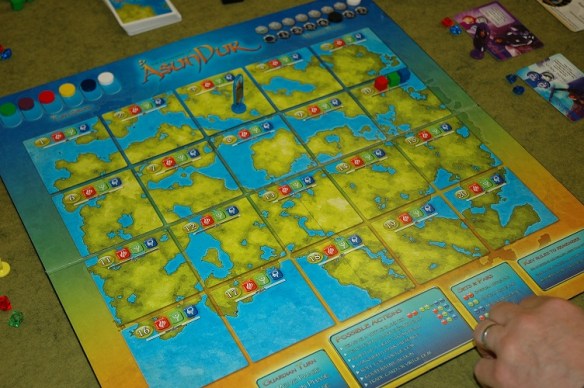
His flagship game is The Guardians of AsunDur, a collaborative game where players work together as guardian angels to defend AsunDur from dark forces.
ctfig2

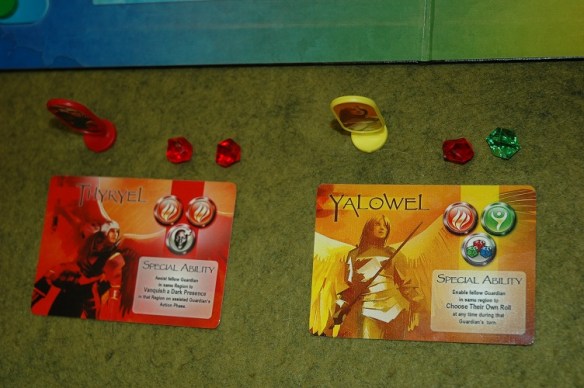
By rolling dice and utilizing colored gems, they battle back the forces of darkness in co-op game play that encourages teamwork and strong strategic planning.
ctfig5

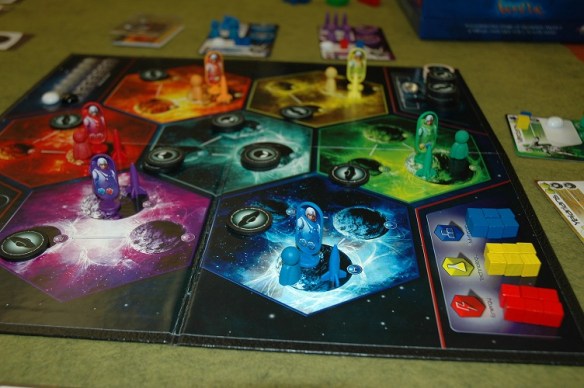
That same style of game play factors into another of Darrin’s board-game projects, Starguard: The Grey Wars, a space-combat game where alien conquerers threaten six different star systems, and only a concerted team effort will prevent the invading alien forces from running roughshod across the galaxy.

I’m a big fan of co-op games, and both of these games had in-depth, elegant systems of play that offered plenty to keep experienced players busy without losing younger players in the shuffle.
ctfig3

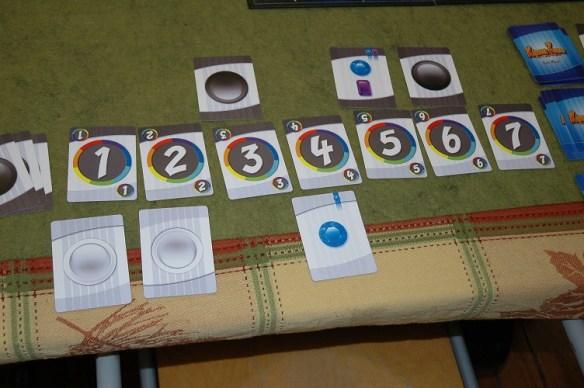
The last game he brought for display was Khroma Zones, a more traditional player-versus-player card game that was easily the puzzliest of the three games. Utilizing the same color-matching game mechanic as Guardians of AsunDur in a simpler format, it’s a great game for families and younger players that might not be ready for more involved game play.

But Darrin was far from the only game designer to have multiple projects in the works.

ctfig32

[Ravenous River, a card game inspired by the classic cabbage-goat-wolf river-crossing brain teaser, shares space at a table with ChronoSphere, a Timeline-style card game with bluffing (recently funded on Kickstarter), and Baker Street Irregulars, a crime-solving puzzle game set in the world of Sherlock Holmes.]

I’m pretty sure Isaac Shalev of Kind Fortress set the high-water mark for the event. He had six games at his table, each with their own unique flavor. (Only one, the abovementioned Ravenous River, was available for purchase there, but I sincerely hope some of his other games follow suit soon.)
ctfig36

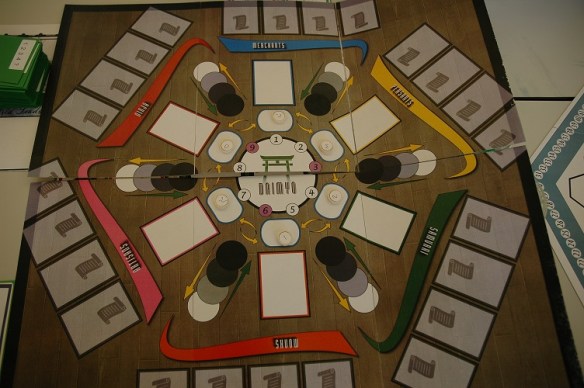
There was something for seemingly every style of card game or board game fan here, from the card-flipping game Flip the Table to the resource-management strategy game set in feudal Japan, Daimyo.

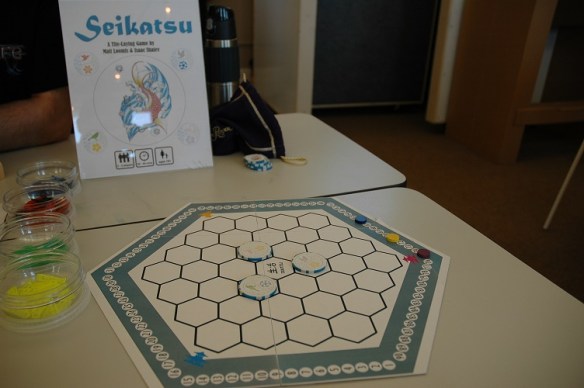
But the one that most appealed to my puzzly sensibilities was Seikatsu, a three-directional tile-placement game that mixes and matches elements from a half-dozen classic games to provide a wonderfully balanced game-play experience.
ctfig35

Unlike many scoring games where tile placement can easily disqualify you from gaining points, Seikatsu assigns one of three directions to each player, meaning virtually every tile on the board could score points for every player. This simple tweak adds massive game-play opportunities, making for a wonderful puzzly session that encourages, rather than discourages, new players.

Kickstarter was a recurring theme in many of the conversations I had with game designers that day. Several of the games I covered in Tuesday’s post were funded and brought to market thanks to crowdfunding, and many others would soon be following suit.
ctfig66

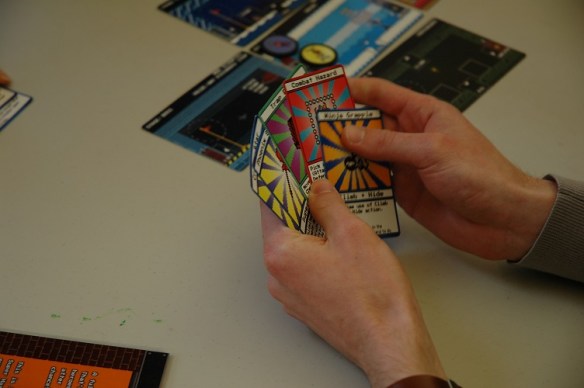
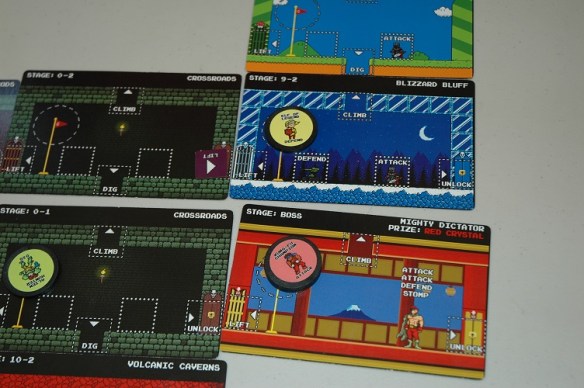
Super Hazard Quest, a card game inspired by 8-bit side-scrolling video games, is on Kickstarter right now (and recently passed its funding goal, thanks in part to the team’s impressive hustling during CT FIG, no doubt).

In the game, you take on the role of a classic video game archetypal hero — the floating princess, the spy, the alien hunter, etc. — and you build and explore a unique video game world while racing to be the first to reach the final boss.
ctfig68

As several event goers and I played through a spirited round of the game, co-creator Mike Mendizabal told me that the game was actually intended as a cooperative game (like Guardians of AsunDur or Forbidden Island), but the players in play testing refused to work together! So they ended up retooling the game for individual achievement.

I love learning little in-development details like that.
ctfig41

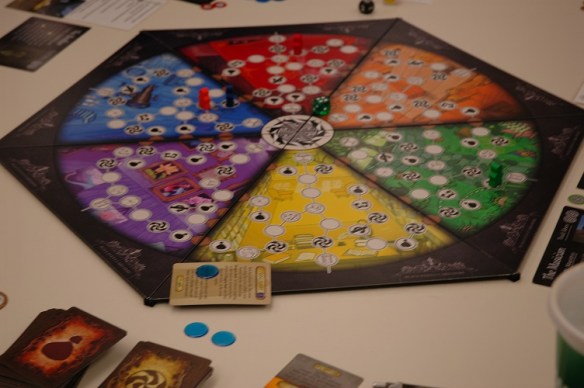
Christopher Bowden of Winter Moon Games shared his own story of development tribulations and lessons learned as I observed a playthrough of his company’s flagship game, Pandemonium Estate.
ctfig40

A board game with shifting board pieces and game play that encourages players to betray each other, Pandemonium Estate is a colorful, dark, and very fun game that indulges the more playfully mean-spirited side of board games. (You know that shamefully satisfying feeling when you play Sorry and bump another player’s game piece back to the start? Multiply that by about 50 and you get something approximating the sinister glee of Pandemonium Estate.)

Christopher told me that he and his team had already taken the game to Kickstarter, but they quickly realized they’d done so before either they or the game was ready. They took some much-needed time to retool, refocus, and get their ducks in a row, and it proved to be a valuable learning experience.

They’re looking forward to bringing their new and improved version of the game to Kickstarter sometime in the future, and I suspect they’ll have great success when they do.

One game that I expect will do quite well is This Is Only a Test, Carl Van Ostrand’s game featured at The Board Room’s table. (I also referenced The Board Room in my previous post when I covered the DNA dice game GATUCA.)
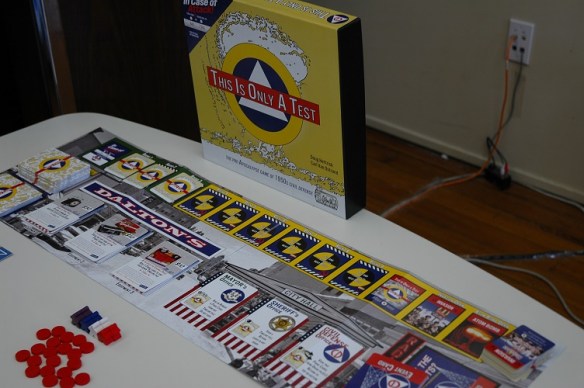
ctfig48

This Is Only a Test is a resource-management game fueled by ’50s nostalgia and doomsday prepping, as you and your fellow players try to gather the necessary materials to survive the end of the world. But be warned…this might be a real nuclear threat, or it might simply be a test. Neither you nor any of the other players will know which is the case until the very end of the game.
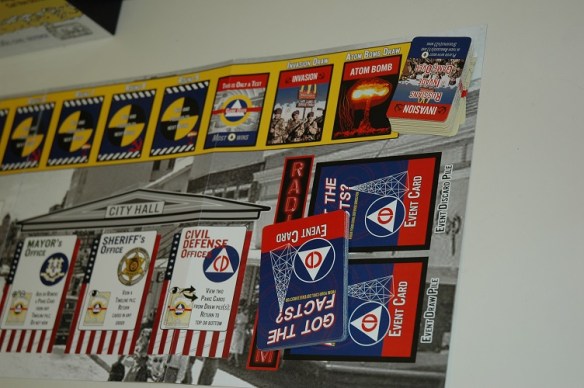
ctfig49

It’s an intriguing game mechanic, one I haven’t really encountered before. In most games, you might not know who will win, or how they’ll do it, or what obstacles they’ll face, but I can’t recall another game where the actual endgame is unknown until the last card is played.

Oh, and speaking of the end of days, that brings me to our next game, Pyramidia.
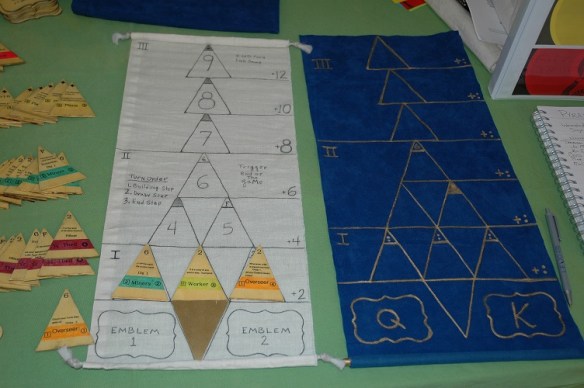
ctfig45

In this puzzly game of curses and construction, you and your fellow players are racing to build the finest Egyptian tomb possible. You gain points for your management of labor, for how much gold you save, and for how magnificent your structure is.

I think the physical building aspect, as well as the numerous ways to win the game, will appeal to puzzle solvers and board game fans both. The triangular game pieces not only added a nice touch stylistically to the game, but they created game play openings for players to either curse each other or themselves for a tactical advantage.

ctfig46

As the game was explained to me, it immediately became clear how much effort had gone into balancing the various styles of play, and I could easily imagine how many hours and hours of brainstorming and playtesting go into each and every one of these games.

And hey, if you’ve got a board-game idea and you’d like to meet up with fellow aspiring designers and players, look no further than CT FIG attendee Alex Wilkinson. He’s part of a group called Let’s Make Games CT based out of New Haven, and they’re always happy to participate in game testing, brainstorming, and all things game development.
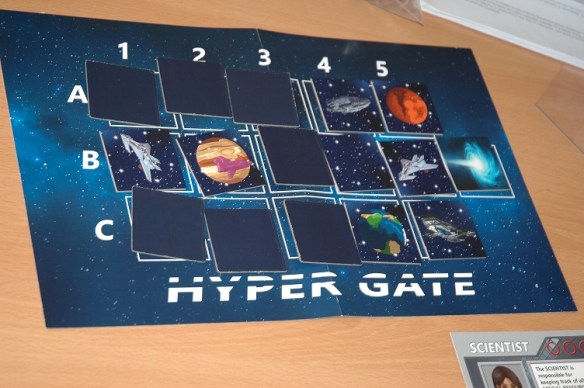
ctfig26

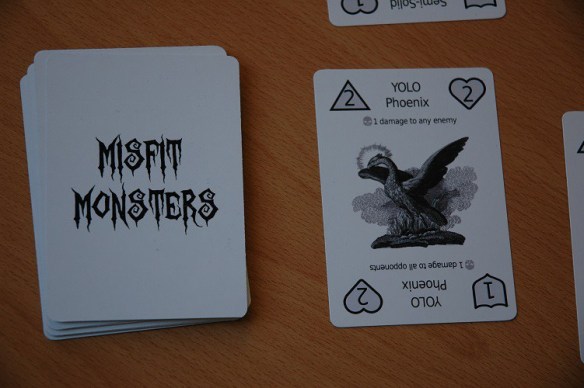
He had two games to show off — a space exploration game called Hypergate that allowed for some engaging role-playing scenarios, and a hilarious card game called Misfit Monsters, where lesser-known creatures like the YOLO Phoenix and the Half-Centaur could do battle.
ctfig27.jpg

It’s genuinely exciting to be around people who love what they’re doing, and that positive energy was all over the Connecticut Festival of Indie Games.

I want to send a big thank you out to all of the amazing developers, designers, and game fans I talked to. I wish them all great success, and I hope to see many of these games on the shelves of game shops and retailers in the near future!


Thanks for visiting PuzzleNation Blog today! Be sure to sign up for our newsletter to stay up-to-date on everything PuzzleNation!

You can also share your pictures with us on Instagram, friend us on Facebook, check us out on TwitterPinterest, and Tumblr, and explore the always-expanding library of PuzzleNation apps and games on our website!