New Clues for an Unsolved Treasure Hunt!

[Image courtesy of Westword.]

Who doesn’t love a treasure hunt? The chance to pit your wits, your skills, and your luck against the elements, a dodgy old map, and the curious clues left behind by an eccentric mind… who could resist?

We’ve detailed a few famous unsolved treasure hunts in the blog in the past, and by far the most popular one that remains is the brainchild of Forrest Fenn.

Somewhere in the Rocky Mountains, there is said to be a treasure chest containing millions of dollars worth of treasure.

[Image courtesy of Wikipedia.]

How does one find this treasure? By deciphering the nine clues in Fenn’s poem, “The Thrill of the Chase.”

As I have gone alone in there
And with my treasures bold,
I can keep my secret where,
And hint of riches new and old.

Begin it where warm waters halt
And take it in the canyon down,
Not far, but too far to walk.
Put in below the home of Brown.

From there it’s no place for the meek,
The end is drawing ever nigh;
There’ll be no paddle up your creek,
Just heavy loads and water high.

If you’ve been wise and found the blaze,
Look quickly down, your quest to cease
But tarry scant with marvel gaze,
Just take the chest and go in peace.

So why is it that I must go
And leave my trove for all to seek?
The answers I already know
I’ve done it tired, and now I’m weak

So hear me all and listen good,
Your effort will be worth the cold.
If you are brave and in the wood
I give you title to the gold.

Hidden since 2010, the poem has baffled and beguiled thousands of aspiring treasure hunters, and several accidental deaths have been attributed to the treasure hunt.

In order to prevent such accidents in the future, Fenn has released a few additional clues to keep hunters safe:

“The treasure chest is not under water, nor is it near the Rio Grande River. It is not necessary to move large rocks or climb up or down a steep precipice,” he writes. “Please remember that I was about 80 when I made two trips from my vehicle to where I hid the treasure.”

Whether these hints will help aspiring hunters, it’s hard to say. For now, that treasure is still out there somewhere…


Thanks for visiting PuzzleNation Blog today! Be sure to sign up for our newsletter to stay up-to-date on everything PuzzleNation!

You can also share your pictures with us on Instagram, friend us on Facebook, check us out on TwitterPinterest, and Tumblr, and explore the always-expanding library of PuzzleNation apps and games on our website!

May the Fourth Be With You!

Hello fellow puzzlers and PuzzleNationers! It’s Star Wars Day, and what better way to celebrate than with a puzzly Star Wars brain teaser!

A fellow Star Wars fan and puzzler sent in this delightful little logic puzzle, and we decided to share it with you! Can you crack this SW gift mystery?


Three friends had three kids who were all named after Star Wars characters. For Star Wars Day one year, all three kids (Han, Leia, and Luke) got different Star Wars LEGO sets as gifts (the Millennium Falcon, an AT-AT, and an Imperial Star Destroyer).

Each set had a different number of pieces (1345, 1432, or 1569) and each kid took a different amount of time to complete the model (2, 3, or 4 hours). Using the clues below, can you figure out which kid got which model, how many pieces it had, and how long it took them to build it?

1. The model with the most pieces took the most time to complete, but the model with the least pieces did not take the least amount of time to complete.

2. The models weren’t to scale, so the Millennium Falcon actually had more pieces than the Imperial Star Destroyer, a fact that Luke was upset to learn since he likes bigger models.

3. Han spent the three hours between opening his gifts and lunch building his model.

Good luck, fellow puzzlers! Although the puzzle is a bit easier if you’re familiar with the Star Wars Universe, any solver should be able to crack this puzzle with the clues provided!

Let us know if you solved it in the comments below! And May the Fourth Be With You!


Thanks for visiting PuzzleNation Blog today! Be sure to sign up for our newsletter to stay up-to-date on everything PuzzleNation!

You can also share your pictures with us on Instagram, friend us on Facebook, check us out on TwitterPinterest, and Tumblr, and explore the always-expanding library of PuzzleNation apps and games on our website!

PuzzleNation Product Review: ThinkFun’s Cat Crimes

[Note: I received a free copy of this product in exchange for a fair, unbiased review. Due diligence, full disclosure, and all that.]

ThinkFun is a company that excels at creating logical deduction puzzles for solvers of all ages. Whether it’s moving robots toward a rocket ship in Lunar Landing, completing electrical circuits in Circuit Maze, or placing mirrors to reflect a laser’s beam in Laser Maze Jr., these clever puzzly challenges introduce classic puzzle concepts to younger solvers in engaging, unique ways.

But with their latest release, they’ve taken a step back from more high-concept, high-tech puzzles and embraced a more traditional logic puzzle format.

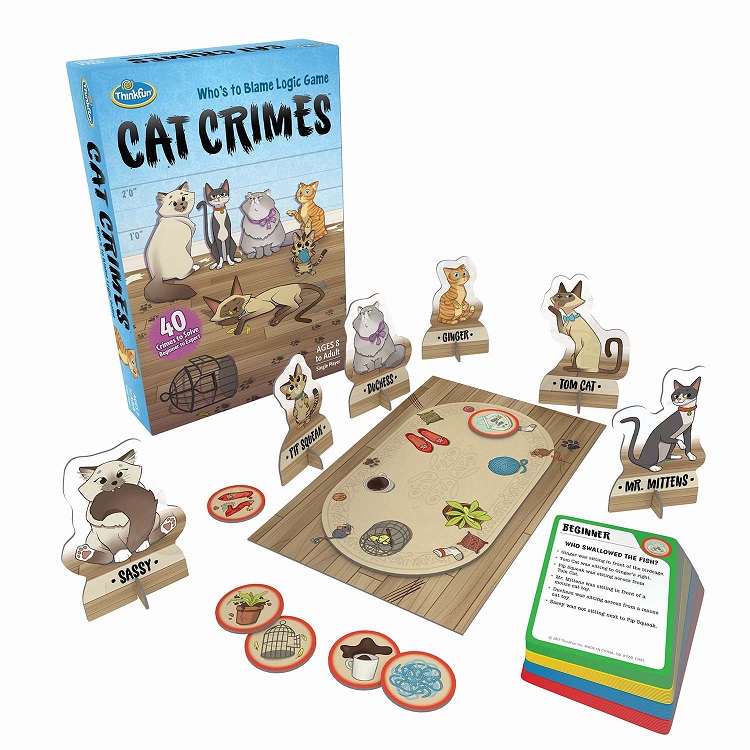
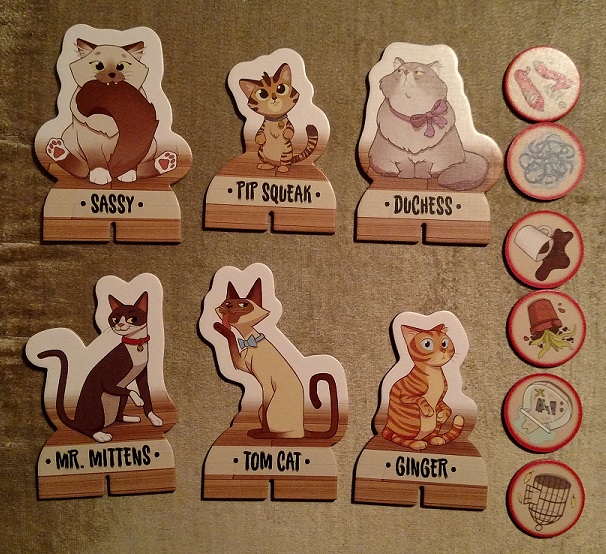
In Cat Crimes, you’re given a series of clues, and it’s up to you to place the six cat characters around the living room in order to determine which one has been up to some destructive mischief.

For instance, a given challenge card will list the crime in the upper right corner — a flowerpot that’s been knocked over, for instance — and the clues listed beneath will tell you which cats are your suspects, along with hints for where to place them in the living room.

The living room is covered with little bits of visual evidence — scratches on the floor, paw prints, mouse toys, etc. — that can be used to help you figure out where each of the cats were sitting when the crime was committed.

The beginner-level mysteries start out simple, with the clues mostly focused on the placement of the cats (across from a sock or next to some catnip, for instance). As the mysteries cards grow more complex — moving from beginner and intermediate levels of difficulty to advanced and, finally, expert — more options emerge. A cat could be in one of two places, or is only referenced with regards to another cat it’s sitting next to or across from.

Higher-level challenge cards will also refer to qualities of the cat suspects themselves. Some wear bows or have bells on their collars, while others are referenced by eye color. Solvers need to keep increasingly greater amounts of information in their head in order to place all of the cats in their proper positions and solve the crime.

I repeatedly found myself discussing possibilities out loud as I solved. “Well, if Sassy is between two of these cats, it can only be Mr. Mittens and Ginger, and Ginger can’t be in front of a scratch mark, so…”

With only six possible crimes and six possible suspects, you’d think that repeated play would lead to player burnout or quickly exhausting the possible permutations, but that’s not the case here at all. As you ascend through the deck of challenge cards, the ThinkFun team throw new twists and cluing styles at you, keeping you on your toes. A lot of creativity and hard work went into the cluing here, and it shows.

[Image courtesy of Logic Puzzles.org.]

It’s not only an absolutely adorable way to bring logic puzzle solving to a new audience, it’s also a refreshing change of pace for solvers accustomed to traditional logic puzzles (complete with those tables where all of the possible permutations are listed, and you can simply cross off the incorrect ones as you go). Cat Crimes requires you to keep more of that information in mind as you determine where each cat goes.

With up to six feline suspects to place per crime and 40 different crimes to solve, Cat Crimes will keep your deductive skills sharp, even as the easier challenge cards introduce younger solvers and logic newbies alike to a different style of puzzle-solving. Cat Crimes is not just one of the cutest puzzle games I’ve played in a long time, it’s the perfect gateway puzzle to strip away some of the intimidation factor of logic problems.

[Cat Crimes is available from ThinkFun and other select retailers for $12.99!]


Thanks for visiting PuzzleNation Blog today! Be sure to sign up for our newsletter to stay up-to-date on everything PuzzleNation!

You can also share your pictures with us on Instagram, friend us on Facebook, check us out on TwitterPinterest, and Tumblr, and explore the always-expanding library of PuzzleNation apps and games on our website!

Puzzles in Pop Culture: NCIS: New Orleans

Last week, a murder investigation turned into a puzzly treasure hunt for a group of NCIS investigators, a team who investigates criminal cases involving members of the military. So join us as we rundown the events of “Treasure Hunt,” episode 17 of season 4 of NCIS: New Orleans.

The episode opens during a pirate-themed festival, as two women search for the secret entrance to an exclusive costume party. Unfortunately, instead of drunken revelry, they stumble upon a dead body, strung up inside a warehouse on the waterfront.

The NCIS team soon arrives, and the coroner identifies the victim as an oceanographer, Lt. Commander Elaine Dodd. Dodd was beaten before her death, and her arm was partially skinned, perhaps as part of an interrogation.

Dodd’s oceanographic work centered around Grande Isle, the former stomping grounds of the infamous pirate Jean LaFitte. The team makes contact with Dodd’s father, Tom, a former Green Beret. He expected her to show up at his house in Florida after an excited phone call, but she never arrived. This leads the team to believe that Dodd’s death had something to do with a treasure hunt, one of the things she and her father bonded over.

Forensic analysis reveals that her arm was skinned to remove a tattoo, but they’re able to reconstruct the image: a simple compass and some coordinates. These confirm the treasure hunt theory: Dodd had apparently made some progress in locating the lost Napoleon Fleur de Lis, a jewel-encrusted emblem stolen by Jean LaFitte and hidden away.

Following the coordinates to a church, Special Agent Pride and lab tech Sebastian search the area, finding their way upstairs to a lofted storage area. But someone has beaten them to the punch, opening fire and sending the agents scurrying for cover.

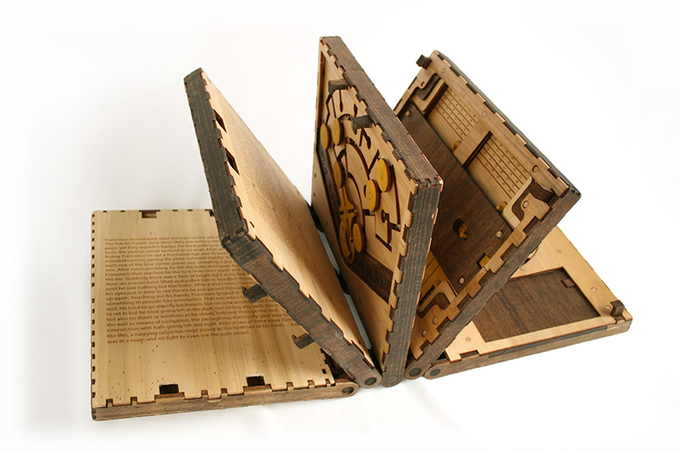
Pride chases the two suspects, but they get away, and when he doubles back to the loft, he finds Sebastian examining a statue stored in the church attic. Once the statue is removed from its pedestal, a secret compartment opens, revealing a wooden puzzle book wrapped in cloth.

The puzzle book is marked with a fleur de lis and bears an inscription of Jean LaFitte’s signature. The investigation of Dodd’s murder has officially become a treasure hunt.

Back at the field office, Agent Gregorio would prefer to use a knife to crack open the book, but Sebastian insists on solving the cipher to open the book, as some puzzle books include a vial of acid inside that would destroy the book if tampered with.

While he works on the puzzle book, cameras outside the church help the agents ID one of the suspects, a mercenary for hire. Dodd’s father Tom enters the office, hoping for progress, and recognizes the suspect. He points the agents toward the mercenary’s usual employer, a specialist in deep-sea diving and sunken galleons. Dodd’s father offers to arrange a meeting, and the team is wary, but takes him up on his offer.

Meanwhile, Sebastian and Gregorio check Dodd’s phone records and find several calls to a local professor, Michelle Faucheux, an expert in LaFitte and pirate history, who they believe helped Elaine find the coordinates. But when they arrive at her home, it has been ransacked, the professor locked in a closet. After they release her and calm her down, she confirms she’d been talking to Elaine.

Tom makes good on his word and lures his contact to a bar with the agents in tow. But the man, Walton, claims he hasn’t worked with either of the suspects in months. He warns Tom and the team away from the treasure hunt, clearly spooked by the ruthlessness he’s observed.

Sebastian and Gregorio bring Michelle back to the office, and she’s stoked to see the puzzle book. The cover of the puzzle book is encrypted, and they have to turn a dial in order to unlock it. But they need a key word to help solve the cipher. After trying out various words, they focus on LaFitte’s brother, Pierre — the most likely person to be hunting for LaFitte’s treasure. This leads them to try the word “Cabildo,” the jail in which Pierre had been incarcerated.

Using that as the key word — and a Vigenere cipher to crack the code — leads them to the answer “fleur de lis”, and they unlock the puzzle book’s cover. The iris in the center opens, revealing a latch, and they open the puzzle book.

On the left page is a clock puzzle, and on the right is a map with smaller code dials beneath it, along with a plate reading BLF6.

Agent Pride calls them, informing Gregorio that the two suspects are camped out right down the street from the office. He and the team are en route, but they expect trouble soon.

Oddly enough, the suspects simply hang back and wait as the team reunites. The agents suspect the mercenaries are waiting for the team to lead them to the fleur. So the team focuses on the riddle, hoping for a chance to gather more info on whomever is bankrolling the gun-toting baddies.

The riddle “Move as the clock” offers a hint for how to find which code letters to enter, but they’re not sure where to start. Pride theorizes that BLF6 could point toward Barthelemy Lafon, an architect and city planner from the 1700s who also palled around with the LaFitte brothers. He is buried in a local cemetery, in a crypt located at F6 on the map.

Gregorio, Sebastian, and Michelle head to the crypt while Agents Percy and LaSalle keep their eyes on the suspects, getting close enough to clone their phones and gain access to their calls and text messages. Pride and Dodd’s father are back at the field office, trying to figure out who would literally kill to have the artifact.

The puzzle book trio spot an engraved fleur de lis over the letter L in “Lafon”. They try “moving as the clock” by moving clockwise to the next crypt. Another fleur de lis over another crypt engraving gives them the final letter they need, unlocking a compartment in the book and revealing both the suspected acid vial and a piece of paper. It’s a partial map with another riddle written in French. Michelle quickly translates it as “enter this last crypt to find the fleur de lis” and runs off.

At this point, all of the viewers become very suspicious of Michelle. I mean, come on, the riddle was four lines long, and given how tough the puzzle book had been to crack thus far, this seemed too easy.

Meanwhile, the suspects leave after receiving a text that the fleur is NOT in the cemetery. As you might have suspected, Michelle texted the suspects and has been behind everything the whole time. But the viewers are clearly one-up on the agents, who blindly follow Michelle to another crypt, where Michelle traps them inside and runs off.

We get some unnecessary backstory on Michelle involving a dead brother and being scammed out of treasure by the Spanish government, but who cares, what about the treasure hunt?

Pride and Tom go after Michelle while Percy and LaSalle hunts for the easily bamboozled agents, who are trapped in the crypt and running out of air. Pride and Tom head out to Fort Macomb, a repurposed, then abandoned, base which was formerly known as Chef Menteur. (It’s unclear whether they solved the map clue that Sebastian photographed and sent them before being trapped or if they just followed the hired goons.)

But nonetheless, they’re en route to the treasure while Gregorio and Sebastian set a fire inside the crypt, hoping the smoke will escape and lead their fellow agents to them before they suffocate. Their plan works, and they’re rescued.

At Fort Macomb, Pride orders Tom to stay with the car, and heads into the fort, getting the drop on Michelle. Unfortunately, her goons capture Tom, and Pride loses the standoff. In classic villain fashion, Michelle has Pride dig up the treasure for her.

At her moment of triumph, Tom puts his Green Beret training to work, taking out one of the hired thugs as Pride dispatches the other. Since we’re running on full cliche at this point, Tom has a chance to kill the woman who killed his daughter, but spares her after a speech from Pride. The better man and all that.

The episode closes with the team admiring the bejeweled source of everyone’s consternation. Tom decides to donate the fleur to the city, because that’s what his daughter would have done. Nice closer.

All in all, I was a little underwhelmed by the episode, because the plotline twists failed to keep up the same interest level that the treasure hunt did. Once they were done with the puzzle book, the cliches rapidly took over.

Who stops in the middle of a treasure hunt to tattoo a clue on themselves? Why wasn’t the tattoo artist a suspect? That would have been a nice touch. Also, Michelle’s transparent villainy wasn’t nearly as fun as her geeky schoolgirl excitement at cracking puzzles alongside Sebastian. That was easily the show’s highlight.

I do want to give a special shout-out to the Codex Silenda team, who created the specially weathered-looking puzzle book for the episode. I wrote about them back in August of 2016 when their wildly-successful Kickstarter campaign originally closed. They’ve been busy fulfilling orders for Kickstarter backers ever since, and they were clearly excited to see one of their puzzle books on a national stage like this.
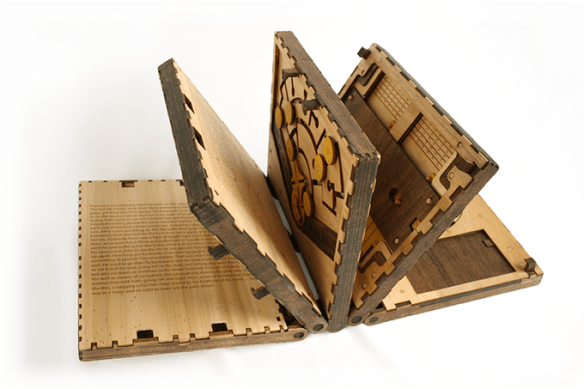
What’s more amazing is that the puzzle book cracked by the NCIS team in this episode was only a few pages deep. The full Codex Silenda is much larger and more intricate! No doubt the real Jean LaFitte would’ve splashed out for the complete Codex in order to bamboozle potential treasure hunters.

Still, it’s always nice to see crime shows explore the possibilities that puzzles offer. Splicing up the occasional murder with a puzzle (or better yet, a treasure hunt) is a pleasant change of pace for the procedural genre. Nicely done, NCIS: NO.


Thanks for visiting PuzzleNation Blog today! Be sure to sign up for our newsletter to stay up-to-date on everything PuzzleNation!

You can also share your pictures with us on Instagram, friend us on Facebook, check us out on TwitterPinterest, and Tumblr, and explore the always-expanding library of PuzzleNation apps and games on our website!

Elizebeth Smith Friedman, Codebreaker and Scourge of Nazi Spymasters

[William and Elizebeth Smith Friedman, hard at work.
Image courtesy of National Geographic.]

Last year, I rather ambitiously attempted to summarize the early history of American codebreaking and the NSA in a series of blog posts spanning World War II through the modern day. One of the names I cited in that series, William Friedman, is synonymous with American cryptography, thanks to his contributions to the cracking of the German ENIGMA code and his efforts to establish the National Security Agency.

Unfortunately, there is a gaping hole in the narrative I constructed. Because none of my sources made any reference to another crucial Friedman: Elizebeth Smith Friedman, William’s wife and partner in code-cracking.

Yes, she was name-dropped in my post about the book Code Girls: The Untold Story of the American Women Code Breakers of World War II, but she had to share those pages with a host of underappreciated women who were codebreaking geniuses.

[Image courtesy of HarperCollins Publishers.]

As The Woman Who Smashed Codes explains, she wasn’t just a talented codebreaker. She literally wrote the book on it. Eight of them, in fact. The Riverbank Publications — although often credited to her husband — covered new codebreaking techniques in rich detail, and they are still referred to today as part of the foundation of modern cryptography.

She also started the first and only American codebreaking unit ever run by a woman, serving as Cryptanalyst-in-Charge while jointly working for both the Treasury and the Coast Guard during and after World War II.

A history of American codebreaking without Elizebeth Smith Friedman is woefully incomplete, and in today’s post, I hope to rectify that oversight.

[Image courtesy of the Marshall Foundation.]

Elizebeth’s work with codes started in a most peculiar way. While seeking a job as a librarian after college, she was recruited by eccentric millionaire George Fabyan to live and work at Riverbank, his palatial estate that doubled as a self-funded research center for all sorts of scientific endeavors.

Elizebeth’s deep knowledge of Shakespeare was put to work attempting to prove Fabyan’s theory that there were secret messages encoded in the writings of Shakespeare. Although her work failed to uncover any hidden pattern in Shakespeare’s words or font choices, it did lead to two unexpected developments: a career in codebreaking and a budding romance with fellow Riverbank recruit William Friedman, whose own interest in codebreaking was sparked by the works of Edgar Allan Poe.

Thanks to the proliferation of radio, there was a seismic shift in how information was being passed between military units, governments, and other organizations, so the ability to listen in on one’s enemies (and allies) was not only a new strategic opportunity, but it was a relatively new science.

In short, America needed codebreakers who could crack the secret messages being transmitted (and intercepted). The military didn’t have them. The government didn’t have them.

But Riverbank did. And for the first eight months of World War I, the small group of William, Elizebeth, and those they trained handled ALL of the codebreaking for every part of the US government, from the State Department to the Army to the DOJ. William and Elizebeth began running a codebreaking school out of Riverbank, even embedding a secret message in a photo of the class taken on the last day of the course.

[Images courtesy of Elonka.com.]

In the aftermath of the First World War, codebreaking had become so important that countries were turning to machines to help develop uncrackable codes. And yet, at this point, American cryptography as a whole consisted of about 50 people. William went to work for the government, establishing the American version of Bletchley Park — Arlington Hall — and setting the stage for the creation of the NSA.

Elizebeth, on the other hand, cracked codes from home. And she did so for both the Treasury Department and the Coast Guard, who would send her sealed packages of intercepted encrypted intel and communications. In her first three months hunting down rum-runners during Prohibition, she solved two years’ worth of backlogged messages.

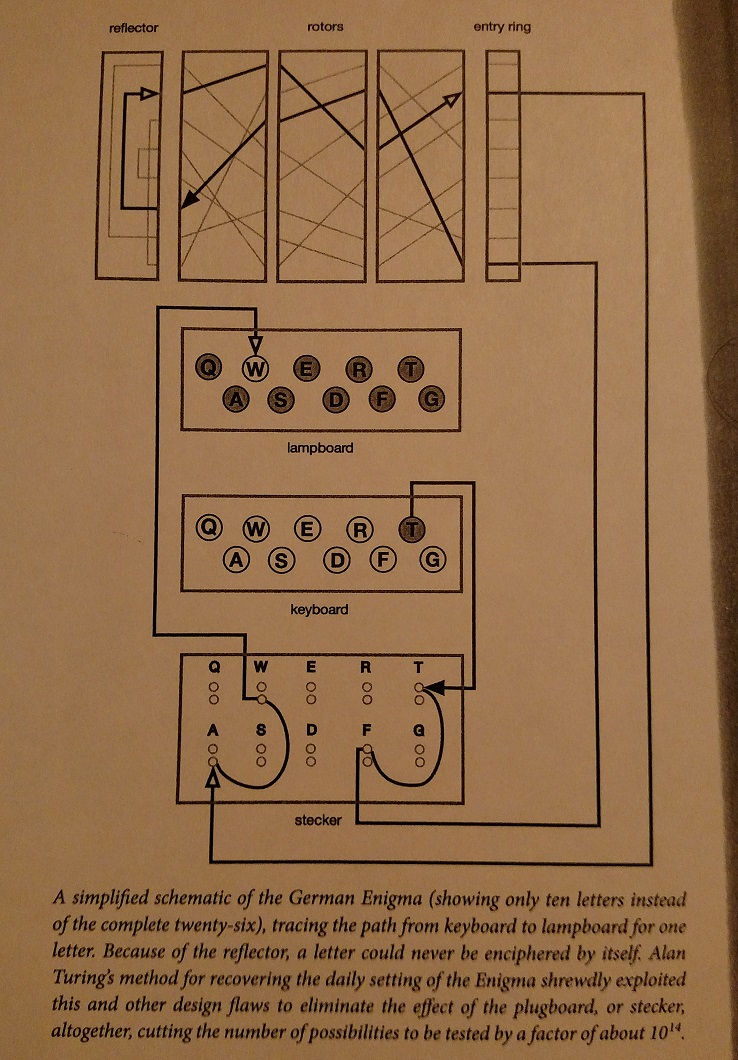
During World War II, Elizebeth’s Coast Guard Cryptography Unit turned their attention from smuggling (which waned during wartime) to cracking German codes. Under her tutelage, they would crack three different variations on the Enigma codes, each more complex than the last. (The British also cracked ENIGMA, independently of American efforts.)

Sadly, in the aftermath of the Pearl Harbor attack, the US military didn’t want civilians in charge of sensitive operations, so Elizebeth was demoted. Yes, she was no longer in charge of the group she started, trained, and cultivated, instead answering to a new boss of dubious cryptographic talents.

(Of course, the sexist dimwits making decisions like this had to grin and bear it when numerous other organizations and agencies continued to asked for Elizebeth’s assistance by name.)

And stealing Elizebeth’s credit was practically a cottage industry over at the FBI. We have them to thank for erasing Elizebeth’s role in particular — and the Coast Guard’s role in general — in hunting down, exposing, and compromising Nazi spy networks in South America, even though the FBI’s hamfisted blundering actually served to expose codebreaking operations in the past, forcing Elizebeth to crack new codes in order to regain the advantage the FBI had squandered.

Oh, yeah, did I mention that both during AND after World War II, Elizebeth continued to hound the Nazi forces in South America who sought to destabilize the region?

As one historian put it, referring to the thousands of pages of decryptions Elizebeth produced:

These pieces of paper saved lives. They almost certainly stopped coups. They put fascist spies in prison. They drove wedges between Germany and other nations that were trying to sustain and prolong Nazi terror. By any measure, Elizebeth was a great heroine of the Second World War.

The British knew it. The navy knew it. The FBI knew it. But the American public never did, because Elizebeth wasn’t allowed to speak.

[Image courtesy of Find a Grave.]

Even in their retirement, the Friedmans continued to contribute to the world of cryptography. They returned to the subject of Shakespeare with The Shakespeare Ciphers Examined, thoroughly debunking the whole idea of hidden codes in the Bard’s works.

When William died, Elizebeth even hid a secret message on his tombstone, for those who knew how to look. (It was Bacon’s cipher, something they both studied extensively during their time at Riverbank.) What a touching tribute to how she met her partner and husband.

And although the accolades and appreciation for Elizebeth’s incredible contributions have been slow in coming, they are trickling in. In the 1990s, the NSA renamed its auditorium from the William F. Friedman Memorial Auditorium to the William F. Friedman and Elizebeth S. Friedman Memorial Auditorium. A Justice Department building also has an auditorium bearing her name.

More information about the massive expansion of codebreaking worldwide is coming to light with every passing year. Hopefully that will mean greater attention for minds like Elizebeth, who used her puzzly mind to protect the world. That’s someone worth celebrating.

[Much of the information in this post comes from a wonderful book on Elizebeth, The Woman Who Smashed Codes by Jason Fagone, and it’s well-worth your time to check out her story in full.]


Thanks for visiting PuzzleNation Blog today! Be sure to sign up for our newsletter to stay up-to-date on everything PuzzleNation!

You can also share your pictures with us on Instagram, friend us on Facebook, check us out on TwitterPinterest, and Tumblr, and explore the always-expanding library of PuzzleNation apps and games on our website!

Wine Is Better For Your Brain Than Puzzles?

[Image courtesy of Bevlaw.]

“It’s time to trade in your Sudoku and crossword puzzles for a glass of wine.”

That was the opening quote in an article sent to me by a friend (and wine enthusiast) who thought I’d be interested to hear just why we should be tossing aside our puzzles for a bit of vino.

That article discusses the book Neuroenology: How the Brain Creates the Taste of Wine, by Yale neuroscientist Gordon Shepherd, and Shepherd posits that the flavor of wine “engages more of our brain than any other human behavior.”

More than listening to music, solving math problems, or hitting a baseball? Apparently so. Even more than solving one of our beloved crossword grids? Shepherd certainly believes that to be the case, and he’s packing some serious science to back it up.

[Image courtesy of Amazon.]

From an NPR piece about the book:

The apparently simple act of sipping Merlot involves a complex interplay of air and liquid controlled by coordinated movements of the the tongue, jaw, diaphragm and throat. Inside the mouth, molecules in wine stimulate thousands of taste and odor receptors, sending a flavor signal to the brain that triggers massive cognitive computation involving pattern recognition, memory, value judgment, emotion and of course, pleasure.

Now, of course, we’re all about engaging the brain in a positive way in this blog. We’ve spent plenty of time debunking faulty promises about “brain-training” puzzle sites and the like that make grand, unfounded promises about what puzzles can do to stave off Alzheimer’s, memory issues, dementia, and more. The science is still out on exactly how long-term puzzle-solving affects the brain, and whether there are benefits, so we’ll table that idea for now.

But savoring a sip of wine and exercising the brain? Now that’s something we can get behind.

[Image courtesy of Amazon.]

Or you could be evil, slap one of these brain teasers on the bottle, and annoy your friends.

Then again, this just makes me think you should enjoy a glass of wine WHILE solving a crossword. The best of both worlds!


Thanks for visiting PuzzleNation Blog today! Be sure to sign up for our newsletter to stay up-to-date on everything PuzzleNation!

You can also share your pictures with us on Instagram, friend us on Facebook, check us out on TwitterPinterest, and Tumblr, and explore the always-expanding library of PuzzleNation apps and games on our website!