PuzzCulture Book Review: Words Apart by Aimee Lucido

Welcome to PuzzCulture Book Reviews!

All of the books discussed and/or reviewed in PCBR articles are either directly or indirectly related to the world of puzzling, and hopefully you’ll find something to tickle your literary fancy in this entry or the entries to come.

Let’s get started!

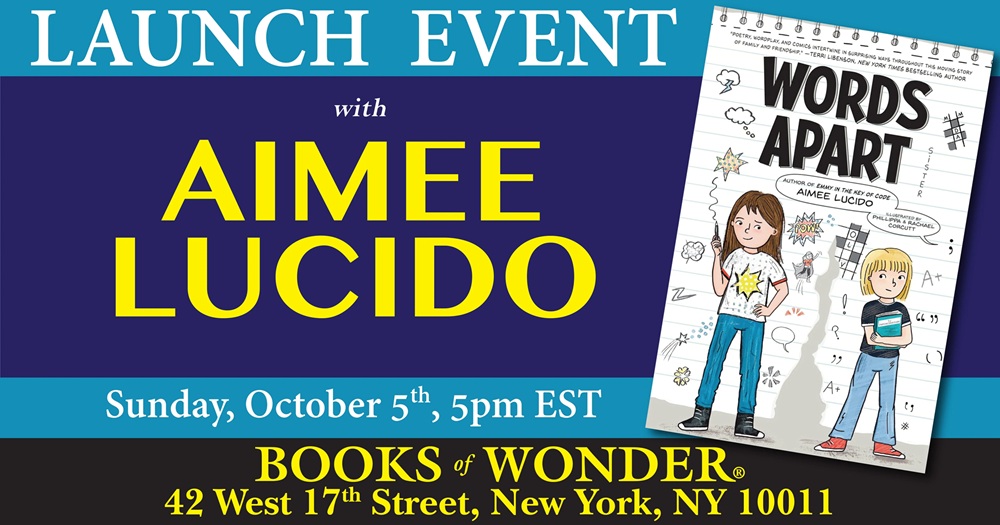
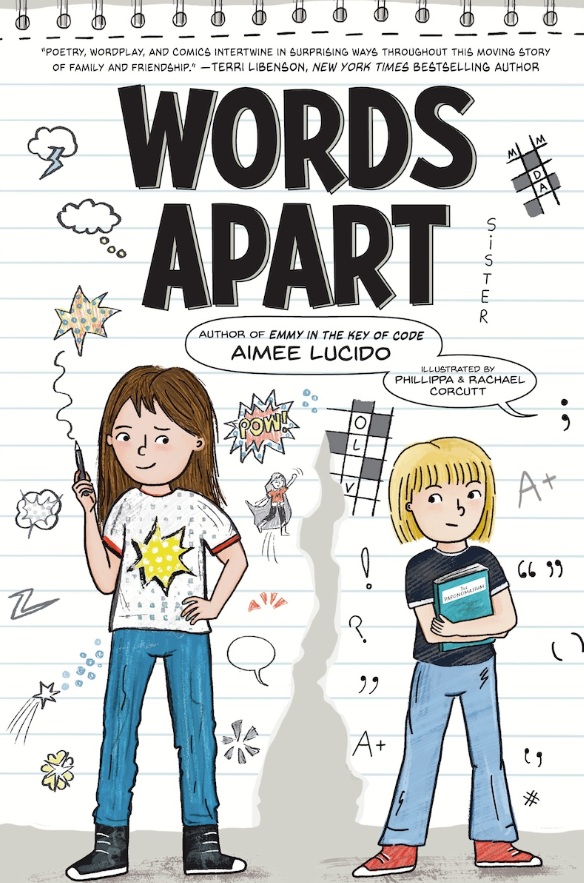
The subject of today’s book review is Words Apart by Aimee Lucido, illustrated by Phillippa Corcutt and Rachael Corcutt, intended for ages 8-12.

Olive and Mattie are sisters, two years apart, but in the same grade. While Olive expresses herself with an impressive vocabulary and a love of wordplay, Mattie struggles with reading but finds comfort expressing herself through cartoons, sketches, and comic strips.

But this once-inseparable duo soon find themselves at a crossroads, as family dynamics, crushes, the pressures of schoolwork, and Mattie’s distrust after years of bullying drive a wedge between them. Is this sisterly friendship broken, or can they find a way to bridge their differences again?


Words Apart manages to encompass so much of the school experience without feeling like Lucido is working her way down a checklist. Each conflict feels natural, each misunderstanding and misstep feels realistic, and the snowballing effect of all these changes adds real drama to the story.

And yet, despite heavy topics and sad moments, this book is so fun.

Using the twin narrative styles of comic book art for Mattie and poetic layouts dappled with linguistic playfulness for Olive tells the reader so much about each character so quickly, they feel like long-time acquaintances, not brand-new characters.

As a dyed-in-the-wool word nerd myself, Olive’s penchant for wild vocabulary and linguistic invention was a delight.

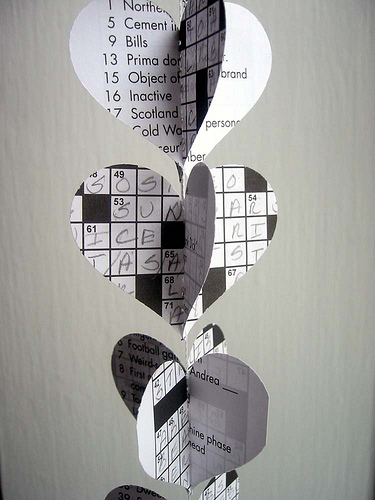
The inclusion of three of Olive’s crosswords revealed her preoccupations and state of mind in a unique way, making them an integral part of the ongoing story and not just a puzzly gimmick. (Sadly, mere gimmickry is often the case with novels that involve puzzle elements, so this was a welcome change of pace.)

I also found Mattie’s desire to express herself in other ways really compelling, and her distrust of the world and outcast outlook resonated with me. Who can’t empathize with feeling alone and misunderstood at that age?

The sisters manage to be so very similar in their passions and desire for expression, and so wonderfully different in believable, meaningful ways. Their fights — both small and big — felt so REAL, it captured the sibling experience, that energy where you can be at odds one minute, but then united the next.

Even when I was younger, I rarely felt seen by literature, YA or otherwise. I could enjoy the stories, and sympathize or empathize with protagonists my age, but I never felt represented. So for Words Apart to come barreling out of nowhere and knock me over was both a treat and something to be savored. It would have been a joy to read this when I was young.

This is a family drama, a coming-of-age story, a wordplay lover’s delight, and a young artist’s inspiration all in one. Words Apart is something quite special.

The book will be released on October 7th, but you are welcome to preorder it now through Aimee’s website or various online booksellers.

But that’s not all!

To coincide with the book’s release date, Aimee will be hosting two launch events, one on each coast!

If you’re on the East Coast, you’re welcome to join Aimee on Sunday, October 5th at 5 PM at Books of Wonder, 42 West 17th Street in New York, New York to commemorate the book’s release.

And if you’re on the West Coast, be sure to visit Mrs. Dalloway’s Bookstore in Berkeley, California on Saturday, October 11th from 4 PM to 5:30 PM!

I wish Aimee, Phillippa, and Rachael great success with this story. It was a pleasure to experience it early.

Happy reading AND puzzling, everybody!

Book Review: The Gamesmaster by Flint Dille

Welcome to PuzzCulture Book Reviews!

All of the books discussed and/or reviewed in PCBR articles are either directly or indirectly related to the world of puzzling, and hopefully you’ll find something to tickle your literary fancy in this entry or the entries to come.

Let’s get started!

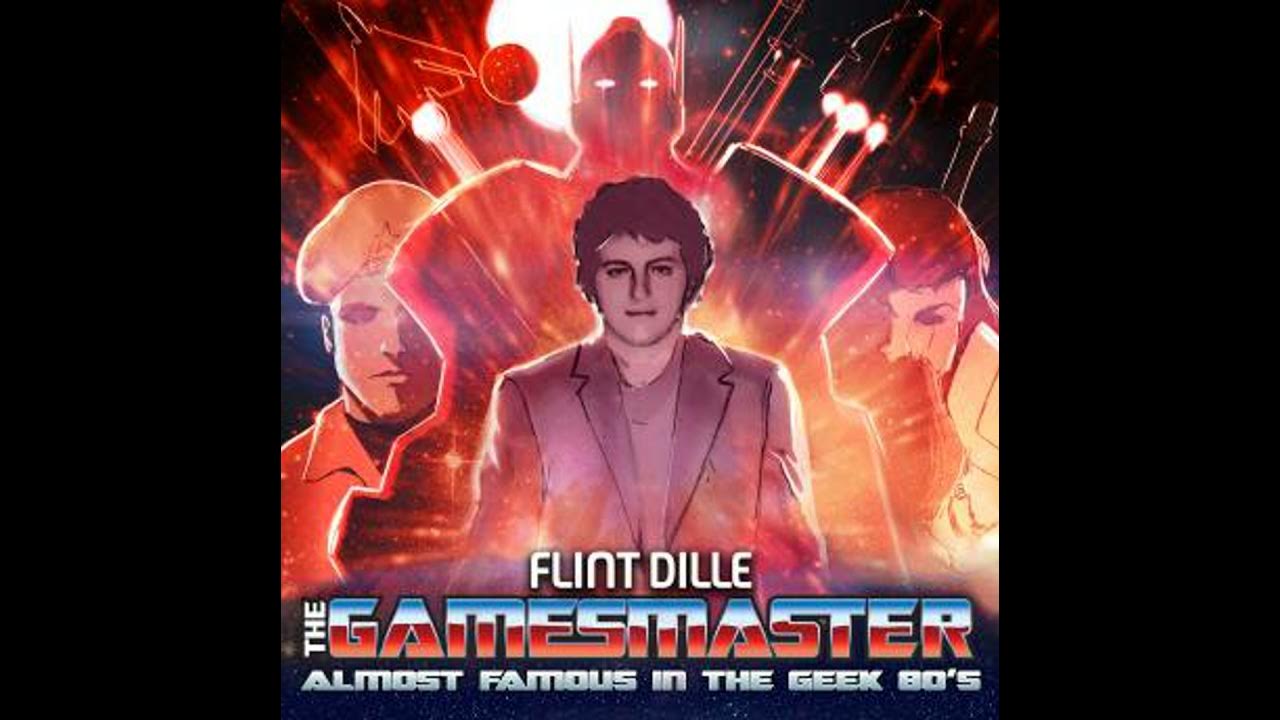
The subject of today’s book review is The Gamesmaster by Flint Dille.

In the late 70s and early 80s, popular culture exploded as cartoons became vehicles to sell toys and the modern blockbuster continued to rise to prominence in cinemas after the successes of Jaws and Star Wars.

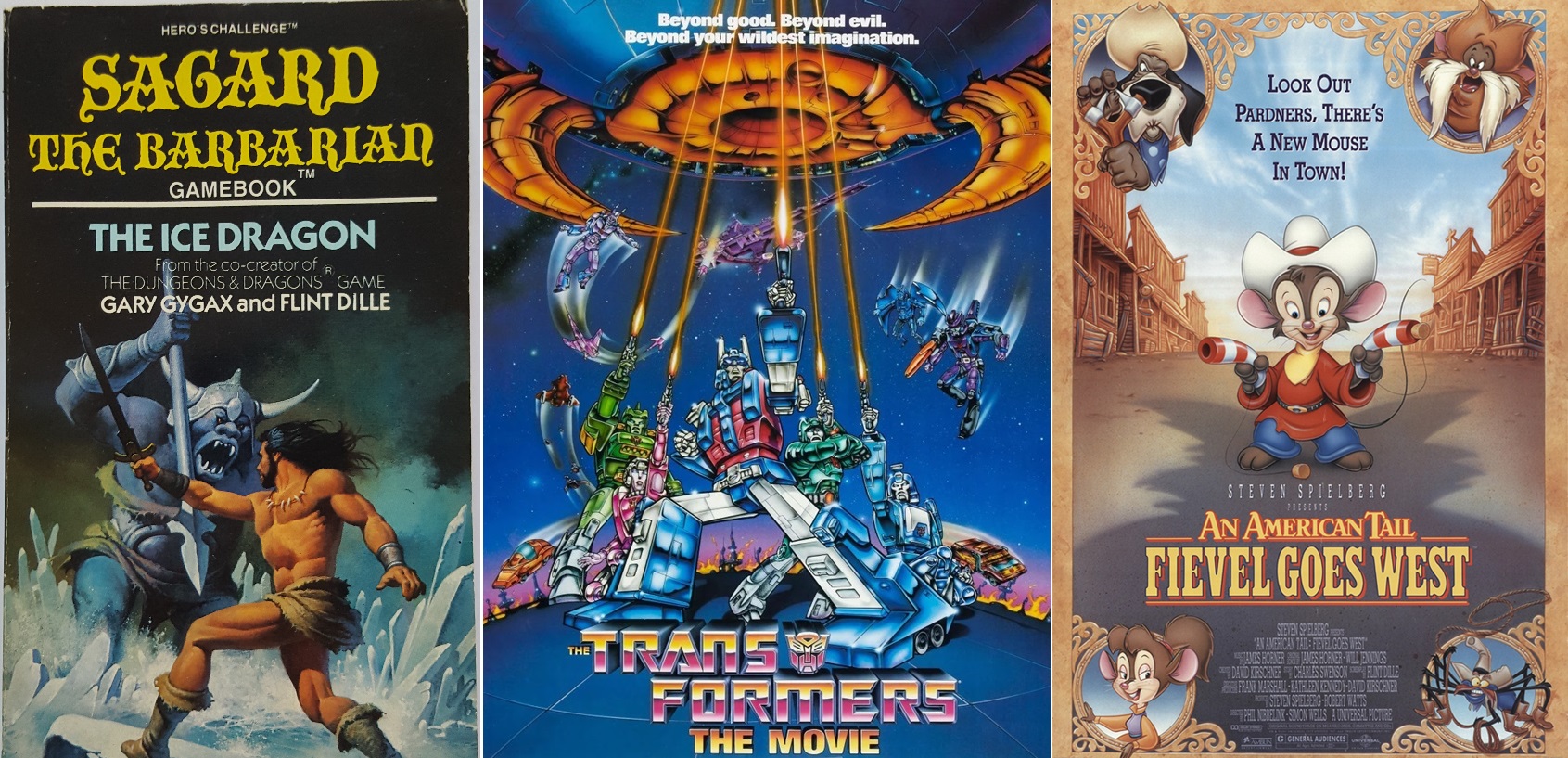
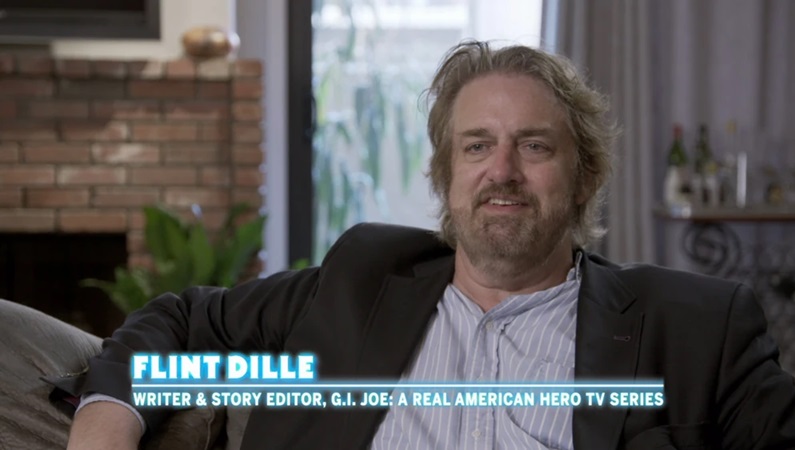
G.I. Joe and Transformers, two of the most iconic franchises from the 1980s, are still influential properties today, but one name that helped craft both franchises (and many others) is probably unfamiliar to you: Flint Dille.

The Gamesmaster chronicles what Dille calls “The Geek ’80s” — aka his animation and pop culture heyday — exploring the birth, growth, and tumultuous developments behind the roleplaying game Dungeons & Dragons as well as the animated shows G.I. Joe, Transformers, Inhumanoids, and the Star Wars cartoons Droids and Ewoks.

This almost feels like a nonfiction companion book to the novel Ready Player One, since so much ’80s pop culture is explored in Dille’s stories. He gives us glimpses into the writers’ rooms of various animated shows (both the most influential and the sadly forgotten), providing what feels like an outsider’s view of Hollywood. It’s the equivalent of a fan getting a deep look behind the scenes.

But the game fans in the readership will get the most out of his journey through the offices of TSR, detailing the steady rise of D&D‘s reach and influence, as well as the incredibly turbulent interpersonal struggles amongst the writers and innovators who helped shape it. Dille generously shouts-out the contributions of fellow creators, but also shares the flip side of success, highlighting the bad luck that followed many of his friends on the TSR side of things.

And at a time where D&D itself is questioning Gary Gygax’s role and somewhat problematic legacy in the wake of the game’s 50th anniversary, Dille offers valuable insight into those crucial, formative years.

Although Dille’s not the most focused or artful storyteller — this feels more like a rambly series of conversations than a traditional autobiography — he is an immensely charming and likable narrator, happily sharing credit, admitting missteps, and celebrating the legacies he played an influential role in crafting.

The Gamesmaster offers a key piece in the often patchy, unreliable history of Dungeons & Dragons, whilst still embracing the nerdy energy that brought roleplaying, Transformers, G.I. Joe, and other celebrated franchises to prominence during the 1980s.

The Tap Code (and a Puzzly Love Story)

puzzlelove

Instead of offering a puzzle for Valentine’s Day, this year I thought I’d do something different and share a story, a wartime puzzly love story for the ages.


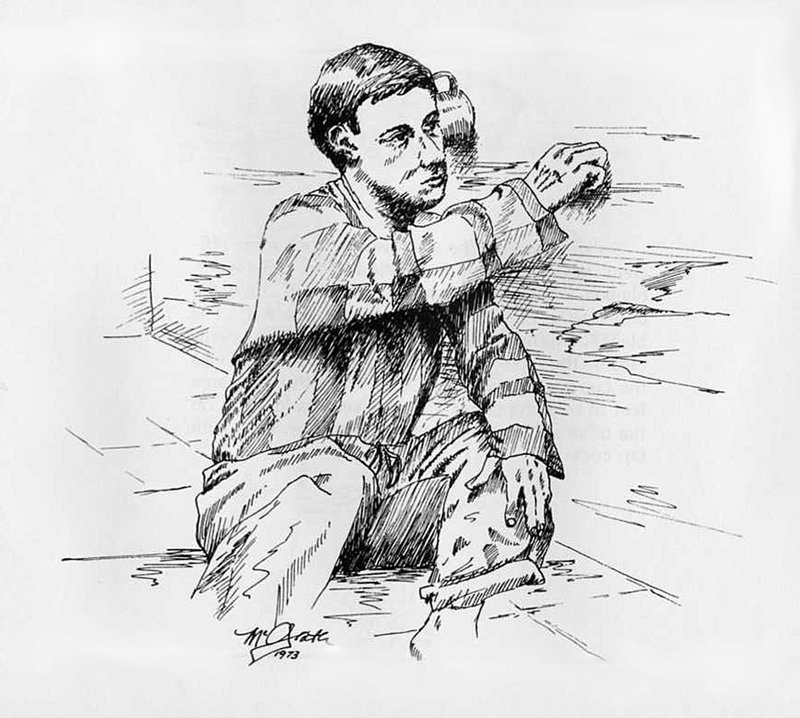
Our tale begins in Vietnam on April 4, 1965, when Air Force pilot Carlyle Harris is shot down during a failed bombing run. Over the next eight years, Captain Harris — Smitty to his friends — was a POW in Vietnamese hands.

He would be imprisoned in numerous camps over the years — Briarpatch, “the Zoo,” Son Tay, Dogpatch, and even the infamous Hanoi Hilton — enduring illness, mistreatment, psychological and physical torture, and whatever other horrors his captors could conjure up.

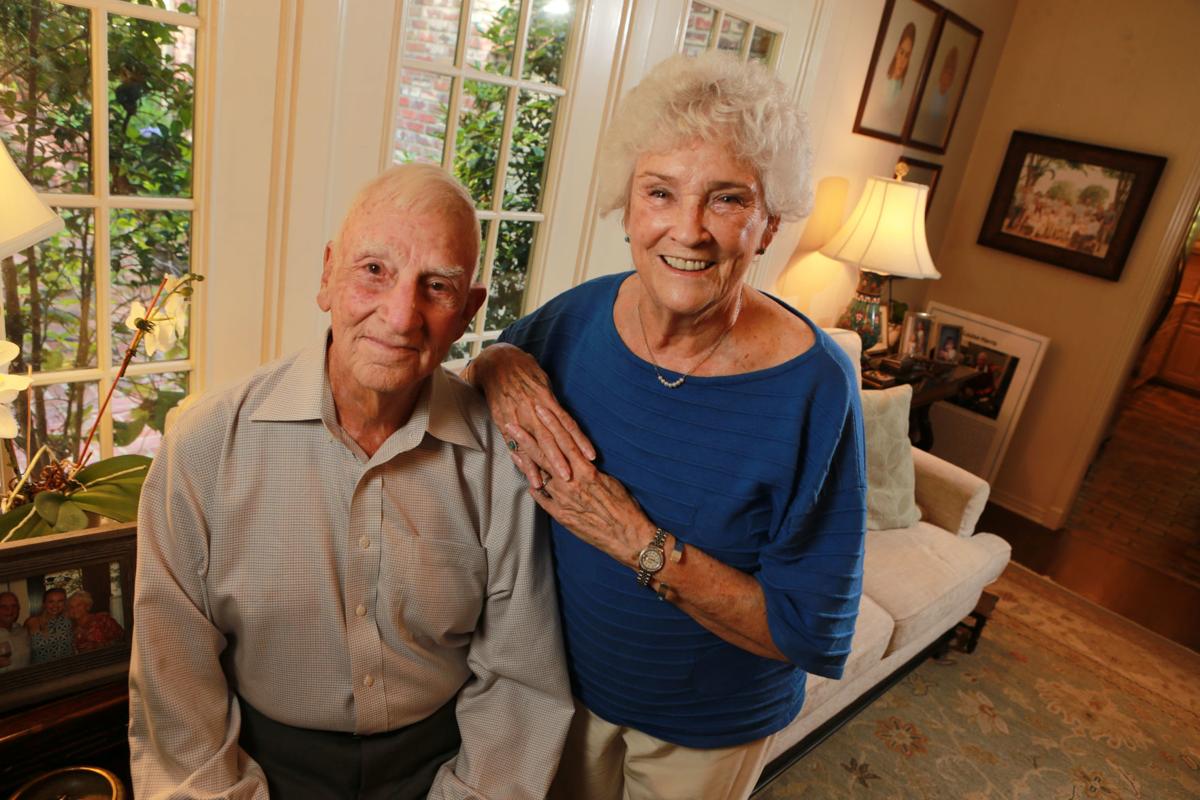
But nothing was more taxing than being separated from his beloved wife Louise. With two daughters to raise, a son on the way, and a husband trapped on the other side of the world, Louise became one of the first POW wives. (Smitty was only the sixth American POW captured by the Vietnamese at that time.)

Louise worked hard not only to care for her family, but to try to contact Smitty and keep his spirits up. She also fought for personal rights, including access to her husband’s pay during his imprisonment, becoming a role model for other POW wives to come.

But what, you might be wondering, makes this a puzzly tale?

The Tap Code.

tapcode4

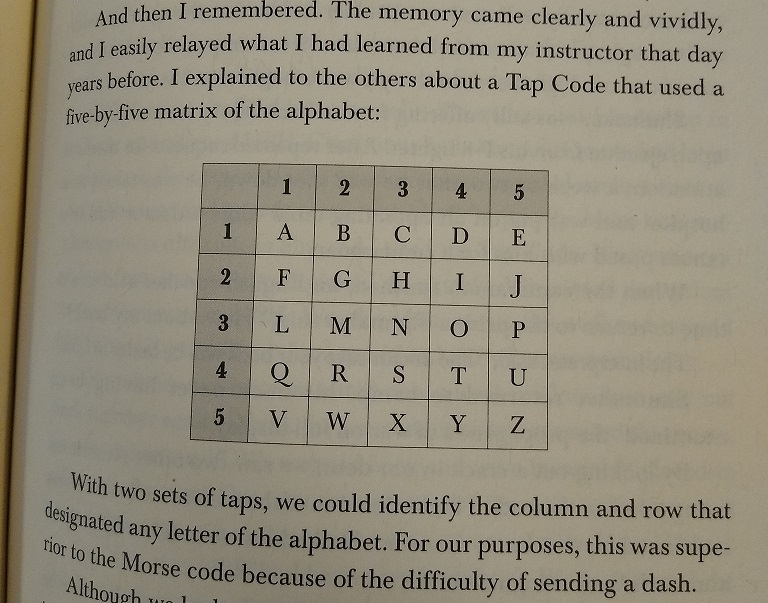
A World War II-era form of communication developed by a POW in Germany, the Tap Code was devised to allow communication when verbal commands wouldn’t do. The simple five-by-five matrix allows each letter to be identified by two simple sets of taps. (The lack of a need for dashes made the Tap Code superior to Morse Code for their efforts.)

Smitty taught it to fellow POWs when given the opportunity, and they taught it to others, and soon, the prisoners could communicate by tapping on walls and water pipes, knocking on buckets, or even through the movements of a broom while sweeping. (Naturally, everyone using the Tap Code did so lightly, so as not to alert the guards to their efforts at clandestine communication.)

This wasn’t the only method of communication employed by the POWs. A one-handed code system similar to American Sign Language was also developed. Some used coughing as a signal that they were being moved, while others managed to pass notes, eventually assembling mental lists of all of the POWs in a given camp.

Of course, Morse Code also proved useful. When one POW was placed on television as a Vietnamese propaganda effort, Jeremiah Denton blinked a message in Morse Code for the world to see. His message? T-O-R-T-U-R-E.

These methods, along with the Tap Code, not only kept morale up, but allowed the POWs to keep track of their ranks even when moved between camps/prisons.

tapcode2

[Image courtesy of PBS.]

It also allowed for covert operations within the camps. An SRO (senior ranking officer) would be chosen for the group, and he could assign tasks to fellow POWs as well as establish rules for newcomers to help them survive the experience.

Key Tap Code abbreviations also emerged:

  • GNST: Good Night, Sleep Tight
  • DLTBBB: Don’t let the bed bugs bite. (A sadly literal wish for the POWs.)
  • GBU: God Bless You.

GBU became shorthand for “you are not alone,” a reassurance that both God and fellow POWs were on your side, watching over you.

But Smitty and his fellow POWs weren’t the only ones using coded messages. Louise was also learning codes in order to both support the war effort and communicate with her husband. She and other POW wives would participate by using the Letter Code:

The long process began when Louise would write a short letter in longhand and send it to the Pentagon. They would rewrite it in code, while at the same time keeping the spirit of what she had written. They would then send the letter back to Louise, and she would rewrite it in longhand on the prescribed form. These then would be mailed to North Vietnam, which didn’t know about the secret strategy. It was a complicated code, and only a select few had been taught how to do it in survival training.

Smitty taught a select few the Letter Code for their own coded messages to send home, but it was hard to tell how many made it out of the camps.

tapcode3

[Image courtesy of The Daily Journal.]

All through that time, Louise was constantly writing letters, sending packages, and making entreaties on behalf of her husband, reaching out to him in any way possible. Although the Vietnamese combed through every package and seized much of the contents for themselves, some items still slipped through, becoming treasures for Smitty to hold onto. (And yes, the US government managed to slip some info and supplies to the POWs spy-style through these packages, including microfilm, maps, and more.)

Louise’s unflagging efforts and Smitty’s determination were finally rewarded when negotiations between the US and Vietnam bore fruit. Before returning to the United States, Smitty was allowed to speak to Louise on the phone. It had been 2,871 days since his capture.

But that wasn’t the end for the Tap Code — later referred to as the Smitty Harris Tap Code after the successes with it during Vietnam. Even when the POWs were finally returned home, staying in a hotel before going their separate ways, they used the Tap Code all night to communicate with each other. Old habits are hard to break.


Not only is this a story of puzzly innovation and determination, but it’s also an inspiring tale of two people in love who never gave up on seeing each other again.

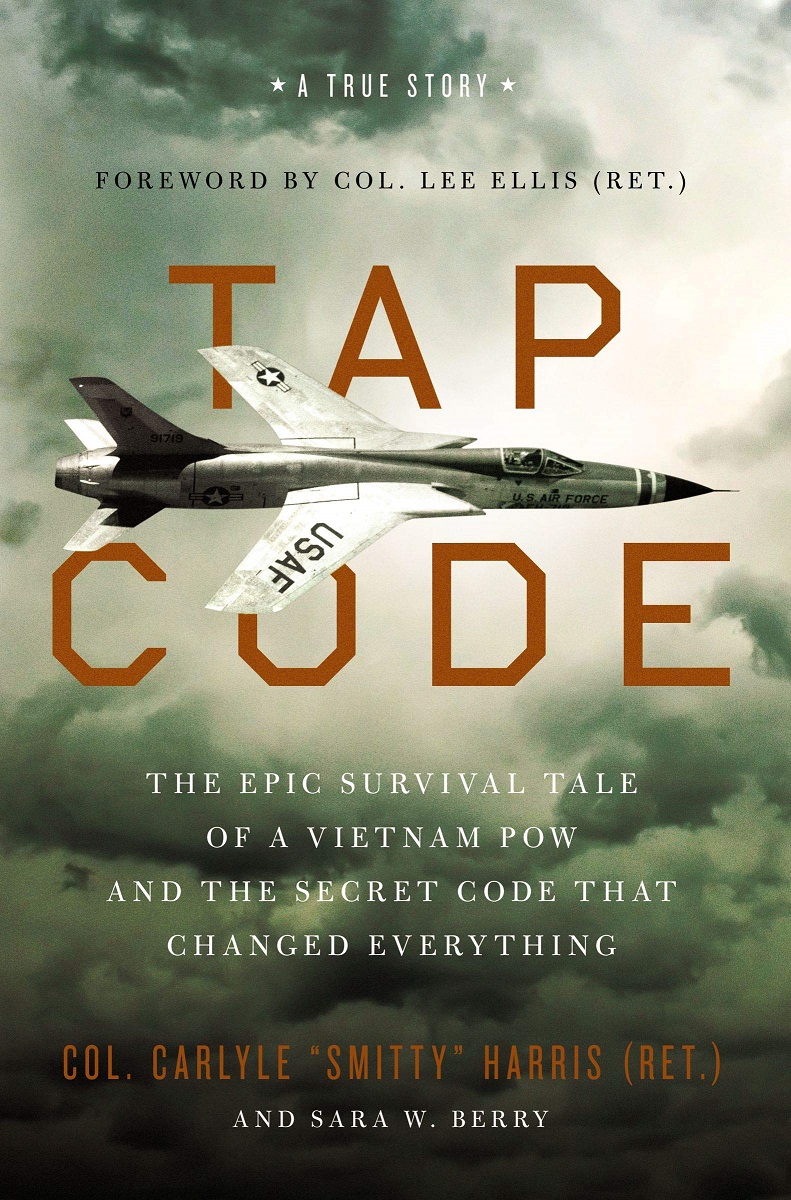
You can read the full story of Smitty and Louise’s trials and tribulations in Tap Code: The Epic Survival Tale of a Vietnam POW and the Secret Code That Changed Everything.

tapcode1

[Image courtesy of Amazon.]


Thanks for visiting PuzzleNation Blog today! Be sure to sign up for our newsletter to stay up-to-date on everything PuzzleNation!

You can also share your pictures with us on Instagram, friend us on Facebook, check us out on TwitterPinterest, and Tumblr, and explore the always-expanding library of PuzzleNation apps and games on our website!

Elizebeth Smith Friedman, Codebreaker and Scourge of Nazi Spymasters

[William and Elizebeth Smith Friedman, hard at work.
Image courtesy of National Geographic.]

Last year, I rather ambitiously attempted to summarize the early history of American codebreaking and the NSA in a series of blog posts spanning World War II through the modern day. One of the names I cited in that series, William Friedman, is synonymous with American cryptography, thanks to his contributions to the cracking of the German ENIGMA code and his efforts to establish the National Security Agency.

Unfortunately, there is a gaping hole in the narrative I constructed. Because none of my sources made any reference to another crucial Friedman: Elizebeth Smith Friedman, William’s wife and partner in code-cracking.

Yes, she was name-dropped in my post about the book Code Girls: The Untold Story of the American Women Code Breakers of World War II, but she had to share those pages with a host of underappreciated women who were codebreaking geniuses.

[Image courtesy of HarperCollins Publishers.]

As The Woman Who Smashed Codes explains, she wasn’t just a talented codebreaker. She literally wrote the book on it. Eight of them, in fact. The Riverbank Publications — although often credited to her husband — covered new codebreaking techniques in rich detail, and they are still referred to today as part of the foundation of modern cryptography.

She also started the first and only American codebreaking unit ever run by a woman, serving as Cryptanalyst-in-Charge while jointly working for both the Treasury and the Coast Guard during and after World War II.

A history of American codebreaking without Elizebeth Smith Friedman is woefully incomplete, and in today’s post, I hope to rectify that oversight.

[Image courtesy of the Marshall Foundation.]

Elizebeth’s work with codes started in a most peculiar way. While seeking a job as a librarian after college, she was recruited by eccentric millionaire George Fabyan to live and work at Riverbank, his palatial estate that doubled as a self-funded research center for all sorts of scientific endeavors.

Elizebeth’s deep knowledge of Shakespeare was put to work attempting to prove Fabyan’s theory that there were secret messages encoded in the writings of Shakespeare. Although her work failed to uncover any hidden pattern in Shakespeare’s words or font choices, it did lead to two unexpected developments: a career in codebreaking and a budding romance with fellow Riverbank recruit William Friedman, whose own interest in codebreaking was sparked by the works of Edgar Allan Poe.

Thanks to the proliferation of radio, there was a seismic shift in how information was being passed between military units, governments, and other organizations, so the ability to listen in on one’s enemies (and allies) was not only a new strategic opportunity, but it was a relatively new science.

In short, America needed codebreakers who could crack the secret messages being transmitted (and intercepted). The military didn’t have them. The government didn’t have them.

But Riverbank did. And for the first eight months of World War I, the small group of William, Elizebeth, and those they trained handled ALL of the codebreaking for every part of the US government, from the State Department to the Army to the DOJ. William and Elizebeth began running a codebreaking school out of Riverbank, even embedding a secret message in a photo of the class taken on the last day of the course.

[Images courtesy of Elonka.com.]

In the aftermath of the First World War, codebreaking had become so important that countries were turning to machines to help develop uncrackable codes. And yet, at this point, American cryptography as a whole consisted of about 50 people. William went to work for the government, establishing the American version of Bletchley Park — Arlington Hall — and setting the stage for the creation of the NSA.

Elizebeth, on the other hand, cracked codes from home. And she did so for both the Treasury Department and the Coast Guard, who would send her sealed packages of intercepted encrypted intel and communications. In her first three months hunting down rum-runners during Prohibition, she solved two years’ worth of backlogged messages.

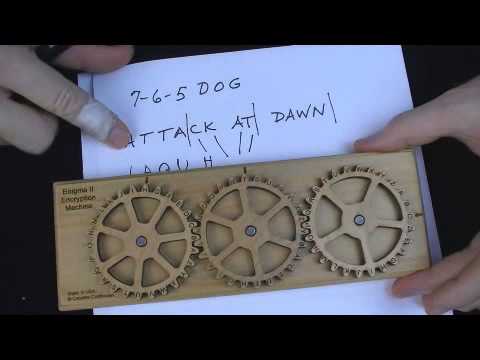
During World War II, Elizebeth’s Coast Guard Cryptography Unit turned their attention from smuggling (which waned during wartime) to cracking German codes. Under her tutelage, they would crack three different variations on the Enigma codes, each more complex than the last. (The British also cracked ENIGMA, independently of American efforts.)
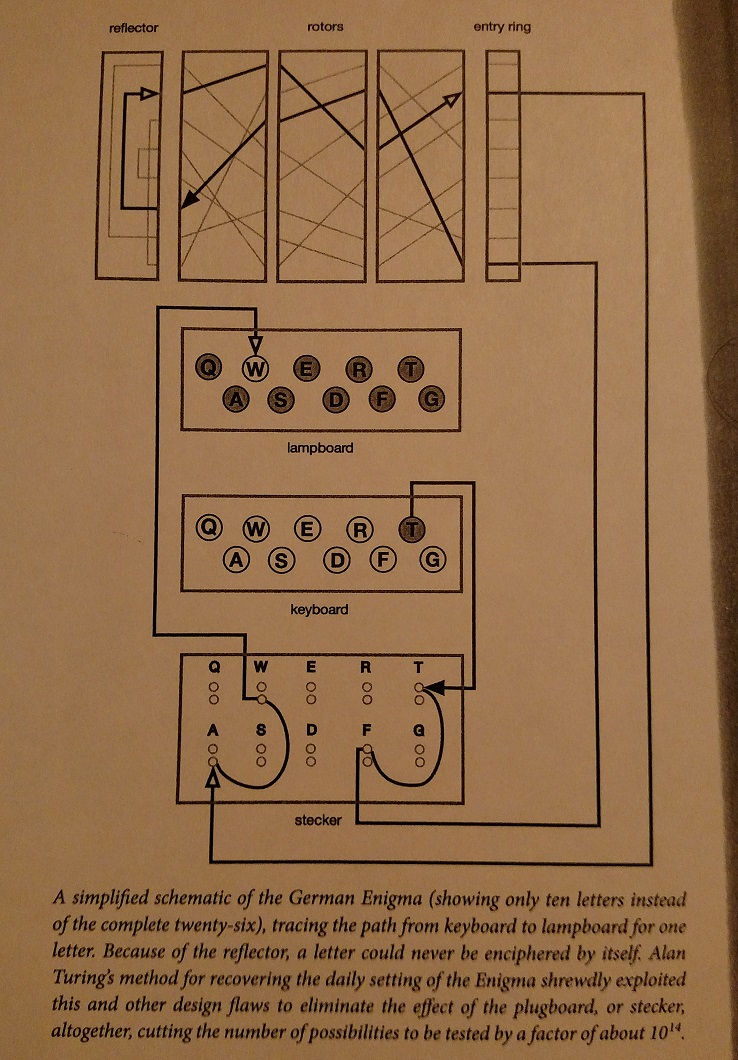
Sadly, in the aftermath of the Pearl Harbor attack, the US military didn’t want civilians in charge of sensitive operations, so Elizebeth was demoted. Yes, she was no longer in charge of the group she started, trained, and cultivated, instead answering to a new boss of dubious cryptographic talents.

(Of course, the sexist dimwits making decisions like this had to grin and bear it when numerous other organizations and agencies continued to asked for Elizebeth’s assistance by name.)

And stealing Elizebeth’s credit was practically a cottage industry over at the FBI. We have them to thank for erasing Elizebeth’s role in particular — and the Coast Guard’s role in general — in hunting down, exposing, and compromising Nazi spy networks in South America, even though the FBI’s hamfisted blundering actually served to expose codebreaking operations in the past, forcing Elizebeth to crack new codes in order to regain the advantage the FBI had squandered.

Oh, yeah, did I mention that both during AND after World War II, Elizebeth continued to hound the Nazi forces in South America who sought to destabilize the region?

As one historian put it, referring to the thousands of pages of decryptions Elizebeth produced:

These pieces of paper saved lives. They almost certainly stopped coups. They put fascist spies in prison. They drove wedges between Germany and other nations that were trying to sustain and prolong Nazi terror. By any measure, Elizebeth was a great heroine of the Second World War.

The British knew it. The navy knew it. The FBI knew it. But the American public never did, because Elizebeth wasn’t allowed to speak.

[Image courtesy of Find a Grave.]

Even in their retirement, the Friedmans continued to contribute to the world of cryptography. They returned to the subject of Shakespeare with The Shakespeare Ciphers Examined, thoroughly debunking the whole idea of hidden codes in the Bard’s works.

When William died, Elizebeth even hid a secret message on his tombstone, for those who knew how to look. (It was Bacon’s cipher, something they both studied extensively during their time at Riverbank.) What a touching tribute to how she met her partner and husband.

And although the accolades and appreciation for Elizebeth’s incredible contributions have been slow in coming, they are trickling in. In the 1990s, the NSA renamed its auditorium from the William F. Friedman Memorial Auditorium to the William F. Friedman and Elizebeth S. Friedman Memorial Auditorium. A Justice Department building also has an auditorium bearing her name.

More information about the massive expansion of codebreaking worldwide is coming to light with every passing year. Hopefully that will mean greater attention for minds like Elizebeth, who used her puzzly mind to protect the world. That’s someone worth celebrating.

[Much of the information in this post comes from a wonderful book on Elizebeth, The Woman Who Smashed Codes by Jason Fagone, and it’s well-worth your time to check out her story in full.]


Thanks for visiting PuzzleNation Blog today! Be sure to sign up for our newsletter to stay up-to-date on everything PuzzleNation!

You can also share your pictures with us on Instagram, friend us on Facebook, check us out on TwitterPinterest, and Tumblr, and explore the always-expanding library of PuzzleNation apps and games on our website!

Unsung Tales of Women in American Code Breaking!

[Image courtesy of Amazon.]

Dot Braden. Agnes Driscoll. Betty Hyatt. Elizebeth Friedman. Genevieve Grotjan. Ann Caracristi. Virginia Aderholdt. Ruth “Crow” Weston.

You don’t know these names, but you should. Everyone should. They’re bona fide American heroes who dedicated their time and energy to protecting not only our country, but also every soldier in the Allied forces during World War II. And they did so when they should have otherwise been continuing their collegiate studies.

That’s right, these women who came from majors as diverse as botany, math, psychology, and English, were recruited out of college in order to build a dedicated code-breaking unit for the US armed forces.

Thankfully, their stories are now being told in Liza Mundy’s new book, Code Girls: The Untold Story of the American Women Code Breakers of World War II. And these are some amazing stories.

It all started in early 1942, as secret letters began showing up in college mailboxes. Schools like Bryn Mawr, Mount Holyoke, Barnard, Radcliffe, and more posed two questions to prospective female recruits:

1. Did she like crossword puzzles?
2. Was she engaged to be married?

All of these women replied yes, they like crossword puzzles, and no, they’re not engaged or soon-to-be engaged.

After answering these questions, the women began attending introductory meetings. They were issued manila envelopes containing “a brief introduction to the arcane history of codes and ciphers, along with numbered problems sets and strips of paper with the letters of the alphabet printed on them.”

Their orders? Complete the problem sets every week.

[Image courtesy of YouTube.]

Each packet contained one problem that could not be solved, to show that sometimes, a jumble of letters or numbers doesn’t stand for anything. Sometimes, gibberish remains just that, because sometimes a code-breaker fails.

They developed working knowledge of foreign languages they didn’t speak. They memorized the most common English letters — E, T, O, N, A, I, R, S — and took frequency counts.

And that’s how America built its answer to England’s Bletchley Park code-breaking operation. (The American effort, known as Arlington Hall, was considered by their Bletchley Park rivals as “just a lot of kids playing at ‘office’.”)

College presidents like Ada Comstock, the president of Radcliffe College (the women’s counterpart to Harvard), were recruited to identify candidates to learn cryptanalysis to help shorten the war.

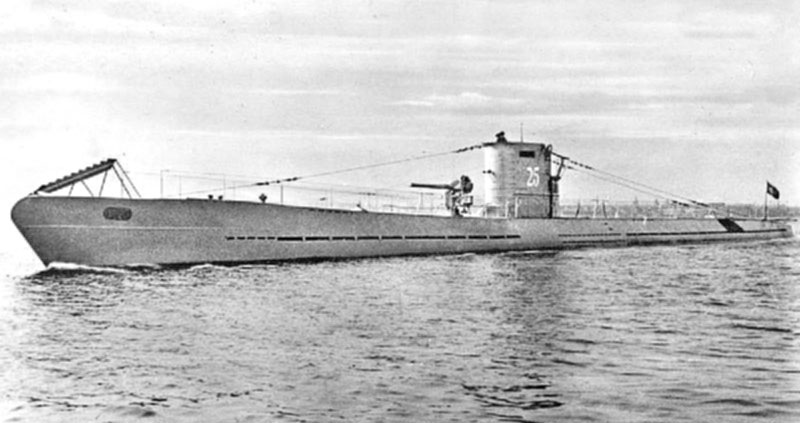
And make no mistake, they did shorten the war. They helped crack Enigma, which was key to decimating the German U-boat fleet, and their code-breaking efforts were instrumental in defeating Japan as well, providing valuable intel on the island-to-island battles of the Pacific theater.

[Image courtesy of Military Factory.]

Of the US Army’s World War II code-breaking force, nearly 70 percent was female. We’re talking 7,000 female code-breakers. When you factor in US Navy recruits as well, that number jumps to 11,000 women out of 20,000 code-breakers.

From Code Girls: “Code breaking required literacy, numeracy, care, creativity, painstaking attention to detail, a good memory, and a willingness to hazard guesses. It required a tolerance for drudgery and a boundless reserve of energy and optimism.”

Genevieve Grotjan was key to cracking the Japanese cipher known as Purple, and William Friedman, the man who initially ran the Arlington Hall operation, described the Purple cipher as “by far the most difficult cryptanalytic problem successfully handled and solved by any signal intelligence organization in the world.” He specifically pointed to the contrbutions of Grotjan, Mary Louise Prather, and other women in the Arlington Hall group.

Codes used by twenty-five different nations were analyzed by Arlington Hall, including codes of friends and foes alike. “There was a French code called Jellyfish, a Chinese enciphered code they called Jabberwocky, another they called Gryphon.”

But even their staggering efforts in code-breaking weren’t all they contributed to the cause. They were also crucial to the success of the D-Day invasion, as many of the women were put to work reverse-engineering messages in order to create false information about imaginary troop movements and landing areas. And in order to create fake signal traffic, they had to know the real traffic backward and forward.

I could go into more detail, breaking down how they cracked some of the war’s most important code languages, or exploring their personal lives and how life changed for these college students-turned-military operatives, but I don’t want to reveal more than I have already.

Read Code Girls. You won’t regret it. It’s another terrific entry in a year of books full of revelations about wartime puzzle history. We’ve been taken behind the scenes of the NSA, Bletchley Park, and now Arlington Hall.

And once more, important and influential female voices are getting the limelight far later than they deserve. It’s about time.


Thanks for visiting PuzzleNation Blog today! Be sure to sign up for our newsletter to stay up-to-date on everything PuzzleNation!

You can also share your pictures with us on Instagram, friend us on Facebook, check us out on TwitterPinterest, and Tumblr, and explore the always-expanding library of PuzzleNation apps and games on our website!
PuzzleNation Product Review: Brad Hough’s The Maze

Mazes are nothing new to even the most casual solver. Whether it’s a puzzle collection, a place mat at a chain restaurant, or a coloring book loaded with time-filling activities, we’ve all traced a path through a maze with pencil, crayon, or marker.

But in most paper-and-pencil mazes, we look down on the map from above, so we have the advantage of perspective, the ability to spot dead-ends ahead of time, the opportunity to make wiser choices with more information.

As anyone who has ever tackled a corn maze will tell you, maze navigation is far more challenging when you’re inside the puzzle itself, rather than observing it from a bird’s-eye view.

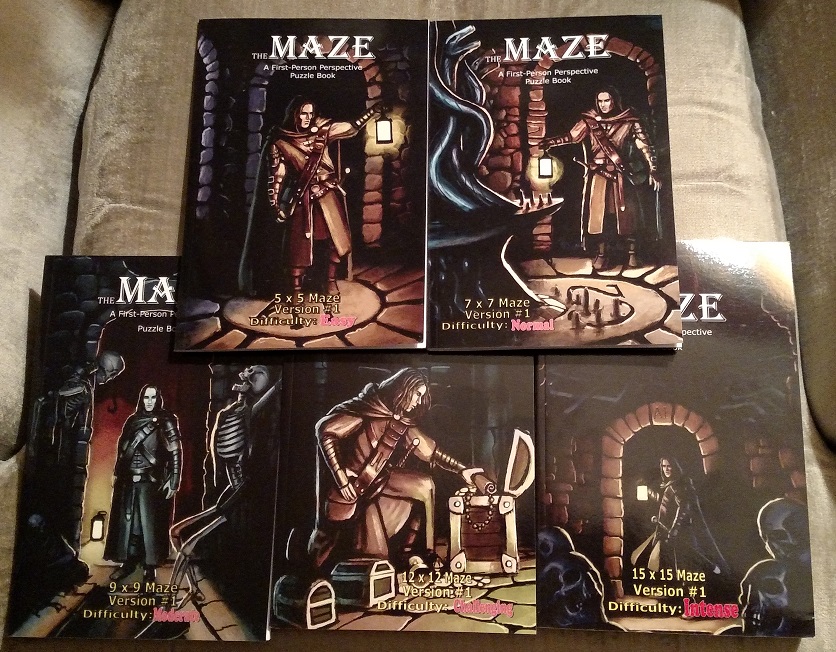
And that’s what makes Brad Hough’s The Maze series of puzzle books something different and far more challenging: they’re mazes designed from the first person perspective. You must imagine yourself walking through this maze, selecting each turn and hoping it will lead you to the promised land.

It’s a marvelous concept, offered in a variety of difficulty levels according to the size of the maze:

  • Easy is a grid of 5 rooms by 5 rooms.
  • Normal is a grid of 7×7.
  • Moderate is 9×9, Challenging is 12×12, and Intense is 15×15.

As you make your choices, you’ll flip to different pages in the book, just as you would in a Choose Your Own Adventure-style story, maneuvering your way to either a dead-end (forcing you to turn back) or your desired exit.

But those are the only decisions you’ll make. There are no monsters to slay or traps to navigate, as there are in labyrinths in Dungeons & Dragons. There are no moral conundrums to unravel, as in Choose Your Own Adventure books. There is simply The Maze… and you. This is bare bones storytelling designed as both a pure puzzle-solving experience and as a blank skeleton upon which you can built your own story.

There are no tricks or endless loops to wander into. This is a fair challenge meant to be unraveled by crafty minds with excellent spacial skills.

Although The Maze lacks the frills of many other labyrinth-style puzzles, it does a marvelous job of portraying the sort of blindness and trepidation that comes with actually residing within a maze, knowing that each choice is more crucial the farther you venture forth.

The Maze (in various sizes) is available from Amazon and other online retailers.


Thanks for visiting PuzzleNation Blog today! Be sure to sign up for our newsletter to stay up-to-date on everything PuzzleNation!

You can also share your pictures with us on Instagram, friend us on Facebook, check us out on TwitterPinterest, and Tumblr, and explore the always-expanding library of PuzzleNation apps and games on our website!