
Welcome to the PuzzleNation Blog 2019 Holiday Puzzly Gift Guide!

We’re excited to be bringing you our biggest gift guide ever! There are so many tremendously fun and puzzly products to share with you. We just might be your one-stop shop for all things puzzly!
This guide is broken down into categories for ease of searching. We have puzzle books, subscription/downloadable puzzles, puzzles by mail, jigsaw puzzles, brain teasers, puzzle games, board games, card games, dice games, party games, miscellaneous puzzle swag, and puzzle events.
We’re sure you’ll find the perfect gift for any puzzler on your list!
This year’s Holiday Puzzly Gift Guide is sponsored by Daily POP Crosswords!

Daily POP Crosswords offers a different themed puzzle every single day, spanning everything from TV and film to sports and music!
Available for both Android and iOS users, you get terrific content from some of the world’s top constructors! And the download is free!
Puzzle Books
Pencil-and-paper puzzles are alive and well, and we’re happy to share some of our favorites with you.
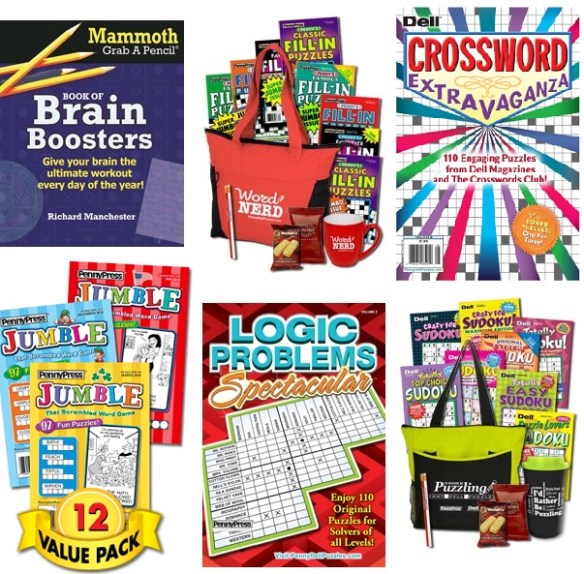
Our friends at Penny Dell Puzzles have put together some outstanding holiday collections with puzzles galore to be solved!
Maybe you’re looking for one kind of puzzle, like their Logic Problems Spectacular ($8.99), the Crossword Extravaganza collection ($7.99), or a value pack of Jumble puzzles ($13.95)! Maybe you’d like some variety with the Mammoth Grab A Pencil Book of Brain Boosters ($10.50).
Or perhaps you’d like a little something extra, and you’d prefer the Merry & Bright Fill-Ins Puzzle Gift Set ($44.95), complete with pencils, coffee, and snacks to keep you puzzling, or the Merry & Bright Sudoku Puzzle Gift Set ($44.95). Either way, the folks at Penny Dell Puzzles have got you covered.
And be sure to check out their deals on Facebook and Twitter throughout the holiday season. They’ve got bundles and discounts for days!

And while we’re on the topic of puzzle books, some of the best constructors working today have released their own books for your perusal! And with New York Times, Los Angeles Times, and USA Today crosswords to their credit, you’re sure to find some quality puzzlers within these pages!
–Eric Berlin’s Puzzle Snacks: More Than 100 Bite-Size Puzzles for Every Solver ($7.59)
–David Steinberg’s Juicy Crosswords from the Orange County Register ($8.95)
–Brendan Emmett Quigley’s Octopus Crosswords ($6.95)
–Matt Gaffney’s Fast & Fun Mini Crosswords ($7.49)
–Andrew Ries’s Maverick Crosswords ($8.95)
–Todd McClary’s Fresh Freestyle Crosswords ($8.95)
–Erik Agard’s Food for Thought Crosswords ($7.48)
—USA Today Crossword Super Challenge ($9.99)
–The Puzzle Society’s Pocket Posh New Crosswords 1 and Pocket Posh New Crosswords 2 ($8.99 each)
–Cynthia Morris’s CynAcrostics Volume 4: My Word! and CynAcrostics Volume 5: My Word, Part 2 ($9.95 each)
–Andrews McMeel Publishing’s Posh Simple Word Search ($12.99)
–Andy Kravis’s Challenge Accepted!: 100 Word Searches ($8.39)
–Shawn Marie Simmons’s 25 Word Search Puzzles for Classic Literature Lovers and 25 Word Search Puzzles for MODERN Literature Lovers ($6.99 each) [available in a large print bundle as well ($12.99)]
—USA Today Super Sudoku Challenge ($9.99)
–Oliver Roeder’s The Riddler: Fantastic Puzzles from FiveThirtyEight ($10.99)
—USA Today Logic Super Challenge ($9.99)
–Andrews McMeel Publishing’s Posh Kurosu ($12.99)
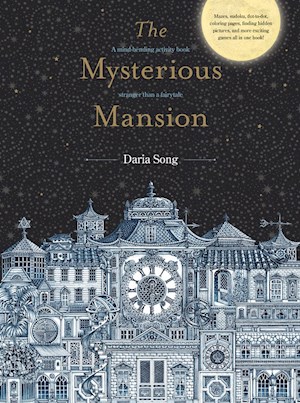
The Mysterious Mansion by Daria Song (Andrews McMeel Publishing)
Combining puzzles and riddles with mazes, coloring books, and a wonderful, intricate story, The Mysterious Mansion is designed to relax, engage, and puzzle the reader in equal measure. The gorgeous full-color illustrations are a feast for the eyes, and the puzzles are both fun and visually immersive. Daria Song gleefully takes activity books to the next level with this beautiful puzzle experience. ($16.99)
[Click here to check out our review!]
Email Subscription/Downloadable Puzzles
Many top constructors and organizations market their puzzles directly to solvers, so between email subscriptions and downloadable puzzle bundles, you’ve got plenty of quality choices!
—The American Values Crossword (subscription and daily puzzles) ($22 for 1 year)
—The Inkubator, edited by Laura Braunstein and Tracy Bennett (crossword puzzles constructed exclusively by women, twice a month, $25 for 1 year)
–Matt Gaffney’s Daily Crossword ($26 per year) and Weekly Crossword Contest ($26 per year)
–Andrew Ries’ Aries Xwords ($12 per year), Aries Freestyle themeless crosswords ($45 per year), and Aries Rows Garden ($30 per year) [available in monthly bundles as well]
–Peter Gordon’s Fireball Crosswords ($31 for 1 year)
–Joon Pahk’s Rows Garden puzzles ($20 for 1 year) and Variety puzzles ($15 for 1 year) OR get both for $30!
–Will Nediger’s Bewilderingly weekly themed and themeless crosswords ($25 for 1 year)
–Eric Berlin’s Puzzlesnacks puzzles ($3 per month)
—Crossword LA 2018 puzzle pack ($5)
–Bryant Park 2018 tournament puzzle pack ($5) and 2016/2017 bundle ($10)
—Topple puzzle magazine ($1 per issue)
Puzzles by Mail
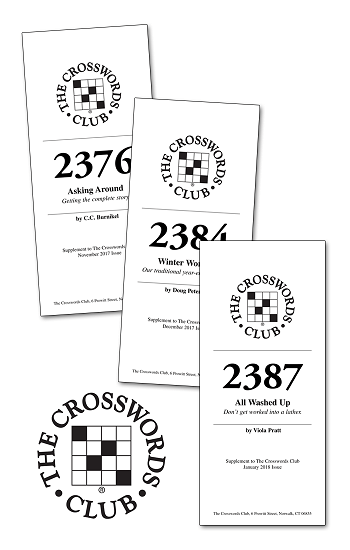
The Crosswords Club
A monthly publication with six Sunday-sized crosswords, The Crosswords Club utilizes some of the sharpest crossword constructors in the business today, and the puzzles are all edited by top constructor Patti Varol. Each bundle is as fun as it is challenging, plus each monthly bundle has an extra word game printed right on the envelope! ($39.95 for 12 issues)
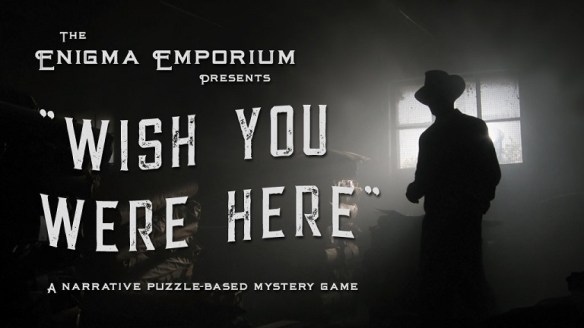
Wish You Were Here (The Enigma Emporium)
Imagine an entire mystery hidden across a handful of postcards. That’s the multilayered puzzle experience offered by Wish You Were Here, where a series of coded messages awaits you. Unravel all the secrets and discover an exciting tale of danger and spycraft along the way! ($15)
[And if you enjoy Wish You Were Here, there are 3 addition puzzle bundles to try out!]

Cryptogram Puzzle Post (Jack Fallows)
A combination of different puzzles and encrypted messages interwoven together with bits of narrative, each edition of the Cryptogram Puzzle Post is a standalone story steeped in mystery and supernatural elements. But solve them all together, and a grand universe of storytelling unfolds. Sold in seasonal bundles and annual subscriptions, this episodic puzzly adventure is quite unique. (£5 for digital downloads, £20 for seasonal bundles)
Jigsaw Puzzles
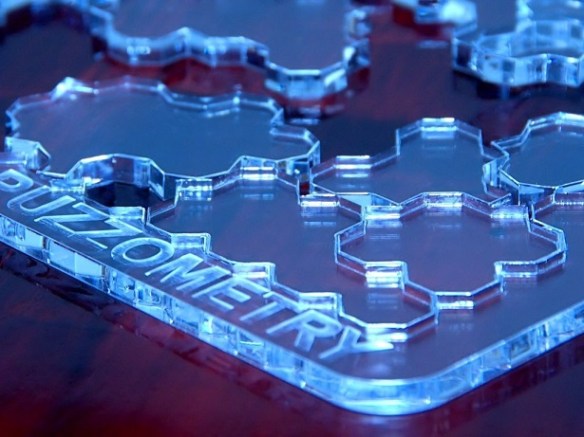
Puzzometry
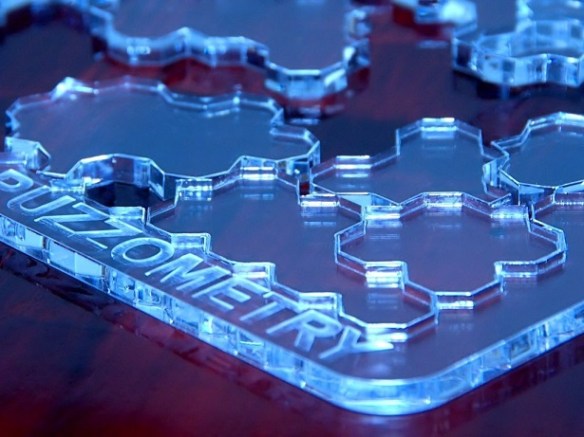
For a next-level jigsaw challenge, Puzzometry is tough to top. These beautiful pieces can be combined in seemingly endless combinations, and yet, there’s only one solution. Available in seven different styles — including Puzzometry ($18.50), Puzzometry Jr. ($14), Puzzometry Squares ($18.50), and the new Puzzometry Hex ($18.50) — you’ve got distinct challenges appropriate for all different ages!
[Check out the full review of Puzzometry by clicking here!]
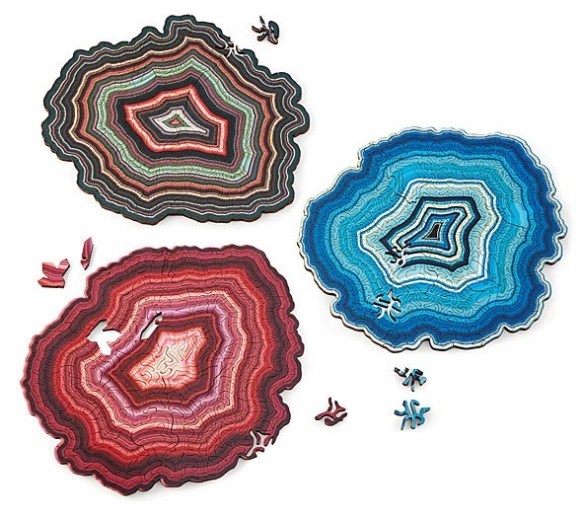
Geode Puzzle (Uncommon Goods)
Forget looking for the edge pieces, because these nature-based puzzles take jigsaws beyond the usual patterning. Geode Puzzle‘s flowing, unusual shapes and vibrant colors create a unique solving experience. ($65)
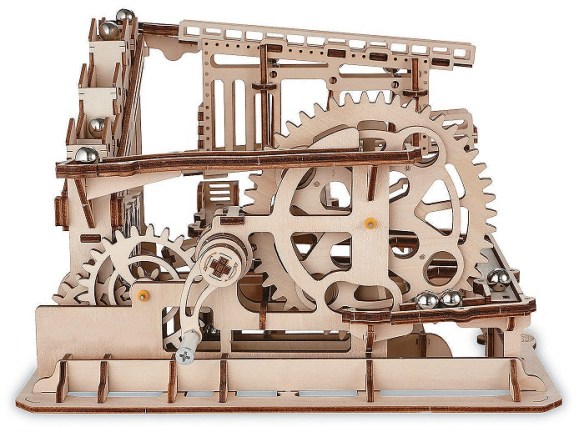
Gearjits Roller Coaster (Gearjits)
Bring your puzzle skills to life as you assemble a working roller coaster from these wooden pieces. Assembling handcranks and gears to operate the machine along with the structure of the roller coaster itself makes this 3-D puzzle more exciting and satisfying than the average 3-D puzzle. ($39.95)
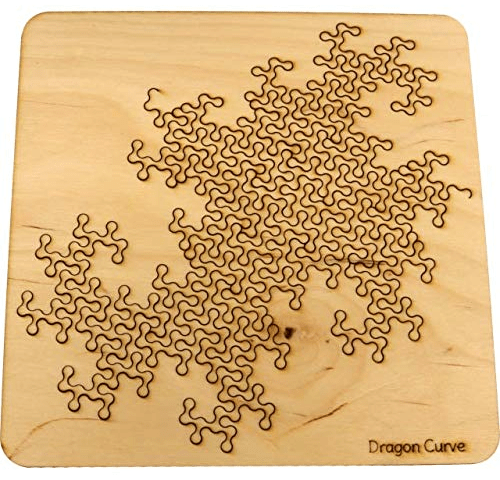
Wooden Fractal Tray Puzzles (Martin Raynsford)
Laser-cut precision and patterns built on fractal designs make these wooden tray puzzles as maddening as they are beautiful. The pieces fall so seamlessly into place that they practically vanish… that is, if you can puzzle out how to place them all into the tray. ($35.99)
Brain Teasers
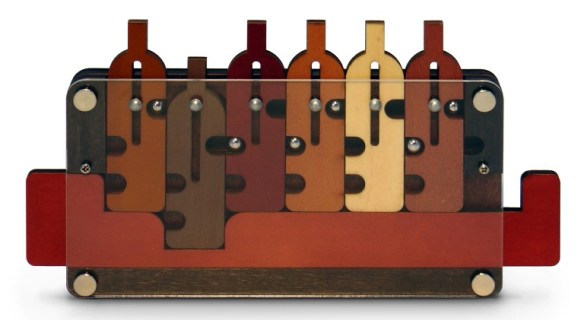
Waiter’s Tray (Project Genius)
Just move the wine bottles so you can remove the Waiter’s Tray. Sounds simple, right? When you’re talking about one of the brain teasers from the Constantin Puzzle series, what appears simple quickly becomes a proper puzzly challenge. ($20)
[Check out our review of Waiter’s Tray here!]
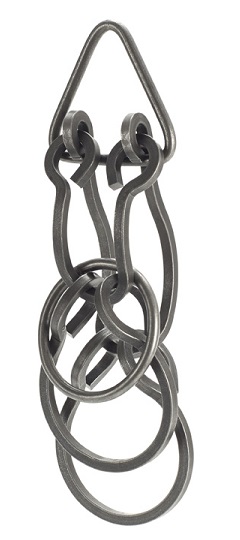
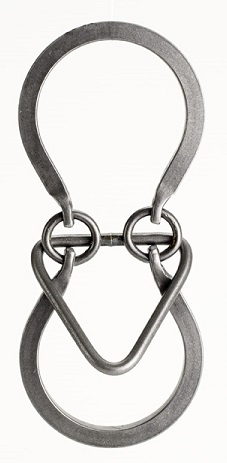
Tavern Puzzles / Tucker-Jones House Inc.
These hand-forged beauties are ready to challenge your dexterity and cleverness, as you accept the Tavern Puzzles challenge. Whether you’re trying to remove twice as many pieces in a Collaborative Effort or free the triangle from Tridiculous, you’re sure to put your skills to the test. ($25 each)
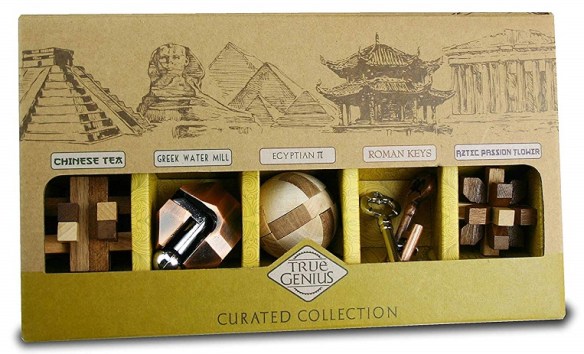
The Curated Collection (Project Genius)
Why tackle one brain teaser when five different challenges are there for the solving? The Curated Collection represents five different historical eras with five distinct styles to unravel. Distribute them around the room or pit one friend against the entire gauntlet! ($19.97)
[Our full review now available here!]
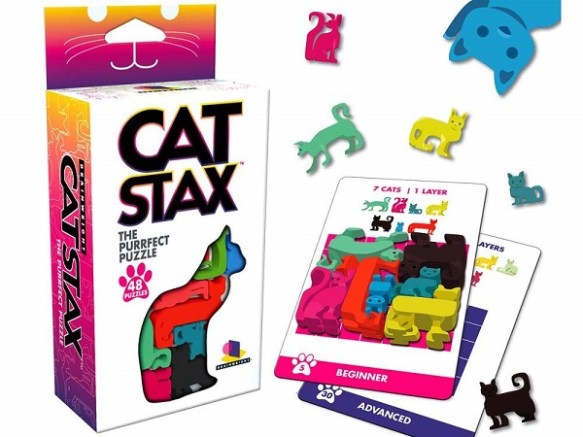
Cat Stax (Brainwright)
Can you place the feline figures into the purrfect arrangement to complete each challenging design? That’s the question posed by Cat Stax, a terrific introduction for younger solvers to spatial-awareness puzzles and Tetris-style solving! ($6.39)
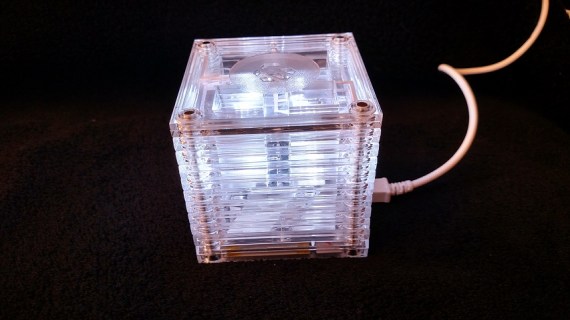
Lightbox (Eric Clough)
A puzzle box unlike anything you’ve ever seen, Lightbox creates different patterns of shadow and light as you shift and arrange the various plastic plates that make up the box. As you twist and reset them, different electrical connections are made, and different plates light up. As gorgeous as it is challenging, Lightbox is a very eye-catching puzzle that always wows new solvers. ($85)
[Check out our full review of Lightbox by clicking here!]
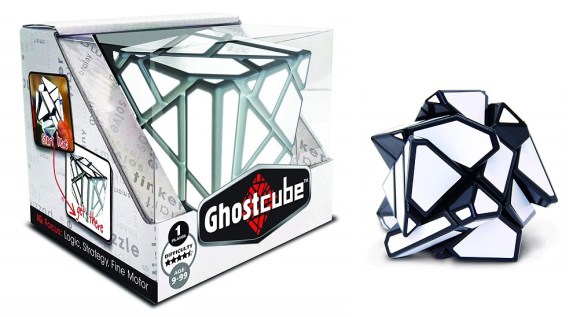
Ghost Cube (Project Genius)
A regular Rubik’s Cube is challenging enough, but at least you can trust that, no matter how mixed up the colored squares get, you’re still dealing with a standard cube. Well, that’s not the case with Ghost Cube. Bending into all different shapes as you manipulate the many twisting pieces, this puzzle will force you to examine Rubik’s-style solving from a whole new angle! ($21.95)
[Click here to read our full review!]
Puzzle Games
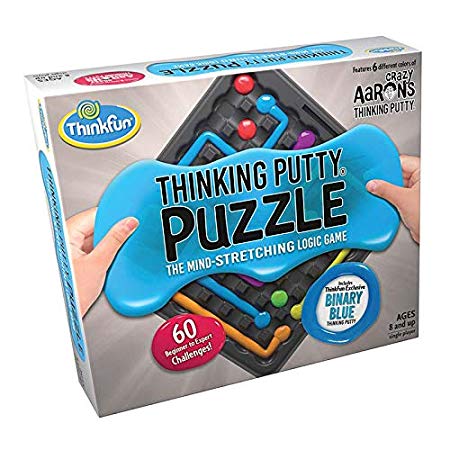
Thinking Putty Puzzle (ThinkFun)
It’s not a stretch to call this one of the most inventive and creative puzzle games of the year. Thinking Putty Puzzle pits the player’s wits and planning against some deviously sticky and tricky puzzle scenarios. Can you connect all the dots without your putty paths crossing? ($29.99)
[Click here to check out our full review!]

Zendo (Looney Labs)
Puzzle games are all about the rules, but what if you don’t know the rules? That’s where Zendo comes in. In this puzzle game, you arrange Looney pyramids and other shapes into various designs, and then see if those designs conform to a mysterious rule. A game of deduction and trial-and-error, Zendo is a very different solving experience. ($40)
Plus there’s a brand-new expansion pack with additional rules for the game! ($5)
[Check out our full review for Zendo here!]
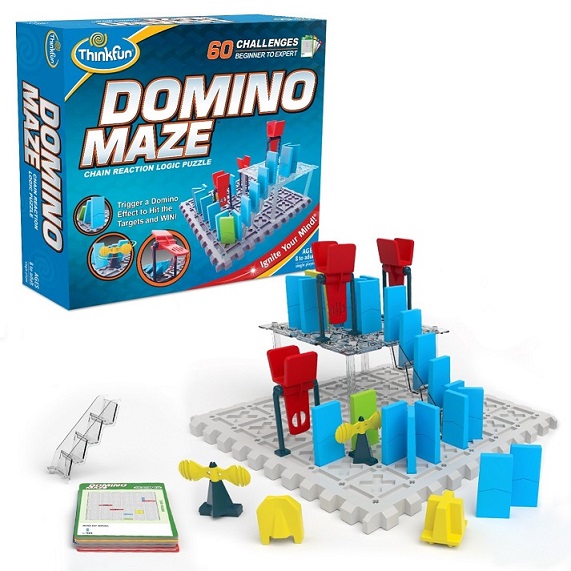
Domino Maze (ThinkFun)
Test your deduction skills and your balance in this diabolical puzzle game. Domino Maze tasks you with not only figuring out how to place the dominoes and complete your path, but being dexterous enough not to set it off too early! ($29.99)
[Check out our full review by clicking here!]
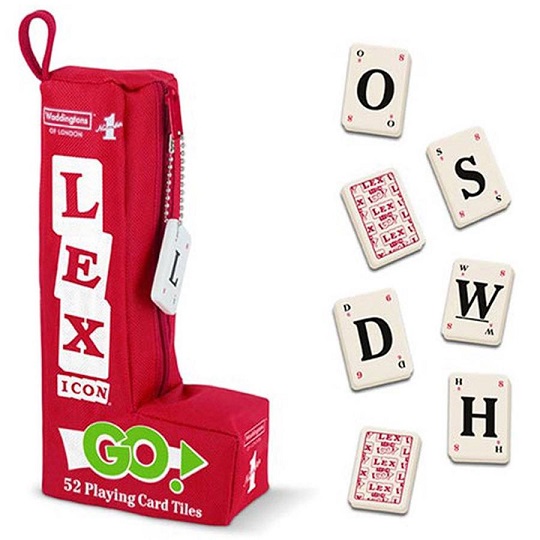
Lexicon-GO! (Winning Moves UK)
Are you a word-forming pro? Take your speed-solving skills and try them out with Lexicon-GO!, a Scrabble-style tile game suitable for solvers of all ages! ($13.27)
[Click here for our full review of Lexicon-GO!]

Chroma Cube (Project Genius)
Deduction puzzles have never been so colorful! In Chroma Cube, you need to puzzle out where to place twelve richly colored cubes, with only a few tricky clues to help you out! Take logic puzzles into the third dimension with this minimalist delight! ($20)
[Check out our full Chroma Cube review here!]
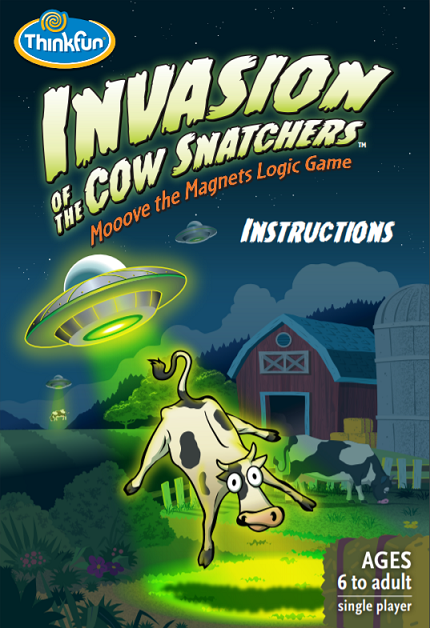
Invasion of the Cow Snatchers (ThinkFun)
One of the most creative deduction puzzle games I saw all year, Invasion of the Cow Snatchers has you piloting a UFO and picking up different cows on an obstacle-laden field. Can you figure out how to magnetically nab all of the cows while avoiding fences, bushes, walls, and silos? ($29.99)
[Read our full review of Invasion of the Cow Snatchers here!]
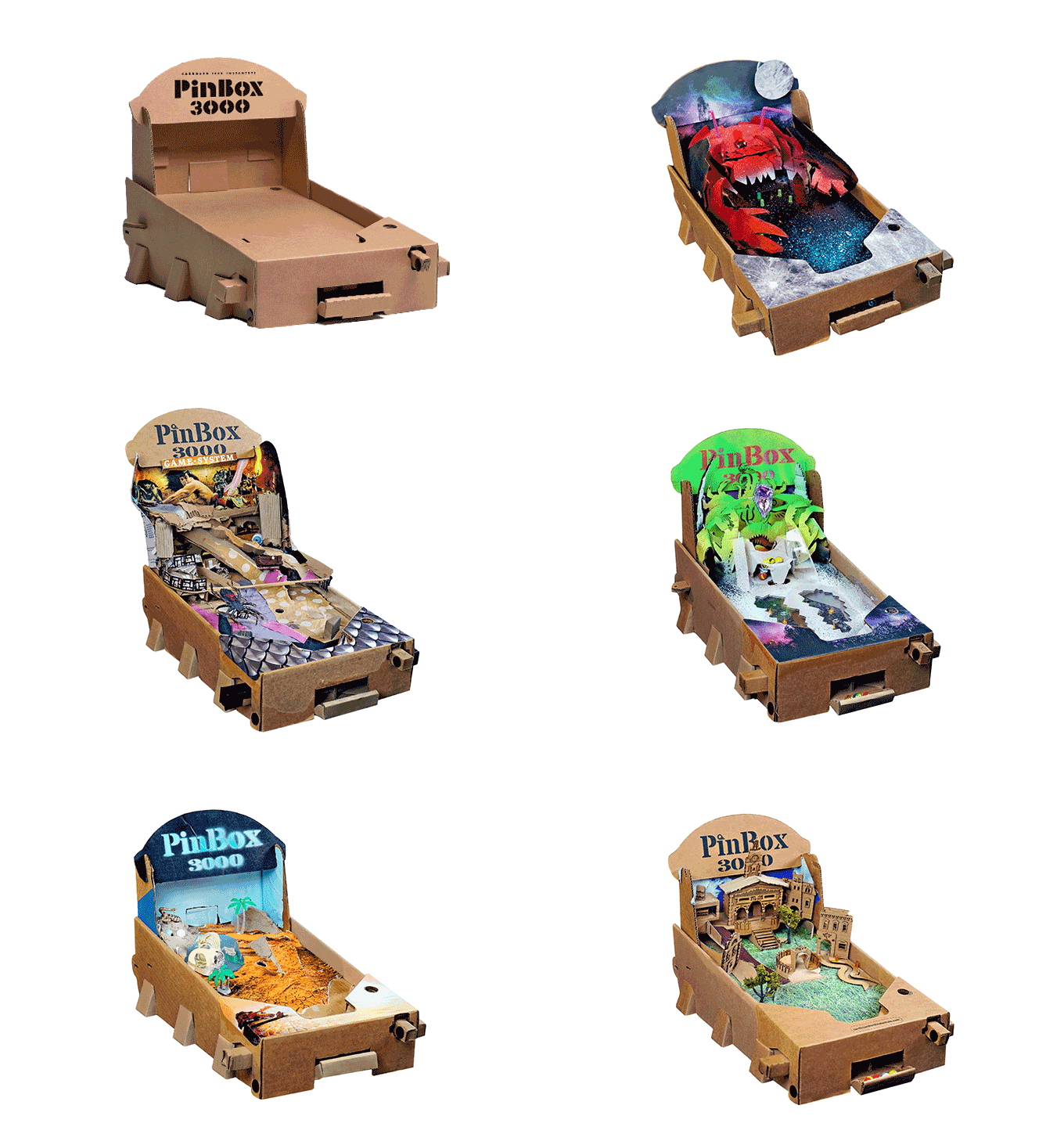
Pinbox 3000 (Cardboard Teck Instantute)
How about the chance to build your own game? Is that puzzle enough for you? Pinbox 3000 provides all the pieces you’ll need, plus valuable advice for brainstorming and creating your very own pinball game. It’s endlessly customizable, so you can make your Pinbox pinball game as simple or as complex as you like! ($49.95)
Board Games
Some of the puzzliest games on the market today are being made by top-flight board game companies, and we’ve got some marvelous games that will appeal to puzzlers of all ages!

Deblockle (Project Genius)
It sounds so simple! Just move your four cubes from one side of the board to the other. But Deblockle is more than meets the eye, and as you race against your opponent to puzzle out a path to victory, you’ll push your puzzly skills to the limit! ($24.99)
[Check out our full review of Deblockle here!]

The Island of Doctor Lucky (Cheapass Games)
People have been trying to kill Doctor Lucky for over twenty years, and this time around, you’re visiting his exotic island estate to try your murderous luck against the titular Doctor! The Island of Doctor Lucky offers a new gameboard to explore, new movement mechanics, and a very distracting cat. This is the best addition to the series yet! ($27.39)
[Check out our full review by clicking here!]
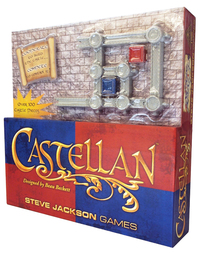
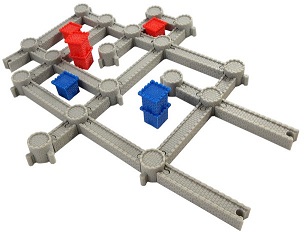
Castellan (Steve Jackson Games)
Build a castle and then occupy it in Castellan, a game of strategy and opportunity. With great modeled pieces that really add to the aesthetic, Castellan has style and substance. ($34.95)
[Check out our full product review here!]

The Abandons (Puzzling Pixel Games)
Can you escape a dangerous labyrinth that changes every time you explore it? The Abandons pits the solver against a random deck, where luck, quick decision making, and puzzly skill all must be on your side if you ever want to see daylight again. ($15)
[Check out our full review by clicking here!]

The Great Dinosaur Rush (APE Games)
Bring the insane real-life rivalry of paleontologists Cope and Marsh to life in The Great Dinosaur Rush! As you collect fossils and discover your own unique dinosaur, you must also steal bones, sabotage other scientists, and more! Show off your cunning and creativity in this game that proves historical truth is weirder than fiction! ($50)
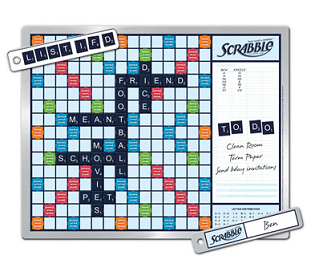

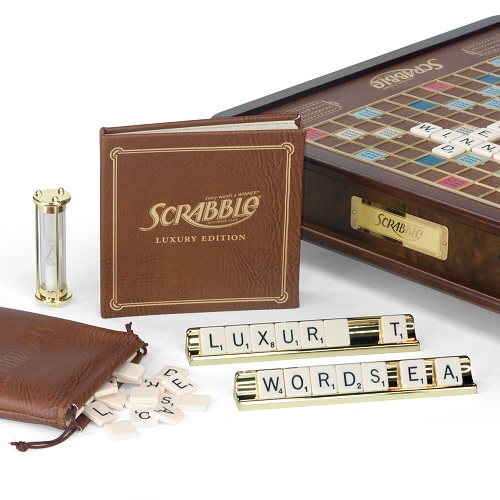
Walk-By Scrabble Board, Tile Securing Travel Scrabble, and Drawing Room Scrabble (Hammacher Schlemmer)
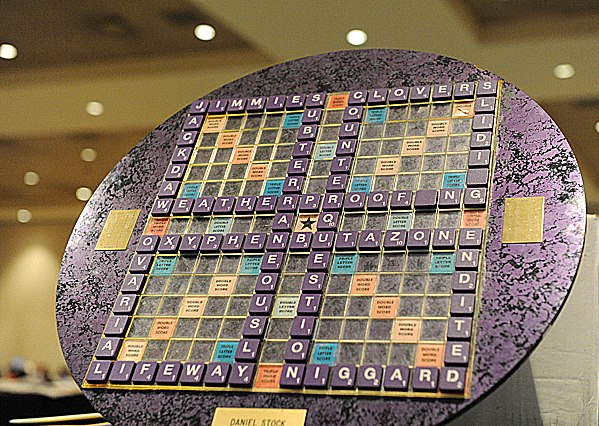
Hammacher Schlemmer has several Scrabble variants available, including Tile Securing Travel Scrabble for those who want to solve on the go ($39.95) and Drawing Room Scrabble for those with swankier taste ($249.95) — not to mention the mind-boggling World’s Largest Scrabble Game for $12,000! — but few are as clever or as convenient as the Walk-By Scrabble Board! Designed as a family game for people on the go, it’s a perfect way to bring back Board Game Night for busy families! ($29.95)
[Check out our full product review of the Walk-By Scrabble Board here!]
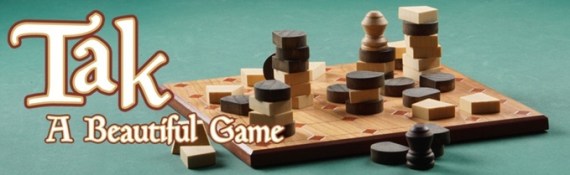
Tak: A Beautiful Game (Cheapass Games)
Many new games build off of classic mechanics, but very few new games truly feel like they could have been played centuries ago. Tak definitely fits that mold, using simple wooden pieces to create a game that feels both fresh and ancient all at once. Inspired by the eponymous game in Patrick Rothfuss’s KingKiller Chronicles series, Tak is a wonderful two-player game that quickly grows addictive. ($40 and up)
[Click here for our full review of Tak!]
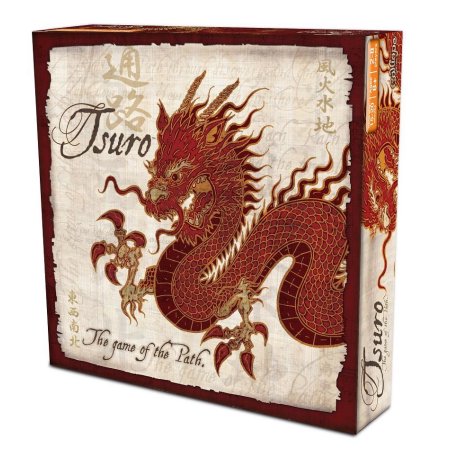
Tsuro: The Game of the Path (Calliope Games)
A path-laying game with tons of style and historical spirit, Tsuro casts up to eight players as flying dragons, and tasks you with laying out your path with special tiles. Try not to meet any other dragons or fly off the board! It’s a simple mechanic with plenty of replay value, and perfect for quick games with large groups. ($30)

Chessplus
The first thing you learn in chess is how the pieces move. But what if that could change? What if you could make new pieces that move in unexpected ways? How would that change the game? With Chessplus, you’ll find out, as you mix and match chess pieces in order to capture your opponent’s king. The possibilities really are endless! ($44.95)
[Click here for our full review of Chessplus!]
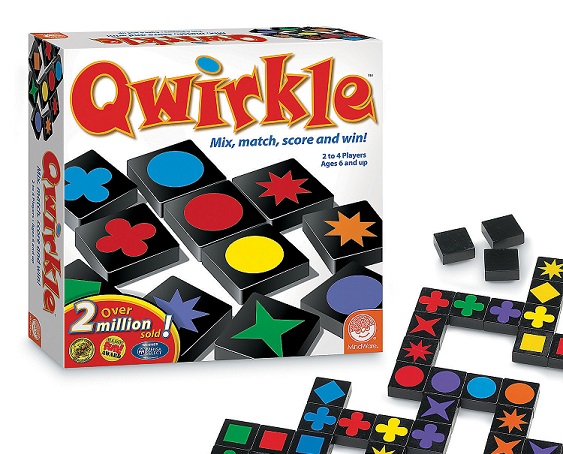
Qwirkle (MindWare)
A wonderful mix of Uno and Mexican Train Dominoes, Qwirkle is a tile-placing game where you try to maximize your points while minimizing the help you give to your opponents. With six bright colors and six different shapes to match up, Qwirkle is endless fun that’s so easy to jump into! ($14.99)
Card Games
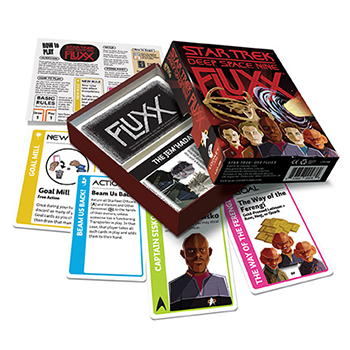
Star Trek: Deep Space Nine Fluxx (Looney Labs)
The chaos and ever-changing rules of Fluxx finally meet their match as they tackle the crews of the Federation’s most famous outposts, Deep Space Nine. Work with Sisko and his eclectic team to outwit the Dominion, the Cardassians, and more, all in a card game that boldly goes where only a few other versions of Fluxx have gone before! ($20)
And if Star Trek isn’t your style, maybe you’d enjoy Jumanji Fluxx, Marvel Fluxx, or any of the other marvelous variations on this classic quick-changing card game!
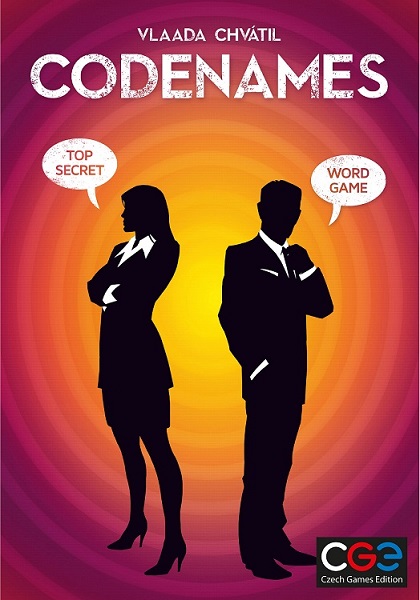
Codenames (Czech Games)
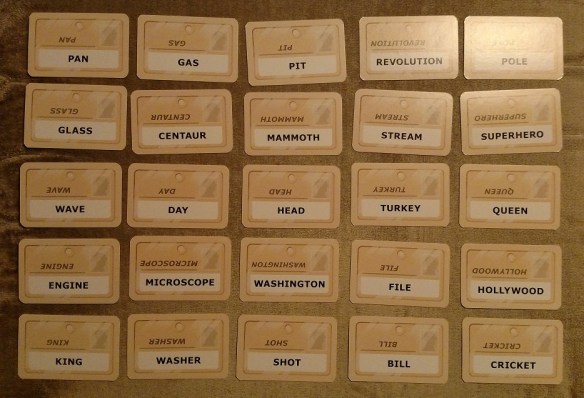
It’s a race against time to locate all of your spies before your opponents. But in order to do so, you need to communicate information with a single word. Codenames will put your word association skills to work as you try to find secret agents disguised with code words, while avoiding innocent citizens and dangerous assassins along the way! ($19.99)
[Read our full review of Codenames here!]

Deluxe Pairs (Hip Pocket Games)
Building on the legacy already established by the bar-friendly series of Pairs decks available, Deluxe Pairs offers a new artistic spin on the classic Pairs “Fruit Deck,” as well as a companion booklet with rules for numerous Pairs variants you can play with the deck! This isn’t just one card game, it’s dozens! ($14.85)
[Click here for our full review of Deluxe Pairs!]
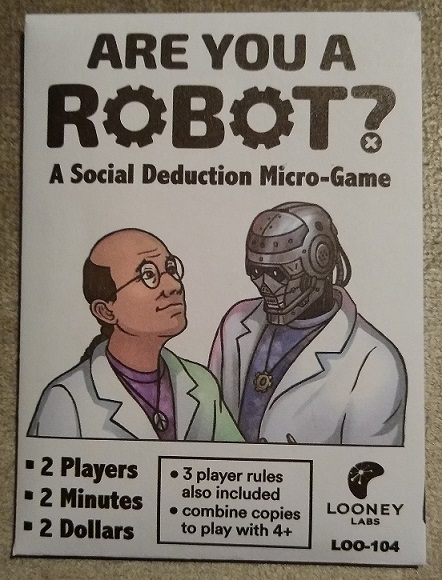
Are You a Robot? (Looney Labs)
In this social deduction game, your space station has been invaded by robots that can masquerade as human. Is one already in the room, or are you just being paranoid? The more packs you have, the more people can play, and the more devious and exciting the gameplay becomes. If you’ve ever played Mafia or Ultimate Werewolf, you’ll enjoy Are You a Robot? ($2 per pack)
[Check out our full review by clicking here!]

Spaceteam (Timber and Bolt)
Can you repair your ship and get the engines up and running before a black hole ends your space adventure forever? That’s the name of the game in Spaceteam, a cooperative, communication-based game where you have to accomplish various tasks with your fellow players while sharing tools. It’s delightful chaos, heightened by the five-minute hourglass timer counting down your dwindling seconds before disaster strikes! A definite favorite around here. ($24.95)
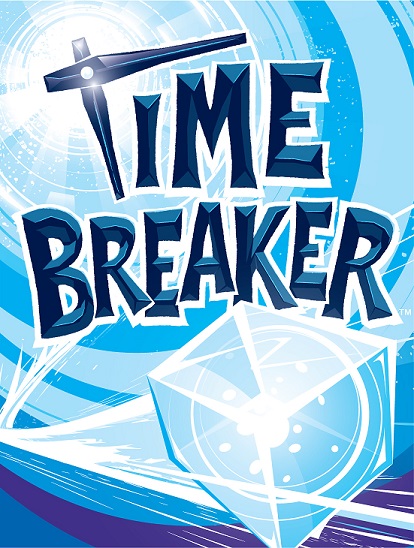
Time Breaker (Looney Labs)
Time itself is in danger as you chase a fugitive across history in this clever strategy game. Whether you’re moving your token through time across the board or playing special cards to leap to specific moments in time, you’ll have to be quick and cagey to prevent the Time Breaker from escaping your clutches. ($25)
[Check out our full review here!]

Constellations (Xtronaut Enterprises)
Sometimes, we can move heaven and earth! Constellations is all about collecting stars and building famous constellations, then placing them in the night sky! The more effective your constellation-building, the higher your score! ($23.98)
[Check out our full review of Constellations here!]

Scrimish (Nexci)
Combine the card game War with elements of Chess and Memory, and you’ve got something approximating Scrimish, a card game that’s effortless to learn, but offers endless possibilities. Can you protect your crown card while hunting down your opponent’s? With cards for both defense and offense, there’s a lot packed into just 25 cards apiece! ($9.99)
[Check out our full product review of Scrimish by clicking here!]
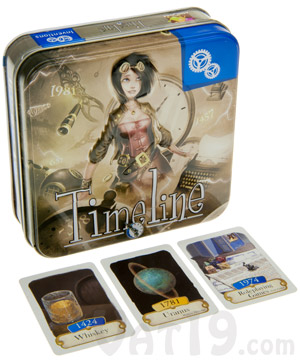
Timeline (Asmodee Games)
Timeline pits your knowledge of history against a growing timeline of important events, inventions, and historical moments. You don’t have to know exact dates; you just need to know if something happened before or after something else. Was the toothbrush invented before or after the syringe? Which came first, language or agriculture? Timeline is a fast, fun way of learning (or relearning) history! ($8.99 and up)
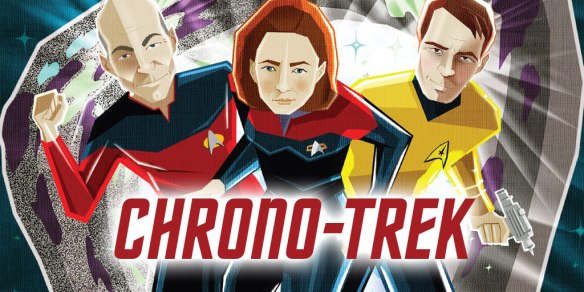
Star Trek Chrono-Trek (Looney Labs)
Can you bend time to your will and make the future you desire come to pass? In Star Trek Chrono-Trek, you take on the role of a famous member of Starfleet and try to alter the fabric of space-time itself in order to win. But be careful, because other players are changing the timeline too, and there are consequences for meddling with time! ($25)
[Check out our full review by clicking here!]
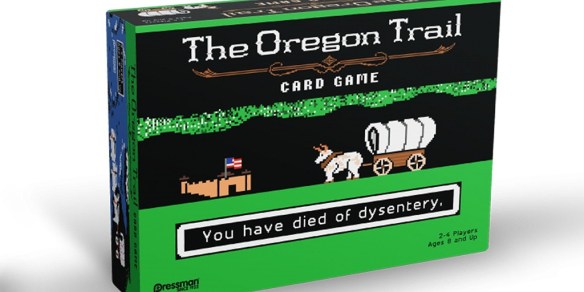
The Oregon Trail (Pressman Toys)
The classic computer game comes to life as you and your fellow players team up to survive the perilous journey along The Oregon Trail. With art evoking old-school computer games, rampant threats and calamities to endure, and a long and challenging road to travel, will any of you will make it to Oregon? ($10.23)
[Check out our full product review of The Oregon Trail by clicking here!]
Dice Games
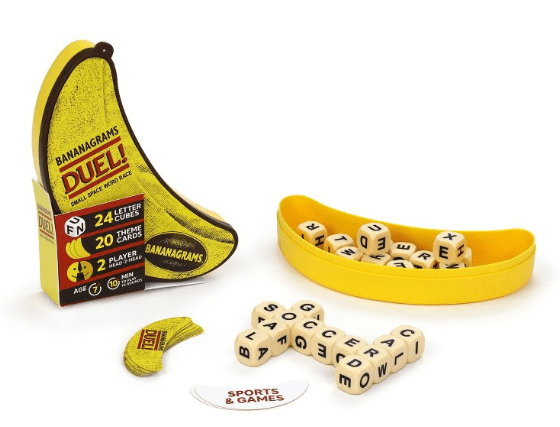
Bananagrams Duel (Bananagrams)
Bananagrams specializes in crossword-inspired fun for groups, but what if you’re looking for a head-to-head challenge? Well then, Bananagrams Duel might be what you’re looking for. Utilizing letter cubes instead of tiles, you’ll have to build a grid of related words fitting a given theme before your opponent can! It’s a new twist on an old classic! ($7.99)
[Click here for our full review!]

Sagrada (Floodgate Games)
One of the most beautiful strategy games on the market today, Sagrada is a singularly peaceful gaming experience. Compete with other players to build the most beautiful stained glass window, but with dice instead of glass! Unique and challenging, Sagrada is something else. ($39.95)

Tenzi
All of us have rolled dice in games before, but can you roll what you need as fast as possible? That’s the challenge of Tenzi, a game that pits up to four players against each other in tests of speed and dexterity. Can you roll ten 6’s before everyone else? ($14.95)
Party Games
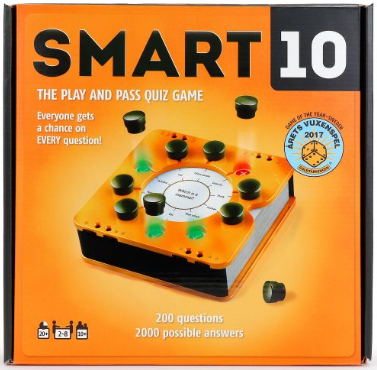
Smart10 (Bananagrams)
Can you pick one correct answer from a field of possibilities? Smart10 challenges you and a group of friends to do just that by selecting correct answers from a list of possible responses. It’s tougher than it sounds, and it’ll test your trivia skills and your ability to think under pressure. ($19.95)
[Check out our full review here!]

Slapzi (Tenzi)
Slapzi will keep you on your toes. In this quick-reaction game, you’ve got to match your picture cards to the clue cards before your opponents. But with clues like “Not sold in a hardware store” or “Two of the same letter together,” this isn’t as easy as it appears! ($19.95)
[Click here to check out our full review of Slapzi!]
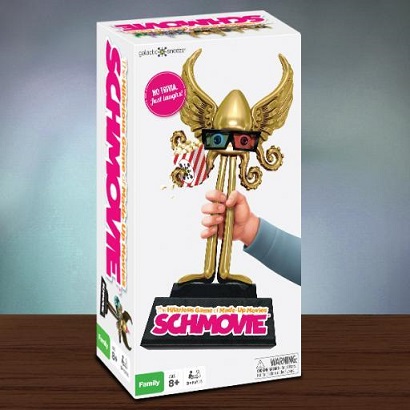
Schmovie (Galactic Sneeze)
Are you the funniest, punniest one in your group of friends? Find out by playing Schmovie, the party game that pushes you to scribble down the best name for an imaginary movie created on the spot! Now redesigned in a sleeker box and playable by all ages, this is the movie game for everyone. ($19.95)
[Check out our full product review of the original version of Schmovie here!]

Decrypto (IELLO USA)
Can you covertly communicate with your teammates without revealing your secret code to the opponent team? That’s the name of the game in Decrypto, a party game all about word association and deduction. The first team to crack the opposing team’s codes twice wins! ($19.98)
Miscellaneous Puzzle Swag
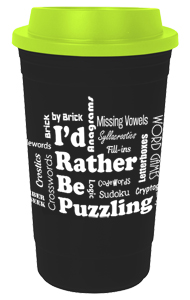
I’d Rather Be Puzzling travel mug (Penny Press)
After a long day of puzzling, sip some coffee from a snazzy I’d Rather Be Puzzling Travel Mug ($7.95).

Flying Colors coloring book (Penny Press)
Our puzzly pals at Penny Press know that sometimes, you need a break from puzzles, so why not unwind with their Flying Colors coloring book ($6.99).

All of the Things
If you’re looking for puzzly magnets, keychains, teddy bears, and more, the team at All of the Things have puzzle treats for you! Their table was one of the marketplace highlights at the American Crossword Puzzle Tournament, and we’re happy to welcome them back to the Gift Guide this year!
Puzzle Events

The Enigmatist
“An immersive evening of puzzles, cryptology, and illusions” created by magician and crossword constructor David Kwong, The Enigmatist is based on William and Elizebeth Friedman’s work at Riverbank, a peculiar hotbed for codebreaking in the early days of the twentieth century.
Tickets are available in New York City until January 11th, then again in May, but in Los Angeles this time at the Geffen Playhouse! (Prices range from $59 to $150 in NYC, $30 to $130 in LA.)

Escape Room gift cards/vouchers
When it comes to the puzzler in your life, why not buy them a gift card or voucher for your friendly local escape room? It’s a terrific unique puzzle experience they can share with friends, loved ones, and fellow puzzlers!
Most escape room companies offer them, and a quick Google search should turn up an escape room near you!
But here’s a smattering of terrific escape rooms to check out:
- Escape 101 in Danbury, Connecticut
- Epic Team Adventures in Seattle, Washington
- ESC Escape Rooms in North Hollywood, Los Angeles, California
- Escape Reality Sarasota in Sarasota, Florida
- Boxaroo Escape Adventures in Boston, Massachusetts
- Big Escape Rooms in Atlanta, Georgia and Silver Spring, Maryland
- Red House Mysteries in Exeter, England
Thank you to all of the constructors, designers, and companies taking part in this year’s holiday puzzly gift guide!
And thank you for visiting PuzzleNation Blog today! Be sure to sign up for our newsletter to stay up-to-date on everything PuzzleNation!
You can also share your pictures with us on Instagram, friend us on Facebook, check us out on Twitter, Pinterest, and Tumblr, and explore the always-expanding library of PuzzleNation apps and games on our website!







 PuzzCulture