The Puzzle and Game Legacy of Godzilla

Godzilla has been a cultural icon for seventy years.

Across dozens of films, in a film market with hundreds of behemoths, leviathans, and titans to watch, Godzilla is still the King of the Monsters. Godzilla has battled humanity, aliens, robotic duplicates, and other kaiju, bringing joy and wonder to millions of moviegoers. Godzilla has evolved from personifying the specter of nuclear annihilation to representing the spirit of a proud nation against threats like pollution, environmental catastrophe, and war.

The cultural influence of Godzilla cannot be overstated. So you shouldn’t be surprised to see that it extends into the world of puzzles and games as well.
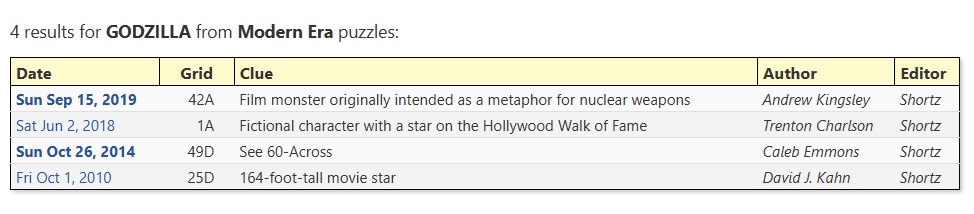
Now, sure, Godzilla isn’t popping up in crosswords on the reg. Xwordinfo tells us that Osaka has been clued a half-dozen times in relation to Godzilla (and Tokyo nearly as many times).

Godzilla has appeared in New York Times crossword grids four times (including one where they cross paths with King Kong). In comparison, fellow Kaiju Mothra has appeared in New York Times crosswords five times.
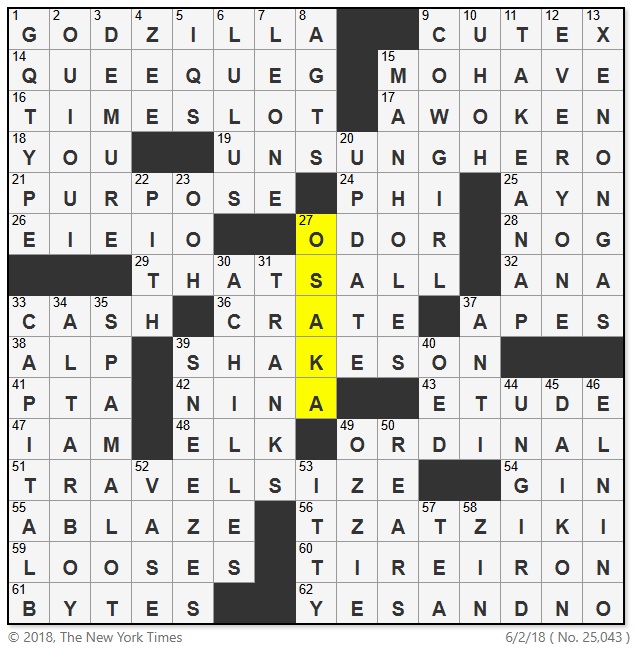
Godzilla and Osaka are both in this themeless crossword from Trenton Charlson on June 2, 2018.

But The New York Times isn’t the only publication worth discussing here. No, to truly appreciate the puzzly legacy of Godzilla, we have to discuss G-Fan magazine.
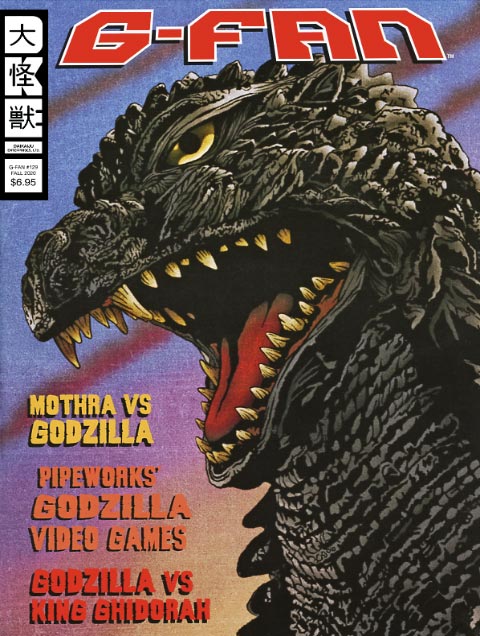
The art for this cover (and a half-dozen others) was done by my marvelous friend Matt Harris!

G-Fan is the premiere magazine for all things kaiju, especially Godzilla, and it was flipping through an old copy of the magazine that inspired this post. (It’s amazing what you unearth when you’re packing up your whole life to move.)

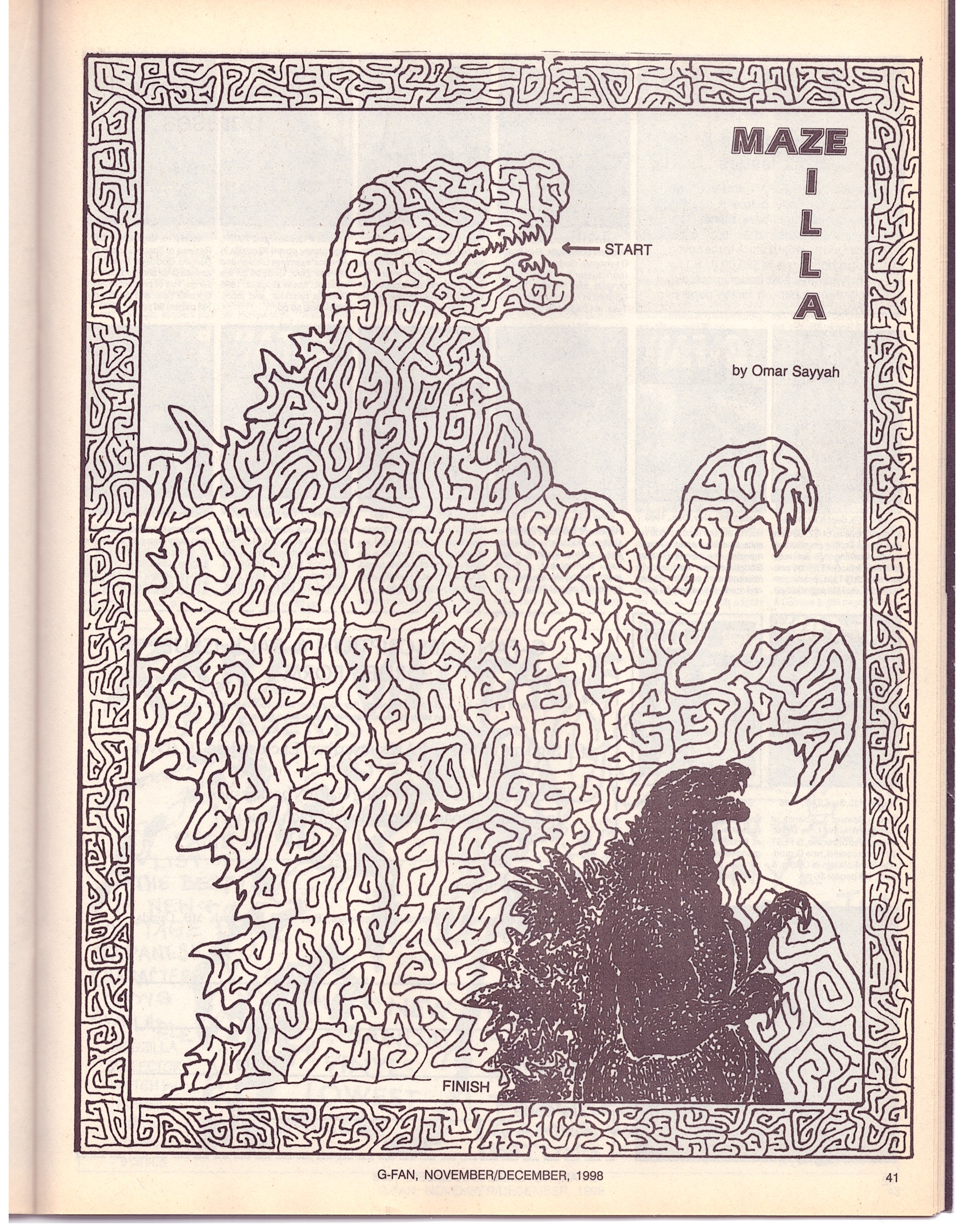
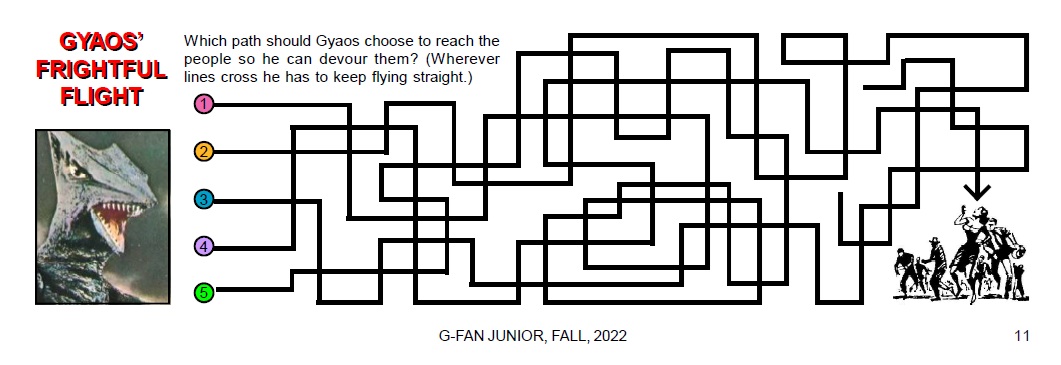
Among interviews, movie reviews, and wonderfully nerdy deep dives into various monster-centric topics, I stumbled across not only a Godzilla-shaped maze (pictured at the start of this post), but a crisscross all about my favorite skyscraper-sized monster.
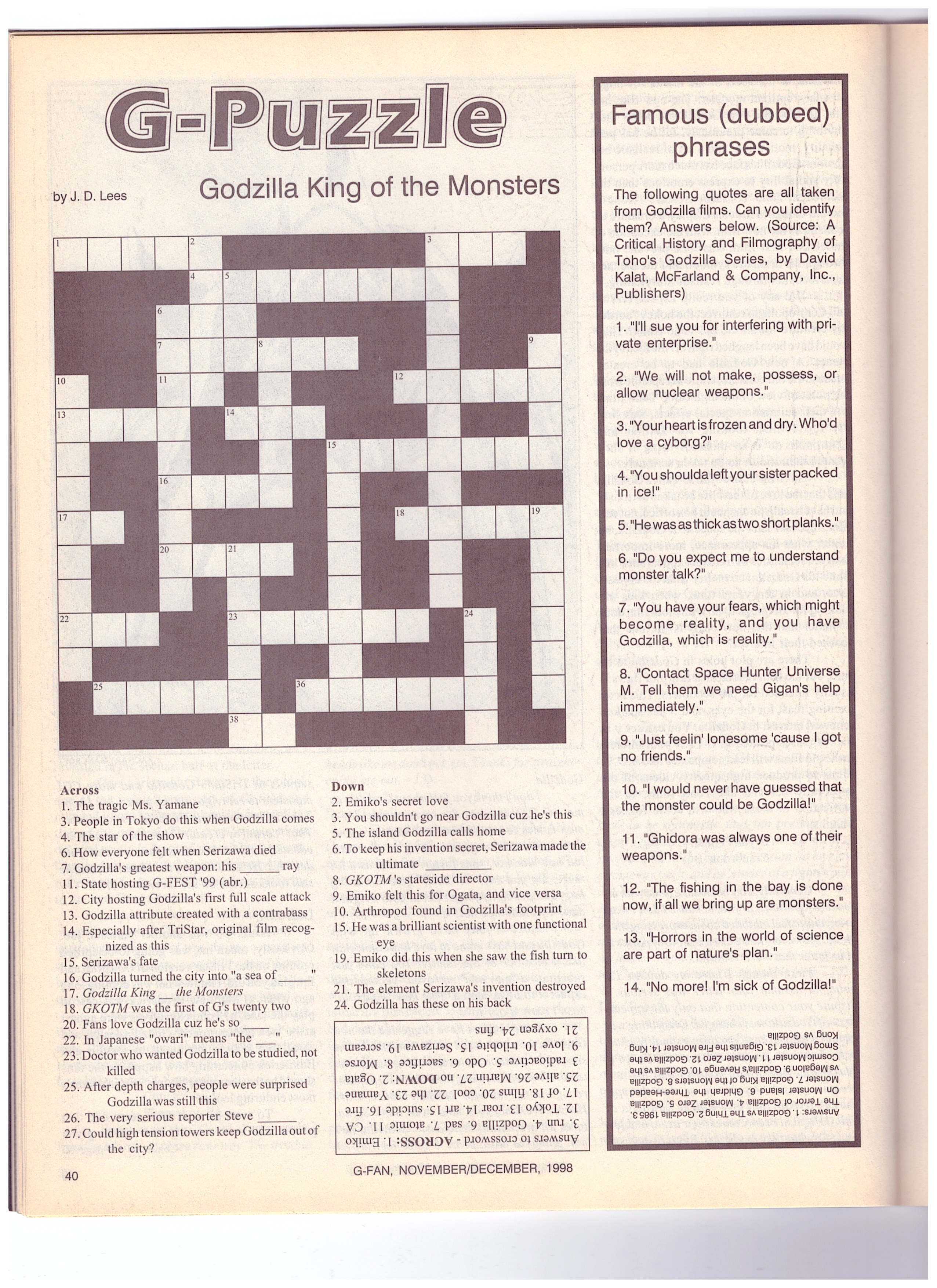
So, naturally once I started, I kept digging, delving into the G-Fan archives and reaching out to JD Lees, the man behind not only G-Fan, but the annual G-CON / G-FEST convention!

He was kind enough to take some time out to discuss the puzzles periodically appearing in the pages of G-Fan.
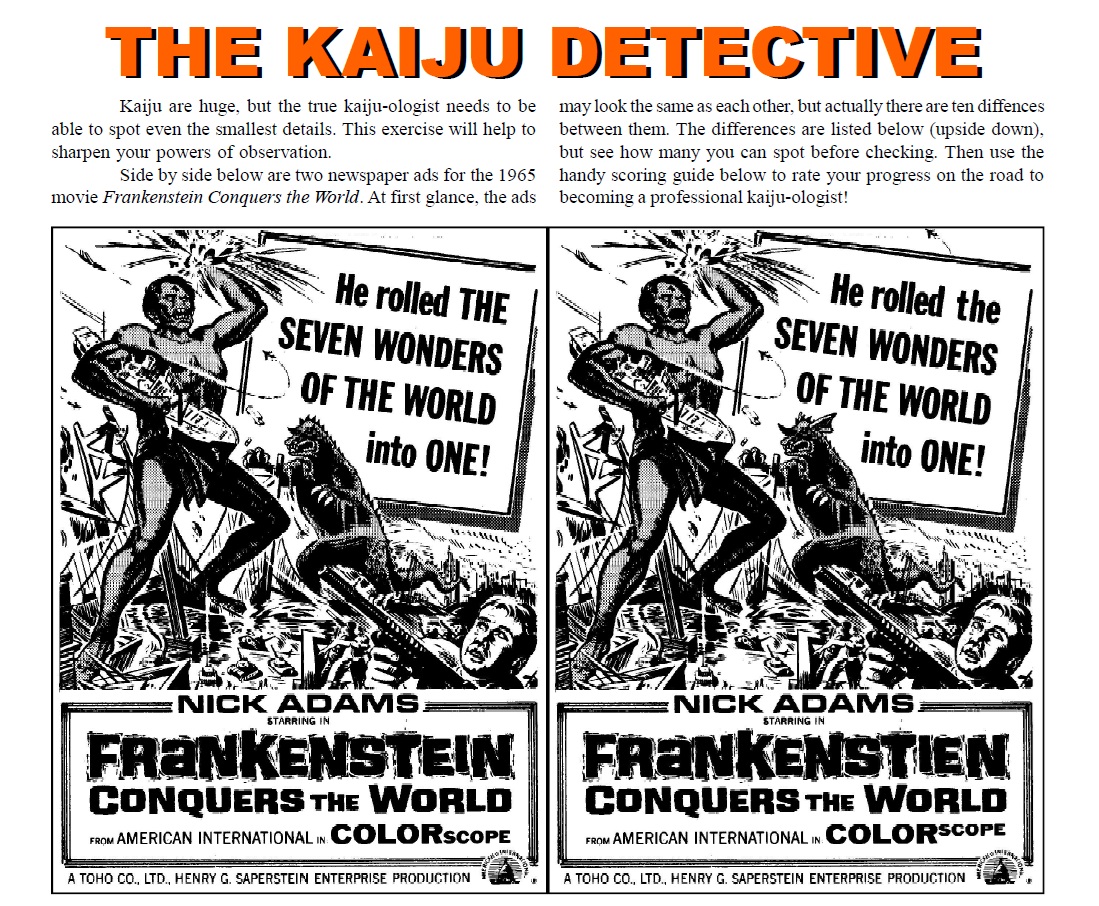
What inspired you to start putting puzzles into G-Fan?

When I was a teacher, I would often include puzzles in the worksheets I created for students. I figured it was a way to increase engagement that was a bit fun and different for the kids. I found I enjoyed making them, so when I was creating G-FAN Junior, puzzles seemed a natural thing to include to break up the articles, add variety, and fill space!
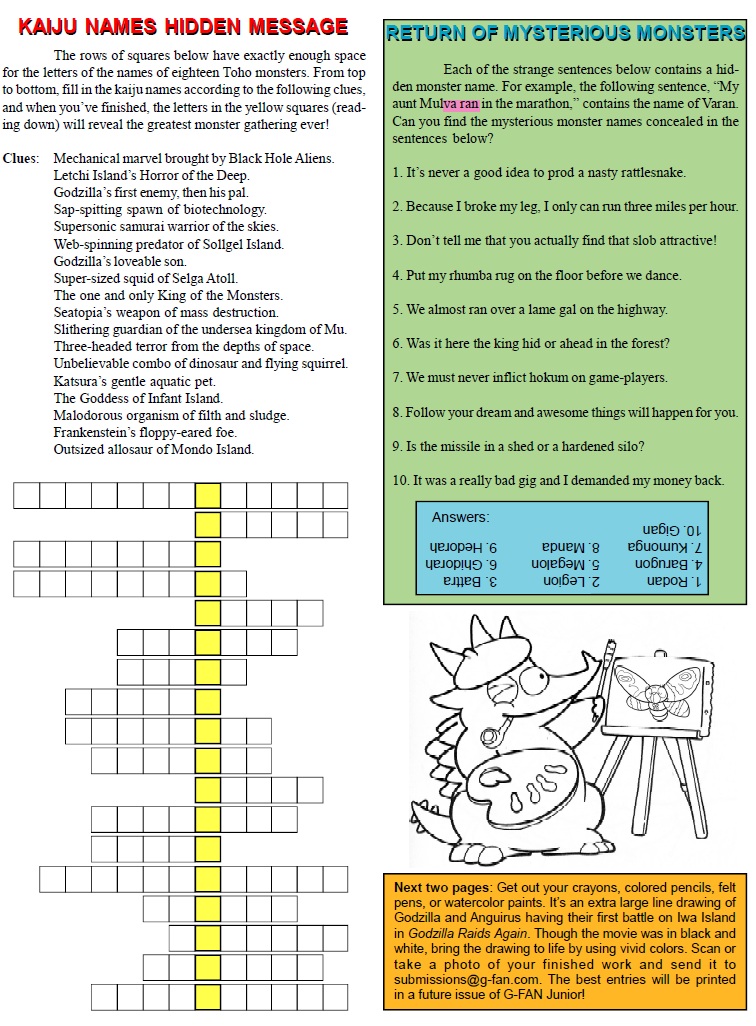
Do you have a favorite puzzle (either in terms of topic or overall execution) from over the years?

I have a lot of fun creating the puzzles where a monster’s name is hidden in an unrelated sentence. I first saw this done with the names of the U.S. states and their capitals. I think it was in a puzzle book I used in my Grade 10 math class.
There’s a Godzilla Monopoly game. Is your affection for Godzilla potent enough to make you endure a game of Monopoly through to the end?

Ha ha! I look back and marvel at those long-ago times when my friends and I used to enjoy playing Monopoly. Maybe I’m just getting old. (Actually, no maybe about it!) However, I did buy the Godzilla version of Monopoly for the Gaming Room at G-FEST, and it was used. The second year someone stole all the kaiju tokens, so I replaced them with generic monster figures. Overall, G-fans are very honest, but thousands attend the convention, so I guess there will be a few bad apples.

Although he’s currently taking a break from G-Fan, JD did say he expects to construct more puzzles in the future (though they might not be so kaiju-focused.)


Speaking of the Godzilla edition of Monopoly, that brings me to the other half of today’s post: the legacy of Godzilla in board games.
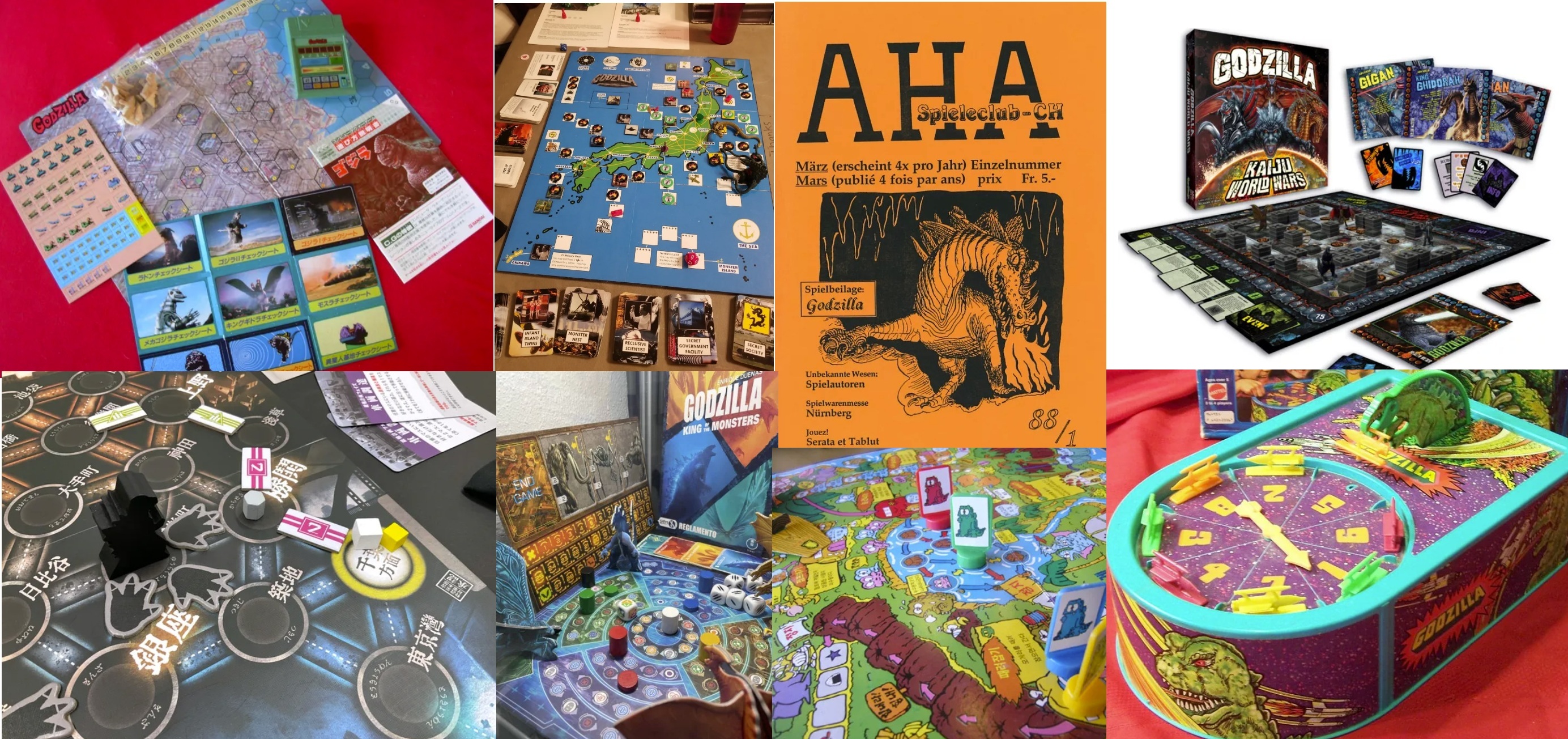
The many ways Godzilla has been translated to board games. Clockwise from upper left: Godzilla Electronic Wargame (1984), Godzilla: Monsters Attack! (2008), Godzilla pen and paper game (1988), Godzilla: Kaiju World Wars (2011), Godzilla Game (1978), Super Godzilla Tempest (1990), Godzilla: King of the Monsters (2020), Godzilla: Kaiju on the Earth LEGENDS (2022).

There are literally DOZENS of board games inspired by Godzilla and the many kaiju that followed in those monstrous footsteps.

Alongside the aforementioned official Monopoly version, there’s an official Godzilla Jenga, a Godzilla version of The Incredible Hulk Smash (one of several dismal tie-ins promoting the atrocious Fox 1998 Godzilla film), as well as expansions for Cthulhu: Death May Die and an upcoming reimagining of the game Battle Masters called Battle Monsters.
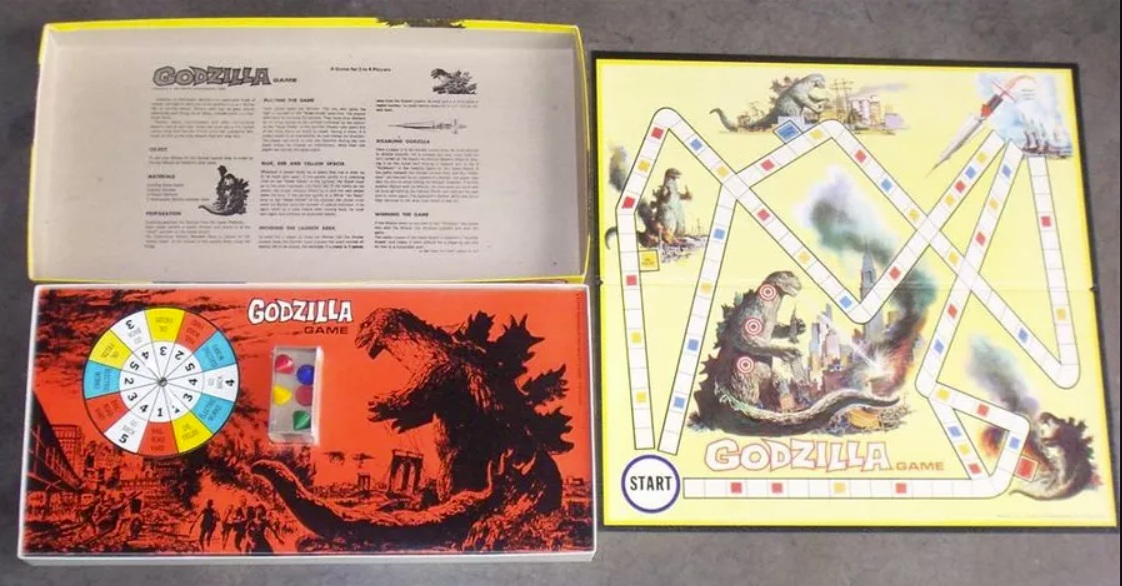
Godzilla-inspired board games date all the way back to 1963, when the imaginatively titled Godzilla Game was released. It was actually the first Godzilla toy produced in the US and only the second Godzilla toy ever made.

In 1978, another Godzilla Game was released, followed by a Mothra vs. Godzilla game in 1982. There have been strategy games (like a pen-and-paper game in Swiss gaming zine AHA in 1988), dice games like Godzilla VS Kong from 2022, and loads of, quite frankly, fairly disappointing board games.

This trend has only reversed in the last fifteen years or so with releases like my all-time favorite Godzilla game, Godzilla: Tokyo Clash from 2020.
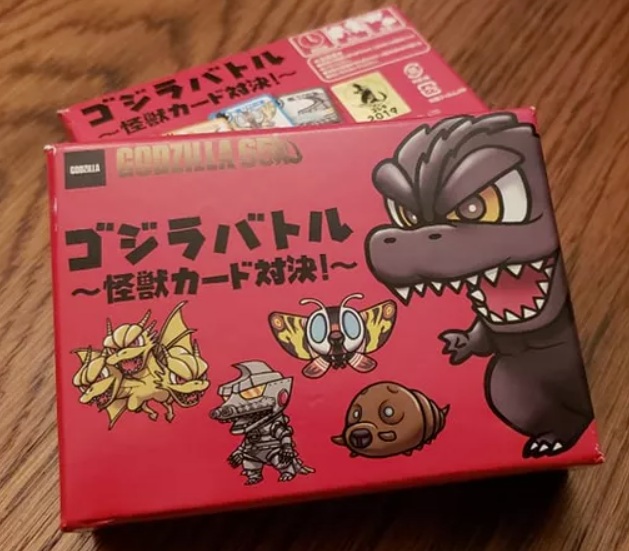
There’s also a curious pattern of Godzilla card games with names that go unnecessarily hard, but I respect the manic energy they bring to game shelves. These names include Godzilla: Stomp! (2011), the delightfully named Godzilla Boom (2012), and Godzilla Total War (2019).

Confusingly, there seem to be both a board game AND a card game called Godzilla Rampage, and they both have supplements adding other monster/monster-fighting icons like Ultraman, Gamera, and Daimajin to the mix.

But easily my favorite discovery as I strolled down the well-stomped memory lane of Godzilla games was this 1994 Hungry Hungry Hippos-style game.
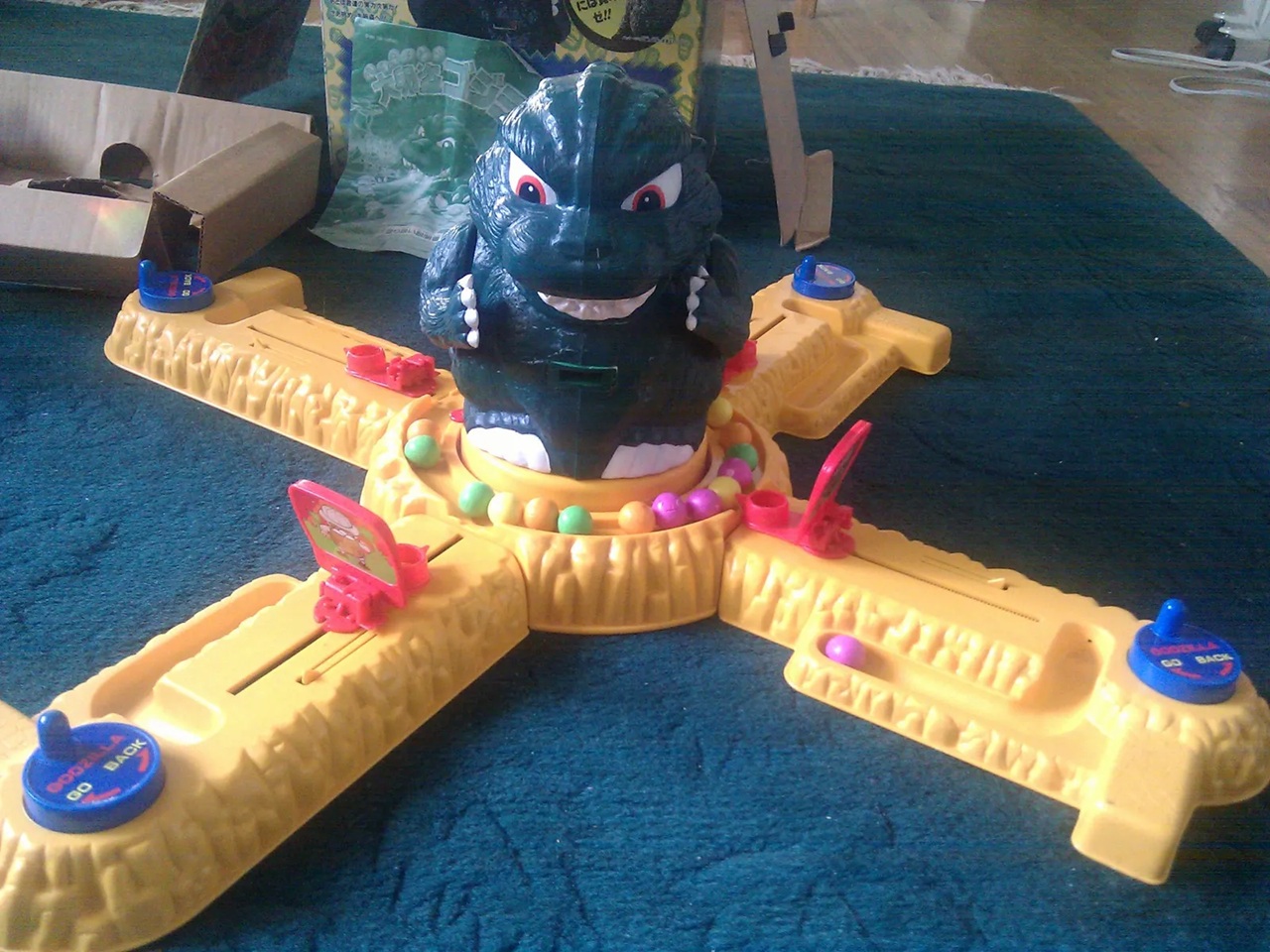
From cutesy to vicious, from the pages of fanzines to coffee tables across the world, Godzilla has moved far past the silver screen and become part of the cultural language. People who have never seen a Godzilla film — yes, they exist, and we pity them — still know the name.

Bridezillas the world over owe their monstrous reputations to our beloved atomic-breathed kaiju. We know dozens of other monsters because of Godzilla. Rodan, Mothra, King Ghidorah… heck, even King Kong rides those enormous coattails from time to time.

And it’s fun to remember that even the world of puzzles and games is not immune to the mighty roar or the deep, deep shadow of the King of the Monsters.


Thank you to JD Lees, Matt Harris, and several chums from the Board Game Geek forums for helping me with this post. Be sure to check out the G-Fan website for all things Godzilla, and enjoy this not-at-all-exhaustive list of G-Fan issues with some of JD’s puzzles:

  • Issue #110, Fall 2015
  • Issue #109, Summer 2015
  • Issue #108, Jan/Feb 2015
  • Issue #97, Fall 2011
  • Issue #49, Jan/Feb 2001
  • Issue #42, Nov/Dec 1999
  • Issue #39, May/June 1999
  • Issue #37, Jan/Feb 1999
  • Issue #36, Nov/Dec 1998
  • Issue #33, May/June 1998
  • Issue #32, March/April 1998

Do you have a favorite Godzilla film, Godzilla game, or Godzilla pop culture moment, fellow puzzlers? Let us know in the comments section below. We’d love to hear from you!

Learning How to Drive From a Board Game?

ipgsycot_elearning-board-games

You can learn a lot from board games.

You can test your dexterity with games like Flick ‘Em Up, Flipships, or Pitchcar. You can test the steadiness of your hand with Jenga or Operation. You can test your deduction skills, your memory, your trivia, your tactical ability, your pattern matching, and your luck in all sorts of games. And along the way, you can learn history, strategy, negotation, and deception.

But, according to an article sent in by a fellow puzzle fan, there’s a board game out there that teaches you the rules of the road as well.

in-sierra-leone-a-board-game-will-grant-you-a-drivers-licenseeventually-80452-7

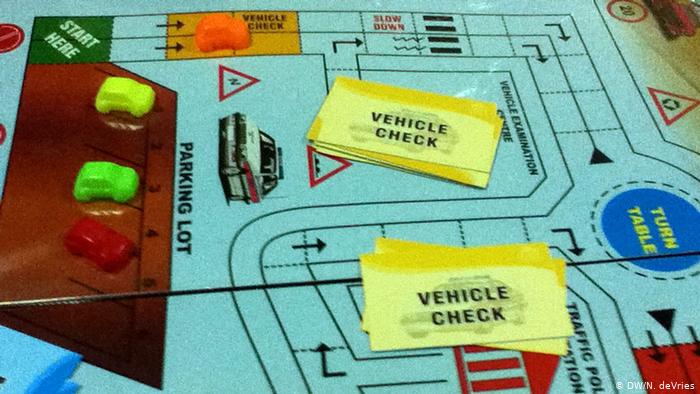
It’s called The Driver’s Way, and in the African country of Sierra Leone, it became law that you had to purchase and play this board game to learn road safety.

The game was actually designed by the assistant inspector general of police in Sierra Leone, Morie Lengor, and he designed the game in the hopes that it would reduce the accident rate for drivers in his country.

Now, this is a pretty cool idea, and I think more skills should be taught through board games. Do detectives need to play Clue or Deception: Murder in Hong Kong in order to learn their trade? Should we have exterminators playing Mousetrap and virologists playing Pandemic?

Just imagine if a court could order someone to play Sorry until they respected the meaning of the word.

17305512_303

Anyway, I thought this was a weirdly fascinating factoid, so I went on the hunt for more details. There weren’t many.

The news regarding this story broke in 2013, and the vast majority of articles about the game date back to that initial media blitz. Practically all of them carry the headline “You Have to Play a Board Game Before You Can Get a Driver’s License in Sierra Leone.”

Moreover, almost all of the articles were in some way factually incorrect, because they were thirdhand or worse reports, copying and paraphrasing from another article which did the same from another article which MIGHT have linked to the original.

Recent search results (and by recent, I mean 2018, which is the latest reference I found to it) are scarce, and parrot the same information from 2013. Most articles don’t even have an actual image of the game, using any image with a road — be it The Game of Life or just one of those small town rugs from kindergarten class with roads drawn all over.

multi-colored-jungtier-kids-rugs-kcp010032-2x5-64_1000

Descriptions of the game vary. Some refer to “spotlight-themed dice” and answering questions, while others compared the game to “a cross between Monopoly, Snakes and Ladders, as well as Scrabble.” I have no idea what form that game would take, and I suspect the person who wrote it has even less of a clue.

I can’t find anything that verifies this became a widespread tool for driver safety. A planned global production expansion appears to have dried up quickly, and I can’t find anything on the 3000 copies of the game articles claim were already manufactured and distributed. There’s not even an entry for the game on Board Game Geek, which is an otherwise exhaustive resource of board game info.

And yes, I did go as far as to actually reach out to the Sierra Leone Road Safety Authority about this, but they haven’t gotten back to me.

So, sadly, until we can find out more, we must consider this story a delightful flash-in-the-pan and not the start of a board game-learning revolution that could transform us all into Battleship-hunting, Forbidden Island-exploring, Kerplunk masters of a thousand different legally-bonded skills.

For now, anyway.


Thanks for visiting PuzzleNation Blog today! Be sure to sign up for our newsletter to stay up-to-date on everything PuzzleNation!

You can also share your pictures with us on Instagram, friend us on Facebook, check us out on TwitterPinterest, and Tumblr, and explore the always-expanding library of PuzzleNation apps and games on our website!

5 Questions with PuzzleNation Director of Digital Games Fred Galpern

Welcome to 5 Questions, our recurring interview series where we reach out to puzzle constructors, game designers, writers, filmmakers, musicians, artists, and puzzle enthusiasts from all walks of life!

It’s all about exploring the vast and intriguing puzzle community by talking to those who make puzzles and those who enjoy them! (Click here to check out previous editions of 5 Questions!)

For the entire month of August, I’ll be introducing the PuzzleNation readership to many of the members of the PuzzleNation team! So every Thursday this month, you’ll meet a new name and voice responsible for bringing you the best puzzle apps on the market today!

And I’m excited to continue this series with Fred Galpern as our latest 5 Questions interviewee!

Fred is our Director of Digital Games, and he’s been the driving force behind our mobile app brand since Day One. With previous video-game experience working on iconic games like System Shock 2 and Thief, Fred brings illustration, digital art, and graphic-design knowhow to the table, bringing pen-and-paper puzzle concepts to new formats like mobile gaming and solving.

(He’s also a pretty sharp guitar and ukulele player, but as far as I know, that hasn’t factored into our app-development efforts yet.)

Fred was gracious enough to take some time out to talk to us, so without further ado, let’s get to the interview!


5 Questions with Fred Galpern

1. As Director of Digital Games, you’re the head honcho around these parts when it comes to app development. What does that job entail? What role do you play in bringing new features and apps to market?

PuzzleNation is a small team, which means we all wear multiple hats. For me, the most important, and coincidentally the most fun, hat is product management. In this role I set the direction for each of our apps, including sorting out what new features to add, which existing features to improve, what new content to offer to users and how to improve the look and feel of our apps.

Our approach always starts with what will be best for the app user; we then figure out how to make that good user experience work for us as business. Finally, we do our best to listen to user feedback so we can improve a feature after it’s released, so that our apps get better and better over time.

2. You had a background in game development and design before you began developing puzzle apps. How has your work in traditional video games informed your work with puzzles, and has working with puzzles changed how you view game design as a whole?

Prior to joining PuzzleNation I was fortunate to have had experiences all around the game industry, from intense hardcore game development projects to family-oriented games and even some gaming hardware. All of these experiences have been valuable, especially my experience at Blue Fang Games, where I was an Art Director and Producer for the Zoo Tycoon series. Working on that series showed me how fulfilling it can be to create games that appeal to people outside the stereotypical gamer audience of males aged 13 to 35.

PuzzleNation strives to provide users of all ages with great puzzle-solving experiences. The lessons I learned at Blue Fang are useful every day at PuzzleNation. Whether we’re planning new apps or improvements to our current apps, I often find myself recalling a previous project that suggests a solution for today’s projects.

3. The PuzzleNation audience first got to know you in our post announcing the free daily puzzle feature for the Penny Dell Crosswords app, where you mentioned you and your family are big board game players. Are there any new games that have become favorites in your house?

Oh yes, our passion for board games has not slowed down! Our current favorites include a mix of old and new games: X-Wing Star Wars miniatures game, Star Realms, Ascension, Marvel VS and 7 Wonders.

Of those, 7 Wonders has gotten the most play. It’s a wonderfully fun game that has a small learning curve followed by hours of enjoyable, strategic gameplay that works for all different play styles. I usually try aggressive strategies which are countered by more thoughtful approaches by my wife and kids. Board games are still in the midst of an amazing renaissance. I encourage readers to learn more on sites like Board Game Geek and The Dice Tower and Watch-It-Played YouTube channels.

[Fred, alongside the Puzzle Pope at last year’s American Crossword Puzzle Tournament.]

4. What’s next for Fred Galpern and PuzzleNation?

For me, next up is lunch! I know that sounds like a joke, but it’s true. Since I work from home, getting out of the house at lunchtime is a ritual that adds a bit of adventure to my day. I’m lucky to live in Providence, RI, a small city with an abundance of excellent restaurants. Today, I’m thinking of heading to historic Federal Hill, well known for several of the top Italian restaurants in the country. I’ll most likely indulge with a delicious Italian grinder sandwich or maybe a chicken parmigiana.

As for PuzzleNation, our what’s next may not be as literally delicious, but you can be sure it will be equally enjoyable. We’re deep into development of two great new apps, and at the same time rolling out performance improvements for our current Crosswords apps. I can’t go into specifics but can say that puzzle lovers who enjoy the puzzles found in Penny Press and Dell Magazines will be pleasantly surprised. Stay tuned to the PuzzleNation blog and Newsletter for more details soon!

5. If you could give the readers, writers, programmers, aspiring game/app designers, and puzzle fans in the audience one piece of advice, what would it be?

One piece of advice for all of those different folks? Wow, that’s a puzzle in itself!

I learned something many years ago about achieving goals. The only way to reach a goal is to never give up. On the surface this can seem like rah-rah, sports minded, “stay strong” type of advice. For me, the thinking behind it goes a bit deeper. “Never give up” doesn’t speak to just tenacity and willingness to keep trying, but also to the need to think differently about the path to a goal.

Sure, sticking doggedly to the path you’re on may get you to your goal; however, creative exploration and finding alternate paths is often a more enriching, fulfilling journey. I know that may sound a bit mystical, but I assure you it’s not. It’s as simple as settling on a goal to strive for, then waking up every day and checking in that you’re still on a path towards that goal. The path may change every day, every few days or not at all. As long as you’re still on a path that can logically lead to the goal, you are making progress towards that goal.


A huge thank you to Fred for his time! I can’t wait to see some of those new apps hit the market and watch the PuzzleNation brand expand and flourish!

Thanks for visiting PuzzleNation Blog today! Be sure to sign up for our newsletter to stay up-to-date on everything PuzzleNation!

You can also share your pictures with us on Instagram, friend us on Facebook, check us out on TwitterPinterest, and Tumblr, and explore the always-expanding library of PuzzleNation apps and games on our website!

5 Questions with Andrew Hackard of Munchkin

Welcome to another edition of PuzzleNation Blog’s interview feature, 5 Questions!

We’re reaching out to puzzle constructors, video game writers and designers, board game creators, writers, filmmakers, musicians, and puzzle enthusiasts from all walks of life, talking to people who make puzzles and people who enjoy them in the hopes of exploring the puzzle community as a whole.

And I’m overjoyed to have Andrew Hackard as our latest 5 Questions interviewee!

(Andrew oversees a session of Munchkin for a younger group of puzzlers at Gen Con. Intended for adults, Munchkin can also be a great intro to both card games and roleplaying for younger gamers.)

Munchkin is a hilarious send-up of the classic roleplaying scenario: the dungeon romp. Encouraging players to team up to battle monsters (and betray each other as often as possible for the sake of treasure), it’s a marvelous mix of puzzly strategy and luck. With numerous expansions covering everything from pop culture to the apocalypse, Munchkin has become one of the standard-bearers for the modern board game and card game industries.

And when it comes to all things Munchkin, Andrew Hackard is your go-to guy. As the Munchkin Czar for Steve Jackson Games, he oversees the brand as a whole — at this point, he’s practically synonymous with Munchkin — and helps to offer a unified vision of the franchise while guiding it into new, unexpected territory.

Andrew was gracious enough to take some time out to talk to us, so without further ado, let’s get to the interview!

5 Questions for Andrew Hackard

1.) Everyone hopes for a great job title, something that’ll look sharp and impressive on a business card. Your title is Munchkin Czar. Can you tell us what that entails? Also, why “czar” and not something like “wrangler” or “overlord” or “almighty omnipotent entity and big cheese”?

It’s a little daunting to realize that out of seven billion people, I am the only one to have this job title. (If that’s not true, please don’t tell me.) It certainly does get me into some interesting conversations when I hand out my business card!

When Steve and Phil rehired me, back in 2009, Steve’s first thought for a title was “Brand Manager” — in fact, I have some cards with that title that I give to people who regularly wear neckties and sport coats. But Steve quickly decided that he didn’t know what a Brand Manager did, and he knew what he wanted ME to do — oversee all the day-to-day mundane operations of the Munchkin line, so that his time was freed up to write games rather than tracking sales figures and planning reprints and fussing with spreadsheets. For whatever reason, “Czar” was the title we came up with. It has the advantage of being both impressive and vague!

Over the past five years (!!!), my job has evolved considerably, and now I’m doing quite a bit of Munchkin design work myself, enough that we’ve started talking about maybe hiring *me* a Brand Manager to track sales figures and fuss with spreadsheets!

(Just a few of the Munchkin game sets and expansions that have been released.)

2.) How do you decide what the next theme or expansion will be for Munchkin? Are there any favorite cards or additions that really sold you on a given idea? Is there anything that, as a board/card game fan yourself, you loved bringing to the Munchkin universe?

We’ve published six new base Munchkin games since I started, and every one of them was different. (The next one, Munchkin Adventure Time, will be the most different of all, because we *aren’t* publishing it; our pals at USAopoly are doing the heavy lifting of design and development, and they’re knocking it out of the park!) Munchkin Zombies came about because we were trying to figure out what we hadn’t done yet, and all of us simultaneously said, “ZOMBIES!”

Munchkin Apocalypse grew out of a desire to commemorate (i.e., mock) the 2012 hysteria. Munchkin Legends was a set lots of our fans had suggested, and it worked well as a new fantasy set when we needed one. Our licensed sets (Axe Cop, Conan, Pathfinder) have all been targets of opportunity, and every one has been both a challenge and a blast to work on — all for different reasons.

So far, I think the most fun I’ve had designing a Munchkin set was Munchkin Apocalypse, because the Seal mechanic was completely new and a real design challenge. The first version we tried was way too hard — playtesters almost universally said it felt like they were fighting the game, not the monsters (and not the other players).

After a couple of disheartening playtest sessions, we went back and completely retooled the set, and ultimately came up with a game that I’m extremely proud of. I would be remiss not to give John Kovalic a shout-out for his outstanding art on Apocalypse, and of course on so many other Munchkin sets over the years. (Look at the Pathfinder cover!)

(The Pathfinder cover, along with the Munchkin version. Look at it!)

3.) You’ve also had a hand in guiding GURPS — short for Generic Universal RolePlaying System — as well as developing the most recent addition of Ogre. All of these projects involve longstanding legacies and expansive rule sets that must be quite a puzzle to work with. How do you mix and match the needs of the player with the high expectations involved?

To correct a minor misconception, my involvement with Ogre was more as a Kickstarter consultant than an Ogre developer — and there are times I wish I’d been a much louder consultant. (But wow, it’s an amazing achievement in game design and production!) Other than that, all I did for Ogre was keep the Munchkin train on the tracks so we could afford to print the sucker.

With GURPS, I was fantastically lucky to work with the best RPG line editor in the business, Sean “Dr. Kromm” Punch. Kromm took care of all the rules issues and made sure that the manuscripts were consistent with the rules that had gone before. That freed me up to worry about issues of text quality, book production, and of course scheduling.

I’m really proud of the work that Kromm and his team did on GURPS, especially on the Fourth Edition launch — editing the entire Basic Set was six months of hard work, but having him there to consult made it go so much easier.

It’s no exaggeration to say that my work on GURPS Fourth Edition was invaluable when I undertook to revise the rules and cards over the entire Munchkin line in late 2009 and 2010. We had decided to upgrade the visuals on the core Munchkin game, to use full-color art instead of the shades of brown that it used to be, and as long as we were going to be changing the set that much, we decided we could afford to sand down a few other rough spots.

It turned out to be quite a bit more of an undertaking that we had originally planned, but the result was a more consistent set of rules (on six pages instead of four, so old, tired eyes like mine could read them!), and the removal of a few design choices that were fine as one-off jokes in 2001 when Munchkin was a stand-alone game, but had started to become VERY frequently asked questions in 2009 when there were nine Munchkin core games and a dozen expansion sets. We thought about calling this a new edition, but it really wasn’t — it was just a refinishing job on the existing game. Ultimately, we compromised and updated the rule version number to 1.5 (with a tip of the hat to D&D in the process).

A lot of the updates we made in ’09 have helped shape the new sets — I think Steve and I both have a clearer understanding of the “Munchkin engine” than we did before that process started. The sets starting with Munchkin Zombies have been a lot more internally consistent, I think, because now we know when a rule doesn’t “feel like Munchkin.” Which is not to say that the earlier sets were bad — far from it! — just that the work of looking at every single card taught us a lot about the game. I certainly hope Steve would agree!

4.) What’s next for Andrew Hackard?

At the time of writing this, we’ve just sent Munchkin Apocalypse 2 to print (it’ll be out in the spring of 2014) and I’ve finished writing a couple of expansion sets for later next year. We have several booster packs planned for 2014, and a few surprises, too! Our biggest news, though, is that Steve, Phil, Ross Jepson (our Director of Sales), and I sat down for an all-day meeting in Dallas during BoardGameGeek Con, and we not only planned out the entire 2014-2015 schedule, we even started putting some things on the board for 2016!

I wish I could tell you about all the Munchkiny goodness coming down the pike, but I have been sworn to secrecy. Suffice it to say that I think our fans will be very pleased indeed, both with the new games coming out and the new support for some classics that haven’t seen a lot of love lately. As long as we don’t start competing with ourselves, we’ll be fine.

I’m also working on a couple of *new* goodies in the Munchkin sphere, one planned for late 2014 and one for 2015, and I’m really looking forward to being able to talk more about them as their release time draws closer. Right before our holiday break, I got the go-ahead to dust off something *non*-Munchkin that I’d been working on awhile back, so I’ll get a chance to stretch my skills in a whole new direction as well.

I expect 2014 to be an amazing year for me, personally, as well as for fans of Munchkin and of Steve Jackson Games in general.

5.) If you could give the readers, writers, aspiring game designers, and puzzle fans in the audience one piece of advice, what would it be?

Wil Wheaton talks about being an advocate for what you love, not a detractor for what you hate, and I think that’s very important. Gaming is a huge field and getting bigger all the time, and life’s too short to get into arguments about taste.

Have fun playing what you like, be a positive spokesman when someone expresses interest in what you’re playing, and try new games when you get the chance, because you never know when you’ll find your next favorite game — or when you’ll teach someone THEIR favorite new game.

For the aspiring designers out there, my best advice is simple: play games. Play LOTS of games. Take notes on the rules you like and the rules you don’t, and think really hard about why those rules were designed the way they were. (Don’t be surprised when the answer is, “It seemed like a good idea at the time.” That’s how Munchkin started!) If you’ve never studied technical writing, consider taking an introductory class at your local community college, because rule writing IS technical writing. If you confuse the players, they won’t play your game.

Go to conventions, if you can afford it; you’ll never get a better chance to show your game prototype to people who are eager to see the next hot new thing, and you may get a chance to meet and schmooze your favorite game designers, if you’re polite and well-groomed and willing to buy the first round.

(Seriously, the game industry is more welcoming than many others — we all started out as gamers ourselves, after all, and the list of fan-to-pro success stories is half a century long and growing every year.)

Ultimately, that’s what it’s all about — having a good time with your friends. Keep that in mind, and you’ll be far ahead of the game.

Many thanks to Andrew for his time. Check out all things Munchkin on the Steve Jackson Games website, and be sure to follow Andrew on Twitter (@redpenofdoom)! As a fan, I cannot wait to see what he and the Munchkin team come up with next.

Thanks for visiting the PuzzleNation blog today! You can like us on Facebookfollow us on Twitter, cruise our boards on Pinterest, check out our Tumblr, download our puzzle apps and iBooks, play our games at PuzzleNation.com, or contact us here at the blog!