The King of the Monsters Rampages Across the World of Board Games!

monopolyvariations

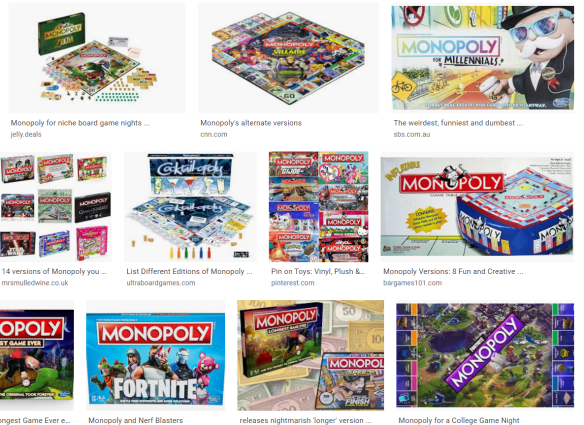
When it comes to licensing and variant titles, no board game comes close to the empire of different versions available that has been amassed by Monopoly.

Not only can you get one tailored to every one of the 50 states, but there’s a version of Monopoly for practically every pop culture phenomenon out there, covering everything from Game of Thrones and Star Wars to Spongebob Squarepants and The Office. There are versions with credit cards instead of cash, and even a cheater’s edition where players can be handcuffed to the board.

Sure, other classic board games are following suit. You can find versions of Clue centered around The Golden Girls or Dungeons & Dragons, and a Nightmare Before Christmas version of Operation out there.

But that’s a drop in the ocean compared to the myriad versions of Monopoly that are available for board game fans.

Even Godzilla is getting in on the fun.

monopolygodzilla

[Image courtesy of Mental Floss.]

Yes, there’s a Godzilla-themed Monopoly game now, complete with renamed properties, monster-influenced money, special game pieces, and rebranded Chance and Community Chest cards.

There are even factories and bases to build instead of houses and hotels.

But I must ask the obvious question. If you’re moving a monster token around the board, why aren’t you smashing houses and hotels instead of building bases and factories? I mean, the only monopoly your average kaiju is looking for is a monopoly on destruction, am I right?

Maybe a few intrepid players will cook up some fun variant rules that encounter the monsters to rampage rather than rebuild.

Of course, if you’re looking for an excuse for destruction, maybe the accompanying Godzilla-themed Jenga will be more up your alley.

godzilla-jenga

[Image courtesy of Bloody Disgusting.]

Yes, it’s just like normal Jenga, except the tower pieces are painted to look like pieces of a building, and Godzilla is slowly marching toward it, his atomic breath glowing as he anticipates the unbridled joy of knocking over yet another skyscraping edifice.

That’s certainly more in keeping with the King of the Monsters and his traditional manner for dealing with massive man-made structures. It won’t be as destructive as, say, Smash City or Terror in Meeple City, but it’s certainly a step in the right direction.

And, honestly, if there are two games that could use a little destructive sprucing up, it’s Monopoly and Jenga.


Thanks for visiting PuzzleNation Blog today! Be sure to sign up for our newsletter to stay up-to-date on everything PuzzleNation!

You can also share your pictures with us on Instagram, friend us on Facebook, check us out on TwitterPinterest, and Tumblr, and explore the always-expanding library of PuzzleNation apps and games on our website!

Did a Typo Help Defeat the Enigma Code and Win World War II?

During World War II, the Enigma code was one of the most daunting weapons in the German arsenal. Cracking the code would be the key to intercepting crucial information and outmaneuvering the Nazi war machine. In fact, unraveling the secrets of Enigma was so important that both England and the United States poured massive resources into building their own codebreaking operations, Bletchley Park and Arlington Hall, respectively.

Loads of fascinating information about the day-to-day operations of Bletchley Park and Arlington Hall have emerged over the last decade or so, and one of the most peculiar anecdotes to make the rounds recently claims that a typo is partially responsible for cracking Enigma.

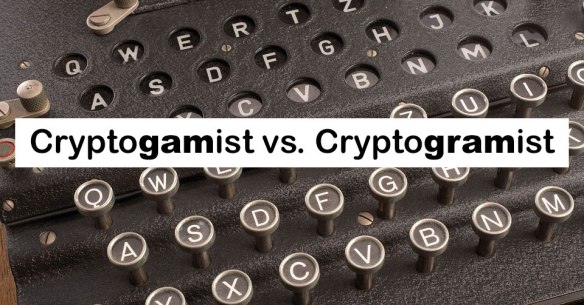
As the story goes, a man named Geoffrey Tandy was recruited by the UK Ministry of Defense to work at Bletchley Park as part of their growing team of cryptography experts. Scholars and professions from all over the country were being enlisted in the war effort, and cryptographers (or cryptogramists) were at the top of the list.

But Tandy wasn’t a cryptogramist. He was a cryptogamist, aka an expert on mosses, algae, and lichen.

Despite the error, Tandy remained at Bletchley Park, and a year or two after his mistaken hiring, his expertise proved invaluable when a German U-boat was sunk and cryptographic documents relating to Enigma were recovered. You see, his experience preserving water-damaged materials and specimens helped salvage the water-logged documents so they could be used to crack the German code.

And thus, a typo helped end World War II.

cryptogam

[Image courtesy of Did You Know Facts.]

It’s a great story. And like many great stories, there’s a hint of truth to it. There’s also a lot of exaggeration to make it a tale for the ages.

It was no fluke that Tandy was recruited for Bletchley Park. In addition to his cryptogamist credentials, he was assistant keeper of botany at the National History Museum of London. His work included managing the voluminous library, working with fragile documents and samples, and a facility with multiple languages.

Those linguistic skills and organizational talents made him a perfect choice for Bletchley Park, since they were recruiting all sorts of experts. Remember that the field of cryptography was in its early stages. You couldn’t just go looking for cryptographers. You had to build them from scratch, as well as the folks who would be support staff for those codebreakers-in-training.

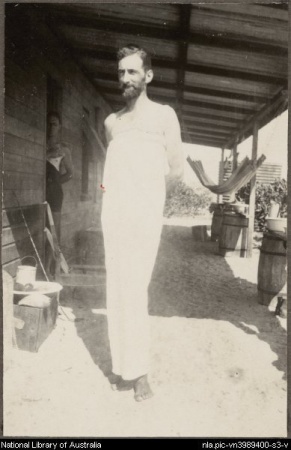
That would be Tandy’s role. He was part of a division known as NS VI, responsible for archiving foreign documents and helping the cryptographers deal with any technical jargon they might encounter, particularly in foreign languages.

tandy

[Image courtesy of the National Museum of Australia.]

So where did the typo idea come from?

Well, it’s entirely possible it came from Tandy. The cryptogram/cryptogam mistake is just the sort of joke that would appeal to linguists and other professorial types, so either another member of the Bletchley Park team or Tandy himself could have downplayed his credentials in tongue-in-cheek fashion with the story of an erroneous typo.

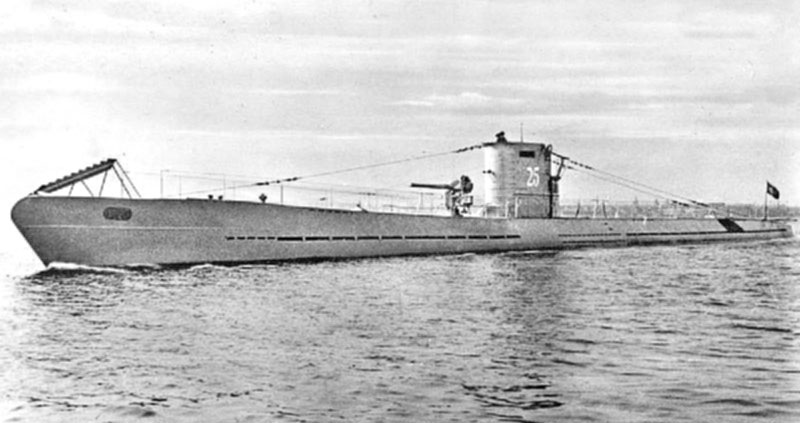
As for the other part of the story — where he saved the documents — there is some debate as to whether that happened. As the story goes, he used his knowledge of preserving documents to save a waterlogged set of cryptographic codes from a sunken U-boat.

[Image courtesy of Military Factory.]

The anecdote as reported usually cites the year 1941, whereas many books about Bletchley Park’s codebreaking efforts reference a U-boat from 1942, U-559, where documents AND a working Enigma machine were recovered.

I believe he DID participate in rescuing/preserving documents from a U-boat because it’s not some great heroic deed, it’s literally part of why he was hired in the first place. The crux of the anecdote is on the wordplay and the faux-fortuitousness of his employment, not on the actual events.

So, in the end, no, a typo didn’t help end World War II. But Geoffrey Tandy certainly did.


Thanks for visiting PuzzleNation Blog today! Be sure to sign up for our newsletter to stay up-to-date on everything PuzzleNation!

You can also share your pictures with us on Instagram, friend us on Facebook, check us out on TwitterPinterest, and Tumblr, and explore the always-expanding library of PuzzleNation apps and games on our website!

Farewell, Kazuhisa Hashimoto, Creator of the Konami Code

We talk about codes a lot in this blog. We’ve discussed codebreaking, hidden messages, encryption, spycraft, and password protection in the past. But we haven’t talked much about another kind of code, the sort that grants secret access to new abilities, powers, and other benefits.

In the video game world, these are commonly known as cheat codes. There are various famous ones from different eras of gaming, but one code stands head and shoulders above the rest: the Konami Code.

konamicode

[Image courtesy of Newegg.]

Up, Up, Down, Down, Left, Right, Left, Right, B, A, Start.

Ubiquitous in the 1980s and 1990s, the Konami Code was named for Konami, the video game publisher whose games utilized this code. It was first used in the Nintendo version of the arcade game Gradius in 1986, giving the player the full set of power-ups (rather than forcing the player to earn them throughout the game).

You see, the video game designer and producer working on converting the game, Kazuhisa Hashimoto, found the game too difficult to play during his testing phase. He then created a cheat code to make the game easier, allowing him to complete his testing. The code he chose became known as the Konami Code.

It’s most famously associated with the game Contra, a side-scrolling platformer that pitted Rambo-inspired heroes against an invading alien force. The game was famously difficult because one hit could kill you, and you only had three lives for the entire game. Entering the Konami Code granted the player 30 lives and a much greater chance of success.

(I, of course, could beat it without the Konami Code. But this article isn’t about me and my old-school video game wizardry.)

The code became part of video game pop culture, continuing to appear not only in Konami games, but all sorts of other games, up through the modern day. Often with different results.

In Teenage Mutant Ninja Turtles: Turtles in Time, you got extra lives. But if you used it in Tony Hawk’s Pro Skater 2, it would unlock a playable version of Spider-Man. If you use the code in Assassin’s Creed 3, a turkey will wear the character’s famous hood, weirdly enough.

The code has transcended gaming as well, not only becoming the name of a famous wrestler’s gaming-centric YouTube channel, but appearing everywhere from Family Guy and Wreck-It Ralph to Dance Dance Revolution and Rocket League.

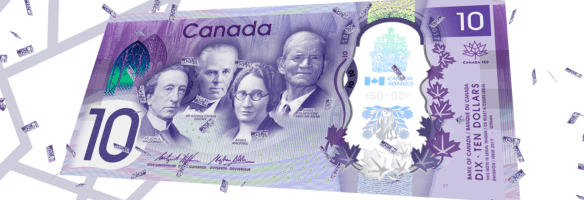
It even allows for a bit of festive fun on the website for Bank of Canada. On the page revealing the new $10 bank note, inputting the code hilariously activates a rain of money-confetti and plays the Canadian National Anthem.

konamicanada

Sadly, the reason that I’ve got the Konami Code on my mind today is that Kazuhisa Hashimoto passed away this week. The veteran game designer was 61 years old, and after being hired by the company in his twenties, spent nearly 30 years working for Konami, first on coin-operated games and later on console titles.

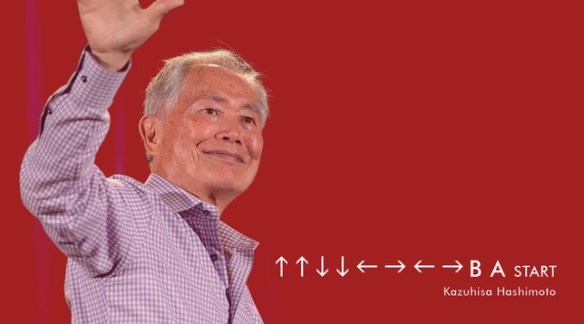
There’s not a huge amount of information readily available about Hashimoto or his life outside the world of video games. In fact, some articles about Hashimoto claim he was 79 years old at the time of his death. And the one photo I can find that’s attributed to him appears to be a picture of Star Trek actor George Takei instead.

konamitakei

We here at PuzzleNation mourn the loss of this influential designer and contributor to pop culture. May both his games and his famous code live on as fine, smile-inducing examples of his hard work and playful nature.


Thanks for visiting PuzzleNation Blog today! Be sure to sign up for our newsletter to stay up-to-date on everything PuzzleNation!

You can also share your pictures with us on Instagram, friend us on Facebook, check us out on TwitterPinterest, and Tumblr, and explore the always-expanding library of PuzzleNation apps and games on our website!

A Puzzle Design Competition Hosted by a Secretive Puzzly Society?

yoshi0

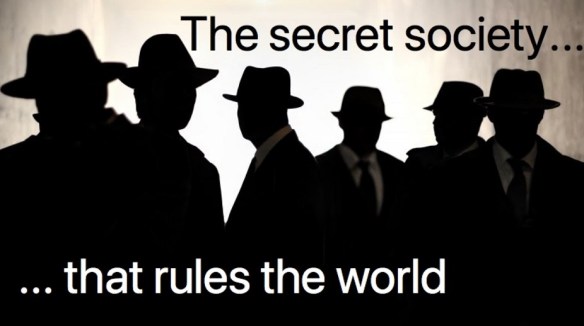
[Image courtesy of Activist Post.]

What if I told you that there’s a secret cabal of puzzle enthusiasts lurking in the shadows of the global puzzle community? A group that meets once a year in different locations, rotating between the United States, Europe, and Japan. An invite-only assortment of puzzle collectors and innovators who bring mechanical puzzles to challenge and delight their fellow attendees.

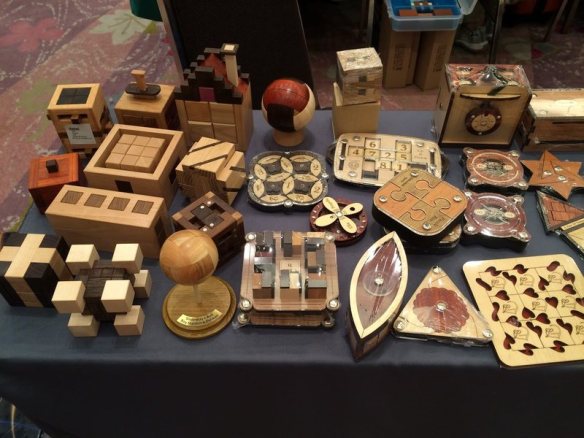
Yes, we’re talking about a clandestine event where puzzle collectors discuss, show off, and trade mechanical puzzles and brain teasers they’ve designed or crafted themselves.

yoshi2

[Image courtesy of Atlas Obscura.]

No commercially available puzzles can be brought as gifts, since you might duplicate a puzzle that’s already in someone’s collection.

But swapping and selling puzzles isn’t all that happens at one of these International Puzzle Party events. No, they’re also home to the Nob Yoshigahara Puzzle Design Competition, an annual award centered around mechanical puzzles. More specifically, the winners of the competition are announced at the IPP.

yoshi1

[One of Yoshigahara’s most famous puzzles. Image courtesy of Mr. Puzzle.]

Named after the prolific and innovative puzzle designer Nob Yoshigahara, the competition was founded in 2001, and named after Yoshigahara in 2005.

The entries for this year’s competition have until June 15th, 2020, to submit their puzzle for consideration. (This year’s competition was announced back in November of last year.)

Usually, only 5-7 puzzles out of all those submitted will be selected by one of that year’s judges for consideration. Each puzzle is graded on how innovative the concept is, how well the puzzle is physically designed (both aesthetically and mechanically), and how enjoyable the solving experience is.

[The 2017 competition winner, Kakoi.]

Anyone may submit his or her own mechanical puzzle design, independent of Puzzle Party affiliation.

There is a Puzzlers’ Award for the top design as well as Jury Prizes for other submissions (a grand prize, 1st prize, and honorable mention).

You can check out a listing of the 2018 competition submissions here to see the incredible variety and creativity represented in a single year’s pool of submissions. (Including links for purchase if any of them catch your eye!)

Personally, I’m a sucker for secret societies, invite-only activities, and so on, so I love the concept of a puzzle competition created for and judged by fellow puzzlers.

Oh, wait. Before I go. You may be asking yourself why all the secrecy? Well, apparently, there were several attempts by companies to infiltrate the event and bootleg puzzle ideas for market. It’s simultaneously insane and totally believable for spycraft like this to be taking place at a puzzle event.

In any case, I wish the best of luck to everyone submitting their puzzles to this year’s competition!


Thanks for visiting PuzzleNation Blog today! Be sure to sign up for our newsletter to stay up-to-date on everything PuzzleNation!

You can also share your pictures with us on Instagram, friend us on Facebook, check us out on TwitterPinterest, and Tumblr, and explore the always-expanding library of PuzzleNation apps and games on our website!

The Coronavirus Hits the Board Game Industry

coronavirus

[Image courtesy of NBC News.]

The coronavirus has dominated the news recently. Health organizations in numerous states and countries have posted informational guides on identifying the virus and the stock market has taken a hit due to an upswing in reported cases.

After a few weeks of reporting, we’re starting to get news stories about the global economic impact of the coronavirus, as boats loaded with shipping containers from China are being held up (if the warehouses and factories have been allowed to ship out products at all).

This has hit the board game industry particularly hard.

As you might expect, many board games are manufactured in China due to the competitive pricing available there, but the one-two punch of Chinese New Year and the coronavirus have left many game companies in the lurch with regard to product availability.

chinese-new-year-5

[Image courtesy of How Stuff Works.]

Chinese New Year is a period of tremendous turnover for staffing in factories in China, so production is often shutdown entirely or severely curtailed during the holiday. As new employees are hired, their training time also eats into production time.

Additionally, the Chinese government mandated that all “non-essential” companies stay closed until February 9th, and board game production is naturally considered non-essential. The ports are similarly either closed or dramatically reduced in staff.

Oh, and for many companies, that directive has been extended until March 2nd at the earliest. (Some publishers have speculated that delays of three months could be looming.)

So even in the areas where employees and manufacturers are thankfully healthy, they can’t work. I’ve gotten updates from a half-dozen different board game Kickstarter projects regarding coronavirus-related delays. Whether they’re trying to start production or they’ve got all their games printed, but trapped in warehouses waiting for shipment, they’re in limbo during this crisis.

containership

[Image courtesy of AGU.]

Our hearts go out to those affected by the virus. Here’s hoping the hard-working folks in those factories stay healthy, and can return to work soon.

But if you’re wondering why your Kickstarter goodies haven’t been delivered yet, or why your favorite game’s latest expansion isn’t on shelves yet, here’s why.


Thanks for visiting PuzzleNation Blog today! Be sure to sign up for our newsletter to stay up-to-date on everything PuzzleNation!

You can also share your pictures with us on Instagram, friend us on Facebook, check us out on TwitterPinterest, and Tumblr, and explore the always-expanding library of PuzzleNation apps and games on our website!

Puzzles in Pop Culture: DiscWorld

discworld1

[Image courtesy of Blizzard Watch.]

There are many strange worlds in the realms of fantasy literature, crafted in loving detail across dozens of novels and stories. But no fictional world is as hilarious, as thought-provoking, as sincere, as strange, or as endlessly inventive as the DiscWorld.

DiscWorld is a pizza-shaped planet that rests on the backs of four giant elephants that themselves stand atop the shell of a giant turtle that swims through space. The masterful creation of author Terry Pratchett, DiscWorld is a beloved universe of stories that encapsulates social commentary, parody, and epic adventure, all told through the lens of classic fantasy tropes turned on their heads.

And when you have a world that encompasses everything from witches and golems to time travel and Death himself, you’re bound to encounter a puzzle or two.

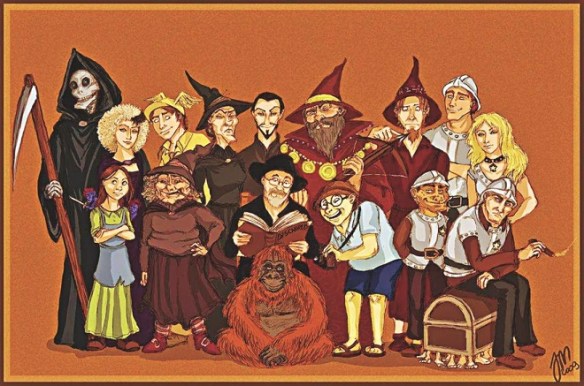
In today’s edition of Puzzles in Pop Culture, we’re looking at the colorful ways that Terry Pratchett incorporated puzzles into one of the most singular, expansive worlds in fantasy literature.
discworld2

[Image courtesy of The Daily Star.]

There are numerous capable puzzle solvers in the DiscWorld novels. Across several novels, Commander Vimes of the City Watch cracks both criminal cases and elaborate conspiracies thanks to his street smarts and years of detective work. Career criminal-turned-postmaster Moist Von Lipwig unravels several criminal conspiracies on his journey from miscreant to hero. Even Death, alongside his granddaughter Susan, takes a turn testing his puzzly might over the holidays when they uncover why the Hogfather (DiscWorld‘s version of Santa Claus) has gone missing.

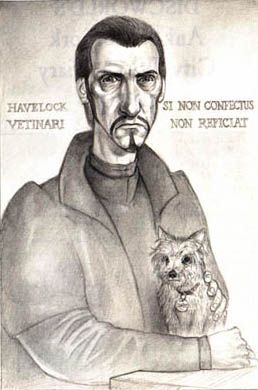
But you cannot talk about capable puzzlers in DiscWorld without mentioning Lord Havelock Vetinari, the Patrician of the fabled city of Ankh-Morpork.

A trained assassin and mastermind who pulls puppet strings all over the city, Vetinari is both hero and villain, doing whatever he deems necessary to keep the city running smoothly.

As you might expect, he’s quite a fan of puzzles. (He plays games as well, like Thud and Stealth Chess, but we’re going to focus on puzzles today.)
discworld3

[Image courtesy of VS Battles Wiki.]

He’s something of a whiz when it comes to decoding and decrypting messages. At the Blind Letter Office in the Post Office — where letters unable to be delivered end up — Vetinari sometimes tests his wits by unraveling the near-gibberish found on some of the letters.

For example, Vetinari encountered a letter addressed to “Duzbuns Hopsit pfarmarrsc” and offhandedly explained that the letter was intended for “K. Whistler, Baker, 3 Pigsty Hill.” How, you ask? By decoding the above into the much-more coherent “Does Buns Opposite the Pharmacy.”

Although the regular employees of the Blind Letter Office manage to translate five out of every six addresses that cross their desks, they view Lord Vetinari’s puzzly skill with awe.
cryptic3

[Image courtesy of Amazon. The Times Cryptic Crossword Book.]

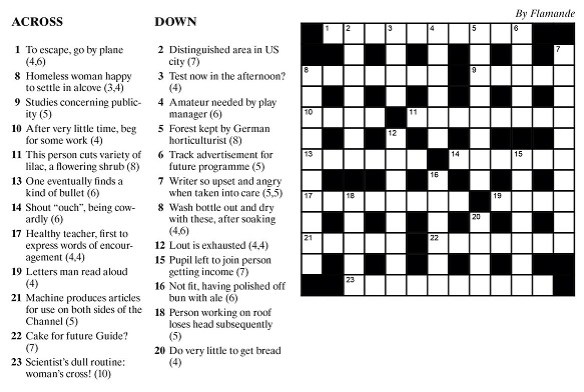
When it comes to British-style/cryptic crosswords, he brings equal skill to the table. In fact, the only discernible sign that Lord Vetinari is drunk is when it takes him 15 seconds longer than normal to solve The Ankh-Morpork Times‘ daily crossword puzzle.

He is routinely challenged by “Puzzler,” the setter for The Ankh-Morpork Times. Naturally, his begrudging respect for the skilled constructor leads him to pursue the secret identity of Puzzler.

In a later DiscWorld novel, Vetinari believes that fellow trivia enthusiast and pet-food shop owner Grace Speaker could be Puzzler. He puts her under observation when it’s revealed she is one of five people in the city who correctly answers the trivia question “What is, or are, Pysdxes?”

(For the record, the other four are Vetinari himself, his assistant Drumknott, Puzzler, and the Curator of Ephebian Antiquities at the Royal Art Museum.)

Later confirming her secret life as Puzzler, Vetinari continues to welcome her challenging puzzles, even if entries like “snarkenfaugister” leave him exasperated at her fiendish and obscure vocabulary choices. (Apparently crosswordese is a thing on DiscWorld as well…)
discworld4

[Image courtesy of Amazon.]

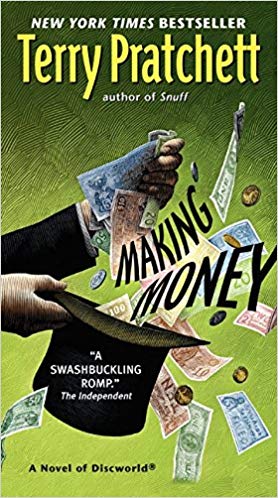
In the novel Making Money, a cryptic crossword clue is presented for the reader to solve as well: Shaken players shift the load (9)

Later in the novel, the answer is revealed. Did you figure it out?

The answer is CARTHORSE. The word “shaken” implies that some letter-mixing is involved, and if you shake up ORCHESTRA (the “players” from the clue), you get CARTHORSE, a device which allows you to “shift the load.”

Naturally, this clue was no match for Vetinari.

[Screenshot from the Penny Dell Sudoku App!]

It’s worth noting that Sudoku has also made its way into DiscWorld, though in a tongue-in-cheek dismissive fashion. In DiscWorld, it is called Jikan no Muda, which is Japanese for “waste of time.” Lord Vetinari considers Jikan no Muda puzzles far easier than the crossword, and therefore less worthy of his attention.

As you’d expect from a master manipulator like the Patrician, he enjoys crosswords more because they allow him to comprehend how another person’s mind works when actively trying to mislead.

In the capable hands of a world-class storyteller, little puzzly details like this don’t simply add color to an established character; they can set the tone for the adventures to come.

In Making Money, for instance, mentioning both crosswords and Jikan no Muda is no coincidence. The entire novel is built around the battle between those who prefer to deal in words (Vimes, Vetinari, Moist) and those who prefer numbers (Mr. Bent, who runs the Royal Bank of Ankh-Morpork).

One of my all-time favorite series even before I compiled these puzzly moments, the DiscWorld books make the most of every story element involved, whether it’s witchcraft, magic, misunderstandings, fiendish plots, or simply one city official’s penchant for puzzles.


Thanks for visiting PuzzleNation Blog today! Be sure to sign up for our newsletter to stay up-to-date on everything PuzzleNation!

You can also share your pictures with us on Instagram, friend us on Facebook, check us out on TwitterPinterest, and Tumblr, and explore the always-expanding library of PuzzleNation apps and games on our website!