[Note: I received a free copy of this game in exchange for a fair, unbiased review.]
There’s something immensely satisfying about building a contraption and then setting it into motion. Marble runs, Rube Goldberg devices, clockwork toys, chain reactions… they all involve a meticulous step-by-step creation process that builds anticipation as you go.
And then finally, you get to pull the string, throw the lever, drop the marble… and enjoy the clicky-clacky fruits of your labor.
But I don’t think I’ve ever encountered a game that makes it both as challenging AND as effortless as Gravitrax does.
Allow me to explain.
Gravitrax takes the traditional marble run formula — gravity x (tracks + ramps) = good times — and improves it in every way.
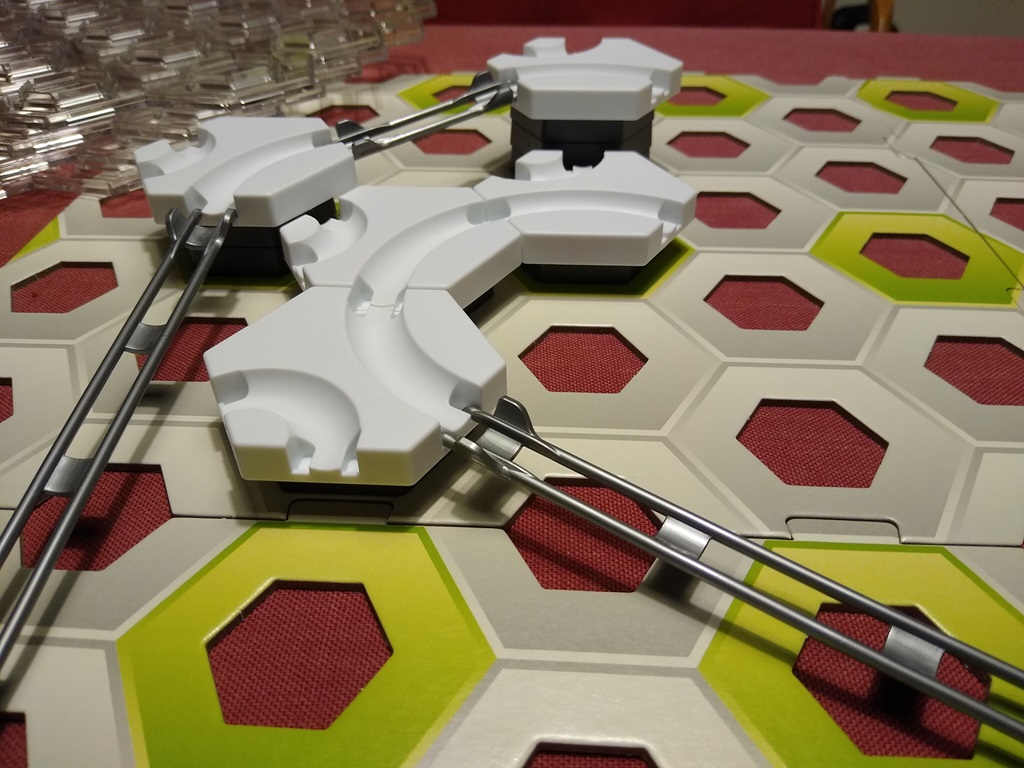
The hexagon matting provides a stable base that not only makes it easy to follow the instructions included for all sorts of designs, but makes the entire design perfectly steady. Every piece fits snugly into the hexagons, so there’s none of the wobbly uncertainty that can ruin a flawless marble run.
Factor in ALL of the pieces provided in the Starter-Set XXL — columns of two different thickness to raise pieces, plates to create entire new levels to build speed, curves and connectors galore, plus specialty pieces to add new tricks and challenges — and you have an amazing launchpad for creating your kinetic designs.
So much thought has been put into all of the pieces included. There’s a triple launcher so you can race multiple marbles along different paths OR set up different chain reactions all at once to dazzle the eye.
There’s even a magnetic accelerator that can launch a ball uphill to add further distance to your track!
The instruction books are another standout part of the package. Like a LEGO manual, they’re completely wordless, and yet, everything is crystal clear. The first book introduces all the pieces and how to use them, while the second (much thicker!) handbook offers all sorts of designs to try out, starting from simple to complicated and challenging ones. There are six difficulty ratings in all.
And the instructions lend themselves to puzzly minds. They show you the finished product first, so if you want to try to puzzle out how to build it yourself, you’re welcome to. If not, just keep reading, and you can follow the step-by-step instructions, complete with piece listings so you know exactly what you need for each step.
I’ve been a sucker for kinetic puzzles and games like this my whole life, and I can only imagine the crazy contraptions and high-speed runs younger me would have spent hours testing and assembling with a kit like this.
So when I say it’s both effortless and challenging, I mean it. This incredibly well-designed set can be picked up by a child immediately, and yet, there’s enough adaptability and opportunity here for new designs, more innovative builds, and limit-pushing attempts at speed and complexity.
I mean, it’s nearly 2 AM as I write this, because I spent two hours trying out a new idea I had instead of writing this review.
One of the best things about Halloween is guessing what people’s costumes are. Clever costumes can be great fun, and I’m a huge fan of costumes that combine humor and design because they really let your creativity shine through.
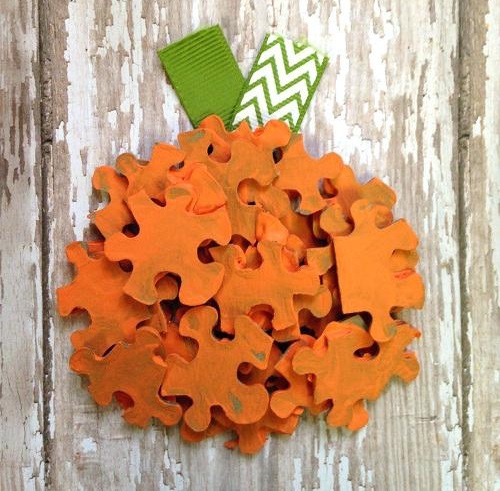
Mashup costumes offer ample opportunity to show off (and often require some fun wordplay to figure out), so it’s only appropriate that we celebrate Halloween in the puzzliest way possible — by looking at some punny mashup costumes!
I’ve compiled ten costumes for you to figure out. Let’s see how many you can get!
How many did you get? Have you seen any great mashup costumes I missed? Let me know in the comments section below. I’d love to hear from you. And Happy Halloween!
[Note: I received a free copy of this game in exchange for a fair, unbiased review.]
Most memory games are pretty simple, falling into one of two categories: you either observe a pattern and repeat it, or you look at multiple items and remember where they are when hidden/concealed.
Memory games that include a social mechanic are rarer, and memory games with a social mechanic AND bluffing are rarer still.
Imagine a white elephant or Yankee swap gift exchange, except in reverse. You know what all the gifts are to start, but then they are wrapped one by one and traded around, and you need to remember what’s inside each one.
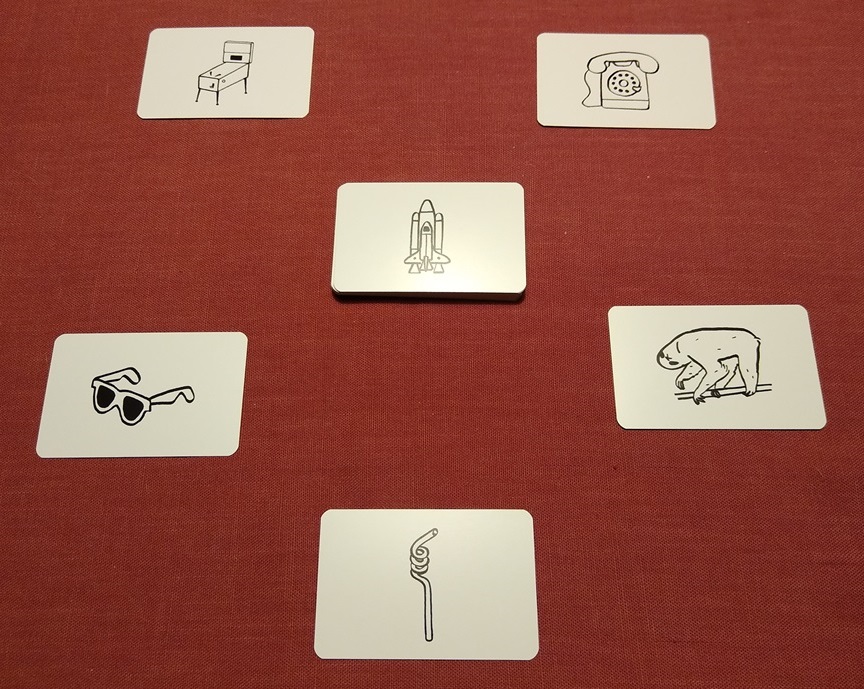
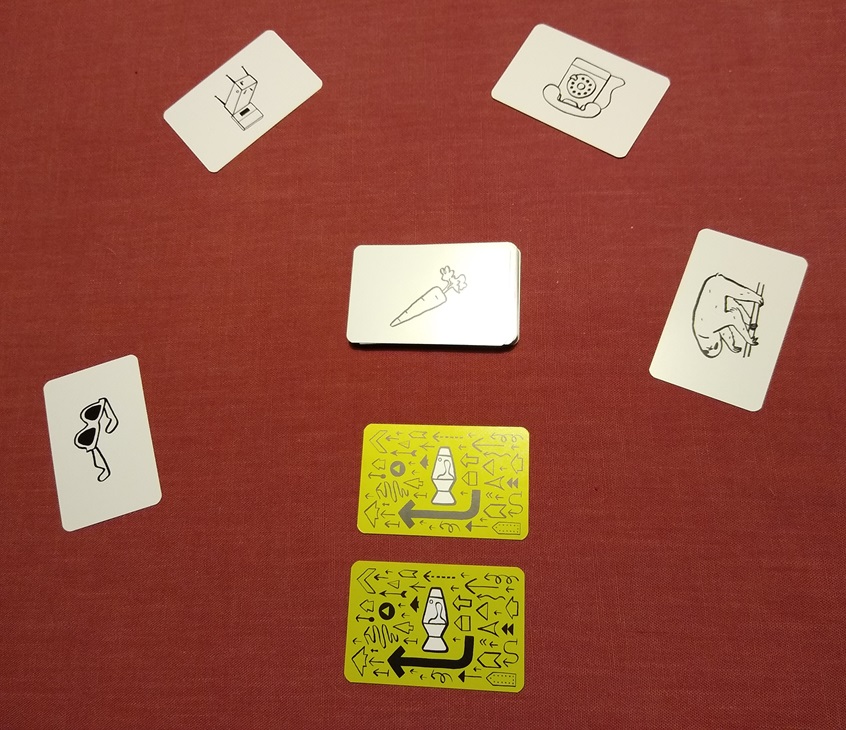
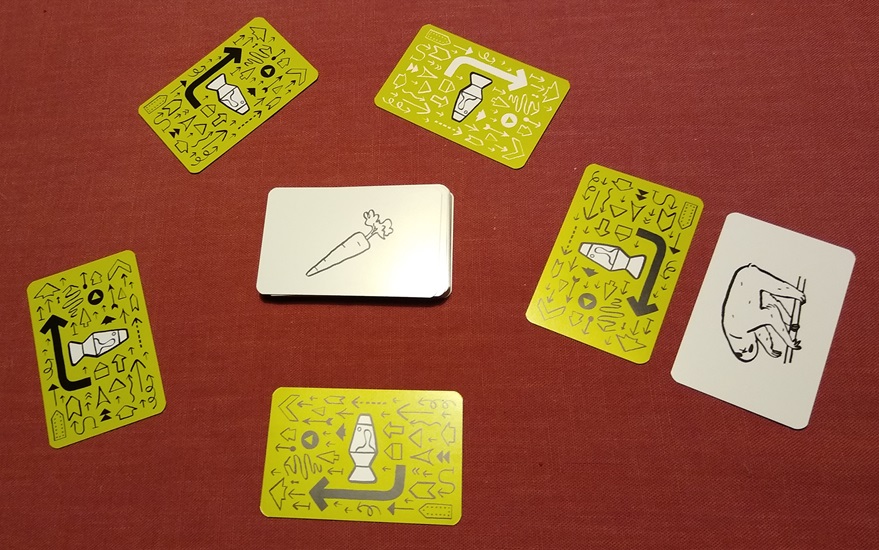
As you can see, everyone starts with a gift. The first player pulls a new gift from the stack in the center of the table, shows it to everyone, then places it facedown.
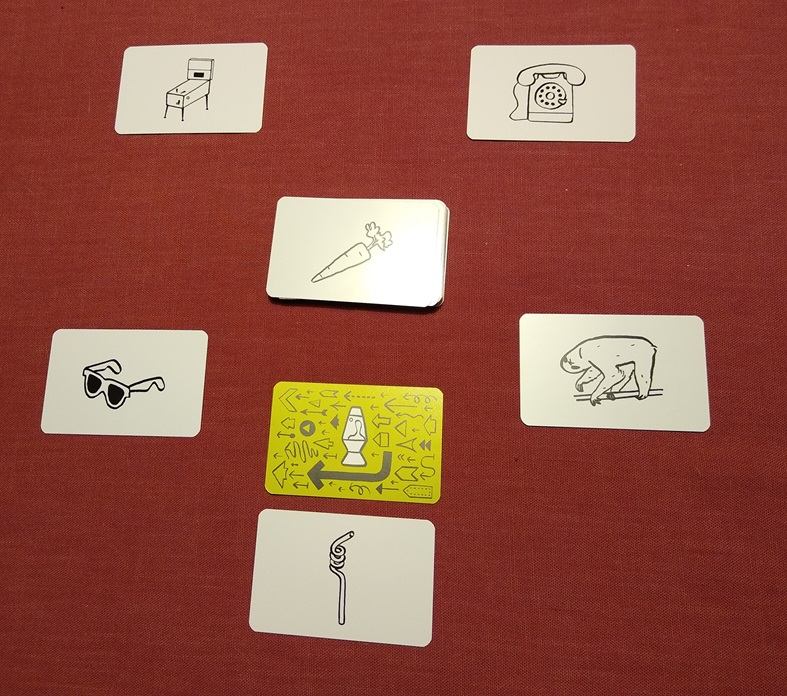
They then hand that gift to the player indicated by the arrow on the back of the card.
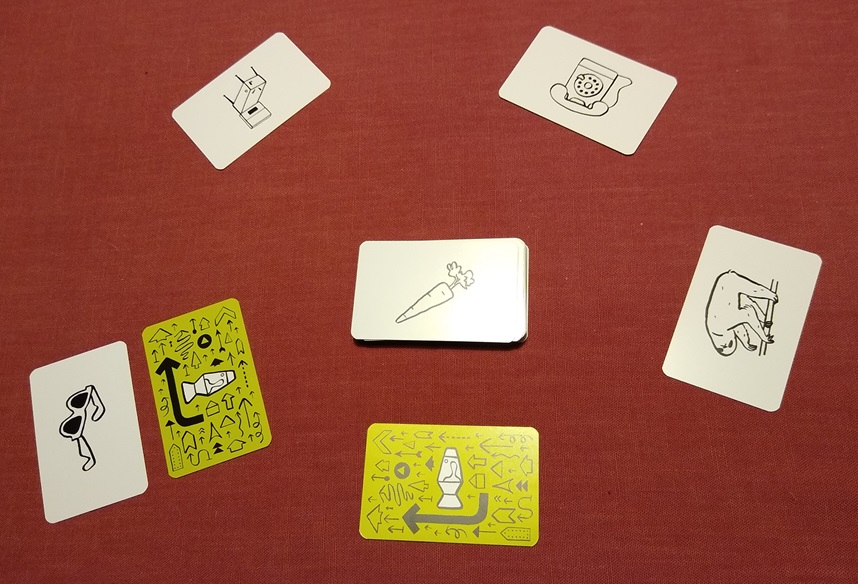
So the player to the right with the sloth card received the space shuttle, flipped it over, and handed it to the swizzle stick player to their left, saying “I have a nice space shuttle for you.”
The player receiving the gift has two options: accept the gift (meaning that they know it’s a space shuttle underneath and agree with the gift giver) or refuse the gift (meaning that they suspect the item underneath is NOT what the gift giver said).
In this case, the game has just started, so our swizzle stick player accepts the gift.
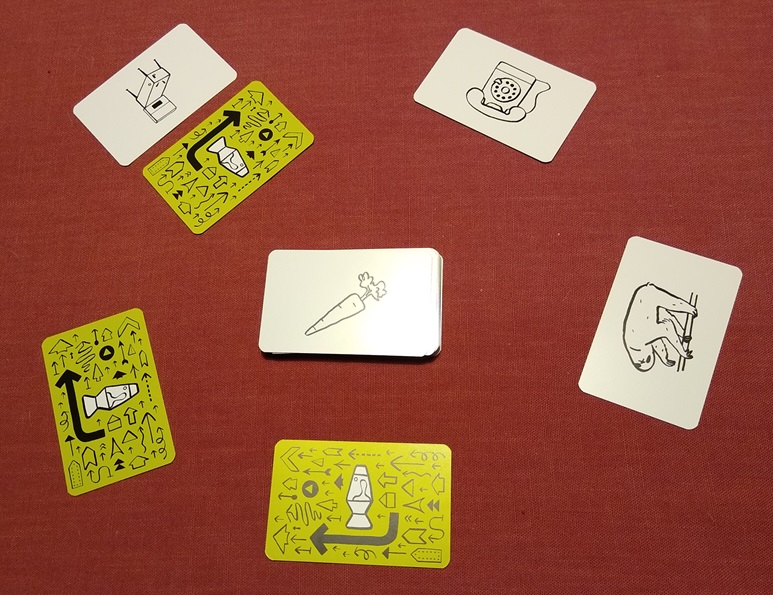
It would be rude to immediately regift what they were just given, so the swizzle stick player turns over their “old gift” and follows the arrow, saying “I have a nice swizzle stick for you” and giving that card to the player to the left (the sunglasses player).
The sunglasses player accepts, turns over their old gift, says their line, and follows the arrow.
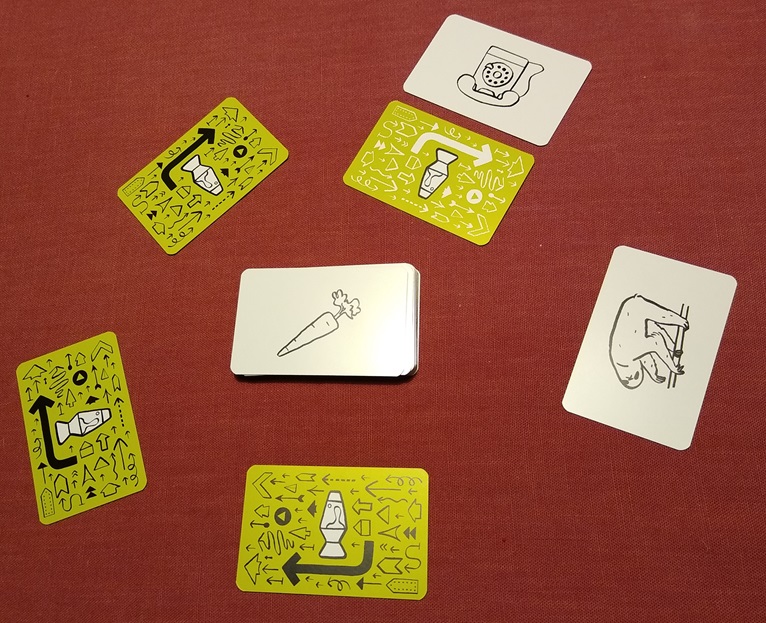
In this simplified version, the arrows only go in one direction, whereas in the regular game, arrows can go left or right (or, in the advanced play style, to any player, depending on the arrows).
Now, as the cards continue moving around from player to player, can you remember what was under all those cards? You’re gonna have to, because it gets harder and harder to remember what each card represents.
Eventually, someone is going to forget, and their “I have a nice __ for you” is going to be met with a refusal. If the refusing player is correct and the gift giver has forgotten what’s under the card, the gift giver takes that card and gets a point. If the refusing player is incorrect and the gift giver correctly remembered what’s under the card, then the refusing player takes the card and gets a point.
The game then resumes with a new present and all the previous cards STILL flipped over. The game ends when one player gets three points.
This combination of memory, interaction, and bluffing (if you forget what’s under your card) makes for a very fun, very mellow play experience, one that only grows tougher and more entertaining the more you play.
On the second game, I had so many images in my head from previous rounds that I immediately forgot what was under my card and earned a point.
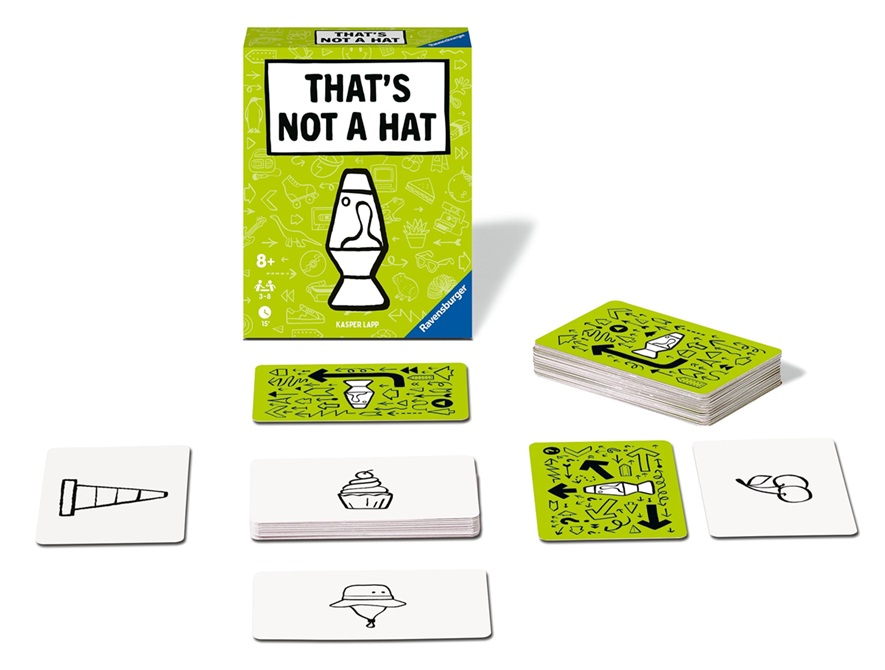
With up to eight players at the table, 110 cards to choose from, plus mechanics to make the game easier or harder for the players, That’s Not a Hat is instantly replayable and never feels tired.
Now, you may start to worry about your memory before too long. It’s okay, though, because you’ll quickly be distracted by the laughter (and bad bluffs) to come.
[That’s Not a Hat is for 2 to 8 players, ages 8 and up, and it’s available from Ravensburger and participating websites (in two editions) starting at only $9.99!]
Five years ago, I wrote my first (and until then, only) post about horror movies in this blog. It was part of a series of posts about the best puzzle solvers across various genres, media properties, and franchises. And I really liked that post.
However, at the time, I felt like I had to avoid certain film franchises and subjects to keep the post as family friendly as possible.
But PuzzCulture is a different animal from its predecessor, so let’s push the boundaries a little bit and make the most comprehensive and accurate list possible, shall we? Let’s honor Halloween right by celebrating the sharpest and most cunning characters to ever elude those relentless meat grinders known as horror films and horror video games.
These are the characters you want on your side, because they’re clever, decisive, and immensely capable. After all, most horror movies and games are populated with idiots who are destined to perish before the film’s conclusion.
So instead, these are the characters who break the mold.
When you’re confronted with a monster who hunts people through their dreams, you have to be pretty clever to survive. After all, you have to sleep at some point. When it comes to the Elm Street franchise, they don’t come more clever than young Nancy Thompson.
Nancy discovers she has the ability to pull things from the dreamworld into the real world, and plans to use this ability to stop Freddy Krueger once and for all. She not only sets an alarm to ensure she wakes up before falling victim to Freddy in the dreamworld, but sets numerous booby traps in her house to ensnare and hurt Freddy.
Nancy is a top-notch puzzler for not only figuring out how to use her incredible ability to her advantage, but devising a plan (and a backup plan!) to save herself.
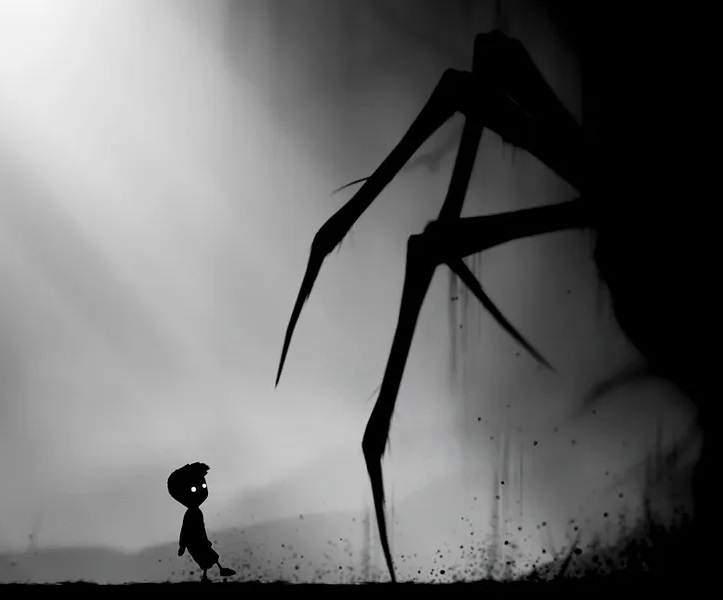
One of my all-time favorite video games, Limbo is a moody, atmospheric puzzle horror game where our silent protagonist ventures through dangerous mechanical traps and shadowy creatures in search of his missing sister.
Easily one of the most clever puzzle platform games of the last twenty years, Limbo allows players to climb, push and pull objects, and manipulate the environment to allow the boy to continue his search. Trial and error is the name of the game here, but it takes some serious puzzle-solving skills to survive to the end.
The Lament Configuration is a Rubik’s Cube-like puzzle box that opens a portal to another dimension, where monstrous beings called Cenobites promise untold delights in exchange for your soul. Unfortunately, Kirsty is a clever enough puzzler to solve the Lament Configuration and open the portal.
Thankfully, Kirsty is also clever enough to outmaneuver the Cenobites, buying herself time by realizing someone has escaped their clutches and working to save herself by finding the fugitive.
So Kirsty not only figures out the rules of monsters from another dimension and how to use them, but solves a difficult puzzle box (first opening it, then solving it in reverse to close it) in order to save herself. A pretty sharp cookie, to be sure.
A young FBI trainee who finds herself tangling with two serial killers — one on the loose, another in custody — Clarice Starling has to not only save a young woman kidnapped by Buffalo Bill, but do so while unraveling the word games and riddles of the devious and brilliant Dr. Hannibal Lecter.
Clarice is perhaps the most overtly puzzly of our heroes, solving anagrams and figuring out the double meaning behind many of Dr. Lecter’s riddles and clues in order to get closer to stopping Buffalo Bill. Along the way, she uncovers information missed by more seasoned investigators, even managing to survive an attack by Buffalo Bill (in the dark!) and saving the kidnapped girl in the process.
If you’re ever in danger, hope that Clarice Starling is on the trail.
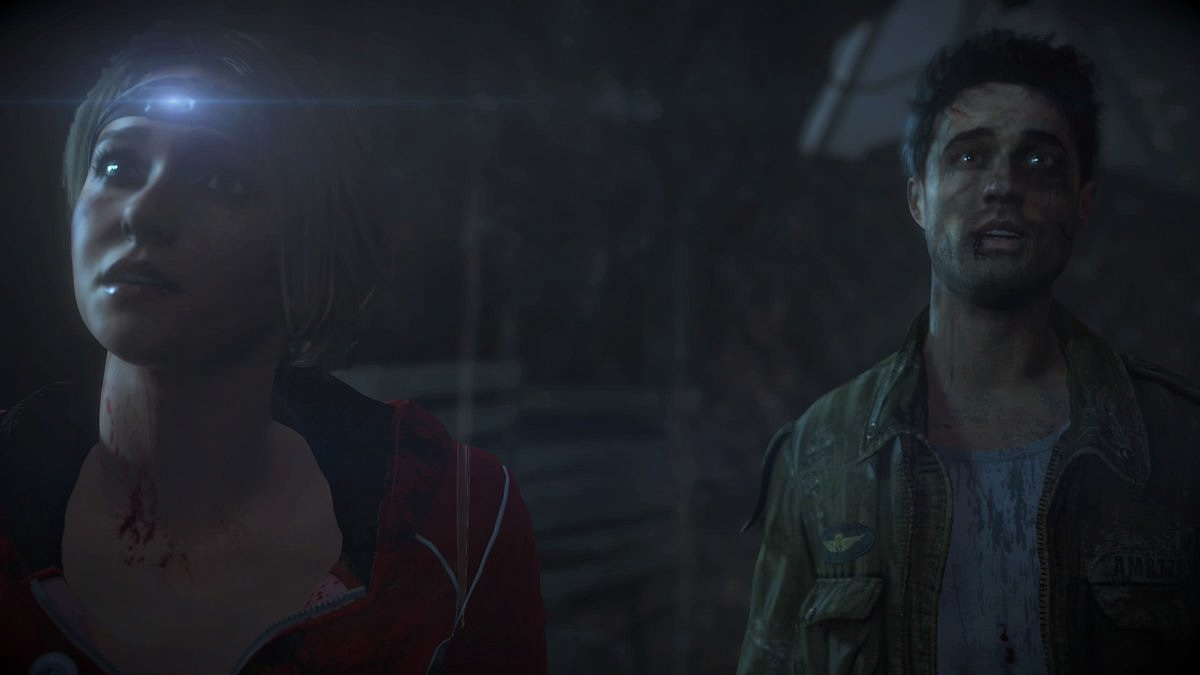
Mike and Sam, Until Dawn
In the interactive horror game Until Dawn, a group of high school pals return to a cabin on a snowy mountain to honor the disappearance of two friends a year earlier. Unfortunately, more tragedy awaits them as a maniac stalks the mountain and evil lurks behind every choice the players make.
Several characters get heroic moments in the game, but nobody more so than Sam and Mike, who manage to wordlessly communicate a plan to stop the dark forces hunting them. (A plan that iron-willed players can help execute, saving Mike and Sam and any other characters that managed to make it to dawn.)
In a game where both characters and players can make clever or clumsy decisions, Sam and Mike definitely stand head and shoulders above the rest.
Imagine that you’re being hunted by a monster that lurks in the dark. It seems like an obvious solution to simply stay in the light, but when that monster is both intelligent and cunning, that’s a taller order than you think. Bret, along with his girlfriend Rebecca and Rebecca’s family, are being pursued by Diana, a creature who can only appear when it’s dark.
When Diana cuts power to the entire neighborhood, everyone must scramble for safety. Thankfully, the resourceful Bret is on their side, and he thwarts Diana’s attacks several times. When she knocks the flashlight from his hands and charges him, he banishes her momentarily with the brightness of his smartphone screen. As he runs for a car outside, she ambushes him from a shadow, but he escapes again by using the key fob in his pocket to activate the car’s headlights.
Effective puzzlers always make the most of the tools at their disposal, and Bret is a most effective puzzler.
We meet many criminal investigators in the Saw franchise, but arguably none are more capable than Agent Peter Strahm. Strahm not only deduces important information about Jigsaw’s apprentice in Saw IV, but he actually outwits one of the apprentice’s traps in Saw V!
Using the same pen he would nervously click to relieve stress, Strahm manages to outlast the Water Trap, where his head was trapped in a cube that quickly filled with water. (I won’t go into detail, but anyone who has watched House, M*A*S*H, or Nobody can probably figure out how.)
Although Strahm doesn’t get to walk off into the sunset (very few do in Saw movies), he proved far more capable than many who chose to tangle with Jigsaw and his apprentices.
Sometimes, a good puzzler is plunked down in an unfamiliar situation and has to make sense of it all. (This is the premise of many an escape room or a video game, as well as the truth regarding many coded puzzles or puzzles with symbols.) The situation in Cube is like that times a thousand.
Leaven is one of six people trapped in a maze of interconnected cubical rooms, many of them booby-trapped in various ways. As a young mathematics student, Leaven is immediately intrigued by the numbers inscribed in the small passages that connect the various rooms. The group soon realizes that the rooms are shifting periodically, making the maze harder to solve.
After several theories don’t pan out, Leaven manages to unravel the pattern of the trapped rooms — realizing those rooms are related to prime numbers (specifically powers of prime numbers) — and navigates the group through the ever-shifting maze toward an exit.
The stakes may not always be as high as they were for Leaven, but she never gave up and always approached the puzzle from a fresh angle when thwarted. That’s a sign of a true puzzler.
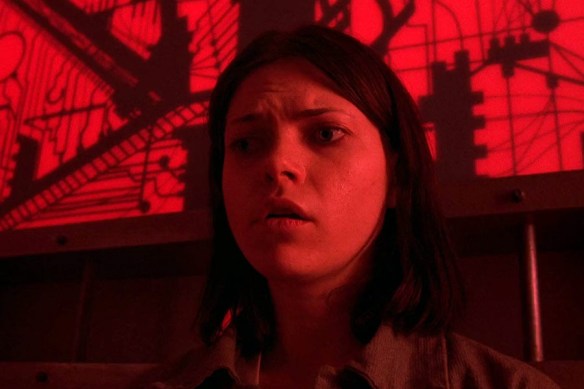
After being run off the road in an accident, Michelle wakes up in a well-stocked underground bunker. She’s been taken there by Howard, the bunker’s owner, who tells her the surface is uninhabitable and the air outside is poisoned. Michelle quickly realizes that Howard is unstable, but must bide her time before attempting to escape.
Michelle is another remarkably resourceful individual, mapping out the ventilation system in the bunker (while doing repairs), fashioning a hazmat suit out of found items, and outwitting Howard long enough to escape. (Once free, she even manages to whip up a Molotov cocktail and dispatch an unexpected threat.)
Some of the most devious puzzles are the ones where you have to figure out how to use what’s in front of you in creative ways to complete a task. Michelle has this skill in spades.
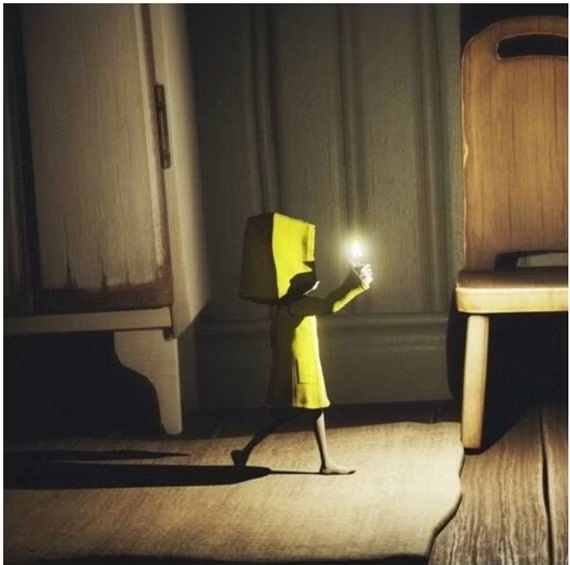
A hungry nine-year-old girl in a yellow raincoat, Six is the protagonist of Little Nightmares, a brilliant puzzle-platformer where the player must outmaneuver hulking monstrosities and sneak their sneakiest sneaky selves through treacherous scenarios.
Six is patient, resourceful, and pragmatic, carefully choosing when to be stealthy and when to be bold, as both are required to survive the game.
Through pattern identification, enemy observation, and learning from your mistakes, you and Six navigate the oversized horrors of the game. (While the puzzles in Limbo often require the player to die more than once before figuring out the correct path forward, Little Nightmares allows players chances to figure out the puzzle ahead of time, making for a different, but equally satisfying, solving experience.)
Erin joins her boyfriend at a family gathering, only for things to turn sour as masked invaders target the party’s guests. But they get more than they bargained for, as Erin quickly reveals herself as one of the most capable horror movie protagonists in the history of the genre.
Erin gathers information, sets traps, outwits the bad guys at seemingly every turn, and generally dazzles with her intelligence, tactical skill, and resourcefulness.
You know that puzzle where you have to connect all the dots in the square with only three lines, but to do so, you have to draw outside the square? That puzzle wouldn’t fool Erin for an instant. She is constantly thinking outside the box — and the house — in order to accomplish the most with the fewest moves.
Horror movies haven’t seen a puzzler like Erin before, and I almost feel bad for any bad guys who get in her way.
Did I miss any world-class puzzlers from horror movies? Let me know in the comments section below! I’d love to hear from you!
[Note: I received a free copy of this game in exchange for a fair, unbiased review.]
If you’re not currently in school, you probably haven’t thought about Order of Operations in a while. Maybe six little letters will bring it all back to you: PEMDAS. Parentheses, Exponents, Multiplication, Division, Addition, Subtraction. (I learned to remember it as “Please excuse my dear Aunt Sally.)
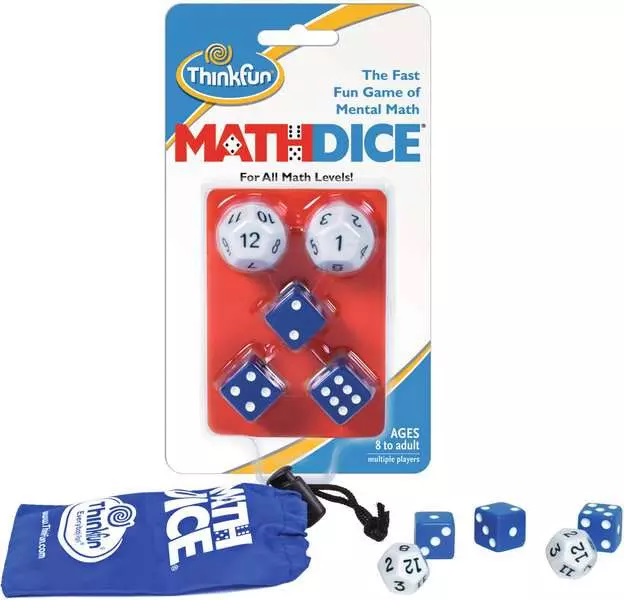
This was a handy mnemonic device to explain how to break down complex equations into simpler ones. But it’s also the basis for ThinkFun’s latest puzzly game: Math Dice.
Math Dice challenges players to put their mathematical skills to the test, using randomly rolled dice and their own numerical ingenuity to get the closest to a given number.
But before we get started with the actual gameplay, I want to take a moment to appreciate how the instruction manual eases new players (and players with less confidence in their math skills) into the game.
After explaining the rules, and offering several techniques to make the game easier or harder, depending on player comfort levels, the manual offers numerous examples to make new players more familiar with all the options available to them.
It’s a terrific way to allay player uncertainty and show them some of the creative ways to mix different operations to make different totals.
Now let’s take a look at the gameplay:
For example, the two 12-sided dice rolled a 12 and a 1. When multiplied, you get your target number of 12. Now the players must try to either match 12 or get closer to 12 than any other player, using the 2, 3, and 6 rolled on the 6-sided dice.
Simple addition will get you to 11. (3 x 2) + 6 will get you to 12. (6 – 2) x 3 will also get you to 12. Can you find any other ways to make 12 from those dice?
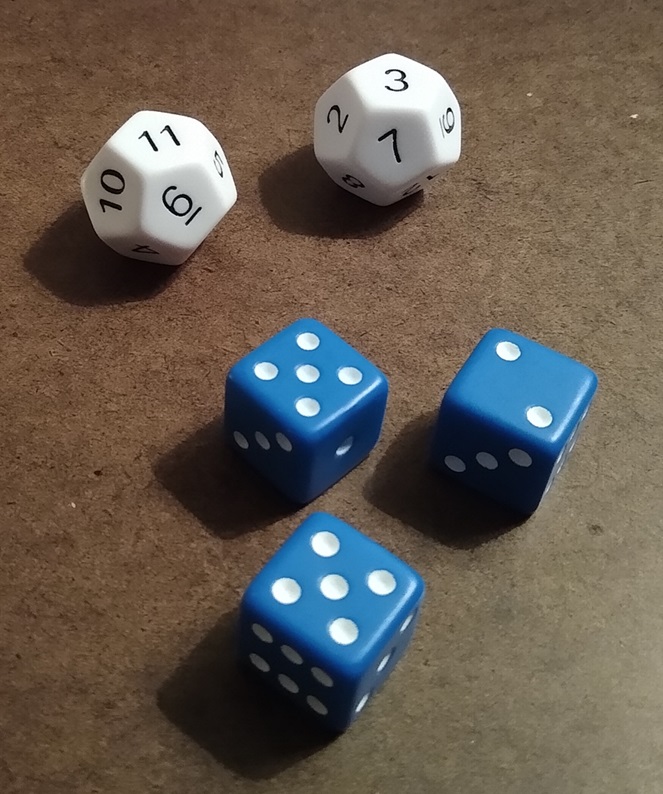
This one is a little tougher. The two 12-sided dice rolled an 11 and a 3, giving us a target number of 33. We also have less flexibility with the 6-sided dice, since we have a 2 and two 5s.
(5 x 5) + 2 will get you to 27. Pretty good! 5^2 + 5 will get you to 30. 2^5 + 5 will get you to 37.
In this case, player who got 30 wins a point!
As someone who is always idly playing with words and numbers during mental downtime or between tasks, this game really appeals to the playful side of my puzzly brain. The challenge of making two sets of numbers balance is both challenging and soothing in the best way, like the purely mental equivalent of a fidget toy or other tool to keep your hands and mind engaged.
But this is also a clever launchpad to introduce younger puzzlers to the idea that numbers aren’t just classwork or homework, they’re something to play with. They’re puzzle pieces to rearrange and put together in all sorts of ways to create new results.
ThinkFun excels at turning learning experiences into engaging puzzles and games. Over the years, they’ve done so with logic problems, optics, programming, gravity, deduction, mechanical puzzles, and more, so it’s no surprise they’ve managed to do the same quite deftly with the basics of mathematics.
[Math Dice is for 2 or more players, ages 8 to Adult, and it’s available from ThinkFun and participating websites starting at only $6.99!]























 PuzzCulture