A Boggle Grid Big Enough For Every Word?

Puzzly minds are often analytical minds, so I’m no stranger to wild attempts at puzzle-inspired calculation.

Puzzle people have previously calculated the human limit for solving a Rubik’s Cube, as well as the fastest known mechanical solve of a Rubik’s Cube. Years ago, I myself tried to figure out how many years it would take to use every unique Sudoku grid possible.

But optimization is something altogether different, and it’s a intriguing way to look at the potential of puzzles.

A Redditor by the name of AntiqueRevolution5 posed the following question a few days ago, and it absolutely fits the bill of both puzzly calculation and optimization:

What would a Boggle grid look like that contained every word in the English language?

Well, there are somewhere between 1 million and 1.5 million words in the English language, so I imagine it would be pretty big.

The redditor is an artist, and their goal is to make a sculpture composed of Boggle dice. And their concept is fascinating:

The idea for the piece is that it’s a linguistic Rorschach that conveys someone could find whatever they want in it. But it would be even cooler if it literally contained any word someone might reasonable want to say or write.
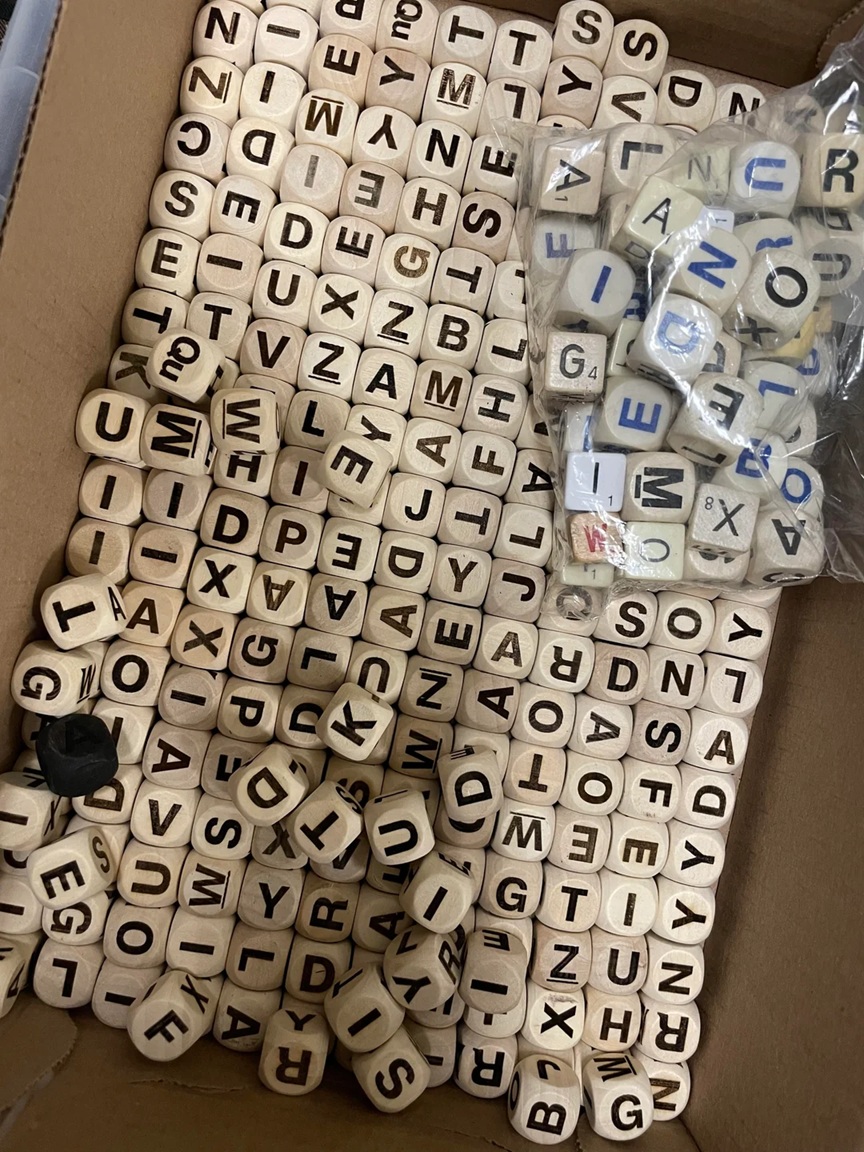
So, where do you start with something like this? Our artist has a suggestion:

To simplify, we could scope it to the 3000 most important words according to Oxford. True to the nature of Boggle, a cluster of letters could contain multiple words. For instance, a 2 x 2 grid of letter dice T-R-A-E could spell the words EAT, ATE, TEA, RATE, TEAR, ART, EAR, ARE, RAT, TAR, ERA. Depending on the location, adding an H would expand this to HEART, EARTH, HATE, HEAT, and THE...

What would be the process for figuring out the smallest configuration of Boggle dice that would let you spell those 3k words linked above? What if the grid doesn’t have to be a square but could be a rectangle of any size?


Naturally, creative minds accepted the challenge.

One user claimed that an online Boggle website called Squaredle has two 10×10 boards with just under 900 words of 4 or more letters.

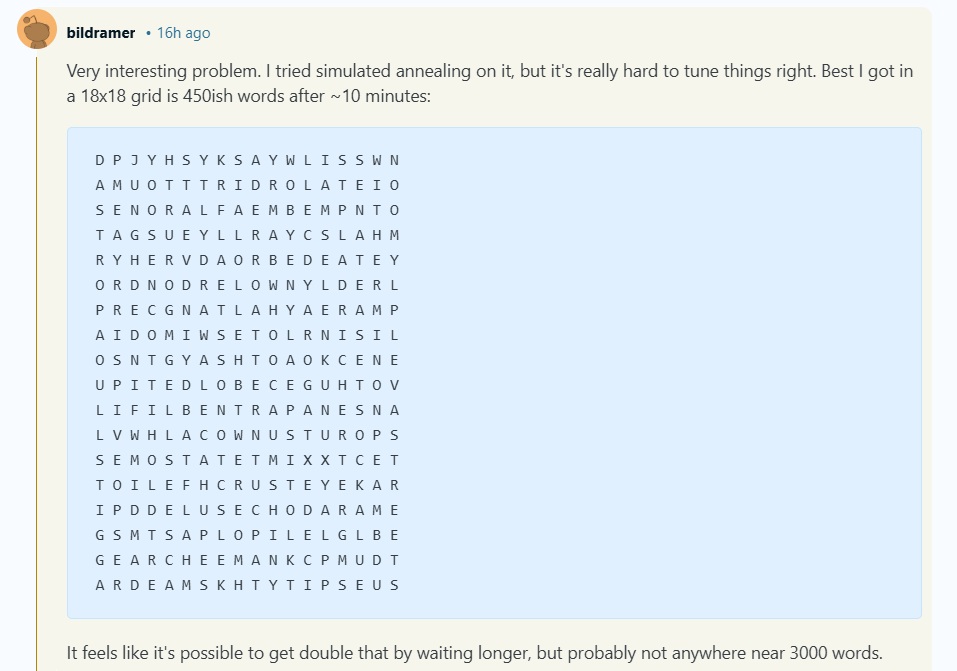
Another user, a programmer, was able to create an 18×18 grid with approximately 450 words in under 10 minutes.
As you might expect, I was unable to resist diving into this one. But I’m not a programmer, so let’s do some meatball mathematics to get a sense of the scope of the puzzly conundrum before us.


We can extrapolate that if we get 450 words in an 18×18 grid, we’d need seven 18×18 grids connected to approach 3,000 words, assuming there’s some consistency in letter efficiency.

If we stick to the rectangular suggestion of the original post, a 63×36 rectangle (six 18×18 grids in a 2×3 arrangement, plus a 9×36 grid attached at the bottom) should allow for those 3,000 words.

Now, I can’t verify that. But 63×36 means 2,268 letters in the grid. Which, with a 3,000 word goal (including two- and three-letter words) kinda feels possible.

Of course, this is just to cover that 3,000 word list. Remember that the English language is estimated to contain between 1 million and 1.5 million words total.

That’s 333-and-a-third times more, if we use a million words. It’s 500 times more words if we assume 1.5 million words.

So, that’s 2,268 letters in our 3,000 word grid. Multiply that by 500 and you get 1,134,000 letters in the grid.

That means we’d need a grid that’s 1,065 x 1,065 to cover the entire English language.

So what does that mean in Boggle terms?

A standard six-sided die is 16 millimeters. That’s 17,040 millimeters, or 17.04 meters. That’s 67.09 inches. We’re talking about a Boggle game that’s FIVE AND A HALF FEET ACROSS.

That’s one heck of a Boggle grid.

Now, of course, these numbers are all estimates, and dubious ones at that. But I couldn’t resist TRYING to find an answer, even if it’s just a ballpark number.
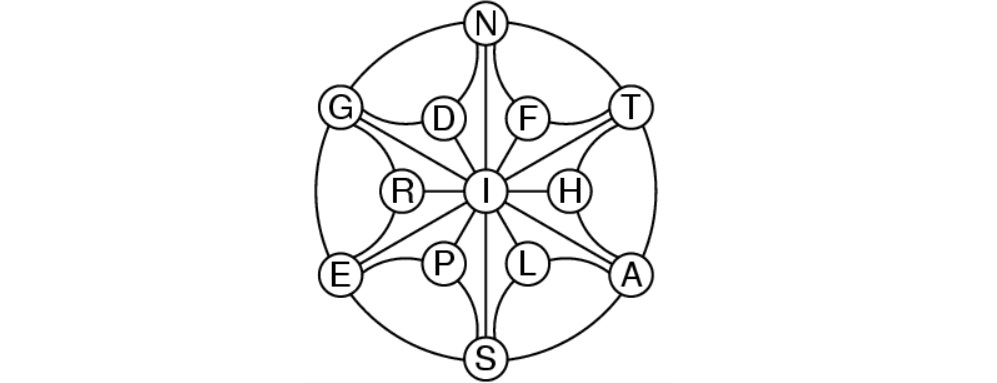

You see, fellow puzzlers, this brand of puzzle efficiency tickles something in my brain, as there are several Penny Press puzzles I quite enjoy that employ a similar idea.

Starspell (pictured above) involves finding words in a star-shaped grid, except unlike Boggle, you can reuse letters. So you could bounce back and forth from A to N and spell BANANA, for instance.

Word Maze involves a small grid with many words hidden inside Boggle-style (though it’s actually a themed word list, meaning it’s not optimized to just cram as many words inside as possible).

Letter Perfect is a reversal of the idea, seeing if the solver can arrange letters in a mostly-empty 4×4 grid to fit every word in a given wordlist. It’s excellent training for a challenge like this, since you learn about efficiency of letter placement and how many words can spell out with neighboring letters if you’re clever.


I don’t know if any programmers will figure out how to build a language-spanning Boggle grid, but I look forward to seeing them try!

Happy puzzling, everyone.
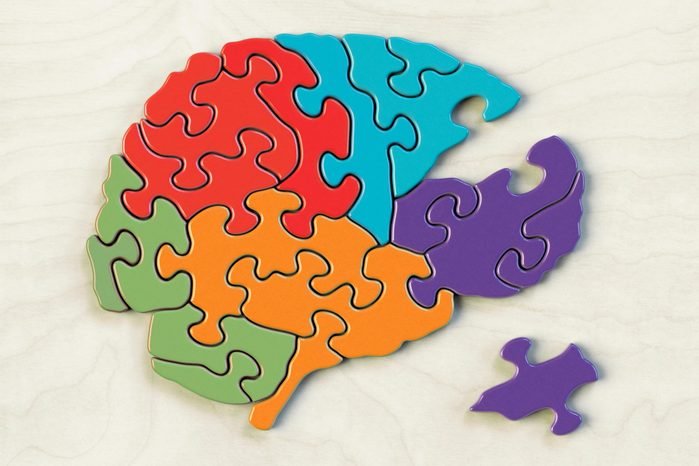
What Makes a Good Brain Teaser?

I was going through a collection of brain teasers a fellow puzzler gave me, and it occurs to me that “brain teaser” is one of the least specific puzzle terms around.

Riddles, logic and deduction, math puzzles, and wordplay games all fall under the brain teaser umbrella. So you never know what you’re gonna get. Are your math skills required? Your outside-the-box thinking? Your ability to pay attention to the specifics of the question itself?

In this collection alone, I found examples of each of these types of puzzles:

Riddle: Sometimes I’m green, sometimes I’m black. When I’m yellow, I’m a very nice fellow. That’s when I’m feeling mighty a-peeling. What am I?

Logic / deduction: 3 guys go into a hardware store, all looking for the same thing. William buys 1 for $1. Billy buys 99 for $2. Finally, Willie buys 757 for $3. What were they buying?

Math puzzle: The sum is 12 and the same digit is used 3 times to create the sum. Since the digit is not 4, what is the digit?

Wordplay: Which state capitals would you visit to find a ram, cord, bus, and dove?

So, if someone challenged you to a brain teaser, these would all be fair game. Would you be able to solve all four of them?


It’s possible you wouldn’t, because good and bad brain teasers alike employ tricks to keep you on your toes.

Some hide the answer in plain sight:

Homer’s mother has 4 children. 3 of them are named Spring, Summer, and Autumn. What is the 4th named?

Some use misdirection, purposely phrasing the question to get you thinking one way and steering you away from the real solution:

The big man in the butcher shop is exactly 6’4″ tall. What does he weigh?

In fact, both of these examples use plain sight (Homer, butcher shop) and misdirection (implying a pattern with seasons, specifying his height) to distract you.

I suspect you weren’t fooled by either of them, though.

Others try to overwhelm you with information so you bog yourself down in the details instead of clearly analyzing the problem at hand:

Nina and Lydia start from their home and each runs 2 miles. Nina can run a mile in 8 minutes 30 seconds and Lydia can run a mile in 9 minutes 10 seconds. When they finish running, what is the furthest apart they can be?

A lot of numbers get thrown at you, but they’re irrelevant, since the question only asks about the distance, not the time. So if they each run 2 miles, the furthest apart they can be is 4 miles. The rest is just smoke.

These are all effective techniques for teasing a solver’s brain. You’re given all the information you need to solve the puzzle, plus a little extra to distract, mislead, or overwhelm you.


Unfortunately, some brain teasers use unfair techniques to try to stump you:

Jacob and Seth were camping in June. Before going to sleep they decided to read a book. They both agreed to stop reading when it got dark. They were not fast readers, but they finished the entire encyclopedia. How?

Ignoring the fact that these two boys somehow brought an entire encyclopedia with them on a camping trip, we’re not actually given a lot of information here.

So that makes the intended answer seem like more of an insane leap than a logical jump to the conclusion: They were in Lapland, land of the midnight sun, and the sun didn’t set until September.

WHAT?

There’s no reasonable way for someone to reach this conclusion based on the information given. In fact, it makes less sense the more you read it. Presumably Jacob and Seth know where they are camping, and that it wouldn’t get dark for months. So why would Jacob and Seth agree to stop reading when it got dark IF THAT MEANT THEY’D BE READING UNTIL SEPTEMBER!?

This is gibberish, and you’d be surprised how often something like this gets passed off as acceptable in a collection of brain teasers. (I discussed a similar issue with detective riddles in a previous blog post.)


Let’s close out today’s discussion of the ins and outs of brain teasers with a few fun, fair examples, shall we?

  • In what northern hemisphere city can you find indigenous tigers and lions?
  • Scientists have found that cats are furrier on one side than the other. The side with the most fur is the side that cats most often lie on. Which side of a cat has more fur?
  • A woman married over 50 men without ever getting divorced. None of the men died and no one thought she acted improperly. Why?

Did you solve them all? Let us know! Also, please share your favorite brain teasers (or your tales of treacherous and unfair brain teasers) in the comments below!

Happy puzzling, everyone!

A Surprise Escape Room… During a Wedding!

We’ve seen puzzly marriage proposals (even helping design a few over the years!), we’ve seen puzzly wedding party invitations, and we’ve seen puzzly wedding receptions

But I think this is the first puzzly wedding I’ve ever seen!

Yes, the bride surprised the groom with a wedding ring trapped in a combination lock!

She then read out a riddle, loaded with clues that were tied to costumes and items held by various guests in attendance, each of them with a number.

So he needed to decode which references in the riddle connected to the numbers and characters in the audience.

And, quite cleverly, the combination turned out to be the exact date they met.

This is the lovely sort of puzzle fun that I think all of us sorely need right now, so thank you to friend of the blog and all around good egg Jen for sharing the video with me!

And if you’re in the mood for other lighthearted, puzzle-fueled, wedding-centric content, here’s a quick bullet list of links for you to enjoy:

Happy puzzling, everyone! Happy Valentine’s Day! And watch out for those escape rooms… they can show up anywhere these days!

puzzlelove

The more things change… (Tariffs and the Board Game Industry)

containership

Well, this is the worst kind of deja vu.

Five years ago, in February of 2020, I wrote a blog post about how the pandemic was affecting the board game industry, particularly regarding production and shipping from China and how it was hurting (sometimes crippling) board game companies.

And now, half a decade hence, I’m writing a blog post about another global disaster affecting the board game industry:

Donald Trump.

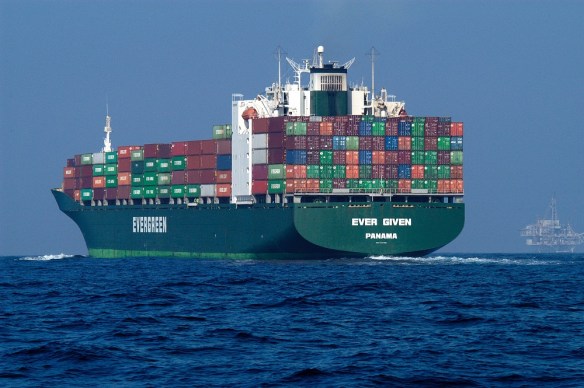
You see, the president’s “genius” plan to enact large tariffs against the US’s trade partners, forcing the American public to pay more for goods from China, Mexico, and Canada, is guaranteed to hurt many MANY industries, and the board game industry is one of them.

Already, game companies are reaching out to their customers with mailing list entries and blog posts and warning them of potential price hikes being forced upon them by this half-witted political stunt.

Atlas Games, for instance, issued a post this week about the current, frustrating, entirely-avoidable situation:

Unfortunately, there’s confusion and a distinct lack of clear guidance at this point. While Canada’s announcement of tariffs they’re levying in response clearly states that goods already en route to Canada aren’t subject to them, the Trump Administration has been contradictory on how and when US tariffs will actually be applied.

For example, two 40-foot shipping containers filled with our new game Vicious Gardens arrived in Seattle on Saturday. These games are on US soil, but they haven’t yet cleared customs. We don’t know if, when they do, we may be handed a tax bill equal to 10% of their value…

We also need to place orders NOW to reprint some of our popular titles. The Pops & Bejou game CULTivate is now published by Atlas Games. It’s out of stock, but we’ve had to delay the reprint because of the lack of clarity about these import taxes. During the election campaign, Trump threatened that tariffs on Chinese-made goods could be as high as 60% to 100%.

Unlike the president and his poor explanation of the current constantly-evolving tariff agenda, these game companies are striving to be as transparent about their circumstances as possible.

That kind of honesty goes a long way with customers, and while both the companies and customers will be feeling the squeeze of these new tariff-induced costs, hopefully the companies can still remain profitable and board game fans can still enjoy these wonderful play experiences.

Sadly, this is no surprise to industry insiders. Steve Jackson Games wrote about the consequences of the tariffs back in early November, and Stonemeier Games soon followed in early December.

A few days ago, CBS8 did a report about a local game shop in San Diego that expects to take a big hit when the tariffs land.

Some companies, like Monte Cook Games, are doing limited time discounts and sales to offset the upcoming tariff pricing. Some tabletop roleplaying game companies are already considering retreating from the physical game market entirely and focusing on PDF and downloadable products to remain profitable.

Much like the ripple effect of COVID in 2020, I suspect the effect of Trump’s tariffs will be felt for years to come.

But, unfortunately, like so many things these days, we’ll have to wait and see… and hope for the best… but expect the worst.

What’s a Shortz Number?

While I was researching Salomon Numbers for last week’s post, I discovered another crossword-centric number system with an S-name attached.

The Shortz Number.

Actually, I found several of them.

Allow me to elucidate.


XWordInfo lists a constructor’s Shortz Number as a reflection of when that constructor was first published in a daily puzzle during the Shortz Era of The New York Times crossword.

For instance, Jacob Reed debuts in today’s puzzle, and his Shortz Number is 1373.

Peter Gordon is 1. Merl Reagle is 26. Bernice Gordon is 77. Matt Gaffney is 97. Nancy Salomon is 143. Patrick Berry is 257. Deb Amlen is 378. Doug Peterson is 431. Patti Varol is 1000.

It’s an incredible insight into an ever-evolving roster of constructors.

According to a cursory Google Search, this seems to be the most legitimate definition of a Shortz Number.

But there are others.


The second and most specious definition seems to be a Shortzian take on the Salomon Number, connecting constructors to Shortz through a Kevin Bacon-like system of collaborations.

I only found a few references to this interpretation, so it seems more like a coincidence than actual cultural permeation.

But that still leaves one more version of a Shortz Number, and it’s my favorite one.


This version is actually referenced on Wikipedia under Humorous Units of Measurement and apparently originated as a Reddit post.

But in this instance, a Shortz is a unit of measurement for fame. More specifically, it’s the number of times a person’s name has appeared in The New York Times crossword as either a clue or a solution.

The brief post then goes on to state that Shortz himself is 1 Shortz famous. (I was unable to verify this through XWordInfo, either through SHORTZ, WILLSHORTZ, or WILL as grid entries.)

But as someone who enjoys weird statistics, I was definitely intrigued by this one. What’s the Shortz Number for common crosswordese and frequent fill?

I mean, RIPTORN only has a 6, but that’s an impressive number of times to get your first AND last name in a crossword.

So let’s dig in.


First things first, I’m jettisoning the clue aspect of the definition. Let’s stick to grid entries.

I’m also doing my best to eliminate shared names or ones with multiple definitions. ETTA has 241 uses in the Shortz Era, but I don’t want to parse between James and Jones. Same for ELLA (249), ANA (342), and ALOU (150).

Second, let’s stick to real people. It’s cool that SMEE has 114, ODIE 145, and ASTA a staggering 183. But the Bacon, Erdos, and Salomon Numbers rely on real people, so our Shortz Number will too.

So allow me to present the people with the 8 highest Shortz Numbers I could find:

#8 ENYA – 149
#7 ALDA – 152
#6 UMA – 162
#5 OTT – 188
#4 ONO – 196 (minus a half-dozen or so fish references)
#3 ESAU – 226 (hard to stat out other biblical figures like Adam, Eve, Enos, because of other uses)
#2 ASHE – 264

and, as you might expect…

#1 ENO – 268!

It’s certainly a close race, and one that could easily change in the future!


Let’s add one more wrinkle before we go.

Because it’s interesting to track all the Shortz Era uses… but there are decades of puzzles before that, and XWordInfo has stats on them too.

So do the rankings change when you factor those puzzles in?

Absolutely.

Let’s call these Farrar Numbers and see how things shake out.

I mentioned ETTA earlier. The pre-Shortz puzzles cause their Farrar Number to be more than double, vaulting up to 516. Similarly, ELLA leaps to 688 and ANA to 758!

Some of our fictional friends also prosper, with SMEE moving from 114 to 332 and ASTA rocketing from 183 to 533! But ODIE only adds a handful more, moving from 145 to 156.

So how did our top 8 do?

ENYA (149) stayed in the exact same place. There were NO pre-Shortzian references.

UMA (167) drops from 6th to 7th, only gaining 5 more references. She swaps places with ALDA (270), who adds a lot of references (discounting the hundred or so mentioning his father or opera star Frances Alda).

Sadly, ENO (280) plummets from the #1 spot all the way to 5th, only adding another dozen or so references to make his Farrar Number.

ONO (390) stays in 4th despite nearly doubling the number of references, while OTT (432) leapfrogs over ONO, going from 5th to 3rd with an impressive pre-Shortzian showing.

ASHE (560) stays in 2nd despite more than doubling his references (and obviously disappearing from the pre-Shortzian rankings in the early 1960s).

This means ESAU (609) goes from 3rd to 1st in the Farrar Number rankings!


So, whether you prefer your Shortz Number to be chronological, Baconian, or grid-centric, you’ve got plenty of options.

But personally, I think the Farrar Number is gonna take the world by storm!

Okay… maybe not. But it’s certainly fun to think about.

Happy puzzling, everyone!

Help Out Game Designer Owen K.C. Stephens!

I love using this blog as a place to explore puzzly topics, to promote games and creators and share the love of puzzles with the world.

But I also love using this blog to spread the word about worthy causes.

And today I’d like to talk about the GoFundMe campaign for Owen K.C. Stephens’ medical bills.

If you’ve been a roleplaying game fan over the last two decades, you’ve probably played a game that Owen has shaped in some way.

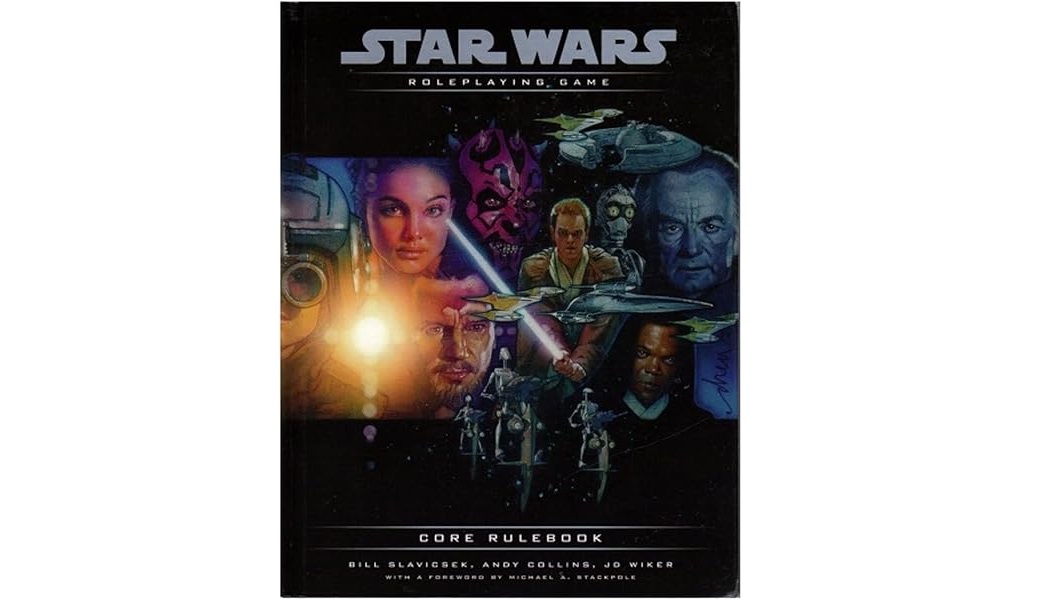
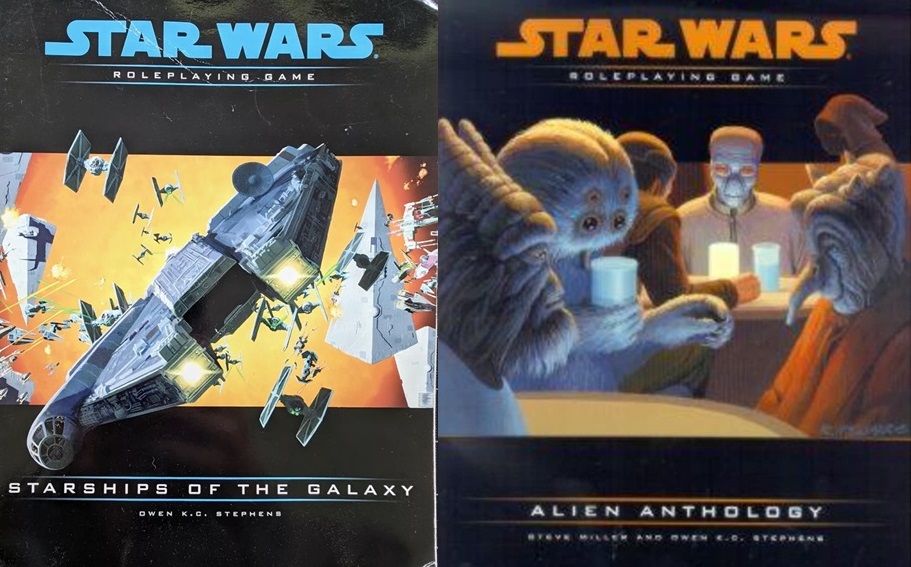
He has been an influential game writer and designer for years, contributing to the Star Wars Roleplaying Game (both the d20 and Saga editions), Dungeons & Dragons, Pathfinder, Starfinder, Everyday Heroes, The Wheel of Time RPG, and so many other games. Wizards of the Coast, Super Genius Games, Rogue Genius Games, Evil Genius Games (sensing a theme?), Paizo, and Green Ronin have all been homes for him over the years.

After an 18-month battle with colon cancer, he is still feeling the effects of his treatment and continuing the long, hard road to better health. And sadly, he is still buried under medical bills for his treatment and convalescence.

You can contribute to the GoFundMe campaign for him here.

And if you’re interested in learning more about Owen and his wonderful work in games, you can check out his website and his Patreon.


Normally, that’s how I would close out a post like this, but in this case, I hope you will indulge me with a personal anecdote.

Back in the year 2000, I discovered tabletop roleplaying.

A friend had just bought the new Star Wars Roleplaying Game (the d20 edition released around the same time as Dungeons & Dragons 3rd edition), and knowing I was a huge Star Wars fan, he invited me to play.

After a short adventure he ran for us as Game Master, he asked if I’d be interested in learning to be a Game Master myself. (I later realized he did this not only because he thought I would be good at it, but because HE wanted to play and needed someone to run for him. My friend was and is a diabolical genius.)

I ran that game on and off for nearly seven years. It gave me the confidence to explore other roleplaying games, like the Buffy the Vampire Slayer RPG, Dungeons & Dragons, Ninja Burger, and many many more, kickstarting a hobby that now spans more than two decades.

It also gave me confidence as a storyteller, pushing me to take writing more seriously (both fiction and nonfiction).

And all of that started with the d20 Star Wars Roleplaying Game.

Owen contributed to some of my favorite sourcebooks for that game (and several brilliant mini-adventures), helping make the galaxy a bigger and more interesting place for my players to explore. He is part of the fabric that helped shape me as a Game Master / Dungeon Master / Storyteller.

And I hope you’ll take a second to read about his story and help him out.

Best of luck to you, Owen, and happy puzzling, friends.