Welcome to the PuzzleNation Blog 2015 Holiday Gift Guide!

We’re overjoyed to have so many tremendously fun and puzzly products to share with you this year. We just might be your one-stop shop for all things puzzly!
This guide is broken down into categories for ease of searching. We have puzzle apps, puzzle books, downloadable puzzles and puzzles by mail, jigsaw puzzles, puzzle games, board games, card games, and party games. We’re sure you’ll find the perfect gift for any puzzler on your list!
Puzzle Apps
Naturally, you’ll forgive us for starting off with a link for a familiar puzzle app!

The Penny Dell Crossword App not only features bundles of terrific puzzle content, but it offers a free daily puzzle to all users! You can check out the full details on the PuzzleNation website!
Puzzle Books
Pencil-and-paper puzzles are alive and well, and we’re happy to share some of our favorites with you.

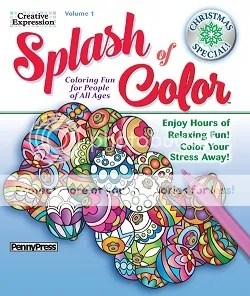


Our friends at Penny Dell Puzzles have put together some outstanding holiday collections with puzzles galore to be solved!
Whether it’s the Colossal Grab-a-Pencil Book of Brain Boosters ($10.50, also available with Logic Puzzles!), the Splash of Color Christmas Special (and its sister title, Flying Colors, both $6.99), the Logic Problems Spectacular collecting more than a hundred brain teasing puzzly challenges ($8.99), or their Super Grab-a-Pencil Pocket series — with a crossword edition (pictured above), a Fill-In edition, a Sudoku edition, and a Word Seek edition ($7.95 each) — Penny Dell has you covered.
And be sure to check out their deals on Facebook and Twitter for the entire holiday season. 15% off all sorts of puzzle bundles and books!

And for more specialized puzzle books, some high-level constructors have books of their own for your perusal! With New York Times and Los Angeles Times crosswords to their credit, you’re sure to find some puzzlers within these pages!
–Ian Livengood’s Sit & Solve® Sports Crosswords ($5.95)
–Rich Norris’s A-to-Z Crosswords ($8.95)
–Doug Peterson’s Easy ABC Crosswords ($8.95)
–Jeff Chen’s puzzles for bridge enthusiasts ($12.95)
–Brendan Emmett Quigley’s Sit & Solve® Marching Bands ($5.95) and Diagramless Crosswords ($20.98)
–Patrick Blindauer’s Sit & Solve® Quick-As-A-Wink Crosswords ($5.95) and Wide-Screen Crosswords ($8.95)
–Dale Maron’s Pentdoku Puzzles: Volume 1 ($12.95)

Collins Little Book of Bananagrams
Are you a Bananagrams fan who’s looking for something to give you an edge? The Collins Little Book of Bananagrams might be just what you need! With a list of puzzle words you might not otherwise think of, suggestions for other games to play with Bananagrams tiles, and techniques for speeding up your gameplay, you’re sure to be Top Banana with this handy guide in your pocket. ($9.95)
Downloadable Puzzles and Puzzles by Mail
Many top constructors and organizations market their puzzles directly to solvers, so between by-mail offers and downloadable puzzle bundles, you’ve got plenty of quality choices!
—The Uptown Puzzle Club (puzzle bundles by mail) ($35 for 12 issues)
—The Crosswords Club (puzzle bundles by mail, available in both regular and large print; $39.95 for 12 issues, $59.95 for large print)
—David Steinberg’s Chromatics (color-themed puzzles)
—The American Values Crossword (subscription and daily puzzles) ($20 for 1 year)
–Matt Gaffney’s Weekly Crossword Contest ($26 per year)
–Bassey Godwin’s Will Sudoku (PDF puzzle bundle, full review here!) ($10)
Jigsaw Puzzles

Puzzometry
For a next level jigsaw-style challenge, Puzzometry is tough to top. These beautiful pieces can be combined in seemingly endless combinations, and yet, there’s only one solution. Available as Puzzometry ($16), Puzzometry Jr. ($11), and Puzzometry Squares ($16), you’ve got three distinct challenges appropriate for different ages!
[Check out the full review of Puzzometry by clicking here!]


Tavern Puzzles
These hand-forged beauties are ready to challenge your dexterity and cleverness, as you accept the Tavern Puzzles challenge. Whether you’re trying to free your heart from the tangled pieces of Heart’s Desire or remove the ring from the Iron Maiden, you’re sure to put your skills to the test. ($22)
Puzzle Games
These one- and two-player puzzle games are perfect to train your brain and keep you guessing!


Houdini, Gravity Maze, and Laser Maze Jr. (ThinkFun)
ThinkFun meshes learning and gameplay with three logic games ready to challenge kids and adults alike. Whether it’s the ropes and locks challenging nimble fingers in Houdini ($19.99), the marble-dropping path-building of Gravity Maze ($24.99), or the study of optics and mirrors with an actual laser in Laser Maze Jr. ($29.99), young minds and older minds will soon be in fighting trim for puzzling!
[Check out our full product reviews of Houdini by clicking here, Gravity Maze by clicking here, and Laser Maze Jr. by clicking here!]

Word Winder (David L. Hoyt)
Word Winder (also available in app, puzzle book, and GIANT versions!) is a game of finding chains of hidden words in an ever-changeable grid! Put your strategy and spelling skills to the test! ($19.95)
Board Games
Some of the puzzliest games on the market today are being made by top-flight board game companies, and we’ve got some marvelous games that will appeal to puzzlers of all ages!

Stuff and Nonsense (Cheapass Games)
Many games are about grand adventures, but only Stuff and Nonsense is about pretending to go on grand adventures while scamming your fellow would-be adventurers. Can you sneak around London and gather the props you need for your impressive lie, all while avoiding the fiendishly clever Professor Elemental? Great fun and quick to learn. ($25)
[To check out the full review of Stuff and Nonsense, click here!]


Castellan (Steve Jackson Games)
Build a castle and then occupy it in Castellan, a game of strategy and opportunity. With great modeled pieces that really add to the aesthetic, Castellan has style and substance. ($34.95)
[Check out our full product review here!]

Zip It (Bananagrams)
Bananagrams is already pretty travel-sized, but if you’re looking for a game you can play on an airplane tray table, you need to check out Zip It. This 24-cube game works on Bananagrams rules AND allows you to use the carrying case to keep score! For puzzling in your pocket, you can’t go wrong. ($12.99)

Tsuro: The Game of the Path (Calliope Games)
A path-laying game with tons of style and historical spirit, Tsuro casts up to eight players as flying dragons, and tasks you with laying out your path with special tiles. Your goal is to avoid meeting another dragon or flying off the board. It’s a simple mechanic with plenty of replay value, and perfect for quick games with large groups. ($29.99)


Walk-By Scrabble Board, Lexicographer’s Extended Scrabble, and Drawing Room Scrabble (Hammacher Schlemmer)
Hammacher Schlemmer has several Scrabble variants available, including the Lexicographer’s Extended Scrabble for those with mega-syllabic ambitions ($29.95) and Drawing Room Scrabble for those with swankier taste ($149.95) — not to mention the mindboggling World’s Largest Scrabble Game for $12,000! — but few are as clever or as convenient as the Walk-By Scrabble Board! Designed as a family game for people on the go, it’s a perfect way to bring back Board Game Night for busy families! ($29.95)
[Check out our full product review of the Walk-By Scrabble Board here!]

Qwirkle (MindWare)
A wonderful mix of Uno and Mexican Train Dominoes, Qwirkle is all about placing your tiles to maximize points and minimize helping your opponents. With six bright colors and six different shapes to match up, Qwirkle is endless fun that’s so easy to jump right into! ($34.99)

Tak•tak (Twizmo Games)
If you’re looking for a game that combines the strategy of chess and the mechanics of Upwords, Tak•tak is right up your alley. Score points by stacking and attacking your opponent’s pieces in this game that’s more than meets the eye! ($18.95)
[Check out our full product review of Tak•tak by clicking here!]
Card Games
These card games add a bit of friendly competition to some splendid strategizing for puzzlers of all sorts!

Pairs (Hip Pocket Games)
A simple card game with a lot of strategy behind it, Pairs is about NOT scoring points and avoiding pairing your cards at all costs. With new deck styles arriving all the time — like the Goddesses of Cuisine deck and the Lord of the Fries deck — complete with numerous variant games available, Pairs is a perfect group card game you can pick up quickly. ($10)

Give Me the Brain (Cheapass Games)
In this revamped version of a lesser-known classic, you and your fellow players are zombies running a fast food joint, competing to complete your tasks first. Unfortunately, there’s only one brain for all of you to share. A mix of strategy and luck, Give Me the Brain is the most fun you can having working in fast food, undead or not! ($25)
[Review coming soon!]

The Stars Are Right (Steve Jackson Games)
Build an army of followers and change the stars themselves in The Stars Are Right, a thoroughly enjoyable card game where the goal is summoning an elder god and destroying the world. As you do. ($27.95)
[Check out our full product review here!]


Batman Fluxx, Retro Loonacy, and Just Desserts (Looney Labs)
The folks at Looney Labs are all about games where the rules can change in an instant. They’ve broadened their library of Fluxx card decks with a marvelous Batman-fueled version ($20), as well as putting a new twist on their fast-play matching game with Retro Loonacy ($15)! Plus, you can always put your culinary skills to the test in the deliciously busy Just Desserts! ($18)
[Check out our full product reviews of Batman Fluxx here, Retro Loonacy here, and Just Desserts here, plus reviews for Adventure Time Fluxx and Fluxx Dice here!]

Timeline (Asmodee Games)
Timeline pits your knowledge of history against a growing timeline of important events, inventions, and historical moments. You don’t have to know exact dates; you just need to know if something happened before OR after something else. Was the toothbrush invented before or after the syringe? Which came first, language or agriculture? Timeline is a fast, fun way of learning (or relearning) history! ($14.99)

Adorable Pandaring (Asmadi Games)
We can all agree that pandas are adorable, but in Adorable Pandaring, you only earn points if your pandas are adorable, so you need to change the rules to favor the pandas in your hand. This game might have some mighty cute art, but don’t be fooled — it is all about timing and strategy. ($12)
[Check out the full review of Adorable Pandaring by clicking here!]

Compose Yourself (ThinkFun)
For a card game that’s marvelously musically different, try your hand at Compose Yourself. It’s designed to teach people of all ages the magic of music, and you can use the cards included to compose your own pieces, performed by an actual orchestra! I sincerely doubt you’ve ever seen — or heard — anything like it. ($14.99)
[Check out the full review of Compose Yourself by clicking here!]
Party Games
Some puzzles are best enjoyed in groups, so here are a few fun options for party puzzling!

Schmovie (Galactic Sneeze)
Are you the funniest, punniest one in your group of friends? Find out by playing Schmovie, the party game that pushes you to scribble down the best name for an imaginary movie created on the spot! Now redesigned in a sleeker box and playable by all ages, this is the movie game for everyone. ($19.95)
[Check out our full product review of the original version of Schmovie here!]

ROFL! (Cryptozoic)
Challenge your friends to decode famous movie lines, catchphrases, and song lyrics in Cryptozoic’s game ROFL!, created by Dork Tower‘s John Kovalic! Put your texting and abbreviation skills to the test in this laugh-out-loud party treat! ($35)
[Check out our full product review here!]
Thank you to all of the constructors, designers, and companies taking part in our holiday gift guide!
Thanks for visiting PuzzleNation Blog today! Be sure to sign up for our newsletter to stay up-to-date on everything PuzzleNation!
You can also share your pictures with us on Instagram, friend us on Facebook, check us out on Twitter, Pinterest, and Tumblr, and explore the always-expanding library of PuzzleNation apps and games on our website!