Meme culture is constantly evolving. As new memes emerge, others are updated. They mutate, they cross over with other meme styles. It’s virtually a language at this point, a hyper-dynamic vernacular where the rules change as fast as the imagery.
And yet, old memes can resurface for new audiences and make an unexpected impact, like the one I stumbled across this week.
Two years ago, an archaeology report hit internet news feeds. Archaeologists in Kazakhstan uncovered the burial mound of a young girl, somewhere between the ages of 12 and 15. The grave dated back to the Bronze Age, about 5000 years or so.
But that wasn’t what caught the Internet’s attention.
It was the sheep bones that captured everyone’s imagination.
You see, she was buried with 180 ankle bones, also known as astragalus bones, from dozens and dozens of sheep.
Researchers were unsure of the significance of these bones, attributing them to cult practices, totems for meditation, or symbols of good luck to wish the deceased well in their transition to a new world.
Internet readers came to a different conclusion. They believed this young girl was a world-class gamer and these were her trophies, the spoils of victory.
Knuckle bones, ankle bones, and other small, easily-rolled bones have been associated with gaming for centuries. For many cultures, they were the first readily-available dice. This is true in Kazakhstan as well.
In fact, there is a Kazakh game called Assyk, and it’s similar to marbles. Players take an ankle bone and try to knock other ankle bones from the game space. It requires considerable skill, since you’re tossing the assyk from a distance.
Rules vary depending on your sources, but according to some articles about this traditional Kazakh game, winners would keep the ankle bones they knock out of the circle, just like in marbles, pogs, and other games of this nature.
So, if our Bronze Age assyk master followed this rule — and based on the number of bones in her grave, it’s a distinct possibility — that means she didn’t just dabble in this game… she dominated at it, collecting dozens of victories.
Appropriately, the Internet celebrated her as a pro gamer, a tournament-level champion with the hand-eye coordination to dominate modern games as easily as she did games of assyk around her village.
And honestly, how can you not love something like that? Everybody needs a hero, gamers included. A 5000-year-old Bronze Age astragalus-hoarding game sniper is not a bad place to start.
The Puzzmo mini crossword is always accompanied by notes from the constructor and the editor. The comments from yesterday’s puzzle centered around anagrams, since the mini had not only an anagram in the theme entries — MAORI and MARIO — but actually had the word ANAGRAMMED crossing those entries.
In those comments, both Will Eisenberg and Brooke Husic discussed a really playful subset of cluing involving misdirection.
You give the solver an anagram, but present it is as a statement, rather than just saying “ABLE, to BALE.” When done properly, it takes a second for your brain to actually register the anagram, even though it’s right in front of you!
Will used the example “Ancients, for instance,” which cleverly employs the standard crossword trope of “for example / for instance / for one / e.g.” to conceal the anagram. Brooke had another banger example, offering “Anemone, to name one.”
I delved into the archives on Xwordinfo to look for other examples of this misdirection cluing style, and I found some fun ones. (Obviously, ANAGRAM isn’t an incredibly common entry, but I was genuinely surprised by the variety of options that awaited me in the archives.)
Back in 2011, Oliver Hill and Eliza Bagg gave us “Neo, for one,” which is such an effective misdirect than I can imagine writing the wrong answer more than once in the grid before realizing the trick, since this sort of clue is used so often for things like HERO or ROLE.
Other constructors phrased their anagrams as if they were slang or specialized jargon, leading solvers down the garden path while showing off their own impressive anagramming talents.
Ryan McCarty and Nelson Hardy gave us “Schoolmaster for the classroom, e.g.”
Margaret Saine offered “Illustration for an ill tourist?”
Sam Trabucco crafted “Nerd’s epithet for the president?”
Bryant White presented “Coasters for Socrates, e.g.”
Naturally, cryptic crossword or British-style crossword solvers probably suss out these clues faster, since this sort of stealthy wordplay is standard in cryptic cluing, where clues are written out like sentences, rather than the more direct cluing typically used in American crosswords. (Cryptic crossword icons Emily Cox and Henry Rathvon had one ANAGRAM clue in the Xwordinfo archives, the elegant “Broadcast of bad actors, e.g.”
Some constructors take it even further, employing the age-old trick of apropos anagrams for celebrities.
The Simpsons helped popularize knowledge of this game when Lisa learned that ALEC GUINNESS anagrams into GENUINE CLASS. Another famous one is CLINT EASTWOOD anagramming to OLD WEST ACTION. FLORENCE NIGHTINGALE aptly anagrams to FLIT ON, CHEERING ANGEL.
Patrick Merrell employed this nicely with his clue for ANAGRAM, “Horrid glances from Charles Grodin?”
I could go on and on listing examples, but Patrick’s clue is hard to top.
I’m obviously a huge fan of misdirectionclues, so it was a joy to deep-dive into a different genre of cluing and watch clever people work their magic. Hopefully you enjoyed taking this puzzly stroll with me.
Hallmark movies place crime solvers in all sorts of curious situations. Police have been paired up with crossword editors, bakers, home renovation pros, literature professors, archaeologists, dancers, fashion designers… the list goes on and on.
Other times, it’s less about the unexpected pairings and more about the locale. A college campus, a morning TV show, Martha’s Vineyard… big cities and small towns alike. Nowhere is safe from a Hallmark mystery!
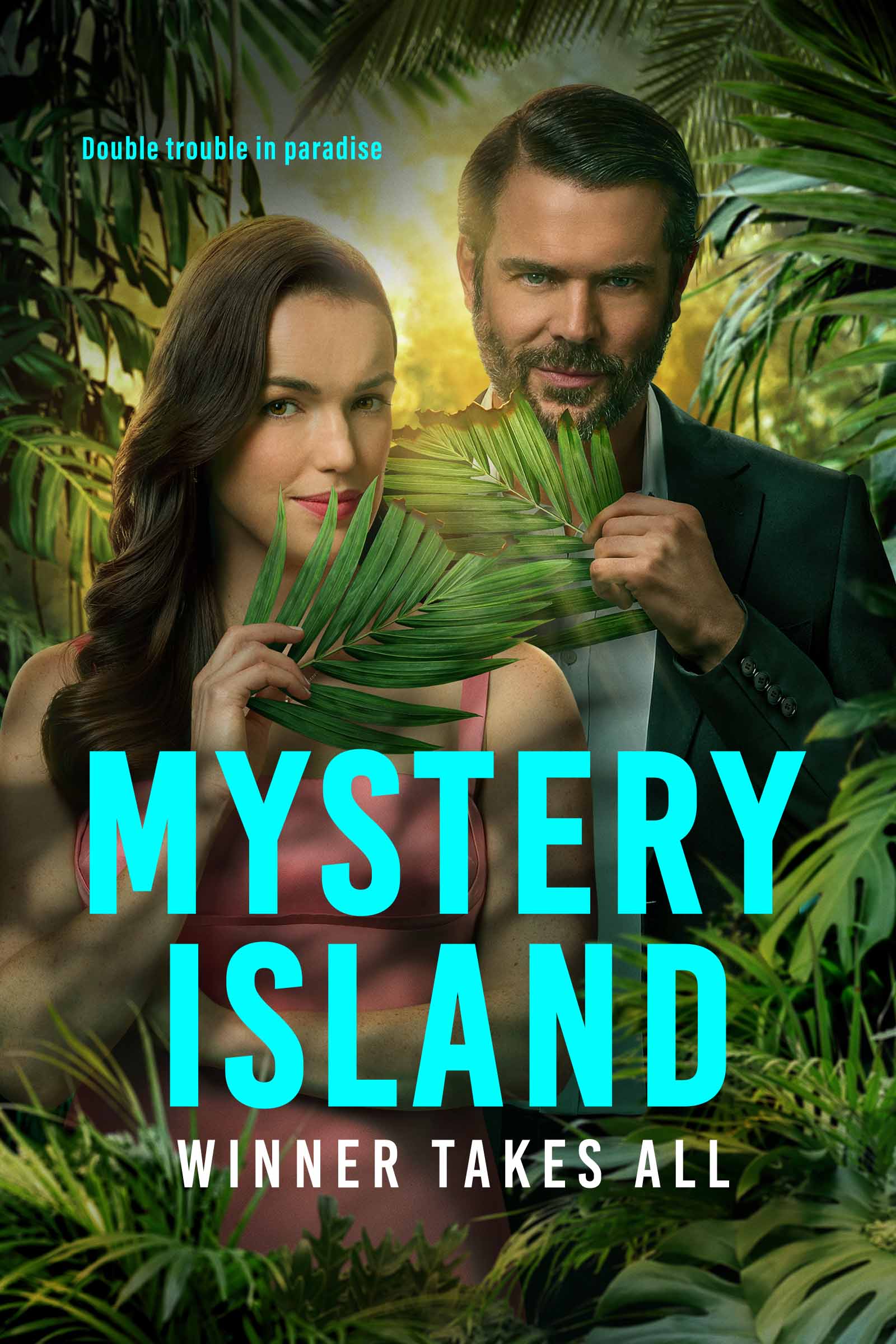
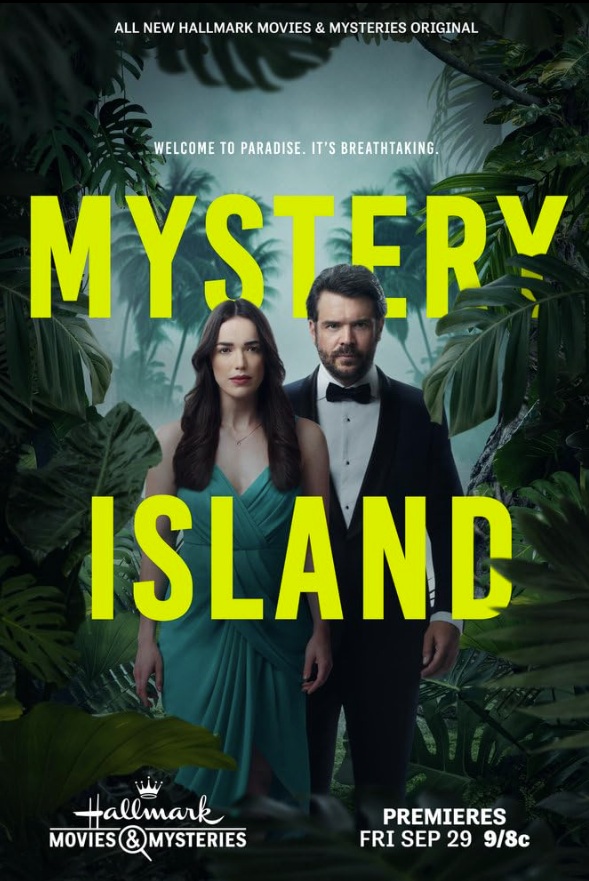
And now, we can add MYSTERY ISLAND to the list of settings for multiple Hallmark mystery movies.
We previously reviewed the first film in the series, and now we’re back to tackle the latest installment: Winner Takes All.
How does it compare to the original? Is MYSTERY ISLAND ever gonna run out of mysteries? We’re going to find out together!
First, though, a heads-up: I’ll recap the story below, and then give my thoughts on the whole endeavor. If you’d like to read my conclusions but skip the full recap, scroll down to the bottom of the post.
Ready? Okay, let’s dig in!
FILM RECAP
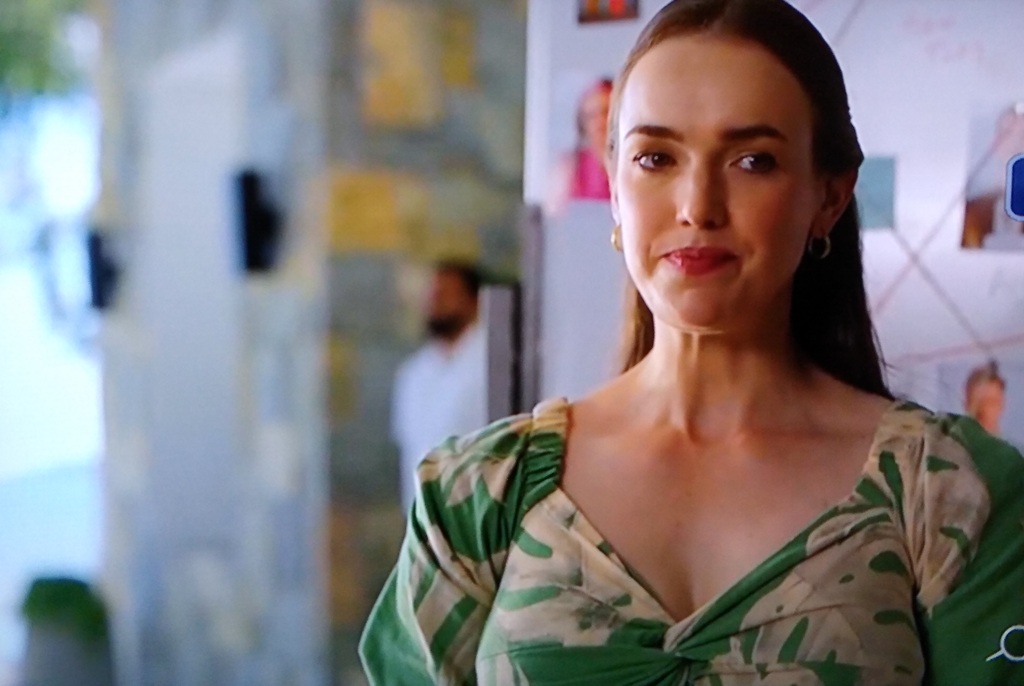
It’s a dark night on MYSTERY ISLAND, as police psychologist Dr. Emilia Priestly pans her flashlight back and forth by the pool, before creeping slowly back into the luxurious house.
There’s the clink of a glass. She’s not alone. She walks across the water feature and up a few stairs when her flashlight goes out for a second.
When it comes back on, BAM. Detective Jason Trent is there, surprising her. The two of them venture into the kitchen, and Emilia quotes a message about the trail “going cold.” So they check the freezer.
There’s a body inside, and they are weirdly casual about it.
Suddenly the Baroness is there, and we shift to a well-lit office as she, Jason, and Emilia toss ideas back and forth. They’re workshopping a new murder mystery. Fredericks, the house manager and CEO of MYSTERY ISLAND, claims he can’t find the unused mystery storylines written by John Murtaugh, the island’s creator (and the victim in the previous film).
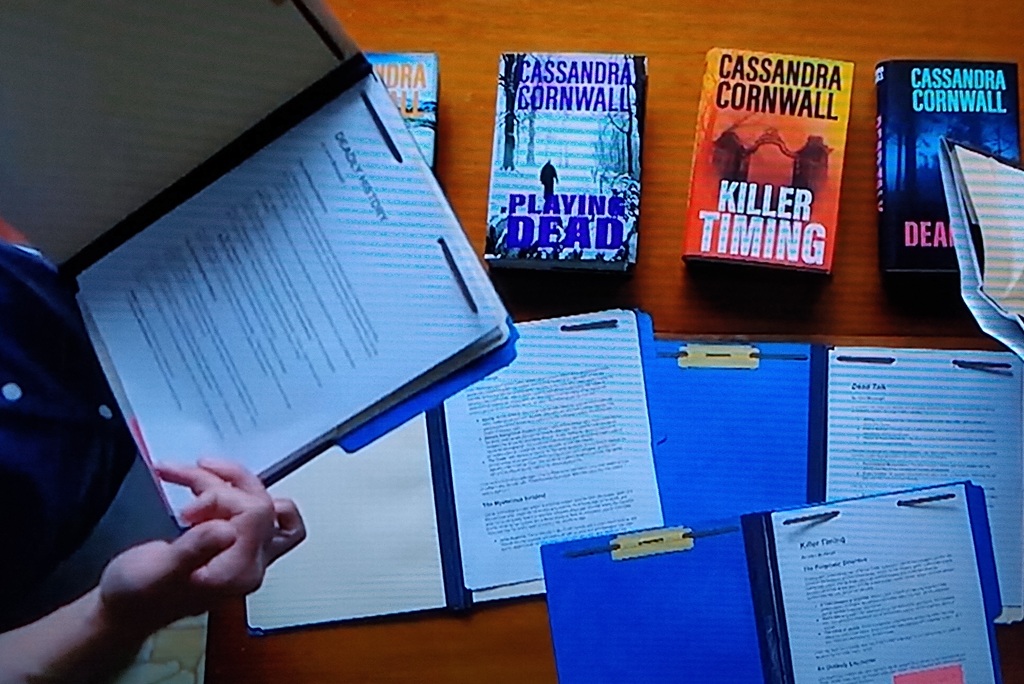
The Baroness has a video call with Carlos, their lead investor, and it turns out he has named the Baroness COO of MYSTERY ISLAND. To generate funds and interest, she proposes a puzzle contest where the top solvers win tickets to attend a murder mystery on MYSTERY ISLAND. And if they solve the mystery that weekend, they win a cash prize. She also suggests inviting celebrity crime novelist Cassandra Cornwall to help promote the event.
They have a tight deadline to deliver a draft of the event to Carlos, and Emilia and Jason immediately start bickering about their other jobs and responsibilities.
Cut to Emilia sitting poolside, where she talks to Jason on the phone and they awkwardly discuss how awkward they are together and that they enjoy working together. Awww…kward.
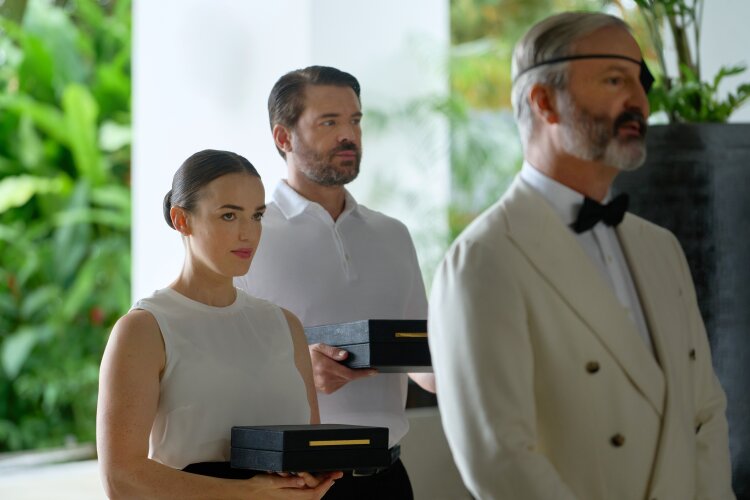
We then jump-cut to the contest weekend and a shot of our eyepatch-wearing white-tuxedoed pal Fredericks, as he introduces a staff of ten employees to Emilia and Jason.
Emilia and Jason give the staff (and the viewers) a rundown of the invited guests:
NYPD detective Bobby Teller, who solved the contest puzzle in 32 minutes
Bobby’s plus one, his brother Davis, an investment banker
Alice Whatley, a whodunit podcaster who solved the puzzle in less than an hour
Alice’s plus one, her aunt Louise Baker, a hotel manager from Manhattan
Cassandra Cornwall, who is an old friend of John Murtaugh
Cassandra’s plus one, her useless husband Ted
The Baroness will also be playing, and has brought her new boyfriend James, a Texas oilman, with her. Emilia and Jason will be undercover as staff to help run the event.
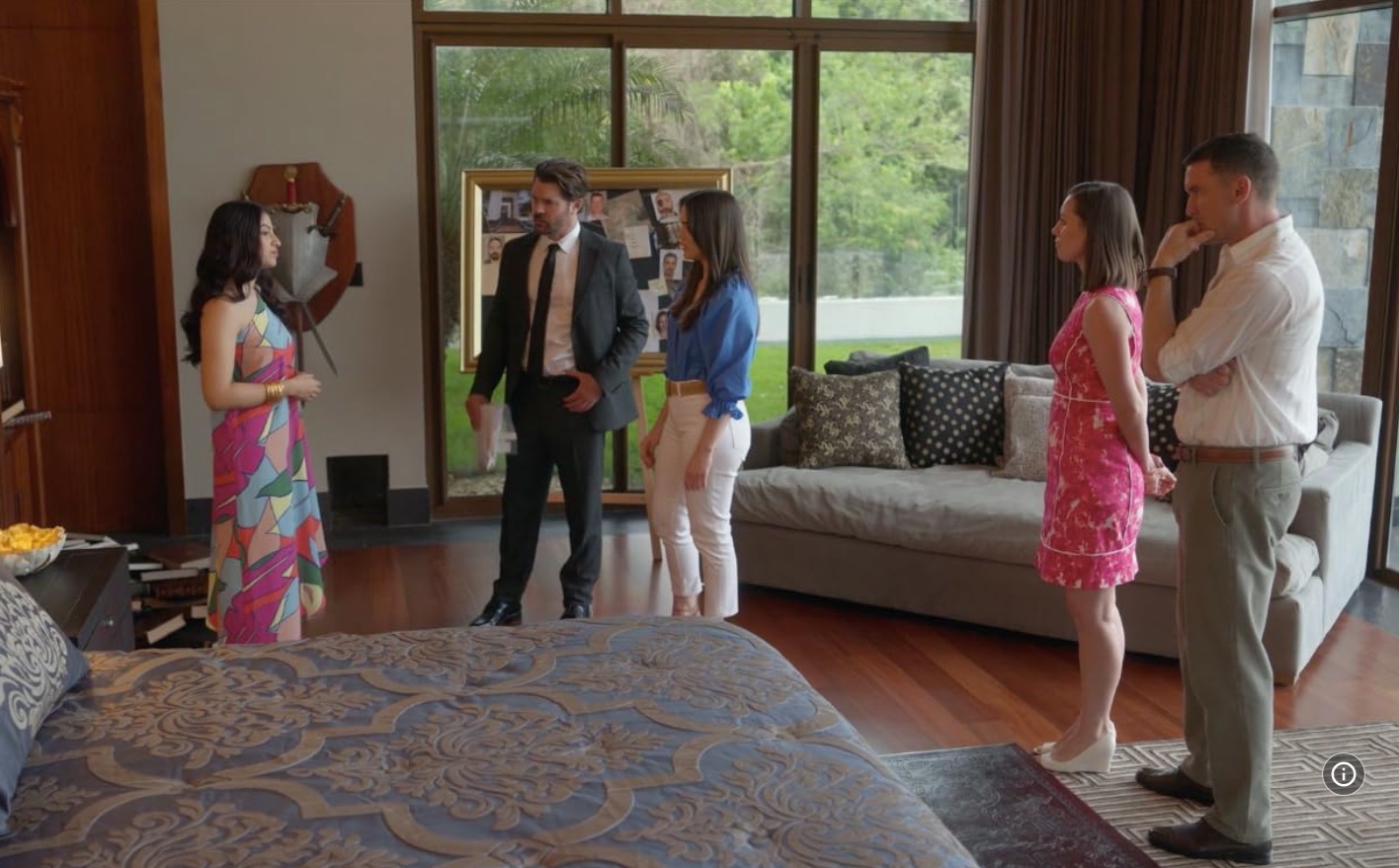
Fredericks informs the guests about the murder boards in their rooms to assist in their solving, and that today’s event starts as soon as they enter their rooms. At some point, a body will drop.
(If one of the invited guests is the victim, they’ll be housed in the “deceased bungalow,” which has a jacuzzi and is adjacent to a golf course. Davis likes this idea and suggests someone kill him.)
Jason then collects everyone’s phones, and the guests discuss detective novels like those of Agatha Christie, Evelyn Murtaugh, and Cassandra Cornwall. It turns out, James and the Baroness bonded over one of CC’s books on a long flight.
Everyone scatters to their rooms, eager for the event to begin.
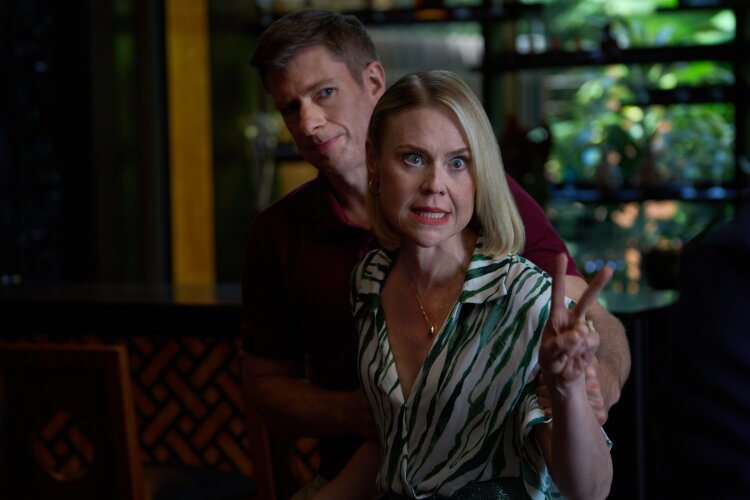
In the Baroness’s room, James knocks at the door and kisses her. His Texas oilman accent is an act, but apparently his affection for her is real. (They have switched rooms at his request to give her a nicer view.) Since James is an actor and employee of MYSTERY ISLAND, the Baroness is hiding their true relationship from Emilia for now.
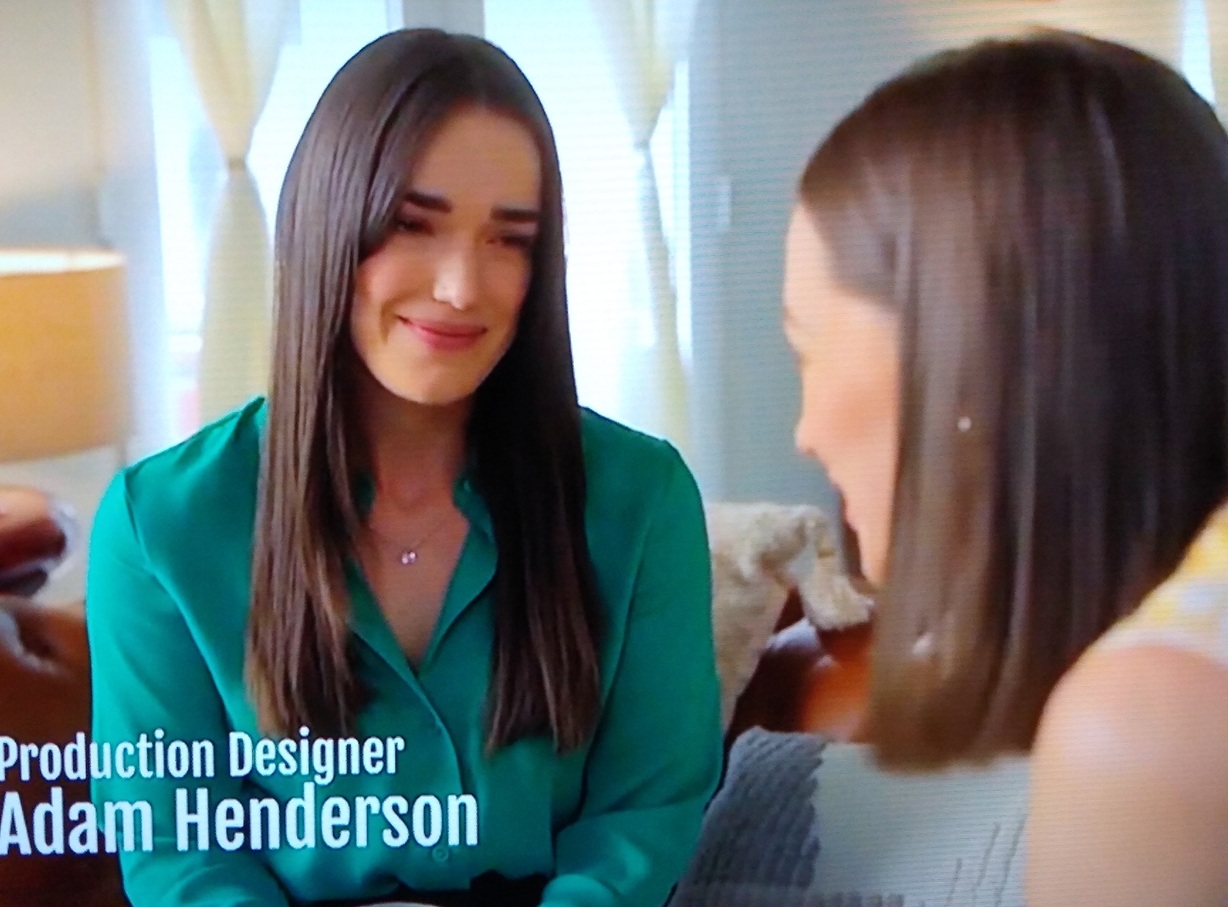
Or so she thinks. We cut to Emilia, who suspects something is up with the Baroness and James. Emilia and Jason awkward-flirt some more and she continues offering snacks to the guests while Jason bartends.
Emilia sees Fredericks looking awfully chummy with Aunt Louise, which piques her interest. Alice talks to CC, mentioning she’s done several podcasts about CC’s books, and inquiring if CC would be a guest on her show sometime. CC is cold in response, then walks off after Fredericks.
Emilia follows and overhears CC telling Fredericks that he owes her. When they notice Emilia, Fredericks covers by saying CC is unhappy with her room, and Emilia offers to handle the problem. Ted asks about the room, but CC blows off Ted and walks away.
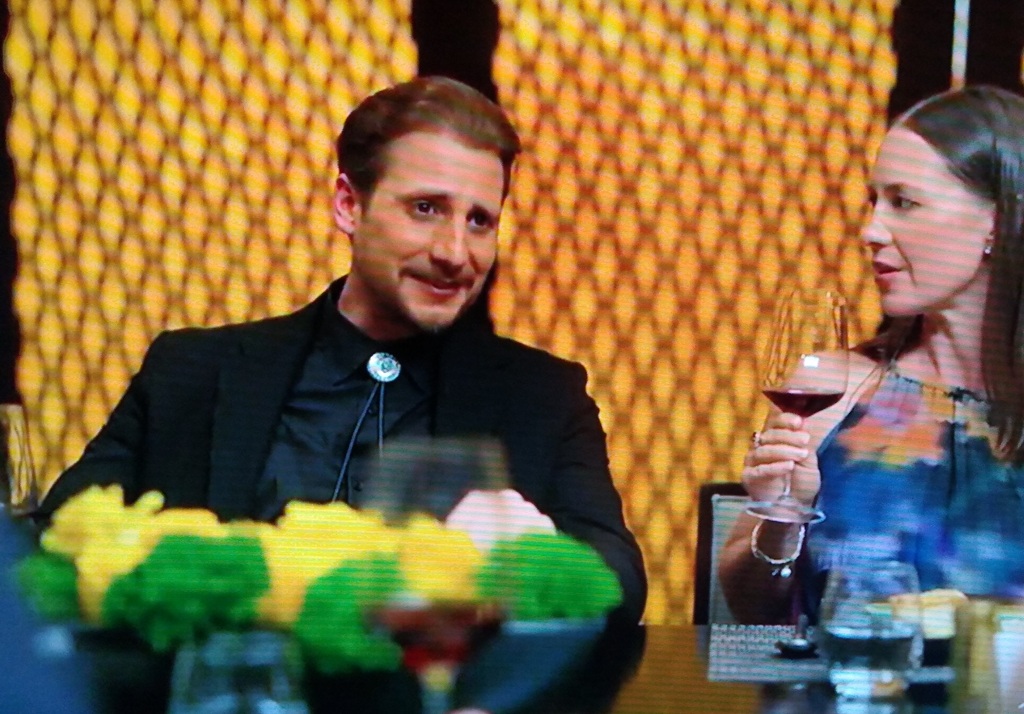
The happy couple…
Emilia asks Fredericks about his conversation with Aunt Louise and he similarly blows her off. Boy, Emilia has only been cosplaying as staff for like FIVE MINUTES and she’s getting the full food service experience.
Cut to dinner time, where everyone is seated except James, who arrives late, back to full cowboy accent. Fredericks informs everyone that they should all be in the game room at 9 PM sharp, but not a moment before.
During dinner, Alice asks if Bobby would go on her podcast, and he asks her in reply how she solved the puzzle so fast. (Um, didn’t he solve it faster than her?)
She admits Aunt Louise helped a bunch. Davis claims Bobby also needed help, and Bobby mentions Davis was kicked out of three colleges and downplays his achievements as an investment banker. What a jerk!
James stirs the pot by claiming Davis’s boss was his advisor, but he fired him. Then he targets CC, telling her he’s not actually a fan of her books and that bringing CC to the island is a waste of time and money. He claims it’ll be different “when he’s running things” and the Baroness tries to shut him down, saying Carlos isn’t interested in selling. James replies that he’ll just have to take the island from him, then. Oooh, heavy-handed intrigue.
Emilia and Jason slip away, pleased at how their mystery is playing out so far. She spots Fredericks standing alone by the pool and again asks him what’s going on, but gets nowhere with him.
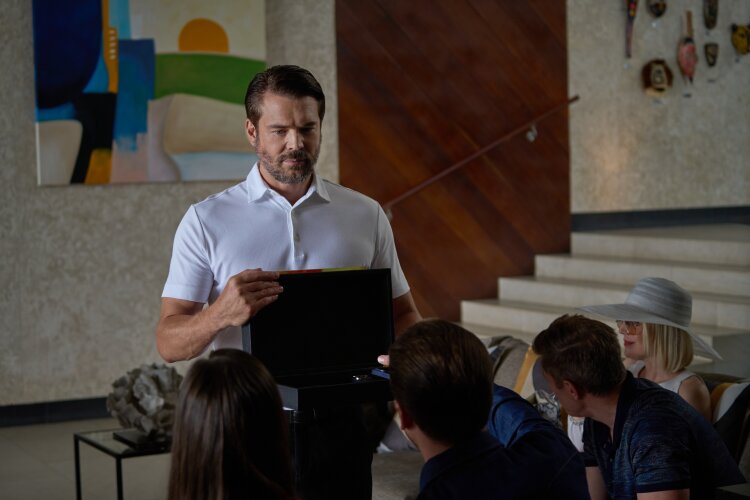
They retreat to the game room, and we see the guests gathered around a Scrabble board. Davis and Ted are missing, though, and Aunt Louise goes to look for them. James starts making drinks while Fredericks slips out.
James focuses on Alice this time, claiming he’s going to buy the podcast network her show is on, and her crime podcast will have to be more family friendly.
Davis finally arrives, and Ted shows up not long after. James puts the tray of drinks on the Scrabble board and spins it around, mixing up the drinks. Aunt Louise returns, and everyone toasts.
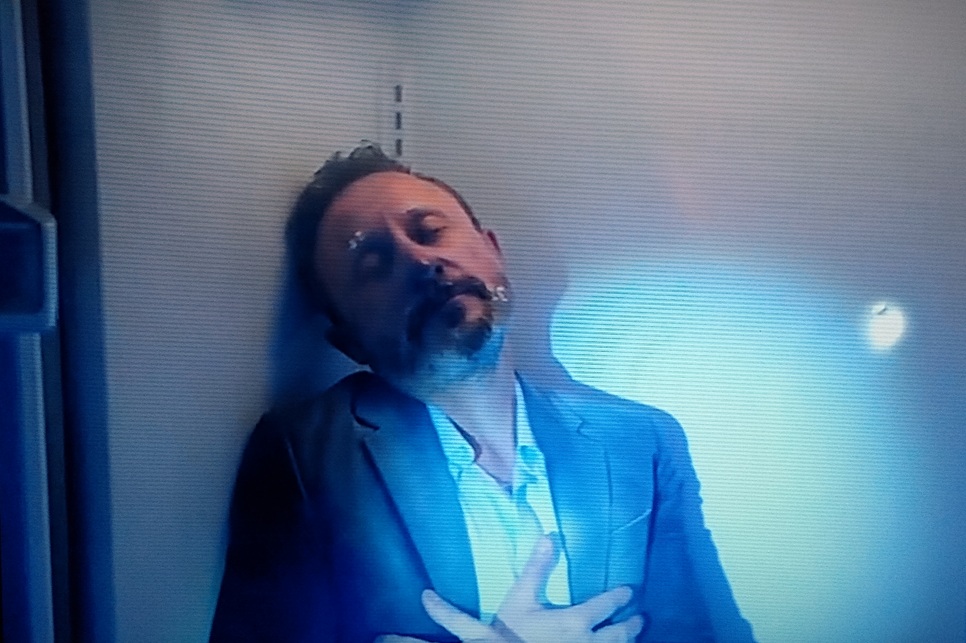
James begins choking, and several guests tend to him, while CC blithely claims the game has started.
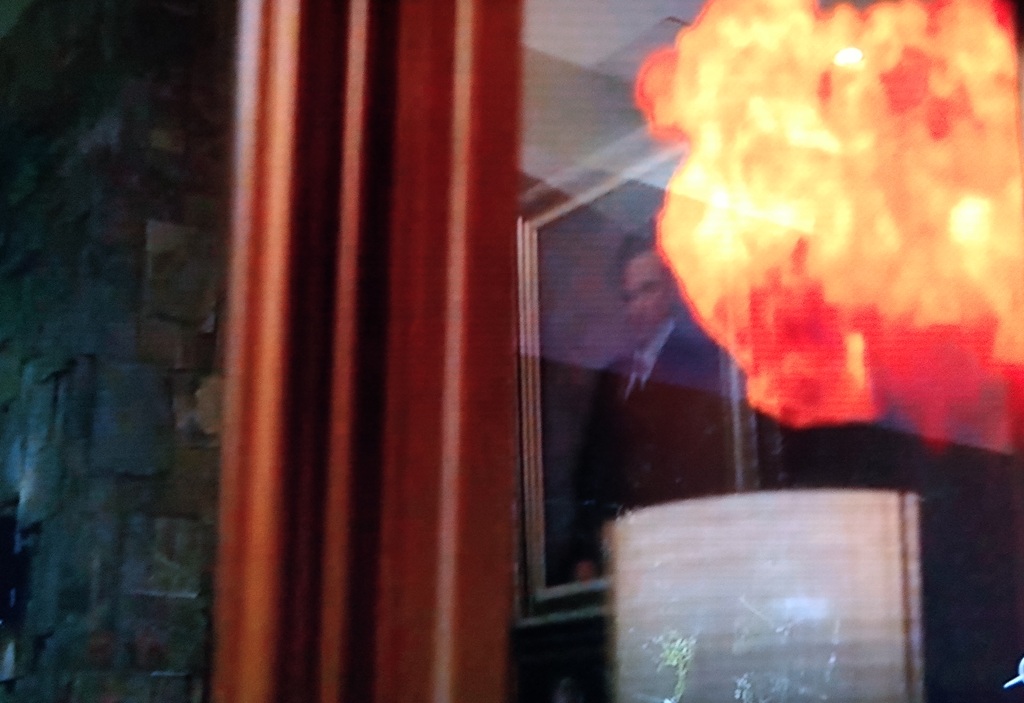
But everyone is shocked when the gazebo bursts into flame outside. James stands up, suddenly fine. But Emilia and Jason are shocked.
The explosion isn’t part of the script.
COMMERCIAL BREAK!
Jason uses a fire extinguisher and puts out the burning gazebo, and they find Fredericks on the ground nearby. Before he dies, he whispers the word “arrest” to Jason.
Bobby tries to handle the investigation, but Jason and Emilia reveal their true roles and send everyone inside. Aunt Louise is crying, while everyone else is stunned/confused.
They find a tripwire in the wreckage of the gazebo, which Fredericks must have tripped, alongside a destroyed briefcase that they believe contained the explosives.
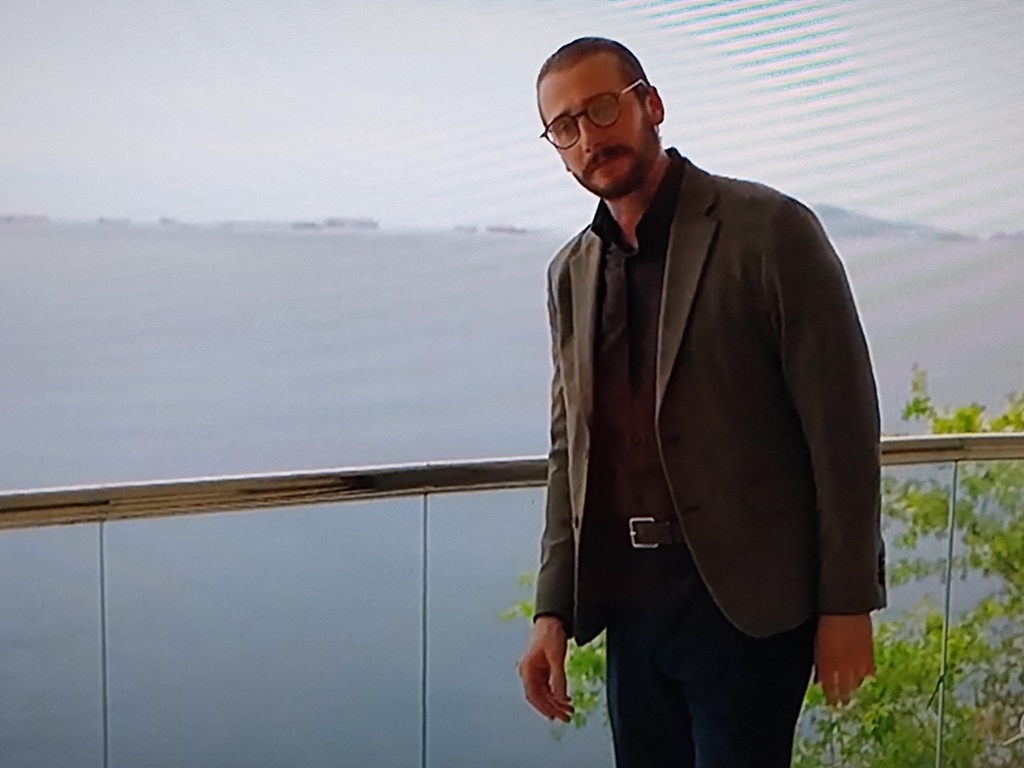
Jason goes to the office to call the mainland while Emilia collects everyone’s passports. James reveals to the guests his true identity as an actor so there are no more secrets.
Oh James, there simply MUST be more secrets. We’re only 30 minutes in.
(Also, from this point forward, to avoid confusion, we will refer to him and his fictional counterpart as Actor James and Victim James, respectively.)
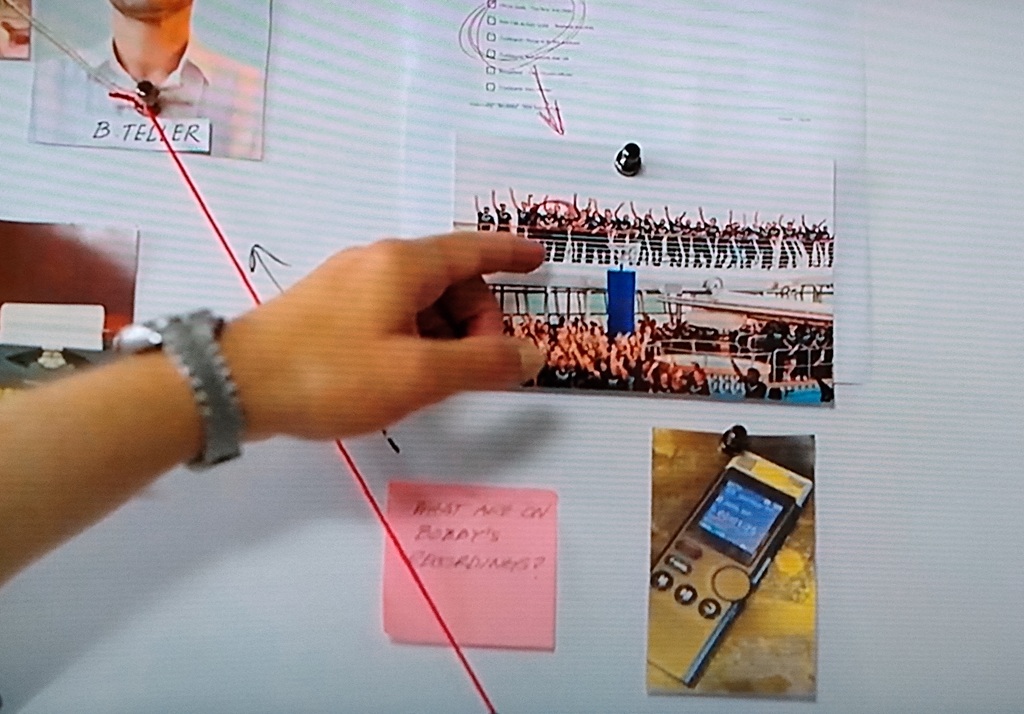
Bobby recognizes him from an improv show he did years ago on a cruise ship. The Baroness gushes about Actor James’s brilliant performance in an off-Broadway show based on the story of Orestes.
The next morning, the Baroness and Emilia find Jason going over security footage from the island. He’s managed to eliminate any of the staff members as suspects for the explosion, leaving only the guests as potential killers.
Jason uses the passports to see if any of the guests had previously come to MYSTERY ISLAND and interacted with Fredericks. They also discuss a trip the Baroness and Fredericks took to New York to find an actor (where they hired Actor James), so all that NY-centric backstory for the guests is surely going to come into play at some point.
Emilia and Jason question the Baroness first, and Emilia confronts her about her relationship with Actor James.
We get interrogation scenes next:
CC reveals that her publisher wants a MYSTERY ISLAND tie-in for her next book, and she approached Fredericks about it, but she was unhappy with the results
Ted plays dumb, claiming he was stargazing near the gazebo
Davis claims he’s the one who solved the contest puzzle, not Bobby
Davis also claims Bobby was previously in financial trouble, but “figured it out”
Aunt Louise confirmed she met with Fredericks on that New York trip
Louise claims she and Fredericks were in love years ago, but Fredericks broke it off, only to reconnect with her recently, giving her and Alice the solution to the contest puzzle so they could come to MYSTERY ISLAND
Louise says Fredericks was going to resign and no longer work for MYSTERY ISLAND, so he and Louise could be together and “live an opulent lifestyle”
(Emilia and Jason talk about Fredericks’ demotion, which is weird. He was named CEO at the end of the last film, while the Baroness is now COO, implying he’s lost some influence. But later, they mention Fredericks as CEO still… so where did the demotion happen?)
COMMERCIAL BREAK!
The title changes continue as Ray — former coroner, now police chief — arrives with several cops to help investigate.
They head to Fredericks’ room, which has clearly been searched already. Ted and Davis, as the people late to arrive to the game room that night, are the top suspects.
Ray finds a secret safe with a fingerprint lock and his team gets to work collecting DNA from the guests.
More interviews ensue:
Actor James asks if his death scene was convincing
Actor James also hands over a note he found in his room that reads “meet me at the gazebo tonight for some real fun”
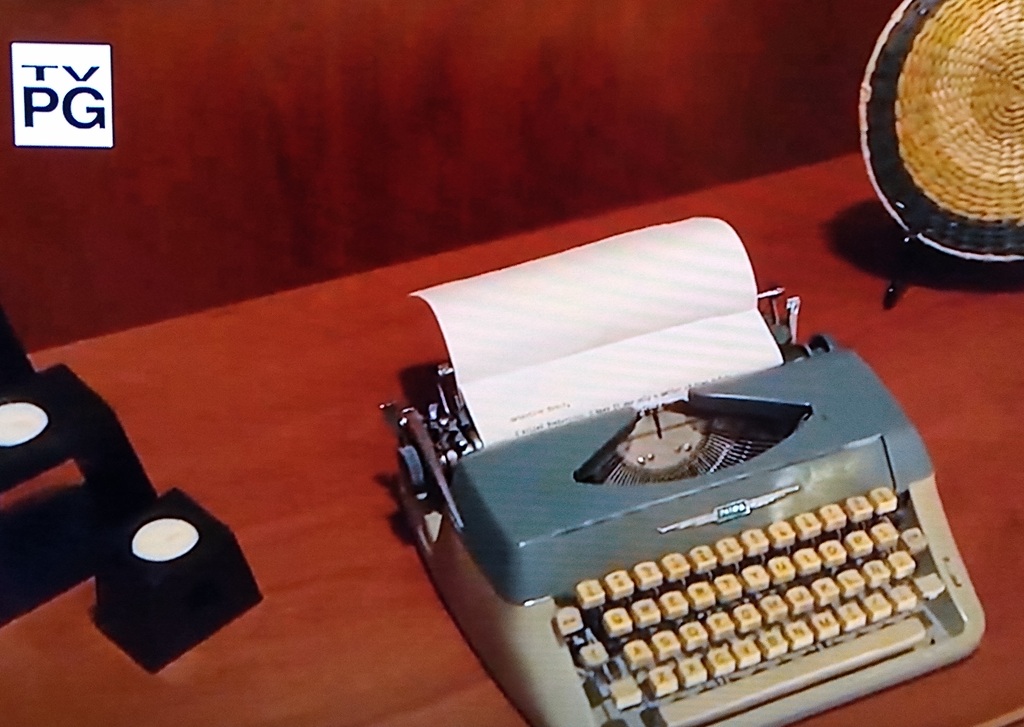
They realize the note is freshly typed, so they go looking for a typewriter.
And wouldn’t you know it, Evelyn Murtaugh’s typewriter is missing from the library.
They show the Baroness the note, and she thinks Actor James was the target, not Fredericks. But she never told anyone that she and Actor James switched rooms, so Emilia and Jason believe she was the actual target.
Emilia and Jason move the Baroness to a safe room since she’s still in danger. Everyone else gets sent to their rooms while Ray heads back to the mainland with the body and the DNA samples.
Jason cooks some food for Emilia and they discuss Fredericks’ secrets before starting to profile the killer. They’re very casual about walking around a manor with a murderer lurking nearby.
Emilia goes back to the kitchen for her forgotten key and is startled by Alice, who she ABSOLUTELY DECKS by accident!
COMMERCIAL BREAK!
Alice is surprisingly cool about getting punched in the face, and offers her services as a mystery solver to Emilia.
Emilia shuts her down, saying that she’s not good at solving mysteries, she’s good at telling stories about mysteries others have solved. (Plus Fredericks provided the solution to the puzzle for her). Alice admits that she came to MYSTERY ISLAND hoping to boost the visibility of her podcast.
The next morning, Emilia is working at the murder board when Jason arrives. They ponder if the death is intended to tarnish the island’s reputation and push Carlos to sell MYSTERY ISLAND.
They check on the Baroness, who excitedly shares her conclusion… the same one Emilia and Jason just discussed. They spoil her moment, but only a tiny bit.
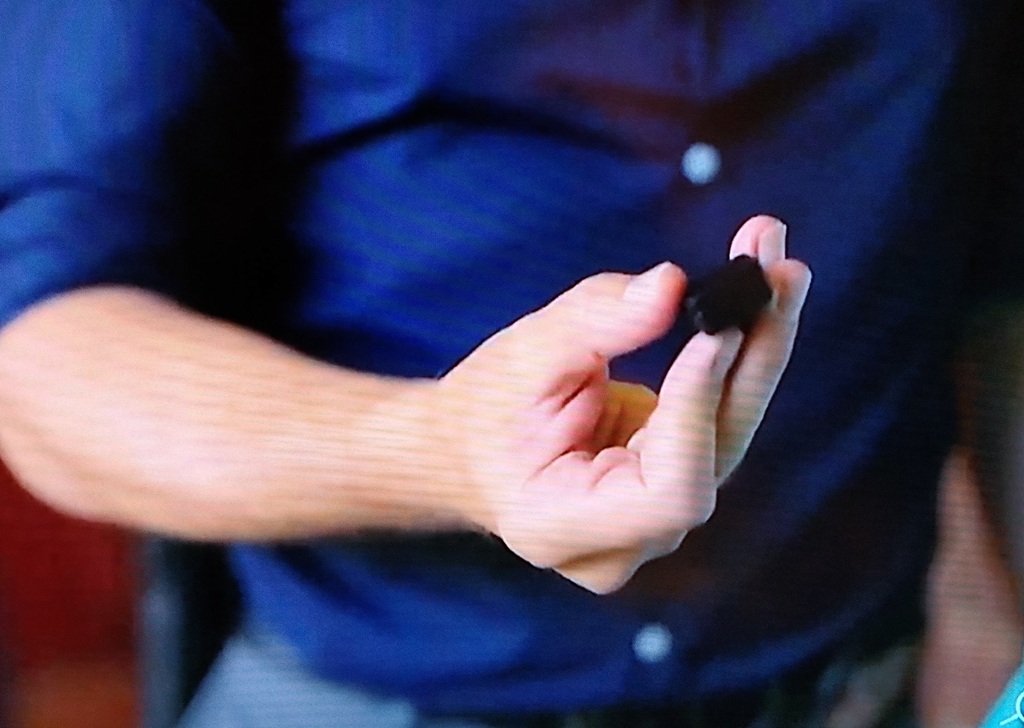
Outside at a lavish buffet, Bobby talks to Alice and offers to team up, but she turns him down. He asks if his brother told her he’s a lousy detective, which he denies. He then brags about deducing that the Baroness and Actor James are a real couple, but the fact that they are embracing quite openly RIGHT IN FRONT OF THEM AT THIS VERY MOMENT hurts his case as a brilliant detective somewhat. (We also see something in Bobby’s ear.)
Jason mentions the investigation is ongoing and asks them all to stay. Davis suggests the group continue solving the original murder game as a distraction. Everyone but Bobby likes this idea, and he walks off.
Actor James and the Baroness retire to the deceased bungalow, since he was the game’s victim and the game has resumed. Jason asks Davis to help keep Bobby around while they’re investigating, and Davis mentions that Bobby could use the prize money, since he might have to retire early. Apparently he’s being investigated by Internal Affairs for taking bribes from a prominent crime family.
Jason tells Ray about the New York crime connection when Alice interrupts to apologize to Emilia about last night. She then asks if Actor James and the Baroness are a couple (WHY DO THEY KEEP ACTING LIKE THIS IS A BIG SECRET?!) and they ask if she figured it out. She mentions Bobby did, and they wonder who told him.
They clock the thing in Bobby’s ear, and believe he knows about Actor James and the Baroness because of a listening device planted in the library. They find the listening device and check the other rooms, in case he’s bugging them as well.
In the deceased bungalow, Actor James and the Baroness talk, and he pitches returning to the mystery as a new character. Emilia and Jason arrive, requesting their help.
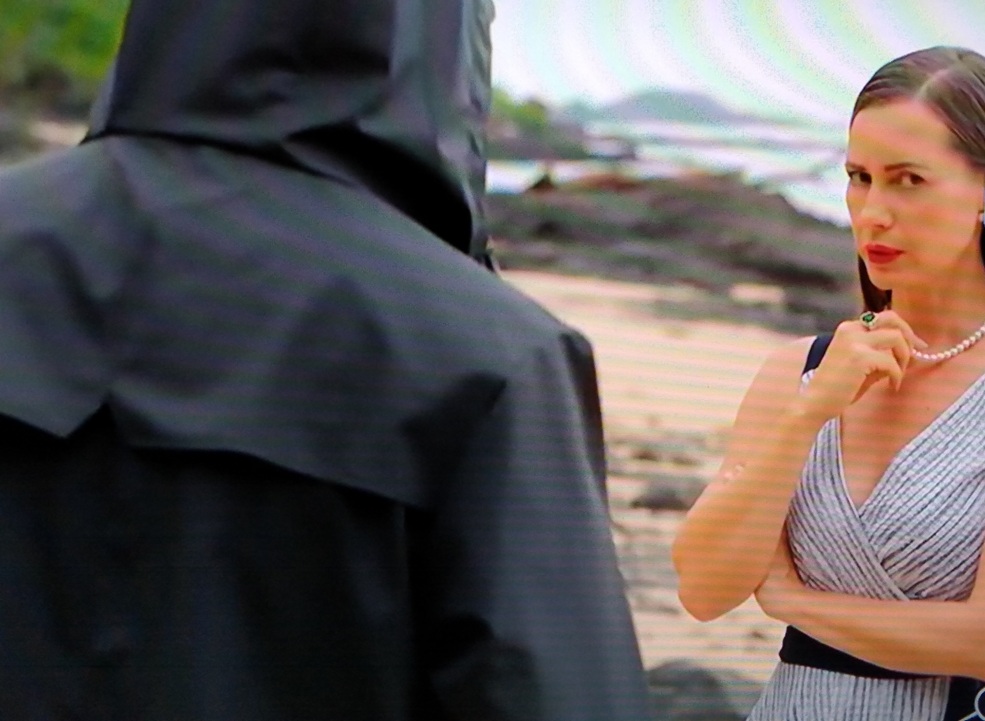
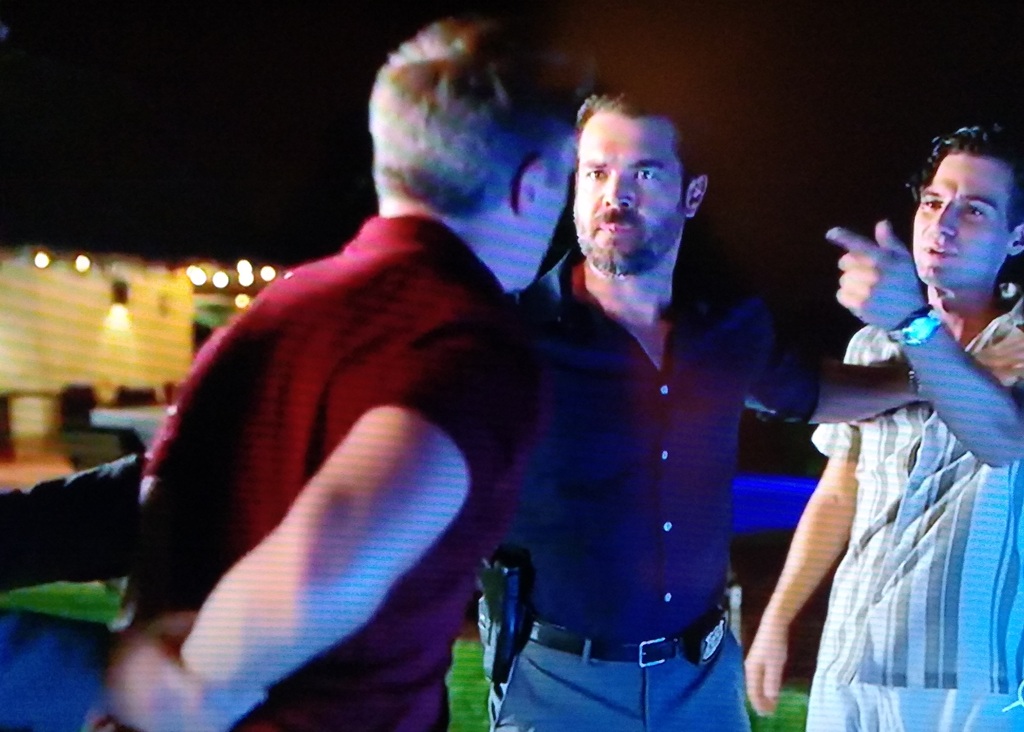
They stage an emergency to lure out Bobby and prove he’s the one who planted the listening devices. Bobby arms himself with a corkscrew and heads to the beach, where he finds the Baroness confronting a man in a dark hooded jacket.
When he approaches, the man turns around and reveals himself to be… Jason. The trap is sprung!
COMMERCIAL BREAK!
While Jason takes a call from the cops on the mainland, Bobby and Emilia talk about police work and masks. He namedrops his mentor, a detective who relocated to Boston.
When he hands over the listening devices, Jason mentions that the investment group looking to buy MYSTERY ISLAND is run by the same crime family that supposedly bribed Bobby. Bobby lawyers up rather than answering any more questions.
They leave Bobby’s room and overhear an argument between Aunt Louise and CC about Louise’s relationship with Fredericks.
As Jason and Emilia await the chief’s arrival, Emilia connects that Jason’s mentor and Bobby’s mentor were the same cop, Detective Ruiz. (In the previous film, Jason mentioned Ruiz’s murder was unsolved.)
With Ray’s help, they open Fredericks’ fingerprint safe and find the missing mystery plots written by John Murtaugh, along with contracts for a $2 million dollar estate in Scotland.
Jason calls the realtor and confirms Fredericks already put down a million for the estate and planned to pay the rest in a week. Where would he get this money so quickly?
As the Baroness reads through the missing mystery plots, she recognizes one of Murtaugh’s mysteries as the plot of one of CC’s novels.
They compare all of the mystery plots to CC’s books, and each Murtaugh mystery predates the novel based on it. Every CC mystery has been stolen.
They confront CC about this, accusing her of rifling through Fredericks’ things. They believe she was upset that he was out of mystery plots for her, and her newest book is suffering delays because of it.
COMMERCIAL BREAK!
CC claims she was happy to pay Fredericks because of her publishing success, and that she didn’t kill Fredericks. She needed him alive to help her finish her next book.
Back at the deceased bungalow, the Baroness wonders if she wasn’t the target after all, but Emilia and Jason still aren’t sure. They then meet Hugh Walsh, aka Actor James’s new detective character.
As Hugh and the Baroness rejoin the game, Emilia and Jason head to the murder board, but are stumped. They’re missing something.
Jason goes to talk to Bobby about Ruiz. They discuss Ruiz’s murder (and add the detail that Ruiz was drugged before he was killed) but Bobby still refuses to talk without his lawyer present.
In the game room, Hugh is talking to Louise, Alice, and the Baroness, and they discuss the game’s murder, returning to the drinks spinning on the Scrabble board. Alice deduces that Victim James picked up the wrong glass and was killed by his own drink… meaning that he intended to kill someone else.
Emilia and Jason bring food to Bobby’s room and discover he’s hung himself.
COMMERCIAL BREAK!
As Jason throws a sheet over Bobby’s body on the bed, Emilia spots the missing typewriter in Bobby’s room. There’s a suicide note from Bobby to Jason typed on it, confessing to Fredericks’ murder. But Jason can’t read the entire note without contaminating the crime scene. (Which is weird, because someone would have had to scroll the paper back down for all the text to NOT be visible on a typewriter.)
They tell Davis about Bobby’s death and the confession, and Davis refuses to believe that Bobby would kill for money, despite his shaky ethics. They fill in Actor James and the Baroness, and then overhear cries for help.
Davis and Ted are fighting near the pool about a deal gone bad, and we finally get the truth about why Davis and Ted were late to the game room on the first night. Ted cut a deal to get Davis as his financial planner in exchange for CC taking on Bobby as a contributor to her next book. (Ted was desperate, he’d lost most of CC’s money in the stock market.)
The chief examines Bobby’s body, and determines he was strangled BEFORE he was hanged, so it was murder, not suicide. Emilia spots that part of Bobby’s murder board was wiped clean, so she suspects he’d figured something out before he died.
They read the rest of the note from the typewriter and see that the word “defence” is spelled the British way, not the American way. So Jason wants to talk to the Baroness again.
Naturally, she’s upset she’s gone from potential victim to potential suspect. Actor James is similarly upset, and goes for a walk while Emilia and the Baroness chat.
The Baroness mentions MYSTERY ISLAND’s bad luck and suggests she might tell Carlos to sell the island and she’ll just move to New York and live with James.
Jason works at the murder board when Emilia arrives, frustrated that MYSTERY ISLAND might be going away. She and Jason resolve to listen to all of the recordings Bobby made, convinced that he heard something that they missed.
COMMERCIAL BREAK!
We get a montage while Jason and Emilia eat pizza and listen to Bobby’s recordings. When a marker runs out, Emilia goes to the Baroness’s desk for more, and finds it out of order. Someone has been in the password book! (So, you know, maybe hide it better if it’s so valuable?)
They check the computer and find that Bobby was the last person who logged in. They look at the computer history and see something important. They stare importantly at it, and at each other. IMPORTANT.
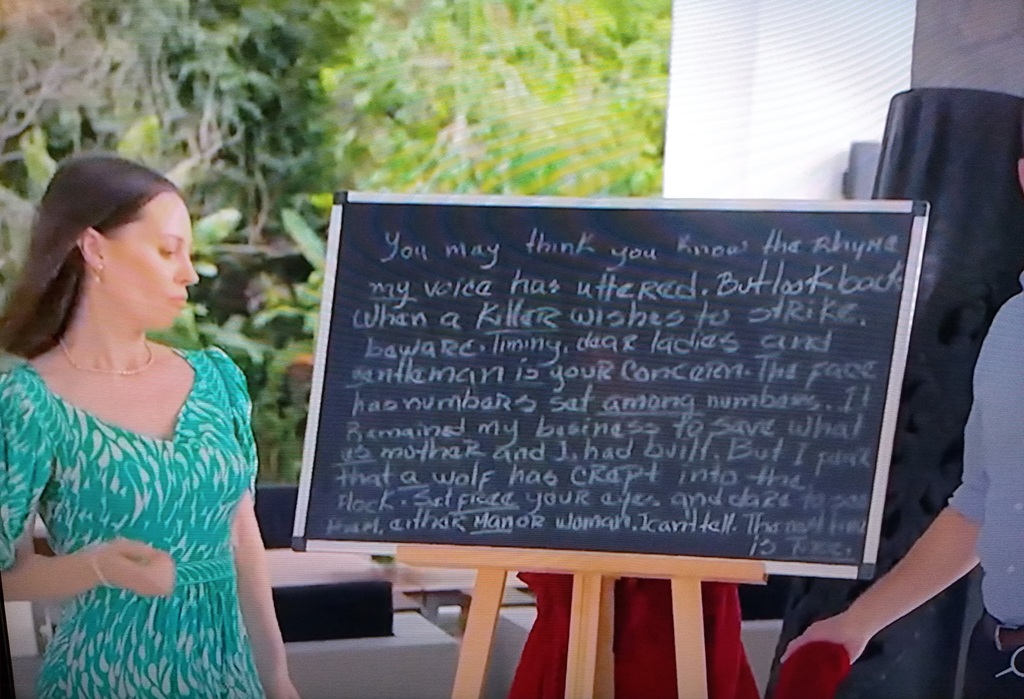
Cut to the big gathering scene. But not the one we expect.
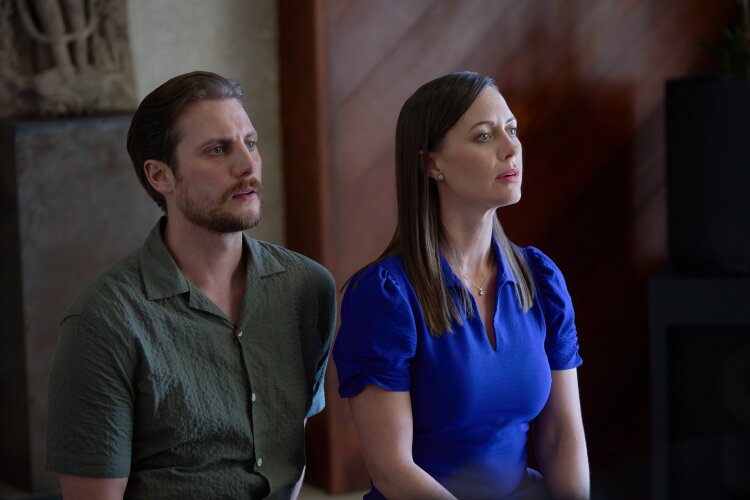
Louise and Alice have collected everyone to solve the murder of Victim James. They focus on the person who stopped the rotating Scrabble board and caused Victim James to pick the poisoned drink… the Baroness!
She dated Victim James, lured him to MYSTERY ISLAND, and then killed him to protect her beloved murder-happy game locale.
The Baroness congratulates Alice and awards her the prize money, but they’re interrupted when Jason strikes the gong in the corner of the foyer.
The cops arrive, and Jason and Emilia wheel in a murder board for their own grand reveal. They accuse Actor James of killing Bobby because Bobby recognized him from that improv show years ago.
In fact, they believe all of the misdirections (the note under James’s door, the fake suicide, the British spelling of “defence”) were the work of Actor James!
FINAL COMMERCIAL BREAK!
It turns out Actor James and Fredericks worked on the same cruise ship seven years ago, and Bobby found this out.
Fredericks and the Baroness had gone to New York to find an actor to play their Texas oilman, and they saw Actor James performing in Orestes.
And Orestes sounds an awful lot like “Arrest” when spoken by a dying man. GASP.
They ping-pong between three main topics: Fredericks, Bobby, and the cruise ship, and it’s sort of a mish-mash of random facts for a bit. They believe that Fredericks knew about a murder Actor James committed… seven years ago. Bobby didn’t know the details, but the connection between Actor James and Fredericks was enough leverage for him to try to shake down Actor James for money.
But Actor James killed Bobby instead and staged his suicide.
Emilia and Jason followed Bobby’s lead down the rabbit hole, uncovering how Actor James’s father died in prison… and how Actor James blamed the detective that put his father in jail: Detective Ruiz, Jason and Bobby’s mentor.
Actor James had discovered the offshore accounts where his father had hidden his embezzled money, and Fredericks tried to blackmail Actor James into helping him pay off his Scottish dream home with Louise.
Actor James was supposed to bring the money to the island to hand it off to Fredericks, but instead, he killed him and tried to pin it on Bobby while using the Baroness as a distraction.
Sadly, this is all conjecture. They have no hard proof of James’s involvement in Fredericks’ or Bobby’s murders. OH NO, WILL ACTOR JAMES GET AWAY WITH IT?
Well, no.
But why not?
They don’t have proof of him killing Fredericks or Bobby, it’s true. But they DO have his DNA from Ruiz’s murder, because he spat in Ruiz’s face before he killed him.
He is arrested and dragged off, still claiming he loves the Baroness. She looks around, baffled by the entire reveal.
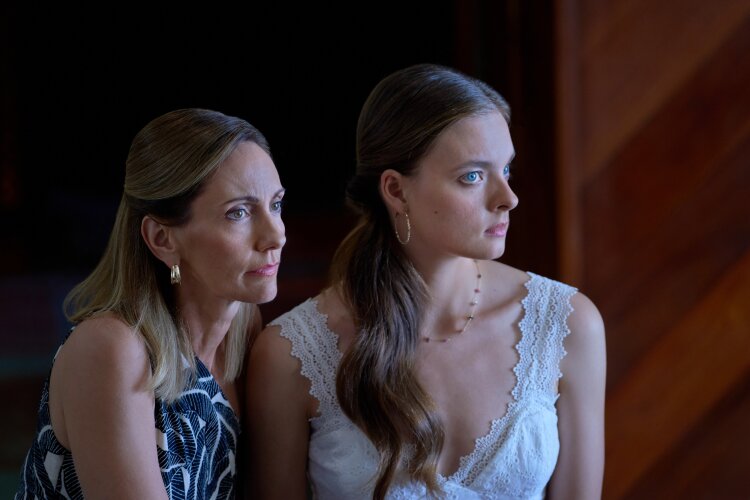
In our closing scene, the guests have left, and Emilia, Jason, and the Baroness decompress after the long weekend. CC wants to write a book about the weekend’s events, but the Baroness would rather Emilia write it instead.
She leaves, and Emilia and Jason discuss the book and return to their flirty banter from before, a bit less awkward now.
The end.
CONCLUSION
This was a curious watch. I enjoyed the actual mystery more than the murder in the original film, but I don’t feel like the filmmakers played entirely fair with the viewers this time around.
Like many murder mystery novels of the past, crucial information was kept out of our hands, so when the big reveal rolled around, we couldn’t really conclusively point to a suspect ourselves, due to lack of evidence.
There are huge assumptions in the big reveal that don’t feel like genuine deductions, and it makes both Bobby’s actions and the last murder seem a bit nonsensical. (Strangely enough, the actual solution of this film’s mystery feels more like the FAKE solution to the previous film’s mystery.)
I’m not saying the story doesn’t wrap up nicely. They manage to tie both movies together in an interesting way… but as someone who likes to try to solve the case alongside the protagonists, I felt a little cheated.
And given how Winner Takes All wrapped up all the loose ends from the previous film, I wonder if there’s anything more for a follow-up to accomplish. This might be a one-and-done (well, two-and-done, anyway).
You should definitely watch it for the fun twists and tropes, though. It’s not a bad way to spend a couple of hours.
Did you enjoy your return visit to MYSTERY ISLAND, fellow puzzlers? Let me know in the comments section below!
Social deduction games are terrific party activities. A social deduction game involves players being assigned secret roles or allegiances, and the goal of the game is to unravel these secret roles before the opposing side can eliminate you from the game.
Usually it means the good guys trying to root out the bad guys before the bad guys take power, kill the good guys, or outwit the good guys into acting against their own best interests.
There are a lot of social deduction games out there for you to enjoy. Ultimate Werewolf, Are You a Robot?, Salem 1692, The Resistance, and Secret Hitler are all affordable ones with tons of replay value. (Of course, for affordability, you can’t beat Mafia. You can play a round of Mafia with just a deck of cards, proving that social deduction games are more about the players than the game pieces.)
But, when it comes to social deduction games, one game stands head and shoulders above the rest in terms of complexity, variation, challenge, and immersion.
There are usually only a few different roles to play in social deduction games. In Are You a Robot?, there are humans and robots. In Ultimate Werewolf, villagers and werewolves. In Secret Hitler, there’s Liberals, Fascists, and Hitler. In Mafia, there are mafia members, townspeople, a doctor/guardian angel, and a detective.
The limited number of character archetypes allows you to introduce to new players to the game quickly, which is definitely a bonus for games that require a large number of people.
But these limited roles can also hurt replay value if your players are looking for more to sink their teeth into.
That’s where Blood on the Clocktower comes in.
Yes, there are only two teams (good and evil), but EVERY player gets their own role, including powers and requirements that change over the course of the three “nights” that the game takes place. Every role is unique, and victory or defeat can hinge on the special abilities of a single player.
Blood on the Clocktower is the Tri-Dimensional Chess to every other social deduction game’s Chess. There is so much going on, so much to keep track of, so many possibilities that you can’t help but fall fully into the immersion of the game. It’s your only chance to survive.
And the game is so involved that it lends itself well to be “performed.” Watching a great game of Blood on the Clocktower being played is sometimes just as fun as playing.
I have seen some amazingly entertaining actual play videos of Blood on the Clocktower. YouTube channels like Smosh and No Rolls Barred have played, and now, Good Time Society is hoping to fund a Kickstarter for a series of actual plays of the game:
Some of the best actual play personalities in the board game and roleplaying game are teaming up for this, and it looks like they’re going to make something special here.
So click this link if you’d like to contribute. If not, hopefully you’ll watch some of these actual play videos and check out the game for yourself.
Game companies continue to push the envelope in terms of storytelling, presentation, and immersion, and Blood on the Clocktower has become the new benchmark. Who knows what’s coming next!
Do you have a favorite social deduction game? Let me know in the comments below! (For me personally, I love the simplicity and replay value of Mafia!)
I had a different post scheduled for today, but unfortunately, Hasbro and Wizards of the Coast cannot stop making bad choices, so I must turn the PuzzCulture spotlight toward Dungeons & Dragons once again for sad reasons, rather than pleasant ones.
For the uninitiated, Wizards of the Coast (WOTC) is the company that owns the Dungeons & Dragons brand. They, in turn, are owned by the toy company Hasbro, and these conjoined companies have done a staggeringly impressive job burning decades of good will and consumer confidence over the last two years.
There have been numerous scandals involving:
the use of AI-generated content (and regular promises NOT to use AI, only for it to “accidentally” show up again)
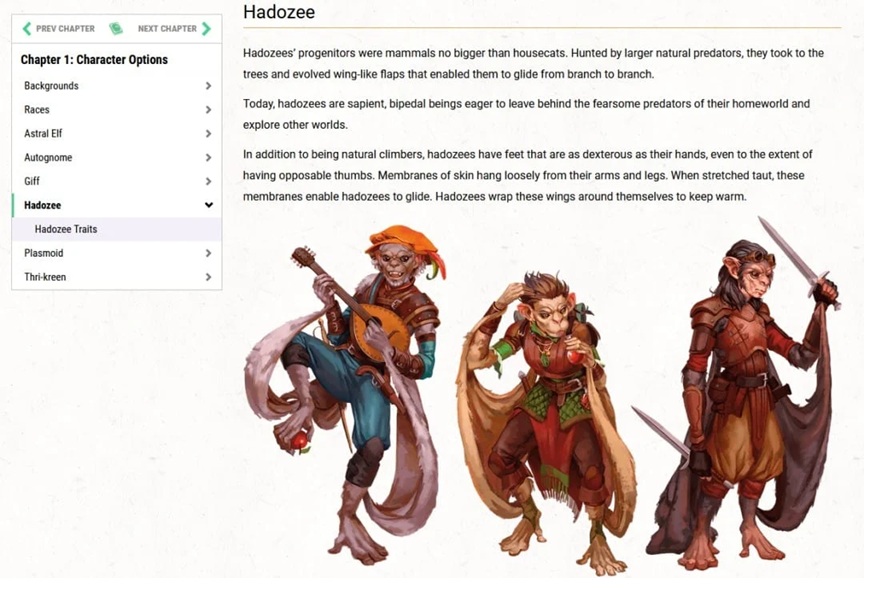
accusations of racial insensitivity (over the reintroduction of beings known as the Hadozee for their Spelljammer expansion)
the disastrous OGL scandal, where the company had to backpedal after trying to bleed the entire third-party market for their own gain. (And accidentally creating several new competitors by driving former allies away.)
But none of those are the reason for today’s outrage.
Apparently the plan is to fold Sigil (or some of its assets) into the current virtual platform owned by the company, D&D Beyond.
Sigil, as it stands, is a far cry from the 3D interactive virtual gaming platform promised in the summer of 2024 by WOTC. Instead, a buggy, unfinished version of Sigil was recently launched as an early playtest for Master Tier subscribers to D&D Beyond, many of whom had problems even accessing the limited version of the Sigil platform.
It’s hard to know the future of Sigil or the remaining development team at this point. This could be part of a fire-and-rehire-as-contractors maneuver, something that plagues modern development companies these days.
This could be an attempt to refocus their efforts on the video game market after the success of Baldur’s Gate 3, which uses Dungeons & Dragons settings, characters, monsters, and other content.
Honestly, it’s hard to believe that Hasbro and WOTC, which are not video game companies, can hope to replicate either BG3‘s success or realize their grandiose plans to release multiple games a year, something that’s a challenge for even top video game companies.
Especially since Larian Studios, the company responsible for BG3, already announced they won’t be producing any additional content for BG3.
I don’t believe Hasbro and WOTC have given up on their plans for digital D&D content. We know for a fact that they aspire to create AI Dungeon Masters to run games for players so they can further monetize their remaining audience. (And Dungeon Masters are in relatively short supply compared to players. This has always been the case; good DMs are hard to find and harder to “manufacture.”)
I wish nothing but the best for the former members of the Sigil development team, and hope they all land on their feet.
Although the future of the D&D brand remains in the hands of WOTC and Hasbro, thankfully for fans of Dungeons & Dragons, the future of playing and enjoying the game remains wholly in our hands. We have the books, we have a thriving third-party marketplace to provide exciting new content, and we have our imagination, which is the greatest resource a table will ever need.
As long as we keep gathering around a table — virtual or physical — and telling our stories, roleplaying games as a whole are in good hands.
Hallmark mystery movies have employed a lot of puzzly tropes over the years.
We’ve seen locked room mysteries, and crossword mysteries, and murder mystery dinners-turned-murder mysteries, but I don’t know if we’ve seen an escape-room-style-puzzle-fueled-murder-mystery-turned-murder-mystery before.
Mystery Island combines some classic murder mystery elements — isolated place, limited number of suspects, unexpected murder — and throws them in a blender with some riddles. It makes a mystery-in-a-mystery. We’re almost to “riddle wrapped in a mystery inside an enigma” level here.
But how does it hold up in the pantheon of Hallmark mystery movies? Let’s find out.
First, though, a heads-up: I’ll recap the story below, and then give my thoughts on the whole endeavor. If you’d like to read my conclusions but skip the full recap, scroll down to the bottom of the post.
Ready? Okay, let’s dig in!
FILM RECAP
The film opens on the big climactic reveal of a murder mystery. We have British accents, a man with an eyepatch and a white tuxedo, and elaborate hifalutin names. The Baroness Alcott believes she knows who the murderer is, but she got it wrong.
Again.
Drat.
Later, she complains on the phone to her friend, Dr. Emilia Priestly, and leans on Emilia to help her solve the mystery, but Emilia has an actual suspected killer to talk to. During an intense back-and-forth, the inmate threatens her and her family’s safety, and she walks out, rattled.
During a cup of tea with the Baroness, who has flown straight back from her murder mystery to check on Emilia, they discuss the dangers of her consulting work. They both agree she needs to take a step back… after wrapping up her work for the next few weeks, that is.
Naturally, this perfectly lines up with the next murder mystery event the Baroness will be attending on MYSTERY ISLAND, and the Baroness offers to treat Emilia to the expensive adventure.
BAM, it’s three weeks later, and our intrepid duo is on the dock, ready to take a boat to MYSTERY ISLAND. But not before literally bumping into an American man who is rather abrupt with them. I’m sure we’ll never see the brooding handsome fellow again.
Cue a big swooping drone shot over the speedboat as it races to MYSTERY ISLAND.
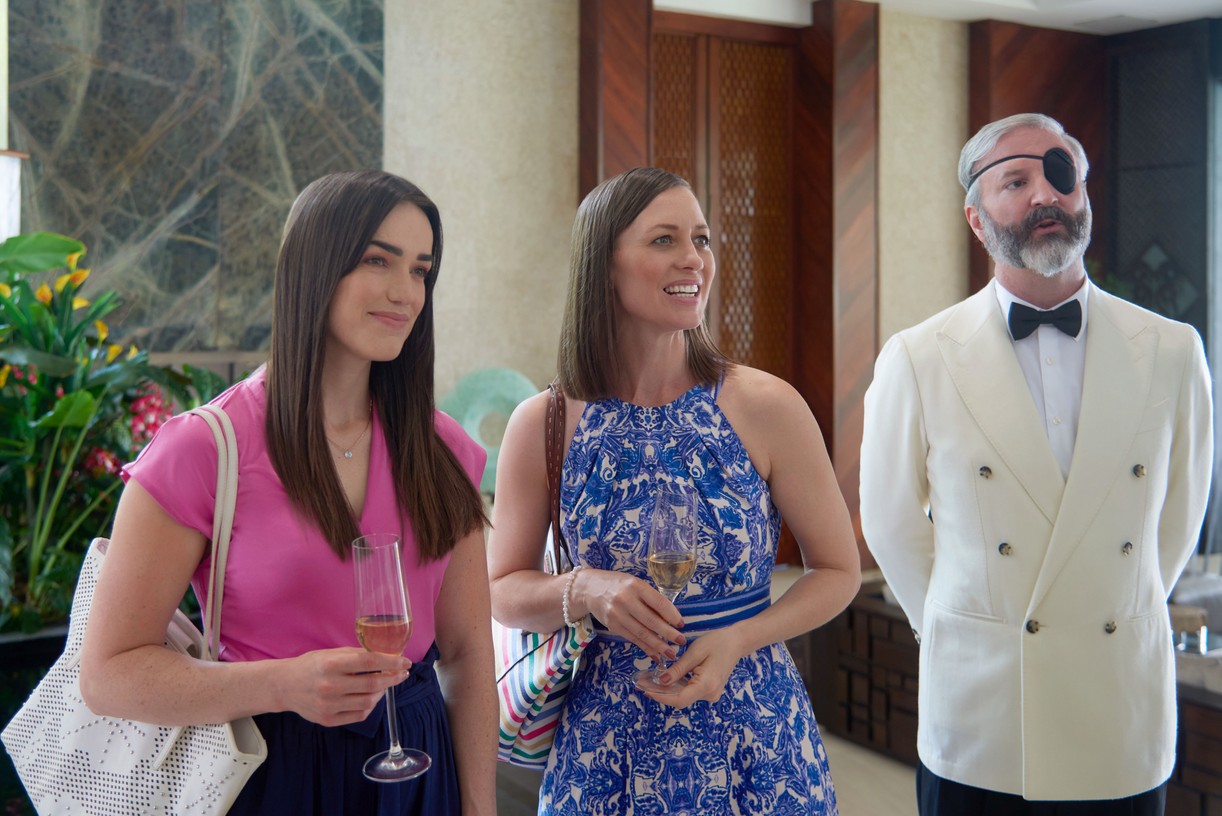
Emilia and the Baroness arrive, greeted by the well-appointed staff of the household and our white-tuxedoed eyepatch-toting host, Fredericks. He welcomes them with champagne and escorts them inside.
This place is BONKERS. There’s a water feature, complete with planks to walk across, like an indoor pond, as well as a conservatory, where plants abound, augmenting the sharp-angled decor.
There’s a library for research (loaded with first editions of mysteries written by the organizer’s famous mother), a dining room with floor-to-ceiling windows, and a game room. (We get our first Clue reference here.)
It’s also backstory time, as we learn about the first mystery hosted on MYSTERY ISLAND five years ago, the reclusive organizer John Murtaugh (who lives in Montana and hasn’t been back since the first event), and the fact that this weekend’s event is meant to attract investors. (Based on the champagne, the numerous members of staff, and the house itself, I’m not surprised!)
We also meet some of the other solvers for this weekend’s event:
Carlos del Fuego (a hedge fund manager and potential investor who knows John) and his wife Morgan
Phoenix Green (a rude workout maven and potential investor)
Sarge (former military, potential investor, and the only four-time winner of MYSTERY ISLAND events)
Riley Peel (a reporter who works for a travel website, non-investor)
An awkward toast follows the awkward introductions, and then Fredericks arrives to collect their phones (to avoid cheating, although there’s no signal on the island) and inform them their rooms are ready.
In Emilia and the Baroness’s room, the Baroness shows off the murder board where they can begin solving the mystery, and explains the rules. Emilia finds an invitation to dinner from John Mariner, and the Baroness begins theorizing if he’s the murder victim or a misdirect. We find out each mystery is specifically tailored to the guests, thanks to profiles provided by the players.
A gong sounds, and dinner time has arrived.
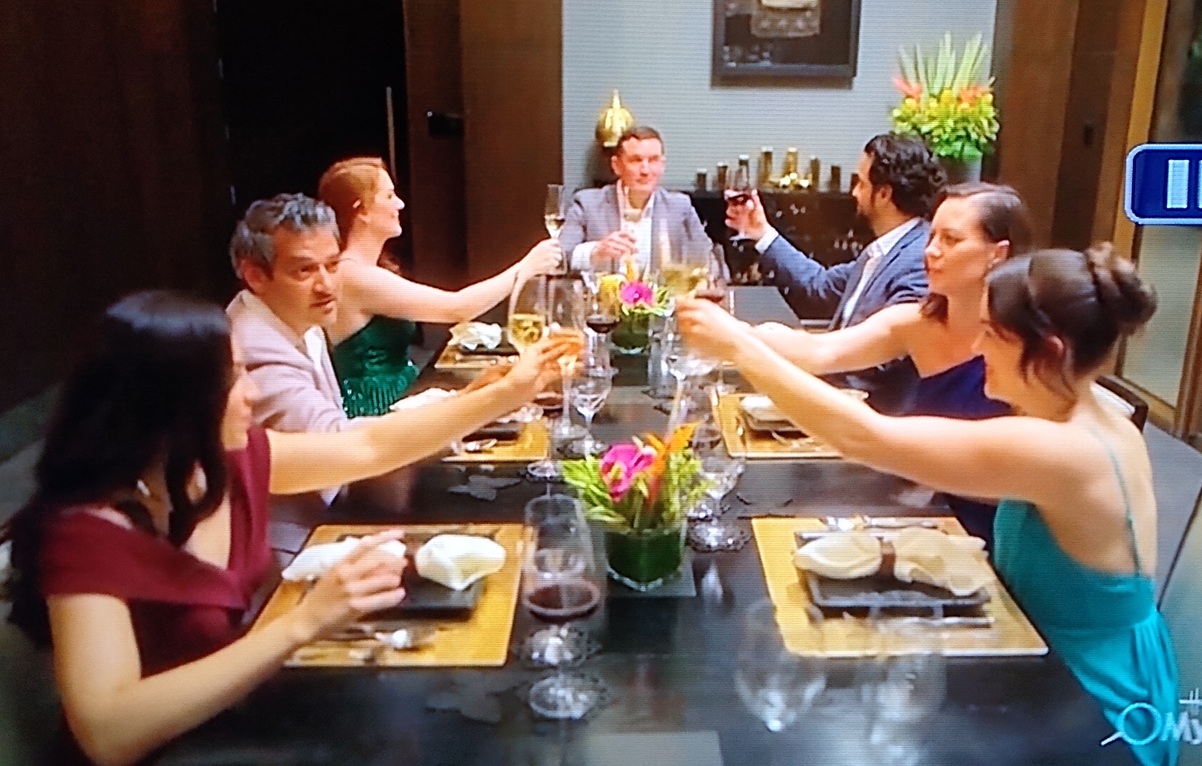
The men are in summery suits and the ladies are totally glammed out. Fredericks plays a recording from Mr. Mariner for the guests, and everyone grabs their pens, ready to take notes. THE GAME IS AFOOT.
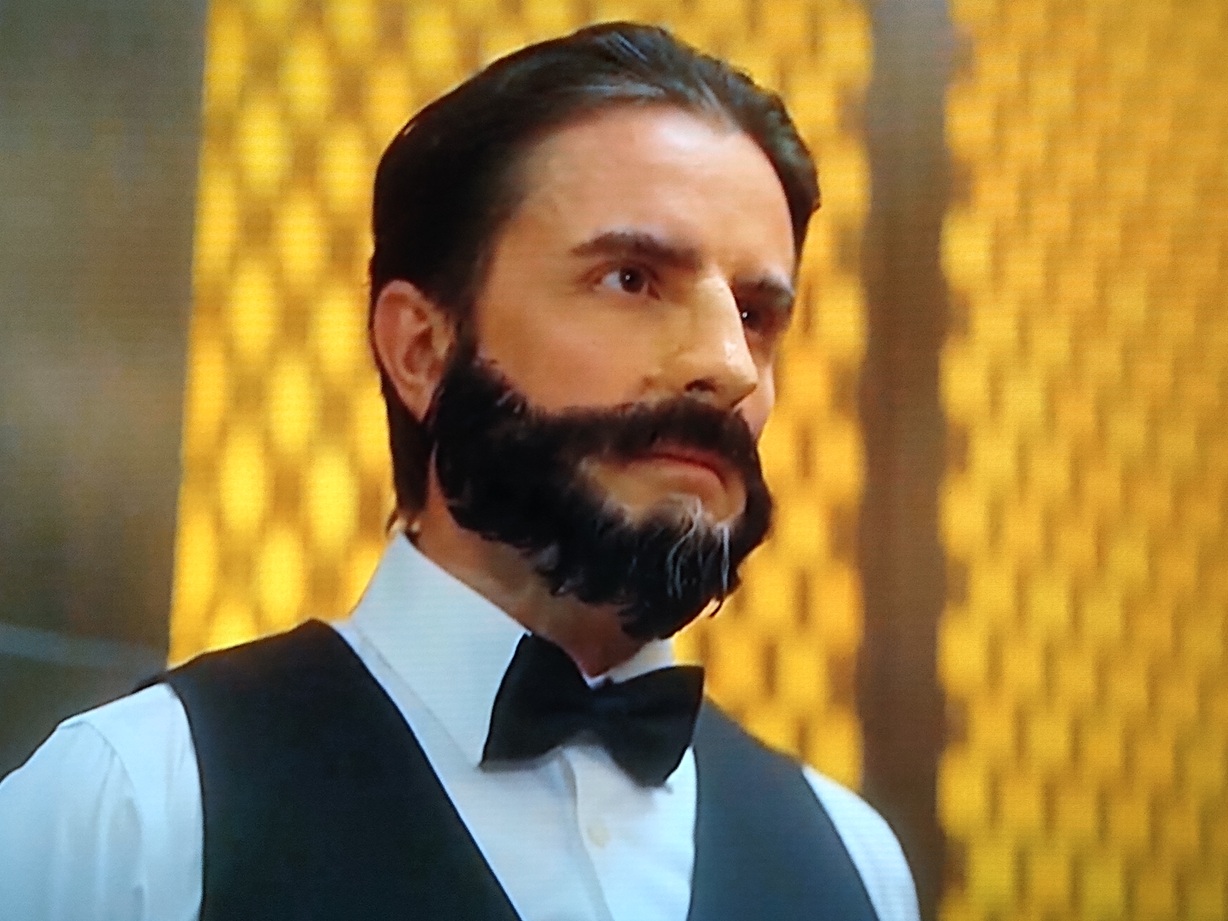
As the message plays, we get a glimpse of a member of the staff with the fakest beard you or I or anyone else has ever seen.
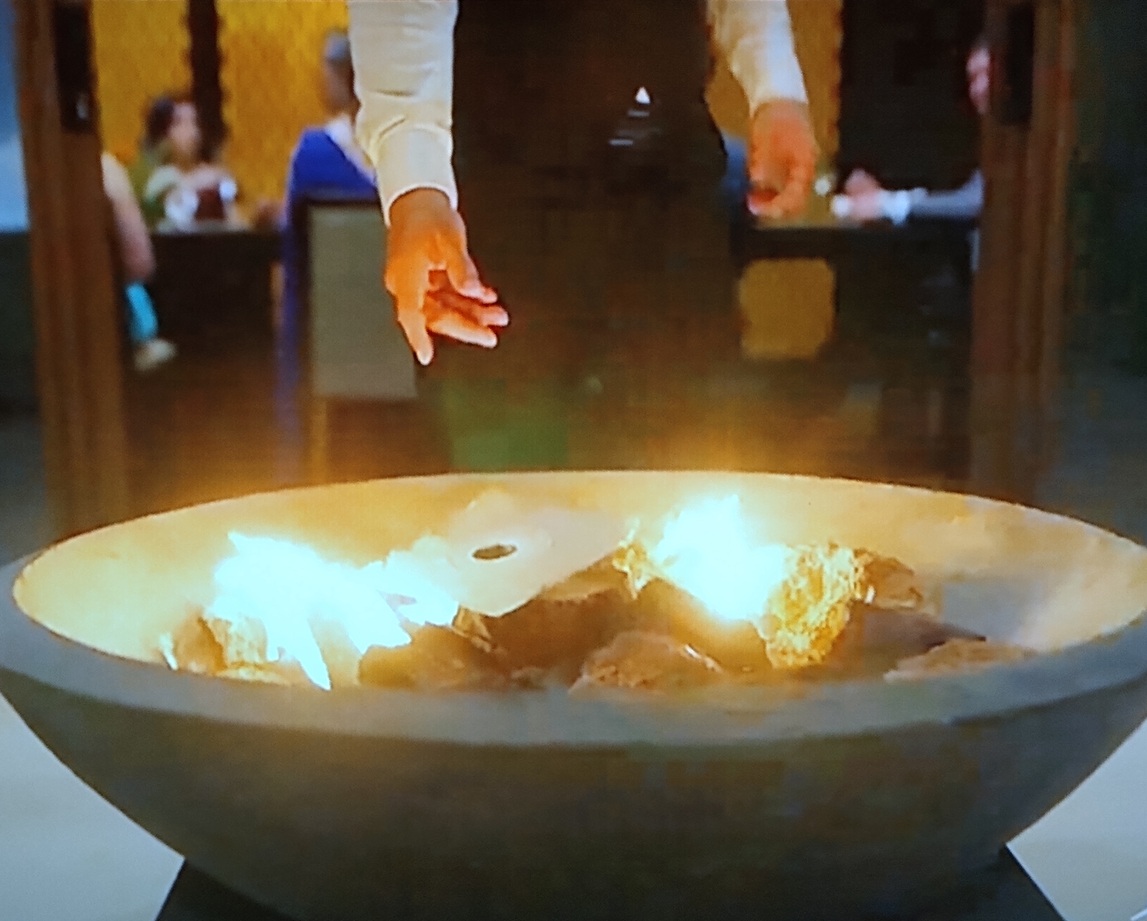
The recording namedrops Sheridan le Fanu (a mystery and horror writer), as well as the nursery rhyme Hickory Dickory Dock. The recording is clearly loaded with references that will mean more later. The record itself is then burned in the fireplace by fake beard man.
Everyone settles in for dinner and wonders about when the mystery will begin.
Cut to the game room after dinner, where Emilia sits down with a drink, and all the players scatter to different rooms, growing impatient. No corpse has dropped yet, so they head off to bed. There’s a momentary glance between Riley and a member of staff named Lucia.
Emilia and the Baroness sit outside and discuss the clues from the recording. We get a “the butler did it” joke, and they discuss the etymology of “Mariner,” the host’s name. Emilia connects it to Murtaugh thanks to the Oxford-English Dictionary in the library. The Baroness hopes this means the mysterious creator will be attending this year’s event.
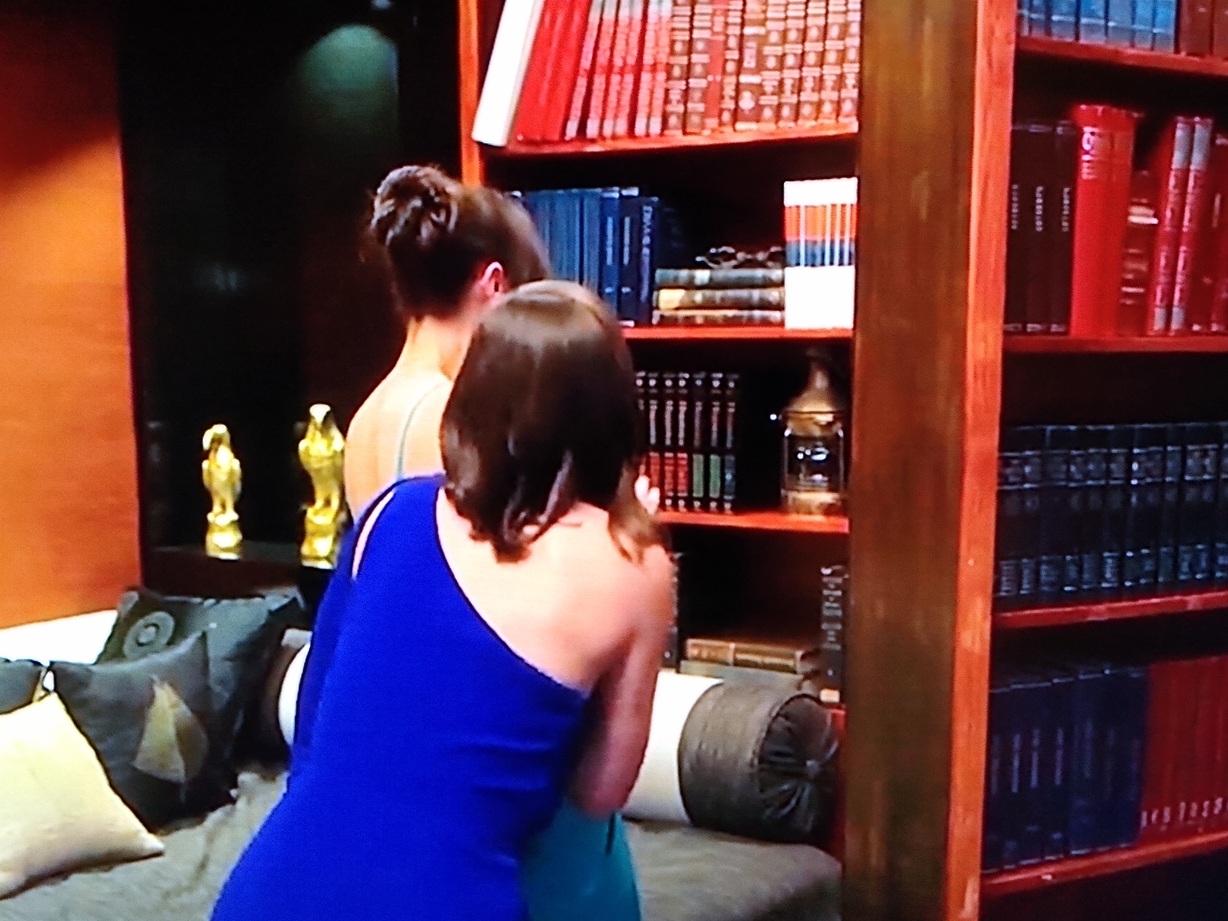
When Emilia returns the dictionary to the shelf, there’s a click, and the entire bookcase swings open, revealing a hidden passage. Giddy, they grab a handy lantern and head into the passageway and up the stairs, finding a door with no knob. A locked room, indeed.
They recall the riddle and knock three times, opening the door to a secret study. The Baroness screams when she sees a body on the balcony, and when they investigate, it’s our friend with the eyepatch and white tuxedo, Fredericks.
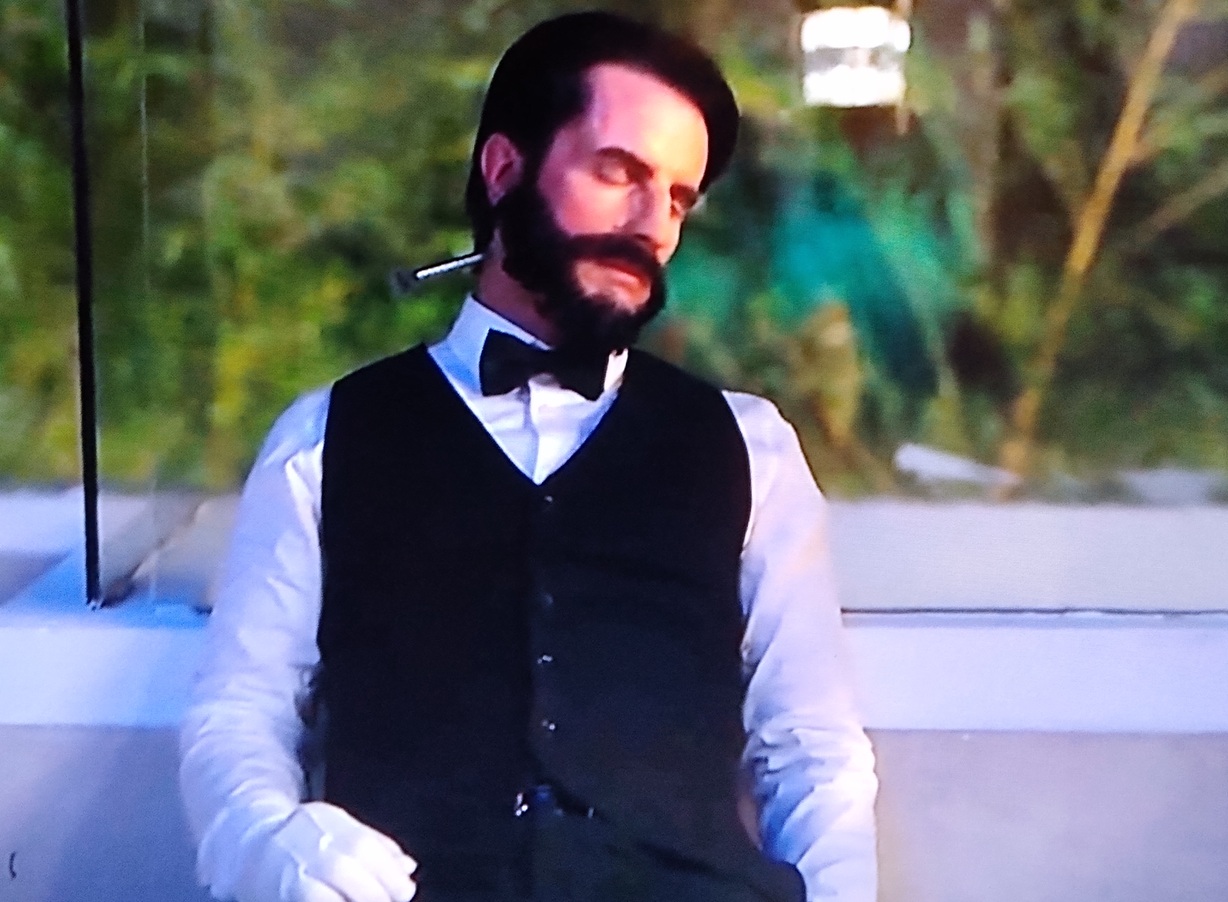
But he’s not alone. Our poorly-bearded server is there as well, with a dart in his neck.
Fredericks stirs, revealing he’s alive, and the Baroness is disappointed. Emilia is horrified when she discovers that the other man is genuinely dead, not just part of the game. She also spots the fake beard and nose on the corpse, removing them to reveal the dead man as – GASP – the reclusive John Murtaugh.
COMMERCIAL BREAK!
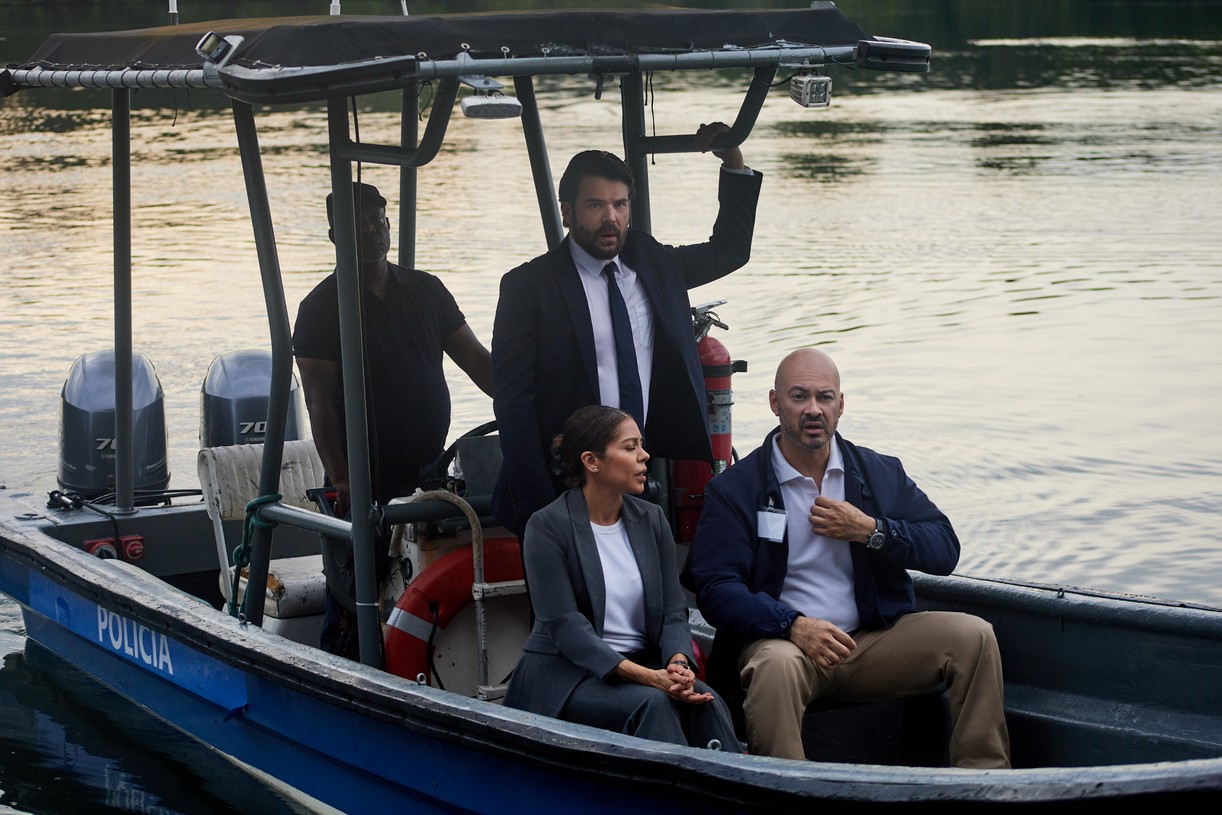
Police Chief Gloria Espinoza steps down onto the boat of the American man Emilia bumped into before, and it turns out he’s Jason Trent, a detective who crossed paths with Murtaugh years ago.
They have a murder to investigate. On MYSTERY ISLAND.
Cue more overhead boat footage.
After a tense reintroduction with Fredericks, Jason and Gloria meet up with the Baroness and Emilia.
Jason examines with the scene with his crime tech and meets Lucia. Murtaugh was killed with a poisoned dart, but could have died anywhere between several minutes and half an hour after being darted. They also find a remote control for a drone, but no sign of said drone.
Fredericks mentions previous tensions between Murtaugh and Sarge, as Sarge wished to collaborate on mysteries for MYSTERY ISLAND, but was rebuffed by Murtaugh.
Fredericks then shares details on the mystery with Jason, explaining that he was meant to be the victim for this weekend’s events, and that he didn’t know what would follow next. The plan for the rest of the weekend’s mystery is locked in the safe. (Murtaugh ordered him not to look until after Fredericks’ “corpse” was discovered.)
When the safe is opened — kudos to the sound designer, the clicks of the safe are very satisfying — GASP. The safe is empty.
COMMERCIAL BREAK!
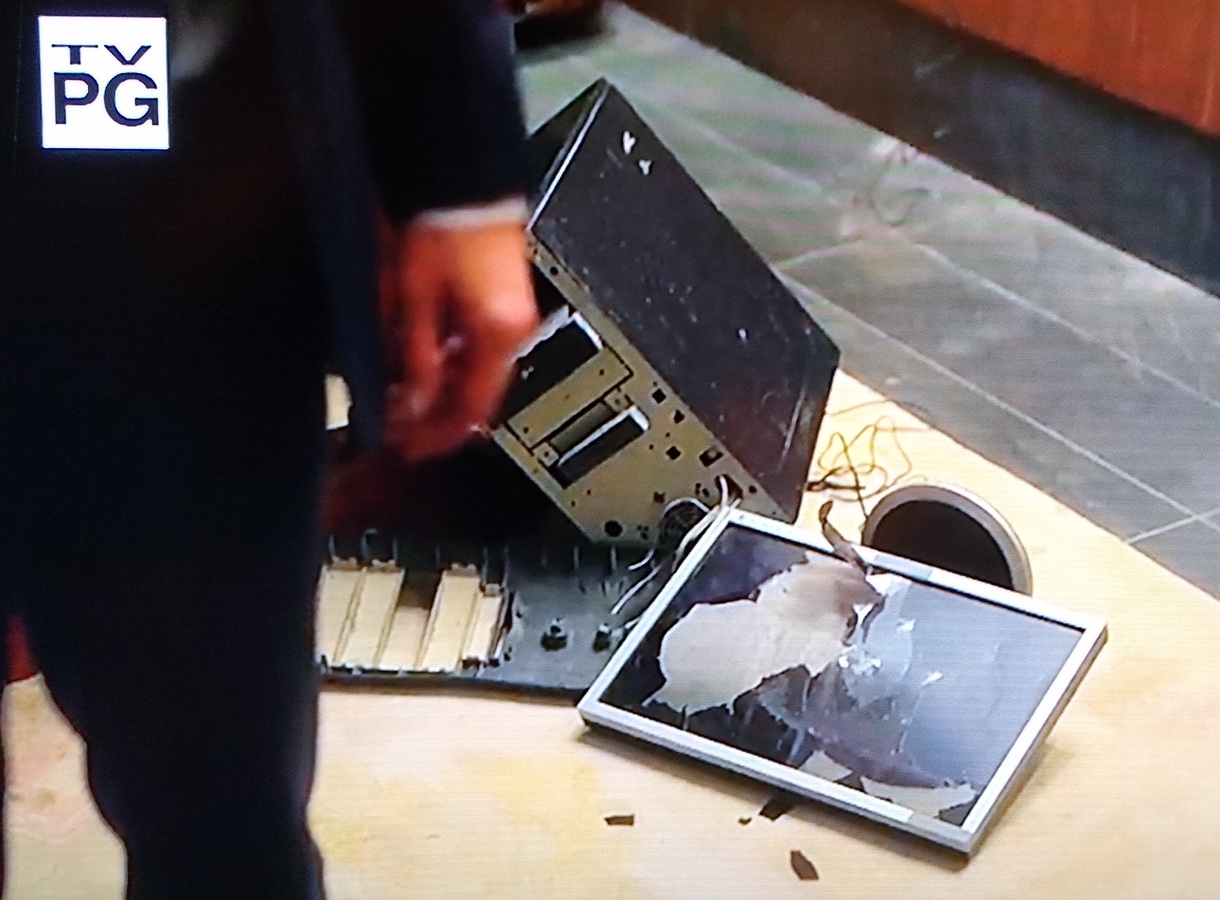
Fredericks is aghast at the empty safe, explaining that only he and Murtaugh knew the combination. He and Jason then notice that his computer is absolutely smashed to bits on the floor. How they entered the room without noticing a wrecked computer tower RIGHT THERE is beyond me.
Not only is that the sole source of internet access for the island, but Fredericks then reveals there is no surveillance anywhere on the island, because guests who pay TEN THOUSAND DOLLARS A NIGHT expect privacy.
The chief goes back to the mainland with the body and profiles on all the guests, since there’s no internet on the island now to verify the profiles. (I don’t know why the chief doesn’t just bring another computer with her the next day. It’s not like that computer was the only one in the world that could access the internet.)
Jason goes to see where everyone was before the secret passageway was discovered, and Emilia hits him with a detailed account of everyone’s movements. Jason is impressed.
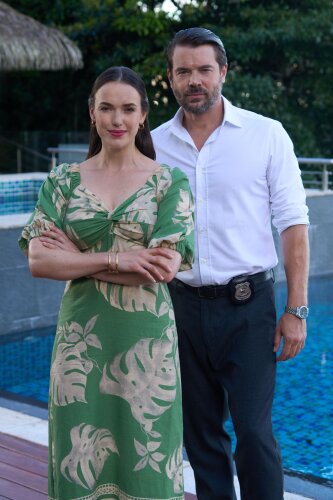
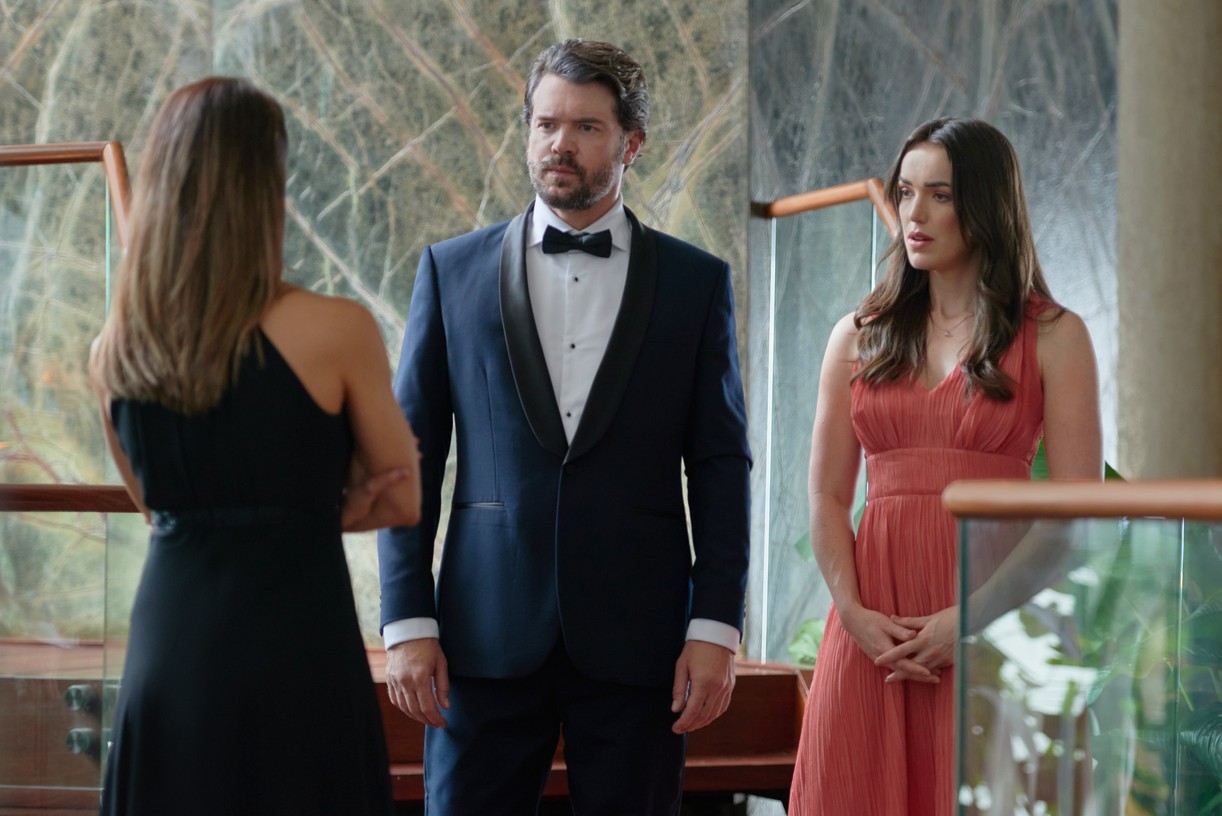
Everyone is sent to bed, and the Baroness immediately starts matchmaking Emilia and Jason, trying to catch up to all the Hallmark viewers who were already doing so. (I mean, look at that photo. Can’t really blame her.)
The next morning, all of the guests and staff are gathered in the dining room, with several guests demanding to leave, only to be cowed into staying by Jason. The police take fingerprints and DNA from everyone.
The Baroness immediately wants to go look for clues, and Emilia reluctantly follows.
Gloria and Jason interview Sarge while Phoenix tells Carlos she’s going to lie to the detectives and say she heard Emilia talking about committing “the perfect murder.” Phoenix even suggests taking a dart gun from her room and planting it in Emilia’s room to frame her, casually claiming that if she’s actually innocent, the trial will prove it.
Phoenix is a monster. (Also Carlos is weirdly casual about Phoenix mentioning a dart gun in her room. I would have asked more questions. I’m just saying.)
Riley spots Emilia eavesdropping and blows up her spot before walking in and greeting Phoenix and Carlos. Emilia then sees Riley find a note in his pocket, read it, and throw it into the fire before he talks a walk outside. So many shenanigans so quickly!
Carlos is interviewed next, as Sarge stumbles upon the Baroness trying to pick the lock to his room. He’s fine with it and gives her the key to his room so she can search his things.
Emilia follows Riley out of the house while Phoenix offers the detective a fake break-up note from Murtaugh to Emilia, claiming it fell out of Emilia’s purse the night before. When Jason puts the spotlight back on her, she immediately claims Morgan was having an affair with Murtaugh.
Phoenix is a monster.
The Baroness finds nothing in Sarge’s room, but still suspects him. However, they agree to work together to solve the murder. (Sarge and the Baroness deserve their own movie. Make it happen, Hallmark!)
Emilia follows Riley along a wooded path and sees him arguing with Lucia.
Back with the police, Morgan claims there was no affair, and deduces that Phoenix pointed the detectives in her direction. She then says that she and Phoenix used to be friends, back when Phoenix and Murtaugh dated. (Man, for a mysterious recluse, Murtaugh really gets around.)
Emilia tells Jason about Riley burning the note, his meet-up with Lucia, and about what Phoenix said. He shows her the note, and she denies ever meeting Murtaugh before walking off. But she doesn’t go far, and she overhears the chief tell Jason that Phoenix’s fingerprint was found on the dart gun that killed Murtaugh.
(See, Carlos, you should’ve asked more questions.)
COMMERCIAL BREAK!
Sarge and the Baroness find Emilia, who immediately wants to join their unofficial investigation after Phoenix’s attempted frame-up. They compare notes and the trio sneak up to listen in on the conversation between Phoenix and the cops.
She claims she didn’t notice the dart gun was missing, but also claims she touched several of the guns on display in her room the day before. Jason confronts her about the note and lying about not seeing Murtaugh, but she again pushes attention to Morgan.
The trio hides a few feet away like Scooby-Doo characters before sneaking up to Morgan’s door to overhear Jason and Morgan talking. (Boy, $10,000 a day for secrecy, and these doors and walls do NOTHING to muffle conversation. What a ripoff!)
Phoenix bursts in, followed by the trio, and gets put in handcuffs while trying ONCE AGAIN to convince them that Emilia and Murtaugh were a thing.
Phoenix is a monster.
Emilia walks down to the beach for a quiet moment, and on her way back, she spots Carlos running into the woods. He starts burning some papers at a small firepit.
COMMERCIAL BREAK!
Emilia yells “Police!” and Carlos scampers off. She then grabs the smoldering papers and runs back toward the house, pursued by Carlos, who apparently didn’t scamper that far. Lackluster scampering, sir.
Thankfully, he trips on that one arch-shaped tree root that’s always there to snag someone’s foot and he wipes out.
She makes it back to the mansion before Carlos and hands over the papers to Jason. They’re love letters from Murtaugh to Morgan. Emilia officially offers to help Jason with the case. (And the Baroness and Sarge wish to listen in… the way they have been through doors the whole time anyway.)
Morgan confirms the love letters are real but claims it was one-sided and she had no interest in Murtaugh. It turns out the letters Carlos was trying to burn were John’s copies of the letters, hidden in a fake Don Quixote novel on the bookshelf that Carlos picked up, as it’s his favorite book.
Given that the secret passageway was also triggered by a book, and this is MYSTERY ISLAND, the crew starts searching every book on the island for another clue. Emilia finds another fake book in the library, and this one has a recording inside.
Lucia marches down to the beach to meet someone, and we get a classic point-of-view “Oh, it’s you” shot before the camera cuts away.
The crew listens to the record, which is another copy of the recording everyone heard at dinner. The Baroness stops it quickly, explaining who Sheridan le Fanu is, in case we’d all forgotten. (We hadn’t, Baroness. We’re all huge le Fanu stans, obviously.)
Fredericks then tells everyone that dinner is at 6 and he has a tux for Jason to wear. Jason balks at the idea of formal wear, but everyone acts like he’s weird for not wanting to dress up for dinner. It’s not weird for MYSTERY ISLAND.
Later, Carlos claims Morgan isn’t feeling well, and Emilia goes to check on her. Jason arrives in his tux (from outside? Did he change outside for some reason?) and he joins Emilia.
Morgan claims she has a summer cold, and Emilia spots a fake nail missing from one of Morgan’s fingers. They leave, both convinced Morgan is lying.
The chief arrives in a fabulous black formal outfit. I’m just saying, no one acknowledges it, and that’s rude. Chief looks fab.
Anyway, she reveals that Riley doesn’t work for the travel magazine after all. Oh, and Lucia is missing.
COMMERCIAL BREAK!
Jason and Emilia have a nice moment talking about her work with the police before going to check on Riley about all that liar’s lying lies he lied about.
They confront him about the magazine job, and he claims he’s working on an expose about Murtaugh. The island is hemorrhaging money and costs ten times what it earns. He’s near bankruptcy and all of his investors would lose out if MYSTERY ISLAND failed. It’s a solid motive for the murder for all the investors. (Also we learn that Murtaugh redecorates every bedroom in the mansion twice a year. MONEY, SIR.)
Emilia and Jason share a drink outside and Emilia reveals her policeman father died at his desk a year ago. We also learn how Jason ended up policing the island. (His mentor was killed on the mainland nearby and his murder remains unsolved.)
They bail on dinner and stroll along the beach. We get more backstory on each of them: Emilia was engaged once, and Jason met Murtaugh six years ago when he had a fight with Fredericks over Fredericks being better at fencing than Murtaugh OH AND THAT’S WHY FREDERICKS HAS THE EYEPATCH. HOLY CRAP DID MURTAUGH STAB FREDERICKS WITH AN EPEE LIKE A PROPER SWASHPUZZLER?!
Ignoring all the unasked questions about One-Eyed Fredericks, Emilia uses her awesome power of finding dead people and spots Lucia’s body in the surf.
COMMERCIAL BREAK!
Riley walks in as Emilia, Fredericks, Carlos, Sarge, and the Baroness discuss Lucia’s murder. Riley breaks down.
Jason and Gloria appear to be investigating the staff dormitory — for a place with an event ten weekends a year? Do they live there all year round? Seriously, hemorrhaging money, this place — where they smell chloroform. Emilia then arrives with Riley.
It turns out Riley and Lucia were dating, and she was his confidential source about Murtaugh’s finances. He then claims that Lucia was planning to blackmail one of the guests for money, but he doesn’t know which one.
The crime tech shows up to take Lucia’s body, and reveals that Murtaugh was killed by cyanide, but he was already dying from cancer.
Based on the time of Lucia’s death, everyone searching the library is cleared for her murder (the Baroness, Sarge, Emilia, and that monster Phoenix). They check everyone else’s alibis for the time around Lucia’s death.
COMMERCIAL BREAK!
The Baroness and Sarge are listening to the record again. They ask Fredericks if Lucia heard the message, and he claims she listened to it days before the event started.
Emilia, just as convinced of the Baroness’s brilliance as we are.
The Baroness believes Lucia decoded the message from the record and confronted the killer. (This is a very confusing deduction. Does the Baroness think that decoding the message for the FAKE murder of Fredericks led Lucia to the REAL killer of Murtaugh? No wonder the Baroness never solves these things. Yeesh.)
The coroner’s report indicates that Lucia fought with her killer, and probably injured them. It also reveals that she drowned in fresh water. So she drowned in the river. (Which is apparently not near the beach. The geography here is a bit confusing.) They go searching the riverbank for clues.
Three seconds later, they find a broken bottle that smells like chloroform and a rock with blood on it. Emilia also spots a fake nail at the scene.
They confront Morgan, who has scratch marks on her arm from Lucia. She claims that Lucia found the bottle of chloroform in Carlos and Morgan’s room, but that it wasn’t theirs. Lucia didn’t care, however, and was going to blackmail them anyway. They fought, and Morgan claims that during the scuffle, Lucia tripped and hit her head on the rock before tumbling into the river.
Emilia and Jason talk to Carlos, who reveals he was secretly funding MYSTERY ISLAND and bailed Murtaugh out of debt. But when Murtaugh found out he was the angel investor and wanted MYSTERY ISLAND to actually be profitable, he was furious and said he would destroy Carlos. He then started sending love letters to Morgan to ruin Carlos’s marriage.
They search Carlos and Morgan’s room again and discover a hidden drawer in the desk, containing darts and a vial of something. Carlos and Morgan again claim ignorance regarding a suspicious item found in their room.
Jason answers a phone call and the drone has been found! (Holy crap, remember the drone remote? That was like 80 minutes ago and hasn’t been mentioned since.) The drone had crashed into the ocean, but the remote helped them track down its location. Somehow. Whatever. MOVING ON.
Emilia and Jason discuss Carlos as a suspect and agree he doesn’t make sense as the killer. They also discuss the inconsistencies in Murtaugh’s relationships with Phoenix and Morgan. Why would he write old-fashioned love letters to Morgan but fly all the way to New York to break up with Phoenix in person? (Apparently being a weird fake-beard-wearing recluse isn’t a good enough reason for them.)
We get a montage of them rearranging their murder board and making phone calls. As Emilia and Jason declare they’ve solved the case, the Baroness and Sarge burst in. They’ve also solved the case!
FINAL COMMERCIAL BREAK!
The Baroness and Sarge want to do a big reveal scene, and they gather everyone to explain whodunit.
They go back to the recording, where they’ve uncovered a hidden number code (based on the original Scottish meaning of Hickory Dickory Dock) AND a hidden message skip-coded in the text of the recording: My killer is among us. A free man fire.
They believe this points to Carlos, as Carlos means “free man” and Fuego means “fire.” They believe he killed Murtaugh out of revenge for the whole writing-love-letters-to-his-wife thing.
Everyone is somewhere between amused and bemused by the explanation, like they’ve just had to listen to some flat-earther explain how the government replaced all birds with spy robots.
Jason and Emilia break the awkwardness by revealing the actual identity of the killer…
John Murtaugh.
Say it with me now: GASP.
While fake-bearded amongst them the first night, he:
stole the plans from the safe (only he and Fredericks knew the combination)
hid the darts and vial in the desk in Carlos’s room (all that redecorating meant he knew the secret compartment was in the desk)
chloroformed Fredericks (which, I mean, come on, you already took the guy’s eye, hasn’t Fredericks suffered enough?)
used the drone to shoot himself from a slight distance with the dart (which seems like it should be much harder than it looks. Did he miss a few times and have to pick up all the darts?)
dropped the gun to the ground below
flew the drone out to sea to crash it
died
He’d cooked up the devious riddle in the recording AND the elaborate fake murder all to destroy Carlos. (Sadly, the remote he left behind was his undoing.)
So, what do you think? Do you think the Baroness still counts this as a successful solve? I bet she does. (It’s not, Baroness. It’s not.)
Everyone prepares to leave MYSTERY ISLAND, but Carlos grabs Jason and Emilia, offering them a lot of money to create new mysteries for the island so he can make it profitable.
They consider the offer… and that Carlos’s offer means they’d get to see each other again.
In the background, Frederick gives us a little nod before the movie ends.
CONCLUSION
This one is so goofy that it circles back around to charming. I really enjoyed the setup, and I especially enjoyed the double reveal of the overly elaborate mystery “cracked” by Sarge and the Baroness, and then the actual, simpler crime solved by Emilia and Jason.
It’s a great takedown of crime novel tropes and locked room mysteries, and with all the Scooby-Doo wackiness, a pretty fun watch. (Though I’m astonished there are no repercussions for Phoenix’s constant lies, interference with the investigation, AND manufacturing evidence against Emilia. Phoenix is a monster.)
There were several seeds for additional mysteries to follow (not just the ending teaser, but Jason’s murdered mentor as well), so I wasn’t surprised when they announced a follow-up movie this year.
We’ll see if it can maintain the same manic energy and escape room-esque riddles and twists that the original had.
Did you enjoy your visit to MYSTERY ISLAND, fellow puzzlers? Let me know in the comments section below!











































 PuzzCulture