A New Venue to Publish More Women!

Long-time readers know that one of my favorite things about the blog is that I can use it to spread the word about different worthwhile projects.

In the past, we’ve proudly provided a signal boost to folks adapting popular games for the visually impaired, game shops that could use more support, and campaigns to encourage and recruit constructors from more diverse backgrounds.

So when I heard about the Kickstarter campaign for The Inkubator, I knew it was another worthwhile project to put a spotlight on.

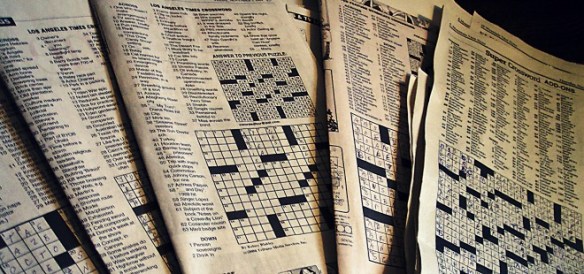
The brainchild of crossword constructors Tracy Bennett and Laura Braunstein, The Inkubator is a by-email subscription puzzle service where 100% of the puzzles will be constructed by women. (It follows in the footsteps of the wonderful Women of Letters project from last year.)

From the public announcement:

The editors invite women — cis women, trans women, and woman-aligned constructors — to submit themed and themeless crosswords or queries in any stage of development. (If you think you may be eligible to construct, but you’re not sure, you’re eligible to construct. Still not sure? Ask us!) If you’re new to constructing, we’ll make every effort to connect you with a collaborator.

Yes, The Inkubator is not only a publishing outlet for anyone who identifies as female, but it is intended to help and encourage new and inexperienced constructors, providing resources and advice in the hopes of publishing more women.

The Kickstarter has only been up for two days, and they’ve already passed their initial funding goal, proving that there is not only a market for women-driven puzzles, but a lot of support for female constructors as well. They’re currently brainstorming stretch goals for the project right now!

I wish The Inkubator not only luck, but success, and I can’t wait to see what new voices the project helps bring to the fore.

For more details or to donate to The Inkubator, check out the Kickstarter page for the project here.


Thanks for visiting PuzzleNation Blog today! Be sure to sign up for our newsletter to stay up-to-date on everything PuzzleNation!

You can also share your pictures with us on Instagram, friend us on Facebook, check us out on TwitterPinterest, and Tumblr, and explore the always-expanding library of PuzzleNation apps and games on our website!

Brain Teaser: A Curious Way to Tell Time

We love tackling brain teasers, riddles, math puzzles, and mind ticklers here at PuzzleNation Blog.

Our friends at Penny Dell Puzzles also enjoy putting their puzzly skills to work by posting various brain teasers..

And one of our mutual readers was hoping we could explain how to solve a puzzle that recently made the rounds on Penny’s social media accounts.

We’d be happy to!

Today, let’s take a look at a brain teaser all about time.

So, where do we begin?

Let’s start by breaking that sentence down to make it easier to parse: “The number of hours left today is half of the number of hours already passed.”

Well, a simpler way of saying that is “the number of hours already passed is twice the number of hours left.”

So if you have the number of hours left — let’s call that X — then the number of hours already passed is twice X, or 2X. Between X and 2X, that’s your entire day covered.

Sorting that out gives us the simple formula of X + 2X = 24, since there are 24 hours in a day.

That easily becomes 3X = 24, and simple division tells us that X = 8.

So X, the number of hours left today, is 8. Which means that twice X, or 16, is the number of hours already passed.

And if there are 8 hours left in the day (or 16 hours already passed), that means it’s 4 PM.


Most of the time, brain teasers are all about efficiently organizing the information we have.

That allows us to figure out how best to use that information to move forward and solve the puzzle. This is just as true with a relatively straightforward brain teaser like this as it is with a complicated logic puzzle with all sorts of pieces to put together.

It’s all about figuring out what we know, what we don’t, and how what we DO know can lead us to what we don’t.

That’s just part of the fun.


Thanks for visiting PuzzleNation Blog today! Be sure to sign up for our newsletter to stay up-to-date on everything PuzzleNation!

You can also share your pictures with us on Instagram, friend us on Facebook, check us out on TwitterPinterest, and Tumblr, and explore the always-expanding library of PuzzleNation apps and games on our website!
PuzzleNation Product Review: Lexicon-GO!

[Note: I received a free copy of this game in exchange for a fair, unbiased review. Due diligence, full disclosure, and all that. And this concludes the disclaimer.]

You might think that if you’ve seen one letter-tile game, you’ve seen them all. But you’d be wrong.

Every word-forming game, from great-granddaddy Scrabble on down, has its own quirks and idiosyncrasies, and some of them have tricks up their sleeves that make for a truly unique puzzle game experience.

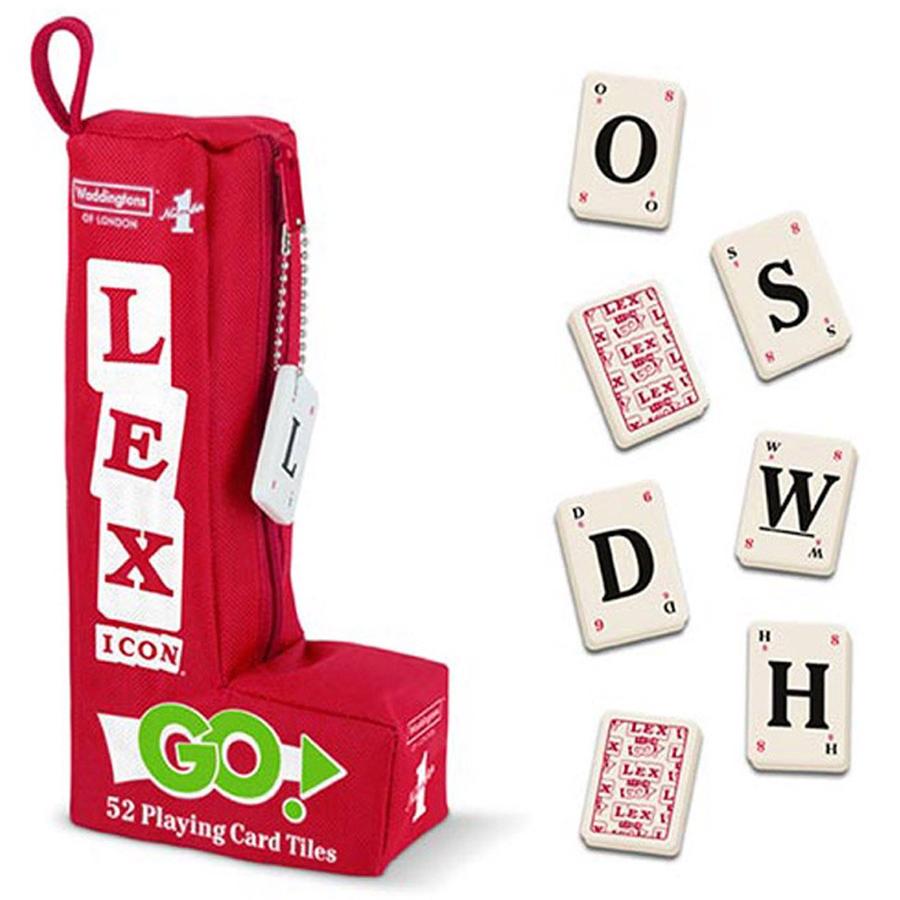
And very few of them have the urgency of Lexicon-GO!, a travel-friendly game distributed by Winning Moves UK.

Designed for 2-4 players, ages 8 and up, Lexicon-GO! is as devilishly simple as it is frenetic.

Each player draws ten tiles from the draw pile, and tries to form words with all ten of them faster than their opponents.

And not just any words will do. There are no one-letter words, plurals, proper nouns, acronyms, and abbreviations allowed as answer words.

In most letter-tile games, it’s all about your own anagramming and word-forming skills; there’s very little direct interaction with your opponents. (Unless you’re both going for the same tile in the draw pile, that is.)

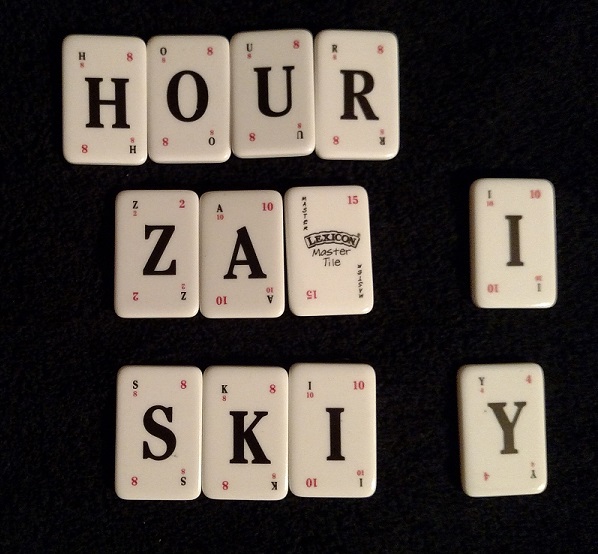
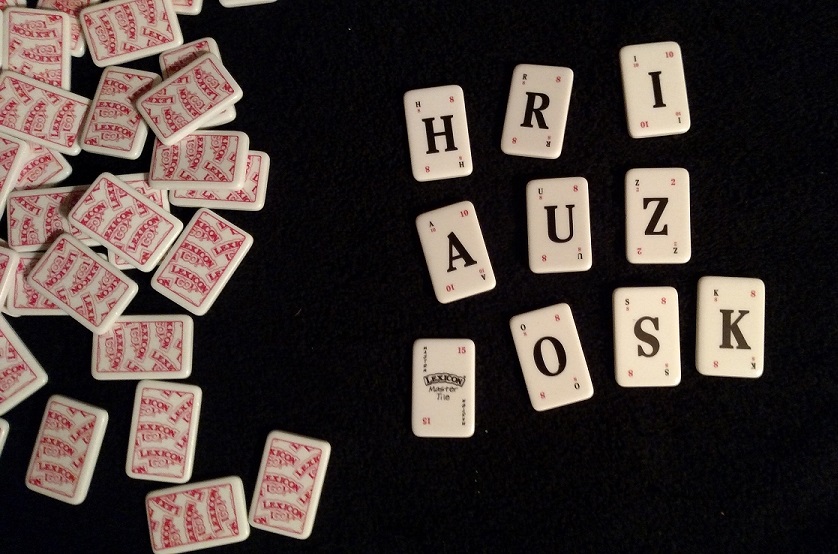
But Lexicon-GO! rewards both interactive thinking and aggressive, advantageous play. You can add your letters to the words being formed by other players (adding a T to the word SKI below to make SKIT, for instance).

Or you could swap out a letter in another player’s word with one of your own (making ZAP into ZIP and taking the A, or making SKI into SKY and taking the I, for instance).

Of course, this move only works if you’re forming a new, acceptable word. You can’t just throw in any letter and steal one you need.

[Once the wild card title is set, it remains that letter for the rest of the round, even if another player steals it. Until this round is done, for instance, the master tile is a P.]

Be the first one to use or dispose of all ten of your letters, and you win the round. The first player to win five rounds wins the game!

(Naturally, we’ve found that most players tend to focus on simply forming their words the fastest, ignoring chances to interact with and/or sabotage their opponents. So we introduced a house rule that every player must either swap a letter with another player’s word or add a letter to another player’s word. It certainly made for more strategic and chaotic gameplay!)

Now, you may have noticed that the tiles also have number values, not unlike the tiles in Scrabble and other tile-scoring games.

That’s because there’s a second path to victory, if you play Original Lexicon (or Master Lexicon) rules, which are helpfully provided with the game.

In Original Lexicon, the rules are the same, including winning a round by being the first to use or dispose of all ten tiles. But instead of everyone else simply conceding the round, they instead add up the point values of their letter tiles. After a few rounds, any player who passes 100 points is out, and the last player standing wins.

That variation makes the game much more tactical. If you know other players are faster at word-forming and anagramming than you, you can mitigate the damage to your score by getting rid of high-value tiles through swapping with the draw pile or adding your letters to the words of other players.

The larger tiles do mean that the game contains fewer letter tiles than other letter-tile games, which might hamper replayability in the long run.

Of course, on the flip side, larger tiles mean that both younger players and older players (who might have visual impairment issues, for instance) can enjoy Lexicon-GO! more than a game with smaller letter tiles.

As always, there’s a trade-off in any design choice.

Lexicon-GO! builds on the strong reputation of the letter-tile games that preceded it, while adding to the genre in engaging, fun ways.

The focus on lightning-quick play (as well as the encouragement to deviously interact with other players) adds some pleasant spice to the genre, rewarding outside the box thinking and puzzle-solving for younger minds and older alike.

This game gives the letter-tile classics a serious run for their money.

Lexicon-GO! is available from Winning Moves UK, Barnes & Noble, Amazon, and other participating retailers.


Thanks for visiting PuzzleNation Blog today! Be sure to sign up for our newsletter to stay up-to-date on everything PuzzleNation!

You can also share your pictures with us on Instagram, friend us on Facebook, check us out on TwitterPinterest, and Tumblr, and explore the always-expanding library of PuzzleNation apps and games on our website!

The First Viral Handheld Puzzle Game?

It’s fair to say that PuzzleNation knows a little something about the world of mobile puzzling. Mobile apps are our bread and butter, after all, and whether you’re talking about our Daily POP Crosswords App or the Penny Dell Crosswords App, we are connoisseurs of puzzles that fit in your pocket.

Of course, puzzle apps are a relatively new addition to the genre. Mobile puzzles, like matchstick puzzles, have existed for centuries.

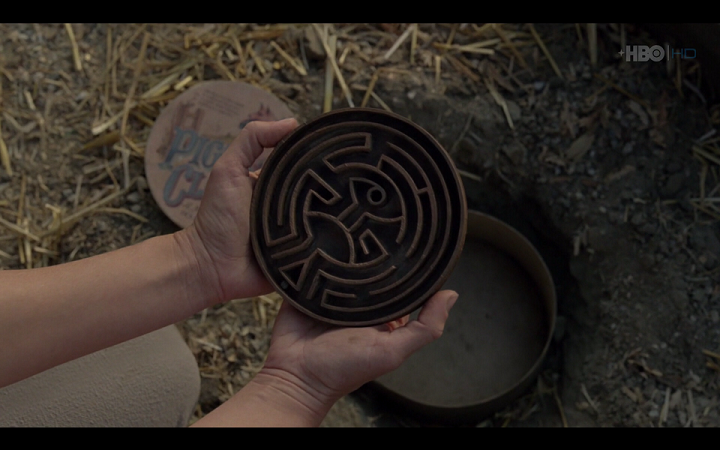
In fact, more than a hundred years ago, a mobile puzzle game went “viral” and became a cultural sensation. (And it has made a recent return to prominence thanks to the HBO drama Westworld.)

Today, let’s talk about Pigs in Clover.

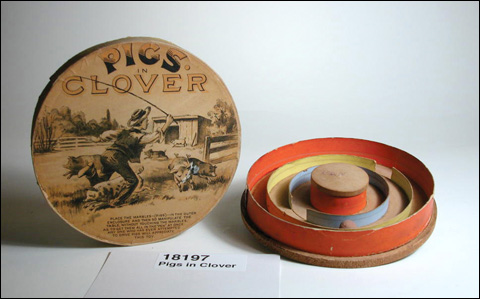
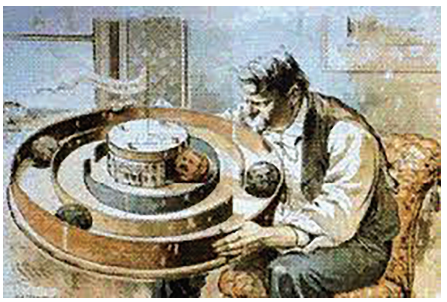
Pigs in Clover is a ball-in-a-maze puzzle invented in 1899 by toymaker Charles Martin Crandall. Although puzzle historians aren’t sure if Pigs in Clover was the first ball-in-a-maze puzzle created, it was definitely the first to capture the imagination of consumers.

You’ve probably solved a ball-in-a-maze puzzle at some point in your life. From the flat disc and labyrinth-inspired models to spherical and more complicated three-dimensional versions, they’re a fun test of both dexterity and strategic thinking.

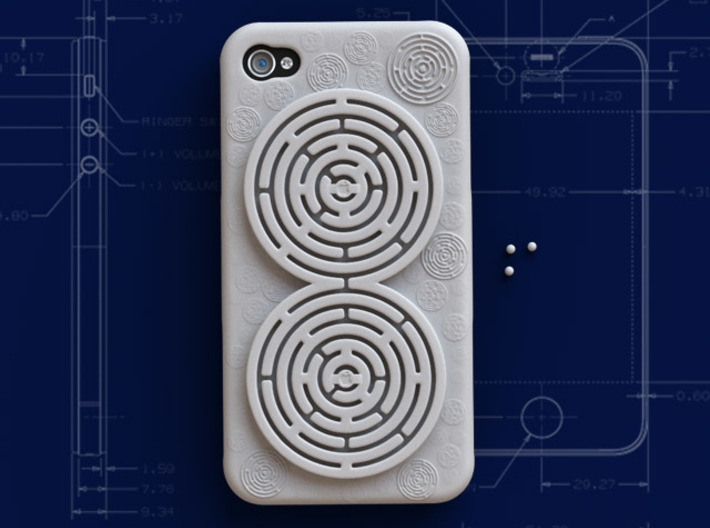
A quick Google image search turns up dozens of variations on the concept, including an iPhone case with two ball-in-a-maze puzzles built into it!

Pigs in Clover was a simpler design, involving only three rings and a center “pen” to herd the “pigs” into. But it’s one that was supposedly so popular upon launch in January of 1889, it impacted the actual operation of the U.S. government.

But how popular was “popular” in 1889?

Well, according to the Waverly Free Press, “The toy works are turning out eight thousand of ‘Pigs in Clover’ a day, and are twenty days behind with their orders.” According to some sources, over a million games were sold by late April 1889!

And one of those games found its way into the hands of William M. Evarts, senator from New York. Depending on the version of events you read, he purchased a copy of Pigs in Clover from either a street vendor or, curiously, an aggressive street fakir.

He then took it home and played with it for hours. At work the next day — and by work, I mean the Senate of the United States — another senator, George Graham Vest, borrowed it and went to the cloak room to try to solve the puzzle game.

Yes, a sitting U.S. senator went and hid in the coats to play this game. It’s sorta like hiding under all the coats at a Christmas party and playing Angry Birds, except in fancier clothing.

Oddly enough, Vest was soon joined in the cloak room by four other senators — Pugh, Eustis, Walthall, and Kenna — who were also interested in trying their hands at the popular game. Apparently, they were too impatient to share Evarts’ copy of the game, since a page was enlisted to go out and buy five more copies of Pigs in Clover for the distracted senators.

Once each had his own game in hand, they engaged in a pig-driving contest. It must’ve been harder than it looks, since it took Vest 30 minutes to herd all of his pigs into the pen.

Yup, at least half an hour of senate business was derailed by a few little metal balls in a cardboard maze. Amazing.

Naturally, the story got out, and a political cartoon in the New York World on March 17th commented on this peculiar delay in President Benjamin Harrison’s agenda, likening the political landscape to the game. With the White House as the pen and various lawmakers as the pigs, the cartoon asked, “Will Mr. Harrison be able to get all these hungry pigs in the official pen?”

It makes you wonder just how many man-hours were lost to Pigs in Clover! After all, a simple game — solved by many — can prove costly.

Remember the Google Doodle in 2010 that allowed you to play Pac-Man? It’s estimated it cost $120 million dollars, and nearly five million hours, in terms of productivity.

Sounds like President Harrison should count himself lucky it was just a half-dozen senators… as far as we know.

[Sources for this article: The Strong Museum of Play, Eli Whitney Museum and Workshop, Le Roy Historical Society, Antique Toy Collectors of America, Wikipedia, and A History of Video Games in 64 Objects.]


Thanks for visiting PuzzleNation Blog today! Be sure to sign up for our newsletter to stay up-to-date on everything PuzzleNation!

You can also share your pictures with us on Instagram, friend us on Facebook, check us out on TwitterPinterest, and Tumblr, and explore the always-expanding library of PuzzleNation apps and games on our website!
Come On Down! It’s Prime Time for Puns and Puzzles!

Yes, yes, it’s that time again. It’s hashtag game time!

For years now, we’ve been collaborating on puzzle-themed hashtag games with our pals at Penny Dell Puzzles, and this month’s hook was #PennyDellPuzzleTV, mashing up Penny Dell puzzles with television shows, characters, catchphrases, actors, actresses, hosts, and more!

Examples include: I Love Loose Tile, Will Shortz & Grace, and Match Game of Thrones.

So, without further ado, check out what the puzzlers at PuzzleNation and Penny Dell Puzzles came up with!


Puzzle TV Shows!

The Good Places, Please

Mighty Morphin’ Flower Power

Leave It To Weaver Words

Spinwheel of Fortune / Wheels of Fortune

Father You Know the Odds Best

The Addams Family Ties / Modern Family Ties / Family Ties Matters / All in the Family Ties / All Fours in the Family / Railroad Family Ties

All in the Crypto-Family

Mama’s Crypto-Family

Crypto-Family Feud

Tales From The Crypt-o-grams / Tales from the Crypto-Verses / Tales from the Crypto-Family

Bewitched Way Words

Sabrina the Teenage Which Way Words

My Three of a Kind Sons

Starspell Trek

ALF-abet Soup

Alphabet Talk Soup

Charlie’s Try-Angles

My Two at a Time Dads

Perfect Fit Strangers

Brooklyn Nine-Nine of Diamonds

Take it from St. Elsewhere

The Odds and Evens Couple / You Know the Odds Couple

Guess Who’s the Boss / Who’s Calling the Boss?

Trade-Off Spaces

Home Runs Improvement

Rowan & Martin’s Fill-In

Dr. Fill-In

Doctor Guess Who

Doctor Who’s Calling?

Whose End of the Line is it Anyway?

Scoreboardwalk Empire

Scoremaster of None

Late Night with David Letterboxesman

Tosh.O and Turning

America’s Next Top to Bottom Model

Throwbacks Horseman

3rd Rock from the Sunrays

Everybody Loves Sunrays

It’s Always Sunrays in Philadelphia

Square Deal or No Deal

Spider’s Webster

The White Shadow

Kaku-Rizzoli and Loose T-Isles

Rocky and Bull’s Eye Spiral

Dancing with the Starspell

Nine(teen Kids) of Diamonds (and Counting), Add One, Plus Fours, Seven Up…

American Pickers-Upper

Give and Take Two

These Three’s Company

Trading Off Spaces

Sister, Sister: Double Trouble

Little Puzzler on the Prairie

Battleships Galactica

Smallville Change

Simon & Simon Says

Knight Ride-of-Way-r

The Price Is Right of Way

Happy Daisy

Daisy of Our Lives

Match-Upstairs, Downstairs

Match-Up Game

Say That Again to the Dress

Riddle Me This Is Us

One Day at a Rhyme Time

One Day at a Time Machine

First and Last Comic Standing

Three to One-der Years

Unsolved Mystery Movie (or Person or Melody or State)

Heads & Tails of the Class

McHale’s Na-V Words

Wizard Words of Waverly Place


Puzzle TV Miscellany!

“No Alphabet Soup for You!”

“Heeeeeeerrree…. (and There’s) Johnny!”

Benedict CumberBattleships

Sherlock Holmeruns

The Walking Dead Keep on Moving

Simon Says: Curb Your Enthusiasm

Home Reruns

In Living Colors

“I’ll Be (Here and) There for You”

“Those Were the Daisy”


And members of the PuzzleNation readership also got in on the fun!

On Twitter, the intrepid Screenhog contributed “Tales of the Cryptoquizzes.” Excellent stuff! Keep it coming, Screenhog!


Have you come up with any Penny Dell Puzzle TV entries of your own? Let us know! We’d love to see them!

Thanks for visiting PuzzleNation Blog today! Be sure to sign up for our newsletter to stay up-to-date on everything PuzzleNation!

You can also share your pictures with us on Instagram, friend us on Facebook, check us out on TwitterPinterest, and Tumblr, and explore the always-expanding library of PuzzleNation apps and games on our website!

Novelty Crossword Songs!

Although the crossword as we know it celebrates its birthday on December 21, tracing its roots all the way back to 1913, it was the 1920s where crosswords really caught the public eye.

By 1924, crosswords had officially become a fad, inspiring fashion trends (black and white patterns) and moral panics alike.

But it was also the year of the novelty crossword song. Yes, crosswords found their way into the world of music, serving as inspiration for numerous comedic ballads.

Perhaps the most famous of the 1924 crossword songs is the curious “Crossword Mama, You Puzzle Me (But Papa’s Gonna Figure You Out).”

The subject of the song is an ardent puzzle solver, but the singer of the song is more bothered by the fact that he doesn’t have her full attention, painting her as someone who ignores him or flirts with other guys. He is clearly suspicious of her, and expresses his suspicions through crossword clue references.

[Although written and arranged by James V. Monaco and Sidney Clare,
this version of the song was recorded in 1925 by Frank Crumit.]

For example:

Crossword Mama you puzzle me,
But Papa’s gonna figure you out.
You call me honey – that means bee!
Looks like I’ll get stung no doubt.

Your Papa’s gonna crossword you right now,
You better get your answers right.
I heard you mention “butcher” – that means “meat”!
Who you gonna “meet” tonight?

The singer is clearly confused by both crosswords and the object of his affections. It would be best if he just left them both alone for a while.

Given how difficult some people find crosswords, you shouldn’t be surprised that there was a blues song penned about crosswords the same year.

“Cross-Word Puzzle Blues,” penned by Fred Herendeen and performed by The Duncan Sisters, is surprisingly upbeat, as the sisters describe themselves as “criss-cross crazy” and discuss their difficulties solving puzzles. It’s very silly indeed.

Be careful not to confuse this with the jazzier song by D.J. Michaud and Marguerite Bruce, “I’ve Got the Crossword Puzzle Blues,” featuring such tongue-in-cheek downbeat lyrics as “I’m feeling awfully down and cross / I spend all day solving, but I still don’t have a clue.”

(Unfortunately I couldn’t find a decent public recording of this one to share with you.)

There’s a strange recurring theme with these songs where women are primarily the solvers, and the men in their lives are utterly baffled by the pastime.

In a similar vein to the first song, “Cross-Words (Between Sweetie and Me)” is all about a man who feels spurned and underappreciated by his crossword-obsessed lady.

Sorrow has torn at my heart strings
I wonder who is to blame
My sweetie never has time for me
She’s deep in love with a game
Crosswords have made me blue as can be,
Cross, crosswords between my sweetie and me,
She’s been puzzling, don’t seem to care
Whether I’m near her or taking the air
I’m jealous. How can I win sympathy?
I’m hoping she’ll soon need L-O-V-E.

[Recording of Billy Jones from Edison Records, circa 1925]

He goes on to describe how a group of people solving crosswords were so quiet, he thought they had died, and he subsequently broke into the house to make sure they were all right.

Billy clearly has boundary issues, and although his sweetie might be spending too much time with crosswords, at least they’re keeping her away from her weird, weird paramour.


This is just a sampling from a single crossword-obsessed year. I’m sure there are many more puzzle-inspired songs out there. Do you know any? Let us know in the comments section below! We’d love to hear from you!


Thanks for visiting PuzzleNation Blog today! Be sure to sign up for our newsletter to stay up-to-date on everything PuzzleNation!

You can also share your pictures with us on Instagram, friend us on Facebook, check us out on TwitterPinterest, and Tumblr, and explore the always-expanding library of PuzzleNation apps and games on our website!