Our setup was simple: a group of five enthusiastic vexillologists — devotees of the study of flags — decided to stage five days of presentations about different flags from American history.
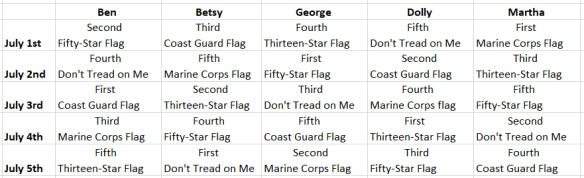
Each person presented a different flag’s history each day (the thirteen-star flag, the fifty-star flag, the Don’t Tread on Me flag, the Marine Corps flag, or the Coast Guard flag), and the presentations were performed in a different order each day (first, second, third, fourth, or fifth).
Each vexillologist presented one flag per day, and none of them repeated a flag presentation across the five days. Similarly, none of the flag presentations happened in the same order each day. So, for instance, if a flag was first in the order on July 3rd, it wouldn’t be first in the order any other day.
And we challenged our solvers to complete the schedule of flag presentations.
If you want to try the puzzle for yourself, this is your last chance.
.
..
…
….
….. you’ve been warned…
….
…
..
.
Okay! Let’s take a look at the solution grid:
How did you fare in our Independence Day puzzle challenge? Did you enjoy any other puzzles or games over the holiday? Let us know in the comments section below! We’d love to her from you.
Thanks for visiting PuzzleNation Blog today! Be sure to sign up for our newsletter to stay up-to-date on everything PuzzleNation!
It is always a sad day when the puzzle community loses one of their own, no matter how rare those events are. It’s rarer still to say goodbye to someone whose contributions were made by appearing IN grids, rather than by constructing or cluing them.
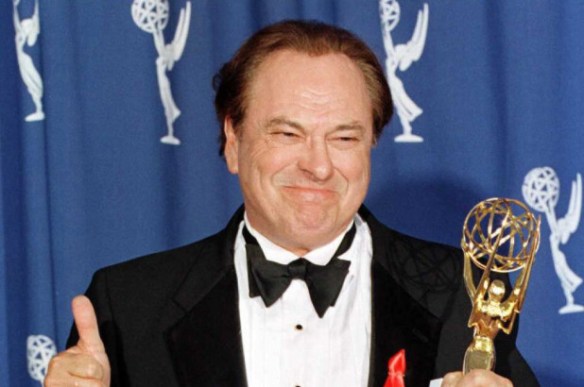
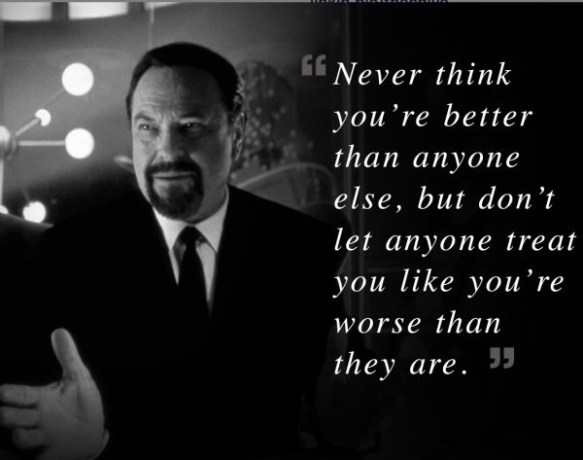
Alas, it is one of those rare times, as this week we mourn the loss of crossword icon and Hollywood actor Rip Torn.
Rip was famously aware of his status as a go-to crossword entry. When he was asked if his name had given him anything but grief over the years, he replied, “Well, when I couldn’t get a job, everybody would say, ‘Where do I know you from?’ I said, ‘Crossword puzzles!’ That kept my name alive for years.”
And it’s true. Some names are simply crossword friendly and have shown up regularly over the years, transforming from pop culture reference to fully accepted part of the crosswordese lexicon.
Although we lost Una and Ona and more than one Ida over the years, Rip hung around amongst stalwart compatriots like Ono and Eno and Esai.
An actor known for both his stubbornness and the realism he brought to his performances, Rip essentially had two careers in Hollywood. He was a serious dramatic performer throughout the 1960s, until his reputation for being difficult to work with led to a dry spell in the 1970s. (This reputation was famously cemented when he lost the role later played by Jack Nicholson in Easy Rider.)
He would later enjoy a career renaissance in the mid-1990s and beyond for his considerable comedic talents, leaving behind memorable performances in the Men in Black films, and perhaps most notably, HBO’s meta talk show comedy The Larry Sanders Show. Personally, I always enjoyed Rip as the gruff but entertaining mentor figure, which made his appearances in Dodgeball and 30 Rock a particular delight.
For his talents, his humor, his honesty, and that inimitable arrangement of letters that made him oh-so-crossword-convenient, he will be missed.
Thanks for visiting PuzzleNation Blog today! Be sure to sign up for our newsletter to stay up-to-date on everything PuzzleNation!
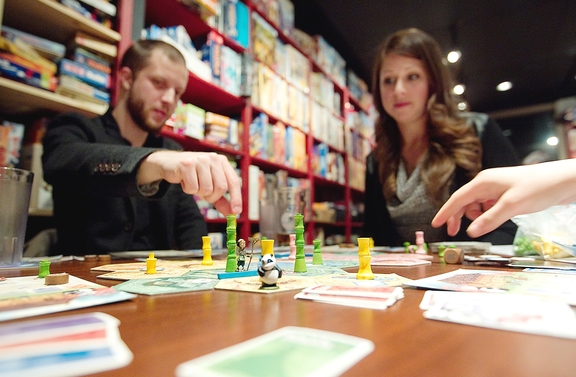
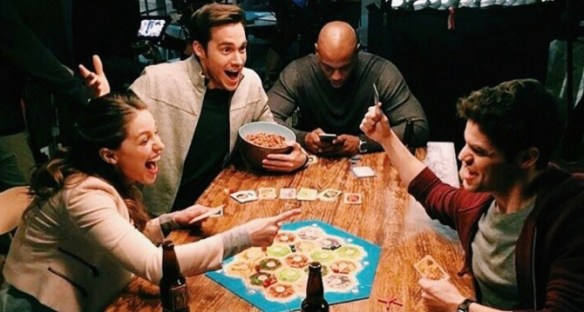
Well, as it turns out, it’s not just romantic relationships that benefit from the board game experience, as another article suggests that social relationships also benefit from communal play like board games.
Board games, along with role playing and table games like Magic: The Gathering and Dungeons and Dragons, allow players to enter into a controlled state of conflict. The process of engaging in that conflict is fun even when you lose, and the outcome is likely to be different the next time around.
A good board game builds in enough chance so that any reasonably skilled player can win. Even in chess, famously associated with warfare and military strategy, the emphasis is not on who ultimately wins, but on the ingenuity that players display in the process.
It’s a simple combination, really. Board games offer not only an achievable goal — something that can feel rare in our ever-complicated world — but a sense of fairness to the proceedings that might feel equally rare. Everyone is operating on the same footing, everyone is capable of the same actions, and (ignoring previous experience with the game) everyone has a fair chance of succeeding.
Heck, in most games, taking turns is built into the game. Board games are orderly affairs. Even the chaotic ones operate under a standard set of rules that are reassuring and clear. Life is rarely so simple.
In addition, there is the comfort-building social aspect of getting together to play games. Conventions like Gen Con and holidays like International Tabletop Day are designed around the joys of shared play, and more and more, you see game stores, hobby shops, libraries, board game cafes, and other locations offering game night activities and bringing people together.
I wonder if there are any games that are commonly regarded as strong relationship builders. I’m sure cooperative games would rank higher than most, but then again, sometimes the spirit of competition can also bring people together.
Fellow puzzlers and PuzzleNationers, is there a particular board game that you prefer for family or friendly game nights? What about games you enjoy playing with your significant other? Let us know in the comments section below! We’d love to hear from you.
Thanks for visiting PuzzleNation Blog today! Be sure to sign up for our newsletter to stay up-to-date on everything PuzzleNation!
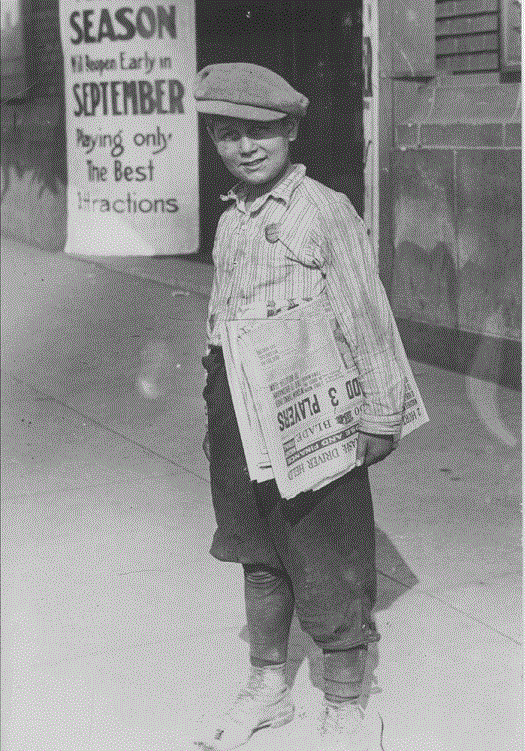
[A photo from the early days of PuzzleNation Blog, as one of our intrepid puzzleboys spreads the word of PuzzleNation far and wide. Image courtesy of Toledo’s Attic.]
I would love to tell you that PuzzleNation Blog is the only game in town when it comes to outstanding puzzle content, but that’s not the truth.
Sure, I think we put out some of the best writing in the puzzle business, but there are other outlets that also pen some marvelous stuff. Deb Amlen’s Wordplay blog on The New York Times website, for instance, is a treasure trove of great material, featuring breakdowns of NYT puzzles, interviews with constructors, and more.
The New Yorker recently posted an intriguing one-two punch of puzzle content. The main article was a meditation on crosswords — their potential, what they mean to a fan, and more — while the accompanying video featured an interview with constructor Natan Last (conducted by crossword editor Liz Maynes-Aminzade) about political entries in puzzles.
What’s slightly more surprising is that another popular Internet outlet has also had puzzles on the brain:
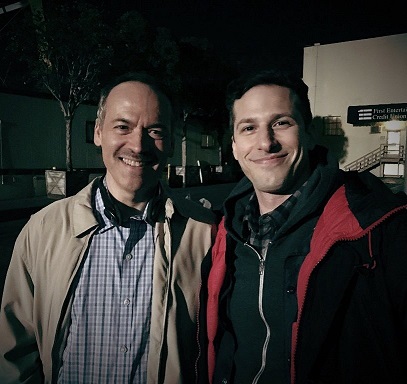
In a hysterically brief send-up of both the famously mild-mannered Shortz and classic criminal masterminds in general (like the one in the Brooklyn Nine-Nine episode that also featured Shortz, or the one from the Hallmark Crossword Mysteries earlier this year), the article paints the crossword editor as a murderous genius who feels unappreciated in his efforts to play a game of cat-and-mouse with the NYPD:
“I naturally assumed that, at some point during the last four decades, at least one detective would be smart enough to solve the case,” said Shortz, who also implied that the geographic coordinates of the victims could be determined by analyzing the sudoku puzzles in the Sunday edition.
It was one of the funniest pieces of the year for The Onion, and further proof of just how ubiquitous crosswords truly are these days.
Thanks for visiting PuzzleNation Blog today! Be sure to sign up for our newsletter to stay up-to-date on everything PuzzleNation!
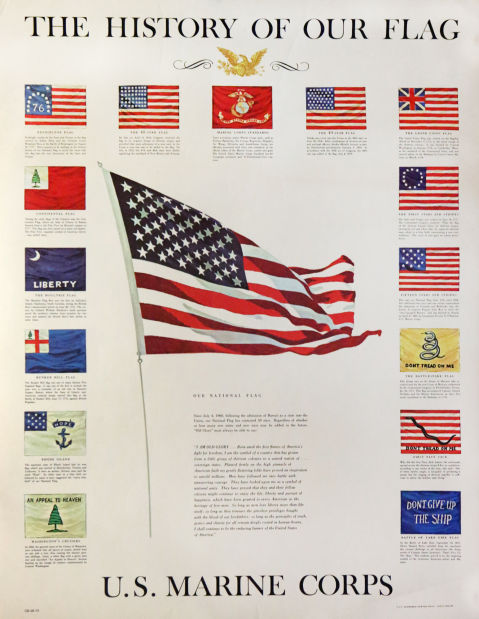
It’s Independence Day, and is there any better way to celebrate the history of America than with a little deduction puzzle based on some classic American symbols? I hardly think so!
Good luck and Happy Fourth of July!
To celebrate America’s birthday, a group of five enthusiastic vexillologists — devotees of the study of flags — decided to stage five days of presentations about different flags from American history.
Each person presented a different flag’s history each day (the thirteen-star flag, the fifty-star flag, the Don’t Tread on Me flag, the Marine Corps flag, or the Coast Guard flag), and the presentations were performed in a different order each day (first, second, third, fourth, or fifth).
Each vexillologist presented one flag per day, and none of them repeated a flag presentation across the five days. Similarly, none of the flag presentations happened in the same order each day. So, for instance, if a flag was first in the order on July 3rd, it wouldn’t be first in the order any other day.
Can you complete the schedule of flag presentations below?
Are you having any puzzly celebrations for Independence Day? Let us know in the comments section below, we’d love to hear from you!
Thanks for visiting PuzzleNation Blog today! Be sure to sign up for our newsletter to stay up-to-date on everything PuzzleNation!
When you think about puzzles and personal security, what comes to mind?
Do you think of puzzle boxes, those delightfully tricky little wooden creations with all their sliding pieces and hidden compartments? Or does your mind go to encryption, the art of concealing your message in plain sight with ciphers, scytales, and other techniques meant to baffle anyone but those in the know?
Some puzzle box designs date back centuries, and ciphers can be traced back even further. (One is named after Caesar, after all.)
But there’s another centuries-old puzzly procedure you might not know about, and it kept letters and messages safe using nothing more than paper and wax.
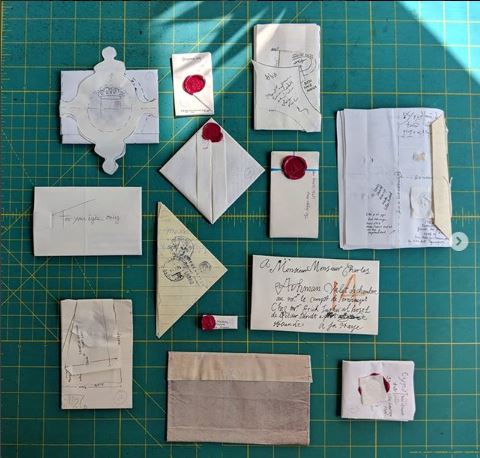
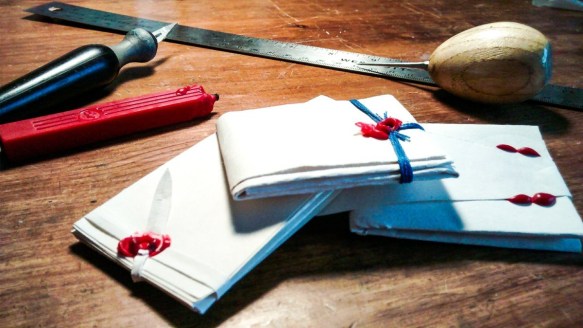
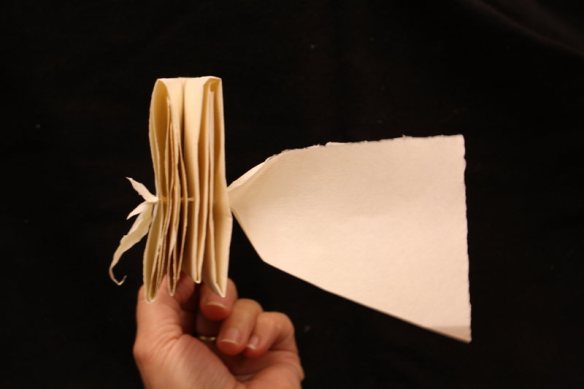
This technique is known as letterlocking. It involves a mix of precise folds, interlocking pieces of paper, and sealing wax in order to create a distinctive design or pattern.
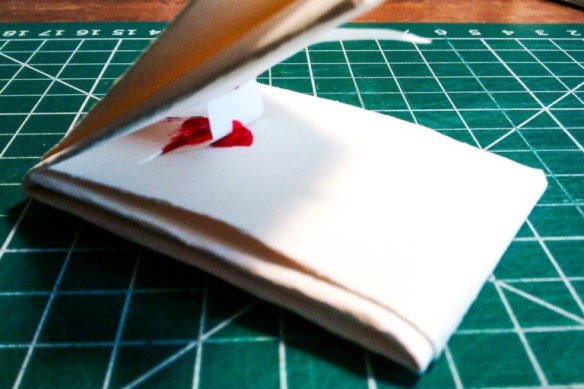
Although the pattern itself can work like a puzzle — requiring a particular trick to unfold it and reveal the message without ripping or damaging the letter — that’s only a secondary line of defense. The true goal of letterlocking is to reveal tampering. The folding techniques are distinctive, and the wax creates points of adhesion.
If you receive a letter and the folds are done (aka redone) incorrectly, or the wax is smeared (or the paper ripped where the wax would have held it tight), then you know the letter has been compromised.
Some examples of letterlocking trace back to the 13th century, and key figures like Queen Elizabeth I, Machiavelli, Galileo, and Marie Antoinette employed letterlocking security in the past. Mary, Queen of Scots, wrote a message and letterlocked it with a butterfly lock six hours before her beheading. (For a more modern reference, letterlocking was employed in the Harry Potter films as well, most famously in Dumbledore’s will.)
The various techniques involved are as distinctive as knots. The triangle lock. The dagger-trap. The pinwheel letter. And some historians believe that those techniques imply connections between some of the important players in history.
For instance, both poet John Donne and the spymaster of Queen Elizabeth I employed a similar letterlocking style. Did they share a common source, or even an instructor in common? Or did a particular letterlocking technique provide a clue as to the contents of the letter within?
Letterlocking is a historical curiosity that was seemingly lost to time after the proliferation of the envelope and other security techniques, but it is slowly being rediscovered by a new generation, as well as reverse engineered by scientists and scholars. Yale and MIT both have teams exploring the burgeoning field of letterlocking.
Museums are discovering treasure troves of letterlocked messages by going directly to the source: post offices. A cache of 600 undelivered letters in the Netherlands, for instance, are being analyzed by researchers.
It’s a remarkable thing, really, this union of centuries-old skills with twenty-first century knowledge. These are puzzles, frozen in time, waiting to be solved and placed into the larger picture of history.
Letterlocking is nothing less than a rare and beautiful art combining puzzles and privacy, as elegant as it is clever. There are no doubt many more secrets to be found behind the folds, slits, and wax seals of these lovingly crafted messages.
Thanks for visiting PuzzleNation Blog today! Be sure to sign up for our newsletter to stay up-to-date on everything PuzzleNation!





 PuzzCulture