A New Twist on a Classic Twisty Puzzle?

The Rubik’s Cube is an instantly recognizable icon of the puzzle industry. That simple pattern of colors on a 3×3 grid, the twisty turny puzzly challenge… it’s unmistakable.

Of course, that hasn’t stopped Rubik’s Cube devotees and puzzle designers from experimenting with new variations on this iconic idea. Just in the last few years, we’ve seen everything from a solvable Google Doodle to a smartphone-enabled solving tool, from self-solving cubes to 3D-printed designs from superfans. Heck, we’ve seen cubes the size of buildings! (We’ve even seen them animated!)

But we’ve never seen a Rubik’s Cube quite like this.

[Image courtesy of Gearbrain.]

Say hello to the Rubik Tilt, a $25 handheld Rubik-style twisty puzzle that mixes button pressing with rotating, turning, and tilting the device itself in order to manipulate a virtual Rubik’s Cube on its game screen.

The buttons on the back of the controller allow you to select which row or column of the Cube is being shifted by your real world maneuvering.

Now, you may very well be saying, “So what? What does the Rubik Tilt do that you can’t get from playing with an actual Rubik’s Cube?” And that is a very fair question.

And the designers at Super Impulse did think of that; yes, the Rubik Tilt does have one trick up its sleeve that the original Cube does not.

[Image courtesy of Gizmodo.]

It’ll offer you hints if you get stuck.

Yes, when the game detects a lapse in solving — such as when you’re stumped about how to proceed next — it offers hints on which rows and columns of the puzzle to focus on. Although the puzzle won’t go as far as walking you through solving a Cube, it does provide a little pushing and prodding to keep you going.

When you factor in that the game also keeps track of your solving time, you have a Rubik’s-solving experience that not only encourages you, but actually teaches you to be better at solving this classic, diabolical brain teaser.

And, like the best puzzles, it rewards determination, rather than doubling down on frustration.

It’s certainly a different take on the Cube we all know, but it remains a worthwhile experiment, a proud new entry in the grand tradition of puzzles that teach us to be better solvers.


Thanks for visiting PuzzleNation Blog today! Be sure to sign up for our newsletter to stay up-to-date on everything PuzzleNation!

You can also share your pictures with us on Instagram, friend us on Facebook, check us out on TwitterPinterest, and Tumblr, and explore the always-expanding library of PuzzleNation apps and games on our website!

Daedalus, The Original Master of Mazes

[Image courtesy of Lofty Dreams 101.]

Writing about The Maze of Games Kickstarter last week got me thinking about labyrinths and mazes, so naturally, my thoughts turned to the ultimate maze builder: Daedalus.

Stories about Daedalus are inconsistent — his workshop was variously attributed to Crete, Sicily, or Athens, and even when he lived is up for debate — but his reputation as the premiere craftsman of his day is unparalleled.

His most famous creation was the Cretan Labyrinth, an enormous baffling maze with a roof, so there could be no assistance or solving from above. The Minotaur, a hulking creature with the body of a man and the head of a bull, was imprisoned inside it by King Minos.

[Image courtesy of Medium.com.]

It would fall to the Athenian hero Theseus to navigate the Labyrinth and slay the Minotaur in order to stop periodic sacrifices of young men and women from Athens to the monster. Theseus did so thanks to a magic ball of wool given to him by the daughter of King Minos, Ariadne. By tying one end of the wool string to the entrance of the Labyrinth — and following instructions given to him by Ariadne — he would be able to find his way back.

(As it turns out, this technique would also prove useful for solving a riddle later in Daedalus’s life, but we’ll get to that in a little bit.)

Theseus bested the Minotaur in a fierce battle, saving the potential sacrificees and ending Minos’s reign of terror over the Athenian people.

But who gave Ariadne the wool and the instructions on how to navigate the Labyrinth? Daedalus, of course.

For his betrayal, Minos imprisoned Daedalus and his son Icarus in the Labyrinth.

[Image courtesy of Fine Art America.]

We all know this part of the story. Daedalus fashions wings for himself and Icarus, and they fly off to escape. Unfortunately, Icarus ventures too close to the sun, melting the wax holding his wings together, and he plummets into the sea.

Daedalus, heartbroken, continues his flight, eventually finding himself in Camicus, Sicily, a land ruled by King Cocalus. Cocalus welcomed Daedalus and promised him protection from the vengeful King Minos.

During his time serving King Cocalus, Daedalus was credited with creating other, less famous wonders, like a perfect honeycomb made of gold, and self-moving “living” statues, and a fortified citadel for Cocalus that was so well designed, three or four men could hold off an invading army.

Naturally, King Minos was still hunting the fugitive inventor, and he devised a puzzly scheme to expose Daedalus wherever he was hiding.

[Image courtesy of Baburek.]

As he traveled around pursuing Daedalus, Minos would bring a large spiral seashell with him, challenging any clever people he encountered to thread a string through its many interconnected chambers. If they could do so, he would pay them a hefty reward.

Hmmm… threading a string though a convoluted maze of chambers. That sounds familiar, doesn’t it?

Minos’s travels brought him to Sicily, and King Cocalus wanted that reward money, so he brought the seashell to Daedalus in secret.

Daedalus drilled a small hole at the top of the shell, and placed a drop of honey at the mouth of the shell. He then glued a thread to an ant and placed it in the hole. As the ant explored the interior of the seashell, hunting for that tempting drop of honey at the end of the maze — like cheese to a lab rat — it towed the string through the shell. Eventually, the little ant completed the task, and Cocalus returned the solved puzzle to Minos.

Naturally, Minos demanded that Cocalus turn over Daedalus — the only person who could’ve possibly solved the seashell puzzle — and Cocalus agreed.

Of course, Cocalus instead had his daughters murder Minos in a hot spring instead. As you do, when you’ve been denied the puzzly prize money you were promised.

So, if you’re ever confronted with a maze — of corn, of wood, or lurking inside a book — make sure you’ve got a ball of yarn or wool with you. And possibly an ant as well.


Thanks for visiting PuzzleNation Blog today! Be sure to sign up for our newsletter to stay up-to-date on everything PuzzleNation!

You can also share your pictures with us on Instagram, friend us on Facebook, check us out on TwitterPinterest, and Tumblr, and explore the always-expanding library of PuzzleNation apps and games on our website!

Crossword Solving Advice, Tournament-Style!

With the American Crossword Puzzle Tournament looming large, newcomers to the tournament and experienced puzzlers alike are trading advice, looking for ways to improve their solving, and gearing up for the latest edition of the Nerd Olympics.

In a similar vein, Lifehacker recently shared a post with advice for how to get better at crosswords. And I thought, with the tournament a little more than a week away, we’d analyze Lifehacker’s suggestions for sharpening your solving game.

1.) Do puzzles every day.

According to article author A.A. Newton, “the only way to improve at crosswords is to do lots of them, and the best way to do that is to work them into your daily routine.” Now, since there is more than one entry in her list, clearly that’s not THE ONLY way to improve.

But this is still valuable advice, especially with the tournament coming up. You see, a fair number of crossword solvers solve them online, either through apps or website interfaces, rather than on paper. But since the tournament puzzles are solved on paper, it’s a good idea to practice the old-fashioned way for a few weeks before the competition, especially if solving time is a priority for you.

2.) Use an app.

Like I said, access to puzzles is a great thing; being able to solve crosswords for all sorts of skill levels at the touch of a button… you can’t beat it. It exposes you to different cluing styles, theme ideas, and all sorts of clever wordplay.

I’d recommend an app that tracks your solving. Several apps like our very own Daily POP Crosswords app track data like your solving times, themes or categories you excel in, and even streaks of days gone without missing a daily puzzle!

3.) Know when — and how — to cheat

Now, this one is a little bit clickbait-y, since it’s only cheating if you look up answers during actual competition. I don’t consider it cheating to admit defeat on a clue you can’t get or a reference you don’t know, and looking it up in order to educate yourself.

Many apps offer hints — either by offering additional letters or entire words that are stumping you — which allows you to continue solving and get past a roadblock in your crossword knowledge.

And if you’re solving a paper puzzle, there are numerous crossword clue sites on the Internet with databases of previously used clues for you to peruse. Not only does this help you with the troublesome clue at hand, but it shows you the different variations of clues you might see for a given entry, which is helpful in the long run.

Of course, you can’t actually do this sort of thing at the ACPT. (Though you can utilize “Google tickets” at other tournament events like Lollapuzzoola, where instructors will silently provide an answer for you so you can keep solving.)

4.) Study up

There are all sorts of crossword resources out there. The article namedrops a few, like Rex Parker’s blog, XWordInfo, and several online guides to crosswordese.

I would also recommend Wordplay, the companion blog to The New York Times crossword. Not only does Deb Amlen break down each day’s puzzles, but there are articles collecting words that will help you become a better solver. Musical terms, authors, plants, opera terms, French rivers, characters from Greek mythology… the whole series is packed with common crosswordese and little obscurities that crossword solvers have come to know and, if not love, then at least tolerate.

But there is other tournament-specific advice I would offer:

  • Have pencils and erasers handy. Maybe a sharpener as well, though there are a few scattered around the competition space. (And we always have one available for use at the Penny Dell / PuzzleNation table in the marketplace!)
  • Bring a clipboard or other writing surface, since the solving space is often tableclothed, which can interact poorly with sharp pencils and paper puzzles.
  • Talk to fellow puzzlers. There’s nothing better than the experience of other solvers, many of whom are also constructors or tournament regulars.
  • Everyone approaches the actual solving process differently. Some people scan the clues for fill-in-the-blank clues or people’s names and fill those in first. Others read through the clues sequentially and fill in what they can. Some solvers even try to solve using only the Down clues, and then double-check their solve with the Across clues. My advice is to try different techniques and see what works best for you.

Whether it’s your first time attending a tournament or you’ve got a few seasons under your belt, there are always new tricks to learn and new techniques to try out.

Do you have any solving advice we missed? Let us know in the comments section below! We’d love to hear from you!


Thanks for visiting PuzzleNation Blog today! Be sure to sign up for our newsletter to stay up-to-date on everything PuzzleNation!

You can also share your pictures with us on Instagram, friend us on Facebook, check us out on TwitterPinterest, and Tumblr, and explore the always-expanding library of PuzzleNation apps and games on our website!

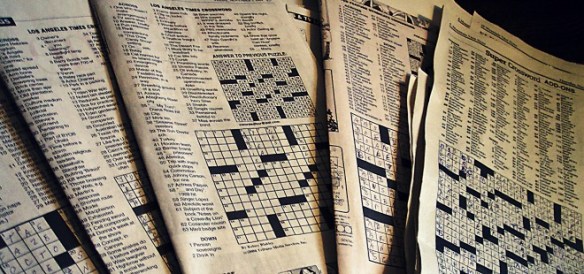
Suggestions from the World of Puzzle Books!

Puzzles come in so many forms these days that puzzlers are absolutely spoiled with choices. There are video games, apps, mechanical puzzles, brain teasers, single- and multi-player puzzle games, subscription services, and puzzles by mail, just for starters.

But sometimes, it’s nice to go back to the simple pleasures of solving while putting pencil (or pen) to paper.

So today, let’s talk about some of the best puzzle books available today for a solver looking to kick back and solve some paper puzzles.

Naturally, let’s start with crosswords. Many top constructors have put out puzzle books with varying degrees of difficulty, and you can pick up most of them for great prices in spots like Amazon or Barnes and Noble.

Maybe we’re talking something smaller and more accessible, like Matt Gaffney’s Fast & Fun Mini Crosswords, or something with a little more challenge, like Andrew Ries’s Maverick Crosswords. You could start your crossword culinary menu off with the food-themed puzzles of Erik Agard’s Food for Thought Crosswords, or enjoy the unthemed puzzles in Todd McClary’s Fresh Freestyle Crosswords as a palate cleanser.

Whether we’re talking about the well-constructed crosswords of David Steinberg’s Juicy Crosswords from the Orange County Register or the challenging puzzles offered by Peter Gordon’s Wickedly Hard Fireball Crosswords, there’s a puzzle book for every skill level, no matter how familiar or unfamiliar you are with crosswords.

Oh, and for a variation on the theme, you can try Brendan Emmett Quigley’s Octopus Crosswords (where the 8×8 grids allow words to spell out in any of 8 possible directions).

Maybe you enjoy clued puzzles but the criss-crossing of a standard crossword grid isn’t your forte. If that’s the case, crostics (or acrostics) might be more your taste. These clued puzzles reveal quotations, bits of information, or anecdotes of all sorts. And all of the letters in the quote/bonus answer can also be found in the answers to that puzzle’s list of clues.

This allows for some fun back-and-forth solving between the clues and the quotation, in case you get stumped in one spot or the other.

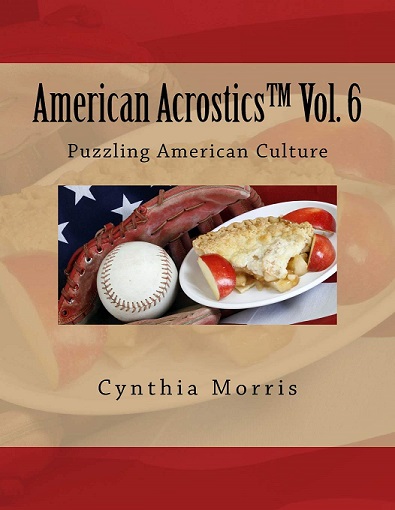
Friend of the blog Cynthia Morris has a fleet of acrostic puzzle books available, with American Acrostics Volume 6: Puzzling American Culture and American Acrostics Volume 7: Puzzling Explorers and Adventurers being among the most recent releases.

Then again, maybe you want to leave clued puzzles behind altogether and simply go hunting for words concealed in a grid. For the word seek/word search fans, a good theme to anchor a puzzle is the key to an enjoyable solving experience.

For the bookworms out there, you can check out Shawn Marie Simmons’s 25 Word Search Puzzles for Classic Literature Lovers. With word lists tailored to different iconic works of literature, you can revisit your favorite reads as you go searching each grid for a bevy of fun and familiar words. (And she has more volumes coming soon!)

Of course, we’ve only just scratched the surface of puzzle books that are available. But whether it’s one of the volumes we’ve mentioned today, the numerous magazines published by our friends at Penny/Dell Puzzles, or something bigger and more ambitious, you can never go wrong with a good puzzle book.

Can you think of any terrific puzzle books we missed? Let us know in the comments section below! We’d love to hear from you.


Thanks for visiting PuzzleNation Blog today! Be sure to sign up for our newsletter to stay up-to-date on everything PuzzleNation!

You can also share your pictures with us on Instagram, friend us on Facebook, check us out on TwitterPinterest, and Tumblr, and explore the always-expanding library of PuzzleNation apps and games on our website!

Unlikely Ways to Escape an Escape Room!

[Image courtesy of I Googled Israel.]

Solving an escape room is a unique experience, one that immerses you in a story and surrounds you with tasks to complete and puzzles to unravel. Although there are some similarities between rooms (as well as solving techniques you can learn to be better at solving all sorts of escape rooms), each one has its own flavor, its own challenges, and its own quirks.

The same can be said for those groups who tackle the escape room experience. They all have different skill levels, different styles, and different approaches. Some players are terrific at the hide-and-seek portion of a room — discovering hidden compartments, secret caches, and so on. Others are better at identifying and solving puzzles. Still others can be strong abstract thinkers who look outside the box and recognize where patterns are formed and where they are absent.

But sometimes, players think too far outside the box, surprising escape room managers and designers with their curious efforts to complete the game.

[Image courtesy of Snorg Tees.]

In a post on Quora Digest, someone asked what was the weirdest or most unexpected thing that has happened during an escape room event?

One commenter, the owner/operator of an escape room, said that a player once snuck a Swiss army knife into the room, used it to unscrew the boxes containing keys to some of the major lockboxes, and escaped the room in five minutes. Naturally, to the disappointment and chagrin of his friends, he skipped the vast majority of the game itself, missing the point entirely by doing so.

Figuring that there had to be more stories like this out there in the world of escape rooms, I reached out to some of the escape room companies we’ve connected with on Twitter, and wouldn’t you know it, there’s plenty of escape room weirdness to go around!

For instance, the crew at Boxaroo, based in Boston, Massachusetts, have had to deal with the opposite problem: people sneaking things OUT of an escape room:

We’ve had interesting things stolen from our rooms. The usual locks, keys, and even a light bulb once. But the most bizarre was an entire lockbox that went missing. About 4″ by 5″ by 11″.

We had no idea how the person snuck it out until we checked our security tape footage. It was someone sticking it in their trenchcoat, old-school style.

When asked about their most peculiar moment with players, the team at ESC Escape Rooms, based in North Hollywood, Los Angeles, shared a story that explores the dangers of getting into character and immersing yourself too deeply into the setting of a game.

One of the employees was overseeing a game from outside, and instructed the player to go through a door. That’s all, just use the door as you would any other.

The player responded by creating a fake door — like a mime or an actor in an improv show — and pretending to step through it, as if acting out the instruction was somehow part of the solve.

Much like the escape room supervisor who witnessed this, I’m totally baffled.

Sometimes players take instruction in a manner you wouldn’t expect. Other times, they take those instructions all too literally.

Just ask the folks at Red House Mysteries in Exeter, England, who lost visual contact with the solvers in one escape room scenario.

The room had a suspended ceiling, and apparently, this created a blind spot for one of the cameras used to monitor the room.

After not being able to see the players on the CCTV for a good 5 minutes and getting no response on the radio, they went into the room to see if everything was ok.

They found the team of 3 people standing on each others shoulders, having removed the ceiling tiles, and currently climbing into the roof cavity above.

“Whilst technically this is escaping, it’s not really the spirit of the game scenario. Nor do I have any idea where they were going to go from there. Needless to say, they didn’t manage to escape…”


To close out this sojourn into the world of escape room shenanigans, I would be remiss if I didn’t mention something that happened during my very first escape room.

We broke something. We broke one of the mechanisms that released a hidden key.

As a group of ten or so players, we quickly scattered around the room and began looking for clues, hidden compartments, hints on how to proceed, and so on. One team member, an acquaintance of my sister I didn’t know, spotted a small statuette on the mantel.

It was meant to be turned 90 degrees, releasing a hidden key below. Not knowing this, she lifted it off of its small base instead, triggering the hidden key.

And since there was a matching statuette nearby, the group surmised that lifting it would release another key on the other side.

It didn’t.

My best guess is that she managed to lift AND turn the first statuette when she picked it up, triggering the release. The second statuette was lifted straight up, leaving the hidden key still untriggered.

As it turns out, the statuettes weren’t intended to be lifted off their bases, and we’d broken the second release trigger. One of us managed to trigger it with a quarter and free the key, but we didn’t realize we’d actually damaged the game room until the session was over.

Here’s hoping it was a quick and easy repair job. I still cringe when I think about it.

Needless to say, I’ve been far more cautious in all of my subsequent escape room attempts.

Have you ever had or seen any strange escape room moments, fellow puzzlers and PuzzleNationers? Let us know in the comments section below! We’d love to hear from you.


Thanks for visiting PuzzleNation Blog today! Be sure to sign up for our newsletter to stay up-to-date on everything PuzzleNation!

You can also share your pictures with us on Instagram, friend us on Facebook, check us out on TwitterPinterest, and Tumblr, and explore the always-expanding library of PuzzleNation apps and games on our website!

A New Gaming Opportunity for Opportunity?

[Image courtesy of Wikipedia.]

Last month, the world collectively mourned the loss of the Opportunity Rover, as NASA declared that the incredible machine’s marathon body of work on Mars had officially ended.

Its mission was meant to last 90 days. Opportunity vastly overperformed, delivering photos and data for a mind-blowing fifteen years of service. The Little Engine That Could has got nothing on the Opportunity Rover.

The outpouring of sadness and affection for the Rover surprised many, serving as a heartwarming reminder of the amazing things we can accomplish. It also represents our almost magical ability to come together as a people in appreciation of an icon, one we’d come to adore and anthropomorphize into a plucky, inquisitive adventurer.

[Image courtesy of Tom Gauld.]

As you might expect, a character with this much esteem couldn’t pass into history without the game community immortalizing it in some way, shape, or form.

Thanks to WalrockHomebrew, an independent content creator for RPGs like Dungeons & Dragons 5th edition, the Opportunity Rover can now be part of your roleplaying campaigns!

Creating not only full stats for Oppy as a neutral good construct but a plausible explanation for how this real-world scientific device has found itself in a magical universe, WalrockHomebrew has crafted a fun fictional legacy for the much-loved rover.

Understandably, Oppy isn’t much of a fighter, though it can use its rock abrasion tool to scratch at any potential foes. It’s far more capable as an observer, seeing through magical illusions and glamours.

It can even see invisible creatures and creatures in the Ethereal Plane. As far as we know, the actual rover couldn’t.

Though, if it could, I suspect its reports to NASA would’ve been front page material every single day.

[WalrockHomebrew even offered rules for how to restore the rover in-game to full operational capacity. Pretty cool!]

This is a wonderful tribute to one of the most amazing devices ever conceived. Thank you, Oppy, for all of the wonders you revealed.

And thank you, WalrockHomebrew, for letting us hold onto that magic in an unexpected and delightful way.


Thanks for visiting PuzzleNation Blog today! Be sure to sign up for our newsletter to stay up-to-date on everything PuzzleNation!

You can also share your pictures with us on Instagram, friend us on Facebook, check us out on TwitterPinterest, and Tumblr, and explore the always-expanding library of PuzzleNation apps and games on our website!