Paint By Number Sleuth: A Puzzly Hashtag Game!

You may be familiar with the board game Schmovie or hashtag games on Twitter.

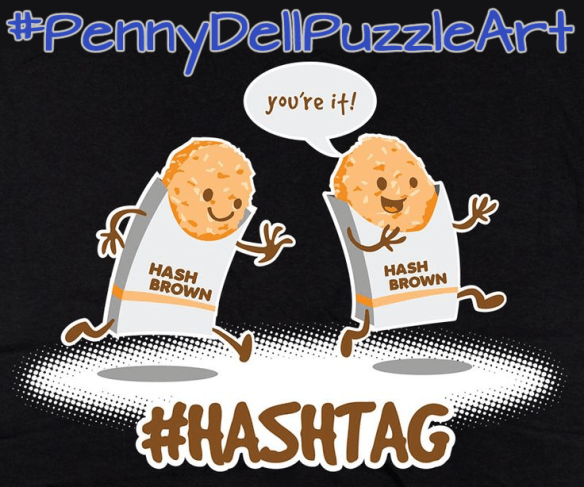
For years now, we’ve been collaborating on puzzle-themed hashtag games with our pals at Penny Dell Puzzles, and this month’s hook was #PennyDellPuzzleArt. Today’s entries all mash up Penny Dell puzzles with artists, famous pieces, techniques, styles, and more from the world of art!

Examples include: The First and Last Supper, O’Keeffeword, and Rows Avant-Garden.

So, without further ado, check out what the puzzlers at PuzzleNation and Penny Dell Puzzles came up with!


Puzzly Artists!

Vincent On-The-Van Gogh Word Seek

Christo Crosswords

Three-Toulouse-One

Paul Cezanneagrams

Picassudoku

Michel(Try-Angle)o

Eugene DelaCrostic

Henri Word-a-Matisse

Camille PissarRows Garden

Paul Klee-from-nine

Anagram Magritte Squares

Eileen Gray That Again

Paul GaugIn the Middle

Marc ChagAll Fours

Grand Tour Moses

Elizabeth Catlettgories

Thomas EakInsert-a-Word

Piet Mondriagain

Liubov Sergeievna Popoverlay

Alfred StieglIts Your Move

Frank Lloyd Right Angles

Man SunRays

Man Raylroad Ties

CrackerJackson Pollock

Joan Miro Image

Johannes Vermeer-or Image

Wassily KenKendinsky

Louise Burgeois Tiles


“Here I sit so broken hearted…”

You can Fill-In the rest!

#Fitting Description


Famous Puzzly Art Pieces, Styles, and Terminology!

“Still Life with Apples and Pairs in Rhyme” (Paul Cezanne)

“The Two (for One) Fridas” (Frida Kahlo)

Pen and In(k) the Middle

Crisscrosshatch

DADArtboard

RocoCodebreaker

Around the Baroque

Letter DrOP Art


Have you come up with any Penny Dell Puzzle Art entries of your own? Let us know! We’d love to see them!

Thanks for visiting PuzzleNation Blog today! Be sure to sign up for our newsletter to stay up-to-date on everything PuzzleNation!

You can also share your pictures with us on Instagram, friend us on Facebook, check us out on TwitterPinterest, and Tumblr, and explore the always-expanding library of PuzzleNation apps and games on our website!

A Kinder, Gentler Tetris? How!?

[Image courtesy of Eurogamer.]

If there was a Mount Rushmore of puzzle games, Tetris would have to be up there. It made the Game Boy one of the most successful mobile platforms in gaming history. It has been played on every continent AND aboard the International Space Station.

Everyone has played Tetris at one time or another. In fact, it’s so ubiquitous that you’ve probably not only played the original, but some variation on the classic version as well.

And there is no shortage of options on that list. Heck, Tetris creator Alexey Pajitnov himself created several famous variations on Tetris, like Hatris (stacking similar hats to clear them from the board), Faces…tris III (where you create famous faces Tetris-style), and Welltris (where pieces fall down all four sides of a cube, and the bottom part is the communal playspace).

[A game of Welltris in progress.]

So what else is out there in the world of Tetris?

There is four-player Tetris (Familiss), Tetris with bombs (Super Tetris), Tetris in a cylinder (V-Tetris), color-specific Tetris (Tetris 2), 3-D Tetris, 3-D Tetris in a sphere (Tetrisphere), speed Tetris (20G or Tetris: The Grand Master), Tetris with earthquakes and meteors (Tetris Elements) and many many more.

As you can see, many of these variations are designed around making the classic game harder. One that we’ve discussed in the past, a 4-directional Tetris variation called Schwerkraftprojektionsgerät, was a personal favorite for a long time.

But easily the most diabolical version was created eleven years ago, and it was aptly named.

Hatetris.

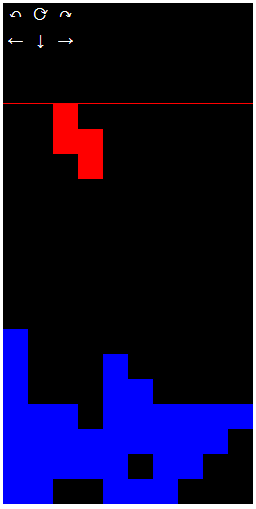
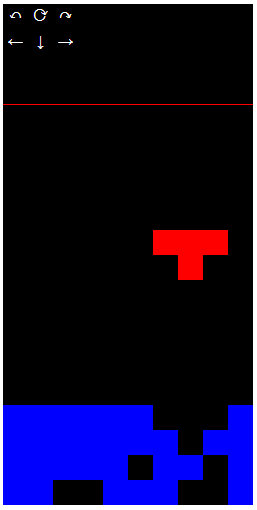
Hatetris is designed to give you the worst possible piece on every turn.

hatetris 1

After figuring out what to do with multiple S pieces, Hatetris throws me a curveball with an I piece.

hatetris 2

Then once I’ve placed the I piece, they flip the script on me with a Z piece. Diabolical.

For the record, after about 30 minutes of play, my record was 3 lines.

hatetris 3

That is brutal.

And after the year or so that many of us have had, who needs brutal?

lovetris 2

Thankfully, the spiritual opposition to Hatetris has appeared for everyone to enjoy. It is, of course, called Lovetris, and it is designed to drop the exact piece you need to clear a line.

lovetris 3

Now, I know what you’re thinking. After a few easy ones, doesn’t it lose its flavor?

On the contrary! It actually offers some new challenges if you approach it from a different direction.

The designer warns that setting up a tetris — eliminating four lines with a single piece — can be difficult when the game is geared toward clearing single lines. That’s one possible challenge for you to solve.

Another that I quite enjoyed was trying to arrange the pieces so I cleared the board entirely. Can you arrange the pieces so that, once you’re done, you’re left with a clean slate to try over with?

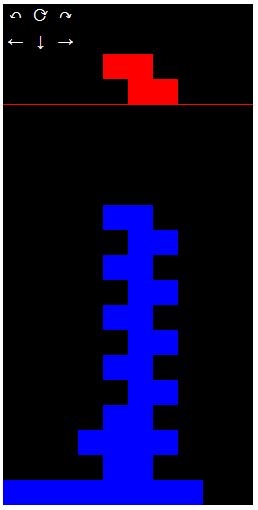
A third option is to purposely drop five or six pieces in a row randomly — or even in a tower in the center of the screen — and then work with the program to dig your way out of your predicament.

lovetris

[Even with the AI’s help, this is a doozy to clear.]

Amazing that it took 37 years for someone to come up with this.

So what do you think, fellow puzzlers and PuzzleNationers? Will you be trying out Lovetris, or enduring Hatetris for a spell, or trying out one of these many variants? Let us know in the comments section below! We’d love to hear from you.


Thanks for visiting PuzzleNation Blog today! Be sure to sign up for our newsletter to stay up-to-date on everything PuzzleNation!

You can also share your pictures with us on Instagram, friend us on Facebook, check us out on TwitterPinterest, and Tumblr, and explore the always-expanding library of PuzzleNation apps and games on our website!

PN Product Review: ThinkFun’s Cold Case: A Story to Die For

a story to die for box

[Note: I received a free copy of this game in exchange for a fair, unbiased review. Due diligence, full disclosure, and all that.]

Detective novels, police procedurals, murder mysteries, forensic shows… there’s an entire entertainment industry out there built on the idea of solving crimes. And why do we watch and read and participate?

Because we all like to believe we can catch the crook. Deep down, we all want to be Batman or Miss Marple or Sherlock Holmes or Temperance Brennan or Jessica Fletcher or Gil Grissom or the NCIS team or members of the NYPD or any of those quick minds who unravel cases and bring the guilty to justice.

Board games are no different, encouraging us to solve crimes through process of elimination (Clue/Cluedo), careful examination of the evidence (Deception: Murder in Hong Kong), or exploring Victorian London through maps, directories, and newspapers (Sherlock Holmes: Consulting Detective).

ThinkFun has taken a different route with their new line of Cold Case mysteries for you to solve.

Today’s review is based on A Story to Die For, the first of two Cold Case mysteries being released in the next few weeks.

In A Story to Die For, you try to solve the 1988 murder of a young journalist.

Yes, this is a cold case, meaning you’re coming in after an investigation has already taken place, yet the case remains unsolved.

You have transcripts of police interviews with suspects, evidence, photographs, and other items collected by the police during their initial investigation. But it’s up to you to comb through the evidence and find what they missed.

There is an absolute wealth of material here to read, creating an entire world of suspects, motives, events, and red herrings for you to unravel. And the materials are top-notch. Full-color photographs, plus different papers and fonts to represent the different sources of information collected.

a story to die for 1

I was very impressed by the presentation of the case. A lot of hard work and detail went into crafting the materials for you to read and reread as you assimilate more information about Andy Bailey’s life. (I would love to tell you specifics, but I want to keep this review spoiler-free!)

And once you think you’ve cracked the case and found answers for all of the questions left behind by the initial investigation, you can test your theory by going to the ThinkFun Cold Case website and submitting your answers.

If you’re on the wrong track, the replies from the website will give you clues on where to look in order to correctly solve the case. And if your detective skills are in tiptop condition, you’ll get more information and a chance to read the suspect’s confession!

It’s a game built on observation, deduction, and wits, and I think it’s one of ThinkFun’s most impressive creations yet. Whether you’re solving alone or with friends, the hour or two you spend unraveling this mystery will be time well spent.

[Cold Case: A Story to Die For is part of ThinkFun’s Cold Case series, designed for players ages 14 and up, and is available for $14.99 from ThinkFun and other associated retailers. Pre-orders start May 18th!]


Thanks for visiting PuzzleNation Blog today! Be sure to sign up for our newsletter to stay up-to-date on everything PuzzleNation!

You can also share your pictures with us on Instagram, friend us on Facebook, check us out on TwitterPinterest, and Tumblr, and explore the always-expanding library of PuzzleNation apps and games on our website!

Candyland: Pastime or Past Its Prime?

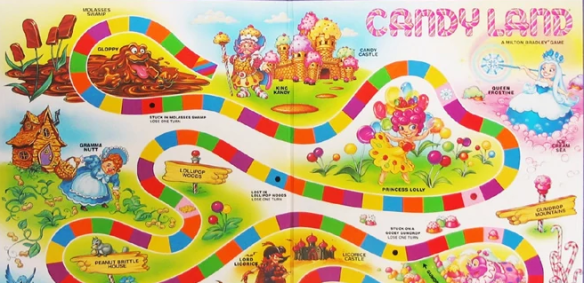
If you ask the average person to name five board games off the top of their head, you can pretty readily guess some of their replies. Monopoly is always there, Scrabble is often second, and then you’ll get a smattering of Candyland, Chutes & Ladders, Sorry, and the like, and then a few outliers like Mouse Trap, Trouble, The Game of Life, and so on.

Candyland is a perennial name on that list, but if you look around the Internet where modern board game enthusiasts congregate, Candyland often appears on lists of the worst board games.

Why is that? Does Candyland get a bad rap?

Well, yes and no.

Strangely enough, the reason that causes so many game fans to put it on “worst” lists is the same reason it is celebrated as a good intro game for children: lack of choice.

Candyland isn’t really a game. There are no moves to make, no strategy to employ. Nothing you say or do will make you the winner. The game is purely one of chance. Once the deck is shuffled, the game is essentially over. (Chutes & Ladders and the card game War suffer from the same problem.)
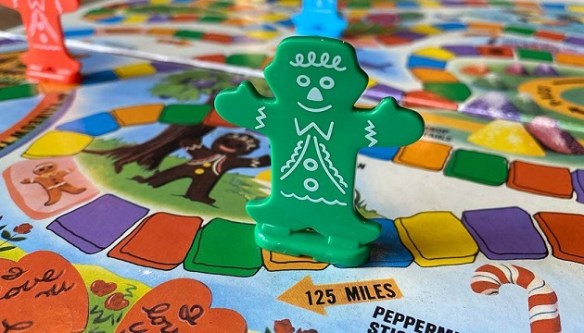
Defenders of Candyland say that this is intentional… which is true. The game was designed to entertain and distract children either suffering from polio or trapped inside because of polio.

But defenders also argue that the game teaches children about reading instructions, learning to take turns, pattern-recognition, and more, all without the “complication” of actual tasks to complete.

But this is a weak argument, because virtually ANY game can teach these things and still offer children choices to make that affect the game.

Still, kids absolutely love Candyland. It’s bright and simple and silly, and the characters are charming.

So, what can we do to make the game engaging for solvers who actually want to do something, but won’t alienate the simplicity factor that makes it appealing to the youngest board game fans among us?

We institute some house rules!
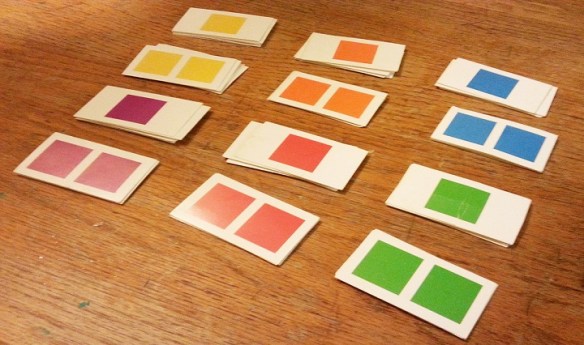
1. Pick a card

Give the players two, three, or four cards to choose from. By allowing them to actually choose a card, there’s some level of strategy involved, even if it’s still a race to the end.

A variation on this idea is the push-your-luck house rule. In a regular game of Candyland, after you draw your card, you can ditch it for a second random draw. If you choose the second card, you must play it. This is a simple modification, but one that still allows players to affect the game in a meaningful way. Do you press your luck or accept the card you know you have?

2. Spot the color

One house rule suggested that a child should have to look around the room and point out an object that’s the same color as the card before they can move forward. While this doesn’t affect the gameplay, it does reinforce the idea that you can use Candyland to teach pattern recognition.

[A gritty reboot of Candyland by artist Shira-Chan.]

3. Deception

Now, it’s probably not a great idea to teach your kids about lying through board games. (After all, you’ll never be able to trust them in a game of Battleship ever again.) But adding a deception element can turn Candyland into an introductory poker game.

Basically, you draw your card, and announce your move without showing the card. If someone thinks you’re lying, they can call you out.

If you are lying, you don’t move AND you lose your next turn. But if you’re not lying, the player who accused you loses a turn.

4. Add trivia

This was a variation in my house on more than one occasion. Since there are six colors on the game board — and six categories in Trivial Pursuit — we combined the two.

When you draw a color card, you must answer a question of the corresponding color. Get it right, and you move on. Get it wrong, you stay where you are.

There are all sorts of terrific ideas out there to make Candyland more enjoyable for players of all ages — for instance, we found some good suggestions listed here which we didn’t cover — and with a little creativity, you can resurrect a classic and make it new again.

And we’ll leave it to you to decide if it’s a good or bad game after that.


Thanks for visiting PuzzleNation Blog today! Be sure to sign up for our newsletter to stay up-to-date on everything PuzzleNation!

You can also share your pictures with us on Instagram, friend us on Facebook, check us out on TwitterPinterest, and Tumblr, and explore the always-expanding library of PuzzleNation apps and games on our website!

Portal 2 Celebrates 10 Years with Time Travel!

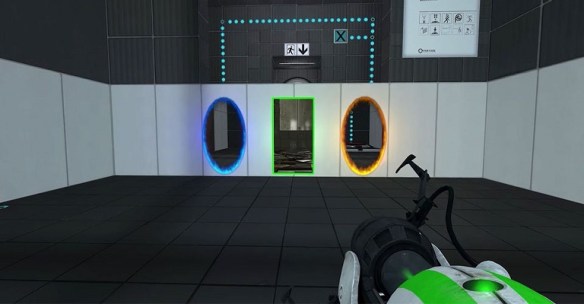
portal 2

Last week, one of the most iconic puzzle games in the history of video games turned ten years old.

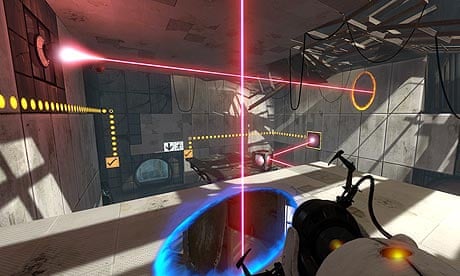
Portal 2 is the beloved sequel to the groundbreaking (and mind-bending) game about a gun that creates portals through which you can leap, fall, and maneuver your way past increasingly complex puzzles and locked rooms. You can make portals — blue or orange, one to enter, the other to exit — with the famous portal gun.

Whether there are buttons to be pressed, lasers to be re-directed, or inaccessible platforms to access, your portal gun is the only tool you need to finish the job… if you’re clever enough.

I reached out to some of my video game-savvy friends to ask their thoughts on ten years of Portal 2, and the feedback was unanimously positive:

Each puzzle taught a lesson, building upon your knowledge of the game’s “rules” and “tricks.” By the end of the game, your brain has been re-wired to solve some of the most brutal possible puzzles. It definitely felt like my brain was running at max capacity playing the portal games.

Portal-2-007

The best puzzle games teach us lessons and allow us to build on those lessons to get better. The more crosswords you solve, the more experience you have unraveling clues and filling in grids. It’s the same thing with Portal.

Another video game enthusiast shared this:

It (along with Portal 1) is one of the only puzzle games that managed to complete from start to finish without resorting to an online hint guide of some sort. It was difficult enough that I felt challenged, but intuitive and logical enough that I was eventually able to figure everything out, which to me is the hallmark of a fun game.

Might also be the first time I ever felt genuine sympathy for a robot in a game. (Or at least the… well, I don’t want to spoil it for anyone who has yet to play through it.)

Oh yeah, it’s also the only first-person puzzle game I can think of where I don’t want to spoil anything for people.

It’s a rare puzzle (and rarer game) indeed where failure doesn’t feel like failure, and instead feels like a learning experience that pushes you to try again with what you’ve learned. Some puzzles and games make that a crushing experience… but Portal makes it fun. Portal makes it compelling. And Portal makes it all so satisfying when you figure it all out.

And now, as fans mark a decade of brain-melting Portal 2 puzzles, a fan-designed free mod known as Portal Reloaded is set to challenge Portal 2 fans all over again.

Portal2-Reloaded-Mod-Valve

How? By adding time travel to the mix.

Yes, your portal gun isn’t just allowing you to manipulate space… it’s allowing you to manipulate time as well.

From the Kotaku article about Portal Reloaded:

Portal Reloaded is a mod, released just in time for Portal 2‘s 10th birthday, that introduces a new set of test chambers and, more importantly, a new portal colour. You’ll still be using the old blue and orange ones, but the green one you’ll also get will let you move through time, as you set up puzzles in one timeline and then move them along/solve them across two different eras, set 20 years apart.

When a game that already lets you bend space to your whim with some clever positioning, the possibility of bending time the same way is practically irresistible.

But will people be talking about Portal Reloaded in ten years the same way they do about Portal 2? Unfortunately, there’s no green portals to tell us the answer. We’ll just have to wait and see.


Thanks for visiting PuzzleNation Blog today! Be sure to sign up for our newsletter to stay up-to-date on everything PuzzleNation!

You can also share your pictures with us on Instagram, friend us on Facebook, check us out on TwitterPinterest, and Tumblr, and explore the always-expanding library of PuzzleNation apps and games on our website!
Puzzly Ways to Manage Stress!

stress ball

Stress is a killer, no doubt about it. Everyone needs ways to escape it, to mitigate it, and to give their mind and body a break from the pressures of stressful situations.

There are all sorts of products out there and suggestions for how to manage stress, but in the last few years, there has been a marked increase in what are known as “stress toys” or “fidget widgets.” Sure, stress balls have been around for years, but now we have things like fidget spinners, fidget cubes, tangle toys, and more. These items are specifically designed to be played with, but they have no actual GOAL built in. Often, these items are played with while the person focuses on other thoughts.

And that’s the key. Many people find puzzles and games relaxing and distracting, but the fact that there is a goal attached — solving the puzzle, completing or winning the game — means the item is less effective at managing stress than other items where there is no inherent goal beyond play.

As reported by The Atlantic, a study by the Polytechnic Institute of New York University stated that playing with small toys can help relieve stress, enhance productivity, and aid in memory. Yes, that person doodling during the meeting might retain more information from it than the person intently staring at the speaker. Who knew?

Some folks suggest Play-Doh, paperclips, magnetic balls, or pipe cleaners as reliable fidget widgets. Today, we thought we would offer some puzzly options for small, stress-relieving puzzly items that could help you get through the day.


I’ve seen Rubik’s Cubes and other twisty puzzles suggested for something like this, but again, the implied goal of the Rubik’s Cube – solving it – disqualifies it from this list. Although the mini Rubik’s Cube keychains are sometimes cited as good stress toys, we’re going to focus on things with less of a reputation or mental association for being challenging.

For instance, let’s look at Knot Dice.

knot dice

These beautiful patterned dice can obviously be used for puzzling or gaming, but many of the folks I’ve introduced to Knot Dice simply enjoy the experience of playing with them and observing what patterns emerge. There is no end goal, just the joy of watching paths form and seeing beautiful knot-like designs appear.

I know several people who keep Knot Dice close at hand as a tool for distraction or letting their minds work on other things in the background while they play with the dice.

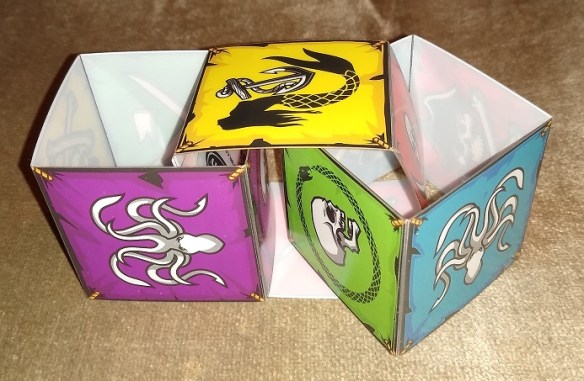
block chain 4

Our friends at ThinkFun have several puzzly games that would make good stress toys. While Fidgitz and Backspin come to mind, I think Block Chain is the best current example. These linked cubes can twist and turn and fold over each other to create cubes, but that feels secondary to the idle joy of simply watching how many patterns you can make with simple movements.

The design of the cube changes wildly based on your choices, and just fiddling with it and then folding it up is terrific fun. Plus the wild and varied imagery offers a nice change from the static colors and designs of many brain teasers, twisty puzzles, and other fiddly items.

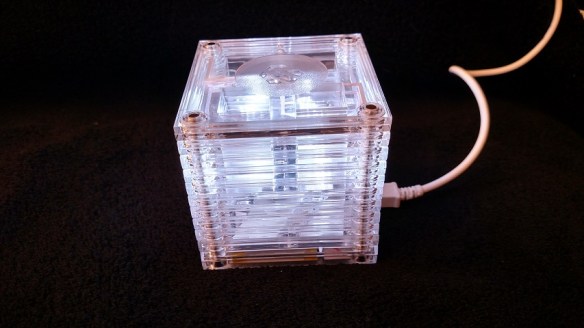
lightbox3

But the puzzly item I find myself returning to most, something to keep my hands occupied while I puzzle over a problem in my head, is Lightbox. The simple action of lifting, twisting, and reconnecting the many stacked plates in different combinations — then seeing what pattern of light is created — has a certain associative aspect that really pushes my brain in positive directions.

Seeing the cube light up in different ways feels like getting that metaphorical lightbulb to appear over my head, and rarely do I need to spend more than a few minutes fiddling with this delightful device before some little burst of motivation, inspiration, or reinvigoration is unlocked inside me, and I can get back to being productive.


What are your go-to items when it comes to stress toys or other items you find yourself idly playing with during the workday, fellow puzzlers? Let us know in the comments section below! We’d love to hear from you.

Thanks for visiting PuzzleNation Blog today! Be sure to sign up for our newsletter to stay up-to-date on everything PuzzleNation!

You can also share your pictures with us on Instagram, friend us on Facebook, check us out on TwitterPinterest, and Tumblr, and explore the always-expanding library of PuzzleNation apps and games on our website!