Ways to Choose Who Goes First in a Board Game (Part 3: The Grand Finale!)

Every tabletop game starts somewhere. Once the box is opened, the pieces distributed, and the board set up, all that’s left is figuring out who goes first.

After two days buried in board game rule books, you might think you’ve seen everything the industry has to offer, especially when it comes to starting prompts.

But I assure you, friend, I’ve saved the best for last. Please enjoy the most elaborate, the most cartoonish, and the flat-out craziest suggestions for Who Goes First, as well as a countdown of my personal favorites.

Without further ado, let’s get into it!


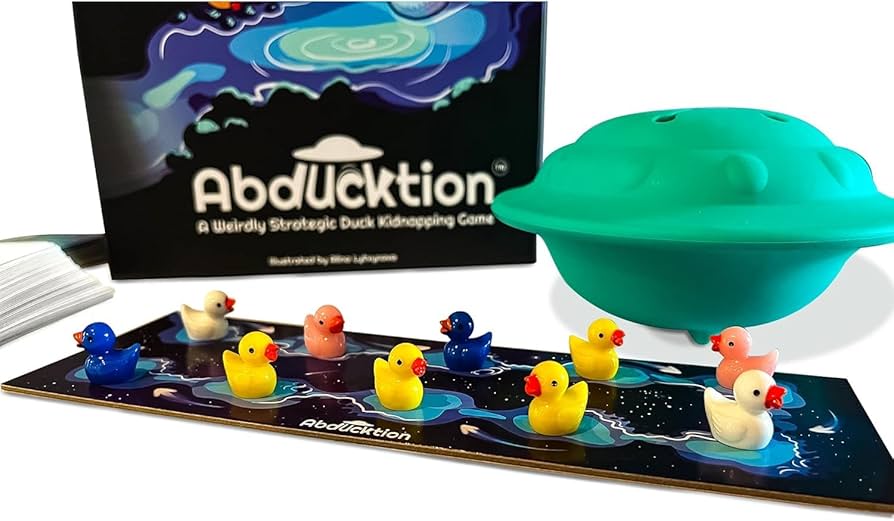
Board games often have an off-the-wall premise, whether you’re dealing with aliens abducting ducks (Abducktion), using mad cows to detonate leftover war-time munitions (Unexploded Cow), or slowly going insane whilst spelling words (Unspeakable Words).

But even games with more down-to-earth concepts can still have mind-bendingly silly or crazy prompts to decide Who Goes First.

Time Masters asks for the player who last spoke with a wizard, while Star Wars Villainous: Power of the Dark Side suggests the last player to use The Force. Time Bomb Evolution lets the player who most recently evolved start the game.

Image courtesy of Disney.

1001 Karawane prefers the player who has ridden on a flying carpet most recently. In Big Monster, it’s the last player to have been to the moon who begins.

Were you the player most recently abducted by the CIA or the KGB (Secrets)? Or the player who most recently killed a monarch (Regicide)? Or the person who last destroyed an entire civilization (Gentes)?

Viking-themed games go pretty hard right out of the gate. Walhalla wants to know who most recently drank mead from a cow’s horn. Vikings, meanwhile, opts for the player who has pillaged and razed the most defenseless villages.

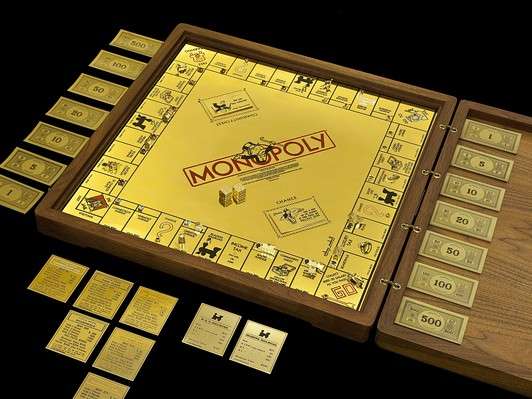
If you can perform miracles, I have a few recommendations for you. In Dead Man’s Cabal, the player who last raised the dead goes first. In Kazaam, the player who has most recently turned lead into gold begins. (This is also the case in Trismegistus: The Ultimate Formula, though that game accepts any alchemical transmutation.)

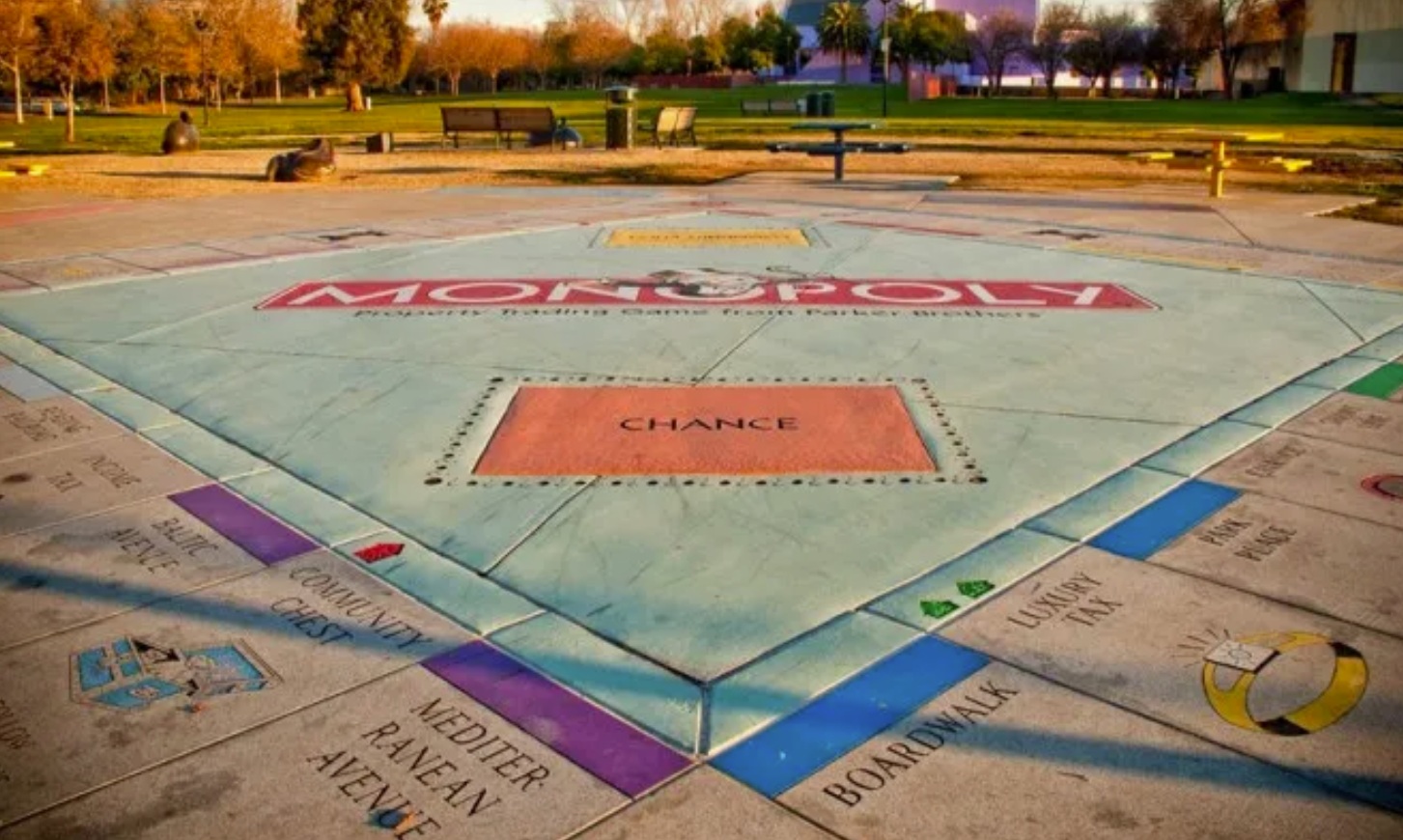
A successful alchemist’s copy of Monopoly…

Some games raise the bar even higher, asking for insanity AND specificity.

How specific? Well, a game of Colorado starts with the player who last visited an abandoned mine in a rusty wagon oozing coal residue.

Fantastiqa: The Rucksack Edition asks just one thing of the starting player. They want the person who most recently conducted a successful short symphony for the Mountain Moles of Mu. Simple, right?

At least Smash Up! gets specific by offering lots of options. The player who most recently experienced ANY of these scenarios can go first…

  • abducted by an alien
  • shanghaied by a pirate
  • bitten by a vampire
  • burned by a dragon
  • kissed by a princess
  • driven insane by Cthulhu
  • attacked by a teddy bear
  • eaten by an orc

Along the same lines, Cleopatra and the Society of Architects prefers the player with the best Egyptian credentials. This could be a nose as famous as Cleopatra’s, a mummified Crocodile pet, or an extensive hieroglyphic library, for instance.


Some of those starting rules listed above are pretty unusual. Thankfully, some games have a ridiculous starting request, but a more reasonable back-up suggestion all lined up. And these “In case of” scenarios can be just as entertaining as the totally bonkers starting prompts.

In Simurgh, the player who last rode a dragon goes first. But if no one has ridden a dragon, they’ll take a horse, a pony, or an extremely large dog instead. Reasonable!

Which player has most recently been to space? You get to go first in Space Explorers. And if no one has, then it’s the player who most recently watched or read something about space.

In the same vein, the player most recently abducted by aliens goes first in Pasture 51: They Came for our Angus. (Whomever has most recently been to a farm is the back-up in this case.)

Dinosaur Island suggests that the player who most recently extracted DNA from a mosquito trapped in amber begins. I mean, sure, we’ve all been there. But, if for some reason, no one at the table has successfully completed that task, you can go with the player who most recently visited a theme park.

And if that feels unlikely, consider this one.

Are you the player who last reached the peak of Mount Everest using nothing but blue-and-white-checkered stilts carved from the wood of a Mammoth tree? Then you start this particular game of The Bridges of Shangri-La. (In case of a tie, choose the wisest player of the group. I imagine that might be the person who didn’t try to climb Everest on stilts in the first place.)

The Great Heartland Hauling Co. is almost contractual in their starting prompt. The player with either (A) the best mustache or (B) the longest hair goes first. If one player has a very nice mustache and another other player has the longest hair, settle the issue with an arm-wrestling match.

This combination of physical qualities, debate, and physical challenge manages to encompass so many different Who Starts ideas that it’s genuinely impressive.


Before I conclude this three-day journey through the world of board game starting gimmicks with my personal favorites, I would like to highlight one delightful subset of starting rules: the “player to the left” option.

Dominion is perhaps the most famous game to use this mechanic, suggesting that the player sitting to the left of whomever won the previous game should start. Since play passes to the left, this means the person who won the previous game goes last. It’s an elegant equalizer for all involved.

Flock Together has a nice variation on this, opting for the player to the left of the player who most recently ate chicken to begin the game.

And Galaktico is absolutely ruthless in this regard, suggesting that play starts with the player to the left of the most impatient player (meaning the most impatient person must go last). That’s brutal!


I’ll conclude today’s post with my favorite Who Goes First prompts. After reading through hundreds and hundreds of board game rule sets, these are the ten I liked the most. They’re an eclectic mix of creative, sincere, silly, and thematic hooks.

#10: Tzolk’in: The Mayan Calendar

Give the Starting Player Marker to the player who most recently sacrificed something. This can be as silly or as serious as you choose, offering a whole range of potential debate opponents.

#9: T-Rex’s Holiday

The player with the most scars from animal scratches begins. This is clearly someone who deserves a little reward.

#8: Terror Below

The player who most recently defeated a worm in combat begins. The door is wide open on this one, and the debate never fails to make everyone at the table laugh.

#7: Tempus

The player who most recently had a great idea begins. As you can tell, I love a passionate debate, and this one has led to some genuinely fascinating pre-game discussions.

#6: A Thief’s Fortune

The player who most recently borrowed something and never returned it begins. Confession time, you light-fingered fiends!

#5: Fog of Love

The player who last blew a kiss begins. I just think this suggestion is so lovely.

#4: Surfosaurus MAX

The most experienced paleontologist/surfer begins. While you could interpret this as the most experienced paleontologist OR surfer, I prefer to debate who best embodies the qualities of both a paleontologist AND a surfer.

#3: Potemkin Empire

The player who most recently had to deal with government bureaucracy. Again, this is someone who absolutely deserves a little kindness.

#2: Trogdor!!: The Board Game

The player with the coolest consonant cluster in their name begins. This one is so unique that I had to put it high on my list. Reward those people whose names are constantly getting mispronounced!

#1: Fairy Tails

The player who most recently took a walk in the forest while contemplating the existence of hidden peoples begins. Plenty of games ask who went hiking or walking in the forest last, but the contemplation aspect makes this one so cute and considerate.


Thank you for taking this deep dive with me into the world of board games. It’s been an absolute blast to dig through not only my own extensive board game collection, but the brilliant archive of Who Goes First rules compiled at First Player Fun. Please check them out!

Did I (somehow) manage to miss your favorite starting prompt across these three days, fellow tabletopper? Let me know in the comments section below! I’d love to hear from you.

Ways to Choose Who Goes First in a Board Game (Part 2)

Every tabletop game starts somewhere. Once the box is opened, the pieces distributed, and the board set up, all that’s left is figuring out who goes first.

As you could tell from yesterday’s post, there are literally hundreds of ways to choose Who Starts. But yesterday’s options were centered mostly around the players on that given day of play. Their age, physical characteristics, recent travels, personal experiences, and so on.

In today’s exploration of board game rules, we’re looking at starting prompts where you have a fighting chance to earn the right to go first.


Sometimes, a game poses a small competition to decide who goes first.

It can be a physical challenge, like who can jump the highest (Dancing Eggs), or who can balance on one foot like a flamingo for the longest (Animal Upon Animal), or who can dance the Flamenco the best (Citrus).

In Bardwood Grove, it’s the player who can hold a note the longest. In Mega Mouth, it’s whoever can say “mmmmmmm” the longest without taking a breath. In Gheos, it’s the player who can refrain the longest from laughing.

It can also be based on the quickest person to respond to a prompt:

  • The first player who chants “ego sum primus ludio” 3 times (Don’t Go In There)
  • The first player to compliment another (I’m Right You’re Wrong)
  • The first player to make a trumpet sound and announce themselves as the starting player (For Crown and Kingdom)

Sometimes, it’s not being first, but being loudest, like in Stratelite, where the player who shouts “I will crush you all!” the loudest gets to start, or in Dungeonology: Rigor Mortis, where the player who yells “Yes, Dark Lord!” loudest in goblin language begins.

Naturally, some games have a performance aspect to their starting prompt.

These can run the gamut from making the weirdest shape with your tongue (Foramina!) or saying “I am a super secret super spy” in Sean Connery’s voice the best (Covert) to the most impressive imitation of Godzilla’s scream (Godzilla Total War) or making the best Chupacabra noise (Chupacabra: Survive the Night).

In Genji, the player who can tell the most romantic or moving love story begins. In Lift Off! Get me off this Planet!, it’s the player with the best story about being stranded by their own accord. (Obviously, a few of these may require some debate among the players.)

Some board games prefer a mental challenge to a physical one, testing your wittiness, trivia knowledge, or other examples of cerebral acuity.

Can you be…

  • The first player to come up with a punny dinosaur joke (Dinosaur Island: Rawr ‘n Write)
  • The player who can name the most of Jupiter’s moons (Exoplanets)
  • The player who comes closest when guessing the current time (Chrononauts)
  • The player who can recall the earliest positive memory begins (Vivid Memories)

Speaking of debate, it’s one of my favorite options when it comes to determining Who Goes First. And there is no shortage of weird, wacky, and wonderful suggestions in board games for this one.

In Oath of the Brotherhood, you must debate which player looks the most like a pirate. In Hellapagos, it’s the one who most resembles a castaway. In Tudor, the one who looks the most like Henry VIII, or one of his wives.

In Obama Llama, it’s the person who most resembles either Obama or a llama. And continuing the thread of silly game names, Bunny Bunny Moose Moose asks for the player who looks the most like a moose. (Don’t worry. If there’s a tie, you can choose the player who looks most like a rabbit instead.)

Which player struck the most chivalrous pose? (Medieval Academy)

Which player most recently did something Scottish? (Glascow)

Which player has held the strangest job? (Funny Business)

Which player has the most hipster cred? (Streets)

Which player has the best taste in music? (On Tour)

Which player has had the worst day? (Gloom)

Who has befriended the most unusual animal? (Wondrous Creatures)

Which player can best make the claim of being a rocket scientist? (Launchpad 23)

Who has the shadiest laugh (Swindler)? The most diabolical laugh (Spare Parts: The Game of Undead Army Building)? Who cackles the most like a vile and greedy medieval pardoner (The Road to Canterbury)?

And some of these are sure to spark a spirited debate.

I mean, how do you decide which player is the most alien (Space Beans)? What about the one who has most recently gone insane (Cthulhu Realms)? The player with the most authentic name (Burgen Land)? Or the one most likely to be from a parallel universe (Trouble: Across the Spider-Verse Part One)?

The weirdest? (Play Me: Alice in Wonderdice)
The most angelic? (The Deadlies)
The most daring? (Carnegie)
The smartest? (That’s Pretty Clever aka Ganz schön clever)
The most evolved? (On the Origin of Species)

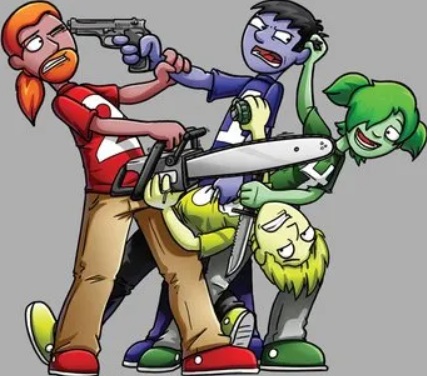
Image courtesy of Ctrl+Alt+Del.

I mentioned in yesterday’s post that Hot Tin Roof‘s starting prompt could ruffle some feathers. But it’s hardly alone amongst board games whose starting rules could cause fireworks.

Do you want be considered the most evil (Dark Minions) or the most sinister (Complots)? Would you be cool with being named the most malicious (Doodle Dungeon) or the blood-thirstiest (Dungeonville)?

The most suspicious-looking (Spyfall)? The one with the sneakiest eyes (Shifty Eyed Spies)? The sneakiest in general (Clank!)? The most cunning (Volto)?

I mean, it’s not exactly a compliment to be told you look the most stressed, which would let you go first in Chakra. Or that you’re the player who most desperately needs a vacation, which makes you first to act in Kahuna.

Bears vs. Babies asks who had the most recent tantrum. Aristocracy asks who most recently made an unreasonable demand. In Awkward Guests: The Walton Case, it’s the player who the host considers to be the most awkward guest. Oof. That’s a rough one.

But not as rough as debating which player LOOKS the oldest. I can’t remember which game I saw this prompt in, but man, that’s guaranteed to start a fight.


I’ll conclude today’s deep drive into board game Who Goes First options with a short list of games that ask you to confess to crimes in order to earn that coveted starting spot.

Yup. How bad do you want that first move or die roll?

It’s the player who last committed a crime who starts in La Cosa Nostra. The player who most recently robbed a bank gets to go first in Escape Plan.

In Trial by Trolley, the player who last thought about murdering someone begins. In The Brigade, it’s the player who most recently set something on fire.

Do the crimes do get more specific? You bet they do.

In Prohibitionists, it’s the player who most recently smashed open a cask of bootleg whiskey with an axe. (Naturally, this wasn’t a crime at the time, but it sure would be now! That’s MY cask of bootleg whiskey!)

And finally, in 10′ to Kill, the last player to have killed someone begins. They do add the caveat that it could be a noisy neighbor, an annoying mother-in-law, or a really hard boss in a video game, but still.

You know, in some of these cases, I think I’d be fine going second.


How apropos, since this is the second entry in a three-part series. I simply could not narrow down the list of bonkers, clever, hilarious, and sinister possibilities.

I’ll be concluding the series tomorrow with the most elaborate prompts, the most insane ones, and my list of all-time favorites. So be sure to come back tomorrow for even more board game-specific fun!

Do you have any favorite Who Starts rules for board games? Let us know in the comments section below! We’d love to hear from you.

Ways to Choose Who Goes First in a Board Game (Part 1)

Every tabletop game starts somewhere. Once the box is opened, the pieces distributed, and the board set up, all that’s left is figuring out who goes first.

There are a few traditional ways to sort this out. Sometimes, the oldest person at the table goes first, showing the younger players how to proceed. Sometimes, the youngest player goes first, getting a chance to dive right in. Sometimes, a simple roll of the dice or a few rounds of rock-paper-scissors determines who goes first.

But there are plenty of board games that have their own idea of how to start.

So please join me on a deep dive into the many, many, MANY ways you can choose who goes first in a board game!


Birthdays are a frequent topic when it comes to choosing the first player.

It can be whose birthday is closest to a given date, like in Duck Dealer, where the player born closest to November 24, 1967 begins, or in Agatha Christie: Death on the Cards, where the player whose birthday is closest to Agatha Christie’s begins.

Closest to The Year of the Rat (Fruits Basket: Friends of the Zodiac), February 12th (Killer Bunnies and the Quest for the Magic Carrot), or the next equinox (Equinox) all come to mind. In The Stars Are Right, it’s the player whose birthday is next, while in the card game Quixx, it’s the player whose birthday is furthest from the day you play.


Many games determine who goes first by physical characteristics.

In Takenoko, it’s the tallest player. In Guillotine, the player with the longest neck. In Titus Tentacle, the longest arms. In Small World, the person whose ears are most pointed. In Pyramix, the person with the most triangular nose.

The longest hair, the largest shoes, the hairiest, the smallest, the huskiest voice… these are all on the table.

In the cat-themed Hot Tin Roof, it’s the player with the longest whiskers. And if there’s a tie, it’s the person whose breath smells the most like fish. (That one might cause a fight, honestly.)

Other games rely on something more conditional, something that could change from game session to game session.

Who is the hungriest or thirstiest, when the game’s gimmick centers around food. In Roll to the South Pole, it’s whomever has the coldest nose. In Snowblind: Race for the Pole, it’s the player with the coldest hands begins. In the Rick and Morty: The Ricks Must Be Crazy Multiverse Game, the player with the lowest cellphone battery begins.

Or it’s based on the last time you did something related to the game.

Please make sure your sheep consent to caressing before you proceed…

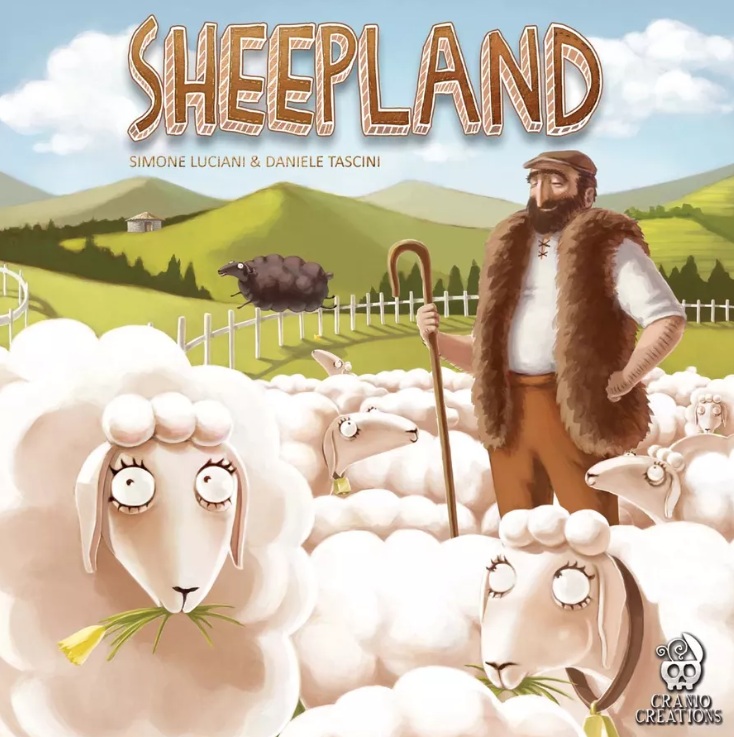
In Sheepland, it’s the player who most recently caressed a sheep. Yes, they use the word “caress” specifically. In Steam Works, it’s the player who most recently built something.

In The Lady and the Tiger, it’s the person who last opened a door. In Golems, it’s the last player who built a snowman. In Flip City, it’s the last player to have flipped a table. (So the person who most recently played Monopoly, I’d bet.)

Who last went hiking, or helped someone, or last petted an animal. Who last visited a museum, watered a plant, read a book, fed a duck, dug a hole, made tea, drank tea, rode a train. Who most recently experienced deja vu, who woke up earliest, who woke up latest. (Each one of these examples showed up multiple times in my research!)

A lot of them involve choices or actions, but some games use a starting criteria that’s out of your control.

In ALIEN: Fate of the Nostromo, it’s the player who most recently had a cat hiss at them. In Let’s Make a Bus Route, it’s the player who recently spent the longest time as a bus passenger.

Were you the person who most recently saw a firefly (Smile), or a full moon (Catch the Moon), or a shooting star (Astra)? Maybe you were the person most recently burnt by the Sun (Solar Storm).

In Copper Country, the player with the oldest penny begins. In Good Cop Bad Cop, the player who was most recently shot (!) begins. (Apparently, it can be in a game or real life.)


A lot of board games have location-specific starting hooks. Often it’s which player has been to the game’s setting most recently.

(At least in Merkator, if you haven’t been to Hamburg, it can instead be the player who most recently ate a hamburger.)

This is especially common with water-based settings. Who lives closest to water (Le Havre), who was most recently on an island (Forbidden Island), or has been deepest in the sea (Nautilus). Builders of R’lyeh gets very specific about this, asking for the player who has been the closest to 47°9′S 126°43′W / 47.15°S 126.717°W in the southern Pacific Ocean.

In Iceberg, it’s the player who most recently was at the South Pole is the start player. (If none was there, the player who got closest starts.) Contrary to Iceberg, in Nanuk, the starting player in this game is whoever has been the furthest north!

Were you the last person to stand on a balcony (Council of Verona) or the last person to travel to a place with less than 100 inhabitants (Boonlake)? That one sounds exotic, until you remember traveling to your home, which hopefully has fewer than 100 inhabitants.

In a nice reversal of this trope, the game Coney Island states that the player who has NOT been to an amusement park for the longest period of time begins.


As you can plainly see, fellow tabletopper, these starting criteria can get very specific. How specific? Well, check out some of these Who Starts prompts:

  • The Voting Game: The player who most recently called their mother begins.
  • Tawantinsuyu: The Inca Empire: The last player to harvest a vegetable begins.
  • Valentine’s Day: The last player to have been pricked by a thorn begins.
  • Mech A Dream: The player who has most recently dreamt of robots begins.
  • Wakanda: The player who last uttered a war cry begins.

These last two deserve their own spotlight for different reasons.

In Tales & Games: The Pied Piper, the player who last saw rats in a bathtub begins. We’ve all been there, amirite?

In Cascadia, the player who most recently saw a bear, elk, salmon, hawk or fox begins. (I love how many options Cascadia allows for!)


Of course, hardcore board game fans know the rules of their favorite games. With some games and their Who Starts rules, this means a devious host might be able to rig who goes first in their favor.

In Railroad Dice, the player who owns the most railroad games begins. Unless you’re in a model train club, odds are the same person will start every time here.

Sucking Vacuum is among the games where the player who owns the game begins. I can see this being a groanworthy moment when trying to decide what game to play, and someone keeps pushing for the game where THEY get to start, heh.

A little bit of foreknowledge comes in handy with these games as well:

  • Antics!: The player who has carried the heaviest item today (stomachs do not count) begins.
  • Dragon Farkle: The player who brought the most snacks begins.
  • Legacy: Gears of Time: The player whose watch is currently set the furthest back in time begins.
  • Step to it: The player with the most colorful socks begins.
  • TacTile: The player with the most colors on their shirt begins.
  • Welcome to Sysifus Corp: The player with the lowest amount of unread emails begins.
  • Plague Inc.: The player who washed their hands most recently begins.
  • The Nacho Incident: The player who has the most interesting thing in their pocket begins.

At least with Dragon Farkle‘s rules, you’re guaranteed snacks!


I’d originally intended for this to be a one-post topic, but the field was so overloaded with noteworthy examples that I’ll be continuing this topic both tomorrow AND Thursday, so be sure to come back for more board game-specific fun later this week!

Do you have any favorite Who Starts rules for board games? Let us know in the comments section below! We’d love to hear from you.

Farewell, Tim. Farewell, Steve.

Sadly, the start of 2026 has been a rough one for the games industry, as we lost two influential voices in the span of a few days.

Please join me as I take a few moments to honor the lives and contributions of Tim Kask and Steve Dee.


On December 30th, we said goodbye to Tim Kask.

When you think of the early days of Dungeons & Dragons, there are names like Gary Gygax and Dave Arneson that many roleplaying fans probably know. But Tim Kask’s name belongs in the same conversation as those renowned voices.

Tim was hired as an editor for Tactical Studies Rules (aka TSR, the founding company of D&D) by Gygax himself, making him the first full-time employee of the company. He was already a fan of Gygax’s game Chainmail and was one of the playtesters of “The Fantasy Game” (the game that would eventually become Dungeons & Dragons).

And his fingerprints are all over the world’s most famous roleplaying game.

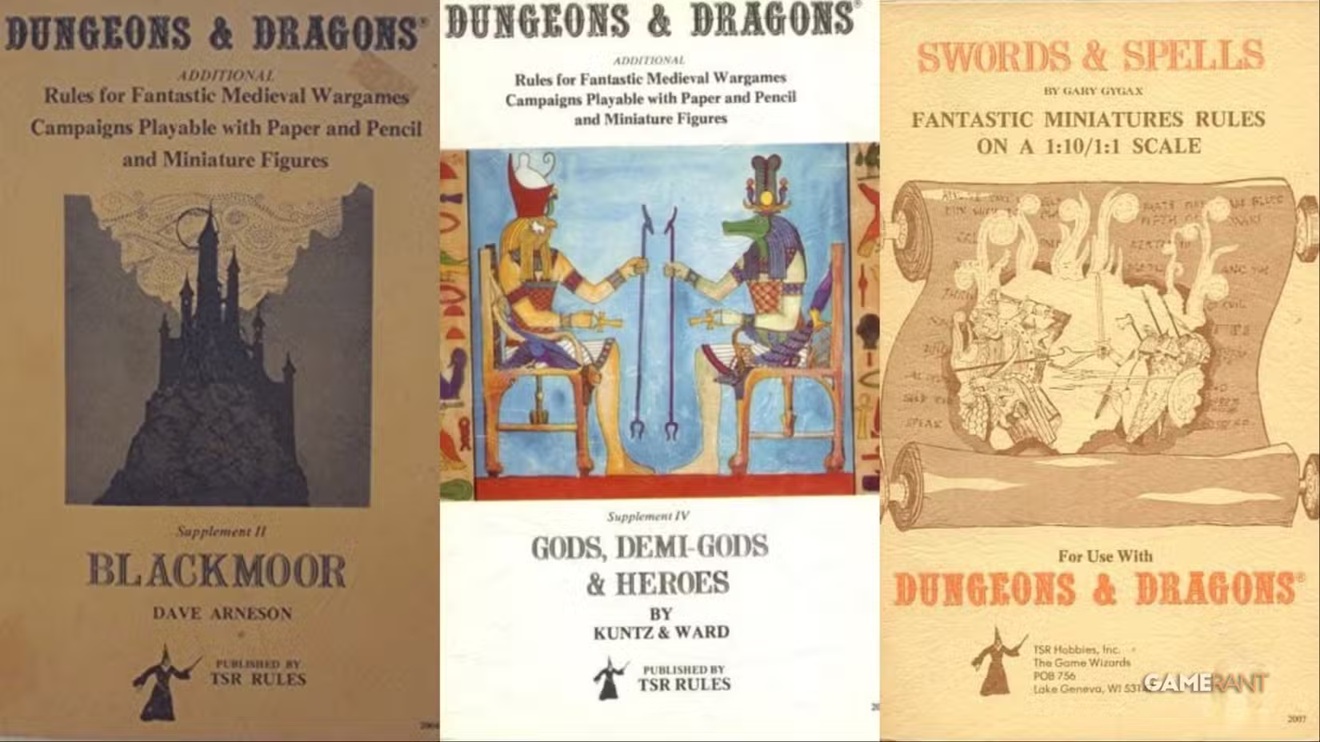
He edited and contributed to Blackmoor, one of the earliest supplemental books for D&D, adding rules, playable classes, and the first published adventure, The Temple of the Frog. Additional supplements like Swords & Spells, Eldritch Wizardry, and Gods, Demigods, and Heroes were also shepherded by Kask’s capable hands.

The first thirty or so issues of Dragon Magazine — formerly The Strategic Review, and then The Dragon, before settling on the name known by most fans — were part of Kask’s ongoing projects for the company as well. It remained one of the premiere D&D-focused magazines for years, and copies of Dragon Magazine are still treasured in RPG collections to this day.

Tim hired influential voices like Kim Mohan, and granted a license to Jennell Jaquays to publish her own D&D fanzine The Dungeoneer, adding new adventures for players to enjoy. (Jacquays would soon revolutionize the concept of the dungeon crawl with her multi-path dynamic dungeons, replacing the linear corridors and encounters that had defined the concept until that point.)

He was one of the first people to call the hobby “role-playing.” Magic Missile automatically hits its target because of Kask. And the Sword of Kas, one of the most legendary weapons in all of D&D, is named after him.

Kask resigned from the company in 1980, displeased with the direction of the game, but he continued to contribute to the games industry by starting magazines, making appearances at Gen Con, writing for The Crusader and Gygax Magazine, and founding game company Eldritch Enterprises. His YouTube channel, Curmudgeon in the Cellar, is a favorite of many gamers and roleplayers.

Fans remember him as straightforward, grumpy, and very very funny, happy to share his knowledge and opinions on the game he helped bring to prominence.

Thank you for everything, Tim.


Only a few days later, on January 2nd, we lost Steve Dee as well.

Steve Darlington, better known to board game enthusiasts as Steve Dee, was president of Tin Star Games, an Australian gaming company dedicated to story-driven play and creative expression. Their motto was simple:

We make games. They tell stories.

His games are endlessly repeatable player-driven fun. You’ve probably heard of his most famous creation, There’s Been a Murder (which was on our Halloween game countdown).

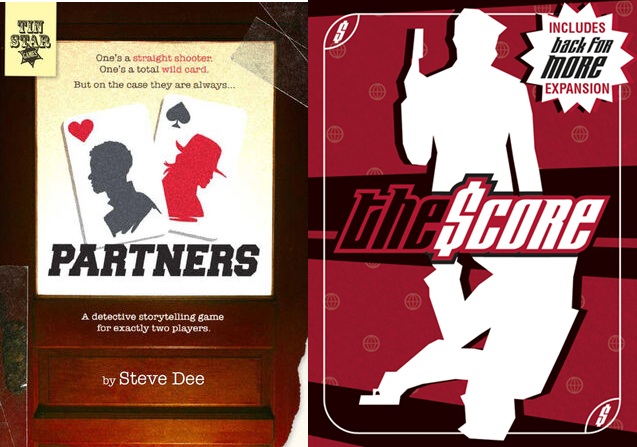
But I want to highlight some of his other games that haven’t received as much of the spotlight. There’s Partners, a two-player game that lets you explore the classic TV crime-solving dynamic of the straight-shooter and their wildcard partner.

There’s also The Score, a simple 18-card game that lets you tell the story of the greatest heist movie ever (at least the greatest heist movie not involving bears).

But he was far more than a mere game designer.

Steve was a huge believer in jams: events where you create something in a limited time, marrying creativity with challenge. He participated in 48-hour jams to create 3-minute short films. He hosted jams and panels at cons, teaching people how to make board games in 2 or 3 hours.

He even hosted a challenge where fans yelled roleplaying game ideas at him and he would turn them into a playable game in just one hour!

Steve’s YouTube channel is a treasure trove of hard-won experience and boundless support for gamers and game designers, shining a light on many of the difficulties of running a small game company in the modern day. His videos are loaded with personality, and his unwavering sincerity shines through in every one.

Described by friends and admirers as humble and helpful, generous and inspiring, Steve was happy to help others with advice, guidance, and encouragement. The number of anecdotes across Facebook and gaming sites was truly overwhelming, mentioning kind words, workshops, impromptu lunch-time feedback sessions, and more.

And it’s so very fitting that his last Patreon post was titled something that fit Steve’s mantra and spirit so perfectly: Just do something.

Please let me conclude this tribute with Steve’s own inspiring words…

In times of crisis, heroism often fails; great efforts come to nothing and the casual or cruel can grant salvation. However, the smallest things can still be incredibly powerful and resonate to eternity. You matter, and if you show up, you can change your fate, or someone else’s. And that is everything.

Thank you for everything, Steve.

The Saga of Trench: A Story of a Game and a Father’s Love

I started supporting projects on Kickstarter back in 2017. One of the first projects I supported was a strategy board game called Trench.

But I had no idea that clicking that button would take me on a six-year journey that transformed from a simple bit of puzzly business to a heartwarming story of a father’s devotion to finishing his son’s work.


The story begins in October 19, 2017, when Trench was successfully funded by its backers. The projected delivery date was April 2018.

Inspired by trench warfare, the game was created by Rui Montero with a limited production run, primarily based in Portugal.

Here’s a brief description of the game:

The 8×8 grid board is diamond-shaped; each player sets up his army on opposing sides of the “trench”, which divides the board into two. As hostilities between the armies commanded by the players grow, each attempts to seize control over the trench in order to take full advantage of its strategic potential, hoping thus to breach the opponent’s defenses and capture the most valuable and important pieces.

From the Soldiers to the General, each piece being subject to specific maneuvers all will have to cooperate in order to occupy the trench, invade the enemy’s territory, and vanquish the foe. The army that manages to survive after two battles wins the game!

In the hopes of achieving greater exposure, a more successful print run for the game, and the creation of a hardcover strategy guide to accompany the game, Montero brought the project to Stan Strickland and his son Mike. With two successful Kickstarter campaigns already underway for their company Outer Limit Games, Stan and Mike accepted this new endeavor.

Stan was kind enough to share some insight into the project with me:

Rui was in the process of writing a book on strategies for Trench. He asked Mike if he could also help him put the book together. Mike was very talented graphically so he agreed. The reason Mike wanted to create a game was he loved graphic designing. His passion was not games but creativity through his graphic designing. He also loved creating music.

Rui said the book would be a little over a 100 pages but ended up being over 200 pages long. Mike and both were busy trying to complete Tau Ceti and Tradeworlds so it was an added responsibility for Mike. Mike always tried to lend a helping hand whenever he could so he agreed to help Rui. Rui had already had great success with Trench in Europe so the game garnered international attention.

The new Kickstarter campaign was a success, leading to production of three versions of Trench: a miniature version, a regular version, and a premium edition. By November of 2017, production was underway! Backers received regular progress updates. The game was nominated by Board Game Geek as one of the Most Anticipated Games of 2018.

As with any Kickstarter project in those days, there were production days. The estimated April 2018 delivery date came and went. The factory manufacturing the game pieces for the premium edition ended up changing locations. But the Trench team was optimistic production would be finished by May of 2018. The Strategy Guide was also behind schedule, but Mark and Stan were firm on the idea that the strategy guide would ship with the games.

Production on the premium version of the game was finally completed at the end of August (though the Strategy Guide continued to need revisions). By the end of September, the premium version was ready to ship, but the regular version and Strategy Guide still were not.

By the end of the year, fulfillment still hadn’t happened, due to logistical problems.

While all of this was going on, Rui was still writing the Strategy Guide. Because the cost of shipping had started to rise, we quickly realized we would have to ship the game and book together to save on shipping. We explained it to the backers and for the most part they understood. There were some complainers but we knew we had to do what we had to do to pull it off. Mike continued to work on the graphics for the game, while I worked on securing a manufacturer for the book and the mini version of the game. We were both working full time at the time as well. So needless to say, it was quite a task running 3 campaigns at once.

Mike was hit with a nasty bout of respiratory flu in early 2019. (An unfortunate consequence of 70+ hour weeks working on Trench and the other campaigns.) But the team was optimistic that everything would now ship by April 2019.

The team was incredibly honest about the delays, the challenges they faced, and the reasons why certain decisions were being made. Although a delay of more than a year is obviously frustrating, I firmly believe that such honesty and transparency goes a long way with backers, and the sincerity that suffused every update from Mike kept all of us enthusiastic and patient regarding Trench.

By June, the Strategy Guide was nearing completion and getting ready to head to the printers, marking the final piece of the fulfillment puzzle before shipping out the games in a financially feasible fashion. Communication and quality issues with the printers pushed things out further, with the end of July as the new projected deadline.

Mike Strickland and his father, Stan Strickland.

But in September, backers were informed that Mike would be stepping away from the project:

Fortunately, we’re a two-person business. However Mike is having to drop out for a bit due to health reasons. This project and others have taken a toll on all of us, but Mike especially. So for that reason, he is taking a step back to focus on getting himself back to a point where he is able to balance this business, and all the demands and pressures of life as well. He has been overloaded the past few years and has taken on far more stress than he probably should have, so I’m stepping in to take over all the obligations that he has been trying to handle.

What does that mean? It means that I’ll be doing my best to fill in areas that he was handling, but things are just going to be a bit slower since I’m only one person. I know that’s not what everyone wants to hear, but it’s reality and I’m certainly going to do my best to keep the project moving along as quickly as possible.

At 66 years old, Stan stepped up, handling both the continued logistical challenges of dealing with Trench and communication with the Kickstarter backers through regular updates. Stan continued the tradition of honest, forthright posts, explaining that Trench was overbudget (mostly due to increased production expenses and the ballooning size of the Strategy Guide), but he still intended to deliver the game as planned.

But December caught everyone by surprise.

On December 2, 2019, Mike passed away unexpectedly due to heart failure. He was only 38 years old.

I was heartbroken when I read the update. Mike and Stan had worked so hard to try to deliver on all the promises made by the Kickstarter campaign. I had spent the last two years following all the ups and downs of the project, and honestly, I had grown to really like Mike. His passion, his dedication, his creativity… all of these wonderful qualities came through in every message, every progress update. His enthusiasm for the job was undeniable.

We were totally devastated. I tried to carry on with all three games even though I realized it would be a monumental task especially since I did not have the graphic skills that Mike had. I kept in touch with the backers and some were very kind and others complained because things were running behind. I was moving as fast as I could on all projects, trying to complete quotes, manufacturing, etc.

In April of that year, an official update went out to all Kickstarter backers about Mike’s passing:

It has been a very tough few months and we greatly miss him so much. My wife, daughter, and I struggle everyday with the reality that we no longer have Mike around. It is without a doubt the toughest thing a parent could ever deal with. And of course, our daughter Heather and Mike were very close so it’s been really hard on her.

On the bright side, we know we will see Mike again one day in Heaven. It is that assurance and our faith that has gotten us through this tough time. My wife, daughter and I are together in Upstate NY taking much needed time together in order that we might heal, reflect and deal with the loss of Mike.

Mike was the impetus of OLG [Outer Limit Games], and truly a creative genius. Unfortunately with Mike’s quick and unexpected passing, I had no time to prepare for the task ahead of me. I was his sidekick and truly a novice at all of this.

The project had stalled again due to the pandemic and worldwide lockdowns. But Stan continued to update the backers on how the family was doing, how the manufacturing process was changed during COVID, and wishing everyone well.

In October of 2020, we learned that the Strategy Guide was finally in the hands of the printers. Sadly, the anniversary of Mike’s passing was also the projected delivery date of Trench to all of the Kickstarter backers.

Unfortunately, both illness and COVID struck again early in 2021, as mentioned in this update:

I hope everyone is doing wonderful and staying safe and well. I ended up with Covid double pneumonia in January. It has been a very tough last few months as my wife, daughter and mother-in-law all ended up getting Covid too. Fortunately, they recovered quickly. Me on the other hand, with Covid double pneumonia, my heart became enlarged too. I am slowly but surely recovering.

It would take the lion’s share of 2021 for Stan to recover from double pneumonia.

At this point, to save on money, Trench would be shipped alongside another Outer Limit Games project, Tradewinds, in order to save on shipping costs. Tradewinds was projected to be fulfilled by late fall 2021.

But once again, December rolled around with some bad news in store.

The premium edition was done and ready to go. The miniature version of the game had already been scrapped, but there were now serious challenges regarding what was now known as the basic version of Trench.

I believe about 50+ backers backed this game. When it was conceived, it was to be a much smaller and basic version of the Trench game. The backers who backed it, paid $29 USD for it. That portion of the KS donated about $1500 USD to the campaign. As of today, we have spent over $4600 on the basic version. I recently contacted the manufacturer, to let them know we were getting ready for shipment. He surprised me with a storage fee of almost $1500. This caught me totally off guard because Mike wasn’t aware of it before he passed away, which was 2 years ago yesterday. Boy do I miss him!!

In short, to deliver the basic version of the game would cost $200 per copy of the game. It would catastrophically affect the entire campaign. The manufacturer gave Stan an ultimatum: either pay the $1500 or he would destroy the games.

Looking at his storage fee and the cost of shipping, and then fulfillment costs, I had only one decision I could honestly make. With that said, those of you that backed that level, I will gladly refund your money or give you a credit to purchase one of the deluxe games. I am so sorry about this but I am sure you would agree the basic version really is cost prohibited. We should have a limited number of the deluxe versions available. I hope you understand the tough decision I had to make.

In spite of every obstacle, Stan soldiered on.

In April of 2022, logistics finally began to fall into place for Trench. Printing of the Strategy Guide had been pushed to May to avoid potential damage to the books during storage or transit.

In May, Stan mentioned that the increase in fees, fuel costs, and shipping costs due to COVID might force him to reach out to the backers to help handle the final cost of fulfillment. Further updates followed in September and December.

In January of 2023, the backers were asked to cover the shipping of the games in order to complete fulfillment.

This is where I will need your help. As much as I would love to cover the costs of fulfillment, it just isn’t possible. I realize this was part of the plan in our KS campaign but all costs of shipping, fulfillment have skyrocketed. When my son Michael passed away unexpectedly in 2019, I was forced to make a tough decision on whether to cancel the project or continue. I decided I would do my best to complete the project. It has been anything but easy without him as I knew very little about this game or project. Needless to say; I wanted to see it come to fruition for Mike’s sake as well as yours. 

At 69 and living on a fixed income, I don’t have the money to pay for fulfillment. There are just so many unknown and unexpected expenses that came along during this project. Not to mention, dealing with the ever changing global exchange rates. Therefore, I have come to the conclusion, the only way to get the game and Strategy Guide to you will be for you to cover your own shipping.

I asked Stan how the backers reacted to this, and he said, “For the most part, the backers were understanding. There were some games that weren’t shipped but most were delivered.”

As a backer myself, I was happy to contribute once more to this project to see Mike’s dream delivered.

But the question of the Strategy Guide still remained.

Originally budgeted for a physical printing at 100 pages, all the additional edits and changes more than doubled the size of the book.

Mike always had too much on his plate. I know he was stressed trying to complete the Strategy Guide for Trench because Rui continued to add more and more changes to the book. Even after Mike completed pages, he’d have to go back and redo them.

In April of 2023, the decision was finally made to cancel printing the Strategy Guide as a physical book and deliver it to backers as a PDF.

Stan explained the financials to the backers with his typical honesty:

Before the shipping/freight to the US, we had $3280.70 left in the KS Campaign funds. After paying the $4406 for freight, the campaign is -$1,125.30 in the red. I still have another $1939.31 to spend for storage and shipping to our local shipping service. I will have paid $3,064.61 out of my pocket when it’s all said and done. If I had spent the $1680 to print the Strategy Guide, I would be a little over -$4744.61 out of pocket. With me living on a fixed income I just can’t afford that.

With a confirmed deadline of May 31, 2023 to get the shipping paid for, the light at the end of the tunnel had finally neared.

My copy of Trench arrived that summer. It felt unreal to actually hold the game in my hands. I was so moved by the journey and effort that went into it.

On August 28th, Stan sent out his final email to Trench backers, nearly six years after the game had initially reached its funding goals:

I wanted to personally thank all of you that supported Trench. I wish you all the very best.

Trench has an average rating of 7.7/10 on Board Game Geek. Four hundred and sixty-four backers supported the project.

And one incredibly dedicated father worked his fingers to the bone to make sure his son’s promises were kept.

When all was said and done, I had lost thousands of dollars on the projects but knew I did the best I could to finish the projects, and more so, for the legacy of Mike. Some backers were still upset and I understood but I knew I did everything I could to make each project a reality. As much as a task it was, it was worth completing it for Mike’s sake. Before he passed away, he had put hundreds of hours in each project.

After playing Trench again recently, I went back through my emails and reread all of the updates from Mike and Stan over that six-year period. I decided to reach out to Stan, to see how he was… and to let him know I was thinking of him and Mike.

Mike’s dog, a regular feature on his Facebook feed…

He was kind enough to not only respond, but share so many of his thoughts and insights on the project as a whole. I asked his permission to share this story with the world, and he very kindly obliged.

I asked him how he was doing, and his reply felt like the perfect conclusion to this post:

We are doing fine but miss Mike so much. We know we will see him again in Heaven. I am truly am thankful to be finished with all of the games. I was determined to finish each one the best I could in the memory of Mike. I know Mike is looking down from Heaven and smiling. As tough as it was, I am thankful God gave me the ability to complete them.

I hope this helps you understand more about Mike. I hope you and your family have a blessed Christmas and New Year.

Thank you, Stan, for everything.

The Greatest Gift Exchange There Never Was…

If you’re a puzzle and game enthusiast, there are many dates and events to look forward to each year. There’s Free RPG Day, National Tabletop Day, the American Crossword Puzzle Tournament, and all sorts of tournaments and contests and reasons to gather.

But after Thanksgiving, as the holiday season arrives, there isn’t really a puzzly or game-fueled event that comes to mind. (Though the Boswords Winter Wondersolve is coming in February!)

That is, there isn’t an official puzzle or game holiday in December.

But in 2013, there was a holiday festivity that brought together the worlds of puzzles and games in truly delightful and chaotically creative fashion.

For 2013 marked the birth of the White Heffalump Gift Exchange.

A heffalump… according to Disney, anyway…

You’re probably familiar with the concept of the White Elephant gift exchange, wherein everyone supplies a gift, and then a game of keeping or swapping takes over, allowing people to take turns, develop friendly little rivalries, and generally enjoy a bit of holiday frivolity.

A White Heffalump gift exchange works the same way, but with one marvelous twist: every gift is imaginary.

That year, puzzle constructor and game designer Mike Selinker brought together more than 50 puzzlers, game designers, artists, and creators from all walks of life to participate in the first ever White Heffalump gift exchange.

Constructors like Eric Berlin, Brendan Emmett Quigley, and Debbie Manber Kupfer joined artists like Stan! and John Kovalic of Dork Tower fame. Game designers like Steve Jackson, Paul Peterson, Matt Forbeck, Elisa Teague, and James Ernest showed off their imaginary creations to other attendees like writer and RPG actual play icon Patrick Rothfuss and cookbook author / Geeky Hostess Tara Theoharis.

And the entire exchange took place on Twitter, so fans and friends alike could enjoy the madcap holiday cheer.

Just some of the amazing White Heffalump offerings from its inaugural year…

A pet squid, a pocket pet named Prudence that GRANTS WISHES, “time to play with toys”, a dapper platypus, and a 29-word crossword were among some of the other silly, impossible, imaginary gifts brought to the exchange.

And although we’ve never seen anything like it again — publicly, at least — there’s no doubt that this festive explosion of maniacal creative expression inspired others to organize their own White Heffalump exchanges.

How do I know this?

Well, because I’ve hosted one for fellow puzzlers for the last eight years now, and the array of ridiculous, delightful, impractical, and mind-bending gifts have been an absolute delight to see shared.

Bob Ross’s Happy Little Trees, complete and total dominion over the planet Pluto, a paid internship with Carmen Sandiego, the ability to harness the magic of unicorn farts (*unicorn not included), a puppy-summoning button, and Your Very Own “No Pickle” Person are just a few of the glorious gifts that have been bandied about over the years of our annual imaginary get-togethers.

It’s an absolute blast, a reason to gather (virtually OR in-person), and all it costs is a little time and imagination.

Given that puzzles and games all start with that — that elusive mote of inspiration, the spark that ignites a creative wildfire — nothing feels truer to both the spirit of the season and to the heart of gaming and puzzling than a bit of White Heffalump fun.

It certainly brightens my holiday season every year. Give it a shot and see if it stirs your soul as well.