Solving Crosswords and Stopping Bad Guys With Superman!

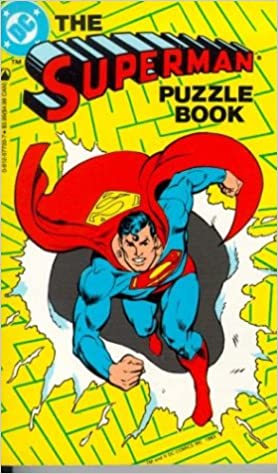
51DA14425CL._SX276_BO1,204,203,200_

[Image courtesy of Amazon.]

When you think of comic books and puzzles, one character instantly springs to mind: The Riddler. He’s easily the most iconic puzzly figure in comics, and his many twisty challenges for Batman have ranged from simple word games to death-defying escape rooms.

But did you know that Superman also has some puzzling in his expansive superheroic past?

In fact, Lois Lane’s life once depended on Superman’s ability to complete crossword puzzles!
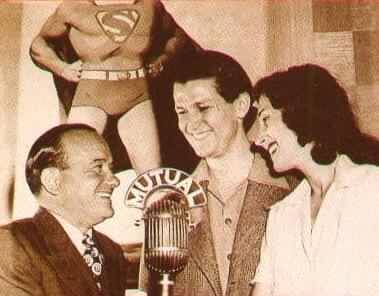
Beckcollyerjoan

[Image courtesy of Superman Fandom Wiki.]

Yes, back in 1948, from April 15th until May 3rd, The Adventures of Superman radio show (aka the Superman Radio Program) featured Superman facing off against a gang of kidnappers and thieves, as well as a devious mastermind, in “The Crossword Puzzle Mystery.”

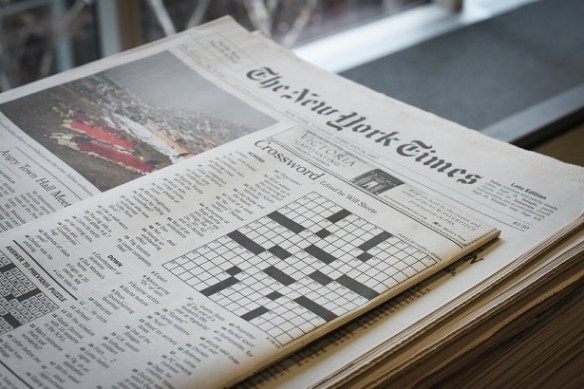
At that point, the crossword hadn’t even become a daily feature in The New York Times yet. (The first Sunday edition crossword debuted in February of 1942. The daily version wouldn’t appear until 1950.)

So how did crosswords cross paths with The Man of Steel?

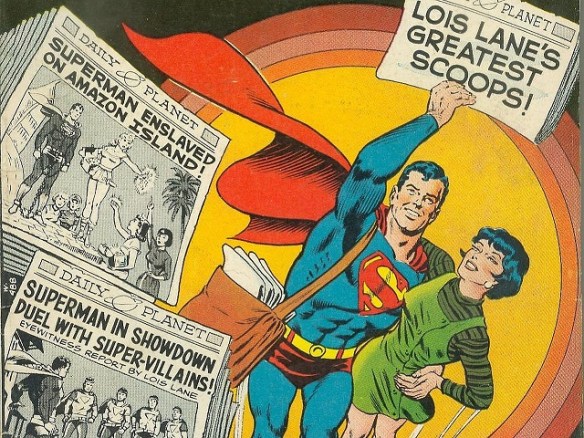
Well, it all starts with Lois Lane on an airplane, solving a crossword in order to find out where she’s going. Lois had received a tip from Horatio F. Horn, a local correspondent for The Daily Planet, and now she finds herself on a hunt across (and down) America for her next destination.
thumb-1920-388894

[Image courtesy of DC Comics, via Alpha Coders.]

The puzzle leads her to Moundville, a mining town where Horatio has gone missing. She meets a sinister gold-toothed man, and then goes missing herself. Cub reporter Jimmy Olsen soon arrives in Moundville, trying to locate both Lois and Horatio, but having no luck.

Eventually, Clark Kent gets involved, solving the same crossword puzzle as Lois and heading to Moundville himself. He arrives just in time to save Jimmy Olsen from being dragged off a cliff by a spooked horse. (You know how it is with spooked horses in old mining towns.)

After a hotel fire (an attempt on Jimmy and Clark’s lives), Clark finds three more crossword puzzles, but they’re partially destroyed. So he returns to Metropolis to track down solvable copies of each crossword, hoping they’ll reveal the whereabouts of Lois and Horatio.

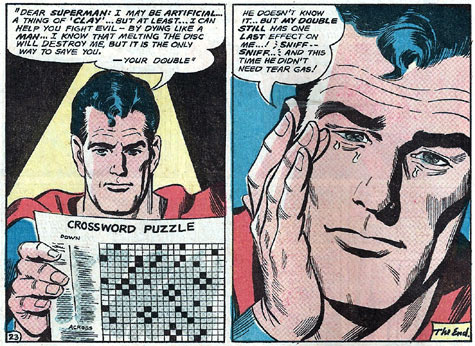
Yes, one of the episodic cliffhangers was Clark solving crosswords while Lois and Horatio were held in a secret cave at gunpoint. It’s gloriously silly.
impostor8

[Image courtesy of DC Comics, via David Morefield.]

Solving the crosswords leads Superman to believe that someone in Moundville is planning to steal a shipment of gold, so he returns to the town and teams up with Jimmy and a local sheriff to get more information. He deduces that a particular shipment going out that night is the target, and manages to rescue Lois and Horatio from the gang of ruffians planning the theft.

It turns out that the mastermind of the thefts is the owner of a Metropolis newspaper syndicate — who supplies puzzles to all the papers, including The Daily Planet — and would alert a vast network of gangs in the West to various gold shipments going out by putting the name of the town in the puzzle.

That’s how Horatio ended up investigating in the first place: he’s a crossword fan himself and noticed the pattern.

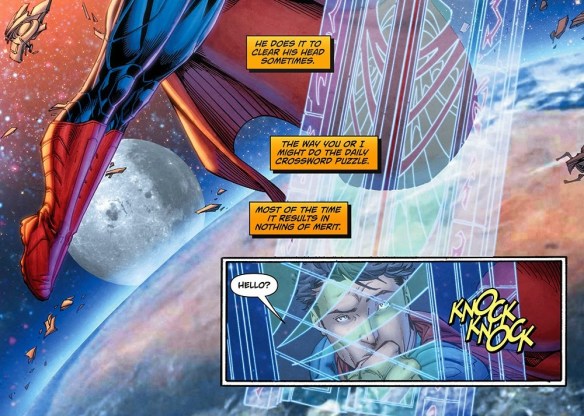
The serial concludes with Superman capturing the rest of the thieves in Moundville while the Metropolis police arrest the nameless puzzle mastermind. Good job, everyone! Another crime spree thwarted, thanks to solving puzzles!

space

[Image courtesy of DC Comics, via View Comic.]

The plot of this radio serial is quite similar to the plot of the first Crossword Mysteries film — both featuring thieves informed about targets through the local crossword — and honestly, it tickled me to imagine all these gun-toting ne’er-do-wells scattered throughout the western states, solving crossword puzzles every day and waiting to see where they’d need to go robbing.

This plan also implies that the crossword constructor NEVER mentioned towns or cities at other times, because that would send his goons on wild goose chases. Imagine all the abbreviated Canadian provinces they’d be searching, not to mention the European rivers.

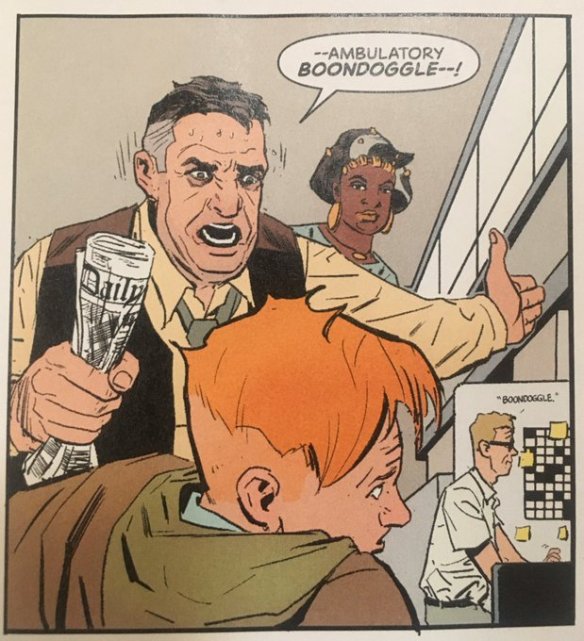
Perhaps this fiasco resulted in The Daily Planet hiring their own crossword editor, because later on in the comics, we see someone in the newspaper offices with a crossword pattern on his wall:
D_w1vLVXYAQayAL

[Image courtesy of Adam Talking Superman, who offered this caption: Huge fan of the newest Daily Planet character, crossword puzzle guy listening to Perry White’s vocabulary!]

Still, it’s fascinating to know that a major radio program — one with over two THOUSAND episodes — devoted literal weeks of airtime to a crossword-themed mystery.

It also makes you wonder what else is lurking in the daily crossword grids. What other devious crimes are afoot right under our noses?

I guess we better keep solving, folks! Our puzzly vigilance could be a crime-riddled town’s only hope!


dailypopwsicon

Hey, have you checked out our special summer deals yet? You can find them on the Home Screen for Daily POP Crosswords and Daily POP Word Search! Check them out!

Thanks for visiting PuzzleNation Blog today! Be sure to sign up for our newsletter to stay up-to-date on everything PuzzleNation!

Solution to the Smith-Jones-Robinson Problem!

[Image courtesy of SharpBrains.com.]

A week ago, we shared a brain teaser sent in by a PuzzleNationer named Brian, who challenged us to solve the following challenge.

Today, we’re going to share not only the solution, but how we got there! Please enjoy this brief solve and tutorial, inspired by one of your fellow PuzzleNationers!


The Smith-Jones-Robinson Problem

Every fact is important. The puzzle is as follows:

On a train, three men named Smith, Jones, and Robinson are the fireman, brakeman, and engineer, but not necessarily in that order. Also on the train are three businessmen who have the same names as the train crew. They will be referred to as Mr. Smith, Mr. Jones, and Mr. Robinson.

  • Mr. Robinson lives in Detroit.
  • The brakeman lives exactly halfway between Chicago and Detroit.
  • Mr. Jones earns exactly $20,000 per year, paid in thousand-dollar bills.
  • The brakeman’s nearest neighbor, one of the passengers, earns exactly three times as much as the brakeman, and is also paid in thousand-dollar bills.
  • Smith beats the fireman at billiards.
  • The passenger whose name is the same as the brakeman’s lives in Chicago.

From the information listed above, can you figure out the name of the engineer?


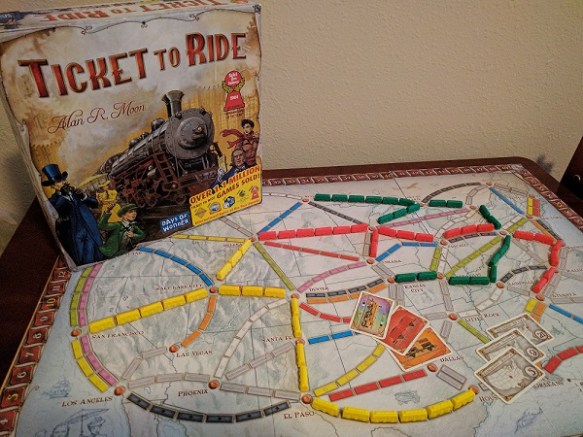
ticket to ride

We’re given one exact number, so let’s start there.

The brakeman’s nearest neighbor, one of the passengers, earns exactly three times as much as the brakeman. Mr. Jones earns exactly $20,000 per year, which cannot be divided evenly by three (in thousand dollar bills), so Mr. Jones is NOT the brakeman’s nearest neighbor.

The brakeman lives exactly halfway between Chicago and Detroit, and Mr. Robinson lives in Detroit, so Mr. Robinson cannot be the passenger who lives nearest to the brakeman. And as we just determined, Mr. Jones is also not the brakeman’s nearest neighbor. That leaves Mr. Smith as the brakeman’s nearest neighbor.

This tells us about the passengers, but how does it help us with the train crew?

Well, the passenger whose name is the same as the brakeman’s lives in Chicago. And neither Mr. Robinson nor Mr. Smith (who is nearest to the brakeman) can live in Chicago. That tells us Mr. Jones lives in Chicago.

This means that the brakeman’s name is Jones.

We can finally turn our attention to the train crew now.

Now that we know the brakeman’s name is Jones, that leaves only Smith and Robinson as possibilities. And we know that Smith beats the fireman at billiards. Smith can’t be the fireman or the brakeman, so Smith must be the engineer.

Did you identify the engineer and outwit the Smith-Jones-Robinson Problem? Let us know in the comments section below. We’d love to hear from you!


dailypopwsicon

Hey, have you checked out our special summer deals yet? You can find them on the Home Screen for Daily POP Crosswords and Daily POP Word Search! Check them out!

Thanks for visiting PuzzleNation Blog today! Be sure to sign up for our newsletter to stay up-to-date on everything PuzzleNation!
What Is Good Trivia?

Trivia is an integral part of many forms of puzzling. Crosswords involve a fair amount of trivia, as do many clued puzzles. Themed puzzles — particularly those that don’t give you a word list — also require some solid trivia knowledge. Brain teasers, riddles, escape rooms… all can involve trivia on some level.

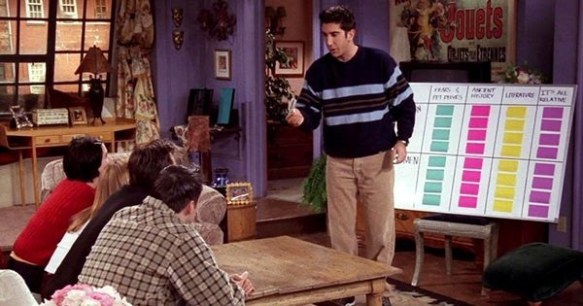
But what do we mean when we say trivia? As it turns out, not everyone agrees.

Merriam-Webster defines trivia as “unimportant matters, trivial facts or details,” then acknowledges the secondary meaning “a quizzing game involving obscure facts,” a definition which didn’t come around until the 1960s.

That first definition certainly fits the bill in many trivia books and games. They’ll claim any random fact as trivia, obscure or otherwise.

But I don’t think obscurity defines trivia. After all, plenty of great evenings of bar trivia don’t require obscure topics or the minutiae of various subjects; they simply require a wide swathe of general knowledge and a decent grasp of recent news and pop culture.

[Image courtesy of The New 60 comic.]

The first time I gave serious thought to the question “what is trivia?” occurred years ago when I started working on a movies and television-themed subscription crossword book for the folks at Penny Press. In addition to creating puzzles centered around a central theme for the issue — soap operas, Star Wars, animal movies, etc. — I also created lists of trivia questions to be included in the book.

I would compile a list of 25 or 30 trivia questions — brief enough to read along the bottom of the page, but hopefully interesting enough to be worth the solver’s attention — and sent them off for consideration.

That’s when Editorial Manager Warren Rivers introduced me to his definition of trivia:

What a lot of people call “trivia” strike me as things one should or could have learned in school. Those are things I don’t consider trivia. Trivia to me are the things that I wouldn’t expect a person to know, or better yet includes a “twist” or an element of surprise.

And I think that’s a key element in good trivia: that interesting twist or surprise. It’s not just informational recall. There’s something more there, whether it’s in the answer or the clever construction of the question.

But there are plenty of knowledgeable trivia enthusiasts out there, and I wanted their input as well.

One of the first people I asked was Stella Zawistowski, a crossword constructor, powerlifter, and trivia supplier for Geeks Who Drink, who clearly has one of the coolest resumes in the world.

I think what you are asking me is, “what is GOOD trivia”?

Good trivia accomplishes one of two things: teaches people something they don’t know and will find interesting, or nudges them to realize they know more than they think. This means that what constitutes good trivia is highly audience dependent. The astronomy question that is too easy to be interesting to a group of JPL employees could be fascinating to a general audience. Conversely, a general-audience question about Handel’s “Messiah” could be very boring to a group of classical music experts.

IMO one of the best trivia questions I’ve ever written is “The hand-cut and -sewn lace of this instantly famous wedding gown includes four types of plants: roses, shamrocks, daffodils, and what?”

The reason I think it’s good is that it fits into the “nudge people to realize they know more than they think” category. On its surface, this is a fashion question. How on earth is one supposed to know a detail as tiny as what flowers were embroidered on the lace of somebody’s wedding gown?

But if you think a little more carefully, you’ll see that the bride is marrying a British royal, and if you know that the three plants mentioned in the question — rose, shamrock, and daffodil — represent England, (Northern) Ireland, and Wales, respectively, you then realize: Oh, she’s representing the four UK countries, and the one that’s missing is Scotland. So the answer is the thistle, the national flower of Scotland.

I very carefully chose which one of those I left out, too! If you give shamrock, daffodil, and thistle, rose is incredibly easy, easier than I wanted the question to be. Take out shamrock, and I think it’s a bit harder to realize that the three remaining flowers are national symbols. Take out daffodil, and the solver unfairly has to choose between daffodil and leek, the latter of which is also a botanical national symbol of Wales. I don’t know that anybody ever wanted leeks on her wedding gown, but I didn’t want anyone to get the question wrong simply because they went with the wrong national symbol.

[Image courtesy of AmazingSuperPowers.]

Stella gets into a very important aspect of quality trivia that you don’t immediately consider: the phrasing and construction of the question.

Sure, the answer is the payoff, but the question is how you get there. The question is often the source of the a-ha! moment we so desire.

According to the crew at Geeks Who Drink, “the usual job of the conscientious quiz-writer is to start with a kernel of something you don’t know, and stir in just the right mix of hints and parallels to lead you to the correct answer (yes, no matter what it feels like, we DO want you to get most of them right).”

And that can take time. Thorsten A. Integrity, commissioner of the invite-only Learned League trivia website, can spend up to 30 minutes on each of the six trivia questions featured in a given day of trivia during one of the four seasonal competitions.

He usually starts with an interesting tidbit from a reference book and builds the question out from there. He fact-checks everything and has his questions professionally copyedited.

That effort creates a conversation in the brain. You ask yourself about different aspects. You rule things out, as Stella shows in her example. A good trivia question gives you enough to get you started and JUST enough to eliminate some false paths. (Although there’s nothing wrong with a tricky trivia question that leads you down the incorrect path a little bit.)

On trivia nights, or in trivia games, that conversation can quickly become fun and engrossing. As Ken Jennings once said of trivia, “It can lubricate social interaction. I like to see it as a way to build bridges.”

Are you a trivia fan, fellow puzzlers? Let us know your favorite trivia questions and bits of trivia below. We’d love to hear from you! (We could even compile them into a future blog post!)


dailypopwsicon

Have you checked out our special summer deals yet? You can find them on the Home Screen for Daily POP Crosswords and Daily POP Word Search! Check them out!

Thanks for visiting PuzzleNation Blog today! Be sure to sign up for our newsletter to stay up-to-date on everything PuzzleNation!
Another Brain Teaser Submitted For Your Puzzly Pleasure!

[Image courtesy of SharpBrains.com.]

A few weeks ago, we shared two brain teasers submitted by one of our fellow PuzzleNationers! Well, that must have inspired some of the readership, because we received another brain teaser to solve and share this week!

This brain teaser, submitted by puzzle fan Brian, is called The Smith-Jones-Robinson Problem, and Brian says it has been slightly altered from the original for clarity’s sake.

So, without further ado, let’s get to the puzzle! (We’ll share the solution next week!)


The Smith-Jones-Robinson Problem

Every fact is important. The puzzle is as follows:

On a train, three men named Smith, Jones, and Robinson are the fireman, brakeman, and engineer, but not necessarily in that order. Also on the train are three businessmen who have the same names as the train crew. They will be referred to as Mr. Smith, Mr. Jones, and Mr. Robinson.

  • Mr. Robinson lives in Detroit.
  • The brakeman lives exactly halfway between Chicago and Detroit.
  • Mr. Jones earns exactly $20,000 per year, paid in thousand-dollar bills.
  • The brakeman’s nearest neighbor, one of the passengers, earns exactly three times as much as the brakeman, and is also paid in thousand-dollar bills.
  • Smith beats the fireman at billiards.
  • The passenger whose name is the same as the brakeman’s lives in Chicago.

From the information listed above, can you figure out the name of the engineer?

Will you be accepting this puzzly challenge from a fellow PuzzleNationer? Let us know in the comments section below. We’d love to hear from you!


dailypopwsicon

Have you checked out our special summer deals yet? You can find them on the Home Screen for Daily POP Crosswords and Daily POP Word Search! Check them out!

Thanks for visiting PuzzleNation Blog today! Be sure to sign up for our newsletter to stay up-to-date on everything PuzzleNation!

Go For a Nice Relaxing Puzzle Hunt with Letterboxing!

Who can resist a treasure hunt? Who doesn’t want to play the role of the clever intrepid adventurer who reads maps, deciphers clues, solves riddles, and finds a hidden cache that eluded so many others?

We’ve discussed them in the past, covering famous ones like Forrest Fenn’s poem or the visual treasure hunt clues of The Secret, as well as tips for creating one of your own.

But did you know there’s another sort of treasure hunting out there that requires nothing more than your wits, your patience, and your willingness to exercise and explore?

[Image courtesy of Underhobby.]

It’s called letterboxing.

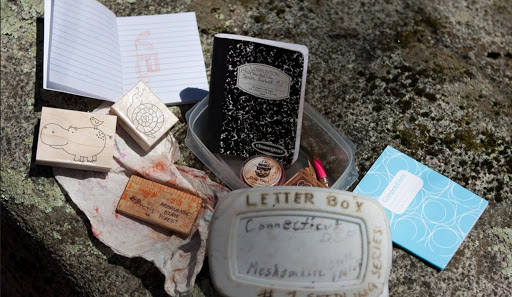
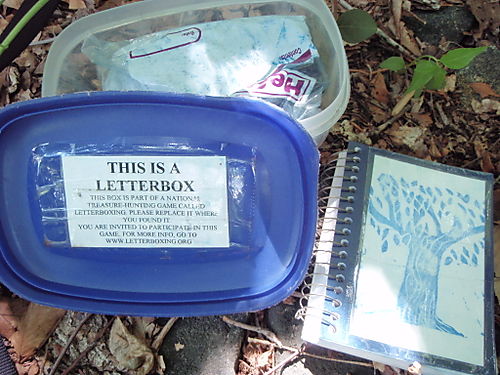
Essentially, you’re hunting for small, weatherproof boxes in publicly accessible areas — parks, for instance — with the goal of celebrating your success locating the well-concealed box. From a given starting point — a letterboxing catalog, or a website, or one given to you by the letterbox designer themselves — you must hunt down the box. (Your state might even maintain an archive of available letterboxing spots. Mine certainly does!)

Sometimes there are clues, or puzzles to be solved, or it’s simply meant to be found by determined, keen-eyed hunters.

Inside, you’ll find a logbook awaiting your personal stamp (to mark that you found it) as well as a stamp unique to that letterbox for you to use in your own record book to record your success in locating the box.

Devoted letterboxers often keep careful records of how many letterboxes they’ve planted, how many they’ve found, which letterboxing events they’ve attended, and more.

And it’s a hobby that dates back more than 150 years!

[Image courtesy of Ms. Nasser’s Art Studio.]

Now, if this sounds familiar, there’s good reason for that. Over the last fifteen years, an updated version of letterboxing has emerged: geocaching.

Geocaching functions mostly along the same lines, but with one crucial difference.

Geocaching is all about finding exact GPS coordinates.

But it can also involve the same exploration, puzzling, and problem-solving as letterboxing. I’ve seen some that contain puzzles that reveal coordinates to other geocaches, like popsicle sticks that have to be sorted to reveal the necessary numbers. There are even some that require you to solve a puzzle to open the letterbox itself.

Some people are very clever indeed, and they’re waiting for you to accept the challenge.

Have you ever been letterboxing or geocaching, fellow puzzlers and PuzzleNationers? Are you planning to try it out in the future? Let us know in the comments section below. We’d love to hear from you!


dailypopwsicon

Hey, have you checked out our special summer deals yet? You can find them on the Home Screen for Daily POP Crosswords and Daily POP Word Search! Check them out!

Thanks for visiting PuzzleNation Blog today! Be sure to sign up for our newsletter to stay up-to-date on everything PuzzleNation!
Where to Look for Crossword Reviews/Commentary?

tumblr_nnl5c43Ov61qd4fqho1_500

Occasionally, we’ll get a message from a PuzzleNationer who wonders why we don’t review the daily New York Times crossword or some of the other prominent daily newspaper crosswords.

It makes sense to ask. After all, we try to cover all things puzzles and games here — great clues, trivia, brain teasers, puzzles in pop culture, interviews, game reviews, how to’s, puzzle history, the Crossword Mysteries — so why not the top crossword outlets?

Well, to be honest, there are already several crossword blogs doing a dynamite job of covering those. So today, I want to discuss some top-notch blogs that discuss and review the daily crosswords!

nyt xwd

For the New York Times crossword alone, there’s Wordplay, XWord Info, and Rex Parker.

Wordplay is the official New York Times crossword blog, and not only do you get great analysis from knowledgeable minds, but you get live solve-alongs, insight from constructors, and more.

XWord Info is my go-to for details on construction and a fair, informative review. People occasionally accuse XWord Info of being too favorable to the puzzles/constructors, but I think they call it right down the middle, and there have been times where reviewers and constructors leveled stern criticism at a puzzle’s editorial process OR how it was discussed on XWord Info itself.

Rex Parker’s blog can be more critical of Times puzzles — as we’ve said before, he borders on the curmudgeonly — but he has terrific advice about grid construction, theme entries, and more that several constructors have told me proved to be invaluable in their early days learning to construct.

His blog is probably not for everybody, but he remains one of the most influential voices in crossword reviewing today.

Oh, and if you’re looking for some terrific reviews of the NYT Mini Crossword, check out this great Instagram account!

Of course, the NYT crossword isn’t the only game in town.

la times

If you’re a fan of the Los Angeles Times Crossword, there’s the terrific L.A. Times Crossword Corner blog to keep you up to date on that puzzle, breaking every puzzle down clue by clue. (There’s also LAX Crossword, which offers answers and clue explanations.)

If you enjoy the USA Today crossword, Sally Hoelscher offers Sally’s Take on the USA Today Crossword daily, offering up theme explanations, things she learned from the puzzle, and sharing terrific opinions and thoughts that would absolutely be beneficial to newer solvers.

And although it’s not a blog per se, the XWord Muggles Forum offers an interactive space to discuss and break down the Wall Street Journal weekly crossword contest, as well as other meta crossword puzzles.

crossword pen

But, if you’re looking for more of a one-stop-shop experience, then you should check out Diary of a Crossword Fiend.

Crossword Fiend covers NYT, LA Times, WSJ, Universal, USA Today, The New Yorker, The Washington Post, Newsday, The Inkubator, AVCX, and more! Not only that, but you’ll get reviews of puzzles from independent constructors like Elizabeth Gorski’s Crossword Nation, Brendan Emmett Quigley, Peter Gordon’s Fireball Crosswords, and others.

They post their solving times, analyze the puzzles, and spread the word about other puzzly projects and crossword news. It’s a fantastic site.

And before I wrap up this recommendation post, I do want to shout out the community on Reddit’s r/crossword subreddit. It’s a forum for discussing puzzle opinions, sharing works from aspiring and developing constructors, and yes, reviewing and sharing thoughts on the major outlets (mostly the NYT).

Most of the posters and commenters are genuinely good folks who love crosswords and enjoy discussing them, and it’s a pretty pleasant place to visit if you’re a crossword fan.

Do you have any favorite Crossword Review Blogs that we missed? Let us know in the comments section below. We’d love to hear from you!


dailypopwsicon

Hey, have you checked out our special summer deals yet? You can find them on the Home Screen for Daily POP Crosswords and Daily POP Word Search! Check them out!

Thanks for visiting PuzzleNation Blog today! Be sure to sign up for our newsletter to stay up-to-date on everything PuzzleNation!