I’ve always been a sucker for optical illusions, which I consider puzzles for the eye. They’re a visual treat that tricks you into seeing things that aren’t there. These inspired bits of perceptual trickery can fool you into thinking near is far, big is small, or two dimensions are really three.
And I’ve been fascinated ever since by this growing subset of glitch art where incredible precision is required to create physical art that looks fuzzy, uncertain, or even moving from the right angle.
So you can imagine my joy when I found this YouTube short:
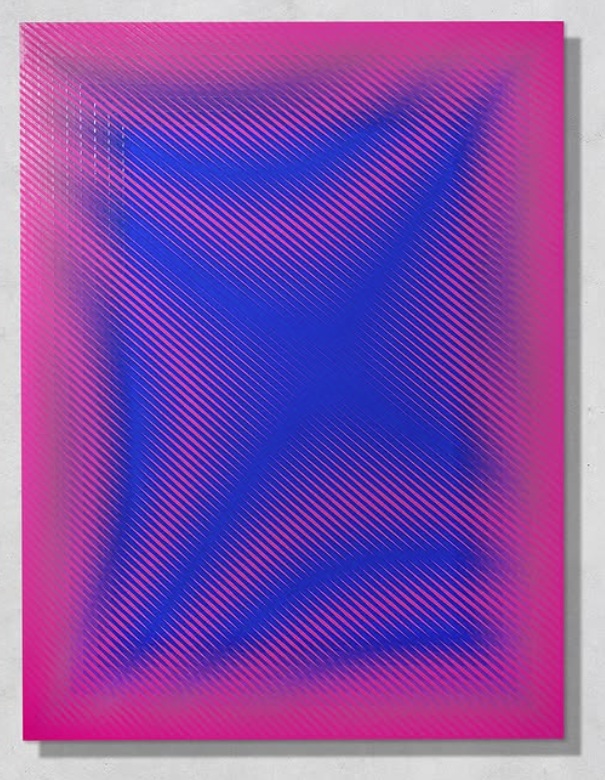
This is the work of artist Enzo Prina, a physical media artist who specializes in Moiré art.
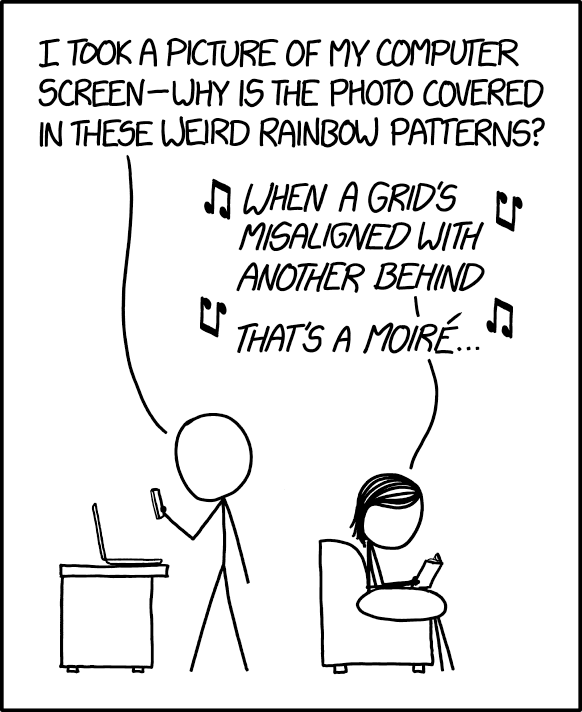
What is Moiré, you may ask? Well, XKCD has a fun explanation:
But please allow me to elaborate.
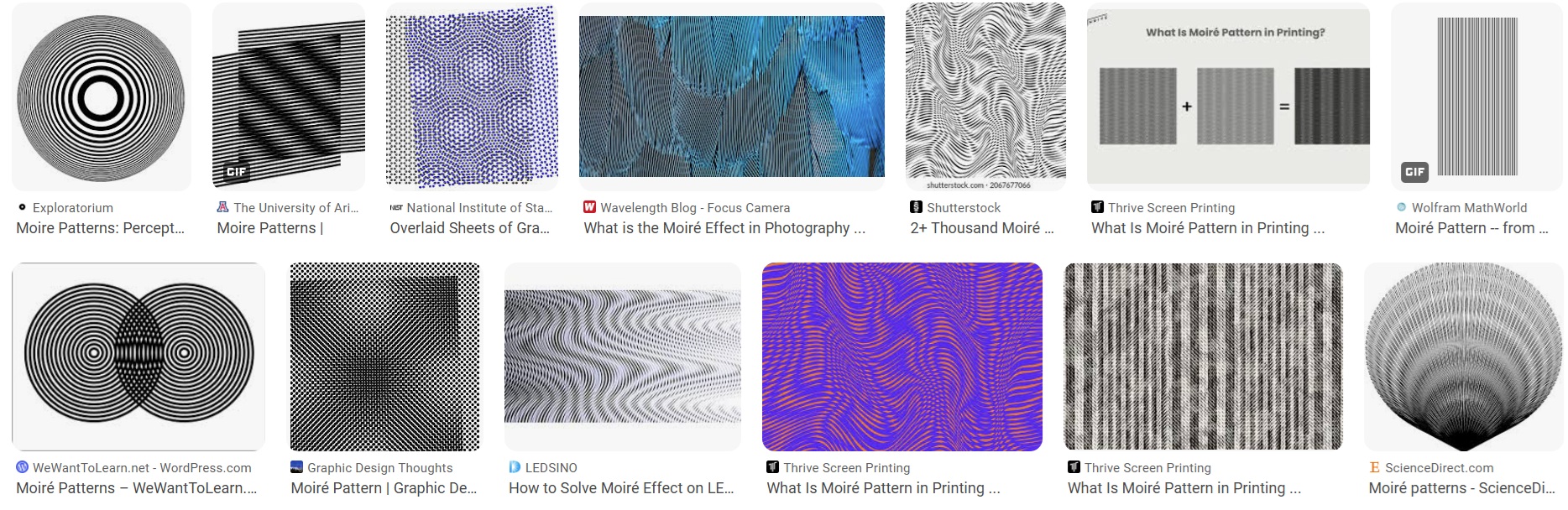
Moiré, which is both a mathematical and an artistic term, is the use of two or more overlapping grid patterns with regular spacing to create an interference pattern.
By overlapping these intricately formed and carefully spaced patterns at an angle to each other (and not directly lined up), you create the eye-catching patterns you see above.
Moiré patterns are all around us. If you’ve ever seen a Houndstooth jacket on an old television program, or tried to photograph a TV screen or computer screen at the wrong angle, you’ve no doubt noticed a Moiré pattern.
While making Moiré patterns isn’t difficult, you can see that Prina’s work is far more complex than simply layering two patterns. He maps out his designs with tape, meticulously pulling layer by layer of tape strands from his work as he paints it, making the creation process as gorgeous and mind-bending as the final product.
It’s truly something to behold, both during and after.
Prina claimed on LinkedIn back in January that he’d just started making art again after a ten-year break, and clearly that break has reenergized him, as his work continues to evolve and diversify in fascinating ways.
This intersection of art and mathematics really struck a chord with me. It’s not surprisingly, really, given that I’ve had Tom Lehrer on the brain for days, and he similarly combined math and artistic whimsy to create works of art that played with perception and imagination.
What a treat.
Now everyone, go stare at something boring and rest your eyes for a while.
The world of puzzles and games is larger than constructors and game designers. There are artists, writers, editors, wordsmiths, hosts, musicians, and influences that help shape puzzles and games in so many different ways. Their efforts enrich and popularize these beloved pastimes, contributing to the world by celebrating wordplay, creativity, and nerdy pursuits.
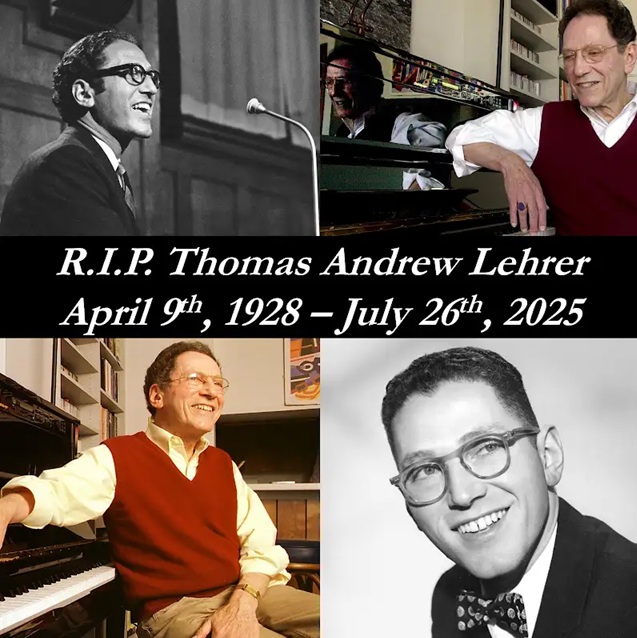
And sadly, the world grew a little less witty, a little less clever, and a lot less bold and outspoken about so many important topics when Tom Lehrer passed away a few days ago.
It’s hard to know where to begin.
How do you describe the cultural influence of a man whose songs still delight, inform, and push boundaries today, even though he wrote most of them over sixty years ago?
How do you describe a successful musician who walked away from public performance after three brilliant albums — thirty-seven songs, each an intricately-crafted dissection of some aspect of culture, science, or current events, often as poignant and sharp-tongued as they were hilarious — and spent the bulk of his life as a teacher and college professor instead?
His influence on pop culture can’t be overestimated. Across generations, his songs educated and inspired, and his legacy is bulletproof. He created songs for The Electric Company, Square One TV, and That Was The Week That Was. (Those shows were decades apart!)
He inspired performers like “Weird Al” Yankovic, and I think his fingerprints are unmistakable on other hilarious and educational projects, like the songs of Randy Rogel for Animaniacs. (Trust me, you can’t listen to “the Multiplication song” from Animaniacsand NOT think of Lehrer’s “New Math”.)
Tom retired from live performance in the late 1960s, having felt like he’d said everything he wanted to say with his music. (Plus, as he famously pointed out, “political satire became obsolete when Henry Kissinger was awarded the Nobel peace prize.”)
But his songs wouldn’t be denied.
Dr. Demento’s radio show brought Lehrer’s work to new ears in the 1970s, 80s, and 90s, and Honest2Betsy has brought him to yet another generation’s attention with her videos over the last few years.
His songs are timeless. “The Elements” alone has appeared in Better Call Saul, NCIS, Gilmore Girls, and The Big Bang Theory. (Not to mention Daniel Radcliffe’s famous rendition of the song on The Graham Norton Show, where he called Lehrer his hero. This actually led to Radcliffe starring in the film Weird: The Al Yankovic Story.)
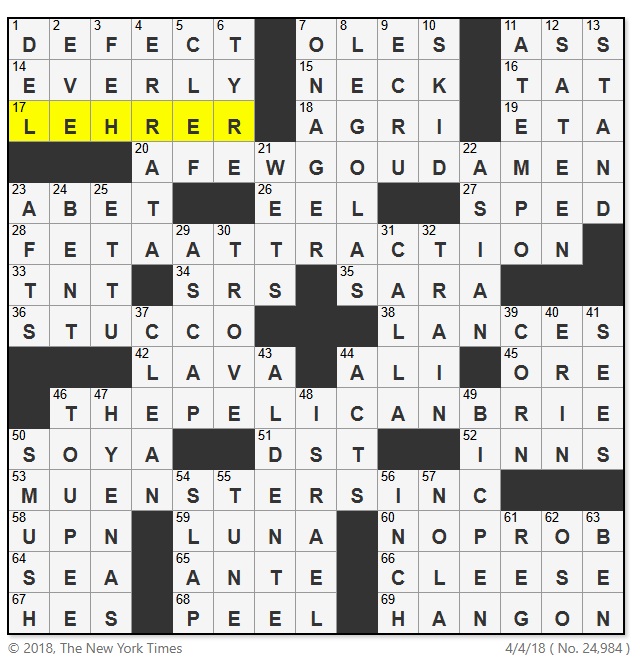
Speaking of “Weird Al,” his New York Times crossword puzzle with constructor Eric Berlin namedropped Tom as part of the grid fill in this pun-heavy collaboration:
And it is a love of wordplay that sparked this tribute today.
Lehrer’s work is absolutely riddled with clever puns, comedic craftsmanship, and playing with the listener’s expectations: all things that great crossword cluing employs.
You can’t listen to songs like “Silent E” or “Without an S” and NOT imagine clues or themes that Lehrer’s linguistic legerdemain could inspire.
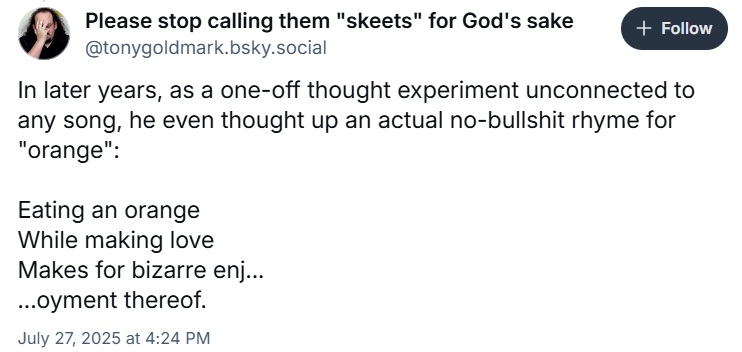
Not to mention this gem:
There’s a playfulness there, paired with technique, creativity, and an absolute willingness to bend conventions to their breaking point in order to make something new. How can you not love it?
But wordplay, commentary, and scientific and mathematical literacy weren’t Lehrer’s only gifts to the world.
He claimed to have invented the jello shot while in the military (to skirt rules about alcohol consumption). He wrote the song “Don’t Major in Physics,” which would have been good advice to me in freshman year of college, had I cared to listen.
And he also made the incredible gesture in 2022 of transferring the music and lyrics for all the songs he had ever written into the public domain. He relinquished the copyright and performing/recording rights for his songs as well, making his music and lyrics free for anyone to use. Downloadable lyric and music files are available on his website.
His statement releasing all his works into the public domain concluded with this note: “This website will be shut down at some date in the not too distant future, so if you want to download anything, don’t wait too long.”
For now, at least, the website remains online.
And it seems so apropos that the man who walked away from music decades ago to share his love of mathematics, science, and teaching with others is also the man who would happily sign away the rights to his music to enrich the lives of others once again.
The humanities and the STEM fields both owe Tom Lehrer a debt that can never be repaid.
The world was blessed with his presence for 97 years, and I have no doubt that his words, his music, and the forceful spirit that infused both will be around for many many years to come.
And ever since, to commemorate that puzzly milestone, top constructors and Times favorites have been pairing up with celebrity fans and puzzle enthusiasts to co-construct puzzles for the Times!
This year, you might’ve encountered some of these collaborations, like news pundit Rachel Maddow’s March 2nd puzzle with constructor Joe DiPietro, or “How I Met Your Mother” star Josh Radner’s meditation-themed puzzler from January 31st with constructor Jeff Chen.
Over the last year, names as diverse as John Lithgow, Elayne Boosler, Joy Behar, Lisa Loeb, Neil deGrasse Tyson, and Bill Clinton have contributed their puzzly efforts to this marvelous project.
And yesterday, another famous wordsmith and master of punnery made his New York Times debut.
Yes, the immortal “Weird Al” Yankovic teamed up with Puzzle Your Kids mastermind and friend of the blog Eric Berlin for a cheese-themed Wednesday outing that delighted fans and solvers alike.
Al has certainly been keeping busy lately, launching his Ridiculously Self-Indulgent, Ill-Advised Vanity Tour — his words, not mine; I loved the show I attended! — and working with Lin-Manuel Miranda to create The Hamilton Polka, an ambitious and hilarious take on the wildly successful musical.
The puzzle was Eric’s 40th Times puzzle, and Al’s first. Not only did the puzzle feature those signature cinematic cheese puns — like A FEW GOUDA MEN and THE PELICAN BRIE — but there was plenty of nerd culture featured in the fill and cluing.
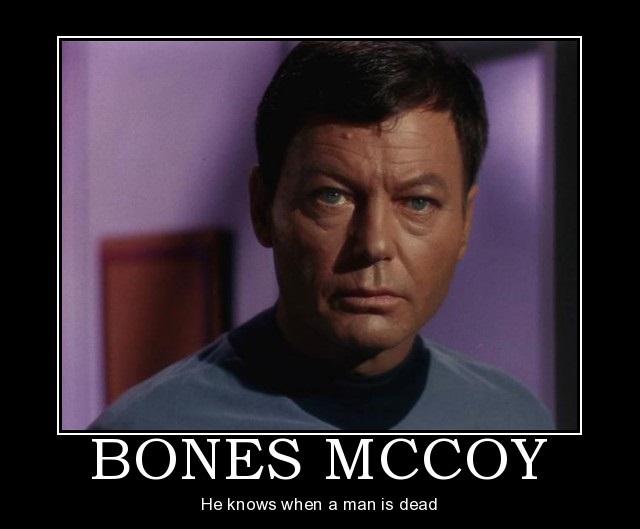
Tom Lehrer and John Cleese were both name-dropped, as well as Legolas, Wile E. Coyote, WALL-E, Mr. Clean, and Bones from the original Star Trek.
Eric offered some insight into the puzzle’s creation while discussing the puzzle with Wordplay’s Deb Amlen:
My very first attempt at the grid included one of my favorites from his list, QUESOBLANCA. I was under the misapprehension that queso is not just the Spanish word for cheese but also a specific kind of cheese. Whoops, not quite. (This was entirely on me, I should note — Al, not knowing during his brainstorming that the end result would be restricted to specific cheeses, had several cheese-adjacent puns in his list, including FONDUE THE RIGHT THING and CHEESY RIDER.)
And appropriately enough, Al had a bit of fun promoting the puzzle on his Instagram, claiming, “If you’re REALLY good, you don’t NEED the clues!”
For the record, I needed the clues.
Thanks for visiting PuzzleNation Blog today! Be sure to sign up for our newsletter to stay up-to-date on everything PuzzleNation!



 PuzzCulture