The 2017 New York Toy Fair, Part 2!

toyfair35

On Tuesday, I gave you a general rundown of what it was like exploring the massive spread of puzzles and games on display at this year’s New York Toy Fair.

In today’s post, I’d like to highlight some of the puzzles and games that most impressed me. I think many of these will also appeal to many of my fellow puzzlers and PuzzleNationers as well.

So let’s dive right in!

toyfair21

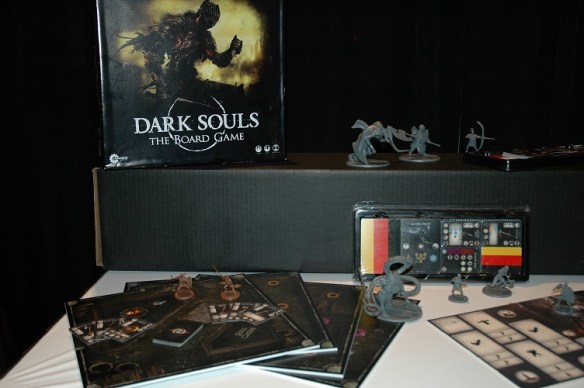
One of the prime spots in the Launchpad area for first-time attendees was given to the team at Steamforged Games Ltd., who have brought the video game franchise Dark Souls into the board-game realm.

toyfair23

Between one and four players can test their mettle against various creatures, battling to capture their souls and use them to make your character stronger and more capable. The impressive array of miniatures, player cards, and tokens makes for an interactive experience that should satisfy both video game fans and board gamers alike.

toyfair16

For a more traditional family-friendly puzzle game, the crew at Befuddled Games has you covered with Kerfuddle and Tree Top Hop, both of which are suitable for solvers of any age group.

Kerfuddle combines a touch of Boggle with the ever-changing gameplay of Fluxx. Roll the dice and use them to form words, but be careful — the “Shake It Up” cards can make your word forming much more challenging.
toyfair17

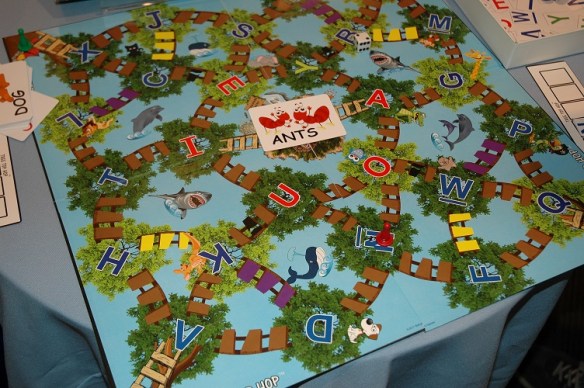
Tree Top Hop is a great intro game for young players, as they move around the tree top, spelling words on their cards and racing to the treasure at the center of the board. By combining word-building and strategy, this is a terrific gateway game for new players.
toyfair57

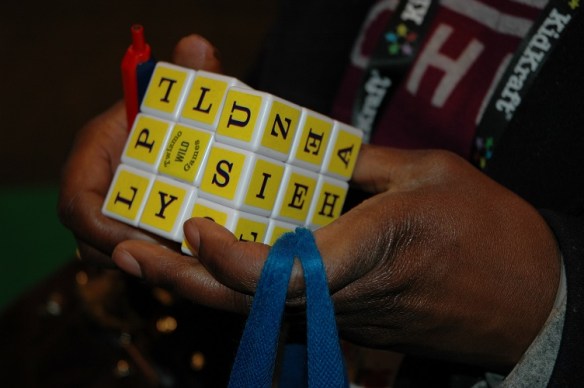
Along the same lines as Kerfuddle is Twizmo! Words, except instead of dice, you have a Rubik’s Cube-style Twisty puzzle providing you with the letters you’ll use to build your word list. Designed by the same team who brought us Tak•tak, Twizmo! Words is a strong quick-play game for any Boggle fans in your household.
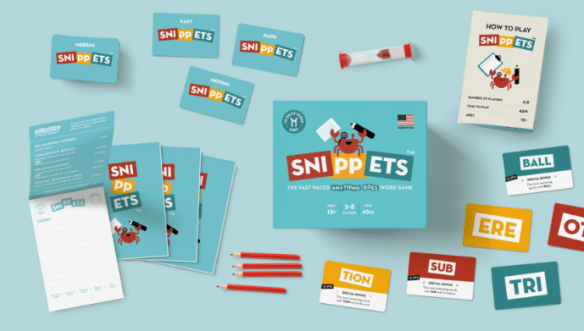
snippets

Snippets takes the list-building idea in another direction. Instead of random letters, you’re given a three-letter snippet of a word, and it’s up to you to come up with as many words containing that snippet as possible. So, if you’ve got TRA, you can write down EXTRA, TRAIN, STRAP, and so on.

toyfair55

And to close out this collection of word-forming games, we have Letter Tycoon, which adds a monetizing mechanic that really spices up the gameplay. Here, not only are you making money by forming words, but you can patent letters so that when other players use them, you cash in as well. It’s a really clever take on the word-building genre of games.
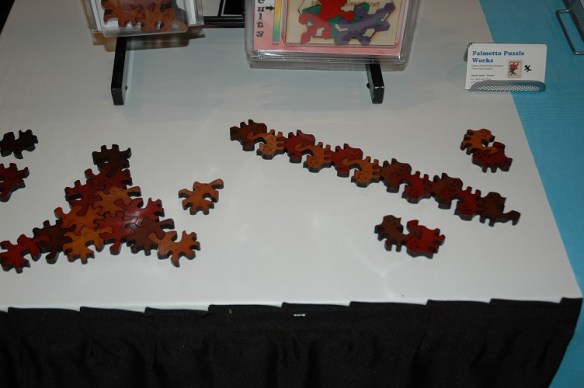
toyfair18

We now move on from combining letters to combining jigsaw pieces. The puzzles from Palmetto Puzzle Works all center around tessellations — shapes that repeat and interlock in many different ways.

toyfair19

Whether you’re trying to fit the pieces into a given space or you’re connecting them freestyle, these well-made wooden puzzles bring an M.C. Escher touch to the world of jigsaw-style solving.
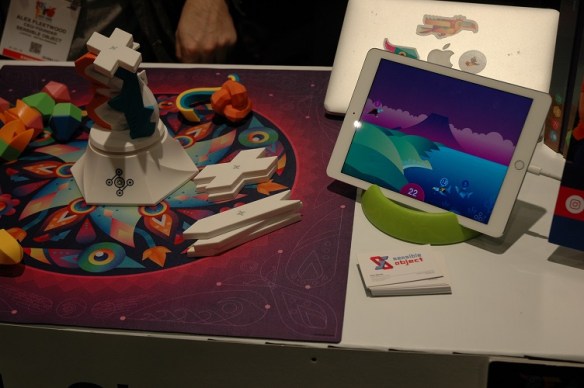
toyfair20

Beasts of Balance, on the other hand, has players using game pieces in a different way, as solvers stack the animal shapes and try to keep their ever-growing tower of creatures and artifacts from toppling over. The game has a tablet interaction feature that enhances both the gameplay and the storytelling aspect of the game, making the most of new school and old school puzzling.
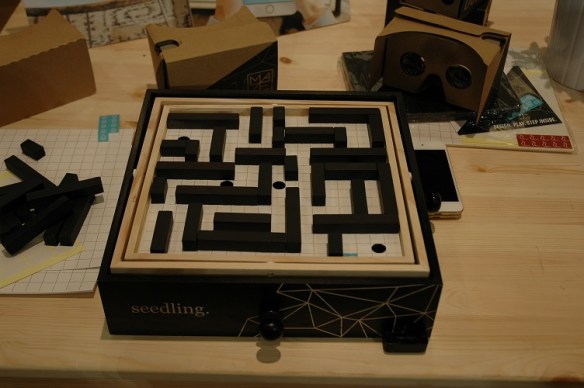
toyfair66

But if you’re looking to do some puzzly building in a different way, Maze by Seedling is a solid choice. Here, you can map out and design your own marble maze, and then tackle your own creation with a fully-functioning labyrinth board, complete with marbles, walls, and holes to avoid.
b081a19a52e3bd99bf7a00754d2d77f0_original

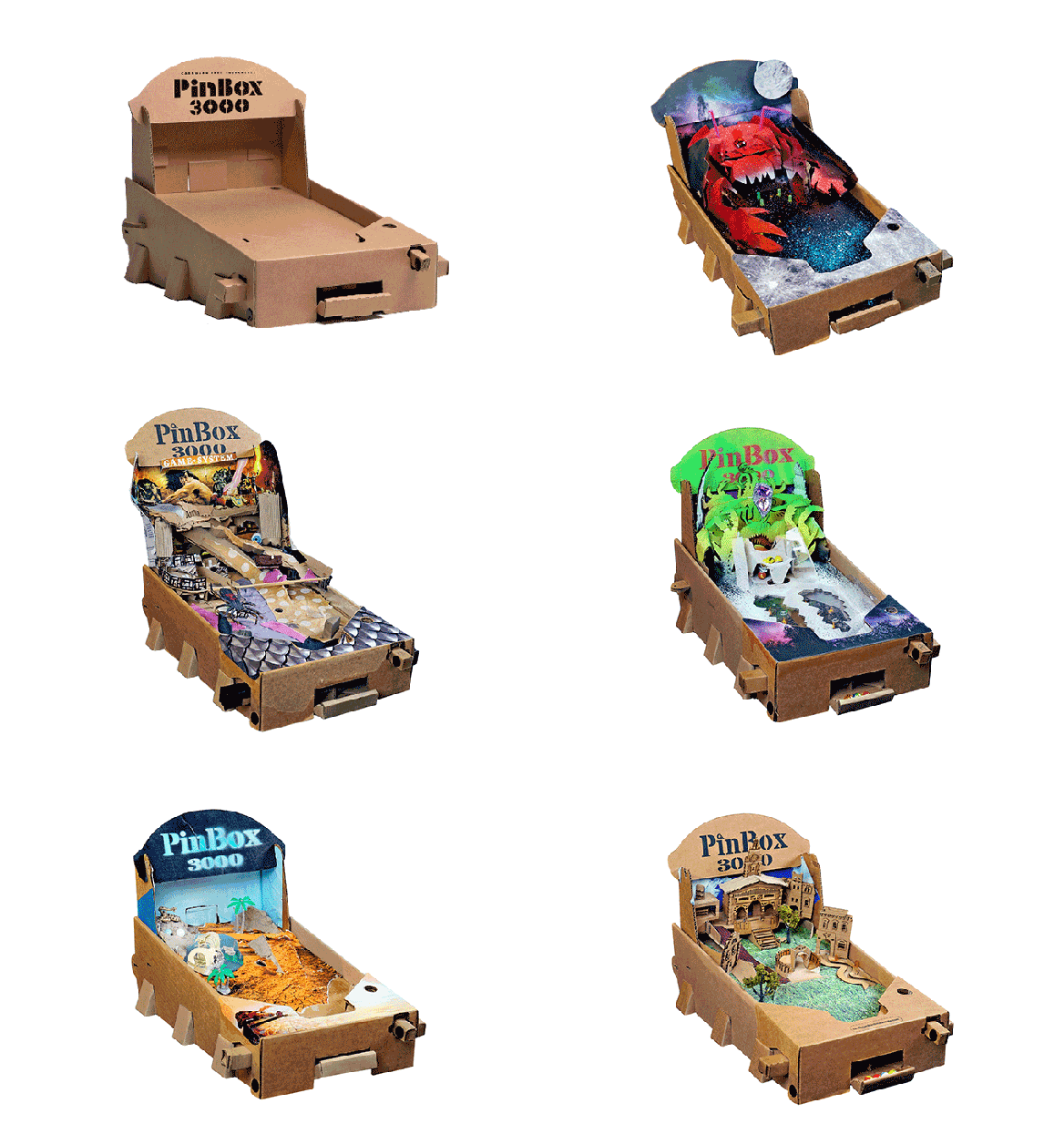
And while we’re on the subject of do-it-yourself puzzling, the crew behind Pinbox 3000 have designed a build-your-own pinball game system that allows for infinite customization. They give you everything you need to build a functioning game, and then leave the theme, bells, and whistles totally up to you.

I wrote about this one back when it was a Kickstarter project, and it was cool to see the brand continuing to thrive and grow.
toyfair37

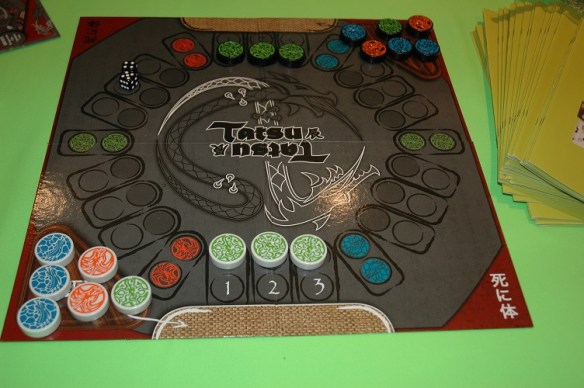
Another gaming classic with a modern twist is Tatsu, which combines Asian-inspired mythology with backgammon-style gameplay. Designed by the same creative team as the tile-placement game Hive, Tatsu is a clever, elegant game all about strategy and guile. It’s easy to learn and tough to master, and I suspect it will do quite well.
tenzi

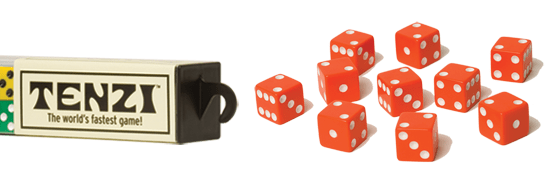
If you’re looking to combine strategy with rapid-fire gameplay, Tenzi is for you. In Tenzi, you’re given ten dice, and you have to keep rolling them until all ten match. It’s like Speed Yahtzee! But with dozens of additional variant games at your disposal, from stacking to scoring to rule-shifting games, this dice game has legs and is easy to tote around to play anywhere.
c1pho8kvqamerbv

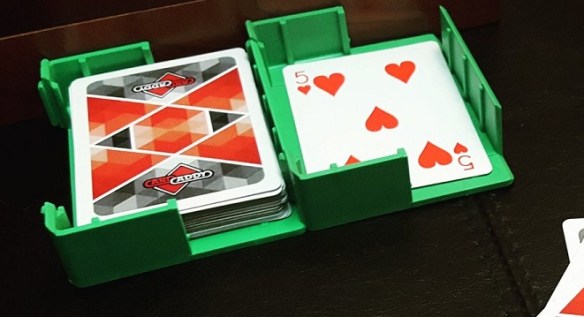
If you’re looking to take your card games anywhere, the team at Narrows Hill have a great solution for you. The Card Caddy is not only a protective case for any deck of cards, but it opens up into a perfect card-dealing and sorting setup for ease of play.
toyfair51

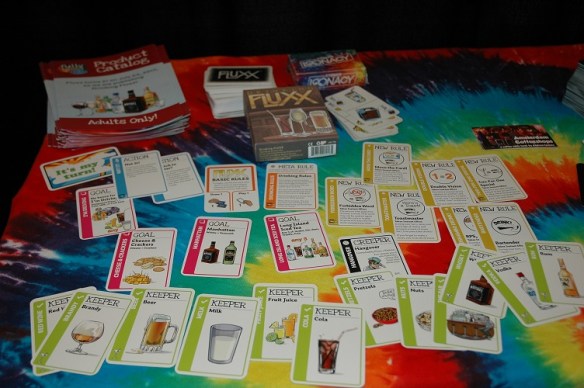
We also got an early glimpse of a forthcoming addition to the Fluxx family of card games. Since Fluxx is celebrating 21 years on the market this year, the crew at Looney Labs is celebrating with Drinking Fluxx, a spirits-soaked version of their famous chaotic rule-shifting card game.

You can mix and match the various ingredients to try to create a winning formula (and perhaps a sideline as a bartender for your fellow players). Just make sure you call a cab after playing.
toyfair41

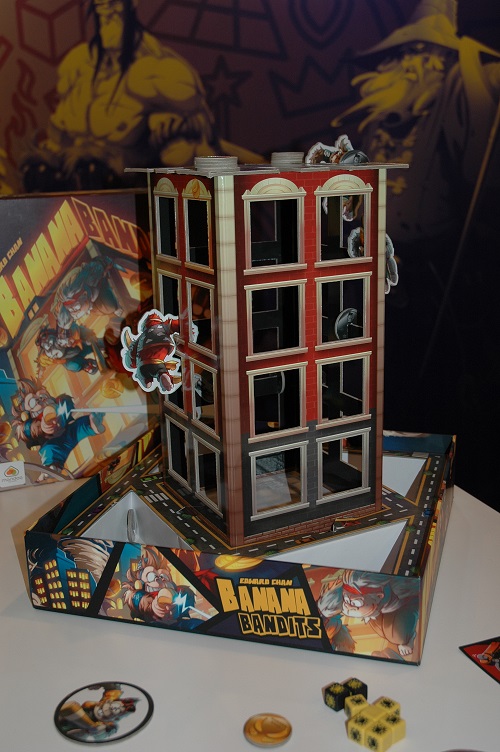
Whereas Tenzi and Fluxx are quite portable, Banana Bandits from CMON Games requires some space, since you have an entire 3-D building to set up as your game board. As you and your fellow players try to prove yourselves as worthy successors to the boss of the Banana Bandits, you’ll climb and explore the building, collect coins, and tangle with opponents, all on an impressively realized game space.

Will you be top banana, or is it time for you to split?

toyfair45

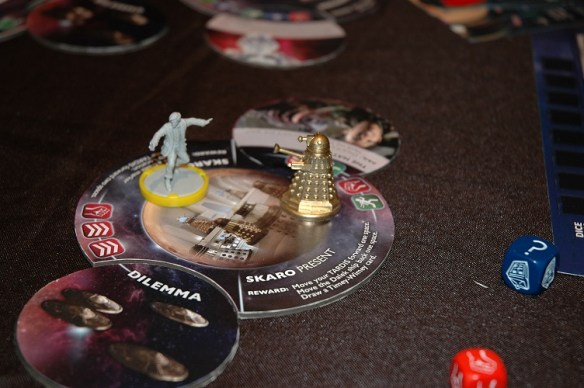
And the last game I’ll be discussing today is Doctor Who: Time of the Daleks, an elaborate galaxy-spanning game where you play as one of six Doctors traveling across time and space in order to complete missions, save the innocent, thwart your enemies, and generally wreak timey-wimey havoc.
toyfair46

Between the terrific miniatures and the expansive options available for players, this was one of the highlights of Toy Fair for me, and I can’t wait to see how they incorporate additional Doctors into the game later down the line.

toyfair62

Obviously this is just a small sample of all the fantastic, eye-catching puzzles and games that graced New York Toy Fair this year. But nonetheless, it’s an impressive group, covering so many different aspects of the puzzle and game world, and constantly blazing new trails in terms of creativity and innovation.

I have no doubt you’ll be seeing more about some of these projects as 2017 rolls onward.

[You can check out our full gallery of photos from New York Toy Fair on Facebook by clicking here!]


Thanks for visiting PuzzleNation Blog today! Be sure to sign up for our newsletter to stay up-to-date on everything PuzzleNation!

You can also share your pictures with us on Instagram, friend us on Facebook, check us out on TwitterPinterest, and Tumblr, and explore the always-expanding library of PuzzleNation apps and games on our website!
PuzzleNation Review: The Great Dinosaur Rush

The Bone Wars marked one of the craziest, most productive periods in scientific history, as two titans of the burgeoning field of paleontology — Edward Drinker Cope and Othniel Marsh — competed to discover and catalog dinosaur fossils.

Cope and Marsh spied on each other, sabotaged each other’s digs, falsified their own records to deter spying, and even blew up their own digs to prevent the other from finding anything else there in their absence.

It was absolute lunacy, and it led to more fossil discoveries than any other point in history.

And, in today’s review, we look at a game that recreates the Bone Wars for your enjoyment. This is The Great Dinosaur Rush.

In this game, players assume the roles of famous paleontologists at a dig site, collecting bones and preparing their specimens for display at a museum.

The game is played in three rounds. Each round consists of three phases: the Field Phase, the Build Phase, and the Exhibit Phase.

In the Field Phase, you move around the dig site and collect various bones. Different colored pieces represent different bones, which can only be placed in a dinosaur skeleton in certain ways. Red are limb bones, yellow are neck and tail bones, etc.

In this phase, you can take standard actions — like determining the scoring of various dinosaur attributes (making a taller dinosaur more valuable than a ferocious-looking one, for instance) or trading bones for points — or you can take actions that increase your notoriety, like sabotaging other digs or stealing bones from adjacent digs.

Notoriety is a double-edged sword, however; your notoriety gets you points at the end of the game… unless you’re the most notorious player, in which case you lose points.

The Field Phase is all setup for the Build Phase, where you use the bones you’ve collected to prepare your exhibit.

Oh yes, part of this game is a puzzle where you get to make your very own new dinosaur. (The screens included in the game block the other players from seeing your dinosaur-in-progress, as well as offering you important information on how to build your dinosaur.)

It’s up to you to figure out how to place them in order to make your dinosaur excel in certain ways. Depending on the scoring values — determined in the Field Phase — maybe you’ll want to emphasize the neck, or the arms, or give it unique attributes like a triceratops’s horns or a stegosaurus’s spiky plates. It’s up to you — it’s your discovery.

Finally, we have the Exhibit Phase, where the screens are lowered and each dinosaur is scored on its attributes as you show off your creation. (I also encourage players to name their creations, which has proven to be great fun in each game I’ve played.)

That’s the end of the first round. For rounds two and three, you go through the Field, Build, and Exhibit Phases again, but the point values are changed.

And at the end of the third round, you settle your notoriety points, determining final scores. Highest score wins!

Although the game can look a bit daunting at the start, it’s essentially Scrabble with dinosaur bones. You get your pieces and try to maximize your points by stringing them together in creative ways. It’s just that instead of words and clever crossings, you’ve got limbs and tails and Allosaurus skulls.

[Here’s my creation, the Dallosaurus. I imagine it’s like one of those toy birds that drinks water, pivoting on its hipbone atop those long legs and dipping its head to eat or drink.]

I was thoroughly impressed by how elegant the gameplay was, and how many actions you could take in the Field Phase. There’s so much you can do as you try to collect the bones you need to make your dinosaur, and it’s a wonderful mix of strategy, skill, and luck.

And then to follow that with pure puzzle solving as you must use every bone you’ve collected to create your dinosaur… it’s a game that engages you on several levels in very satisfying fashion. (The fact that it brings to life one of my favorite rivalries from history is just the cherry on top for me.)

It does take about an hour to play (sometimes longer, when you introduce new players to the game), but it’s worth the time investment. It’s a terrific family game — especially if you use the variant rule that leaves out the notoriety aspect. And it offers a new chance to make history every time you play.

[The Great Dinosaur Rush is distributed by APE Games and appears in this year’s Holiday Puzzly Gift Guide.]


And thanks for visiting PuzzleNation Blog today! Be sure to sign up for our newsletter to stay up-to-date on everything PuzzleNation!

You can also share your pictures with us on Instagram, friend us on Facebook, check us out on TwitterPinterest, and Tumblr, and explore the always-expanding library of PuzzleNation apps and games on our website!

PuzzleNation Product Review: Hoard

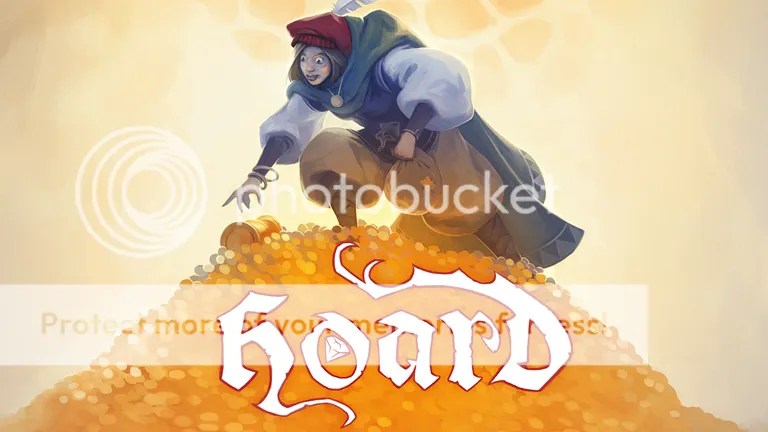
Stealing a dragon’s treasure is an iconic adventure trope, a classic test of a hero’s mettle or a thief’s craftiness. But do you have the skills and luck necessary to pilfer from a sleeping dragon and get away clean?

In the card game Hoard, you’ll get your chance to do exactly that as you and your fellow players maneuver around a sleeping dragon, trying to collect matching sets of treasure while defending yourself from or attacking your fellow plunderers, all with the ever-present threat of a slumbering fire-breathing beastie looming over you.

In fact, waking the dragon (or lulling it back to sleep) is a key part of the game play, since it could be to your advantage to wake the dragon after securing some treasure for yourself.

Hoard combines the resource management aspect of numerous other card games with the luck and wherewithal of Memory. As you move around the board, you have the choice to look at one of the dragon’s treasure cards. You can either take that card, or you can leave it (and hope you remember what you found there, in case you need it later). If you leave the card, you’ll instead draw a random card from the deck.

You might find helpful treasure, a sword to attack with, a shield to defend with, a way to wake the dragon, or a way to soothe the dragon. The variety of cards makes the relatively small playing area a rich field, rife with possibilities.

Wait a minute, why would you WANT to wake a dragon?

Simple. You play for several rounds, and each round can only end in one of three ways:
A.) The last card from the deck is pulled
B.) A player begins a turn with no cards in their hand
C.) The dragon wakes up

So, if you’ve secured a good bit of treasure and you think you’ll win that round, it’s to your advantage to wake the dragon and end the round before the other players can catch up.

Only the players with the top two point totals (amassed from making treasure sets and other related card patterns, similar to Go Fish) receive victory points at the end of the round.

The first player to five victory points wins the game.

The strategy involved is what makes this a terrific game for puzzle fans. You need to make sure that you keep finding matching sets of treasure (both by remembering what cards are around the dragon and seeing which cards you get from the deck), defend your treasure from the other players, and avoid getting outfoxed in manipulating the dragon.

The mechanics of the game are simple, but the sheer number of options available to the player — as well as the element of chance involved — make for a very replayable game experience. One round, the dragon could be your greatest ally, while another time, the dragon wakes at the worst possible moment for you and your meager treasure hoard.

A great game for families, casual players, and hardcore board gamers alike, Hoard is gorgeous, well-executed, and great fun.

Hoard is a Cheeky Parrot Games product, available online now!


Thanks for visiting PuzzleNation Blog today! Be sure to sign up for our newsletter to stay up-to-date on everything PuzzleNation!

You can also share your pictures with us on Instagram, friend us on Facebook, check us out on TwitterPinterest, and Tumblr, and explore the always-expanding library of PuzzleNation apps and games on our website!

Kickstarter Round-up!

International TableTop Day is this Saturday, a day where we celebrate getting together with family and friends to play games! Board games, card games, role-playing games, puzzles…anything that involves gathering in person and having fun around a table fits the bill!

But we simply can’t wait until Saturday — plus the office is closed that day — so we’re hosting our PuzzleNation’s TableTop Day event in-house TODAY! And I figured what better day could there be for a round-up of puzzly crowdfunding campaigns marking some of the newest and most intriguing projects in the puzzle-game industry today!

I’ve covered various campaigns for board games, card games, and puzzle projects across the Kickstarter and Indiegogo crowdfunding platforms over the years, and today I’d like to share three more that could use your attention.

The first is the strategy game Tak.

Tak is a collaboration between game designer James Ernest, head honcho of Cheapass Games and Hip Pocket Games, and author Patrick Rothfuss, creator of the Kingkiller Chronicle series, to bring to life a game featured in Rothfuss’s novel The Wise Man’s Fear.

The premise sounds simple: build a road of pieces connecting opposite sides of the board. By using some pieces as parts of your road and others as walls to block your opponent, this mix of chess, Stratego, and Go is all about strategy. Plus, the game is adaptable, playable on square boards as small as 3×3 and as large as 8×8.

This is a new pub game that feels like a timeless classic, and it looks perfect for puzzlers of all ages.

Now let’s move from the pub to outer space with another Kickstarter campaign, Avoid the Void.

This is a different sort of strategy game, since it’s all about outlasting your opponents, not completing a task first. In Avoid the Void, whole sectors of space are being replaced with black holes, and everyone is scrambling to gather resources and elude these hungry death traps.

You’ve got an ever-changing gameboard, intriguing alien races (including one resembling a piece of cake), and all the reason in the world to deceive, outmaneuver, and betray your fellow players, just so you can stay in the universe a little while longer.

This is a game designed for replayability, allowing you to indulge in all of the diabolical selfishness of games like Monopoly, but without the huge time commitment. After all, the universe is collapsing and there’s no time to waste!

And speaking of replayability, the makers of this last Kickstarter campaign are known for puzzle games with high replay factor. Let’s talk about Pyramid Arcade from Looney Labs.

We normally talk about Looney Labs card games like Fluxx or Loonacy, but their original product line revolved around the Looney Pyramids system: various games you can play with their signature colored pyramids.

Now, they’re launching Pyramid Arcade, covering TWENTY-TWO different games and encompassing 90 pyramids of various colors. It’s their largest release ever, and with all the variants and mini-games they’ve created for these game pieces over the years, this promises to be a game set with endless possibilities.

Pattern-matching games, chess- and Tic-Tac-Toe-inspired games, bluffing games, strategy games, and even a tower-building game…Pyramid Arcade literally has something for everyone.


These are three intriguing and very worthy projects, and I hope you contribute to one or more of them. As someone who has become a regular donor to various Kickstarter and Indiegogo campaigns, I am proud to have funded some marvelous new ideas and watched them take shape over the months that followed.

Thanks for visiting PuzzleNation Blog today! Be sure to sign up for our newsletter to stay up-to-date on everything PuzzleNation!

You can also share your pictures with us on Instagram, friend us on Facebook, check us out on TwitterPinterest, and Tumblr, and explore the always-expanding library of PuzzleNation apps and games on our website!

PuzzleNation Product Review: Strata Sphere

In today’s product review, we look at a puzzle game with a simple premise: get your spheres from the top level of the grid to the bottom before your opponent does. All that stands between you and victory? Four levels of sliding walls and a wily opponent.

Today, we tackle the multi-layered challenge of Strata Sphere.

Strata Sphere is a puzzle game for two players that challenges you to outthink and outmaneuver your opponent in order to get your four spheres through the grid first. Imagine the gravity-fueled fun of Ker-Plunk with the chain-reaction planning of chess, and you’ve got something approximating Strata Sphere.

This game is all about tactics and adaptation. First, you and your opponent take turns placing the twelve sliders into the grid. There are four levels to the grid, each level accommodating three sliders.

As you can see, some of the sliders have holes in different places, and others have no holes at all. Placement of these sliders is only part one of the game, but it’s a crucial one.

Once all twelve sliders are in place, the players choose their color spheres (red or black), and take turns placing them into the columns atop the grid, one sphere per column.

[As you can see, some of the spheres have already dropped to level 2,
thanks to the placement of holes in several of the sliders in level 1.]

Now the real strategy begins, because with each turn, a player may select any slider and pull it out of the grid one notch. (Each slider has three notches, allowing it to interact with three different columns.) As the game progresses, players can also push sliders in one notch.

Whether the slider moves out of the way of a sphere or moves a hole into place so a sphere may drop through, each move has the potential to drop a sphere a level (or two!) closer to freedom.

After one or two games, we actually ended up putting the game on a lazy susan, so we could rotate it, observe the grid more easily, and gain better access to all the sliders.

This form of three-dimensional puzzle-solving is a real challenge, because you’re not just dealing with your opponent’s next move, you’re dealing with all the setup (slider placement, sphere placement) that preceded it. Here’s where your ability to adapt comes into play, because all that strategy can go completely out the window at a moment’s notice.

Tension ratchets up quickly as you and your opponent maneuver back and forth, manipulating the sliders and helping gravity guide your spheres through the grid and toward the open tray below. The first player to free all four of their spheres wins.

Strata Sphere is a puzzle game that’s easily explained to younger players, but one that offers a great deal of complexity for older players as well, taxing your tactical abilities, spatial awareness, and your ability to seize unexpected opportunities when they arise.

Being forced to take turns makes long-term planning more difficult, and the four levels of gameplay will push your visualization skills to the max. (Planning out moves on a chess board is one thing, the multi-tiered slider system of Strata Sphere is quite another.)

The gameplay is engaging, the design is simple and elegant, and I daresay there’s no more satisfying sound than the click of a well-earned sphere hitting the tray, freed. What a treat.

Strata Sphere is for ages 8 and up, available now from Family Games America.


Thanks for visiting PuzzleNation Blog today! Be sure to sign up for our newsletter to stay up-to-date on everything PuzzleNation!

You can also share your pictures with us on Instagram, friend us on Facebook, check us out on TwitterPinterest, and Tumblr, and explore the always-expanding library of PuzzleNation apps and games on our website!

PuzzleNation Product Review: Schrodinger’s Cats

Even if you don’t know the science behind it, you’ve probably heard of Schrodinger’s cat at some point in your life. If you haven’t, let me give you the short short version: there’s a box with a cat in it, and a substance that may or may not release inside the box and kill the cat.

So until you open the box, there’s no way of knowing whether the cat is alive or not. Schrodinger posited that, since we can’t know which is the case, both are true until the box is opened. It’s essentially a thought experiment which delves far deeper into quantum mechanics and particle physics than I’m going to in this review.

But the idea that someone created a card game based on the concept of Schrodinger’s cat is not only audacious, but pretty impressive. (And the puns are just the icing on the cake.)

[Some of the cat physicists in the game: Sir Isaac Mewton,
Sally Prride, Madame Purrie, and Neil deGrasse Tabby.]

Schrodinger’s Cats was funded through a Kickstarter campaign last year, and it’s the brainchild of Heather Wilson, Heather O’Neill, and Chris O’Neill. A mix of bluffing, deduction, and wagering, this game combines Name That Tune-style bravado and strategy with Poker-style game play.

Each player is a cat scientist forming hypotheses on how many boxes contain live cats, dead cats, or nothing at all. (While Schrodinger is away, of course. As the old saying goes, when the scientist’s away, the cats will play. Or something like that.)

Every player receives one box card for each player in the game (so if there are three players in the game, each player receives three box cards), as well as one cat scientist card.

Once the cards are dealt, players look at their box cards and see what each box contains, hiding this info from the other players. Then the players begin hypothesizing. They wager on how many of each result are in ALL of the boxes on the board. So, in the game layout above, there are nine boxes, and each scientist has to wager what’s in all the boxes.

But instead of starting with a high guess and then wagering lower totals (as you would in Name That Tune), you start low in Schrodinger’s Cats and wager upward. Scientists can also affect the wagering by “showing findings” — revealing one or all of their own boxes to either prove their hypothesis or make the other players doubt their own — or by swapping out some boxes. (Each cat scientist card also allows for a one-time-use special action for a player, which can also prove useful.)

When a player either refuses to wager higher or challenges another player’s hypothesis by yelling “Prove it!”, all of the boxes are revealed and the hypothesis is proven or debunked (meaning the player stays in the game or leaves). After multiple experiments (rounds of play), one character remains and wins the game (and an honorary doctorate from Cat Tech University).

What I enjoyed most about this game (other than all the pseudo-scientific jargon involved in playing the game) was the wagering, bluffing, and reading of opponents that is integral to the game play. With so few possible cards to reveal (only four, in varying quantities, as opposed to 13 different cards across four suits in poker), it’s not nearly as challenging as the classic card game, but offers a lot of similar game mechanics.

It’s great fun to try to outwit or read your fellow players in order to make the best hypothesis, and that’s a sort of puzzling that is often left behind in puzzle games. Often, you’re so busy trying to achieve a certain goal or acquire points that you stop actively interacting with the other players; but in Schrodinger’s Cats, a lot of puzzling and game play takes place in the actions and reactions of the other players. It’s a delightfully social game.

Although you can play with as few players as two or as many as six, I recommend playing with at least four characters to keep the game moving and interesting. Between raising hypotheses, showing findings, and trying to puzzle out what your fellow players are hiding, the more uncertainty you can introduce to the game, the better.

Schrodinger’s Cats is available from 9th Level Games and can be found here.


Thanks for visiting PuzzleNation Blog today! Be sure to sign up for our newsletter to stay up-to-date on everything PuzzleNation!

You can also share your pictures with us on Instagram, friend us on Facebook, check us out on TwitterPinterest, and Tumblr, and explore the always-expanding library of PuzzleNation apps and games on our website!